
The numbers are concerning – only 43% of organizations have an AI governance policy, and a third have none at all. This gap shows a critical challenge we face in 2026. While 78% of organizations use AI in at least one business area, only 25% have fully implemented AI governance programs. This creates a 53-percentage-point gap between adoption and governance maturity.
The governance gap becomes especially worrying when industries adopt AI systems faster into their operations. A recent survey shows that 84% of health insurers already use AI and machine learning in some capacity. Organizations need structured, risk-based policies that cover all AI systems to ensure compliance and audit readiness. Frameworks like ISO/IEC 42001:2023 provide a familiar plan-do-check-act structure that can make legal requirements operational. However, many organizations don’t deal very well with practical implementation.
Let me walk you through building effective evidence maps for AI governance in this piece. This practical approach helps reshape complex frameworks into implementable controls. Our research breaks down thousands of pages of standards and regulations into twelve essential domains. You’ll learn how to create evidence artifacts that connect AI governance principles with demonstrable compliance.
Key Takeaways
Evidence maps are essential tools that transform AI governance from theoretical frameworks into demonstrable compliance, bridging the critical gap between AI adoption and regulatory requirements.
• Regulatory enforcement has shifted from voluntary guidelines to binding requirements – Organizations face real consequences including fines, forced system withdrawals, and reputational damage without proper evidence documentation.
• Evidence maps create traceable connections between obligations and artifacts – Unlike simple checklists, they establish dynamic relationships linking regulatory requirements to specific test results, documentation, and operational controls.
• Centralized evidence indexes prevent “AI sprawl” and compliance gaps – Structured registries with version control and traceability mechanisms ensure all AI systems remain visible and governable across the organization.
• Integration into AI lifecycle workflows enables proactive governance – Pre-deployment checkpoints and post-market monitoring transform evidence maps from static documents into operational tools that adapt throughout system lifecycles.
• Practical tools like model cards and requirement matrices make governance actionable – Standardized documentation and visualization platforms help organizations move from “governance by PDF” to measurable, auditable controls.
The transition from principles to proof is no longer optional—organizations must implement systematic evidence mapping now to avoid reactive compliance measures when regulations, audits, or incidents force their hand.
Why Evidence Maps Are Now Essential for AI Governance
AI regulations have changed completely since 2025. What started as optional frameworks and ethical guidelines has grown faster into binding requirements with real consequences. These changes make evidence maps vital tools for organizations dealing with AI governance.
Regulatory enforcement trends in 2026–2027
Regulators worldwide now focus on enforcement instead of guidance. What used to be optional has become mandatory compliance. The EU AI Act stands out as the clearest example – its high-risk obligations will take full effect in August 2026. Italy’s €15 million fine against OpenAI for GDPR violations in training data processing shows that regulators want documented controls and technical safeguards, not just ethics statements.
U.S. states have stepped up to fill the federal regulatory gap. Colorado’s AI Act will take effect June 30, 2026. It requires developers and deployers to prevent algorithmic discrimination, assess impact, and inform consumers. California has also put in place generative AI transparency requirements and frontier AI safety frameworks.
Recent enforcement actions show what organizations should expect. The FTC’s “Operation AI Comply” went after deceptive AI marketing. State attorneys general have increased their oversight too. Pennsylvania’s Attorney General settled with a property management company in May 2025 over claims that its AI platform led to unsafe housing.
Insurance markets send another clear message. Carriers now offer “AI Security Riders” that need proof of adversarial red-teaming, model risk assessments, and special safeguards before providing coverage. Insurance companies base decisions on loss data and exposure models, not philosophy.
Shift from principles to proof in AI compliance
The biggest change in AI governance is the switch from beliefs about responsible AI to actual proof. Missing documentation can now violate regulations. Organizations must show:
- Technical documentation files for high-risk systems
- Post-market monitoring plans that track real-life harms
- Conformity assessment results proving safety and accuracy
- Impact assessments covering bias, privacy, and fundamental rights
AI governance must now focus on proof rather than policy. Companies can measure their “say-do ratio,” and written principles alone won’t cut it anymore. Organizations need well-laid-out evidence maps that link governance requirements to specific artifacts.
Evidence maps help build effective knowledge management systems. They show gaps in current evidence and point out areas that need more attention. AI tools can create these maps well, helping build “living” synthesis products that update automatically with new research.
The 2026 goal is clear – AI governance must move from theory to proven controls. Companies without consistent, auditable oversight of AI systems risk higher costs through fines, forced withdrawals, damage to their reputation, or legal expenses. Evidence mapping isn’t just about documentation – it’s crucial for managing risk.
By 2026, healthcare and other regulated sectors won’t just look at vendor governance to tell them apart. It will determine if they can use systems at all. Models that can’t explain outputs or show how they handle bias and safety risks will face pushback, whatever their accuracy claims.
Understanding the Role of Evidence in AI Governance Frameworks
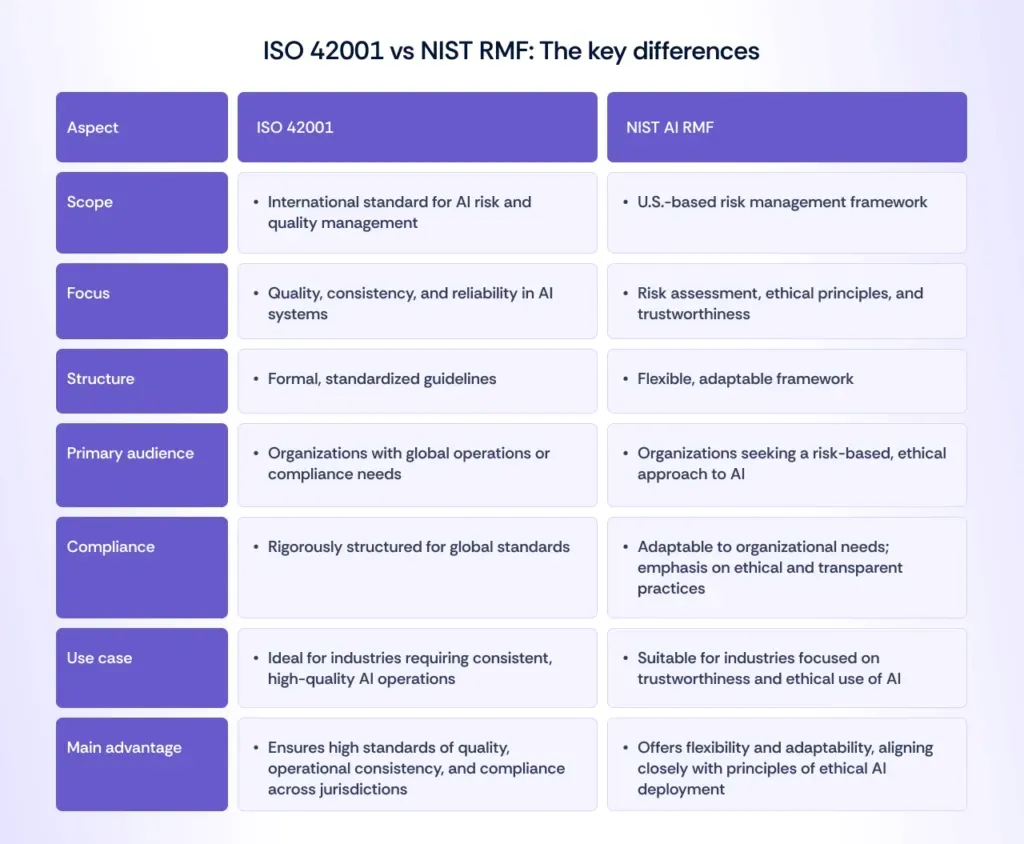
Image Source: Northwest AI Consulting
Major AI governance frameworks now give us well-laid-out ways to collect evidence. Each framework has its own method to show compliance. These frameworks help create systems we can track and audit that link principles to real-life use.
ISO/IEC 42001 and the PDCA model
ISO/IEC 42001, which came out in December 2023, is the world’s first AI management system standard you can get certified for. Many frameworks look at specific AI uses, but ISO/IEC 42001 takes a different path. It looks at the management structure that supports AI systems through an Artificial Intelligence Management System (AIMS).
The standard uses the Plan-Do-Check-Act (PDCA) method across ten well-laid-out clauses. Organizations can turn legal requirements into familiar processes this way:
- Plan: Set AIMS scope, spot risks and opportunities, and set goals
- Do: Put AI governance policies and controls in place, including fairness and transparency steps
- Check: Track, measure, and review AI system results against set metrics
- Act: Make the AIMS better through fixes based on performance data
ISO/IEC 42001 works like an operating system for AI governance. It makes compliance something you can repeat and audit. The standard fits well with other management systems like ISO/IEC 27001. This lets organizations add AI controls to their current audit processes and evidence storage.
EU AI Act Article 43 and conformity files
EU AI Act Article 43 sets specific ways to assess high-risk AI systems for conformity. These assessments check if systems meet requirements for risk management, data governance, technical documentation, transparency, human oversight, and cybersecurity.
Providers need to put together reliable conformity files with detailed evidence. High-risk AI systems listed in points 2-8 of Annex III need internal control assessment without a notified body. Systems with big changes need new conformity checks, except for planned changes in systems meant to keep learning after deployment.
Article 43 needs clear links between obligations and evidence. Organizations should keep current AI inventories that map roles and list high-risk candidates. They must link each obligation to specific processes and artifacts in the AIMS evidence index. A good example would be “Article 43 requirement X -> Test Y -> Evidence Z” in the conformity file.
NIST AI RMF: Govern, Map, Measure, Manage
The NIST AI Risk Management Framework (AI RMF) came out in January 2023. It gives a voluntary but detailed way to manage AI risk through four connected functions:
- Govern: Create policies that promote risk awareness and accountability
- Map: Get a full picture of AI system risks and benefits in context
- Measure: Test and watch systems regularly to check trustworthiness
- Manage: Give enough resources to handle mapped and measured risks
These functions aren’t steps you follow one after another. They work together throughout an AI system’s life. The AI RMF looks beyond technical issues to cover social, legal, and ethical impacts through an integrated approach.
The framework focuses on seven traits of trustworthy AI: validity and reliability, safety, security and resilience, accountability and transparency, explainability and interpretability, privacy improvement, and fairness with bias management. This focus helps organizations create evidence that covers both technical and ethical sides of AI governance.
These frameworks give well-laid-out ways to collect evidence that turn abstract principles into controls we can audit. Organizations can create detailed evidence maps that connect governance needs to specific artifacts by learning these different methods. This ensures they follow new regulations.
What Is an AI Evidence Map?
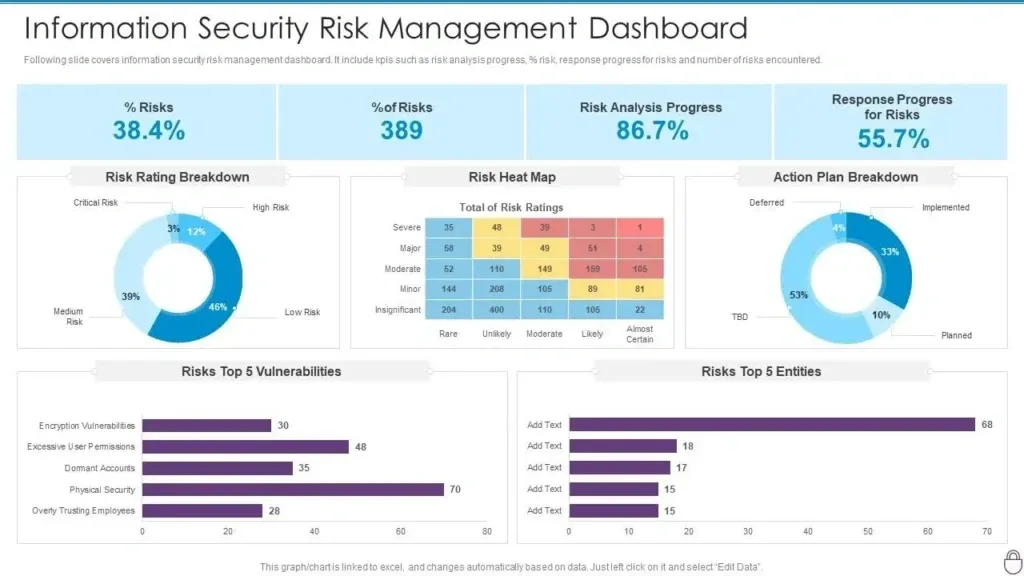
Image Source: Elevate Consult
Evidence maps are the foundation of effective AI governance systems. Companies adopting artificial intelligence face a challenge between high-level principles and practical implementation. Evidence maps close this gap with structured visualization of compliance artifacts and their connection to regulatory requirements.
Definition and purpose in governance systems
An AI evidence map is a systematic visualization that identifies and reports research activity in broad topic areas or policy domains. Unlike regular documentation, evidence maps create a framework that links governance obligations to artifacts showing compliance. These maps help organizations guide through complex regulations by making large amounts of information available and useful.
Evidence maps serve many key purposes in AI governance systems:
- Gap identification – 67% of evidence map definitions describe their main goal as finding gaps in existing evidence or future research needs. For AI governance, this means finding missing compliance artifacts before regulators do.
- Stakeholder engagement – 58% of evidence map definitions focus on creating user-friendly products that involve key audiences. This availability helps technical, legal, and business stakeholders understand compliance status together.
- Systematic coverage – 55% of evidence map definitions show that evidence maps capture broad fields completely. This makes them perfect for handling complex AI governance obligations.
- Visual representation – Evidence maps show information in user-friendly visual formats, often as figures, graphs, or searchable databases. This visualization helps teams spot compliance strengths and weaknesses quickly.
Evidence maps turn abstract requirements into concrete, traceable artifacts. They create a single source of truth connecting regulatory mandates to specific documentation, test results, and operational controls.
How evidence maps differ from documentation checklists
Documentation checklists don’t deal very well with AI governance complexities, though they’ve been the default approach to compliance. Evidence maps are different from checklists in several ways:
Evidence maps focus on relationships instead of just presence. Checklists only verify if documents exist, but evidence maps show how artifacts connect to each other and regulatory requirements. This creates traceability throughout the AI lifecycle.
Evidence maps are dynamic, not static. They work as “living” synthesis products that update automatically as new evidence appears. This flexibility matters because AI regulations and standards change fast.
Evidence maps provide contextual depth that checklists lack. They include details about evidence quality, relevance, and gaps. This helps teams prioritize compliance activities based on risk. Research shows AI-based living evidence maps enable continuous monitoring accurately and save time compared to static approaches.
Evidence maps are user-focused by design. They present technical compliance information in ways that different stakeholders understand and use. Technical teams implementing controls and executives responsible for governance outcomes can both use these maps effectively.
Evidence maps fit into formal Evidence-Informed Decision-Making (EIDM) frameworks. This makes them strategic tools for AI risk management rather than simple documentation exercises.
Well-implemented AI evidence maps help teams analyze complex information, spot research gaps, and make evidence-based decisions across organizations. They provide the structure needed to meet documentation requirements mandated by AI regulations worldwide.
Mapping AI System Obligations to Evidence Artifacts
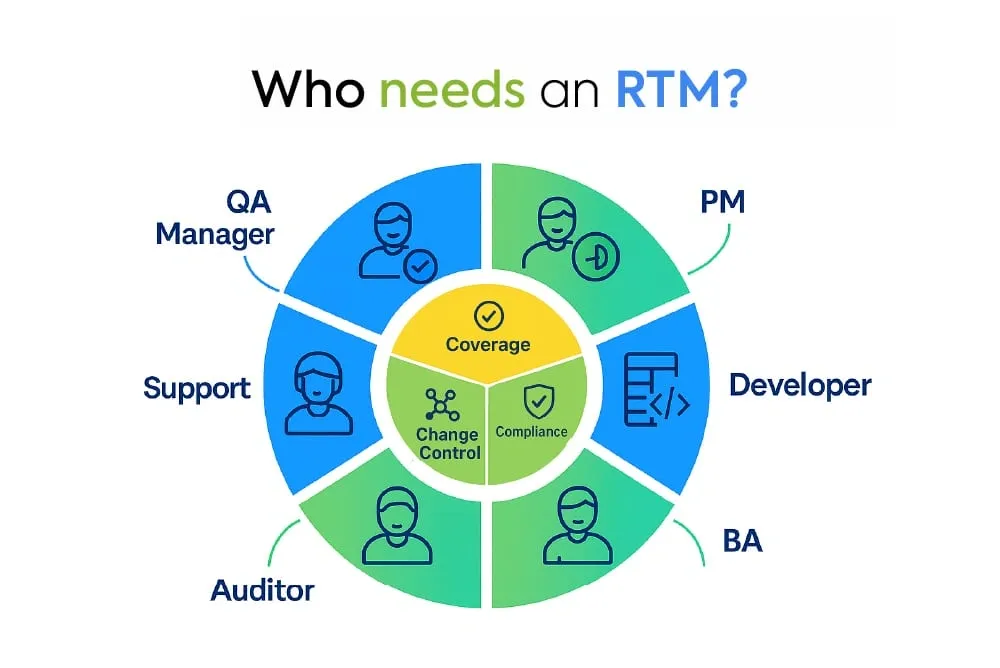
Image Source: Kualitee
Organizations need a well-laid-out approach to connect regulatory obligations with real evidence to make AI governance work. This connection goes beyond documentation. It shows clear links between regulatory requirements and what your organization can prove.
Linking Article 43 requirements to test results
The EU AI Act‘s Article 43 sets specific conformity assessment procedures that high-risk AI systems must complete before market placement. These assessments verify compliance with requirements in risk management, data governance, technical documentation, and cybersecurity controls. Your organization needs a quick way to link these regulatory mandates to implementation evidence.
You should start with a full analysis of conformity assessment requirements that apply to your AI systems. High-risk AI systems listed in points 2-8 of Annex III must follow internal control conformity assessment procedures without a notified body. Biometric systems, however, usually need external assessment.
The next step is to create direct links between requirements and testing artifacts. Your mapping should show:
- Test results that verify each requirement
- Location of evidence in your repository
- Person responsible for evidence maintenance
- Latest evidence update or verification date
Tools that map regulations automatically line up AI workflows with global frameworks like the EU AI Act and NIST AI RMF. These tools collect audit-proof evidence continuously. They scan AI systems to find regulatory obligations and map assets to regulations, creating a complete picture of all AI environments.
Creating requirement-to-evidence matrices
A requirement-to-evidence matrix gives you a clear view of compliance relationships. This traceability matrix is a table that shows connections between two sets of items for complete coverage. These matrices link regulatory requirements to specific evidence artifacts in AI governance.
Here’s how to create a requirement-to-evidence matrix that works:
- Identify source and destination items – List what you’re tracking from (regulatory requirements) and to (evidence artifacts)
- Ensure unique identifiers – Give distinct IDs to requirements and evidence artifacts
- Establish explicit relationships – Connect each requirement to its evidence completely
- Validate coverage – Check that evidence exists for every requirement
- Visualize relationships – Use colors to show strong, partial, or missing evidence
AI-powered requirements traceability works better than manual methods. These tools create traceability links automatically and make sure all requirements connect to their tests. The solutions watch for changes in requirements, tests, and designs. They update links automatically to show current information.
The matrices let you analyze impact quickly. When business requirements change, you can see every affected test case, feature, and document right away. Smart requirement mapping spots gaps by comparing new compliance requirements with existing controls.
These AI systems generate compliance reports without manual work. You get detailed traceability matrices, test logs, and verification results that prove compliance with AI governance standards.
This systematic approach to mapping AI system obligations creates clear paths from requirements to implementation. Your organization will have solid evidence of compliance that regulators and stakeholders trust.
Building a Centralized Evidence Index

Image Source: Virtasant
The life-blood of any working AI governance system is a centralized evidence index. Recent findings show organizations stay up to date by giving clear ownership to monitor regulatory and standards changes. This works best through a shared group of legal, compliance, privacy, security, and AI practitioners. Regular quarterly monitoring proves more effective than reactive updates.
Structuring the AIMS evidence register
ISO/IEC 42001 provides guidelines to create and manage an AI Management System (AIMS) that balances governance with breakthroughs. Organizations must create a “Value Register” under this framework. This register documents relevant ethical values and traces them to specific system requirements and design features. Such a value register creates the foundation of an effective evidence index.
A working AIMS evidence register needs several key elements:
- Standardized documentation – Governance teams should use consistent templates to document system summaries, risk assessments, evaluation records, and monitoring plans
- Traceability mechanisms – Every data point, summary, or calculation must link back to its source. This changes AI from a “black box” into a transparent partner
- Governance categorization – Evidence should be organized by governance domain (fairness, transparency, security) rather than document type to aid impact assessment
The AI Index shows how detailed evidence registries should be structured. Built with input from over 50 subject matter experts, it reviews companies on more than 70 individual indicators. The framework uses clear categorization that supports both internal assessment and external validation.
Your evidence register’s traceability directly shapes AI value. Industry experts put it this way: “Accuracy × Traceability × Governance = AI Value”. You can’t defend your AI outputs without clear traceability, no matter how accurate they are.
Version control and traceability best practices
Data versioning plays a vital role in AI governance by tracking and managing dataset changes over time. Good version control will give you access to every iteration of data used in training, validation, and testing. This supports both reproducibility and compliance requirements.
Here are the best versioning practices to think about for AI governance documentation:
- Define clear versioning conventions – Adapt semantic versioning for AI artifacts where major versions (1.0.0 → 2.0.0) show breaking changes, minor versions (1.0.0 → 1.1.0) represent backward-compatible improvements, and patch versions (1.0.0 → 1.0.1) fix specific issues
- Implement detailed metadata tracking – Record training parameters, dataset versions, and evaluation results with models to ensure reproducibility and contextual understanding
- Use model registries – Set up centralized repositories that store model versions, metadata, and performance metrics to track and retrieve throughout the lifecycle
- Integrate with code version control – Connect model versions with corresponding code commits to maintain traceability between source code changes and model behavior
- Document version rationales – Note why changes were needed, what problems they solve, and what improvements they bring
Teams should build traceability into their tools from the start rather than adding it during review. Early traceability speeds up both compliance and adoption.
The best organizations know their documentation needs constant updates. This ongoing work keeps evidence current and relevant as AI systems grow and regulatory expectations shift.
Integrating Evidence Maps into AI Lifecycle Workflows
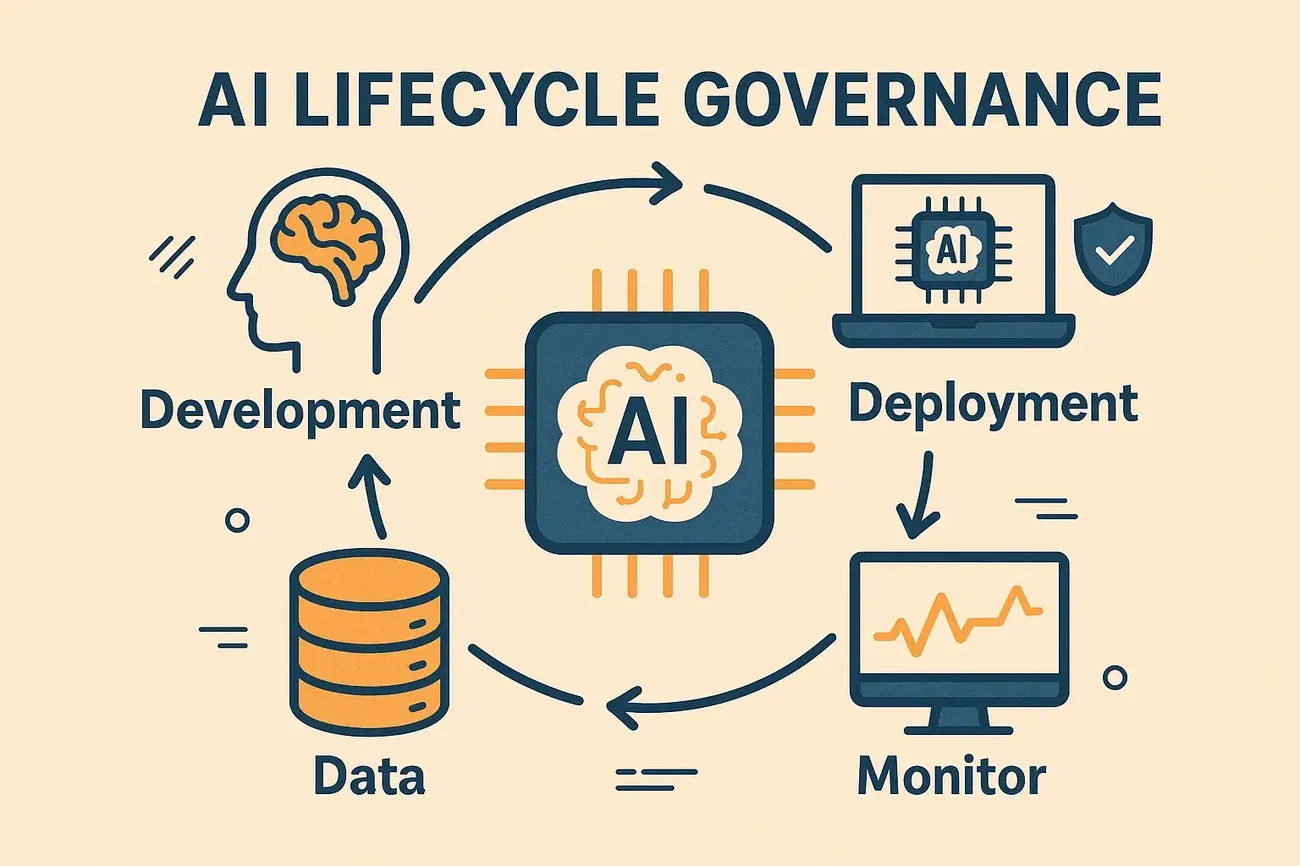
Image Source: Tech Jacks Solutions
AI development needs checkpoints built right into its lifecycle. Organizations can’t treat compliance as something separate. Evidence maps help create clear audit trails that show regulatory compliance throughout system deployment and operation.
Pre-deployment checkpoints and approvals
Pre-deployment approval gates will give a system the green light only after teams verify risk, privacy, and compliance requirements. These checkpoints let decision-makers use evidence maps to confirm all governance requirements. Organizations should take these practical steps:
Risk assessment stands at the core of practical governance. It determines the level of control needed and helps teams focus their efforts. Teams must assess risks early and update them as systems reach new users or applications, since risk profiles often shift.
Clear decision paths make operational governance work. Teams must know who can approve a system and when to escalate issues. They also need guidance to resolve disagreements. Unclear paths lead to confusion, stalled decisions, and teams working around controls just to make progress.
High-risk systems need a staged rollout. Start with shadow mode – the AI plans actions but writes to staging rather than production systems. Next comes a controlled canary deployment with small audiences (5-10%) and strict exposure limits. Each stage needs a 60-second kill-switch ready.
Post-market monitoring and incident logging
The EU AI Act’s Article 72 requires providers to set up post-market monitoring systems. These systems must actively gather and analyze AI performance data throughout the system’s life. Teams need to document relevant data systematically to show ongoing compliance.
Technical documentation must include the post-market monitoring plan. The European Commission will provide a template for this plan by February 2026.
Teams need clear plans to handle AI incidents like biased outcomes, unsafe behavior, data exposure, or regulatory issues. Good incident response needs ready-made playbooks that outline containment steps, communication protocols, and investigation procedures.
Serious incidents have specific reporting deadlines:
- 15 days maximum for any serious incident (immediately when possible)
- 10 days maximum for incidents resulting in death (immediately when possible)
- 2 days maximum for widespread infringement or critical infrastructure disruption (immediately when possible)
Organizations must start internal investigations after reporting incidents. They need to assess risks, suggest fixes, and work with market surveillance authorities. Evidence maps become dynamic governance tools through structured monitoring and incident management. They adapt and evolve throughout the AI lifecycle.
Tools and Templates for Evidence Mapping
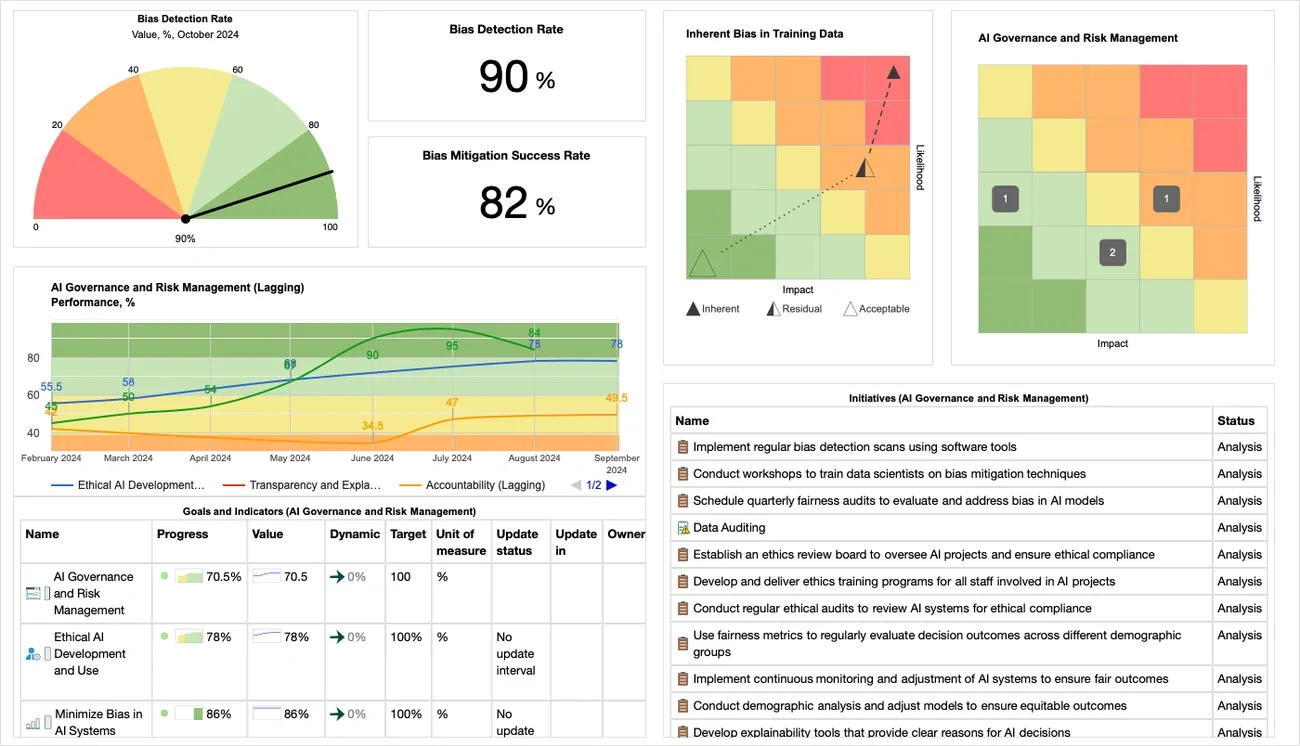
Image Source: BSC Designer
Organizations need specialized tools to make governance tangible and actionable. Model cards, lineage diagrams, and visualization platforms help teams turn abstract requirements into well-laid-out documentation that meets regulatory needs.
Using model cards and lineage diagrams
Model cards work as standardized documentation that captures everything about AI systems, similar to nutrition labels for food products. Research teams proposed these cards in 2018. These structured overviews explain how advanced AI models were designed and tested, and they are the foundations of responsible AI development. Companies that develop and deploy AI, especially generative AI, now use model cards to boost explainability and transparency.
A complete model card has:
- Model details – Information about developers, version, architecture, and license
- Intended use – Approved use cases and those outside the model’s scope
- Performance metrics – Real-life effect data and evaluation factors
- Training data – General description of data provenance and statistical distribution
- Ethical considerations – Privacy, fairness, and societal effect concerns
Data lineage tracking provides vital visibility into data flow through AI systems. This process documents data’s origin, changes, and final destination. Organizations can verify accuracy and maintain consistency as systems evolve by modeling relationships between data elements.
Open-source tools for visualizing control mappings
Organizations now turn to specialized visualization tools to put evidence mapping into practice. The AI governance market’s value ranges between $227-340 million in 2024-2025, showing the rising need for these solutions.
Open-source options give teams affordable starting points to build governance capabilities. These options usually take more work to integrate than commercial platforms. The International Association of Privacy Professionals (IAPP) maintains a collection of AI governance resources. Their collection includes tools to verify neural models’ training data and toolkits that help navigate evolving standards.
Good tools work through continuous cycles of finding, assessment, monitoring, and enforcement. These platforms solve the biggest problem in AI governance—fragmented systems. They provide unified visibility across AI assets and work with existing compliance infrastructure.
Teams should review tools based on six core functions:
- AI model registry capabilities
- Risk assessment features
- Policy management options
- Monitoring mechanisms
- Compliance reporting
- Integration with existing systems
Commercial or open-source solutions serve one purpose: they turn scattered documentation into coherent evidence maps that show regulatory compliance.
Common Pitfalls and How to Avoid Them

Image Source: TEAM Solutions
Organizations with AI governance programs face major hurdles that can make them less effective, even with good design. Companies need to understand these common mistakes to stay compliant and avoid governance failures.
Scattered evidence in systems
AI models multiply faster than regular IT assets, leading to “AI assets sprawl”. Business units create multiple versions of models in isolation without central tracking, resulting in “model sprawl”. Teams cannot enforce security standards uniformly – one group might use strong authentication while another leaves systems exposed.
This usually happens through “shadow AI” when teams build models without getting Security and IT approval. Each hidden model could trigger fines and damage the company’s reputation.
A central registry helps track model versions, ownership, and discovery. Book a Readiness Call to check your risk level and create strategies to handle AI sprawl.
Surface-level governance without real reviews
Companies often create “Compliance Theater” with impressive documents but fail to control AI systems. This happens when teams focus on meeting regulations instead of managing real AI risks.
You can spot this problem when governance rarely changes AI systems and committees meet without making real decisions. The situation turns into “governance by PDF”.
Technical experts who know AI operations should be part of your governance team to avoid rules that sound good but don’t work. Human operators need to stay skilled enough to provide real oversight as AI automation grows.
Conclusion
Evidence mapping plays a central role in AI governance in 2026. Organizations must adapt to a major transformation – regulatory frameworks have evolved beyond voluntary guidelines into binding requirements with serious consequences. The widening gap between AI adoption and governance maturity needs immediate attention as regulators worldwide increase their scrutiny.
Effective evidence maps turn abstract principles into clear controls. They create links between regulatory requirements and your organization’s proof of compliance. Smart organizations don’t see governance as just paperwork – they weave it into the entire AI lifecycle. They set up clear checkpoints before deployment and monitor progress afterward.
Governments continue to respond to rapid AI advances, making regulations more complex. Companies that lack systematic evidence mapping won’t be ready for audits. They risk heavy fines and damage to their reputation. A proactive approach to mapping helps allocate resources better and gives you an edge through proven trustworthiness.
The process might look overwhelming at first. This piece outlines practical approaches – from requirement-to-evidence matrices to centralized indexes – that lead to governance maturity. Expert guidance often helps during this transition. Book a Readiness Call to evaluate your current evidence mapping capabilities and create a tailored plan for your AI governance needs.
Evidence mapping isn’t just about compliance – it’s a strategic investment. Companies that become skilled at this will thrive in the evolving AI regulatory landscape. They build stakeholder trust through clear, accountable AI practices. Now is the time to close the governance gap, before regulations, market forces, or incidents force reactive decisions instead of strategic ones.
FAQs
Q1. What is an AI evidence map and why is it important for governance? An AI evidence map is a systematic visualization that connects regulatory requirements to specific compliance artifacts. It’s crucial for AI governance as it helps organizations identify gaps in compliance, engage stakeholders, provide comprehensive coverage of obligations, and visually represent complex regulatory relationships.
Q2. How does ISO/IEC 42001 contribute to AI governance? ISO/IEC 42001 is the world’s first certifiable AI management system standard. It provides a structured approach to AI governance using the Plan-Do-Check-Act (PDCA) methodology, helping organizations operationalize legal requirements through familiar processes and integrate AI controls into existing audit frameworks.
Q3. What are some best practices for version control in AI governance? Key version control practices include defining clear versioning conventions, implementing comprehensive metadata tracking, utilizing model registries, integrating with code version control systems, and documenting version rationales. These practices ensure traceability and reproducibility throughout the AI lifecycle.
Q4. How can organizations avoid “evidence sprawl” in their AI governance? To combat evidence sprawl, organizations should establish a centralized registry for model discovery, version control, and ownership tracking. This helps prevent the uncontrolled proliferation of AI models across business units and ensures uniform security enforcement and regulatory compliance.
Q5. What are the risks of “paper-only” governance in AI systems? Paper-only governance, or “Compliance Theater,” occurs when organizations create extensive documentation without actually constraining AI behavior. This approach fails to manage real AI risks and can leave organizations vulnerable to regulatory violations. To avoid this, integrate technical experts into governance frameworks and ensure human operators maintain meaningful oversight capabilities.