Centralized Controls, Automated Evidence and Managed Compliance Operations
Most compliance programmes fail on maintenance rather than on design. Controls are documented once, evidence is collected under deadline pressure, and the position degrades quietly between audits until someone rebuilds it. Compliance as a Service combines a platform that centralizes controls, evidence and monitoring with practitioners who run the lifecycle, so the programme holds its position across frameworks including SOC 2, ISO 27001, HIPAA and GDPR rather than being reassembled each cycle.
PODUCTS · AI GUARDIAN
What the platform changes

Evidence collected continuously beats evidence assembled
Evidence of control operation accrues on calendar time. A control configured last week and one configured nine months ago produce the same screenshot and very different defensibility, and no amount of pre-audit effort recovers the gap.
One control, several frameworks
Most of the overlap across SOC 2, ISO 27001, HIPAA and privacy regimes sits in access control, logging, change management, vendor management and incident response. Mapping once and collecting once is where the cost difference between a sequential and a unified programme appears.
Managed, not self-serve
The platform centralizes and automates. Elevate practitioners run the lifecycle: the reviews that catch drift, the decisions the automation cannot make, and the judgment about what an auditor will accept.
A note on naming
Elevate also offers CMMC Compliance as a Service, which is a distinct engagement focused on the defence contractor obligations, the SPRS score and the annual affirmation. The platform described here is framework-agnostic. Confirm which one a prospect is asking about early in the conversation.
WHAT IT IS
Platform plus practitioners
Compliance as a Service streamlines and automates compliance management so an organization stays current with standards including SOC 2, ISO 27001, HIPAA and GDPR without the workload falling entirely on an internal team that has other work.
The distinction from a self-serve compliance tool is the practitioners. A platform can flag that evidence is stale. It cannot decide whether the control still matches the environment, whether the auditor will accept the artifact, or what to do when a business change moves the boundary.
The recurring problems are specific: tracking the lifecycle of models through retraining and decommissioning, managing use cases with different compliance obligations, keeping pace with frameworks that change on their own schedule, and handling ethical concerns in a way that produces a record.
KEY FEATURES
Centralization, automation and oversight
The features that matter are the ones that reduce recurring manual work without removing the judgment that makes the output defensible.
Centralized compliance dashboard
SINGLE VIEW
Full visibility into compliance activities, with documents, controls and metrics in one place rather than distributed across owners and drives.
Continuous monitoring
REAL TIME-STATUS
Up-to-date compliance status so issues are addressed before they escalate into findings, rather than discovered during preparation.
Pre-built frameworks and templates
FASTER START
Customizable frameworks and policy templates designed by practitioners, which shortens implementation and gets an organization audit-ready sooner.
Automated evidence collection
INTEGRATIONS
Automation of portions of the compliance lifecycle, including integrations for evidence collection, which removes the recurring manual pull that consumes the most time.
Risk assessment and register
BUILT IN
Identify, assess and manage risk with a register that connects risks to the controls treating them, rather than living as a separate document.
User and workflow management
GRANULAR CONTROL
Permissions so the right people reach the right information, with workflows that keep compliance activities completing on schedule.
WHY ORGANIZATIONS CHOOSE IT
What changes operationally
The value is measured in what stops happening: the quarterly scramble, the duplicated evidence request, the control nobody owned, the audit finding that surprised everyone.
Expert compliance management
Practitioners manage the compliance lifecycle, reducing the repetitive workload on your team and supplying the judgment the platform cannot: whether a control still matches the environment and whether an auditor will accept the artifact.
Audit readiness and reporting
Audit-ready reports and preparation, structured for the specific framework and the specific auditor rather than exported generically.
Cross-framework mapping
Map controls once across the frameworks in scope so evidence is collected once and answers several requirements, which is where the saving actually lands.
Change management
Identify when a business, technology, staffing or provider change affects scope, controls or evidence, before it affects an audit.
Integration with existing tools
Advisory assessment of AI-related processes, with findings recorded against the use cases in the register rather than delivered as a separate report that ages.
Scalable coverage
Add frameworks as regulatory responsibility grows, without rebuilding the control set each time a new obligation arrives.
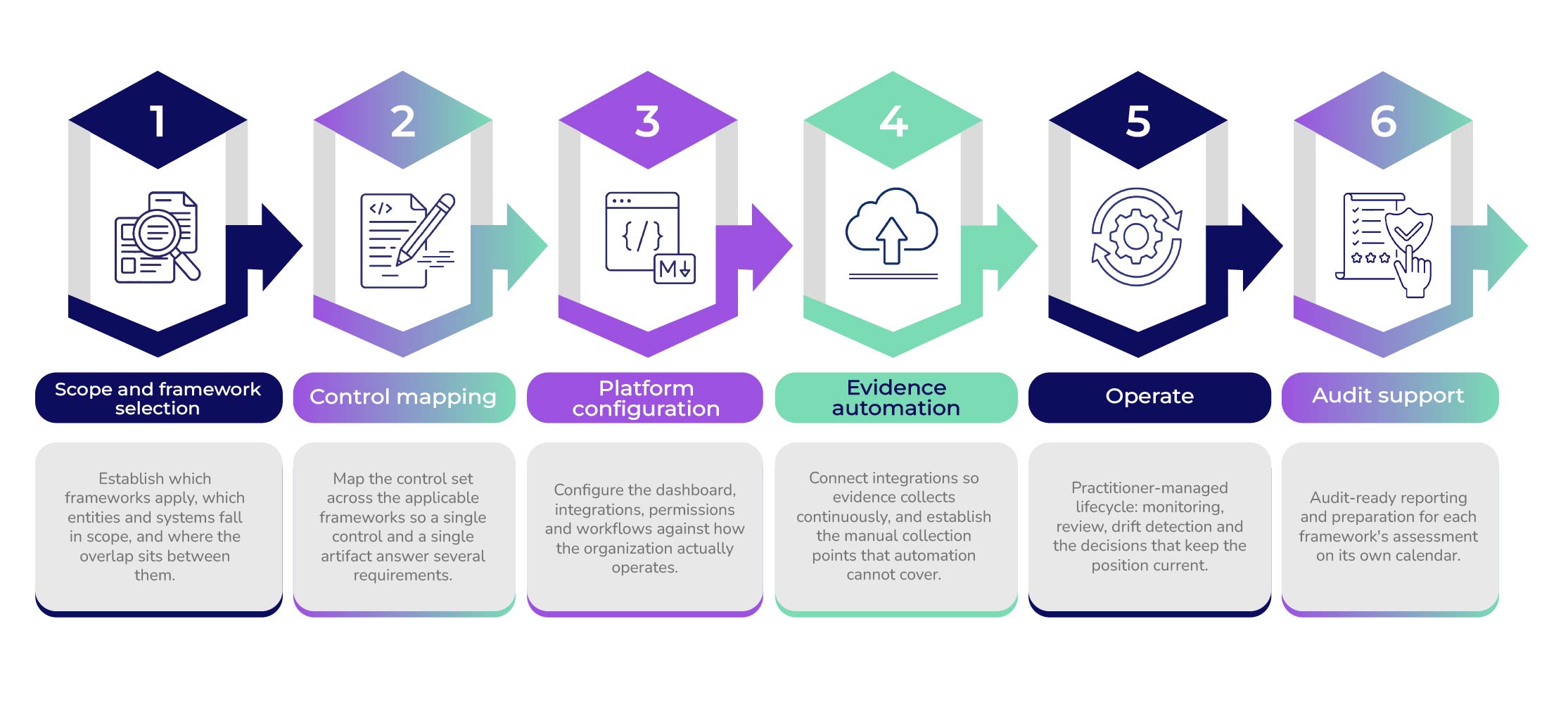
ENGAGEMENT PHASES
How the Work Runs
SEE IT IN ACTION
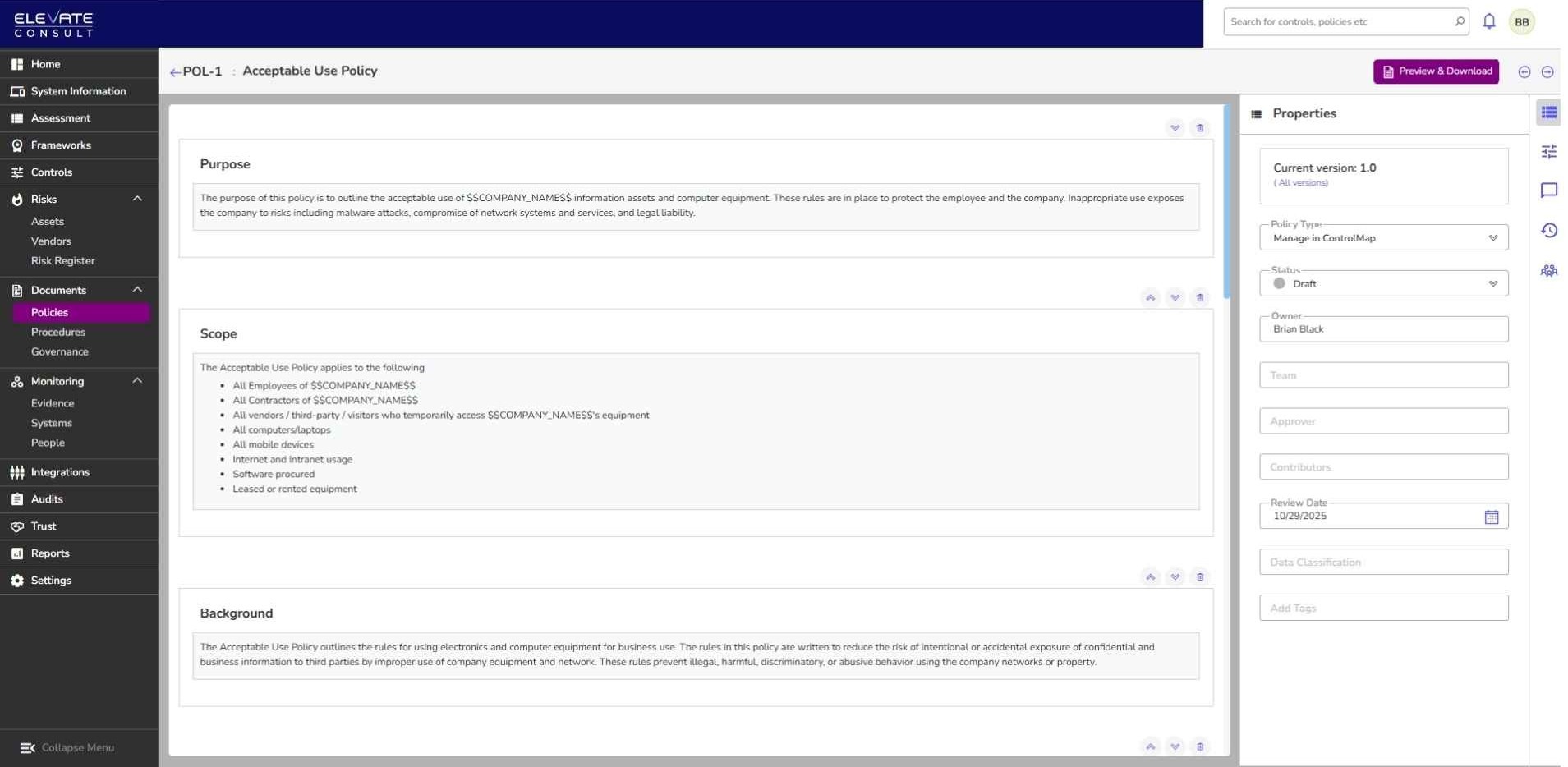
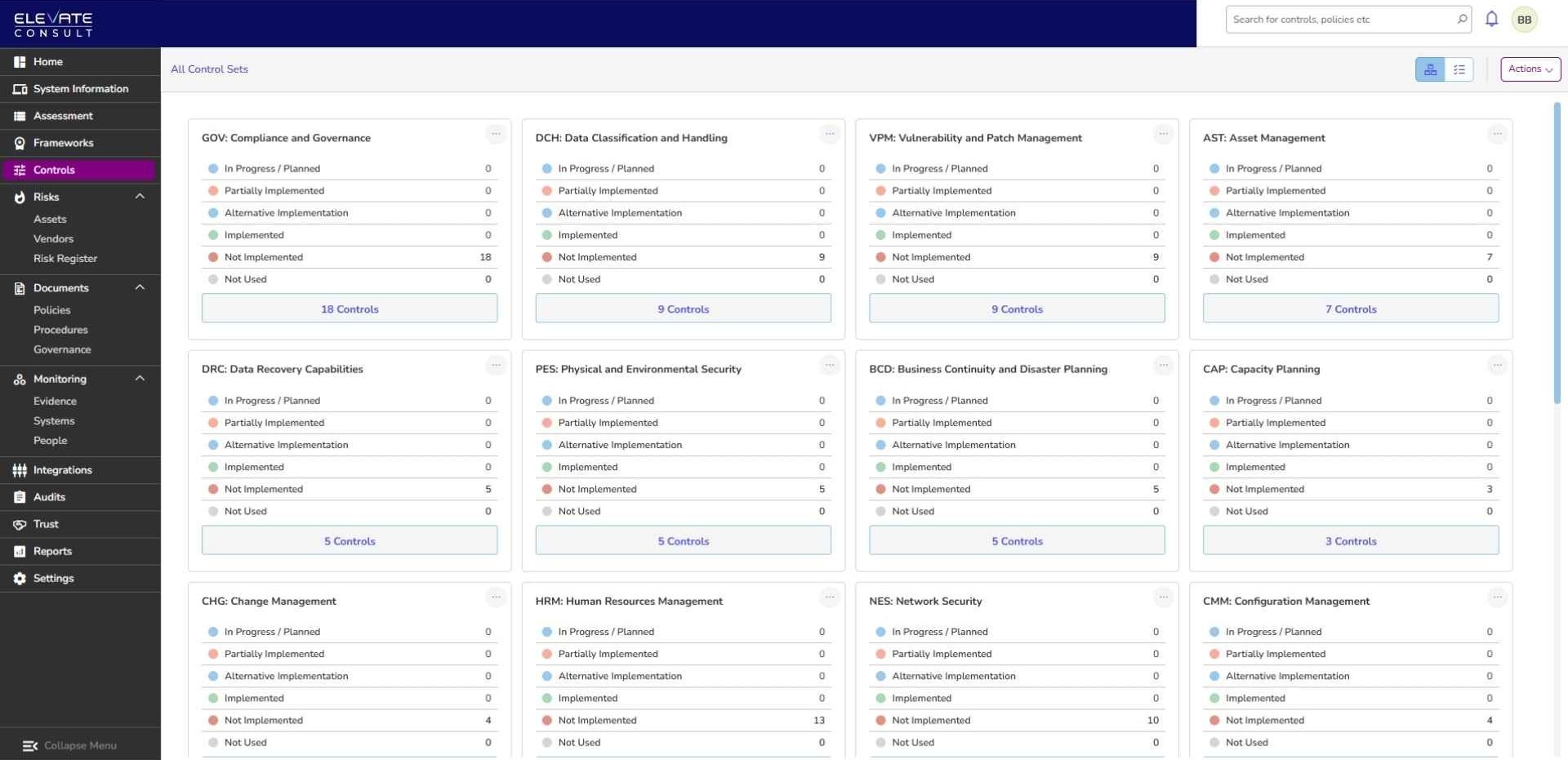
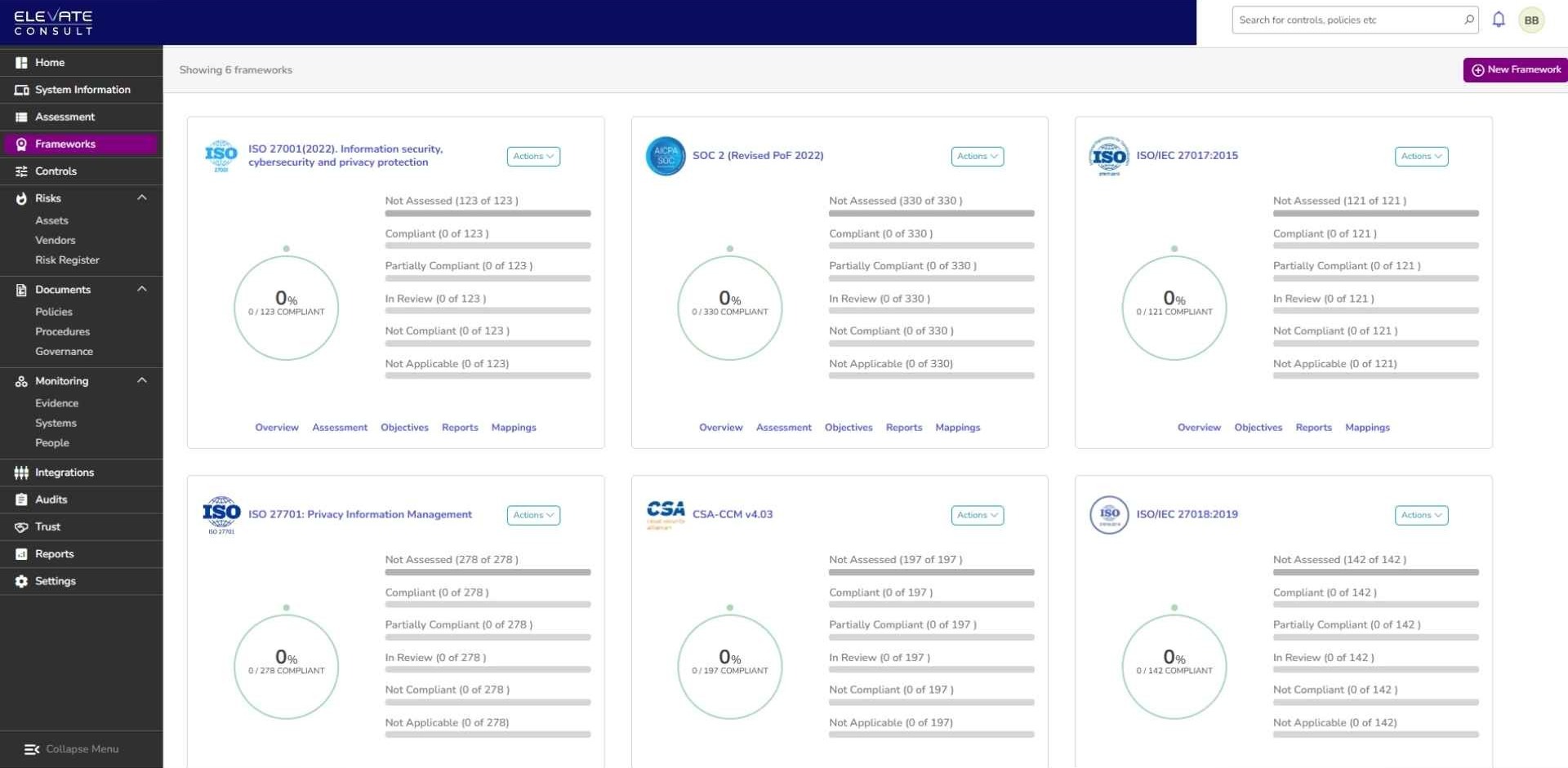
Product screens
Replace each slot with a product screenshot now, and with a short video demo when recordings are available. Buyers evaluating a platform want to see the interface before a call.
WHO THIS IS FOR
Roles Elevate works with on this Standard
+ CISOs and security leads
+ Compliance and GRC officers
+ CFOs and operations leaders
+ SaaS and cloud providers
+ Organizations carrying multiple frameworks
+ Teams without a dedicated compliance function
GET STARTED
Ready to stop rebuilding your compliance position?
Elevate combines the platform that centralizes your controls, evidence and monitoring with practitioners who run the lifecycle, so the programme holds between audits instead of being reassembled before each one.
FAQ
Common Questions
🡪 What frameworks does the platform cover?
Standards including SOC 2, ISO 27001, HIPAA and GDPR, with additional frameworks added as regulatory responsibility grows. The value is in the mapping: most of the overlap across frameworks sits in access control, logging, change management, vendor management and incident response, so one control and one artifact answer several requirements.
🡪 How is this different from a compliance automation tool?
The practitioners. A platform can flag that evidence is stale or a control is unmapped. It cannot decide whether the control still matches the environment after an architecture change, whether an auditor will accept a particular artifact, or what a business change means for scope. Compliance as a Service combines the platform with the people who make those calls.
🡪 Is this the same as CMMC Compliance as a Service?
No. CMMC Compliance as a Service is a distinct engagement focused on defence contractor obligations, the SPRS score and the annual senior official affirmation. The platform described here is framework-agnostic and covers commercial standards. They share a name and not much else, so establishing which one is in question early avoids a confusing conversation.
🡪 Does automation replace our compliance team?
No, it redirects them. Automation removes the recurring manual work of evidence collection and status tracking. What remains is the judgment work: scope decisions, control design, auditor negotiation and the response when something changes. Teams that automate the first usually find they had no time for the second.
🡪 Can it integrate with our existing tools?
Yes. The platform integrates with many existing systems so relevant data is collected automatically, which reduces manual entry and keeps evidence current rather than assembled. Integration scope is part of the configuration conversation because it determines how much of the lifecycle can actually be automated.
🡪 How does it help with audits?
Through preparation rather than at the moment of the audit. Continuous evidence collection means artifacts exist with the dates an auditor needs, cross-framework mapping means one artifact answers several requests, and audit-ready reporting produces the output in the form the assessment expects. The audit gets easier because the year before it was different.