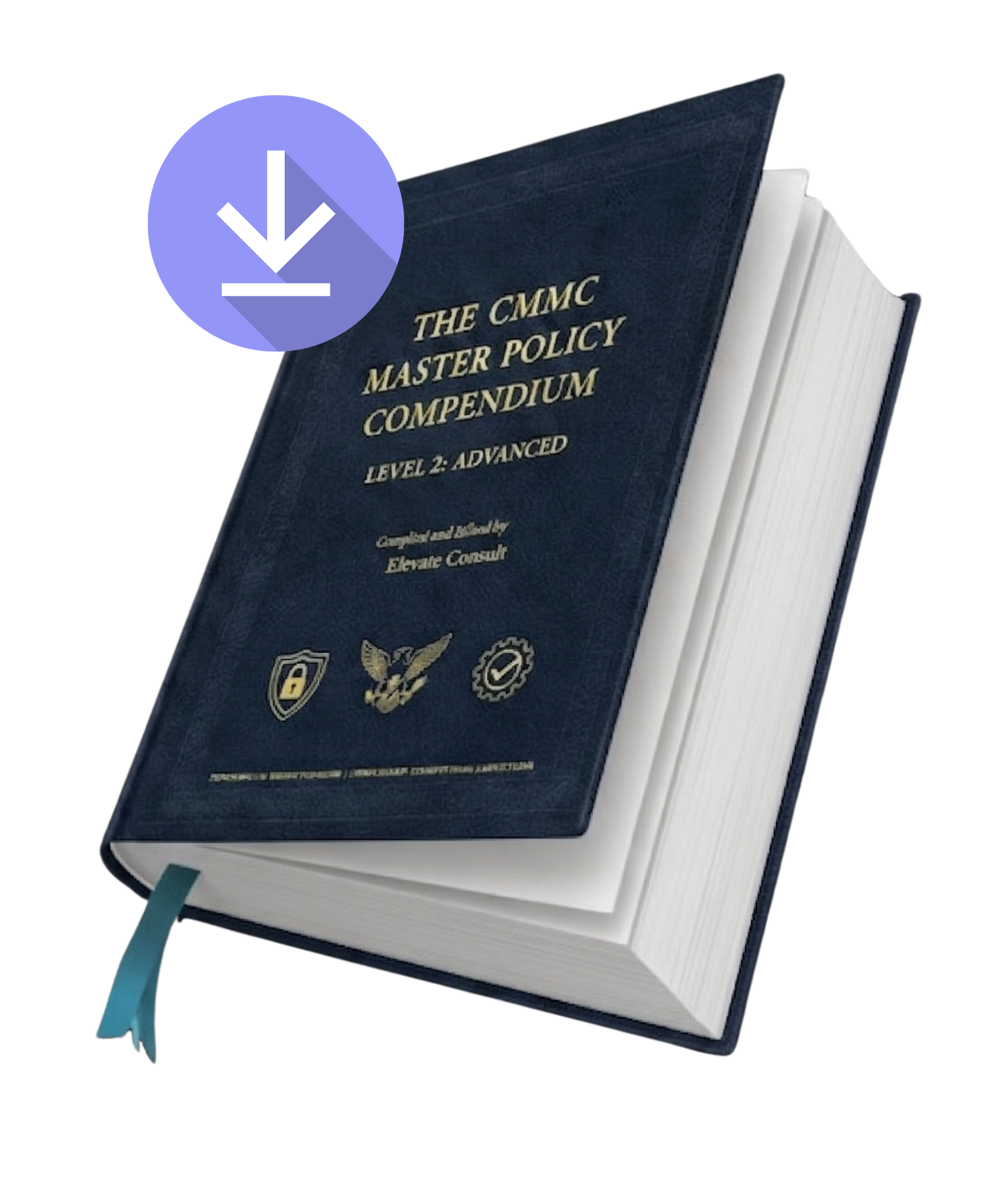
The CMMC Master Policy Compendium (Level 2)
Stop rebuilding “audit-ready” policies from scratch. Start with a full policy library mapped to CMMC Level 2 domains.
Use it like a toolkit, not a novel: implement domain-by-domain, at your pace.
Built to be customized: swap placeholders like [org] / [ID] with your details and standardize your posture fast.
Designed for audit reality: auditors look for documentation and that it’s operationalized.
CMMC Level 2 readiness stalls when policy isn’t standardized.
Most teams don’t fail because they don’t “know” the controls. They stall because:

![]()
Policies are scattered, inconsistent, or written in different voices.

![]()
Control owners can’t tell what “Done” looks like (or what evidence is required).

![]()
You have documentation, but it isn’t institutionalized across people, process, tech, and facilities.
This compendium is built to solve that specific bottleneck: a single, centralized policy library you can tailor and operationalize.
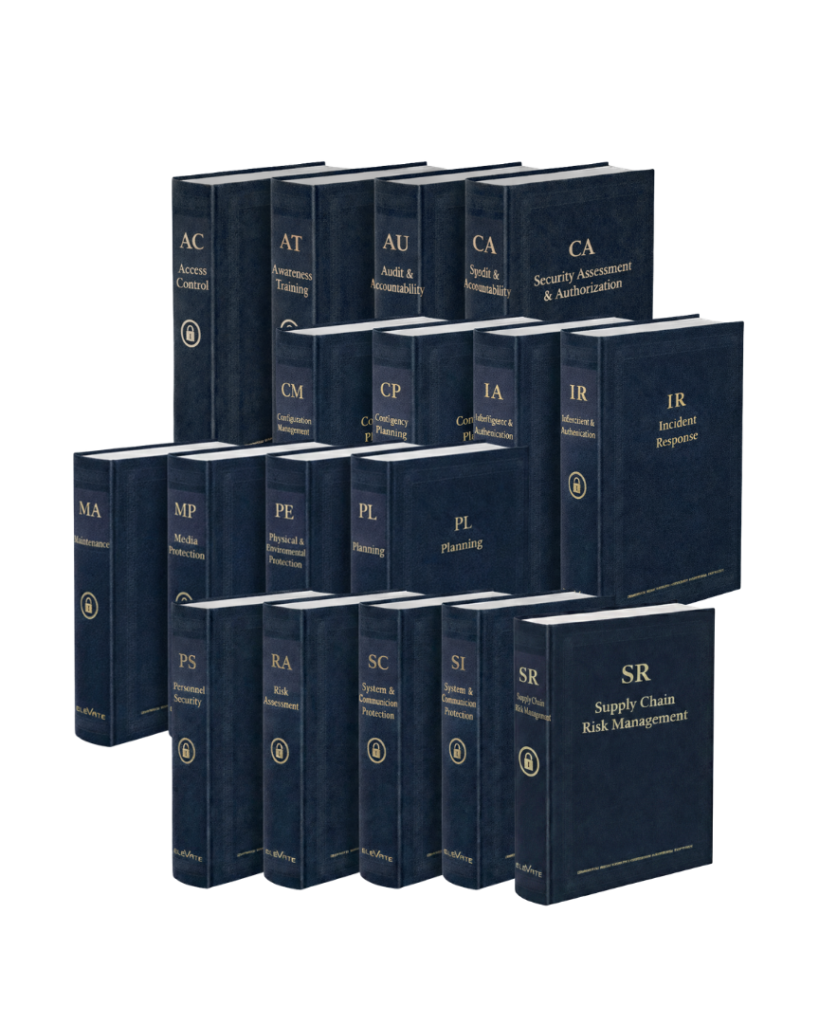
A complete CMMC Level 2 policy library in one place.
This compendium consolidates 17 distinct Policy Playbooks into one central resource so you can gain visibility over your compliance posture and accelerate readiness.
What it includes
- Coverage across the full set of CMMC Level 2 domains (see the full list below).
- Policies designed to support handling of FCI/CUI at CMMC Level 2 scope.
- “Evidence” guidance embedded throughout (what artifacts you should be able to produce). (Example evidence lists appear across domains.)
All 17 CMMC Level 2 domains, compiled
Inside, you’ll find policy playbooks for:
AC — Access Control
AT — Awareness Training
AU — Audit & Accountability
CA — Security Assessment & Authorization
CM — Configuration Management
CP — Contingency Planning
IA — Identification & Authentication
IR — Incident Response
MA — Maintenance
MP — Media Protection
PE — Physical & Environmental Protection
PL — Planning
PS — Personnel Security
RA — Risk Assessment
SC — System & Communications Protection
SI — System & Information Integrity
SR — Supply Chain Risk Management
Plus, Review Cadences to keep your program current.
Policy language you can operationalize
Examples of the kind of specificity inside:
- Session/device lock expectations (e.g., lock after inactivity) and how it’s implemented.
- Remote access controls including MFA, encryption expectations, and monitored access points.
- Audit log protection principles (protecting logs, retention, and handling sensitive data).
(This is why CISOs like it: it’s not vague policy fluff, it’s policy built to stand up in real assessments.)
Use it as a modular toolkit (not a 190+ page read-through)
The compendium is meant to accelerate readiness domain by domain.
Implementation principles:
Modular structure: tackle one domain at a time.
Customization is required: replace placeholders like [org] / [ID].
Policy vs. practice: auditors verify it’s institutionalized, not just written.
Treat it as a living document: update as your environment changes.
Red-highlighted items require org-defined frequencies: your organization must define/approve/document these per NIST SP 800-171 Rev. 3 & DoD guidance.
Built for security leaders responsible for CMMC Level 2 outcomes
This is for you if you’re:

A CISO / Head of Security / Security Program Owner

Responsible for policies covering people, operations, technology, and facilities tied to handling FCI/CUI at Level 2.

Trying to eliminate policy sprawl and align control owners quickly.
FAQs
Is this meant to be copied/pasted as-is?
It’s designed as a certification-ready framework that must be customized to your org (placeholders like [org], [ID]).
Will this alone pass an audit?
Policies are the first step, but auditors verify the policies are distributed, understood, and practiced.
How should we implement without boiling the ocean?
Use it domain-by-domain. You don’t need to implement all 120+ pages at once.
What are the “red” items?
They’re organization-defined frequency parameters that must be defined, approved, and documented per NIST SP 800-171 Rev. 3 and DoD guidance.
How often should policies be reviewed?
Policies in the compendium commonly call for review at least annually or after significant changes.