
AI governance has emerged as a crucial concern for business leaders since 57% of companies using AI at scale now consider ethical, safety, or regulatory risks their biggest barrier to growth. Organizations must now take a different approach to artificial intelligence implementation as regulatory oversight grows stronger. The numbers tell an interesting story – 90% of U.S. insurers are learning about generative AI, and 55% already use these technologies.
AI governance creates a framework of rules, processes, and guidelines that verify AI systems are built, used, and managed responsibly. C-Suite leaders need to understand that building reliable AI governance frameworks isn’t just an option anymore – it’s vital for business survival. The financial risks are significant. A data breach costs $4.45 million on average in 2023, showing a 15% increase in three years. Algorithmic errors spread 11 times faster in automated workflows compared to human-led processes. These facts demonstrate why AI ethics and governance should drive our technology strategies.
This piece examines the changing regulatory environment, including the EU AI Act’s risk-based system with heavy penalties for non-compliance. More than 24 U.S. states have adopted the National Association of Insurance Commissioners’ updated Model Bulletin. Your leadership team will find practical frameworks, tools, and strategies to build enterprise AI governance that creates trust while fostering breakthroughs.
AI Governance in 2025: Why the C-Suite Must Act Now
“With great power comes great responsibility.” — Peter Parker (Spider-Man), Fictional character representing ethical technology use principles
Business leaders have made AI their top priority. A remarkable 85% of C-suite executives believe AI will revolutionize their businesses in the next five years. Digital transformation (82%), streamlined processes (64%), and AI implementation (62%) now rank higher than traditional goals like revenue growth and cost reduction. These numbers show why leadership teams need to focus on AI governance right now.
AI adoption in insurance, finance, and healthcare
The insurance sector leads the pack in AI adoption compared to other industries. Almost every insurer has started using AI in some way. Yet many executives admit their companies aren’t fully AI-native. The results speak for themselves – insurance companies that excel at AI have generated 6.1 times more shareholder returns than their slower competitors over the last five years.
Financial institutions can’t ignore how AI changes the way money moves and decisions happen every day. Chief Risk Officers play a crucial role in proper AI governance. They must balance AI’s benefits against risks like bias, regulatory fines, and damage to reputation.
Healthcare has surprisingly become the new frontrunner in enterprise AI adoption. The sector uses AI at more than double the rate of other industries. About 22% of healthcare organizations already use specialized AI tools – seven times more than in 2024 and ten times higher than 2023. Health systems show the highest adoption at 27%, with outpatient providers at 18% and payers at 14%.
Regulatory pressure from NAIC, EU AI Act, and state laws
The National Association of Insurance Commissioners (NAIC) is creating a groundbreaking AI Model Law. This law aims to ensure fairness, transparency, and accountability throughout the insurance industry. Insurers must prove their AI initiatives are accountable and explainable from start to finish.
The EU AI Act stands as one of the world’s strictest AI regulations. It prohibits certain AI uses and sets tough rules for “high-risk” AI applications in healthcare, policing, and employment. Any company offering AI products or services to Europeans must comply or face hefty fines. Each member state needs to appoint national authorities and create enforcement rules.
Change from IT-led to board-led governance
The way organizations make AI decisions has changed dramatically. C-suite executives now handle nearly half of all AI decisions. CEOs control 22.8% while CTOs manage 21.7% of AI decision-making. C-level executives together make 76.7% of all AI decisions, showing AI’s strategic importance.
This marks a big departure from traditional tech governance. CIOs still hold significant influence at 14.4%. The rise of specialized AI roles and strong CEO involvement shows companies are building new frameworks specifically for AI initiatives. Boards have started to understand their role in AI governance:
- Just 8% of boards don’t work with management on AI at all – down 5% from last year
- Company readiness has improved – 31% say they’re not ready for AI compared to 41% last October
- About 40% of companies now experiment with AI – up from one-third last year
We have a long way to go, but we can build on this progress. Two-thirds of board members and executives still know little about AI. On top of that, AI doesn’t fit well into existing committee structures because it touches technology, risk, cybersecurity, audit, ethics, and strategy.
The message to C-suite leaders couldn’t be clearer: AI governance goes beyond compliance. It’s essential for operational resilience, consumer protection, and maintaining reputation.
Understanding the Regulatory Landscape for AI Governance
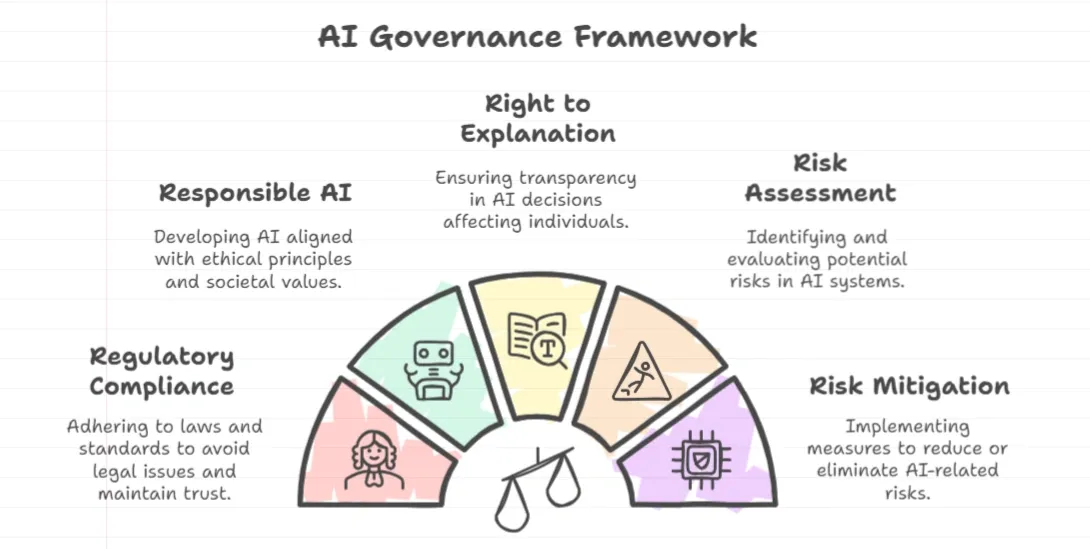
Image Source: Medium
AI governance regulations have moved from voluntary guidelines to mandatory compliance frameworks in many jurisdictions. Companies must now follow written and active regulatory expectations that are expanding faster, leaving executives little room for interpretation.
NAIC Model Bulletin and state-level mandates
The National Association of Insurance Commissioners (NAIC) released its updated Model Bulletin on artificial intelligence use in insurance operations in 2024. More than 24 U.S. states have adopted this regulatory framework as of mid-2025. The bulletin requires insurers to:
- Define AI use cases in writing
- Document model risks
- Maintain explainability standards
- Conduct bias audits
- Assign C-suite ownership
Many states have put stricter requirements in place. Colorado now asks insurers to report algorithm influence on premium pricing and denials. New York demands transparency in underwriting models that use inferred attributes. Connecticut requires internal audit mechanisms for AI-driven claims decisions. California regulators now match bias testing documentation against actual model behavior during random inspections.
Insurers must follow practices that prevent AI systems from causing unfair trade practices, as the Model AI Bulletin builds on the Unfair Trade Practices Act and the Unfair Claims Settlement Practices Model Act.
Explainability and auditability requirements
Explainability stands as the life-blood of AI governance in regulatory frameworks. The EU AI Act groups AI applications by risk level: unacceptable risk AI (banned outright), high-risk AI (subject to strict regulation), and limited & minimal risk AI (lower compliance requirements).
These frameworks require AI-driven profiling and automated decisions to be explainable, customers should know why they were denied services like loans. The EU’s General Data Protection Regulation also demands transparency when AI systems use personal data.
ISO/IEC 42006 sets specific requirements for bodies that audit and certify organizations implementing AI management systems. This standard tackles unique challenges in ethics, data quality, risk assessment, and transparency. It will give auditors specialized knowledge to perform credible and consistent evaluations.
C-suite accountability in AI-driven decisions
Recent regulatory developments have pushed accountability straight to the C-suite. A Delaware ruling makes executives—including Chief Risk Officers, Chief Marketing Officers, and Chief Data Analytics Officers, personally liable for data quality and governance failures.
Executives who approve AI systems face direct scrutiny. The C-suite bears responsibility for compliance failures when algorithms wrongly deny coverage or discriminate based on ZIP code proxies, not just vendors or data science teams. Organizations risk fraud claims, shareholder lawsuits, and regulatory scrutiny from poor data governance.
Smart organizations don’t just ask whether they can automate a decision. They ask: “Who is willing to be accountable for automating this decision—with their name, reputation, and maybe even their job on the line?”. This view turns AI governance from a technical task into a strategic business decision with clear executive ownership.
Embedding Oversight in High-Risk AI Use Cases
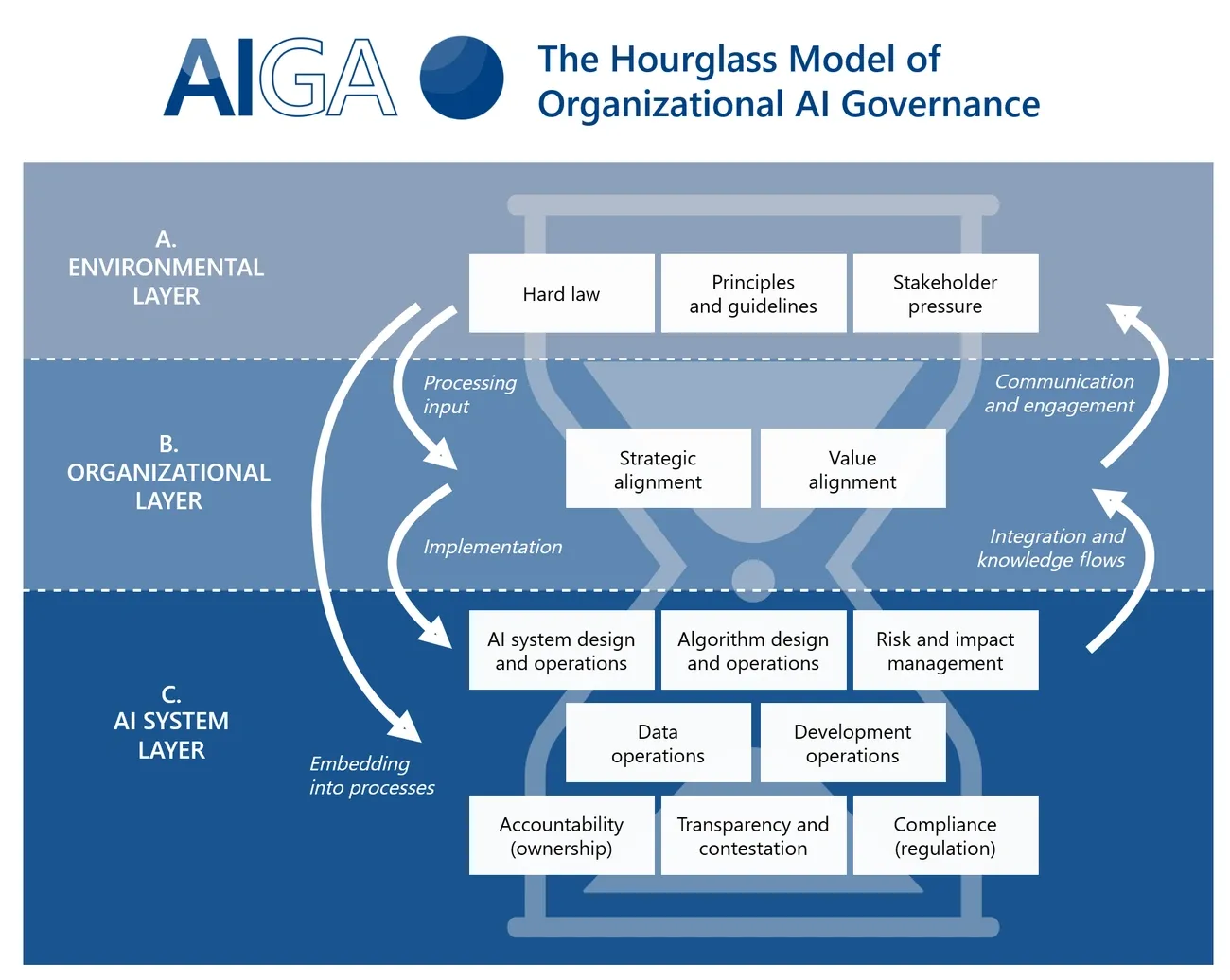
Image Source: Northwest AI Consulting
AI governance plays a vital role when we look at specific high-risk scenarios where automated decisions affect consumers directly. Good oversight needs a deep grasp of what these systems can do and where they might go wrong in each use case.
Claims triage and underwriting automation
Insurance companies now use AI for claims triage to fix the inefficiencies that cause delays, waste resources, drive up costs, and create fraud risks. Modern AI systems can predict how severe claims will be by looking at past data. They find specific patterns that help forecast how future claims might unfold and help cut down both processing time and costs. AI-powered tools use complex algorithms throughout the underwriting process. These tools interpret data better than manual methods and give risk-based suggestions while keeping detailed records.
Fraud detection and proxy discrimination risks
While AI helps catch fraud better, organizations face a big challenge with proxy discrimination. This happens when AI systems find variables that act as stand-ins for race, gender, or other protected groups, even though they don’t directly measure these traits. An insurance algorithm might not look at race directly but could use zip codes or education data that closely ties to racial demographics. This creates the same discriminatory results. A Massachusetts Attorney General settlement showed how variables like cohort default rate (CDR) unfairly affected Black and Hispanic loan applicants. These variables predict outcomes well not because they actually cause risk, but because they link to protected characteristics.
Human override and audit trail protocols
Human oversight becomes essential in high-risk AI applications. The EU AI Act states that high-risk AI systems “be designed in a way that allows humans to effectively oversee them”. This oversight helps prevent risks to health, safety, and basic rights. A working system needs:
- Clear rules about when humans should check or override AI decisions
- Written explanations for overriding AI suggestions
- Regular checks for model drift and performance issues
- Detailed records of every decision step
The EU requires at least two qualified people to verify certain high-risk identification systems before taking action. Organizations should know that just adding humans to the process won’t guarantee better results without proper training and the power to question AI recommendations.
Building a Strong AI Governance Framework
A well-laid-out framework with four key components helps organizations implement AI responsibly. These components work together seamlessly.
Explainable AI (XAI) for decision transparency
XAI marks a radical alteration from black-box algorithms to transparent systems that stakeholders can understand and trust. Yes, it is crucial now that organizations see how transparent AI builds stakeholder confidence. XAI makes decision processes clear. This improves interpretability for non-technical stakeholders and creates accountability through traceable outcomes.
Bias detection and model drift monitoring
Model drift can seriously degrade AI performance as relationships between inputs and outputs evolve. Teams must monitor systems continuously because undetected drift creates incorrect predictions. This can have serious business effects, particularly in critical applications like fraud detection. Teams use statistical tests like Kolmogorov-Smirnov and Population Stability Index to spot when and why AI models stray from their original training.
Human-in-the-loop checkpoints for critical workflows
Human-in-the-loop (HITL) implementation adds vital safeguards by placing human judgment at key decision points. This design pattern lets humans verify potentially high-impact actions before execution. Book a Readiness Meeting to evaluate your organization’s HITL implementation strategy.
Third-party audits and board-level reviews
Independent assessments confirm AI compliance with governance frameworks. Audit committees must go beyond regulatory checkboxes. They need to identify high-risk models and take a closer look at these systems. These reviews confirm that high-risk models have proper controls for development, validation, and monitoring.
Executive Roles in AI Governance: A C-Suite Playbook
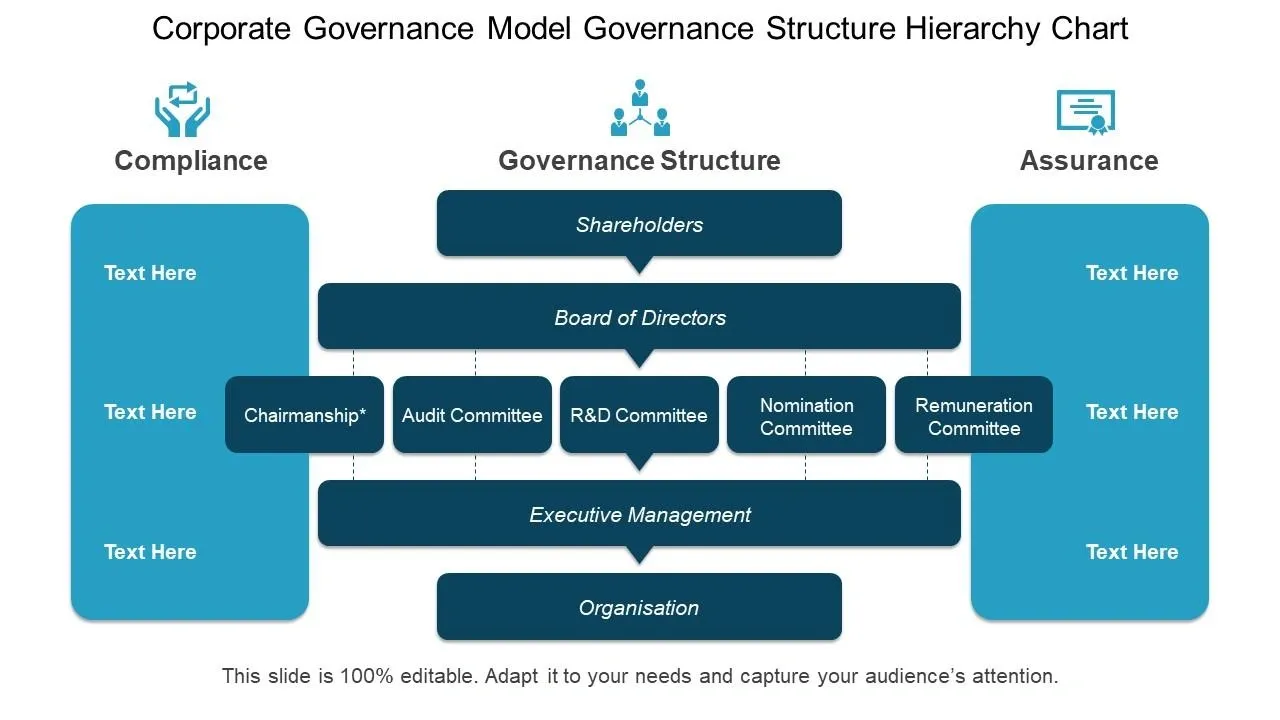
Image Source: SlideTeam
AI governance needs clear role definitions across the C-suite. Each executive owns specific responsibilities in the framework.
CEO: Arranging AI with corporate values
CEOs must position AI governance among core issues like profitability and ESG on their agenda. AI deployed without sufficient governance represents a material risk, and CEOs set the tone for responsible implementation. We focused on expressing how AI principles match corporate purpose and values, while designating accountable leaders to execute the strategy. CEOs should take these steps to ensure AI governance works:
- Embed AI ethics into corporate communications
- Champion responsible AI in board discussions
- Connect AI governance to business outcomes
CRO/CDO: Bias testing and model accountability
Chief Risk Officers have a crucial responsibility for proper AI governance. They balance advanced AI benefits against potential risks. CDOs face mounting pressure as 98.4% of organizations are increasing their data and AI investments. Both roles must establish clear policies around model validation, monitoring protocols, and compliance reporting structures.
CIO/CTO: Infrastructure for monitoring and logging
The CIO/CTO role has grown beyond keeping “IT lights on” to becoming AI stewards. These leaders must build resilient digital infrastructure that supports AI-driven insights. They implement site reliability engineering—an approach that infuses IT operations with DevOps rigor to minimize risk. On top of that, CTOs oversee architecture that balances performance with cost efficiency.
Board: Oversight of AI policy and risk thresholds
Boards must provide oversight while promoting experimentation. Nearly 40% of organizations now experiment with AI—up from about one-third previously. Boards should learn how AI systems are developed and deployed. They need to ask whether these systems have been tested for safety before implementation. Book a Readiness Meeting to assess your board’s AI oversight capabilities.
Conclusion
AI governance has changed the business landscape as executives guide their organizations through complex regulatory requirements. The move from voluntary guidelines to mandatory compliance frameworks has turned AI governance into a board-level priority that demands direct C-suite accountability.
Organizations need strong governance structures to handle explainability, bias detection, and human oversight. Companies that make these principles part of their operations will meet regulatory requirements and build trust with customers, employees, and stakeholders.
Leadership teams now face a crucial decision as they balance state-of-the-art technology with responsibility. CEOs who promote transparent AI practices that match corporate values create competitive advantages. Those who ignore governance risk heavy financial penalties, damage to their reputation, and personal liability.
Accountability has expanded beyond technical teams to specific executive roles. CEOs must show how AI principles connect to corporate purpose. CROs and CDOs take on model validation duties, while CIOs and CTOs create the foundation for monitoring and logging.
Despite big challenges, smart organizations see that good AI governance creates business value instead of slowing progress. Book a Readiness Meeting today to evaluate your team’s AI governance maturity and create a strategic roadmap for your industry needs.
Successful companies will treat AI governance as more than just compliance. They see it as a strategic necessity for sustainable growth in our AI-driven world. Executives must act on AI governance now, before regulatory penalties, stakeholder pressure, or algorithm failures force them to react rather than plan ahead.
Key Takeaways
AI governance has evolved from voluntary guidelines to mandatory compliance frameworks, requiring immediate C-suite action to balance innovation with regulatory requirements and stakeholder trust.
• Regulatory compliance is now mandatory: Over 24 U.S. states have adopted NAIC Model Bulletin requirements, while the EU AI Act imposes heavy fines for non-compliance with explainability standards.
• C-suite executives bear personal accountability: Delaware rulings make executives personally responsible for AI governance failures, shifting liability from technical teams to leadership.
• High-risk AI applications demand human oversight: Claims processing, underwriting, and fraud detection require human-in-the-loop checkpoints and detailed audit trails to prevent discrimination.
• Each executive role has specific AI governance responsibilities: CEOs align AI with corporate values, CROs manage bias testing, CTOs build monitoring infrastructure, and boards oversee policy frameworks.
• Proactive governance creates competitive advantage: Organizations with robust AI governance frameworks build stakeholder trust and avoid the average $4.45 million cost of data breaches while positioning for sustainable growth.
The companies that view AI governance as a strategic imperative rather than mere compliance will thrive in an increasingly AI-driven business environment where algorithmic errors propagate 11 times faster than human-led processes.
FAQs
Q1. What is AI governance and why is it important for businesses? AI governance is a framework of rules and processes that ensure AI systems are developed and used responsibly. It’s crucial for businesses as it helps manage risks, comply with regulations, and build trust with stakeholders while leveraging AI’s benefits.
Q2. How are regulatory requirements for AI governance changing? Regulatory requirements are shifting from voluntary guidelines to mandatory compliance frameworks. For example, over 24 U.S. states have adopted the NAIC Model Bulletin, while the EU AI Act imposes strict rules and heavy fines for non-compliance.
Q3. What are the key components of a strong AI governance framework? A robust AI governance framework includes explainable AI (XAI) for transparency, bias detection and model drift monitoring, human-in-the-loop checkpoints for critical workflows, and third-party audits with board-level reviews.
Q4. How does AI governance impact different C-suite roles? Each executive has specific responsibilities: CEOs align AI with corporate values, CROs manage bias testing and model accountability, CIOs/CTOs build infrastructure for monitoring, and boards oversee AI policy and risk thresholds.
Q5. What are the risks of inadequate AI governance? Inadequate AI governance can lead to regulatory fines, reputational damage, and personal liability for executives. It can also result in biased or discriminatory outcomes, data breaches, and loss of stakeholder trust, potentially costing millions in damages.