
A surprising fact: 85% of machine learning models never reach production. This reality expresses why AI governance tools have become vital components of modern ML pipelines.
The global MLOps market hit US$1.58 billion in 2024 and will likely reach US$2.33 billion by 2025, with a compound annual growth rate of 35.5%. Many organizations don’t deal very well with implementing effective governance throughout their AI lifecycles. A well-laid-out MLOps infrastructure is a vital element that helps AI models move reliably from development to production while reducing failures. Enterprise AI governance tools also help tackle serious financial concerns. Data quality problems cost companies about US$12.9 million each year, while predictive system downtime costs an average of US$125,000 per hour.
This piece explores the best AI governance tools for model orchestration and their integration with MLOps pipelines. You’ll learn why AI governance framework tools matter for ethical model development and how they support compliance workflows. AI incidents rose by 56.4% to 233 cases in 2024. A resilient AI model governance system isn’t optional anymore – it’s vital for building trustworthy AI systems. The text also covers ISO 42001 AI governance tools implementation strategies that will help you establish reliable, secure, and compliant ML operations.
Understanding the Role of AI Governance in ML Pipelines
Image Source: Medium
AI governance stands as the life-blood of reliable machine learning operations. It embodies a detailed system of policies, processes, and tools that help develop, deploy, and monitor AI systems responsibly throughout their lifecycle. Organizations can balance innovation and risk management through this structured approach, which builds a foundation for ethical and compliant AI implementation.
AI governance framework tools for ethical model development
Ethical considerations are the foundations of effective AI governance frameworks. Research shows that organizations must make fairness a priority in model development. AI systems shouldn’t perpetuate or worsen biases or prejudices. Teams can detect and fix potential bias issues before models reach production using tools like AI Fairness 360 and Fairness Indicators.
A reliable ethical AI framework has these vital components:
- Transparency mechanisms that make AI decisions understandable and explainable
- Accountability structures with clear ownership of AI outcomes
- Privacy and security controls that protect sensitive data throughout the AI lifecycle
- Human oversight protocols that maintain meaningful control over AI systems
“Model Cards,” developed by companies like IBM, provide standardized documentation for transparency, capturing critical information about model development, training data, and limitations. These documentation tools help teams spot potential ethical concerns early in the development process.
Enterprise AI governance tools for regulatory compliance
Regulatory scrutiny continues to grow, and organizations need specialized tools to guide them through the complex compliance landscape. Companies can face fines up to EUR 35 million or 7% of their annual turnover for severe compliance violations under the EU AI Act. Enterprise-grade governance tools become vital for risk mitigation.
Modern compliance tools offer automated assessment capabilities. Teams can identify regulatory obligations in frameworks like GDPR, NIST AI RMF, and the EU AI Act. These platforms change manual oversight processes into intelligent, scalable orchestration systems that blend with existing MLOps workflows.
Enterprise compliance tools excel with centralized policy enforcement, regulatory updates, and automated documentation generation. Tools like watsonx.governance provide compliance accelerators—pre-built libraries of regulatory content that optimize the identification of applicable requirements for each AI use case.
Why governance is critical in production ML environments
Production environments create unique challenges that make governance vital. Models moving from development to deployment face increased risks of drift, bias amplification, and unexpected behavior. These issues can cause major financial, legal, and reputational damage without proper governance.
Good governance in production requires continuous monitoring of model performance and behavior. Organizations maintain model quality over time with tools that track metrics related to fairness, accuracy, and data drift. These tools serve as early warning systems for potential issues before they impact business outcomes.
Risk mitigation aside, production governance creates clear audit trails that show responsible AI practices to regulators, stakeholders, and customers. This visibility builds trust and provides key evidence during compliance audits or when model decisions come into question.
Governance systems help cross-functional teams work together by creating structured collaboration frameworks that unite technical, legal, and business views. This collaborative approach keeps AI systems in line with organizational values and regulatory requirements throughout their operational lifetime.
Key Challenges in Aligning Governance with MLOps
Organizations face major hurdles when they implement AI governance. A newer study shows 56% of respondents call model governance implementation one of their biggest problems in deploying ML applications in production. These roadblocks stop organizations from getting full value from their AI investments.
Lack of traceability in model lifecycle
ML models evolve through development stages, making traceability a core challenge. Organizations find it hard to track changes to model code, data transformations, and machine learning pipelines without proper documentation frameworks. Teams can’t explain performance issues because they lack visibility, which creates serious accountability gaps.
AI systems also need a unique, verifiable identity to prove their authenticity across systems. This missing element affects reproducibility and damages stakeholder trust. Teams end up with “black boxes” because they can’t track their models properly. They struggle to explain:
- Which training datasets influenced model behavior
- What preprocessing steps were applied to input data
- How hyperparameters were selected and optimized
- Who made critical decisions throughout development
The traceability problem goes beyond technical documentation. Teams need structured methods to document business context, stakeholder information, and guidelines they use to reproduce models.
Compliance gaps in continuous deployment workflows
ML systems face unique compliance challenges with continuous deployment. Models can degrade over time unlike traditional software. This happens due to changing data patterns, user behavior shifts, or evolving external conditions. This issue, known as concept drift, needs special monitoring systems that standard CI/CD workflows often lack.
Teams find it hard to automate compliance checks in deployment pipelines. Highly regulated industries must maintain detailed audit trails. They need to document every action, including commits, peer reviews, and staff involved in each deployment step. These requirements clash with the speed-focused nature of continuous deployment.
Finance and healthcare sectors face the toughest compliance challenges. Their ML models must follow strict regulatory requirements about data privacy, fairness, and explainability. Standard DevOps approaches can’t handle the extra complexity of aligning ML pipelines with GDPR, HIPAA, and other standards.
Security risks in unmanaged model updates
Unmanaged AI models create security holes that put entire systems at risk. Most organizations don’t have clear policies to validate, test, and deploy models in unmanaged environments. Bad actors can exploit these gaps in governance through various attack vectors.
Security threats grow faster each day. A Gartner study predicts that ML-specific attacks will make up 30% of all cybersecurity threats by 2022. Organizations struggle to add proper authentication, single sign-on (SSO), and role-based access control (RBAC) to ML models.
Unmanaged model updates bring these risks:
- Data leakage through improper access controls
- Exposure of sensitive information used in training
- Vulnerability to adversarial attacks targeting model behavior
- Supply chain risks from third-party components
- Limited security oversight due to lack of governance frameworks
These vulnerabilities can snowball into bigger organizational problems. Organizations without proper governance controls might face AI model failures, biased decision-making, regulatory violations, and ongoing security issues.
Top AI Governance Tools for MLOps Integration
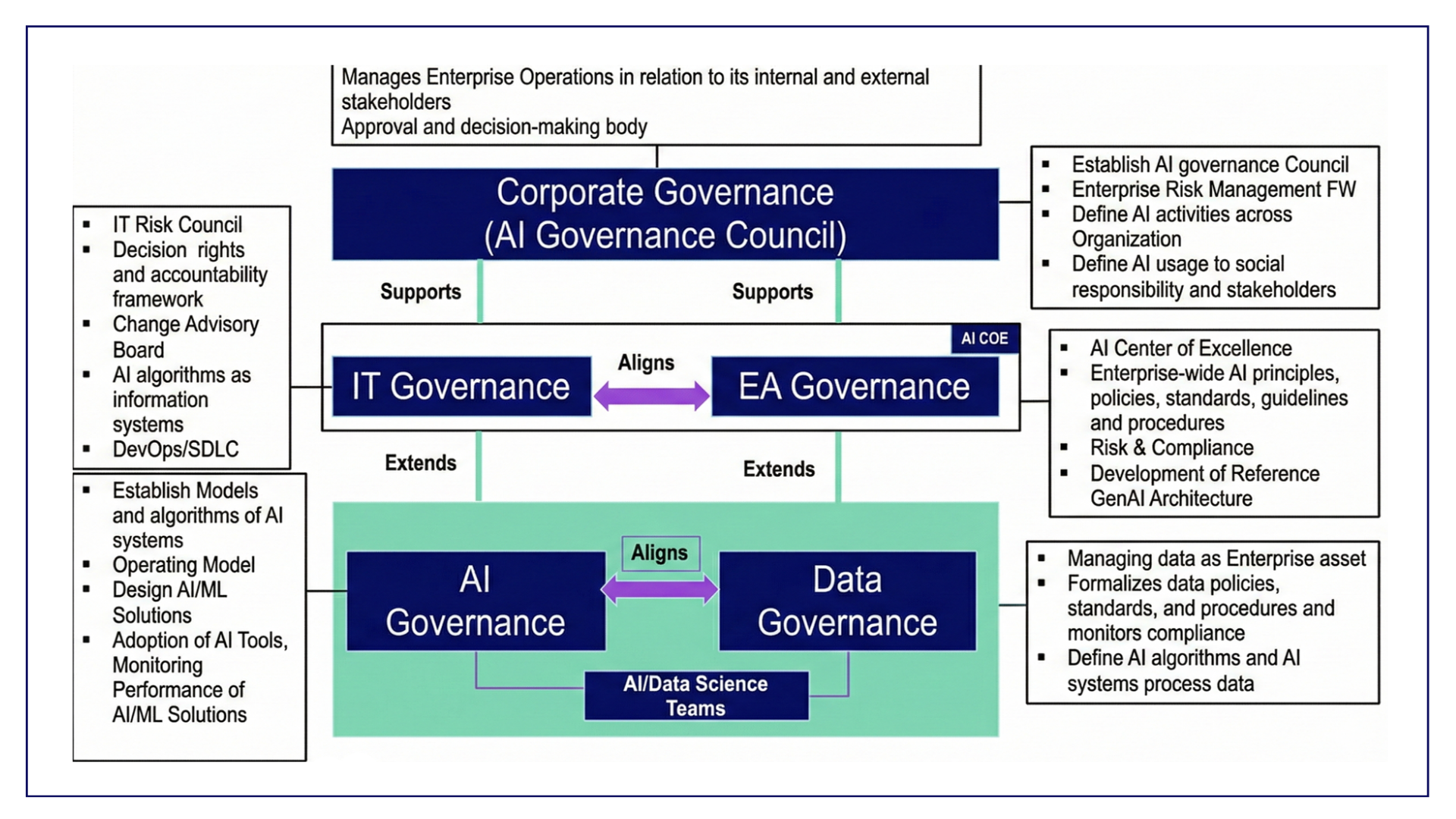
Image Source: Medium
The right mix of AI governance tools in your MLOps pipeline is crucial to work well. These tools are the foundations of responsible AI development that bring transparency, fairness, lineage tracking, and explainability throughout a model’s lifecycle.
Model Card Toolkit for transparency and documentation
The Model Card Toolkit (MCT) makes it easier to create Model Cards automatically. These cards show how a model works and performs. The toolkit uses a JSON schema that lists what should go into Model Cards, which helps developers organize model information better. MCT fills the JSON with relevant data like class distributions and performance statistics through ML Metadata integration. Google introduced these standard documents so developers could share key details about model limitations, intended uses, and ethical concerns.
Fairness Indicators for bias detection in models
Fairness Indicators shows how models perform for different user groups and gives confidence intervals at multiple thresholds. This toolkit runs on TensorFlow Model Analysis to check fairness metrics in product pipelines regularly. Teams can spot if models work poorly for specific data segments instead of looking at total performance metrics that might hide biases. Teams can try new data sources or balancing techniques to help underrepresented groups perform better after getting a full picture.
Apache Atlas for metadata and lineage tracking
Apache Atlas offers expandable solutions for metadata management and governance that track data lineage. Here are its main features:
- Pre-defined types for various Hadoop and non-Hadoop metadata
- Classification capabilities with attribute support
- Lineage visualization for tracking data movement through systems
- Integration with Apache Atlas for authorization and data masking
DataHub for audit trails and access control
DataHub has resilient access policy management through platform and metadata policies. The permissions framework controls who can do what with metadata entities and keeps detailed audit trails. Organizations can decide who edits documentation, adds tags, or changes links through clear privileges, resources, and actors.
SHAP and LIME for explainability in model decisions
SHAP (SHapley Additive exPlanations) and LIME (Local Interpretable Model-Agnostic Explanations) take different paths to model explainability. SHAP uses game theory to calculate how features contribute, showing both global and local explanations. LIME creates simpler local versions of complex models by changing input data. Of course, both methods help explain AI decisions, though SHAP has better visualization options and captures non-linear relationships more effectively.
ISO 42001 AI governance tools implementation overview
ISO 42001 is a well-laid-out framework for AI governance that covers risk management, impact assessment, and lifecycle management. The standard uses a plan-do-check-act approach to help organizations watch AI systems and improve them continuously. Tools that support ISO 42001 usually include AI inventory management, reusable control mapping, centralized documentation, human-in-the-loop workflows, and compliance dashboards.
Integrating Governance Tools into MLOps Pipelines
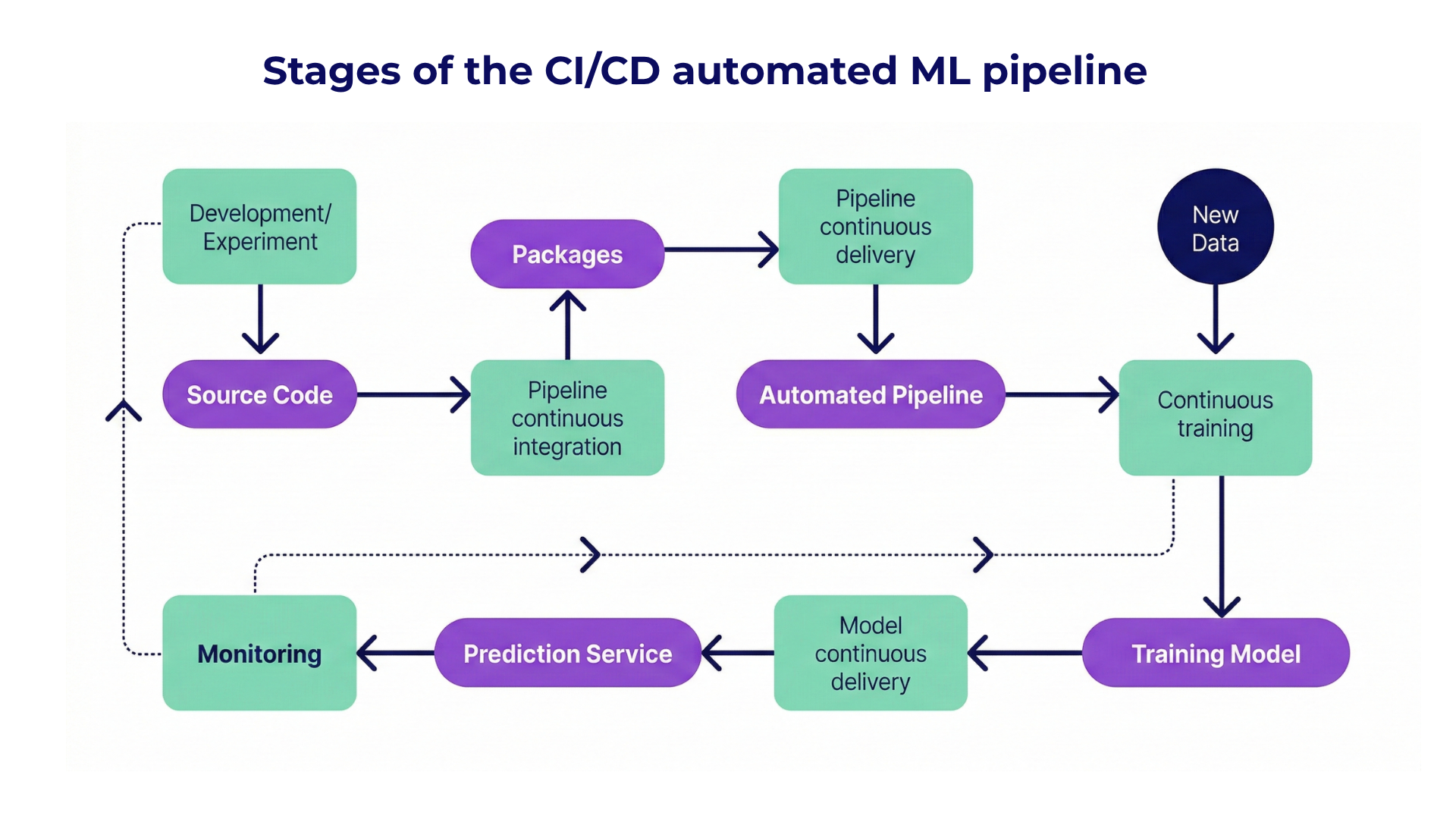 Image Source: BigStep Technologies
Smooth integration of governance tools with MLOps pipelines needs careful automation implementation at critical checkpoints. Organizations can maintain compliance without slowing delivery by embedding governance directly into workflows. This approach changes governance from a final checkpoint into an essential part of the development process.
CI/CD pipeline integration with governance checks
CI/CD pipelines like Jenkins and GitLab CI/CD need governance integration to create consistent confirmation gates throughout the model development lifecycle. These governance gates make sure only confirmed models reach production through defined stages. Automated checks confirm model readiness at each stage. The validation approval confirms pre-production testing readiness while production approval gives final clearance before deployment. The system must store reviewer information, decisions, timestamps, and artifact references automatically for complete audit trails.
Automated compliance validation during model deployment
Automated compliance checks turn policy requirements into measurable metrics that assess model quality, bias, and feature importance. The system automatically confirms artifacts against predefined thresholds set by administrators. Standard test suites run on each model snapshot, store results in the governance system, and create tickets with detailed failure information when tests fail. Automation makes consistent, repeatable assessments possible throughout the deployment process instead of manual point-in-time confirmation.
Version control and audit logging with DVC and Git
Data Version Control (DVC) works with Git to track changes in data, code, and ML models together. This creates a unified history that teams can traverse. DVC creates simple metafiles through codification that describe which datasets and ML artifacts to track. Teams can place this metadata in Git rather than storing large files directly. Each model version connects to its corresponding data, which helps teams restore previous versions and reproduce experiments reliably.
Monitoring fairness and drift using Prometheus and Grafana
Prometheus and Grafana create the foundation of monitoring infrastructure that tracks model health and performance after deployment. Boxkite, an open-source Python library, captures training and production data distributions to detect distribution changes between environments. Teams can implement two key metrics to measure model drift: KL divergence for categorical data and K-S test for continuous data. Both metrics work in PromQL with configurable alert thresholds. These monitoring tools detect fairness issues and performance problems before they affect business outcomes.
Best Practices for Sustainable AI Governance in MLOps
Green AI governance needs more than just implementing tools – it demands complete organizational dedication. Organizations must build practices that weave responsibility into every stage of the AI lifecycle.
Establishing cross-functional governance teams
A mix of viewpoints makes governance work better. Organizations should create AI ethics boards that bring together experts from technical, legal, compliance, and business areas. This team approach helps spot risks from every angle. Clear ownership becomes stronger when you use frameworks like RACI matrices. Book a Readiness Call with governance experts to learn if your organization is ready to build these team structures.
Embedding governance checkpoints in ML workflows
Development pipelines should have governance built right into them instead of treating it as a separate step. Automated gates can check if models are ready at each stage and stop deployments that don’t meet standards. This makes governance an essential part of development rather than just a final check.
Using role-based access control (RBAC) for model security
RBAC protects AI systems by limiting access based on predefined roles. You can implement RBAC through these steps:
- Defining roles that match job responsibilities
- Setting up detailed access policies
- Tracking and auditing access patterns
Continuous feedback loops for ethical model updates
A well-laid-out system to collect human feedback on AI performance makes a big difference. The feedback helps detect biases, performance issues, and potential weak points. User-friendly interfaces and monitoring tools can help automate feedback collection to keep models relevant.
Conclusion
AI governance is the life-blood of organizations that want to deploy reliable, ethical, and compliant machine learning systems. In this piece, we took a closer look at how integrating governance tools with MLOps pipelines creates well-laid-out frameworks that balance new ideas with risk management. The numbers tell the story – 85% of models never make it to production, and AI incidents have jumped by 56.4%. Strong governance isn’t just helpful – it’s crucial.
Model Card Toolkit, Fairness Indicators, and Apache Atlas build the technical foundation to track transparency, detect bias, and trace lineage. These tools work alongside explainability frameworks like SHAP and LIME to give organizations complete oversight of their AI lifecycle. These capabilities have become vital as regulatory requirements get stricter and ethical concerns grow.
Your organization can strengthen its AI governance by building cross-functional teams that combine different types of expertise. Book a Readiness Call with our governance specialists to check your organization’s readiness and spot implementation gaps before they impact your production systems. Solutions like Prometheus and Grafana help maintain model quality after deployment through continuous monitoring of drift and fairness issues.
Success requires treating governance as part of development rather than a separate task. Automated compliance checks, version control, and structured feedback loops turn governance from a roadblock into a driver of sustainable AI adoption. Organizations that accept these practices are ready for success in today’s complex regulatory world while building trust through responsible AI development.
Key Takeaways
Integrating AI governance tools with MLOps pipelines is essential for building trustworthy, compliant AI systems that can successfully transition from development to production.
• Embed governance early: Integrate governance checks directly into CI/CD pipelines rather than treating them as final checkpoints to prevent deployment bottlenecks.
• Implement comprehensive monitoring: Use tools like Prometheus and Grafana to continuously track model drift, fairness metrics, and performance degradation in production.
• Establish cross-functional teams: Form diverse AI ethics boards combining technical, legal, and business expertise to identify risks from multiple perspectives.
• Automate compliance validation: Transform manual oversight into intelligent, scalable systems that validate models against predefined thresholds throughout deployment.
• Maintain complete traceability: Use tools like DVC and Git to track changes in data, code, and models together, creating unified audit trails for reproducibility.
With AI incidents increasing 56.4% and regulatory fines reaching up to €35 million under the EU AI Act, organizations must prioritize governance integration to mitigate risks while enabling innovation. The combination of transparency tools (Model Cards), bias detection (Fairness Indicators), and explainability frameworks (SHAP/LIME) creates a robust foundation for responsible AI development that builds stakeholder trust and ensures regulatory compliance.
FAQs
Q1. How can organizations integrate AI governance tools into their MLOps pipelines? Organizations can integrate AI governance tools into MLOps pipelines by embedding governance checks directly into CI/CD workflows, automating compliance validation during model deployment, and using version control systems like DVC and Git for comprehensive audit logging.
Q2. What are some key challenges in aligning governance with MLOps? Key challenges include lack of traceability in the model lifecycle, compliance gaps in continuous deployment workflows, and security risks associated with unmanaged model updates. These issues can lead to accountability problems, regulatory non-compliance, and vulnerabilities in AI systems.
Q3. Which tools are recommended for ensuring fairness and explainability in AI models? Fairness Indicators is recommended for bias detection in models, while SHAP (SHapley Additive exPlanations) and LIME (Local Interpretable Model-Agnostic Explanations) are useful for explaining model decisions and improving transparency.
Q4. How can organizations monitor AI model performance and drift in production? Organizations can use tools like Prometheus and Grafana to set up monitoring infrastructure that tracks model health and performance. Libraries like Boxkite can help detect distribution shifts between training and production environments, enabling teams to identify fairness issues and performance degradation.
Q5. What are some best practices for sustainable AI governance in MLOps? Best practices include establishing cross-functional governance teams, embedding governance checkpoints in ML workflows, implementing role-based access control (RBAC) for model security, and creating continuous feedback loops for ethical model updates. These practices help ensure responsible AI development throughout the lifecycle.