A SOC 2 readiness assessment is the step that decides whether the formal audit goes smoothly or turns into an expensive scramble. It is the gap analysis that happens before a CPA firm ever begins its work, and it tells an organization exactly where it stands against the Trust Services Criteria so issues surface early instead of during the audit. Most teams searching for a SOC 2 readiness assessment service are weighing two things: how fast they can get one done, and whether the service fits a company of their size. This guide covers what a readiness assessment actually includes, what a realistic turnaround looks like, and how the right SOC 2 readiness service differs for a lean startup versus a mid-size firm with a few hundred employees.
What a SOC 2 Readiness Assessment Is
A readiness assessment is a structured evaluation of an organization’s controls against the SOC 2 Trust Services Criteria, performed before the official audit. Its job is to find and close gaps so the eventual report is clean.
Readiness Is Not the Audit
It is worth being precise here, because the distinction affects budget and timing. The SOC 2 report itself can only be issued by an independent licensed CPA firm. A readiness assessment is the preparation that comes first, and it is typically delivered by a consulting partner. Confusing the two leads teams to underestimate both the timeline and the total cost, so it helps to plan for readiness and the audit as two separate phases. The difference between a readiness review and other audit types is worth understanding before you start.
What a Readiness Assessment Includes
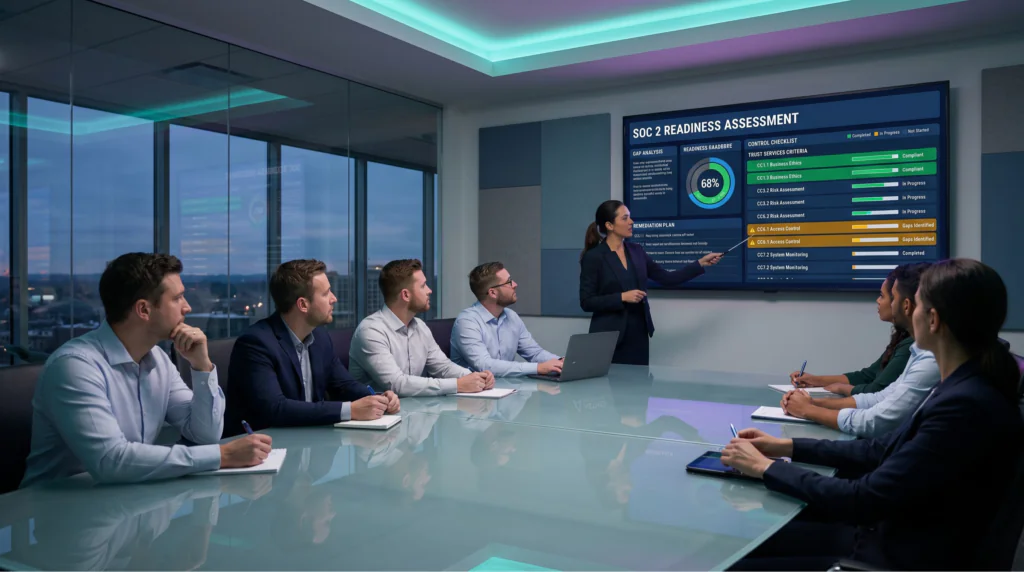
A thorough readiness assessment scopes the system boundary, maps existing controls to the relevant Trust Services Criteria, identifies the gaps between current practice and what an auditor will expect, and produces a prioritized remediation plan. Strong providers go further and guide evidence collection, because most audit findings come from missing or non-defensible evidence rather than missing controls. The deliverable should be an honest picture of where the organization stands and a clear path to close the distance.
How Long a SOC 2 Readiness Assessment Takes
Turnaround is the question almost every buyer asks first, often because a deal is waiting. The honest answer is that parts of the process can move quickly, but a credible SOC 2 report cannot be fully manufactured overnight.
Realistic Turnaround for the Assessment Itself
The readiness assessment is usually the fast part. Depending on the size of the environment and how organized the documentation is, it commonly takes a few weeks. A focused engagement with an organized team can move faster, while a complex environment with scattered evidence takes longer. The variable is rarely the assessor’s speed and almost always how ready the organization’s documentation already is.
What Quick Turnaround Really Means
Speed is realistic for readiness and for a Type I report, which evaluates control design at a point in time. It is not realistic for a Type II report, which evaluates whether controls operated effectively over a period that commonly runs from three to twelve months. That observation window cannot be compressed, because evidence of effective operation takes time to accumulate. Any service promising a complete SOC 2 Type II report in days is a clear warning sign. The fastest credible path is an efficient readiness assessment, quick remediation, a Type I to satisfy an urgent buyer, and a Type II observation window running in parallel.
Choosing a Service by Company Size
The right SOC 2 readiness service depends heavily on the size and complexity of the organization, because both the scope and the support model change.
Startups and Small Teams
A small company usually has a narrow system boundary and fewer people touching customer data, which keeps the readiness assessment focused. The risk for small teams is the opposite of complexity: too few hands to run the controls consistently. Many lean teams pair a readiness assessment with a virtual CISO or a managed compliance model so the controls keep operating after the assessment ends.
Mid-Size Companies With a Few Hundred Employees
A mid-size organization, for example one with around 200 employees, brings more systems, more integrations, more vendors, and more people into scope, which increases both the control surface and the volume of evidence. Scoping becomes a more deliberate exercise, and multiple stakeholders across IT, security, and operations need to be aligned. The advantage is that mid-size firms usually have more resources to dedicate, so the right service for them emphasizes disciplined scoping, clear control ownership across teams, and a remediation plan that coordinates several groups at once. Book a Readiness Call with Elevate’s SOC 2 specialists to scope an assessment to the size and complexity of your environment.
What to Look For, and Red Flags
A readiness assessment is only as valuable as what you can do with it. Look for a provider that delivers both the assessment and hands-on remediation, has genuine depth in the Trust Services Criteria, focuses on defensible evidence rather than a checklist, and sets realistic timelines. A partner that also supports continuous compliance after the report helps keep controls effective between audit cycles. Treat these as warning signs: a checklist with no remediation support, a promise of a full Type II in an unrealistic window, and a report that lists gaps without a practical plan to close them.
Conclusion
A SOC 2 readiness assessment is the highest-leverage investment an organization can make before the audit, because it converts uncertainty into a clear, prioritized plan. Expect the assessment itself to take weeks, understand that genuine speed comes from a fast readiness and a Type I rather than a rushed Type II, and choose a service scoped to your size, whether you are a lean startup or a mid-size firm coordinating several teams. Book a Readiness Call with Elevate to find out exactly where you stand and how quickly you can be audit-ready.
Key Takeaways
A SOC 2 readiness assessment finds and closes gaps before the formal audit, and the right service depends on how fast you need to move and how large your environment is.
- Readiness is preparation, not the audit – A licensed CPA firm issues the SOC 2 report, while a consulting partner delivers the readiness assessment and remediation that come first, so plan for both as separate phases.
- The assessment is usually the fast part – A readiness assessment commonly takes a few weeks, and the main variable is how organized the documentation already is rather than the assessor’s speed.
- Quick turnaround has limits – Speed is realistic for readiness and a Type I report, but a Type II requires an observation window of several months, so a promise of a fast full Type II is a red flag.
- Size changes the service – Startups need a focused assessment and help running controls with limited staff, while a mid-size firm with around 200 employees needs deliberate scoping and coordinated remediation across teams.
- Value comes from remediation and evidence – Choose a provider that pairs the assessment with hands-on remediation and a defensible evidence focus, not a checklist that lists gaps without a plan to close them.
The organizations that pass cleanly are the ones that treat the readiness assessment as the moment to fix problems, not just to document them.
FAQs
Q1. What is a SOC 2 readiness assessment? It is a structured evaluation of an organization’s controls against the SOC 2 Trust Services Criteria, performed before the formal audit. It scopes the system boundary, maps controls, identifies gaps, and produces a prioritized remediation plan so the eventual report issued by a CPA firm is clean.
Q2. How long does a SOC 2 readiness assessment take? The assessment itself commonly takes a few weeks, depending on the size of the environment and how organized the documentation is. A focused engagement with an organized team moves faster, while a complex environment with scattered evidence takes longer.
Q3. Can I get a SOC 2 report with a quick turnaround? Parts of the process can move quickly, but not all of it. A readiness assessment and a Type I report, which evaluates control design at a point in time, can be completed relatively fast. A Type II report requires an observation period of roughly three to twelve months and cannot be compressed, so be cautious of any service promising a full Type II in days.
Q4. What does a SOC 2 readiness assessment look like for a mid-size company? For a firm with a few hundred employees, the assessment covers more systems, vendors, and people, so scoping is more deliberate and several stakeholders across IT, security, and operations must be aligned. The remediation plan typically coordinates multiple teams, and the firm’s larger resource base usually supports faster execution once the plan is set.
Q5. Does a small startup still need a readiness assessment? Yes. Even with a narrow scope, a readiness assessment confirms where the controls stand before the audit and prevents surprises. Small teams often pair it with a virtual CISO or a managed compliance model so the controls keep operating consistently after the assessment is complete.