
Companies are racing to boost their AI investments, with 92% planning increases over the next three years. The rush to adopt AI technology comes with significant risks – a fact acknowledged by 60% of S&P 500 companies. This gap between implementation and protection needs immediate attention.
The AI market shows no signs of slowing down. Experts project a 60% year-over-year spending surge by 2025, pushing the market value to $480 billion in 2026. Research firm Gartner’s data suggests that companies will cancel 40% of emerging agentic AI projects by 2027, largely due to poor risk controls. The UK’s Center for Data Ethics and Innovation reveals an alarming trend – while 78% of public sector organizations use AI systems that directly affect service delivery, only 31% keep AI-specific risk registers.
This piece will help you create and maintain a detailed AI risk management register. You’ll learn about core components, key risk categories to monitor, and steps to implement effective controls. The guidance will give you a practical framework to identify, categorize, and alleviate AI risks in your organization.
Core Components of an AI Risk Management Register
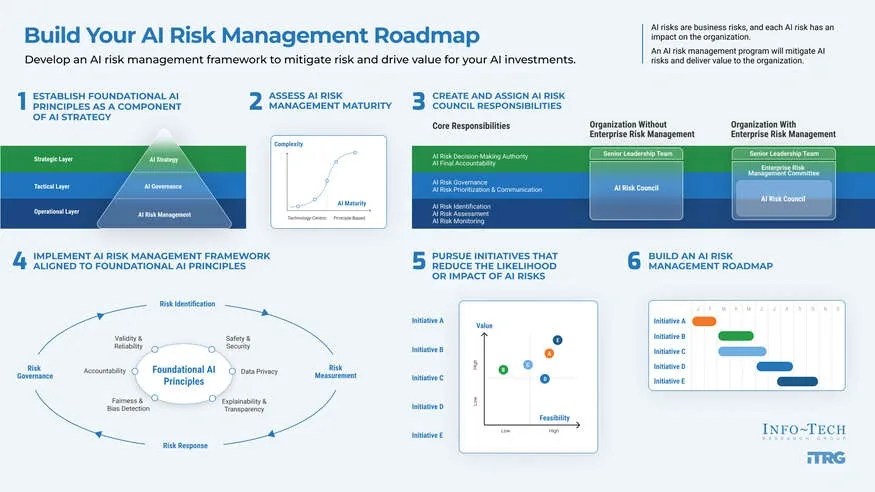
Image Source: Info-Tech
A central AI risk management register is the life-blood of responsible AI governance. This living document tracks, rates, and manages all AI-related risks throughout an organization. The right implementation creates an early warning system that helps organizations find issues, assign who fixes what, track how well controls work, and show regulators and stakeholders they’re doing their due diligence.
Risk ID, description, and categorization
The foundation of any good AI risk register starts with clear identification and grouping. Each risk needs its own tracking ID. On top of that, it needs specific details:
- Clear risk description: You need precise explanations of what could go wrong instead of vague statements. Take this example: “Model may produce racially biased outputs due to underrepresentation in training data”.
- AI application specificity: Don’t just write “ChatGPT.” The register should say “ChatGPT-4 for generating external marketing blog posts” or “GitHub Copilot for Python code assistance in the R&D team”.
- Risk categorization: Standard groupings make classification consistent. Common risk types include performance risks (accuracy, drift), fairness and bias risks, privacy risks, security risks, legal/regulatory risks, and ethical/societal risks.
- Data sensitivity classification: This shows what kind of data the AI will work with – public, internal, confidential, or proprietary source code.
- Risk source identification: This shows how we found the risk – through model testing, internal audits, stakeholder feedback, or external rules like GDPR or the EU AI Act.
Standard categorization lets organizations group similar threats and use consistent risk reduction strategies. The EU AI Act created a risk-based system that puts AI systems into four risk levels, each with different regulatory needs. The right classification determines everything from banned applications to documentation requirements. Higher risk levels need stricter compliance.
Inherent vs residual risk scoring
Risk scoring creates the register’s number-based foundation. You need to measure two key things:
Inherent risk shows how much risk exists without any controls. This measures the baseline risk before any risk reduction efforts. NIST’s Risk Management Framework says you can estimate risk by multiplying how likely something is to happen by what it all means.
Organizations typically calculate inherent risk using:
- Impact rating: High/Medium/Low or 1-5 scale
- Likelihood rating: High/Medium/Low or probability-based scoring
- Inherent risk score: Impact × Likelihood
Residual risk measures the risk that stays after controls are factored in. This shows your organization’s real exposure after putting risk reduction strategies in place. This helps prove due diligence and risk acceptance decisions.
The difference between inherent and residual risk scores shows how well your controls work. Jack Jones, who created the FAIR model, suggests a more practical way: treat inherent risk as the current risk level with existing controls, rather than imagining no controls exist. The residual risk would be whatever risk remains after adding more controls.
Mapped controls and linked obligations
The register must tie risks to specific controls and regulatory requirements. This connection ensures full coverage and regulatory compliance:
Controls/mitigating actions: These are specific technical or procedural steps that reduce risk. Examples include differential privacy implementations, bias audits, model interpretability tools, and approval workflows. A draft AI Risk Mitigation Taxonomy lists four control types: governance and oversight controls, technical and security controls, operational process controls, and transparency and accountability controls.
Linked obligations: Each risk needs mapping to applicable regulations and requirements. This mapping shows how risk reduction efforts support audit readiness and keeps risk management working with compliance needs.
Risk owner assignment: The register must show who’s responsible for managing each risk, like the CISO, Data Science lead, or business unit manager. This responsibility ensures risks get proper attention and fixes.
Target dates and status tracking: Setting deadlines and watching progress is vital for good risk management. The register should record the current status (open, mitigated, accepted) and when to review next.
A detailed AI risk register connects every part of your risk management program. When all pieces work together, it changes from a static document into a useful tool that keeps improving AI governance. Organizations can see AI risk exposure across teams while staying in line with financial, operational, and reputation risk areas.
AI-Specific Risk Categories to Track
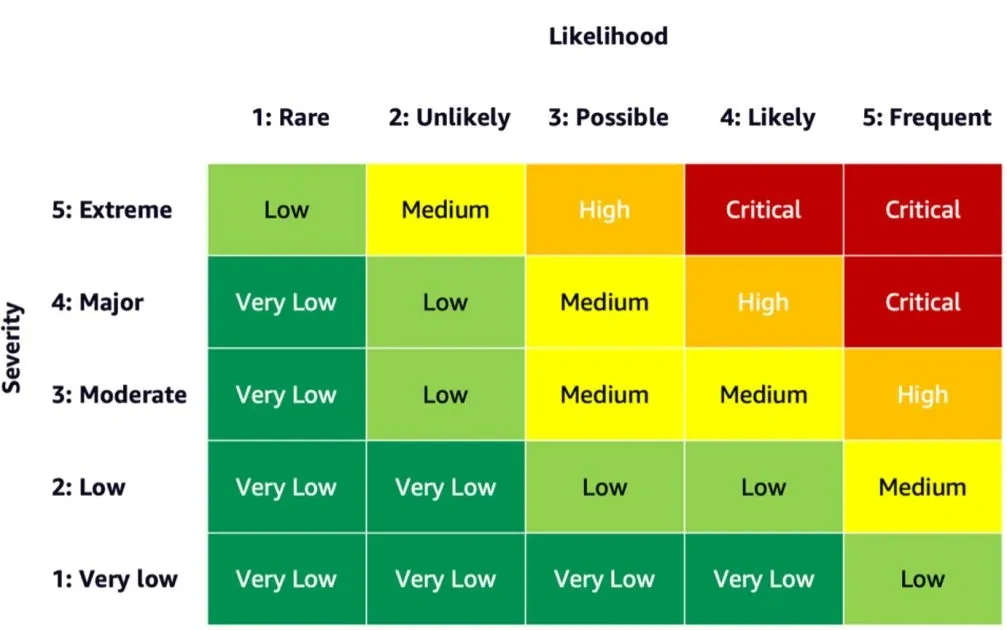
Image Source: AWS
AI risk management needs specific tracking of risk categories unique to AI systems. Traditional IT risks don’t match the new challenges that AI brings, and we just need specialized ways to watch and reduce these risks.
Algorithmic bias and fairness risks
AI bias shows up in three main categories that need monitoring whatever the intent:
- Systemic bias exists in AI datasets, organizational norms, and broader societal contexts
- Computational and statistical bias comes from non-representative samples in AI datasets and algorithmic processes
- Human-cognitive bias comes from how people notice AI information or think about AI system functions
These biases can speed up and scale the harm to individuals, groups, and organizations. AI systems’ discrimination isn’t always bias—sometimes AI results accurately reflect society’s existing patterns. In spite of that, fairness management stays critical since AI models using historical data can keep harmful stereotypes going, especially affecting underserved populations in healthcare diagnostics, hiring processes, and law enforcement.
Explainability and transparency limitations
Transparency answers “what happened” in an AI system, while explainability tackles “how” a decision was made. Interpretability explains “why” a decision happened and its context for users. Explainable systems are a great way to get easier debugging, better documentation, and improved audit capabilities.
Neural networks’ complexity creates major explainability challenges because each processing layer makes the logic harder to follow. Many organizations see AI systems as “black boxes,” which makes them hesitant to use them. This lack of clarity hurts trust and hides potential dangers, making it hard to act before harmful outcomes happen.
Data quality, drift, and model degradation
Model drift—when machine learning performance gets worse—happens when deployed models meet real-life data that is different from their training data. Three main types of drift need watching:
- Concept drift happens when relationships between input variables and target variables split apart
- Data drift (covariate shift) happens when input data distributions change
- Upstream data changes come from modifications in data pipelines
Good models can quickly become outdated without proper monitoring, leading to wrong predictions and business losses. Organizations can spot drift using distribution-based methods like the Kolmogorov-Smirnov test, Wasserstein distance, or population stability index (PSI). The best practices include making detection automatic, watching drift constantly, finding why it happens, and retraining models regularly.
Privacy and surveillance concerns
AI systems collect terabytes of sensitive data regularly, including healthcare information, personal social media data, and biometric identifiers. The main privacy risks include collection without consent, unauthorized data repurposing, unchecked surveillance abilities, and data leaks.
Privacy worries grow as AI lets people figure out previously private information and brings new weak points. To name just one example, see how a healthcare company’s retrieval system might expose patient’s private data to unexpected risks. AI also blurs the line between what is and isn’t “personal information,” which challenges traditional privacy frameworks.
Adversarial threats and model security
Adversarial AI means sophisticated attacks that manipulate AI systems’ intelligence rather than just getting around them. The biggest threats include:
- Prompt injection attacks – Deceptive prompts designed to trick AI systems into revealing secure data or performing malicious actions
- Evasion attacks – Small, calculated changes to input data causing AI to make dramatically wrong decisions
- Data poisoning – Changing a model’s training dataset on purpose to influence outcomes
These attacks target basic weaknesses in how machine learning models work instead of implementation bugs, which makes them hard to fix with regular security updates. Good defense needs adversarial training, strong input validation, real-time monitoring, and zero-trust principles.
Regulatory and compliance classification
New regulatory frameworks take risk-based approaches to AI governance. The EU AI Act defines four risk levels: unacceptable risk, high risk, transparency risk, and limited/minimal risk. Each level comes with different compliance rules:
- Unacceptable risk AI practices (e.g., social scoring, emotion recognition in workplaces) are completely banned
- High-risk applications face strict requirements including risk assessment, high-quality datasets, documentation, human oversight, and strong security measures
- Transparency risk needs specific disclosure requirements, especially for chatbots and generative AI
The NIST AI Risk Management Framework gives voluntary guidelines to add trustworthiness throughout the AI lifecycle. Much of Fortune 500 companies (56%) now list AI as a risk factor in annual filings, making proper classification crucial for governance and compliance.
Step-by-Step Register Implementation Process
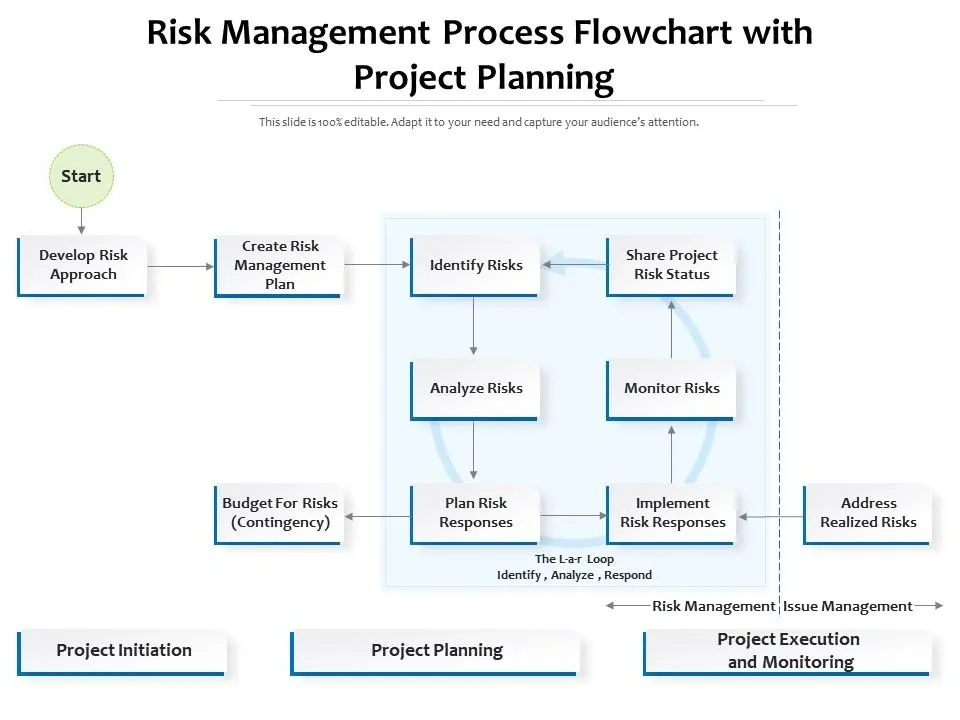
Image Source: SlideTeam
A systematic yet practical approach works best to set up an AI risk management register. Breaking down the process into distinct phases helps build a solid foundation.
Phase 1: Governance and risk taxonomy setup
Success in AI risk management starts with clear governance structures. Your first step is to create an AI Oversight Committee. This team should include experts from data science, ethics, legal, and risk management backgrounds to provide detailed oversight. The team’s diverse skills and capabilities will strengthen AI governance.
The next step is to create a standardized AI risk taxonomy. This should cover technical, operational, ethical, and regulatory risk categories. Such classification will give a consistent way to rank priorities across your organization. The framework should match your organization’s risk appetite and tolerance levels to stay in line with broader governance principles.
The last piece involves setting up central monitoring and escalation protocols. This gives leadership clear visibility into decisions and lets teams raise concerns at the right time.
Phase 2: Risk identification and stakeholder input
With governance basics in place, start running stakeholder workshops to spot specific risks in your AI systems. These sessions should bring together technical teams and business users who work with these systems daily.
Map out every AI touchpoint in your organization to see where AI affects decision-making. Look through past incidents or bias complaints to spot patterns that could help assess risks.
A risk matrix becomes crucial here to rank threats based on their likelihood and potential effects. NIST guidelines suggest using simple categories from “very low” to “very high” risk for better results.
Phase 3: Documentation and control mapping
Now it’s time to fill your register using consistent templates. Include AI-specific details like training data sources, model types, and decision contexts. Each risk needs specific, measurable controls with clear owners and deadlines.
Set up monitoring dashboards and regular reviews to track risk status and how well controls work. Your controls should cover governance/oversight, technical/security, operational processes, and transparency/accountability.
Ready to establish your organization’s AI risk register? Book a Readiness Meeting with our experts to assess your current posture and develop a tailored implementation roadmap.
Phase 4: Integration with existing systems
The final phase merges your AI risk register with other organizational systems. Add the register to your existing risk management, internal audit, and quality assurance processes to avoid isolated operations. Most organizations have risk management, compliance, or IT governance committees that can expand to handle AI oversight.
Start with quarterly risk assessments. Add extra reviews when systems change, regulations update, or incidents occur. Turn risks into tasks with owners, due dates, and status tracking to optimize workflows.
Note that AI systems learn and evolve constantly. This means you need ongoing monitoring and adaptation. Such watchfulness keeps your risk register relevant as AI capabilities and regulations advance.
Monitoring, Ownership, and Continuous Updates
Setting up an AI risk register marks just the beginning. The real benefits come from keeping it current as AI systems grow and change.
Assigning risk owners and due dates
Clear accountability drives effective risk management. Each risk entry needs specific owners from multiple teams – Data Scientists, Risk/Compliance Officers, and Business/Product Managers. This team-based setup brings technical, regulatory, and business views together. Risk entries should also show target dates and status markers (Open/In Progress/Mitigated/Residual Risk Accepted). Companies do better with clear processes and defined ownership across the AI lifecycle – from system setup through deployment and retirement.
Automated workflows and ticketing integration
Your register should be dynamic, not just a document on a shelf. Smart workflows turn risks into tracked tasks with owners, deadlines, and status updates. These systems track risk indicators right away and alert teams when issues arise. The process works best when it connects to your team’s existing ticketing and collaboration tools. Teams can spot new problems quickly without extra coordination work.
Quarterly reviews and continuous improvement
AI risks change fast, and your management register must keep pace. Quarterly reviews should get into how well the framework works, where your AI maturity stands, and whether human oversight still makes sense. Teams can spot patterns from incidents and track regulatory changes that might affect the framework. Running “Grok drills” helps too – these crisis simulations test your response plans and keep human operators sharp.
Ready to see how well your organization handles AI risks? Book a Readiness Meeting with our specialists to spot gaps and build a monitoring plan that fits your needs.
Key Takeaways
Organizations need structured AI risk management as 92% plan to increase AI investments while 60% acknowledge material risks from AI usage.
• Build a comprehensive risk register with unique IDs, clear descriptions, standardized categorization, and both inherent and residual risk scoring • Track six critical AI-specific risk categories: algorithmic bias, explainability limitations, data drift, privacy concerns, adversarial threats, and regulatory compliance • Implement through four phases: governance setup, stakeholder risk identification, documentation with control mapping, and integration with existing systems • Establish clear ownership with cross-functional teams, automate workflows for real-time monitoring, and conduct quarterly reviews to maintain effectiveness • Connect risks to specific controls and regulatory obligations to demonstrate due diligence and ensure comprehensive coverage across your organization
A well-maintained AI risk register transforms from a static compliance document into a dynamic early warning system that drives continuous improvement in AI governance while keeping pace with evolving threats and regulations.
FAQs
Q1. What are the key components of an AI risk management register? An AI risk management register typically includes risk identification and description, categorization, inherent and residual risk scoring, mapped controls, linked regulatory obligations, risk owner assignments, and target dates for mitigation.
Q2. How can organizations effectively categorize AI-specific risks? Organizations should categorize AI risks into areas such as algorithmic bias and fairness, explainability and transparency limitations, data quality and model degradation, privacy and surveillance concerns, adversarial threats and model security, and regulatory compliance.
Q3. What steps are involved in implementing an AI risk management register? Implementation involves four main phases: setting up governance and risk taxonomy, identifying risks through stakeholder input, documenting risks and mapping controls, and integrating the register with existing organizational systems.
Q4. How often should an AI risk management register be reviewed? It’s recommended to conduct quarterly reviews of the AI risk management register. These reviews should assess the framework’s effectiveness, organizational AI maturity, and the relevance of human oversight, while also considering incident patterns and regulatory developments.
Q5. Why is assigning risk ownership important in AI risk management? Assigning clear ownership for each risk ensures accountability and a cross-functional approach to risk management. It typically involves multiple roles such as Data Scientists, Risk/Compliance Officers, and Business/Product Managers to cover technical, regulatory, and business perspectives.