For defense contractors that handle controlled unclassified information, CMMC Level 2 is now a condition of doing business with the Department of War, and most organizations cannot get there alone. A good CMMC consultant is the difference between a structured path to assessment and months of scattered effort that still ends in findings. The challenge is that the market is crowded, and many providers sell a generic checklist rather than the hands-on remediation contractors actually need. This guide explains what a CMMC consultant does, what separates a strong one, what drives cost, and the red flags to avoid, so a contractor can choose a CMMC partner that gets them assessment-ready.
What a CMMC Consultant Does
A CMMC consultant prepares an organization for its assessment. It is worth being clear up front that a consultant does not award certification. For Level 2, the official assessment is conducted by an authorized third-party assessment organization, a C3PAO. The consultant’s job is everything that comes before that, and getting it right is what makes the assessment succeed.
Scoping and Boundary Definition
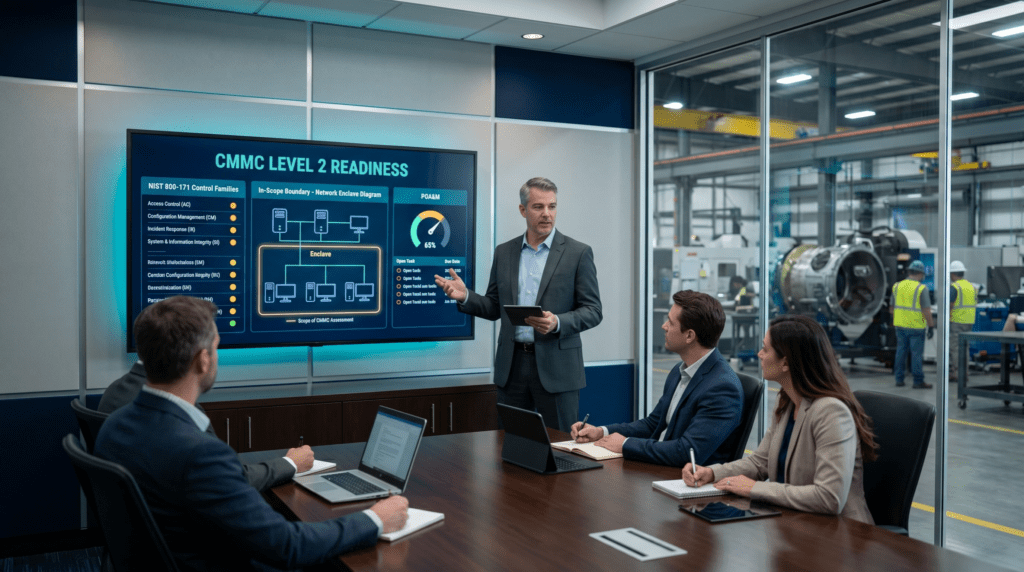
The most consequential early step is defining the scope. A consultant helps draw the boundaries around where controlled unclassified information lives, separating in-scope systems from the rest of the environment. Many contractors reduce both cost and risk by designing an enclave so that fewer systems fall in scope. Getting scope right prevents the two failures of doing too much or missing what matters.
Gap Assessment and Remediation
The core of the engagement is a gap assessment against the NIST SP 800-171 requirements that underpin Level 2, followed by remediation. The strongest consultants do not stop at listing gaps; they work alongside your team to implement the fixes, strengthen documentation including the System Security Plan and Plan of Action and Milestones, and organize the evidence an assessor will expect. A practical remediation timeline turns that work into a schedule the whole organization can follow.
Mock Assessment
Before the real thing, a mock assessment pressure-tests readiness and surfaces issues while there is still time to fix them. This step is one of the clearest signals that a consultant is focused on a successful outcome rather than just delivering documents.
What Separates a Strong CMMC Consultant
The difference between providers becomes obvious once you know what to look for. A strong consultant delivers practical remediation rather than a generic checklist, has real depth in scoping and enclave strategy, offers a mock assessment, and supports ongoing readiness rather than treating certification as a one-time event. Look for relevant qualifications in the CMMC ecosystem and, just as important, references from contractors in your sector. The right partner should be able to explain how it would handle your specific environment, not recite a standard template. For organizations comparing options, evaluating how a provider approaches the assessment process is a useful test of its depth.
What CMMC Consulting Costs
Cost varies based on scope, the size of the environment, how many gaps exist against NIST SP 800-171, and how much remediation the organization needs. A contractor with a tightly scoped enclave and reasonably mature controls will spend far less than one bringing a large, in-scope environment up from a low baseline.
For smaller manufacturers working within a tight budget, the most effective way to control cost is to reduce scope through enclave design and to fix gaps efficiently rather than broadly. A consultant that scopes carefully and prioritizes remediation by risk will deliver more value than one that applies a maximal, one-size-fits-all program. A clear-eyed view of the full picture, including the costs many contractors overlook, helps avoid surprises; Elevate’s breakdown of CMMC Level 2 costs covers those hidden expenses. Book a Readiness Call with Elevate’s CMMC specialists to scope a path that fits your environment and budget.
Red Flags to Avoid
A few warning signs reliably predict trouble. Be wary of a consultant that hands over a generic checklist with no remediation support, that cannot clearly explain the difference between preparing for an assessment and the C3PAO assessment itself, that pushes a maximal scope without considering an enclave, or that promises to make you certified, which no consultant can do. The best partners are honest about the work involved and focused on a defensible result.
Conclusion
Choosing a CMMC consultant comes down to whether the provider will do the hands-on work of scoping, remediation, and evidence rather than handing over a checklist. Decide based on practical remediation capability, scoping and enclave expertise, a mock assessment, and references in your sector, and remember that the consultant prepares you while a C3PAO conducts the assessment. Book a Readiness Call with Elevate to build a structured, defensible path to CMMC Level 2.
Key Takeaways
A CMMC consultant prepares a defense contractor for its Level 2 assessment, and the right one delivers hands-on remediation rather than a generic checklist.
- The consultant prepares, the C3PAO assesses – A consultant cannot award certification, so its value is in scoping, gap assessment, remediation, and evidence that get you ready for the C3PAO’s Level 2 assessment.
- Scope and enclave strategy drive everything – Defining where controlled unclassified information lives, and reducing scope through an enclave, lowers both cost and risk.
- Remediation beats a checklist – Strong consultants implement fixes alongside your team and strengthen the System Security Plan and Plan of Action and Milestones, not just list gaps.
- A mock assessment signals quality – Offering a mock assessment shows the consultant is focused on a successful outcome and surfaces issues while there is still time to fix them.
- Cost follows scope and gaps – Smaller manufacturers control cost most effectively through tight enclave scoping and risk-prioritized remediation rather than a maximal program.
The contractors that pass cleanly choose a partner that does the work with them, not one that delivers a template and steps away.
FAQs
Q1. What does a CMMC consultant do? A CMMC consultant prepares an organization for its assessment by defining scope, running a gap assessment against NIST SP 800-171, remediating gaps, strengthening documentation such as the System Security Plan and Plan of Action and Milestones, and organizing evidence. It does not award certification, since that comes from a C3PAO.
Q2. Can a CMMC consultant certify my company? No. For CMMC Level 2, the official assessment is conducted by an authorized third-party assessment organization, a C3PAO. A consultant prepares you for that assessment and coordinates with the assessor, but it cannot certify its own client.
Q3. How much does CMMC consulting cost? It depends on the scope of the environment, the number of gaps against NIST SP 800-171, and how much remediation is needed. A contractor with a tightly scoped enclave and mature controls spends far less than one with a large in-scope environment starting from a low baseline. Enclave design is the most effective way to control cost.
Q4. How can a small manufacturer make CMMC affordable? The most effective levers are reducing scope through an enclave so fewer systems fall under the requirements, and remediating gaps by risk rather than broadly. A consultant that scopes carefully and prioritizes remediation delivers more value than one applying a maximal, one-size-fits-all program.
Q5. How do I choose a CMMC consultant? Look for practical remediation rather than a generic checklist, real depth in scoping and enclave strategy, a mock assessment offering, support for ongoing readiness, and references from contractors in your sector. A strong consultant can explain how it would handle your specific environment rather than reciting a template.