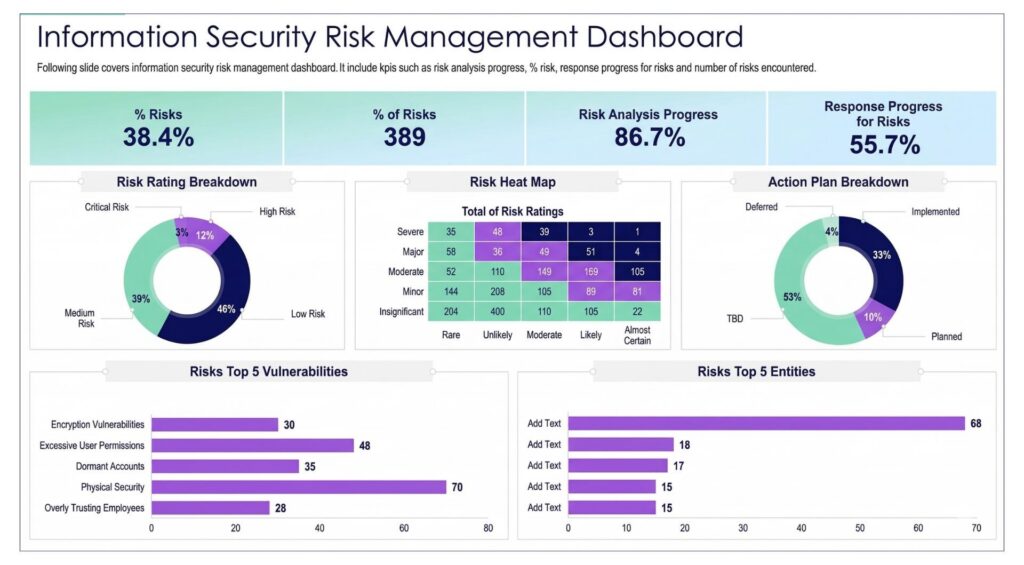
The NIST AI Risk Management Framework marks a defining moment in AI governance. It stands as the first detailed, government-backed approach to managing artificial intelligence risks. This voluntary, non-certifiable framework emerged in January 2023. It guides organizations to design, develop, implement, and use AI systems responsibly throughout their operations. The framework provides essential guidance for organizations navigating AI governance complexities, specifically designed to meet the 2023 U.S. Presidential Executive Order on safe AI use.
Organizations often already follow decades-old frameworks like FedRAMP or ISO standards. Multi-framework compliance offers a quick way to cover multiple frameworks at once. This strategy brings clear advantages. It saves time and reduces audit fatigue. The approach minimizes duplicate work and helps build a stronger, more consistent security posture. The NIST AI RMF Core features four key functions—Govern, Map, Measure, and Manage. These functions can map effectively to existing frameworks and create a unified compliance strategy.
Let’s explore ways to arrange the NIST AI Risk Management Framework with FedRAMP and ISO standards. You’ll find practical guidance to create crosswalks between these frameworks and identify shared controls. This unified approach addresses AI-specific risks throughout the technology lifecycle. The result? A clear roadmap that integrates these frameworks efficiently while ensuring detailed AI risk management.
Understanding the NIST AI Risk Management Framework
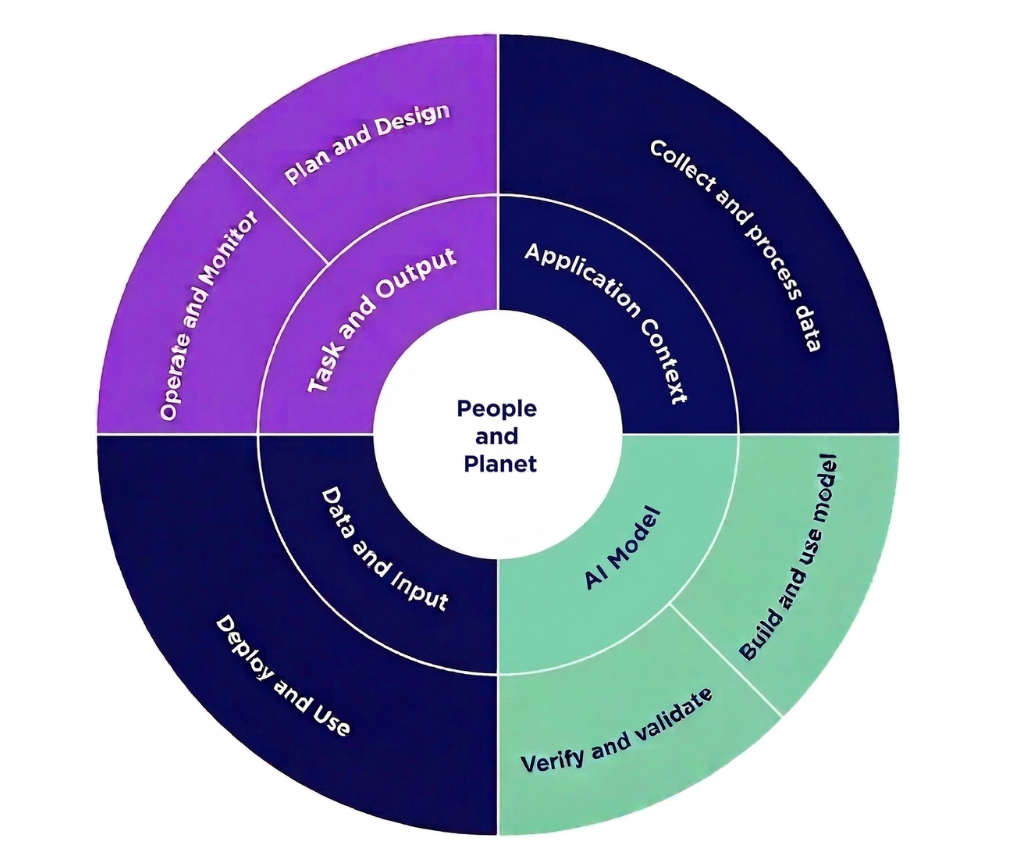
NIST released its AI Risk Management Framework (AI RMF) on January 26, 2023. This marked a key milestone in AI technology governance. The framework came together through teamwork. People shared comments, joined workshops, and gave their input. The result was a complete way to manage AI risks.
What is NIST AI RMF and why it matters
The NIST AI RMF helps organizations handle risks in AI systems throughout their life. The framework shows teams how to build trust into AI products, services, and systems right from design to evaluation.
AI technologies keep changing the digital world at breakneck speed. They bring new risks about being open, fair, private, and secure. The NIST AI RMF gives everyone the same language and method to handle these risks. This creates a foundation that lets innovation grow responsibly.
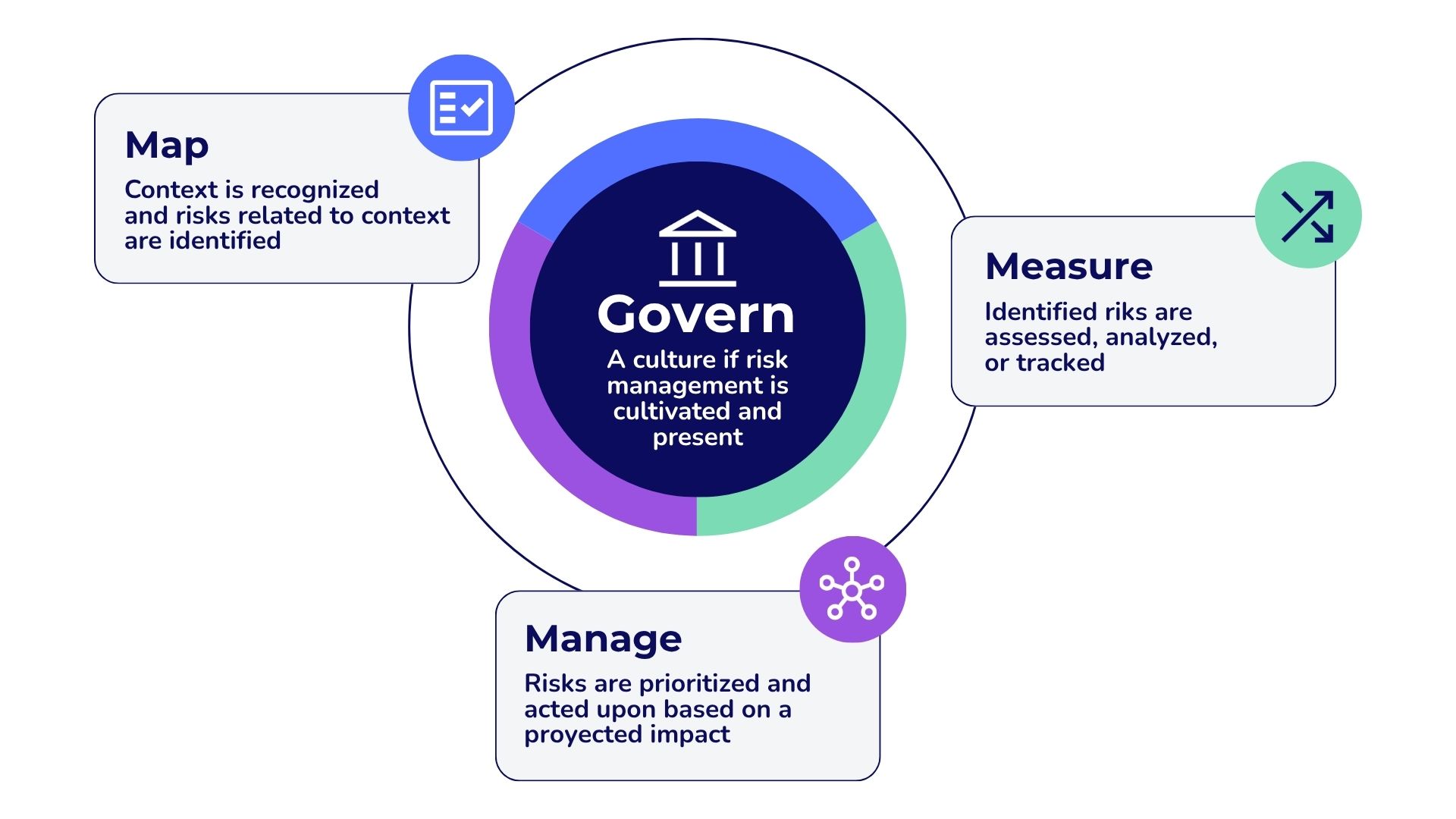
The framework stands on four main functions that work together:
- Govern: Sets up leadership oversight, organizational policies, and accountability culture
- Map: Spots context, needs, and risks in AI systems
- Measure: Creates ways to check performance and risk levels
- Manage: Puts controls in place to reduce risks and keeps watch
These functions help organizations create AI systems that work well, stay safe, and bounce back from problems.
Voluntary nature and non-certifiable status
The NIST AI RMF is not mandatory. Organizations can pick and choose what works for them. This flexibility makes sense because AI gets used in many different ways.
You won’t find a NIST-recognized certification process here. Unlike ISO 42001, which can certify your management system, the NIST AI RMF just gives advice. Many teams start with this framework before moving to certified standards.
The framework may be optional, but its complete approach has caught on worldwide. Teams beyond U.S. federal agencies – in the UK, US, and other countries – now use it to spot and reduce AI risks better.
How it complements NIST SP 800-37
The NIST AI RMF fits with other NIST risk tools. It builds on NIST Special Publication 800-37, which lays out the Risk Management Framework (RMF) for information systems.
NIST SP 800-37 has seven steps: Prepare, Categorize, Select, Implement, Assess, Authorize, and Monitor. This process focuses on keeping regular information systems safe and matches the Federal Information Security Management Act (FISMA).
The AI RMF tackles AI-specific challenges head-on. AI system security ties closely to IT infrastructure security. Teams can use both frameworks at once.
NIST has created overlays where AI meets cybersecurity. These give AI users and developers a starting point for security, though they’re optional. Teams can take what they need from the AI RMF Playbook and Control Overlays based on their industry.
The NIST AI RMF adds to current risk management by showing how to handle AI’s ethical, technical, and social effects from start to finish.
Overview of ISO 42001 and FedRAMP Frameworks
You need to understand each standard’s purpose and scope to map AI governance frameworks properly. Organizations must know how ISO 42001 and FedRAMP work as separate yet potentially complementary systems to match them with the NIST AI Risk Management Framework.
ISO 42001: AI Management System Standard
ISO/IEC 42001:2023 is the first international standard for Artificial Intelligence Management Systems (AIMS). This new standard came out in December 2023 and offers a well-laid-out method for organizations that create, provide, or use AI systems.
The standard gives organizations a complete framework to set up, run, maintain, and improve their AI governance. It includes rules about risk management, AI system effect assessment, system lifecycle management, and oversight of third-party suppliers.
ISO 42001 uses a Plan-Do-Check-Act method that helps organizations:
- Set up AI governance policies and practices
- Run responsible development procedures
- Track performance against set metrics
- Keep improving AI management processes
This standard tackles key AI issues like transparency, accountability, fairness/bias, security/safety, and privacy. Organizations that use ISO 42001 must follow 38 specific controls split into 9 control objectives.
Unlike the NIST AI RMF, you can get certified in ISO 42001. Organizations go through several audit stages including document review, operational assessment, and checking how well they’ve implemented everything. Once approved, certificates last three years with yearly check-ups.
FedRAMP: Cloud Security Authorization Program
The Federal Risk and Authorization Management Program (FedRAMP) takes a different approach to technology governance. This 12-year-old program offers a standard, government-wide system for U.S. federal agencies to adopt secure cloud services.
FedRAMP uses NIST 800-53 security controls but adapts them for cloud environments with extra rules for constant monitoring and risk assessment. The program lets multiple federal agencies use a single Authorization to Operate (ATO), following a “do once, use many times” approach.
Organizations seeking FedRAMP authorization must:
- Prepare System Security Plan (SSP) documentation
- Complete a full security assessment by a third-party assessment organization (3PAO)
- Get authorization from their sponsoring agency
- Monitor constantly to stay compliant
FedRAMP groups cloud systems by impact levels based on data sensitivity and possible breach risks. These range from Low Impact SaaS (LI-SaaS) to Low, Moderate, and High impact levels. Each level needs more security controls – about 156, 323, and 410 respectively.
Right now, FedRAMP has 486 authorized cloud services, with 78 in process and 70 ready for assessment.
Key differences in scope and certification
The main difference between these frameworks lies in what they cover. ISO 42001 focuses on AI governance, making sure AI systems are ethical, transparent, and accountable. FedRAMP deals only with cloud service security for federal agencies.
They also certify differently. ISO 42001 uses third-party audits to check management system requirements and gives a three-year certificate with yearly reviews. FedRAMP needs constant monitoring with monthly security updates to stay compliant.
The technical bases differ too. ISO 42001 builds on management system standards like ISO 9001 and ISO 27001 to create an integrated governance approach. FedRAMP expands NIST 800-53 controls specifically for cloud environments and focuses on technical security requirements rather than broad management practices.
ISO 42001 is a voluntary standard that works worldwide across industries. FedRAMP is mandatory for cloud service providers who want to work with U.S. federal agencies.
These basic differences matter a lot when mapping these frameworks to the NIST AI Risk Management Framework because each one handles different parts of technology governance with varying levels of technical detail and compliance needs.
Mapping ISO 42001 to NIST AI RMF Core Functions
Organizations can use both standards at the same time by building an effective bridge between ISO 42001 and the NIST AI Risk Management Framework. These frameworks line up well together. This gives organizations a chance to build a unified AI governance approach that meets multiple compliance requirements without doing the same work twice.
Govern: Aligning ISO clauses with AI governance
The Govern function of the NIST AI RMF matches ISO 42001 Clauses 4 and 5. These clauses focus on organizational context, leadership, and policy development. ISO 42001’s rules for setting up formal AI governance policies (Clause 5.2) match perfectly with how the NIST framework emphasizes organizational governance structures. This connection also covers leadership accountability. ISO 42001 requires clear assignment of roles and responsibilities (Clause 5.3), which mirrors the NIST AI RMF’s focus on governance culture and accountability.
Organizations using both frameworks should start by setting up a single governance committee for AI oversight. This committee can then create AI policies that address both ISO 42001’s certification requirements and the NIST framework’s governance recommendations. This creates a more reliable foundation for responsible AI.
Map: Risk context and stakeholder mapping
The Map function closely relates to ISO 42001 Clauses 6 and 7, which cover planning and support elements. ISO 42001 requires organizations to document their understanding of AI context and share it throughout the organization. This matches the NIST AI RMF’s focus on identifying AI risks and mapping system impacts.
Organizations can create single documents that work for both frameworks:
- Complete stakeholder matrices showing everyone affected by AI systems
- Context documents covering regulatory, technical, and operational environments
- System impact assessments that show what it all means for different stakeholder groups
Measure: Metrics and performance evaluation
ISO 42001 Clause 9 (Performance Evaluation) matches the Measure function in the NIST AI RMF. Both frameworks stress the importance of ongoing assessment, though they use different terms. ISO 42001 requires regular monitoring, measurement, analysis, and evaluation of AI systems (Clause 9.1). It also needs internal audits (Clause 9.2) and management reviews (Clause 9.3).
Organizations should develop unified metrics that cover:
- System performance compared to intended outcomes
- Finding bias, security threats, and other vulnerabilities
- Following defined governance controls
- How well risk management approaches work
These shared measurement systems work efficiently by cutting out duplicate evaluation processes while meeting both frameworks’ requirements.
Manage: Risk treatment and continuous improvement
The Manage function of NIST AI RMF matches ISO 42001 Clauses 8 (Operation) and 10 (Improvement). ISO 42001’s focus on continuous improvement in Clause 10.1 lines up with the NIST framework’s emphasis on handling identified risks through ongoing management. Both frameworks use a circular approach—ISO 42001 through Plan-Do-Check-Act methodology and NIST through its repeated risk management process.
Organizations can blend these requirements by:
- Creating unified risk treatment protocols that meet both frameworks’ expectations
- Using shared documentation systems to track fixes
- Coordinating improvement projects based on measurement results
- Building integrated incident response procedures for AI-specific situations
The way these frameworks fit together helps organizations build a complete AI governance program. This program can meet both ISO 42001’s certification requirements and the NIST AI RMF’s risk management goals without extra work or conflicting controls.
Mapping FedRAMP Controls to NIST AI RMF Functions
Organizations can take a practical approach to AI governance by matching FedRAMP controls with the NIST AI Risk Management Framework. This mapping helps teams use their existing compliance work while tackling AI system challenges in federal settings.
Govern: FedRAMP policies and AI accountability
FedRAMP’s approach matches the NIST AI RMF Govern function as it focuses on organizational culture and leadership. A detailed AI governance framework serves as the foundation of risk management in FedRAMP. Most organizations set up an AI ethics committee to watch over AI decisions. This committee supports the accountability structures that both frameworks need.
FedRAMP’s governance requirements has these elements:
- Clear ethical guidelines for AI use in the organization
- Strong governance structures to oversee AI deployment
- Regular AI security training programs for employees
These governance elements naturally connect to NIST AI RMF’s Govern function, which also stresses organizational structure and accountability. Teams can meet both frameworks by creating policies that cover FedRAMP’s technical controls and NIST AI RMF’s governance principles.
Map: FedRAMP categorization vs AI system mapping
FedRAMP groups cloud systems into impact levels (Low, Moderate, High) based on data sensitivity and breach risks. Each level needs different controls – about 156, 323, and 410 respectively. The NIST AI RMF Map function takes a different approach. It aims to understand AI systems’ contexts and their effects on various stakeholder groups.
These approaches work well together. FedRAMP’s mapping activities include:
- Complete inventory of AI systems
- Impact assessment of AI systems on critical operations
- Finding connections between AI systems
Organizations can meet both FedRAMP categorization needs and NIST AI RMF mapping goals through this method. Teams can create documentation that works for both frameworks without doing the work twice.
Measure: Control assessment and AI metrics
Both frameworks value ongoing monitoring but focus on different aspects. FedRAMP needs constant security control checks. NIST AI RMF looks at AI-specific metrics and performance evaluation.
A good integration plan should have:
- Tools and processes specific to AI monitoring
- Security KPIs for AI
- Regular AI security metric reports
This approach meets FedRAMP’s monitoring needs while building the measurement system that NIST AI RMF requires. Teams can add AI-specific checks to FedRAMP’s monitoring activities without creating separate systems.
Manage: Incident response and AI risk mitigation
FedRAMP’s incident response (IR) controls are a great starting point for NIST AI RMF’s Manage function. The IR family has nine main controls (IR-1 through IR-9). These cover policy, training, testing, handling, monitoring, reporting, assistance, planning, and information spillage response.
Action-Level Approvals help integrate AI systems smoothly. These approval systems watch over sensitive AI operations and ensure human oversight without stopping automation. They:
- Ask for human review of sensitive AI actions
- Keep approval records for audits
- Stop AI systems from self-authorizing
FedRAMP’s clear incident escalation rules match NIST AI RMF’s risk treatment focus. Teams can improve this by creating AI-specific incident responses for unique issues like model drift, unexpected outputs, or bias incidents.
Organizations can build a unified compliance approach by mapping FedRAMP controls to NIST AI RMF functions. This strategy uses existing security investments while handling new AI risks. It cuts down on compliance work, gives full coverage, and makes security stronger across traditional and AI systems.
Using a Unified Control Matrix for Crosswalks
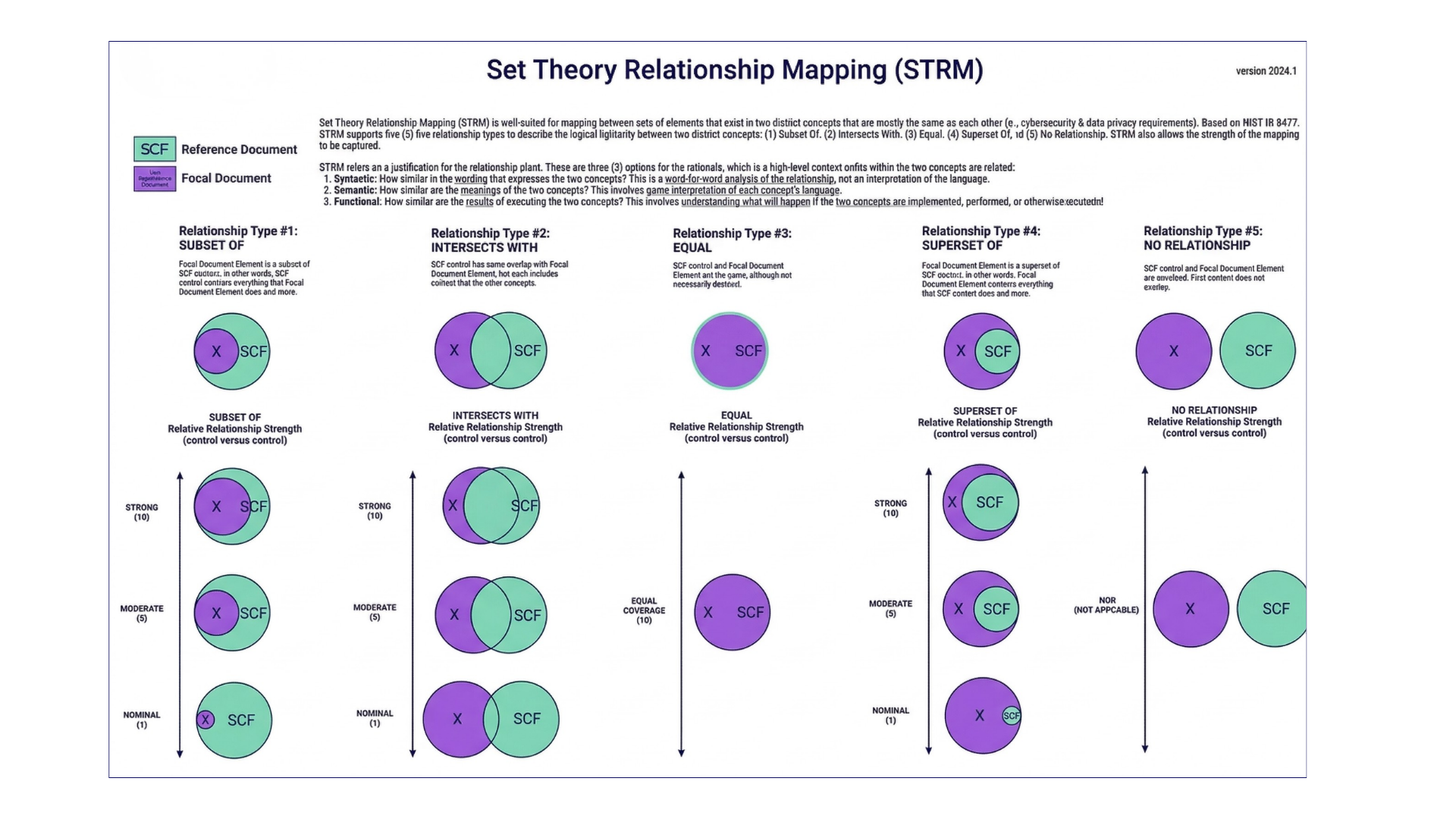
A unified control matrix is the life-blood of framework alignment that works. Organizations can optimize compliance requirements across multiple standards by creating a complete crosswalk between the NIST AI Risk Management Framework, FedRAMP, and ISO frameworks.
Creating a control mapping spreadsheet
The success of a crosswalk starts with a well-laid-out control mapping spreadsheet. Organizations should design a matrix that captures all requirements across applicable frameworks. The Cloud Security Alliance’s AI Controls Matrix (AICM) provides an excellent template. It has 243 control objectives spread across 18 security domains. This matrix already lines up with key standards, including ISO 42001, ISO 27001, and NIST AI RMF 1.0.
Your control mapping spreadsheet should have:
- Primary control ID and description from each framework
- Responsibility assignments for each control
- Implementation status tracking
- Cross-reference mapping to equivalent controls
- Evidence collection requirements
Many Governance, Risk, and Compliance (GRC) tools now automatically generate these mappings. This reduces the manual work needed to develop crosswalks.
Tagging shared controls across frameworks
The next crucial step after setting up the structure is to identify shared controls. Modern approaches use vector representation techniques to automate this process. Each document and control becomes a vector, which allows comparison through cosine similarity to find related content.
Term Frequency-Inverse Document Frequency (TF-IDF) analysis has proven to be nowhere near as effective. It eliminates about 95% of irrelevant controls for any given document. Organizations can focus AI processing on just the top 5% most likely matches. This creates substantial efficiency gains.
Start with direct equivalents (similar requirements) when tagging controls. Then move to partial matches (related requirements), and finally to controls unique to one framework. This systematic approach ensures complete coverage and highlights areas that need more attention.
Avoiding duplication in evidence collection
A unified control matrix shows its true value in efficient evidence collection. In spite of that, several challenges can reduce this efficiency if left unaddressed.
Terminology inconsistencies often make direct mapping difficult. Different frameworks use varying terms for similar security concepts. NIST CSF might talk about “Asset Management” while ISO 27001 discusses “Information Security in Supplier Relationships” for overlapping controls.
Duplicate records in assessment processes create confusion. Reviewers who see the same record twice (A and B) might include A but leave out B. This creates mixed signals about control relevance. The solution is to mark spare records as duplicates instead of excluding them.
Cloud environments bring shared responsibility models where control accountability splits between providers and customers. The matrix should outline these responsibilities to avoid compliance gaps.
These approaches turn months of manual work into minutes—with better consistency, accuracy, and transparency.
Common Challenges in Framework Alignment
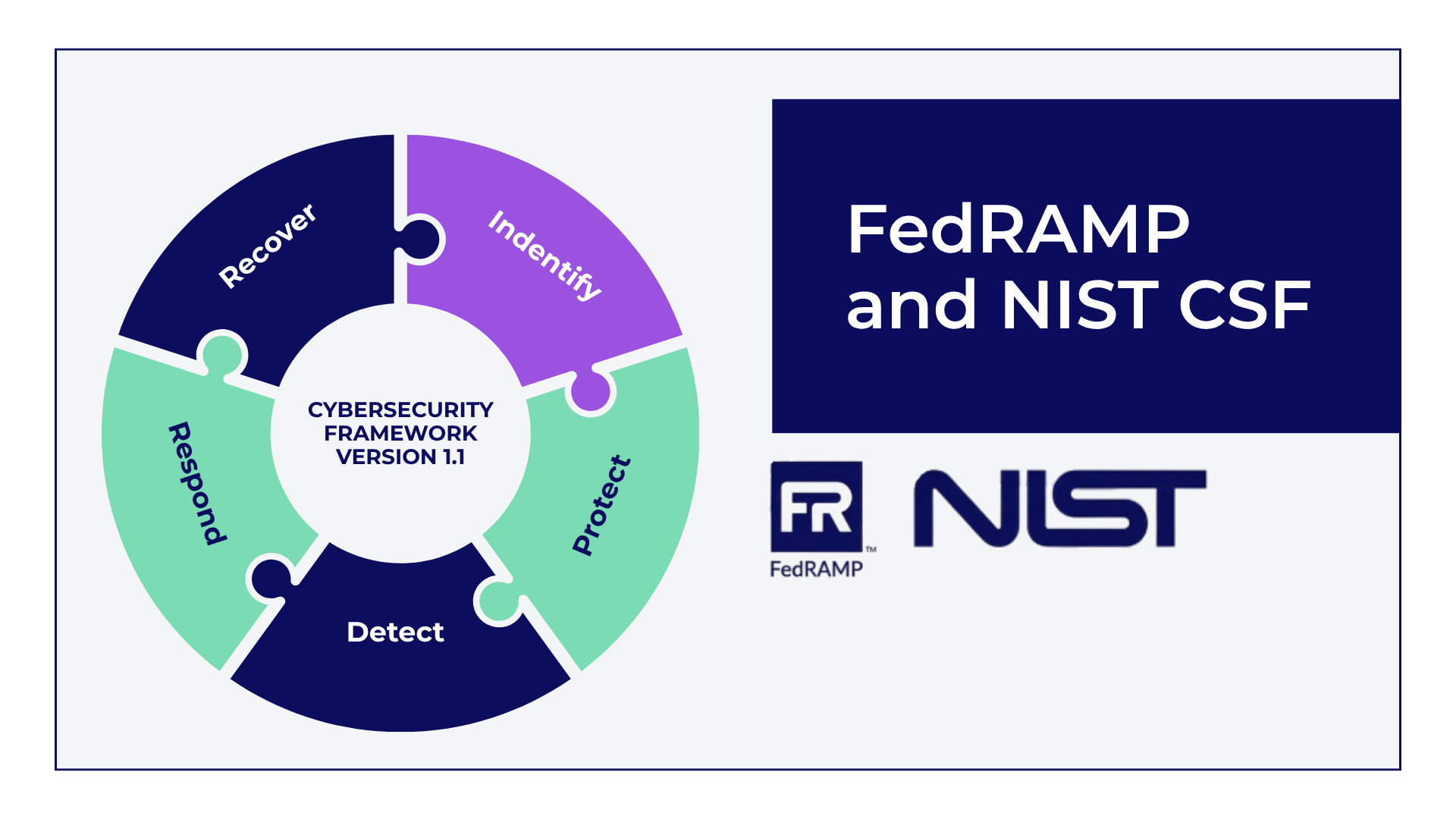
Organizations implementing multiple frameworks struggle to arrange ISO 42001, FedRAMP, and the NIST AI Risk Management Framework. These challenges need smart strategies to overcome.
Terminology mismatches between ISO, FedRAMP, and NIST
Security frameworks use different terms to describe the same concepts. This creates confusion during mapping work. To cite an instance, NIST’s “Asset Management” might show up as “Information Security in Supplier Relationships” in ISO standards. These terms vary between all three frameworks. Companies need standard glossaries that translate concepts between standards.
Word differences cause real problems beyond just confusion. Reviewers might miss controls listed under different names. They could include one version while missing another, which leads to mixed compliance signals. Companies must build unified term lists to bridge these gaps.
Gaps in AI-specific controls in legacy frameworks
COBIT and ITIL frameworks don’t work well with AI systems that use probability-based decisions. This gap leaves companies exposed to risks. Problems like algorithmic bias, declining model performance, and supply-chain weaknesses remain unchecked.
The biggest frameworks give structure and terms but lack details about how to implement them. Guidelines stay abstract and industries adopt them unevenly. Companies often treat these frameworks as checkboxes to tick off. The reality is that “green checkbox on a spreadsheet cannot prevent an adversary from manipulating an AI model”.
Overlapping but similar risk categories
Managing risks across frameworks gets tricky because AI players have different duties based on their lifecycle roles. Companies that build AI systems rarely know how others will use their products. This creates blind spots.
Measuring risk poses challenges because experts haven’t agreed on reliable testing methods. Some risks stay hidden and grow as AI systems learn and change. Third-party components make assessment harder since their measurements might not match company standards.
The answer lies in a mixed control framework that connects traditional system goals to NIST AI RMF functions and ISO 42001 structure. This integration needs clear Key Risk Indicators to track progress. Companies must develop this comprehensive approach. Otherwise, they’ll either slow down with red tape or rush to market while compromising safety.
Best Practices for Implementation and Documentation
The NIST AI Risk Management Framework needs clear structures to work well and stay accountable. Organizations must set up practical ways to blend multiple frameworks that meet compliance rules and work smoothly.
Assigning ownership for each RMF function
A solid AI governance roles structure will build success from day one. Your organization should build a team from different departments to watch over AI risks. This team needs people from technical, legal, compliance, and business areas. The mix gives a full picture from all angles.
Each AI RMF Core function (Govern, Map, Measure, Manage) needs its own leader to create accountability right away. The team should mix people from IT, compliance, security, legal, and business to watch things carefully. Written rules must spell out who approves what, who watches over things, and how to raise AI-related issues up the chain.
Maintaining traceability across mapped controls
You need to track everything in the AI lifecycle to check and audit properly. The foundation starts with watching the whole AI journey from data gathering to deployment and keeping an eye on things. This detailed approach lets you see every step where decisions happen.
Clear data rules that spell out who can access what, how to use it, and privacy guidelines will give a framework to track everything. On top of that, it helps to use version control systems that watch model changes. This way, you can go back to older versions if problems pop up.
Using model cards and risk logs for transparency
Model cards work like nutrition labels for AI systems. They give a well-laid-out view of how models were built and tested. These cards show vital details about the model, how to use it, how well it works, training data, number analysis, and ethical thoughts.
Ready to assess your current framework alignment? Book a Readiness Call to identify gaps in your implementation approach.
Detailed paperwork like model cards, decision logs, and risk reports help create a clear view of your AI systems. Leadership and teams should see these documents often. Regular reviews help make processes better as AI systems and risks change.
Tools and Platforms to Support Mapping Efforts
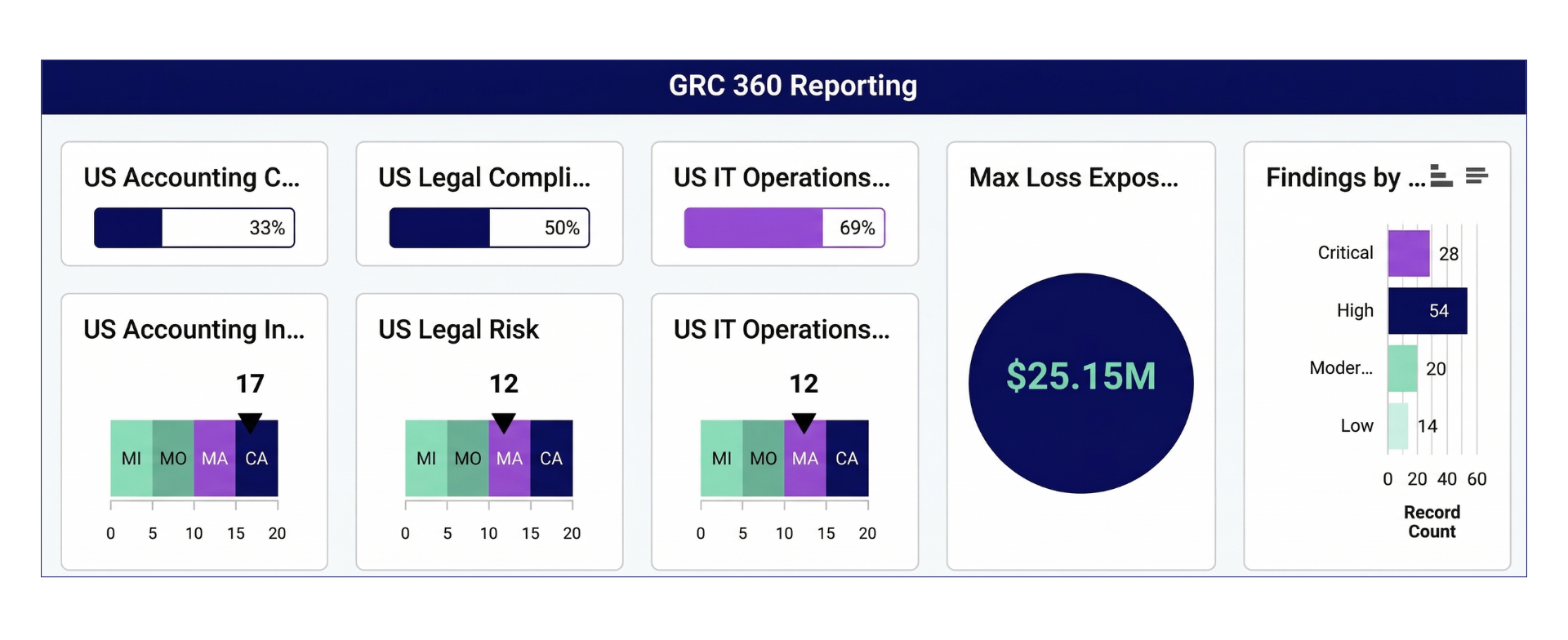
Organizations today need specialized technology to quickly map frameworks between NIST AI RMF and existing standards. These tools cut down compliance work through automation and smart features.
GRC tools with AI RMF support
Several Governance, Risk, and Compliance (GRC) platforms now come with built-in support for the NIST AI Risk Management Framework. Scrut offers pre-built controls that work with the four core RMF functions: Govern, Map, Measure, and Manage. Organizations can use this platform to run internal audits that meet both NIST AI RMF and ISO 42001 requirements. Drata also helps by automating control mapping, training assignments, and evidence collection—essential tasks to implement AI RMF quickly.
Automated evidence collection platforms
Collecting evidence is one of the most time-consuming parts of compliance work. RegScale solves this challenge by gathering evidence automatically from systems of all types. Gartner’s 2024 report shows that continuous compliance automation tools are a great way to get proof that controls work effectively. These platforms merge with identity systems, cloud logs, and application audit trails to create detailed evidence records. Teams save hours of work while producing better documentation that works for multiple frameworks at once.
Using AI to assist in control mapping
AI itself helps map AI controls, which is quite interesting. MIT researchers found and pulled out 831 ways to reduce risk from 13 key documents, building a detailed AI Risk Mitigation Database. Their system groups controls into four areas: Governance & Oversight, Technical & Security, Operational Process, and Transparency & Accountability. You might want to Book a Readiness Call to find the right AI-powered mapping tools that line up with your organization’s framework needs.
Conclusion
Lining up the NIST AI Risk Management Framework with 20-year old standards like FedRAMP and ISO 42001 gives organizations a powerful way to handle the complex AI governance world. In this piece, we looked at real ways to build connections between these frameworks. A unified control matrix can change compliance from isolated tasks into a complete strategy.
This multi-framework approach brings substantial advantages. Companies save time and resources when they map shared controls once instead of repeating work in separate compliance projects. It also gives better risk coverage since each framework looks at different parts of AI governance.
In spite of that, some problems exist. Different terms between frameworks cause confusion. Gaps in AI-specific controls within older systems create weak spots. Companies need standard glossaries and unified classifications to bridge these gaps. Clear ownership for each RMF function will give the accountability needed to make things work.
The platforms we looked at are a great way to get automated evidence collection and control mapping. GRC platforms with AI RMF support and AI-powered mapping tools reduce the work load and improve documentation.
Good AI governance needs more than just checking boxes. Companies need clear accountability structures and model cards for transparency. This integrated approach will give responsible AI development that meets multiple regulatory needs.
AI governance’s future depends on knowing how to create unified compliance strategies. These strategies must tackle AI’s unique challenges while building on proven security frameworks. Smart framework mapping helps companies build AI systems that are innovative, trustworthy, secure, and true to their values.
Key Takeaways
Organizations can streamline AI compliance by mapping NIST AI RMF, FedRAMP, and ISO 42001 frameworks together, eliminating duplicate efforts while ensuring comprehensive risk coverage across all standards.
• Create unified control matrices to map shared requirements across frameworks, reducing compliance overhead by up to 95% through automated similarity analysis and eliminating redundant evidence collection.
• Assign clear ownership for each NIST AI RMF function (Govern, Map, Measure, Manage) with cross-functional teams spanning IT, compliance, security, legal, and business stakeholders.
• Leverage modern GRC tools with built-in AI RMF support and automated evidence collection to transform weeks of manual mapping work into minutes of streamlined compliance.
• Address terminology gaps between frameworks by developing standardized glossaries and unified taxonomies that bridge semantic differences and prevent contradictory compliance signals.
• Implement model cards and risk logs for transparency and traceability throughout the AI lifecycle, ensuring auditability while satisfying multiple framework documentation requirements.
The key to successful AI governance lies not in treating each framework as a separate compliance exercise, but in creating an integrated approach that leverages existing security investments while addressing the unique challenges of artificial intelligence systems.
FAQs
Q1. What are the key differences between ISO 42001 and the NIST AI Risk Management Framework? ISO 42001 is a certifiable international standard with formal requirements for AI system management, while the NIST AI RMF is a voluntary U.S. guideline focused on fostering trustworthy AI through risk-based functions. ISO 42001 provides a structured certification process, whereas the NIST framework offers flexible guidance without formal certification.
Q2. How can organizations effectively implement the NIST AI Risk Management Framework? To implement the NIST AI RMF, organizations should assess their current AI practices, customize the framework to fit their context, take practical steps for implementation such as assigning ownership of core functions, and continuously monitor and review the effectiveness of their approach. Creating a playbook that outlines these steps can help guide the implementation process.
Q3. What tools can assist in mapping controls across different AI governance frameworks? Several tools can aid in control mapping efforts, including GRC platforms with built-in AI RMF support like Scrut and Drata. Automated evidence collection platforms such as RegScale can streamline compliance documentation. Additionally, AI-powered tools are emerging that can assist in identifying and classifying controls across multiple frameworks.
Q4. How does the NIST AI Risk Management Framework relate to existing cybersecurity standards? The NIST AI RMF complements existing cybersecurity standards like NIST SP 800-37. While it focuses specifically on AI-related risks, it can be integrated with broader information security frameworks. Organizations can create unified control matrices to map shared requirements across AI and cybersecurity standards, reducing duplication of effort.
Q5. What are some common challenges in aligning multiple AI governance frameworks? Common challenges include terminology mismatches between frameworks, gaps in AI-specific controls within legacy systems, and overlapping but non-identical risk categories. Organizations must develop standardized glossaries, bridge control gaps, and create integrated approaches that address the unique aspects of AI governance while leveraging existing security investments.