
Recent data shows that 72% of organizations use some form of artificial intelligence, which is up 17% from 2023. The rapid adoption of AI brings serious security challenges. Leaders are worried – 96% believe that implementing generative AI increases the risk of security breaches. The numbers tell a concerning story as only 24% of current generative AI projects have proper security measures.
A big problem exists because AI isn’t just one technology. It includes many different applications and techniques. Traditional risk management approaches don’t deal very well with AI’s unique challenges. Organizations need AI risk management frameworks that offer well-laid-out methods to identify and address specific risks throughout their systems’ lifecycles.
This piece will show you how to properly map your AI assets as a foundation for risk management. You’ll learn about frameworks like NIST AI Risk Management Framework that help organizations put necessary safeguards in place while discovering AI’s full potential. We’ll give you useful guidance to build resilience against the growing threats that come with artificial intelligence systems.
Scoping AI Assets: A Foundational Step in Risk Management
Organizations must know exactly what they’re working with to build effective AI risk management. This task becomes challenging because businesses of all sizes use various AI technologies.
Scoping AI Assets: A Foundational Step in Risk Management
What counts as an AI asset in platform environments
An AI asset is any digital tool or resource that uses artificial intelligence to perform specific tasks or solve problems. These assets are different from traditional IT assets. They are the foundations of AI capabilities throughout the development lifecycle.
A detailed AI asset inventory has:
- AI models: Functions and algorithms trained on data sets to generate predictions or make decisions
- AI systems: Technologies that make predictions, recommendations, or decisions that affect physical or virtual environments
- Prompts: Text or images used to guide, instruct, or influence an AI model’s output
- Datasets: Structured or unstructured data used for training and evaluation
- Supporting infrastructure: Training pipelines, inference endpoints, vector databases, and orchestrators
Modern AI environments go beyond just the models. Let’s take a customer service chatbot as an example. The language model is essential, but the complete asset picture has system prompts defining behavior, datasets providing context, API credentials connecting to backend services, user interaction logs containing sensitive data, and deployment endpoints serving responses.
Why asset scoping is the first step in AI risk management
Creating an inventory of all AI projects is one of the most critical steps to establish an AI governance program. Yes, it is now a compliance expectation, not just best practice. Regulatory frameworks including the EU AI Act, ISO 42001, and the NIST AI Risk Management Framework have made this a basic requirement.
Asset scoping is the life-blood of AI risk management for several compelling reasons:
- Protection requires visibility. Teams can’t implement meaningful governance without understanding their AI tools’ usage. This includes finding shadow AI—tools used without centralized visibility or review.
- AI assets grow faster. AI assets spread faster than traditional IT assets. AI teams create new models, fine-tune existing ones, and spawn experimental variants daily, while typical applications might deploy monthly.
- Asset identification helps classify risks. Organizations can save resources by evaluating risk levels early. This helps avoid projects that might end up being high or unacceptable risk.
- Compliance needs drive this process. An AI inventory helps answer questions from auditors, legal teams, and regulators. It maps how AI affects revenue, customer experience, brand reputation, safety, and regulatory exposure.
Asset scoping also helps implement appropriate controls. Teams can find exposed model endpoints and understand their data access. They can identify risky configurations across AI infrastructure and see privileged access paths—like service accounts with write access to training data or production models.
A good AI asset inventory isn’t a one-time spreadsheet exercise. AI systems appear, change, and retire quickly. The inventory must update automatically as teams deploy new endpoints, update permissions, or evolve architectures to stay trustworthy.
The NIST AI Risk Management Framework suggests organizations should “take inventory of all current uses of AI” as their first step. This means identifying “all AI capabilities being deployed within your organization” and the “data utilized for AI use cases”. This approach creates clear oversight of AI usage and builds a foundation for future risk management activities.
Categorizing AI Risks Using the CIA Triad
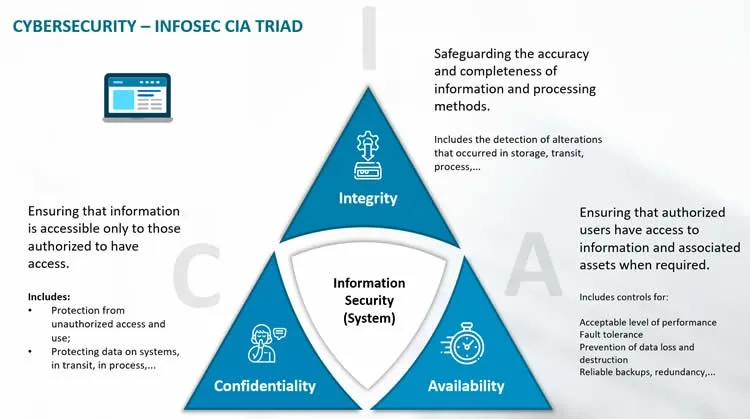
Image Source: i-SCOOP
The CIA triad becomes crucial after properly scoping AI assets. This fundamental cybersecurity framework helps us understand AI systems’ unique vulnerabilities by looking at confidentiality, integrity, and availability.
Confidentiality: prompt injection and data leakage
AI platforms must prevent unauthorized access to sensitive information. Prompt injection stands out as the biggest threat to confidentiality. The OWASP 2025 Top 10 for LLMs and Gen AI applications ranks it as the number one risk.
Attackers use prompt injection to manipulate AI tools through malicious inputs. These inputs can bypass the system’s safety guardrails. The attacks come in two main forms:
- Direct prompt injection: Attackers give explicit instructions to override system behavior
- Indirect prompt injection: Malicious code hides in data sources that AI systems use
The second type is trickier because attackers can hide harmful instructions anywhere. Email signatures, document metadata, webpage content, and even image files are all vulnerable. Both nation-states and individuals can launch these attacks. A job applicant once tricked an AI hiring platform by hiding indirect prompt injection in photo data.
Data leakage is another serious confidentiality risk. It happens when AI interactions expose sensitive information. Poorly configured systems, weak data storage, or exchanges between models and users can cause leaks. The collateral damage ranges from exposed personal data to leaked business strategies and security credentials.
Integrity: data poisoning and model inversion
Integrity in AI means keeping data reliable and safe from unauthorized changes. Data poisoning is the main threat here. Bad actors can mess with the training data that builds AI models.
Attackers who use data poisoning can:
- Switch correct labels with wrong ones in training data
- Add fake data points to control AI behavior
- Create hidden backdoors that trigger under specific conditions
- Launch clean-label attacks that regular validation misses
Data poisoning comes in two flavors: targeted attacks that mess with specific outputs and broader attacks that weaken the whole model. These attacks pack a punch – changing just ~0.001% of training data can work.
Model inversion is another big risk to integrity. Attackers try to rebuild sensitive training data by studying model outputs. They can extract private information like biometrics or health records used to train the model. This could break GDPR or HIPAA rules. Model inversion also shows how the AI makes decisions, letting attackers create specialized harmful inputs.
Availability: model outages and inference failures
Availability risk management makes sure systems work when needed. AI systems face unique challenges compared to regular IT setups.
Problems with AI availability reach way beyond the immediate system. One broken agent can trigger failures across connected systems and disrupt business processes. Chain reactions are especially dangerous. Attackers can overload an agent’s compute, memory, or service limits. This makes applications slow or unresponsive.
Inference failures are another headache. AI inference – where models make predictions from input data – can fail in many ways. Resource limits, poor model design, or targeted attacks on the inference process all cause problems.
These three types of risks – confidentiality, integrity, and availability – often overlap in AI systems. A successful prompt injection attack shows this well. It can leak sensitive data, mess with decisions, and drain resources all at once.
Organizations need a comprehensive approach to handle these connected risks. The CIA triad gives them a detailed framework to check their AI systems and protect all three security areas.
Using FAIR-AIR to Analyze AI Risk Scenarios
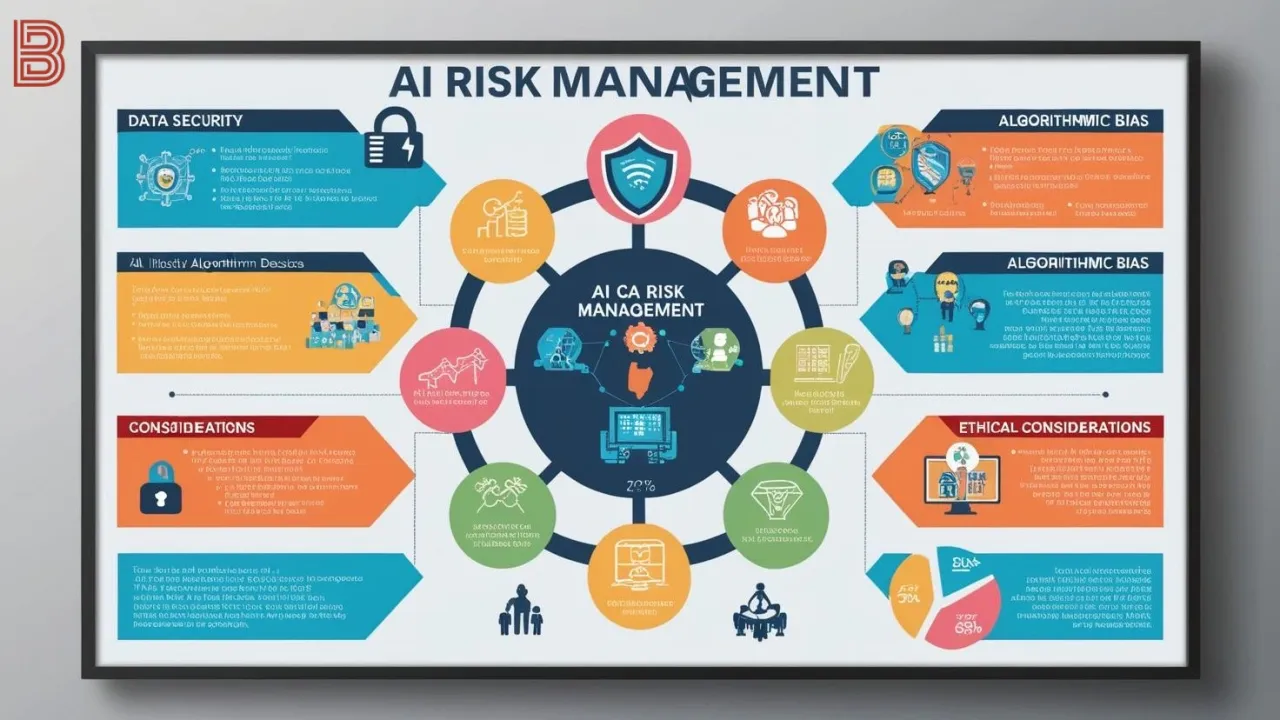
Image Source: LinkedIn
Organizations need a clear plan to analyze scenarios and make informed decisions after they spot and group potential AI risks. The Factor Analysis of Information Risk for Artificial Intelligence (FAIR-AIR) methodology offers a way to calculate complex AI exposures in measurable terms.
Step 1: Place AI risk in context
FAIR-AIR starts by figuring out what you need to calculate. The first step looks at five vectors of GenAI risk: Shadow GenAI (unauthorized use), Creating Your Own Foundational LLM, Hosting on LLMs, Managed LLMs, and Active Cyber Attack.
You need a clear picture of the specific use case and everyone involved to understand AI risk. This should cover:
- The business problem you want to solve
- Key stakeholders involved
- Workflow characterization
- Critical inputs and outputs of the system
Step 2: Scope the threat surface and actors
The next phase identifies possible loss scenarios using FAIR’s threats/assets/effects approach once you have the context. You must know the business decision you want to support before starting the analysis.
The right scope needs three key elements:
- The asset (what needs protection)
- The threat (what you’re protecting against)
- The loss event (what happens if protection fails)
To name just one example, when analyzing a prompt injection vulnerability, your scope might read: “There is a risk that malicious actors (threat) will exploit prompt injection to extract sensitive data (asset) through our customer service chatbot, leading to data exfiltration (loss event)”.
Step 3: Calculate likelihood and impact
FAIR-AIR uses specific metrics to assess both probability and potential impact after identifying scenarios. This creates clear risk statements like: “There is a 5% probability in the next year that employees will leak company-sensitive information via an open-source LLM model, potentially causing $5 million in losses”.
Risk estimation works best when organizations:
- Use likelihood scales (from very low to very high) to measure occurrence probability
- Apply severity scales to assess consequence magnitude
- Combine these in a risk matrix to calculate overall risk per stakeholder
Industry sources or subject matter experts can provide baseline estimates when internal data isn’t available.
Step 4: Prioritize treatment options
FAIR-AIR helps spot key drivers behind risk scenarios after the calculations. Organizations can then find the controls and fixes that will reduce loss exposure the most.
Security teams should take these steps before implementing solutions:
- Document each threat’s likelihood and impact
- Create an action plan with prioritized fixes
- Get support from data engineers, developers, IT teams, and senior leadership
Step 5: Make informed decisions
The final step brings everything together by comparing treatment options while looking at calculated values, controls, and key risk drivers. This practical approach turns AI exposure into a useful tool for governance, compliance, and strategic planning.
FAIR-AIR aims to help manage risk while meeting business needs, not create roadblocks to AI deployment. The results let organizations:
- Focus investments on high-impact safeguards
- Show measurable improvement over time
- Add findings to governance processes
- Guide capital allocation and risk appetite decisions
FAIR-AIR helps technical experts and business executives communicate better by calculating AI risks in financial terms. This leads to more objective decisions about using limited security resources.
Frameworks for AI Risk Governance and Compliance
Regulatory frameworks shape how organizations handle AI risk management. These guidelines set boundaries that help you direct evolving AI challenges while staying compliant.
Frameworks for AI Risk Governance and Compliance
Overview of NIST AI Risk Management Framework
The NIST Artificial Intelligence Risk Management Framework (AI RMF) emerged in January 2023. This framework shows how public and private sectors worked together to tackle risks affecting individuals, organizations, and society. The framework takes a voluntary path to build trustworthiness into the AI lifecycle—from design and development to use and review.
The AI RMF stands on four key functions:
- Govern: Fosters a risk-aware organizational culture that starts with leadership’s dedication
- Map: Relates AI systems to broader operational environments through technical, social, and ethical dimensions
- Measure: Reviews risks using both quantitative and qualitative approaches
- Manage: Tackles identified risks through technical controls and procedural safeguards
The framework’s adaptability makes it valuable. NIST AI RMF works for organizations in a variety of contexts, from startups to multinational corporations. Version 1.0 uses a two-number system to track major and minor changes. Full reviews happen at least every five years.
EU AI Act and ISO/IEC standards for AI systems
The European Union’s AI Act leads as the world’s first complete legal framework for artificial intelligence. This regulation sets mandatory requirements based on a four-tier risk system:
- Unacceptable risk: Prohibited applications (social scoring, emotion recognition at work)
- High risk: Systems that need rigorous compliance measures
- Limited risk: We focused on transparency obligations
- Minimal risk: Basic compliance requirements
High-risk systems under the EU AI Act need risk assessment, quality datasets, detailed record-keeping, and human oversight. Breaking these rules brings heavy penalties—up to €35 million or 7% of annual global turnover for prohibited AI systems.
ISO/IEC has created matching international standards. ISO/IEC 42001, launched in December 2023, brings the first certifiable AI management system standard. Its Plan-Do-Check-Act method gives organizations a structured way to guide AI governance. ISO/IEC 23894:2023 helps integrate risk management into AI-related activities and functions.
Mapping scoped assets to regulatory requirements
Asset mapping to regulatory frameworks becomes crucial after cataloging your AI assets. This task spans multiple expertise areas like AI, privacy, and security. Several approaches can simplify this process.
Regulatory mapping needs constant updates. AI systems change faster than traditional documentation can keep up. Automated mapping tools that keep workflows arranged with GDPR, EU AI Act, and NIST RMF requirements work better than manual processes.
You should find common requirements across frameworks. Risk assessment methods in ISO 31000 work well with organizations that want to add AI risk into broader enterprise risk programs. NIST AI RMF brings in specific concepts like explainability and fairness.
A complete mapping approach needs:
- Finding AI systems and their regulatory obligations
- Guiding obligations across teams with unified compliance orchestration
- Building continuous compliance assurance as regulations evolve
Good mapping turns abstract regulatory principles into real operational controls. These might be technical safeguards like access restrictions, data governance procedures, or monitoring systems that match framework-specific requirements.
Many AI governance frameworks share basic elements. The NIST AI RMF, ISO standards, and EU AI Act all stress risk-based approaches. This shows how strategic asset scoping builds the foundation for effective AI governance whatever framework you choose.
AI Risk Assessment Tools and Monitoring Systems
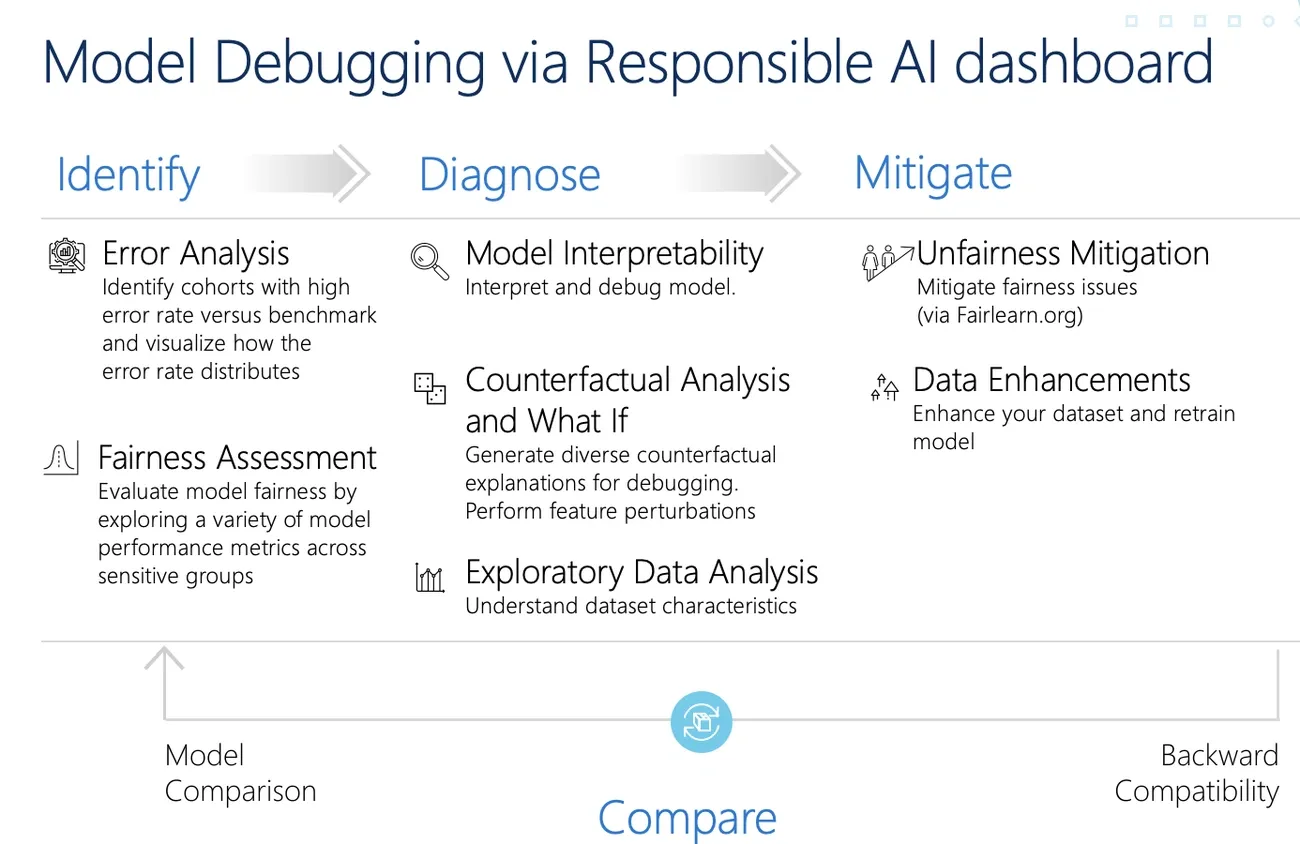
Image Source: Microsoft Learn
AI governance tools provide the backbone for risk management strategies. These technologies connect theoretical frameworks with practical implementation. Organizations can use them to put their risk management policies to work.
Model monitoring platforms for immediate alerts
Today’s AI risk management needs constant watching of deployed models. Platforms like ModelOp offer central AI systems that watch for risks such as bias, drift, and poor performance. These tools alert teams when models stray from expected outcomes, so they can fix problems quickly before causing harm.
AlertMedia has improved its risk intelligence suite with AI capabilities. The system processes tens of thousands of open-source intelligence sources. Security teams can spot threats early through signals that group and summarize information from trusted sources automatically.
Explainable AI (XAI) tools for transparency
Organizations need Explainable AI to build trust when they deploy AI models in production. XAI tools show how AI makes decisions. Teams can use this knowledge to make adjustments and reduce compliance, legal, and security risks.
XAI methods come in two main types:
- Ante-hoc models with built-in explainability (decision trees, linear regression)
- Post-hoc models that create explanations after predictions are made
Post-hoc explainability uses methods like SHAP and LIME. These tools show which inputs shaped an AI decision and create visual explanations like heatmaps. Regulated industries find these features valuable because they need clear reasons for AI-driven financial decisions to ensure fairness.
Bias detection suites and fairness metrics
Strong AI governance with clear policies helps teams spot and fix bias. Several tools now help organizations measure unfairness in their AI systems.
Fairness metrics show if an AI system treats different demographic groups fairly. Teams often use demographic parity to measure outcome distribution, equalized odds to check true and false positive rates, and disparate impact ratio to compare outcomes between groups.
IBM’s AI Fairness 360, Microsoft’s Fairlearn, and Google’s Fairness Indicators offer these metrics as open-source tools. IBM AI Fairness 360 stands out with over 70 metrics and algorithms that help teams find and fix bias throughout the AI lifecycle.
These tools create a complete ecosystem for organizations that want to manage AI risks using frameworks like the NIST AI RMF.
Implementing Controls and Building Resilience
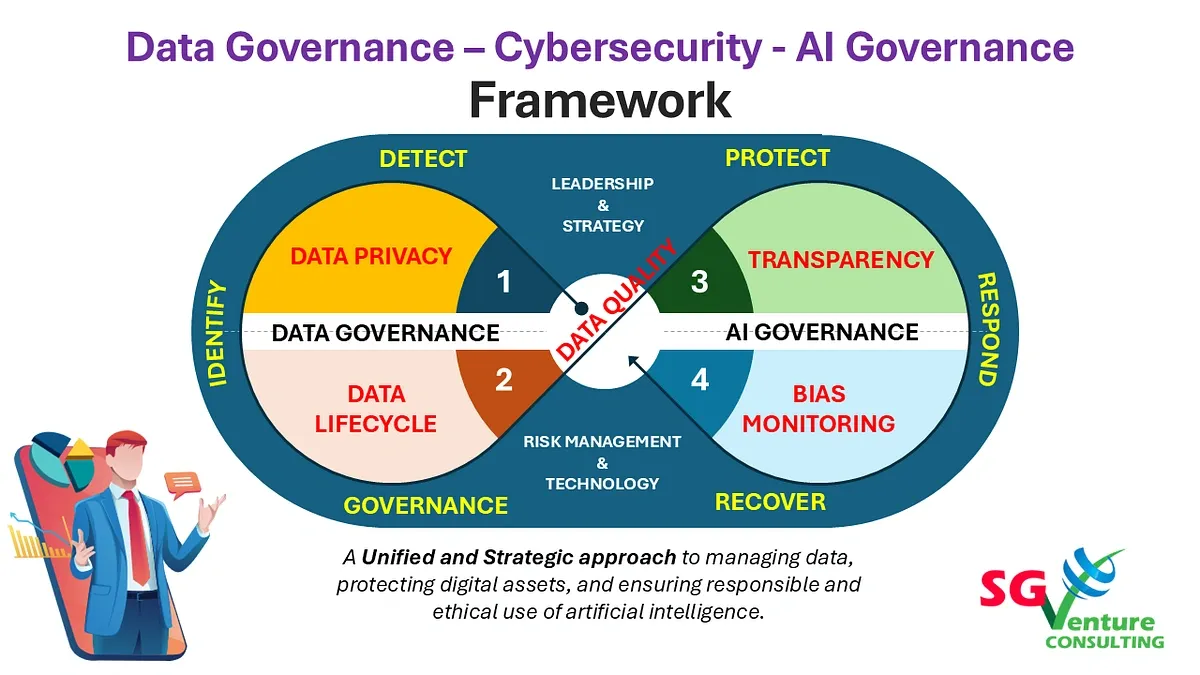
Image Source: Medium
Sustainable AI risk management needs strong controls as its foundation. Organizations must set up concrete safeguards to protect their systems throughout their lifecycle, not just identify and assess risks.
Role-based access control for AI pipelines
Role-Based Access Control (RBAC) acts as a basic security mechanism for AI systems. It ensures users and processes get only the minimum permissions they need for authorized functions. AI pipelines are not like traditional IT environments. They contain many sensitive parts – from training datasets to model configurations – and each needs specific protection.
RBAC works best when following several key principles. Teams should first create clear role definitions based on specific AI workflow functions like Data Scientist, ML Engineer, or AI System Administrator. They should then give only essential access rights based on the principle of least privilege. The final step involves splitting up duties so no single person has too much control that could lead to mistakes or misuse.
RBAC in AI environments must cover both human users and non-human identities such as AI models, MLOps pipelines, and service accounts. This setup helps prevent prompt injections, unauthorized model changes, and attempts to poison data by restricting access to training datasets.
Data governance and lineage tracking
Data governance has grown from a simple compliance tool into a powerful business asset that cuts risk while building trust in AI systems. Good governance needs automated lineage tracking. This means constantly mapping how data moves through machine learning systems from the original training datasets to production inference.
AI data lineage is not like traditional tracking. It captures unique ML transformations including feature engineering, model training processes, and inference decisions. Teams can trace data from source to output and spot potential risks before they disrupt production systems.
Strong lineage tracking makes incident investigation much easier. Engineers can trace problematic outputs back to their source instantly instead of spending days on manual forensics. This feature becomes invaluable during security incidents because teams can quickly find affected systems and limit potential damage.
Incident response planning for AI-specific threats
Standard incident response plans need updates to handle unique AI-specific threats. Traditional plans focus on security breaches, but AI incidents also include risks like bias, discrimination, and unexpected model behaviors.
A complete AI incident response plan needs several critical elements. Teams should add “kill switch” measures to stop AI systems immediately when harmful behaviors appear. They need clear protocols for human-in-the-loop escalation when automated systems detect problems. The plan should also include detailed documentation requirements for regulatory investigations, covering model development history and impact assessments.
Good preparation makes AI incident management work better. Teams should understand their AI tools’ unique risks, run tabletop exercises for AI scenarios, and build cross-functional teams that bring in stakeholders who usually don’t deal with traditional incidents.
Organizations can build stronger defenses against complex AI system threats by using these three basic controls – RBAC, data lineage tracking, and AI-specific incident response plans. These measures help drive innovation without sacrificing security, compliance, or trust.
Conclusion
This piece explores how AI risk management starts with detailed asset scoping. Organizations can’t protect what they can’t see, making asset identification the life-blood of any solid AI security strategy. The CIA triad gives a well-laid-out way to sort out unique confidentiality, integrity, and availability risks that AI systems face. FAIR-AIR methodology turns complex technical vulnerabilities into measurable business risks that decision-makers can grasp.
Frameworks like the NIST AI RMF, EU AI Act, and ISO standards are the foundations for organizations to navigate this complex digital world. Mapping your scoped assets to these regulatory requirements builds a base for lasting compliance. Tools for model monitoring, explainable AI, and bias detection give you the operational muscle to put these theoretical frameworks to real-life use.
Building true resilience needs practical controls. Role-based access systems, data lineage tracking, and AI-specific incident response plans protect AI assets throughout their lifecycle. All the same, AI risk management is an ongoing trip rather than a destination. As AI technologies advance faster, our security approaches must keep pace.
Organizations that tackle AI risks head-on set themselves up for lasting breakthroughs while keeping stakeholder trust. Therefore, those still developing their AI governance programs should Book a Readiness Call to check their current stance against proven frameworks and find practical next steps. Effective AI risk management balances chances with responsibility, helping organizations tap into AI’s full potential while managing its unique risks.
Key Takeaways
Effective AI risk management starts with knowing exactly what AI assets you’re protecting—from models and datasets to prompts and infrastructure—as you can’t secure what you can’t see.
• Asset scoping is foundational: Create comprehensive inventories of all AI components including models, datasets, prompts, and infrastructure before implementing any security measures.
• Use CIA triad for risk categorization: Structure AI threats around confidentiality (prompt injection, data leakage), integrity (data poisoning, model inversion), and availability (outages, inference failures).
• Apply FAIR-AIR methodology: Transform complex AI risks into quantifiable business terms through contextualization, threat scoping, likelihood assessment, and prioritized treatment options.
• Implement specialized monitoring tools: Deploy model monitoring platforms, explainable AI tools, and bias detection suites to operationalize risk management frameworks in production environments.
• Build resilience through targeted controls: Establish role-based access control, data lineage tracking, and AI-specific incident response plans to protect systems throughout their lifecycle.
The rapid proliferation of AI assets—with teams iterating daily rather than monthly, demands automated, continuous risk management approaches that evolve alongside your AI capabilities. Organizations that proactively scope and secure their AI assets position themselves for sustainable innovation while maintaining regulatory compliance and stakeholder trust.
FAQs
Q1. What is the first step in AI risk management? The first step in AI risk management is scoping and creating an inventory of all AI assets within an organization. This includes identifying models, datasets, prompts, and supporting infrastructure used in AI systems.
Q2. How can organizations categorize AI risks effectively? Organizations can effectively categorize AI risks using the CIA triad framework, which focuses on Confidentiality (e.g., prompt injection, data leakage), Integrity (e.g., data poisoning, model inversion), and Availability (e.g., model outages, inference failures) risks.
Q3. What is FAIR-AIR and how does it help in AI risk analysis? FAIR-AIR (Factor Analysis of Information Risk for Artificial Intelligence) is a methodology that helps organizations analyze AI risk scenarios by contextualizing risks, scoping threats, quantifying likelihood and impact, prioritizing treatment options, and making informed decisions based on measurable data.
Q4. What are some key frameworks for AI risk governance? Key frameworks for AI risk governance include the NIST AI Risk Management Framework, the EU AI Act, and ISO/IEC standards such as ISO/IEC 42001. These frameworks provide guidelines and requirements for managing AI risks and ensuring compliance.
Q5. What types of controls should be implemented for AI risk management? Important controls for AI risk management include role-based access control for AI pipelines, data governance and lineage tracking systems, and incident response planning specifically tailored for AI-related threats. These controls help build resilience against the unique risks associated with AI systems.