
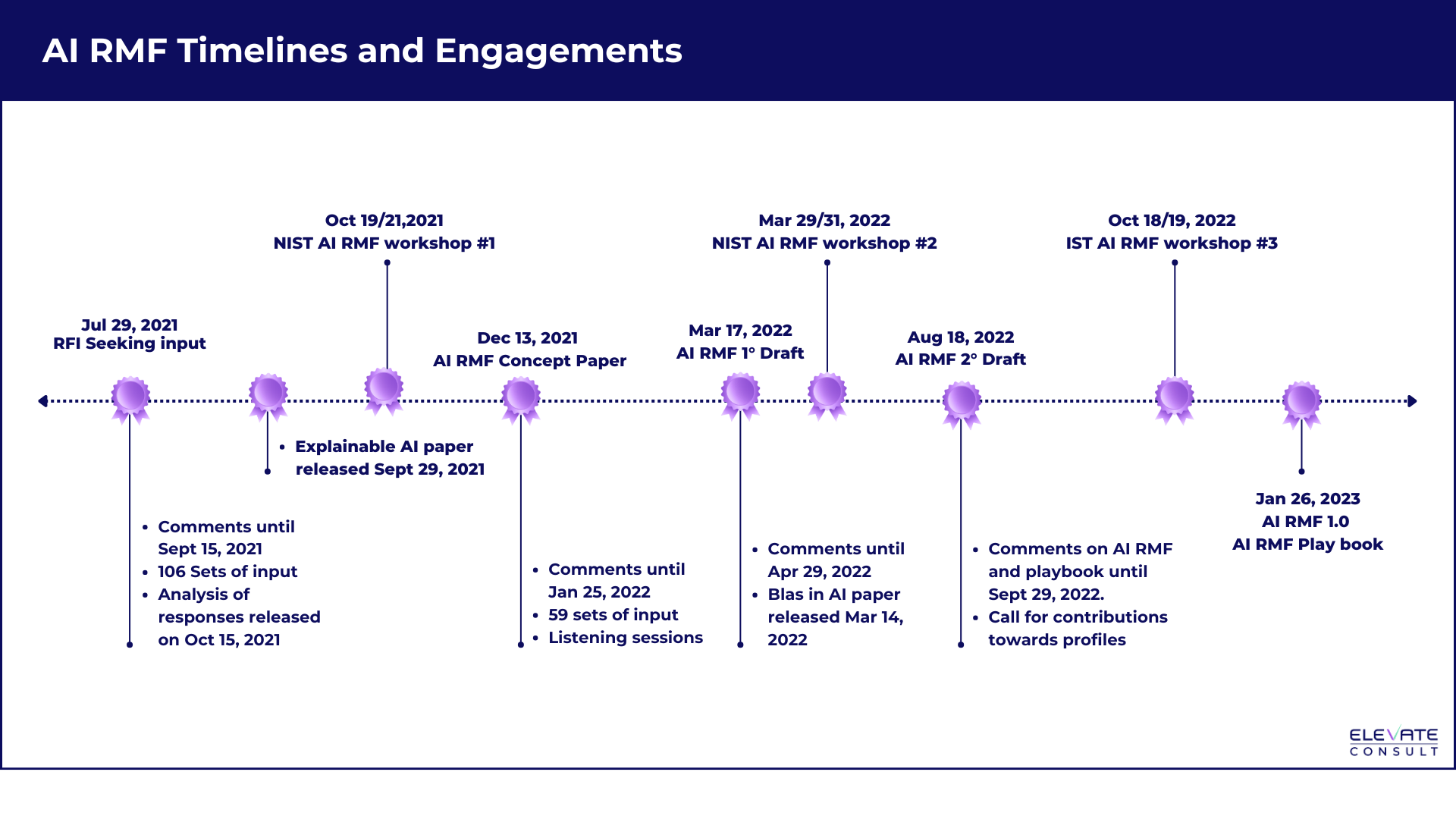
The NIST AI Risk Management Framework (AI RMF 1.0) was published on January 26, 2023 — and for organizations deploying AI at scale, it remains the most practical starting point for managing what has become a genuinely complex risk landscape.
AI adoption is accelerating faster than most governance structures can keep up with. The financial and reputational exposure is real: models that behave unpredictably, training data that introduces bias, generative systems that create IP and security vulnerabilities that didn’t exist five years ago. The question isn’t whether your organization needs a structured approach to AI risk — it’s whether the one you have is actually working.
NIST’s framework is voluntary, but it’s built around four functions — Govern, Map, Measure, and Manage — that give organizations a consistent way to identify AI-related harms before they escalate. NIST defines those harms across three dimensions: impact to individuals, to organizations, and to broader ecosystems.
This guide walks you through how to implement the NIST AI RMF as an ongoing program — not a one-time exercise — that integrates with your existing risk management practices and scales as your AI portfolio grows.
Why AI Risk Management Needs a Dedicated Framework
Traditional risk management practices don’t work well with AI systems. The quick rise of AI needs specialized frameworks that can tackle its unique challenges. The NIST AI Risk Management Framework stands as a vital development for organizations using AI technologies.
Limitations of Traditional Risk Management for AI
Risk assessment approaches rely on historical data, manual reporting, and human intuition—methods that don’t match AI’s dynamic nature. Model Risk Management (MRM) workflows in regulated industries need 6-12 weeks of review time after development ends, which causes major delays. These step-by-step processes clash with the quick, iterative development cycles that drive AI breakthroughs.
Standard risk frameworks focus on financial aspects but miss the wider range of AI-specific issues. Current MRM practices deal with traditional risk types like capital adequacy and credit risk. They miss the reputational, consumer conduct, and employee risks that AI systems bring.
A key problem lies in organizational fragmentation. AI risks cut across many control areas—model, legal, data privacy, compliance, and reputation. These areas work separately with little coordination. This divided approach fails as AI spreads throughout enterprises.
Unique Risks in Generative and Predictive AI
Generative AI brings new risk profiles that old frameworks can’t handle. AI systems combine technical and social elements, so risks emerge from how these parts interact in real-world use.
Shadow AI—using generative AI tools without proper oversight—has become a serious issue. About 77% of employees use GenAI at work, but only 28% of organizations have clear usage policies. This creates a dangerous gap that traditional risk management can’t fix.
The range of unique risks includes:
- Data poisoning: Bad actors can hide inaccuracies during model training
- Sensitive information exposure: GenAI models might remember and share confidential data from training sets
- Bias amplification: AI systems can make existing societal biases worse
- Environmental impact: One transformer large language model’s training can release as much carbon as 300 round-trip flights between San Francisco and New York
- Privacy violations: Training needs massive amounts of data that might include personal details without proper consent
As these technologies grow, risks multiply when models start “talking to one another”—something AI developers find hard to resist.
Business Impacts of Unmanaged AI Risk
Poor AI risk management comes at a high cost. IBM reports that one in five organizations had a breach from Shadow AI. These incidents cost USD 670,000 more than regular data breaches. Also, 96% of leaders think using generative AI makes security breaches more likely.
Most organizations aren’t ready—only 24% of current generative AI projects include security measures. This gap looks worse as corporate data in AI tools jumped 485% between 2023 and 2024. The share of sensitive data in these inputs almost tripled from 10.7% to 27.4%.
Beyond money losses, unmanaged AI creates big operational and compliance risks. Without proper controls, organizations might lose intellectual property, use false model outputs, and face legal troubles. This matters even more since 58% of organizations now use more than five AI tools. This complex risk landscape needs more than traditional frameworks can offer.
The NIST AI Risk Management Framework offers a structured approach built for these connected challenges. It helps organizations reduce negative effects while getting the most from AI’s potential.
Overview of the NIST AI RMF Core Functions
The NIST AI Risk Management Framework consists of four connected functions that are the foundations of its structure. These functions work together as integrated processes throughout an AI system’s lifecycle to create an all-encompassing approach to risk management.
GOVERN: Embedding Risk Culture
The GOVERN function is the foundation that builds effective AI risk management. This function differs from the other three because it cuts across and flows through all aspects of AI risk management. The core emphasis lies in building a risk-aware organizational culture that starts with leadership commitment and clear governance structures.
Organizations must establish these six vital categories under GOVERN:
- Clear policies and procedures to map, measure, and manage AI risks
- Accountability structures with strong teams
- Workforce diversity and inclusion processes throughout the AI lifecycle
- Organizational commitment to risk communication
- Strong involvement with relevant AI stakeholders
- Procedures that address third-party software risks
Organizations can define their structures, processes, and roles to manage AI risks effectively through this function. It also establishes ethical guidelines that line up with organizational values and regulatory requirements.
MAP: Contextualizing AI Use Cases
The MAP function helps understand the broader ecosystem where AI will operate before starting AI system development. This vital first step gathers input from internal teams, external collaborators, end users, and others the AI system affects.
Organizations can learn about potential effects across technical, social, and ethical dimensions through the MAP function. The main categories include establishing context, proper AI system categorization, comparing AI capabilities against measurements, mapping risks across system components (including third-party elements), and identifying effects on individuals, communities, and society.
To cite an instance, MAP 1.5 requires organizations to determine and document their risk tolerances. This step forms a significant foundation to manage risks later. Teams can review potential risks before they grow larger at this context-setting stage.
MEASURE: Measuring Risk
The MEASURE function tests AI systems before deployment and during operation. It offers tools to assess risks continuously and includes performance metrics, fairness indicators, and security assessments.
Organizations pick suitable methods and metrics, review AI systems against trustworthiness characteristics, implement systems to track risks over time, and collect feedback about measurement effectiveness. This numbers-based approach helps set thresholds and creates alerts when systems cross those thresholds.
The MEASURE function recognizes AI’s socio-technical nature—risks come from technical aspects interacting with societal factors in deployment. Organizations develop complete measurement approaches that review both technical performance and social impact based on this understanding.
MANAGE: Operationalizing Risk Response
MANAGE, the final function, prioritizes and responds to AI risks found through the MAP and MEASURE functions. Organizations can implement strategies to address negative impacts and harmful biases through bias mitigation, ethical compliance verification, and incident response planning.
Four categories make up this function: determining if the AI system meets its intended purpose; developing strategies that maximize benefits while reducing risks; managing third-party AI risks; and documenting/monitoring risk treatments.
The MANAGE function allocates resources to address identified risks based on GOVERN definitions. Organizations get clear plans to respond to, recover from, and communicate about AI-related incidents—completing the framework’s continuous approach to risk management.
Step 1: Define AI System Context and Risk Tolerance
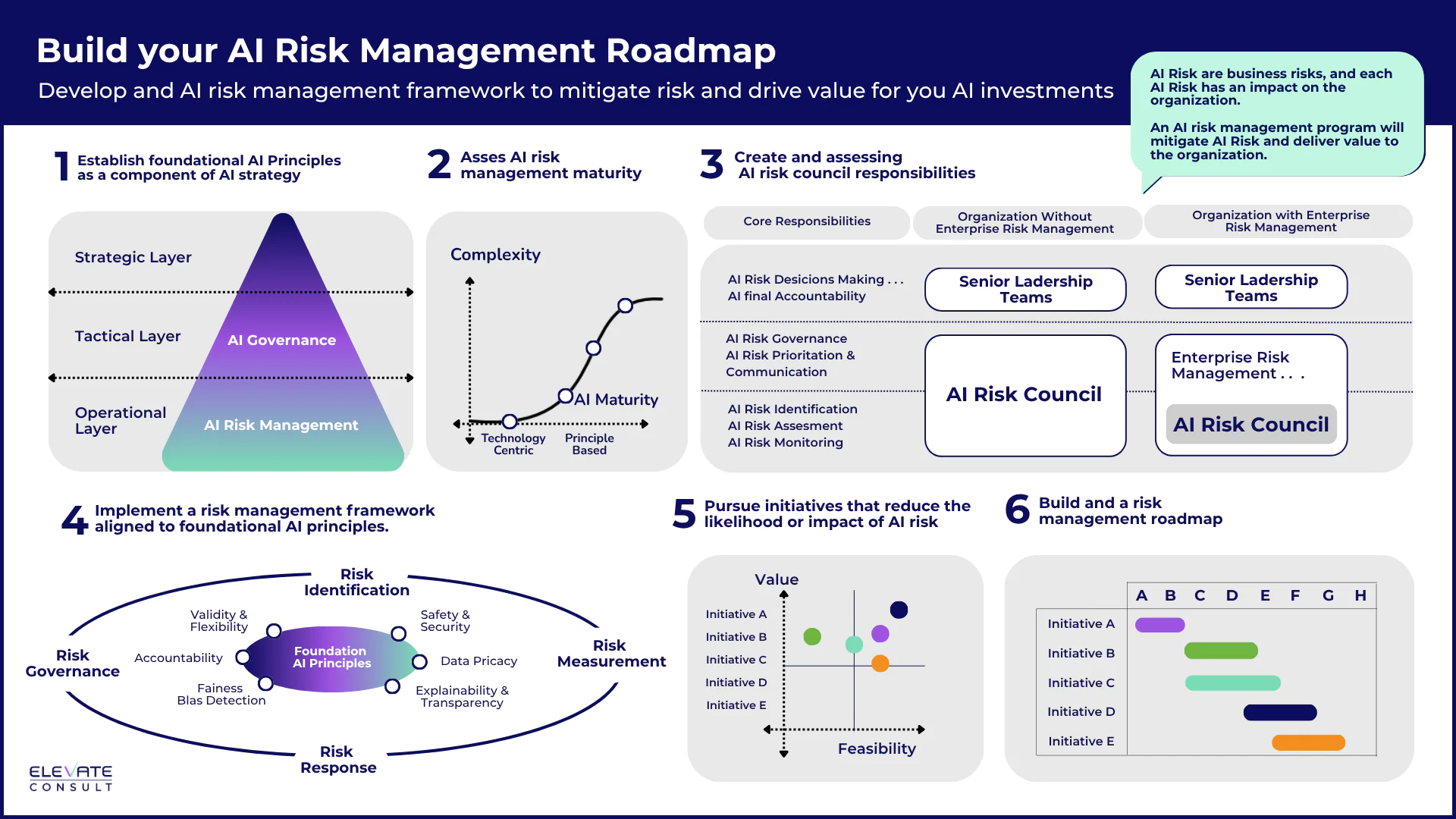
The first step to implement the NIST AI Risk Management Framework is setting your AI system’s context and risk boundaries. Organizations must document their AI solution’s purpose, identify stakeholders, set risk thresholds, and categorize the technology before development or deployment. This stage lines up with the MAP function of the NIST AI RMF.
MAP 1.1: Documenting Intended Use and Stakeholders
Organizations must state and document their AI system’s intended purposes clearly. They need to outline beneficial uses and specific deployment environments. The documentation should cover these significant elements:
- The specific users or user types and their expectations
- How it affects individuals, communities, organizations, and broader society – both positively and negatively
- The AI system’s purpose and risk assumptions and limitations
- Required testing, evaluation, validation, and verification processes
A complete documentation is more than just checking boxes – it’s the life-blood of trust, accountability, and market credibility. Investors use this information to measure risk. Regulators need it for enforcement, and stakeholders refer to it to understand system boundaries.
Identifying stakeholders needs special focus. Organizations should look at both internal stakeholders (senior leaders, technical employees, non-technical staff) and external parties the AI system affects. The NIST AI RMF emphasizes input from a variety of sources. This helps prevent negative risks and builds more trustworthy AI systems.
MAP 1.5: Establishing Organizational Risk Tolerance
Organizations must set and document their risk tolerances after identifying stakeholders and documenting intended uses. Risk tolerance shows how ready an organization is to take risks while achieving its goals. It serves as a foundation for future risk management activities.
The NIST AI RMF helps prioritize risks but doesn’t set specific risk tolerance levels. This approach recognizes that risk tolerance changes based on:
- Legal and regulatory requirements
- Organizational policies and standards
- Industry norms and expectations
- Application-specific considerations
Risk tolerance is different from risk appetite. Risk appetite shows an organization’s strategic willingness to chase potential gains despite possible losses. Risk tolerance sets specific operational limits that decisions must not cross.
To cite an instance, a retail company using an AI-driven inventory management system might accept moderate risk with technology that improves customer involvement and operations. However, they might set specific error rate limits (below 1%) to maintain supply chain reliability.
MAP 2.1: Categorizing AI System Types
Categorizing your AI system correctly is vital for context setting. Organizations must define the specific tasks and methods their AI system will support – whether classifiers, generative models, recommenders, or other types.
AI agents typically perform three types of actions:
- Actions that affect physical or digital environments
- Resource consultation and tool usage
- Process selection when choosing resources/tools/other AI agents
Knowing your AI system type helps select the right risk management approaches. The EU AI Act divides AI systems into risk categories: high risk (limited risks), and minimal (no risk). Each category needs different compliance measures. High-risk AI systems need complete risk management frameworks that reference standards like the NIST AI RMF.
Organizations should understand their AI system’s potential effects well enough to make informed decisions about moving forward with design, development, and deployment after this mapping phase. This foundation supports the framework’s measuring and managing functions.
AI risks work best as part of broader enterprise risk management strategies. Treating AI risks alongside cybersecurity and privacy concerns creates a complete risk management program that handles all organizational threats.
Step 2: Build Governance and Accountability Structures
AI risk management implementation depends on good governance as its life-blood. The NIST AI RMF’s GOVERN function helps arrange risk management with organizational goals and regulatory requirements. It also sets up significant accountability mechanisms. This vital second step builds the organizational foundation needed to run your AI risk management program.
GOVERN 2.1: Assigning Roles and Responsibilities
A clear definition of roles creates accountability in your AI governance structure. You need to identify who will oversee AI governance activities, talk to stakeholders, and lead risk mitigation efforts. An AI Governance Committee should be formed with these responsibilities:
- Determining AI maturity levels in business functions
- Addressing inadequacies in AI implementation
- Communicating with the core team of AI stakeholders like researchers and data scientists
- Mitigating AI risks to acceptable levels
- Conducting regular assessments of AI usage and implementation
Document technical details carefully for each AI solution in your portfolio. Include the foundational model, hosting location, use case criticality, data sensitivity, and inter-agent dependencies. You should then set up human-in-the-loop oversight with identified stakeholders responsible for security, compliance, and decision-making.
AI risks can become more opaque than analytical AI systems without this transparency. Your organization needs standardized oversight processes with defined ownership throughout the AI lifecycle—from onboarding through deployment to offboarding. This will give a detailed governance structure.
GOVERN 3.1: Ensuring Diverse Risk Perspectives
Managing AI risks needs input from different viewpoints across the entire AI lifecycle. AI teams should represent various experiences, expertise, backgrounds, and demographics. Such diversity helps organizations predict effects and evaluate emerging risks better.
The NIST AI RMF emphasizes that good risk management comes from organizational commitment at senior levels. Organizations often need cultural changes to achieve this. AI governance works best within a broader enterprise risk management framework. When you treat AI risks among other critical concerns like cybersecurity and privacy, you get better integrated outcomes and organizational efficiencies.
Note that AI governance must “have teeth”—non-compliance should have consequences. The responsible team should create and enforce specific guidelines. They need to establish consistent decision-making frameworks for ethical dilemmas and update guidelines as AI technology evolves.
GOVERN 5.1: Engaging External AI Actors
Success in AI governance needs cooperation with internal and external stakeholders. Your governance structure should involve stakeholders at all organizational levels to gain support and make the program work. This means identifying and consulting with relevant AI actors throughout your AI systems’ socio-technical dimensions.
The NIST AI RMF recognizes several key areas where external stakeholders play vital roles: people and organizations, data, model development, and system integration. You should blend AI actors with test, evaluation, verification, and validation expertise throughout your AI lifecycle. You should establish effective communication channels with external stakeholders. This ensures your governance structure considers all critical viewpoints.
Your organization should also set up centrally steered, business-aligned AI portfolio management. This provides oversight by IT risk, information security, and compliance functions. Such a detailed approach offers transparency around business ownership, use cases, and data handling. It creates a governance foundation that grows with your AI implementations.
Step 3: Identify and Document AI Risks
Organizations must identify and document AI risks as a key step in implementing the NIST AI Risk Management Framework. Teams need to create a full picture of all possible risks after setting up proper context and governance structures. Special attention should go to third-party components, effects on society, and documentation methods.
MAP 4.1: Mapping Third-Party Risks
Third-party AI components create unique risks that need special review methods. More organizations now rely on external vendors for AI capabilities. Learning when and how these partners use AI has become a bigger challenge. Many companies still use manual outreach methods, which slows down vendor onboarding.
Standard oversight tools like SOC 2 reports or general risk questionnaires don’t provide enough detail about how vendors use AI, their data sources, and control measures. Companies should rethink how they spot, review, and track third-party AI use. This means adding AI-specific controls to risk models and improving due diligence.
Companies need to update vendor contracts to require AI use disclosure in service delivery. Teams should inspect data usage policies to verify if third parties train AI models with organizational data. Clear documentation of data handling and consent processes is essential.
Third-party AI risk assessment should include targeted questions about:
- AI model design and development approaches
- Data sources used in training
- Risk control mechanisms
- Explainability and monitoring processes
- Compliance with relevant regulations
MAP 5.1: Characterizing Societal and Individual Impacts
The NIST AI RMF stresses the need to understand how AI systems help or hurt individuals, communities, and society. Public opinion supports this view—50% of Americans feel more worried than excited about AI’s growing role in daily life, up from 37% in 2021.
Americans worry about AI’s effect on core human skills. About 53% think AI will hurt creative thinking while 50% fear it will damage meaningful relationships. The numbers paint a clear picture: 57% see societal risks of AI as high, while only 25% believe the benefits are high.
AI risks can hit different groups harder than others. Without proper controls, AI systems might magnify unfair outcomes for individuals and communities. People share this worry, as 76% of Americans think it’s very important to tell if humans or AI created content.
Teams should review impacts across several areas:
- Socioeconomic effects on employment and wealth distribution
- Privacy and autonomy considerations
- Potential for bias or discrimination
- Environmental sustainability impacts
- Effects on cognitive abilities and social connections
Creating a Centralized AI Risk Register
A centralized AI risk register helps organizations track all AI-related risks. This living document should record each risk, rate its likelihood and impact, connect it to controls and obligations, assign owners, and monitor fixes over time.
The register should start with simple elements: risk descriptions, categories, affected assets, likelihood and impact scores, mapped controls, linked obligations, designated owners, target dates, and current status. AI can help keep the register current by adding context from assessments and frameworks.
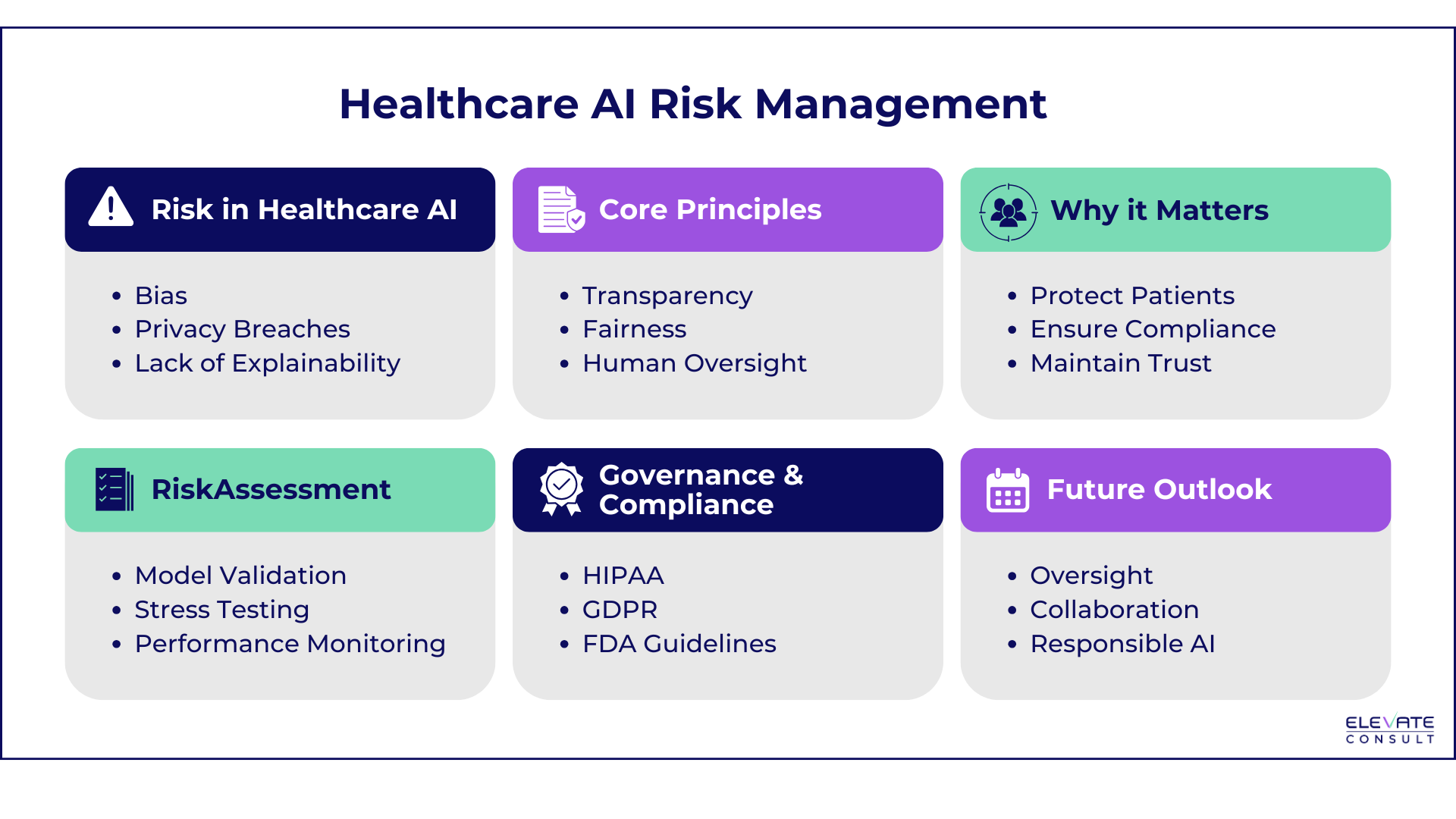
Good risk registers help spot issues early, assign fixes, track how well controls work, and provide proof for regulators and stakeholders. High-impact AI applications deserve special focus, like customer-facing decisions, sensitive areas such as healthcare or HR, and automated decisions with legal effects.
The register works best when it connects to company-wide risk management. This provides real-time risk metrics for board reports. Organizations can then see AI risk exposure across teams while staying aligned with financial, operational, and reputation risk areas.
Step 4: Measure and Monitor AI Risk Over Time
Measuring AI risks continuously helps create effective risk prevention strategies. Organizations need reliable ways to track and review these risks throughout their AI systems’ lifecycle. This approach lines up with the MEASURE function of the NIST AI RMF.
MEASURE 2.6: Safety and Fail-Safe Metrics
Safety metrics help ensure AI systems work reliably even at their limits. NIST guidelines state that AI systems affecting human life, health, property, or the environment need thorough testing before deployment. The tests must confirm that:
- The system works safely in normal conditions
- Negative risks stay below accepted levels
- The system fails safely when it reaches its limits
Safety measurement tracks system performance, reliability limits, and system failure response times. Companies using AI in critical areas should track how fast security weaknesses could be exploited. They should also monitor potentially compromised information.
MEASURE 2.11: Fairness and Bias Evaluation
Mathematical definitions help measure bias in AI systems. These measurements show if models treat different demographic groups fairly. A good bias review needs:
- Demographic parity: Different groups should have equal chances of positive outcomes
- Equality of opportunity: Qualified people from all groups deserve fair treatment
- Counterfactual fairness: Predictions should stay consistent when protected attributes change
Overall performance numbers can hide problems affecting minority groups. Yes, it is challenging to tell the difference between real-life patterns and bias. Some AI results might reflect society’s realities rather than system bias.
MEASURE 3.3: Feedback Loops from End Users
Feedback loops help AI models become more accurate over time. These systems spot errors in AI outputs and use corrections as new input. This process helps prevent similar mistakes.
Good feedback systems from users and affected communities serve two main goals:
- They create ways to report problems and challenge system decisions
- They add user experiences to AI system measurements
Automated reasoning checks should spot patterns that might harm workflow quality. When feedback shows reasoning issues affecting data quality, the system should roll back automatically and record what went wrong.
A good measurement system needs permission-based integration where data sources work within set limits. This prevents uncontrolled changes that could harm your infrastructure’s data quality.
Step 5: Manage and Respond to AI Risk Events
Organizations need systematic strategies that match the NIST AI Risk Management Framework’s MANAGE function to respond to AI risk events effectively. This step will give organizations the ability to handle AI risks through well-laid-out responses and clear communication channels.
MANAGE 1.3: Selecting Risk Response Strategies
AI risk management needs strategic responses based on risk assessment results. Teams should put mitigation strategies in place to reduce or eliminate identified risks after getting a full picture. This approach helps teams tackle potential risks early. It reduces the chance of data breaches and limits the effects of possible cyberattacks.
Teams must balance their desire to adopt new technology with their need to reduce risks. This helps them focus on the most dangerous threats through smart decision-making. The biggest risks in any situation need the most urgent attention and detailed management.
MANAGE 2.4: Deactivating Unsafe AI Systems
Teams should immediately stop development and deployment if an AI system shows unacceptable risk levels. These risks include immediate negative effects, severe ongoing harm, or catastrophic dangers. The system should stay offline until the team can manage these risks properly. This quick action serves as a key control mechanism in the NIST AI RMF.
Teams need to know the exact hardware running a problematic AI system to shut it down. Organizations should keep detailed records of their AI system’s parts and infrastructure. This makes quick deactivation possible when needed.
MANAGE 4.3: Communicating Incidents to Stakeholders
Clear communication becomes crucial when AI incidents happen. Cybersecurity communication isn’t about sharing everything. Teams need to share the right information clearly and consistently. Leaders must decide who speaks, what information they can share, and what stays under investigation. This prevents mixed messages.
Messages should match the incident’s effect on different groups. Directly affected clients get private updates while other audiences receive structured briefings. A clear communication plan prevents confusion, builds trust, and keeps everyone informed during AI risk events.
Step 6: Build and Maintain the AI Risk Roadmap
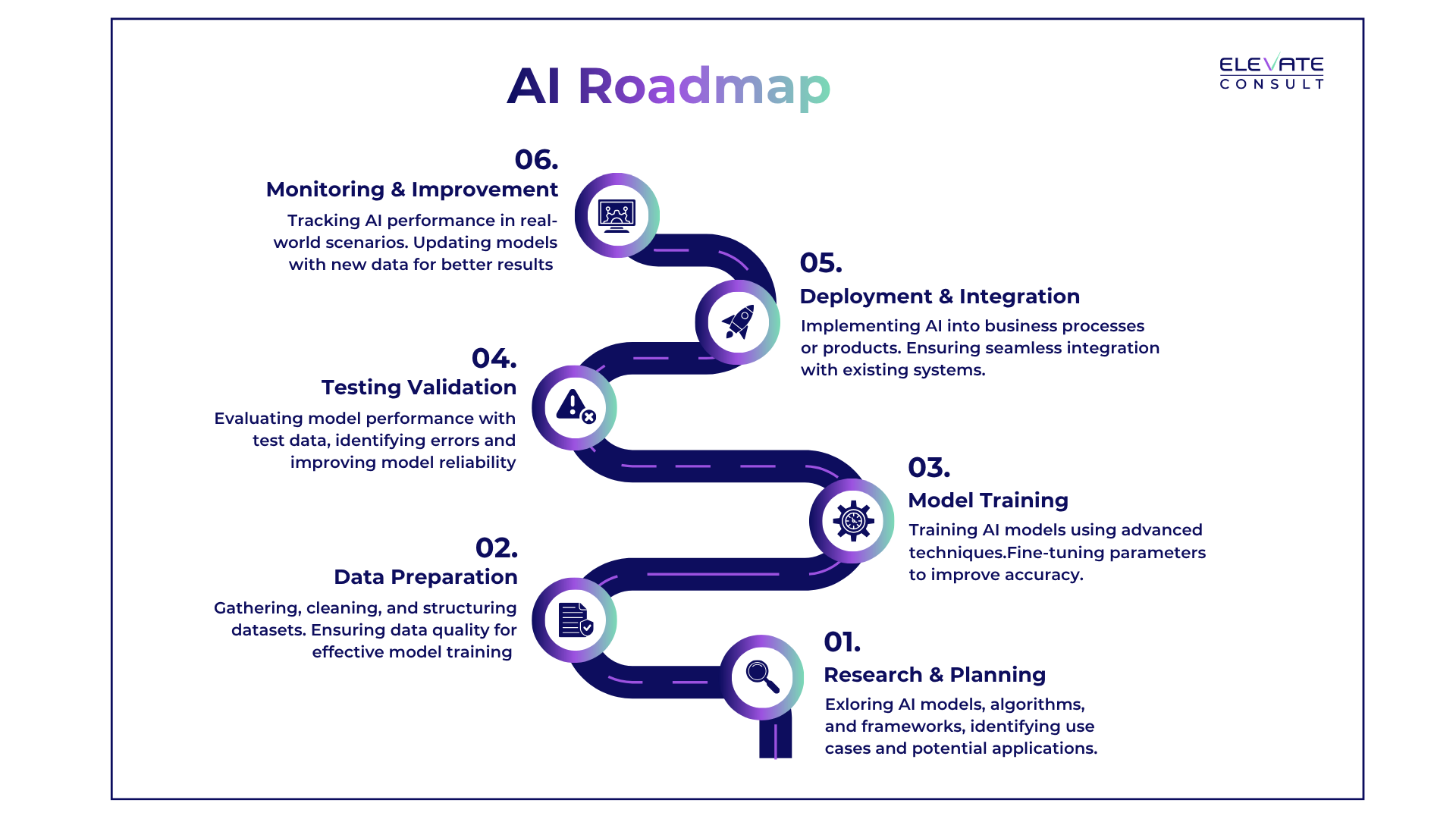
The NIST AI Risk Management Framework’s final implementation stage needs a complete roadmap that shows your risk management trip. This document should be dynamic and updated regularly as technology advances and new risks surface.
Visualizing Initiatives with a Prioritization Matrix
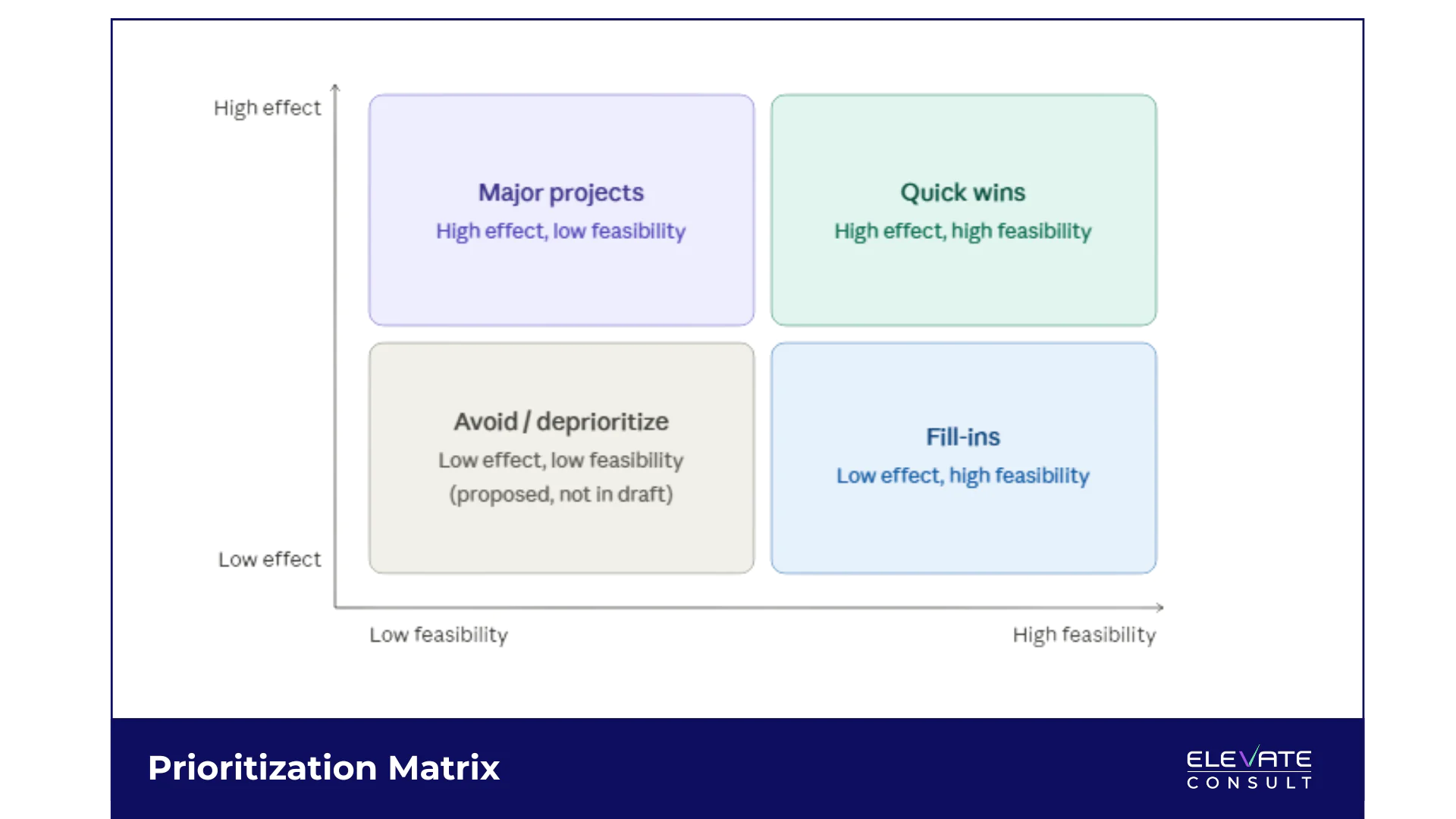
Organizations should use an Effect and Feasibility Matrix to set priorities for AI risk initiatives when resources are limited. This framework places opportunities in four quadrants based on their business value and how easy they are to implement. Projects with high effect and high feasibility deserve immediate focus. Major projects that have high effect but lower feasibility need careful planning. Fill-in projects are easy to complete but offer minimal strategic value.
Tracking Progress with KPIs and Milestones
Clear metrics help measure how well AI risk management works. Organizations that use AI-enabled KPIs are five times better at lining up incentive structures with their goals compared to those using legacy KPIs. Each KPI needs a specific definition, threshold levels, monitoring schedules, and response plans. about setting up dedicated workspaces for each risk category to track performance immediately.
Updating the Roadmap Based on Risk Development
The roadmap must stay flexible and current. NIST plans to review the framework’s content and usefulness regularly, and they expect formal community input by 2028. Organizations should also review their roadmaps whenever AI technologies advance, regulations shift, or they learn new implementation lessons.
Conclusion
This article explored how the NIST AI Risk Management Framework helps organizations tackle unique challenges of artificial intelligence technologies. AI systems bring complex risks that traditional frameworks can’t properly address. A specialized methodology for risk management becomes essential.
The framework’s four core functions—GOVERN, MAP, MEASURE, and MANAGE—work together as integrated processes. They create a detailed risk management approach throughout the AI lifecycle. Organizations should define their AI system context and risk tolerance levels first. Clear accountability and resilient governance structures come next. This makes it possible to identify and document AI risks, which leads to better measurement strategies and response mechanisms.
Companies that implement this framework successfully can better control AI’s transformative potential while reducing its risks. Our roadmap helps turn random processes into formal programs that fit existing business risk management practices.
The most important lesson is simple: AI risk management is an ongoing trip, not a destination. The NIST framework works as a living document that needs regular updates as technology changes and new risks appear. Your organization’s approach must change with these developments.
AI continues to alter the map of our digital world. This framework provides a crucial foundation for responsible breakthroughs. Setting up detailed AI risk management needs time and resources. The alternative of unmanaged AI risks brings operational, financial, and reputational costs that are nowhere near acceptable. Organizations must make it a priority to adopt structured approaches like the NIST AI RMF to guide themselves safely and effectively through the complex world of artificial intelligence.
Key Takeaways
The NIST AI Risk Management Framework provides organizations with a structured approach to navigate AI’s unique risks that traditional frameworks cannot adequately address.
• Implement the four core functions systematically: GOVERN establishes risk culture, MAP contextualizes use cases, MEASURE quantifies risks, and MANAGE operationalizes responses across the AI lifecycle.
• Start with clear context and governance: Define AI system purposes, stakeholders, and risk tolerance levels before establishing accountability structures with diverse perspectives and external engagement.
• Create comprehensive risk documentation: Build centralized AI risk registers that capture third-party risks, societal impacts, and integrate with enterprise-wide risk management for board-level visibility.
• Establish continuous monitoring systems: Implement safety metrics, bias evaluation, and user feedback loops to track AI performance and detect issues before they escalate into major incidents.
• Develop living roadmaps with clear priorities: Use impact-feasibility matrices to prioritize initiatives, track progress with AI-enabled KPIs, and regularly update strategies as technology and regulations evolve.
The framework transforms ad hoc AI risk processes into formalized programs that align with business objectives while ensuring responsible innovation. Organizations that proactively adopt this structured approach will be better positioned to harness AI’s benefits while minimizing financial, operational, and reputational risks.
FAQs
Q1. What are the core functions of the NIST AI Risk Management Framework? The NIST AI Risk Management Framework consists of four core functions: GOVERN (embedding risk culture), MAP (contextualizing AI use cases), MEASURE (quantifying risk), and MANAGE (operationalizing risk response). These functions work together throughout an AI system’s lifecycle to create a comprehensive approach to risk management.
Q2. How should organizations identify and document AI risks? Organizations should create a centralized AI risk register that captures all AI-related risks. This register should include risk descriptions, categories, likelihood and impact scores, mapped controls, designated owners, and mitigation plans. It’s crucial to pay particular attention to third-party risks and societal impacts when identifying AI risks.
Q3. What metrics should be used to measure AI safety and fairness? For safety, organizations should implement metrics that measure system performance during normal conditions, residual negative risk levels, and the system’s ability to fail safely. For fairness, metrics like demographic parity, equality of opportunity, and counterfactual fairness should be used to evaluate bias across different demographic groups.
Q4. How should companies respond to AI risk events? Companies should have predefined risk response strategies based on risk assessment results. In cases of unacceptable risk levels, they should be prepared to immediately deactivate unsafe AI systems. Clear communication channels should be established to inform stakeholders about incidents in a transparent and structured manner.
Q5. Why is it important to regularly update the AI risk management roadmap? The AI risk management roadmap should be treated as a living document because AI technologies and associated risks are constantly evolving. Regular updates allow organizations to adapt their strategies based on new technological advancements, changing regulations, and lessons learned from implementation. This ensures that the risk management approach remains effective and relevant over time.