
The ISO 27001 audit of Interserve in 2022 exposed major gaps in information security risk management that basic spreadsheets failed to catch, resulting in a £4.4 million fine. Your ISO 27001 audit needs precise attention to detail, especially during the final phase of risk treatment.
A solid ISO 27001 risk assessment is the foundation of an effective information security program. Most organizations find implementation challenging because the standard explains ‘what’ to do without clearly showing ‘how’. The certification process takes time. Based on your organization’s security posture, you might need several months to eighteen months or more.
The process can seem daunting with 114 controls in Annex A and 7 clauses that define Information Security Management System (ISMS) requirements. This piece guides you through the final steps of risk treatment preparation to help you create audit-ready documentation and verify your control implementation.
We will help you ensure your risk treatment approach meets compliance requirements and strengthens your security position before the auditors arrive. Let’s help you ace your ISO 27001 audit by getting this vital final step right.
The Role of Risk Treatment in the ISO 27001 Audit Process
Risk treatment is the life-blood of ISO 27001 implementation. It turns theoretical risk assessment into real security actions. Organizations can better prepare for their certification audit and improve their security when they understand this crucial process.
Where Risk Treatment Fits in ISO 27001 Implementation
ISO 27001 standard builds on risk-based management rather than rule-based systems. Risk treatment follows risk assessment in the implementation lifecycle. It helps select and implement actions to deal with identified risks.
Risk treatment answers a simple question: “What will we do about these risks?” Risk assessment spots vulnerabilities, and risk treatment turns this knowledge into real controls and safeguards.
ISO 27001’s Annex A offers 93 controls in four categories: Organizational (37 controls), People (8 controls), Physical (14 controls), and Technological (34 controls). These controls protect against identified risks. Organizations need to implement only the controls they need based on their risk assessment results.
The Statement of Applicability (SoA) comes into play as a required document that lists all Annex A controls. It explains why each control is included or left out. Auditors look at this document first during certification because it links risk assessment to control selection.
Risk Treatment vs Risk Assessment
These two processes work together but serve different purposes in ISO 27001 implementation:
- Risk assessment spots and reviews potential security threats and their effects on operations
- Risk treatment decides how to handle these identified risks
Organizations must pick one of four treatment options for each unacceptable risk:
- Avoid – Stop activities that create the risk
- Reduce – Put controls in place to lower the risk’s impact or likelihood
- Transfer – Share the risk with third parties, usually insurers
- Accept – Live with risks that fall within acceptable levels
Most organizations reduce risks by implementing Annex A controls. They must then document any remaining risk—called residual risk—and get formal approval from Risk Owners.
Timeline for Finalizing Risk Treatment
Risk treatment completion marks a key milestone before your ISO 27001 audit. Small to medium organizations that prioritize certification usually need three to twelve months. Larger enterprises with complex operations often need more time.
Risk assessment and treatment usually takes four weeks. Organizations should set aside time to:
- Review and select the right controls
- Develop the Statement of Applicability
- Create and implement the risk treatment plan
- Document treatment decisions and reasons
- Check if controls work
A rushed risk treatment can hurt both certification readiness and security. Organizations should plan backward from their target certification date. This ensures they have enough time to implement risk treatment properly.
Auditors want to see documentation that shows you’ve tackled information security risks systematically. Your approach should match your business goals and risk appetite—this proves crucial for certification success.
Building Your Final Risk Treatment Plan
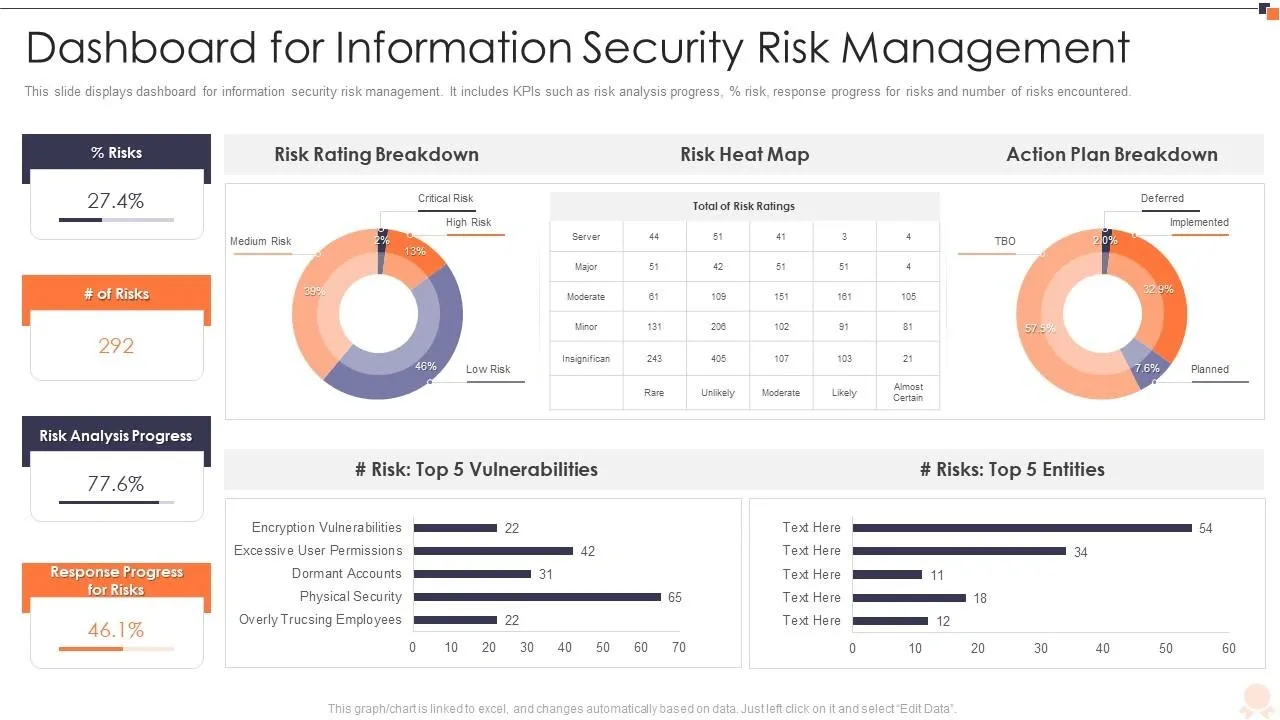
Image Source: PowerPoint Templates
A solid risk treatment plan is the foundation of ISO 27001 preparation. Your risk assessment completion leads to the next crucial step – turning identified risks into actionable treatment strategies that prepare you for the audit.
Reviewing All Identified Risks
The risk treatment plan starts with a detailed review of every risk in your risk register. You need to look at each asset, threat, and vulnerability combination to catch anything you might have missed. This review acts as your final checkpoint before you commit to specific treatment actions.
Your review should confirm that you have:
- Listed all information assets within your assessment scope
- Collected feedback from stakeholders in various areas about current risk landscape
- Recorded past security incidents and their effects
- Set clear risk appetite and acceptance criteria
Selecting Treatment Options for Each Risk
ISO 27001 gives you four treatment options for risks you can’t accept:
- Mitigation/Reduction: Put controls in place to lower likelihood or impact
- Acceptance: Keep track of risks that fall within acceptable limits
- Avoidance: Remove the risk source by stopping risky activities
- Transfer: Share risk through insurance, outsourcing, or third-party contracts
Most companies use mitigation through Annex A controls. Notwithstanding that, a mature security approach needs all treatment options based on business needs and cost-benefit analysis.
Calculating Residual Risk Scores
The remaining risk after treatment measures becomes your residual risk. This calculation shows whether your treatment approach has lowered risks enough.
Here’s the simple formula: Residual risk = Inherent risk – Impact of risk controls
You should recalculate each risk score after adding controls, using the same method as your original assessment. Additional controls or formal risk acceptance become necessary if residual risk is too high.
Documenting Treatment Decisions and Rationale
Good documentation leads to successful implementation and audits. Your treatment documentation needs to show:
- Annex A controls that fit your organization
- Reasons for excluding any controls (in your Statement of Applicability)
- How risks, controls, and business processes connect
- Evidence supporting each treatment decision
- Who owns which risks and controls
Auditors check if you follow your procedures and risk owners actively monitor their assigned risks.
Setting Implementation Timelines
Your implementation schedule should have:
- Deadlines for each treatment activity
- Names of people responsible for risk mitigation
- Required resources (budget, staff, tools)
- Ways to check if controls work
- Review and update checkpoints
Longer projects need interim measures and progress tracking to show active risk management during ISO 27001 audits.
Note that risk treatment isn’t just about compliance—it needs constant monitoring and adjustments. Regular reviews help your controls stay effective against new threats and deepen your organization’s commitment to security beyond certification requirements.
Creating Audit-Ready Documentation
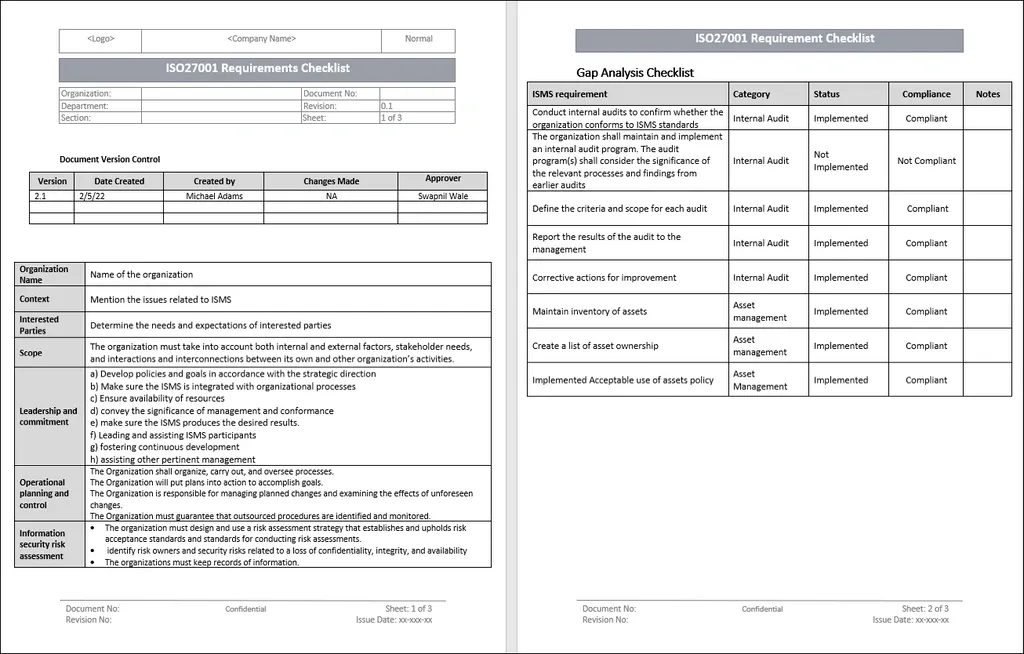
Image Source: ISO-Docs
Documentation are the foundations of ISO 27001 certification. Auditors get into your paperwork first. A well-laid-out risk treatment documentation paves your path to audit success.
Required Documents for Risk Treatment
ISO 27001 mandates several key documents for certification. Risk treatment documentation must have:
- Risk assessment process documentation outlining your methodology for identifying and evaluating risks
- Risk assessment reports showing identified risks with their likelihood, effect, and risk levels
- Risk treatment plan detailing how each risk will be addressed
- Statement of Applicability (SoA) listing all Annex A controls
- Evidence of risk treatment implementation proving control effectiveness
These documents help your certification audit and internal security management. The preparation takes time, but these materials create a traceable record of your organization’s security approach.
Statement of Applicability Best Practices
The SoA connects risk assessment with your ISO 27001 control set. Auditors use this vital document as their primary reference during certification, so it needs careful preparation.
Your audit-ready SoA should have:
- All 93 Annex A controls with inclusion/exclusion status
- Justification for each control’s selection or exclusion
- Implementation status (implemented, planned, or not implemented)
- Clear references to supporting evidence
Note that your SoA shows your security profile and helps auditors understand how your organization addresses identified risks through specific controls.
Risk Treatment Plan Format and Content
Risk treatment plans turn theoretical assessment into practical action. Effective plans need:
- Treatment option selected for each risk (avoid, reduce, transfer, accept)
- Implementation timeline with specific deadlines
- Resource allocations (budget, staff, tools)
- Risk owners and responsibilities
- Methods for measuring control effectiveness
Your plan should work as a living operational document rather than a theoretical exercise. Auditors will check if you follow your documented procedures.
Evidence Collection Strategy
ISO 27001 added Annex A Section 5.28 in 2022, which specifically addresses evidence collection. A systematic approach to gather evidence should have:
- System logs and access records
- Security incident reports
- Control testing results
- Policy documentation
- Training records
Automating evidence collection reduces manual effort. Compliance platforms centralize documentation, track progress with up-to-the-minute data, and automatically capture up to 80% of required evidence.
Well-laid-out documentation satisfies auditors and strengthens your organization’s security posture by ensuring accountability and enabling continuous improvement.
Validating Control Implementation Before Audit
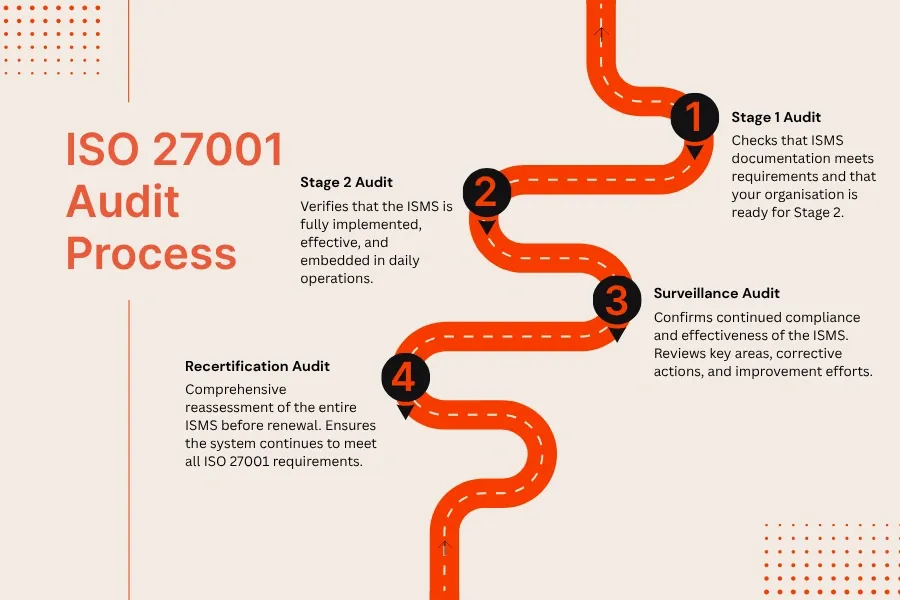
Image Source: YOUR ISO
A complete check of security controls before your ISO 27001 audit will determine if you get certified. You need both technical testing and proper documentation review to make sure controls work as planned.
Testing Implemented Controls
Your security controls need ground testing to check if they work properly. Documentation alone isn’t enough – you should run vulnerability scans and penetration tests to check if technical safeguards work correctly. These tests copy real attacks and help you learn about your technical controls like firewalls and intrusion detection, as well as your procedures for access management and incident response.
The best time to test critical systems is during maintenance windows, usually between 02:00-05:00, which reduces disruption. You might want to run invasive tests in staging environments instead of production systems.
Gathering Implementation Evidence
Your evidence proves controls exist beyond paper. A strong audit trail needs:
- Clear steps showing how you deployed controls
- Regular, documented reviews
- Proof of participation from board meetings to daily tasks
Auditors look for the “golden thread” – clear links between risks you found, controls you put in place, and proof these controls work. Keep detailed logs of access records, how you handle incidents, and your control testing results.
Addressing Control Gaps
Gap analysis often shows where you’re falling short on compliance. Put these findings in a well-laid-out gap analysis report that compares what you do now against ISO 27001 requirements. Your corrective action plan should turn these findings into clear steps toward compliance.
Deal with gaps based on risk level. Give specific team members the task of fixing each issue with realistic deadlines.
Management Review Requirements
ISO 27001 Clause 9.3 requires formal management reviews before your audit. These reviews must cover specific topics like risk treatment status, problems found, audit results, and ways to improve. Keep records of all decisions to show auditors.
Regular management reviews work better than yearly ones. Monthly or quarterly reviews show you’re actively watching your systems.
Final Readiness Checks for ISO 27001 Risk Assessment
Getting ready for an ISO 27001 audit needs close attention to detail. Your risk assessment documentation should stand up to scrutiny and paint an accurate picture of your security posture.
Cross-Checking Risk Register Completeness
A risk register does more than meet compliance requirements – it acts as your organization’s security roadmap. Version control is vital since auditors want to see how risks change over time, especially after major changes or incidents. Your risk register should give a structured way to identify assets, threats, and vulnerabilities while assigning values to likelihood and effect.
You might want to set up automated stale-risk alerts for any review date older than 90 days. This helps your register show current realities instead of outdated assumptions. Book a Readiness Call with internal stakeholders to get a full picture of your risk register before the audit.
Verifying Stakeholder Approvals
Risk owners need to formally approve the risk treatment plan and accept any remaining information security risks. This approval should be shared at the next Management Review Team meeting. The team needs to formally agree and document it in the meeting minutes.
Keep detailed records of decisions, rationale, plans, and monitoring results – auditors look specifically for this documentation. An ISO 27001 audit looks at risk acceptance documentation, management interviews, and justification of residual risk levels.
Confirming Continuous Monitoring Setup
Point-in-time assessments are not enough. You need to implement continuous risk monitoring to keep a dynamic framework that adapts to new threats and evolving standards. A recent survey shows 70% of organizations plan to invest more in risk management technologies. This highlights the significance of ongoing oversight.
Your automated systems should alert teams right away when risks appear. This enables quick action to reduce potential harm. Your monitoring tools should automatically check regulatory compliance to keep your organization aware of changing legislation and industry standards.
Conclusion
The success of ISO 27001 certification depends on completing risk treatment properly. This piece shows how risk treatment changes your assessment findings into real security actions. You can avoid, reduce, transfer, or accept risks. Many organizations don’t deal very well with this vital phase. They have identified their risks but lack clear steps to implement solutions. A detailed Statement of Applicability becomes crucial here. Auditors examine this document first during certification.
Your certification’s success depends on validating the controls you’ve implemented. Testing needs to prove ground effectiveness beyond just paperwork. You’ll need vulnerability scans, penetration tests, and solid evidence collection. On top of that, it helps to show auditors your steadfast dedication to getting better, not just following rules. You can do this through well-laid-out corrective action plans.
The final checks should confirm your risk register is complete. You need stakeholder approvals and monitoring systems in place. Organizations pass their audits easily when they put time into these preparations. They also build stronger security measures. Before your upcoming audit, you might want to Book a Readiness Call with your team and external experts. This helps spot any gaps in your treatment approach.
Risk treatment is more than just checking boxes for compliance. It creates the foundations of working information security management. A methodical approach with proper documentation and testing shows auditors your security maturity. It protects your valuable information assets too. The time you spend on full preparation pays off through successful certification. Your operational security improves for years to come.
Key Takeaways
Master these essential steps to ensure your ISO 27001 risk treatment is audit-ready and strengthens your organization’s security posture:
• Risk treatment transforms assessment into action – Select from four options (avoid, reduce, transfer, accept) for each identified risk, with most organizations focusing on mitigation through Annex A controls.
• Document everything systematically – Create audit-ready documentation including risk treatment plans, Statement of Applicability, and implementation evidence that demonstrates the “golden thread” between risks and controls.
• Validate controls through real-world testing – Conduct vulnerability scans, penetration tests, and gather operational evidence to prove controls work effectively, not just exist on paper.
• Secure formal stakeholder approvals – Ensure risk owners formally approve treatment plans and residual risks, with decisions documented in management review meetings for auditor verification.
• Implement continuous monitoring systems – Set up automated alerts and regular reviews to maintain dynamic risk management that adapts to evolving threats and regulatory changes.
Remember that effective risk treatment serves dual purposes: satisfying ISO 27001 compliance requirements while genuinely strengthening your security posture. Organizations that approach this methodically with proper documentation, testing, and stakeholder engagement not only pass their audits but build lasting security resilience.
FAQs
Q1. What is the role of risk treatment in ISO 27001 implementation? Risk treatment is a critical step that follows risk assessment in ISO 27001 implementation. It involves selecting and implementing actions to address identified risks, essentially answering the question “What will we do about these risks?” Risk treatment transforms theoretical risk assessment into practical security measures.
Q2. How long does it typically take to prepare for an ISO 27001 audit? The preparation time for an ISO 27001 audit varies depending on the organization’s size and existing security posture. For small to medium organizations prioritizing certification, it typically ranges from 3 to 12 months. Larger enterprises with complex operations may require more extended timelines, sometimes up to 18 months or longer.
Q3. What are the four main risk treatment options in ISO 27001? The four main risk treatment options in ISO 27001 are:
- Avoid – Eliminate the risk by discontinuing activities that create it
- Reduce – Implement controls to mitigate the risk’s impact or likelihood
- Transfer – Share the risk with third parties, typically insurers
- Accept – Acknowledge risks that fall within acceptable tolerance levels
Q4. What key documents are required for ISO 27001 risk treatment? The key documents required for ISO 27001 risk treatment include:
- Risk assessment process documentation
- Risk assessment reports
- Risk treatment plan
- Statement of Applicability (SoA)
- Evidence of risk treatment implementation
Q5. How can organizations validate control implementation before an ISO 27001 audit? Organizations can validate control implementation before an ISO 27001 audit by:
- Conducting vulnerability scans and penetration tests
- Gathering comprehensive implementation evidence
- Performing gap analysis and addressing identified shortcomings
- Conducting formal management reviews
- Ensuring thorough documentation of all processes and decisions