
Data breaches now cost companies an average of $4.35 million. ISO 27001 certification has become vital for AI platform founders to protect their business. This global gold standard helps safeguard valuable digital assets and shows your steadfast dedication to reliable security practices.
Research shows that two-thirds of organizations must prove their strong security posture to stakeholders and arrange their systems with recognized cybersecurity standards. Your ISO 27001 certification tells potential clients and partners you take security seriously. Many corporations need their vendors to be certified before doing business [-3]. The latest edition, ISO 27001:2022, works perfectly in our ever-changing digital world and stays highly relevant for AI companies.
The certification process has evolved significantly. What once took 6-12 months can now happen in weeks or even days if you use the right approach and modern automation tools. Some companies became audit-ready in just 14 days by using AI-powered compliance platforms. This piece breaks down everything AI founders should know about getting ISO 27001 certification – from understanding the framework to implementing it quickly within your organization.
Understanding ISO 27001 and Its Role in AI Platforms
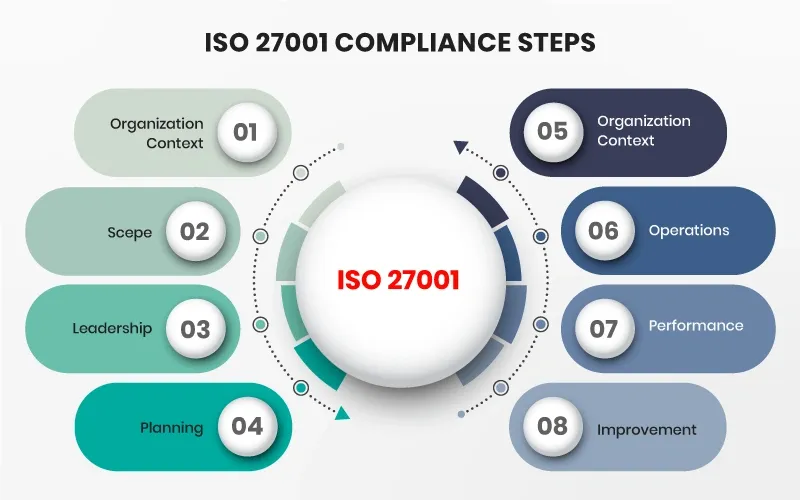
Image Source: EC-Council Global Services
ISO/IEC 27001 serves as the life-blood of information security management worldwide and provides a systematic approach to protect sensitive data. AI platform founders must understand this framework to build trust with enterprise clients and protect valuable intellectual property.
What is ISO/IEC 27001 and ISMS?
ISO/IEC 27001 stands as an internationally recognized standard for information security management systems (ISMS). The standard gives organizations a structured framework to manage sensitive company information. The International Organization for Standardization (ISO) and International Electrotechnical Commission (IEC) created this most recognized standard in the ISO/IEC 27000 family. Organizations can use this standard to set up, implement, and improve their information security management system.
An ISMS covers the entire ecosystem that protects organizational data:
- People: Employees, contractors, and leadership interacting with information assets
- Policies and processes: Documented rules for handling data securely
- Products and technologies: Technical tools like encryption and access management
- Partners and third-party vendors: External parties accessing your data
Your organization’s ISMS acts as a playbook for protecting information. ISO 27001 keeps this playbook detailed and effective. Companies can identify potential security threats through risk assessment and implement safeguards through risk alleviation.
The CIA Triad: Confidentiality, Integrity, Availability
Three fundamental principles known as the CIA triad form the foundation of ISO/IEC 27001 and information security:
Confidentiality limits information access to authorized personnel only. This principle guards against unauthorized access to sensitive data, including proprietary AI models and algorithms. Organizations use encryption, access controls, and user authentication to maintain confidentiality.
Integrity keeps information accurate, complete, and safe from unauthorized changes. AI systems need uncompromised training data and model outputs. Teams use hashing, digital signatures, and version control to maintain data integrity.
Availability ensures authorized users can access information systems when needed. AI platforms must keep their model APIs, data pipelines, and computing resources operational. Redundant systems, failover mechanisms, and disaster recovery plans help maintain availability.
Why AI platforms need structured security frameworks
AI systems process big amounts of sensitive data that needs protection against unauthorized access and breaches. The technology brings new security risks beyond traditional IT concerns. Data poisoning, model inversion attacks, and adversarial examples can compromise AI systems. Security control gaps could lead to data breaches, intellectual property theft, or manipulated AI outputs.
AI platforms must comply with growing regulations on data privacy and algorithmic accountability. ISO 27001 certification helps meet various compliance requirements like GDPR and the EU AI Act. Risk assessment focuses on finding and alleviating AI-specific vulnerabilities.
AI founders need to adapt the ISO 27001 framework to address these unique challenges. Better data handling practices, expanded risk management, continuous monitoring, and AI-specific security policies will help. This structured approach lets AI founders invent systems that protect their most valuable assets.
Key Benefits of ISO 27001 Certification for AI Startups
ISO 27001 certification gives AI platform founders clear business advantages beyond simple security improvements. Cybercrime costs will reach $10.50 trillion annually by 2025. This makes structured security frameworks a strategic necessity rather than an option.
Accelerating enterprise sales with trust signals
ISO 27001 certification works as a powerful sales accelerator. About 75-80% of certified organizations report better customer trust and satisfaction. The certification removes security roadblocks during negotiations and makes enterprise sales cycles shorter. Certified AI startups often skip long due diligence steps instead of spending weeks on security questionnaires.
The effect on revenue is substantial. About 70% of certified organizations get a competitive edge, while 66% find new markets and opportunities. Many procurement teams start with one question: “Are you ISO 27001 certified?” A negative answer might kill the proposal immediately. Security reviews now block or delay 73% of enterprise deals over €500K. These delays average 10-12 weeks and cost about €200K monthly in stalled pipeline.
Reducing risk of data breaches and IP theft
Data breaches have increased by 72% since 2021. ISO 27001 offers a systematic way to manage risks that substantially reduces breach likelihood. Each breach now costs organizations $4.88 million. This makes prevention financially vital.
ISO 27001 protects intellectual property, which is vital for AI startups whose algorithms, training data, and models are their most valuable assets. The framework sets proper controls for mobile devices and defines expectations about intellectual property protection. This reduces unauthorized data access risks and protects proprietary technology.
Meeting global compliance requirements like GDPR and EU AI Act
ISO 27001 builds a compliance foundation that supports many regulatory frameworks. This becomes more important as AI faces increased regulatory scrutiny. The EU AI Act applies to companies of all sizes that develop or deploy AI solutions in the EU. Non-compliance can lead to fines up to €35 million or 7% of global annual turnover.
ISO 27001 lines up with:
- GDPR requirements for data protection by design
- EU AI Act compliance frameworks
- Industry-specific regulations like HIPAA and SOX
This alignment proves valuable since 91% of security executives say they need a new cybersecurity approach that combines architecture, operations, and culture.
Improving internal security culture and team accountability
ISO 27001 certification makes organizations better by defining security roles and responsibilities clearly. It creates accountability at every level—including executive pay. This encourages a security-first culture throughout the company.
A resilient security culture helps organizations spot threats early, minimize post-attack damage, and build stakeholder trust. ISO 27001 helps bridge the gap between goals and results by setting up governance frameworks that handle immediate security decisions. This matters because only 40% of organizations have built governance, risk, and compliance into their innovation workflows.
ISO 27001 implementation helps AI startups optimize operations. Mature programs report 11-25% efficiency gains across IT and security functions. This complete framework helps your organization balance security needs with rapid AI innovation.
Scoping and Planning Your ISMS for AI Workflows

Image Source: SlideTeam
Your first crucial step toward ISO 27001 certification as an AI platform founder is to define your Information Security Management System scope. AI organizations need tailored security approaches throughout their technical workflows, unlike conventional software companies.
Defining scope for model training, data pipelines, and APIs
AI systems need clear ISMS boundaries that map every component processing, storing, or transmitting sensitive information. A detailed scope should cover:
- Model development environments where training occurs
- Data collection and preprocessing pipelines
- Inference engines and deployment infrastructure
- External APIs and integration points
- Cloud resources used for model hosting
Best practices suggest including any system with automated decision-making capabilities or exposure to high-risk data in your scope. You should document any exclusions specifically. This “include by default” approach keeps critical components within your security perimeter, as gaps often create vulnerabilities.
Identifying AI-specific risks: data poisoning, model inversion
AI systems face specialized threats beyond traditional cybersecurity concerns. These threats must be part of your risk assessment. Data poisoning attacks increased by 25% in 2024 alone. Your assessment should focus on these main AI-specific vulnerabilities:
Data poisoning happens when malicious actors contaminate training datasets, which makes models learn incorrect patterns. Supply chain attacks, insider threats, or unauthorized access to training pipelines can cause this.
Model inversion attacks let adversaries extract private training data by querying trained models. Attackers can reconstruct faces from facial recognition systems or extract sensitive information from language models.
Prompt injection tries to manipulate AI behavior through carefully crafted inputs that might bypass authentication completely.
Creating your Statement of Applicability (SoA)
The Statement of Applicability (SoA) is the life-blood of your ISO 27001 certification. AI platforms’ SoA must state which security controls apply to specific AI workflows. Your SoA should:
- Document every selected control and its implementation status
- Provide justification for included or excluded controls
- Connect controls directly to identified AI-specific risks
- Reference supporting policies and procedures
AI threats are still emerging, so treat your SoA as a living document that grows with your understanding of risks and compliance requirements.
Choosing relevant Annex A controls for AI systems
Your risk assessment helps select Annex A controls that address specific AI vulnerabilities. Several guidance documents suggest that effective AI security needs both traditional and specialized controls:
- A.8.1.1 Asset Inventory: Extend to include AI models, training datasets, and inference pipelines
- A.9.2.3 User Access: Implement strict role-based controls for model training interfaces
- A.12.6.1 Vulnerability Management: Monitor for AI-specific CVEs and adversarial robustness issues
- A.14.2.1 Secure Development: Include bias testing and model validation in development lifecycle
A well-defined scope creates the foundation for your entire ISMS, making it the most crucial phase of your ISO 27001 certification trip.
Step-by-Step ISO 27001 Certification Process for AI Founders

Image Source: ResearchGate
The path to ISO 27001 certification follows a clear roadmap that addresses the specific challenges AI companies face. Companies usually need several months to get certified, though new tools can speed up this process.
Original gap analysis and risk assessment
A full gap analysis helps you spot differences between your current security practices and ISO 27001 requirements. This review gives you a clear picture of where you stand and what needs fixing first. AI platforms need this analysis to look at standard security controls and AI-specific risks like data poisoning, model inversion, and adversarial attacks.
The risk assessment process identifies threats to your information assets and reviews their likelihood and possible effects. You’ll create a custom risk treatment plan that fits your organization’s specific risk profile.
Policy creation and control implementation
After identifying risks, you need to design and set up proper security controls. This stage includes:
- Creating a Statement of Applicability (SoA) that shows which of the 93 security controls from Annex A you’ll use
- Writing security policies that work with AI workflows
- Setting up technical and organizational measures to alleviate identified risks
Internal audit and management review
You need an internal audit to check if your ISMS works well before certification. Someone who didn’t help create the ISMS should do this audit – either a team member or outside expert. The audit must record review steps, dates, team members involved, and results.
Management should review the system regularly, at least once a year. Quarterly reviews work better since security threats change faster these days. These reviews make sure your ISMS stays suitable and effective.
Stage 1 and Stage 2 certification audits
The certification process has two main audit phases:
Stage 1 looks at your documentation to ensure your ISMS design meets ISO 27001 requirements. The auditor checks your management system’s design, policies, and overall preparation.
Stage 2 tests how well everything works through evidence collection, interviews, and observation. This phase confirms your organization actually follows its documented policies and procedures.
After you pass, your ISO 27001 certification lasts three years. You’ll need yearly surveillance audits to keep your certification valid.
Cost, Tools, and Support Options for Certification
Getting ISO 27001 certification needs both financial planning and technical preparation. AI founders need to understand the costs and tools to make smart budget decisions.
Breakdown of ISO 27001 certification cost factors
ISO 27001 certification costs between USD 10,000 and USD 50,000. The costs break down into preparation (USD 2,000-10,000), documentation (USD 1,000-8,000), implementation (USD 1,000-10,000), and certification audit (USD 4,000-12,000). You’ll need USD 1,000-4,000 each year for maintenance.
Using ISO 27001 tools like Vanta or Scytale
Compliance platforms make certification easier. Vanta combines with 400+ tools and runs 1,200+ automated tests to gather evidence and spot gaps. Scytale gives you immediate alerts for control monitoring and uses AI to automate compliance. These platforms come with policy templates, automated evidence collection, and custom dashboards that make complex compliance tasks easier.
When to hire ISO 27001 certification consultants
You should think about consultants if you lack internal expertise. Expert support from start to finish costs between USD 35,000-40,000. Yet compliance automation platforms give you expert guidance that costs nowhere near traditional consulting fees.
How automation reduces ISO 27001 certification price
Automation cuts certification costs by a lot. It reduces manual work and slashes compliance operations costs by 50%. Teams that use automation complete their audits in half the time without quality loss. These tools also help prevent employee burnout by handling repetitive tasks around the clock.
Conclusion
ISO 27001 certification is a vital investment for AI platform founders in today’s complex security world. This piece explores how this globally recognized standard offers a complete framework that addresses unique security challenges AI companies face.
AI platforms deal with huge amounts of sensitive data. They need protection against specialized threats like data poisoning, model inversion attacks, and prompt injection. ISO 27001 protects against these vulnerabilities and speeds up business growth. The certification cuts down enterprise sales cycles by a lot, lowers breach risks, meets global compliance needs, and builds an accountable security culture.
Getting certified needs careful planning. Companies must scope AI workflows properly and get a full picture of risks. They need to create policies and put the right controls in place. This process usually takes several months. Modern automation tools can speed things up and cut costs by up to 50%.
ISO 27001 certification means more than checking a compliance box for AI founders. It gives a competitive edge that builds customer trust, protects valuable intellectual property, and shows your steadfast dedication to security. As AI faces more regulatory oversight worldwide, this certification builds strong foundations that support growth while protecting critical assets.
Investing in ISO 27001 through automation platforms or mutually beneficial alliances pays off. It leads to faster sales, fewer breach risks, and simplified compliance with new regulations like the EU AI Act. AI platform founders who want to grow with confidence in today’s security-focused market need ISO 27001 certification.
Key Takeaways
ISO 27001 certification has evolved from a nice-to-have to a business necessity for AI platform founders, offering both security protection and competitive advantages in today’s market.
• ISO 27001 accelerates enterprise sales by 75-80% – certification removes security roadblocks and shortens sales cycles significantly • AI faces unique security risks requiring specialized frameworks – data poisoning, model inversion, and prompt injection demand structured protection • Certification costs $10K-$50K but automation reduces expenses by 50% – modern tools can achieve audit readiness in just 14 days • The framework addresses both traditional IT and AI-specific vulnerabilities – protecting training data, models, and inference pipelines comprehensively • Compliance alignment supports global expansion – meets GDPR, EU AI Act, and other regulatory requirements automatically
With cybercrime costs projected to reach $10.5 trillion by 2025, ISO 27001 provides AI founders a strategic foundation that builds customer trust, protects intellectual property, and enables confident scaling in security-conscious markets.
FAQs
Q1. What is ISO 27001 and why is it important for AI platforms? ISO 27001 is an internationally recognized standard for information security management systems. It’s crucial for AI platforms as it provides a structured framework to protect sensitive data, address AI-specific security risks, and demonstrate a commitment to robust security practices to clients and partners.
Q2. How does ISO 27001 certification benefit AI startups? ISO 27001 certification accelerates enterprise sales by building trust, reduces the risk of data breaches and IP theft, helps meet global compliance requirements like GDPR and the EU AI Act, and improves internal security culture and team accountability.
Q3. What are some AI-specific risks addressed by ISO 27001? ISO 27001 helps AI companies address unique risks such as data poisoning (where training data is deliberately corrupted), model inversion attacks (extracting private training data), and prompt injection (manipulating AI behavior through crafted inputs).
Q4. How long does the ISO 27001 certification process typically take? Traditionally, the certification process takes several months. However, with modern automation tools and platforms, some companies have achieved audit readiness in as little as 14 days, significantly accelerating the timeline.
Q5. What is the typical cost range for ISO 27001 certification? The total investment for ISO 27001 certification typically ranges from $10,000 to $50,000, including preparation, documentation, implementation, and audit costs. However, using automation tools can reduce these costs by up to 50% and streamline the certification process.