
ISO 27001 requirements are the foundations of modern information security management systems worldwide. Two critical components divide the standard: mandatory management clauses (4-10) with roughly 140-150 requirements to set up and maintain an ISMS, and Annex A that lists 93 security controls to implement. These Clauses 4-10 specify every requirement an information security management system needs before getting ISO 27001 certification.
The standard underwent its last major revision in 2022 to match modern security challenges. This update brought minor wording and structural changes to the ISMS Clauses 4-10 and added a new Clause 6.3: Planning for Changes. CISOs can use this piece to understand the critical requirements within these clauses that build a compliant and effective security program. We’ll get into each clause and give you practical explanations to help with your certification trip.
Understanding ISO 27001 Clauses 4–10 in Context
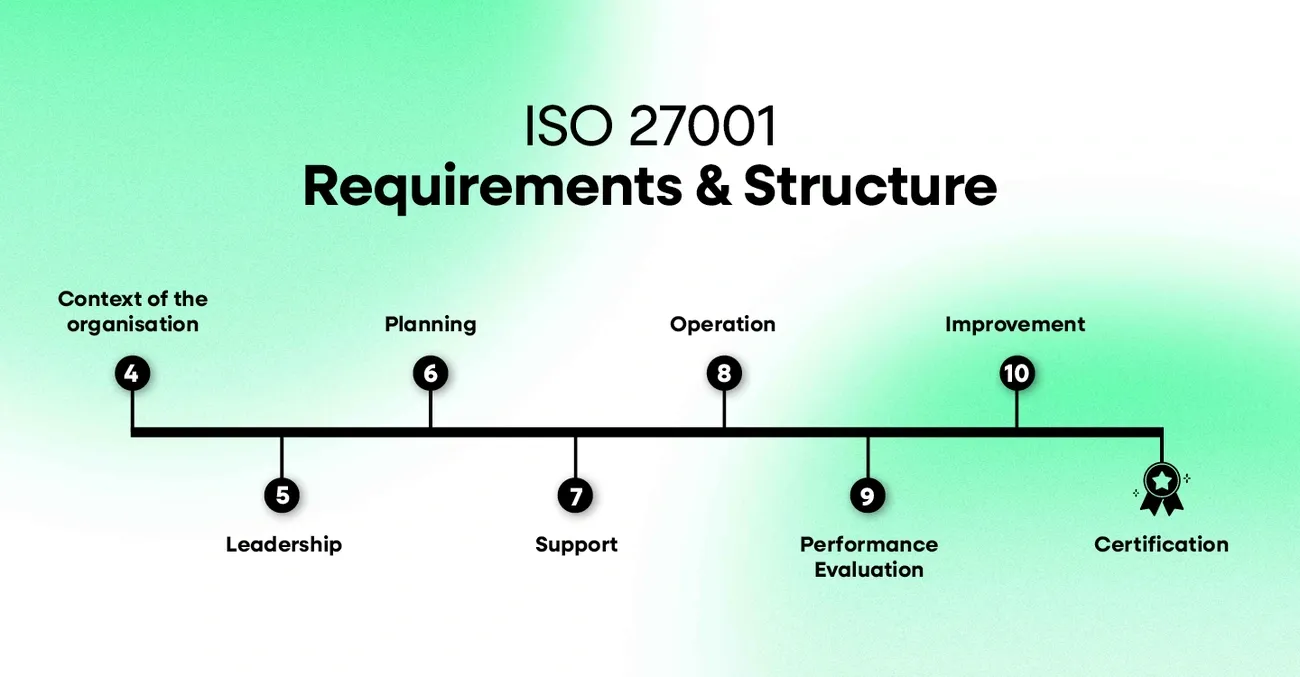
Image Source: ISMS.online
Clauses 4-10 are the backbone of ISO 27001. These clauses create the foundation that organizations use to build their information security management systems. The first three clauses (0-3) just give context and definitions. The real requirements that organizations need to meet for certification come from clauses 4-10.
Why Clauses 4–10 Are Mandatory for Certification
The ISO 27001 standard has two main parts. Annex A has security controls that organizations can pick based on their risk assessment. Clauses 4-10 are different – they’re not optional. Organizations must meet about 140-150 requirements from these clauses to get certification. These requirements create the management system that guides all security activities.
Certification bodies will inspect how well organizations follow these clauses during audits. Each clause builds on the ones before it. A weakness in one area affects all the others.
Clause 4 makes you understand your organization’s situation, identify stakeholders, and set the ISMS scope. These elements are the foundations for all future security work. Security efforts might miss their mark or leave gaps without this understanding.
Leadership must commit to security and create policies under Clause 5. This leadership role is so important that ISO 27001 auditors need to talk to top management during certification. Security projects usually fail without strong support from the top.
Risk management and planning are the focus of Clause 6. These are the foundations for choosing and using security controls. Clause 7 makes sure the ISMS has enough support through resources, skills, and documentation.
Clauses 8, 9, and 10 cover operations, performance checks, and continuous improvement. Together, they create a complete management approach that keeps information security working and aligned with what the organization needs.
How These Clauses Fit into the ISMS Lifecycle
Clauses 4-10 follow the natural flow of an ISMS from start to maturity:
The original step in Clause 4 sets the scene for information security. Organizations look at internal and external factors that affect them. They identify stakeholders and figure out what needs protection. This understanding shapes every security decision that follows.
Leadership steps in with Clause 5. They create governance structures and set direction through policies and clear responsibilities. Their commitment ensures the ISMS gets the support it needs.
Planning comes next in Clause 6. Organizations spot risks and opportunities, create treatment plans, and set measurable goals. This stage turns strategic direction into practical steps.
Clause 7 deals with the support needed to carry out these plans. This includes resources, skills, awareness, communication, and documentation. Even the best security plans would fail without these building blocks.
Clause 8 puts everything into action. Security controls and risk treatment plans move from paper to practice. Real security measures take shape here.
Performance checks happen in Clause 9 through monitoring, internal audits, and management reviews. These checks show how well the ISMS works.
Clause 10 completes the cycle with improvement processes. Teams fix problems and make security better based on what they learn. This keeps the ISMS current as threats and business needs change.
These clauses create a complete Plan-Do-Check-Act cycle. The 2022 revision doesn’t mention PDCA directly anymore, but the idea still lives in how the clauses work. Clause 4 sets the scene, Clauses 5-7 plan things out, Clause 8 puts plans into action, Clause 9 checks progress, and Clause 10 makes improvements.
This cycle shows that ISO 27001 isn’t just a checklist. It’s a living system that gets better through regular checks and updates.
Clause 4: Organizational Context and ISMS Boundaries
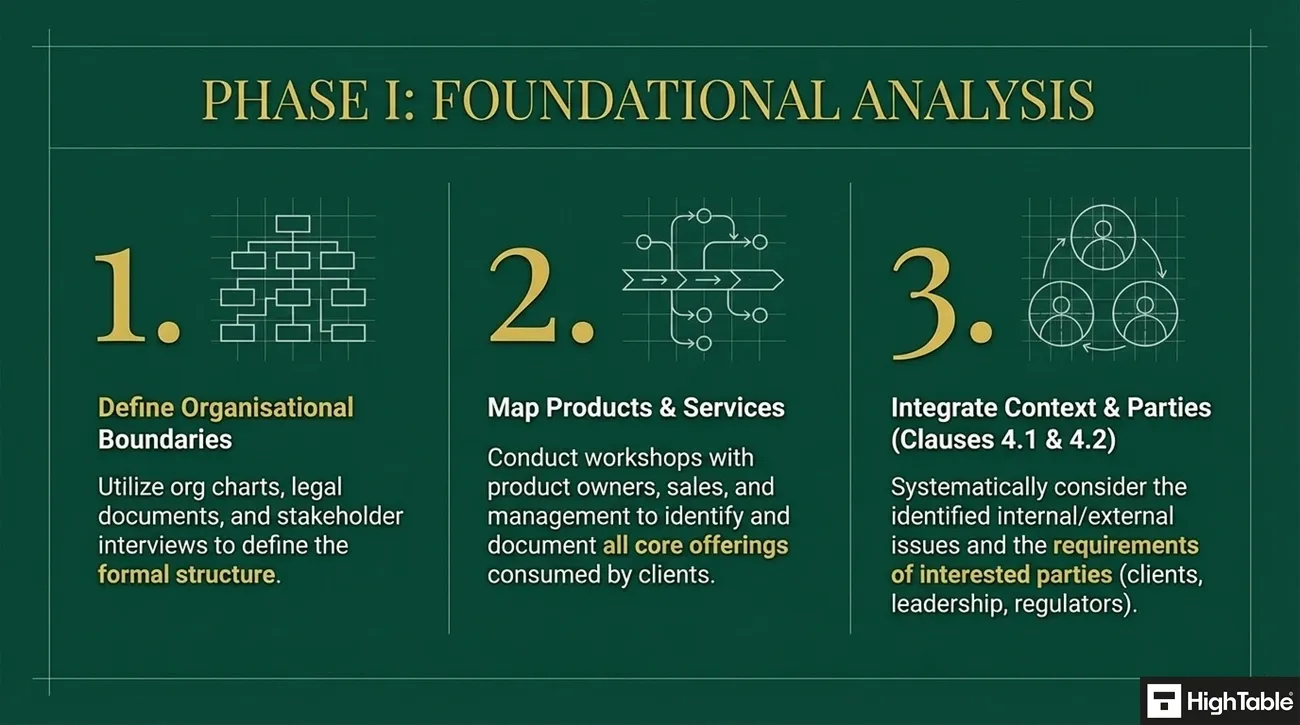
Image Source: High Table
Clause 4 of ISO 27001 is the life-blood to build an ISMS that works. You must understand your business environment before you put security controls in place. This vital clause needs you to get into internal and external factors that affect your organization’s information security goals. You also need to spot key stakeholders and set clear ISMS boundaries.
Using PESTLE to Analyze External Factors
PESTLE framework offers a well-laid-out way to spot external issues that affect how well your ISMS works. This tool breaks down complex external environments into manageable parts. It makes sure you cover all factors beyond your direct control.
Your PESTLE analysis for ISO 27001 compliance should assess these areas:
- Political: Government policies, trading regulations, political stability, and lobbying groups that might shape information security practices
- Economic: Market conditions, financial trends, budget constraints, and competitive landscape that affect resource allocation
- Social: Demographic shifts, consumer expectations about data privacy, and workforce attitudes toward security practices
- Technological: Emerging technologies, cybersecurity threats, infrastructure changes, and digital transformation initiatives
- Legal: Data protection laws, industry-specific regulations, compliance requirements, and contractual obligations
- Environmental: Physical location factors, climate considerations, and green practices that might affect security operations
To cite an instance, the legal category should list all relevant laws and regulations beyond data protection laws. This analysis helps you comply with control A.5.31, which needs you to maintain a list of relevant legislative, statutory, regulatory, and contractual requirements.
Identifying Interested Parties and Their Needs
Your stakeholders are individuals or organizations that can shape your information security or feel its effects. ISO 27001 requires you to identify these stakeholders and what they expect from your ISMS.
Common stakeholders include:
- Employees and their families
- Shareholders and business owners
- Government agencies and regulators
- Emergency services
- Clients and customers
- Media organizations
- Suppliers and partners
Knowing who your stakeholders are is nowhere near as crucial as understanding what they want. Each stakeholder’s expectations from your information security program matter most. Shareholders want secure investments and good returns. Clients expect you to follow security clauses in contracts. Government agencies need you to follow specific laws.
You can gather stakeholder requirements by reviewing written documents like laws and contracts. Sometimes, you might need to talk to representatives directly. Document these requirements and let the right departments or people handle compliance.
Defining the ISMS Scope
The last part of Clause 4 sets the boundaries and applicability of your ISMS. Your scope definition should reflect both the external/internal issues from PESTLE analysis and stakeholder requirements.
To define your ISMS scope:
- Think over organizational elements: Pick which departments, functions, physical locations, assets, and technologies to include
- Assess information boundaries: Decide what information needs protection and which processes use this information
- Look at interfaces and dependencies: Find links between your organization’s activities and external parties
- Document exclusions: List any elements you leave outside the scope
Small organizations often work best with their entire business in scope. Larger companies might limit scope to specific business units or services. But note that anything outside your ISMS scope becomes “external” and potentially untrustworthy from a security view.
Top management must approve your documented scope statement. Major scope changes might mean re-certification, based on their type and timing. Think about future business plans while setting your original boundaries.
Your ISMS scope shapes every part of your information security program, from risk assessment to control implementation. A well-thought-out scope keeps your security efforts focused where they matter without becoming too broad or too narrow.
Clause 5: Leadership and Governance Responsibilities
Leadership is vital to Clause 5 of ISO 27001. It drives successful ISMS implementation. The clause makes it clear that security frameworks don’t work well without executive backing. The core team must direct security initiatives rather than just delegate them.
Showing Leadership Commitment
The senior team must show their dedication to information security through real actions, not just gestures. They need to make sure information security policies and objectives match the company’s strategic path. Their role goes beyond watching from afar – they must own the ISMS results and prove their involvement.
Auditors look closely at how leaders participate during certification checks. Companies will fail their audits without clear signs of management support. Leaders can show their commitment by:
- Attending management reviews and audit meetings
- Talking about security in town halls or company updates
- Approving information security policies and objectives
- Checking performance metrics and security risks
- Supporting security awareness programs (and joining in themselves)
- Taking action on audit findings and feedback
Yes, it is crucial that top management provides resources for ISMS operations. This means having the right people (like information security managers), budgets for security projects, and investments in technology that boost security measures.
Creating an Information Security Policy
The security policy forms the cornerstone of your ISMS and needs top management approval. This high-level document shows your company’s security approach and guides all security work.
ISO 27001 Clause 5.2 requires your policy to have:
- A good fit with organizational purpose
- Framework for setting information security objectives
- Commitment to meeting applicable requirements
- Commitment to continuous ISMS improvement
Of course, you can’t just file away this policy. You must document it, share it, and make it available to stakeholders as needed. The policy reinforces your company’s security stance and shapes detailed operating procedures.
Beyond ISO 27001 certification, a well-laid-out security policy helps executives – who often aren’t security experts – understand your ISMS activities. This connection keeps your security program tied to business goals instead of running separately.
Blending ISMS into Business Processes
ISO 27001 wants ISMS to be part of daily business operations, not a standalone program. Leaders must ensure “the integration of the information security management system requirements into the organization’s processes”. This shows that security is a core business element, not an afterthought.
You can see this integration through:
- Process documents that include ISMS requirements
- Security controls built into product development, HR, procurement, and operations
- Process owners who know and handle security requirements
Good integration means policies work together across departments. Your security policy should connect with other company policies like HR and procurement. This creates a unified security approach throughout all business areas.
Integration shows that security management fits naturally with business goals and processes. When done right, it helps companies improve their operations while building a culture of risk management and ongoing improvement.
Auditors check if ISMS requirements truly blend with business processes before certification. They review documents, talk to process owners, and see if security controls exist throughout operations. Security measures become helpful business tools instead of obstacles when properly integrated.
Meeting Clause 5’s requirements builds the leadership foundation for ISMS success. This foundation ensures security gets proper attention, resources, and company support – essential elements to handle risks found in Clause 4’s context analysis.
Clause 6: Planning Risk Management and Objectives
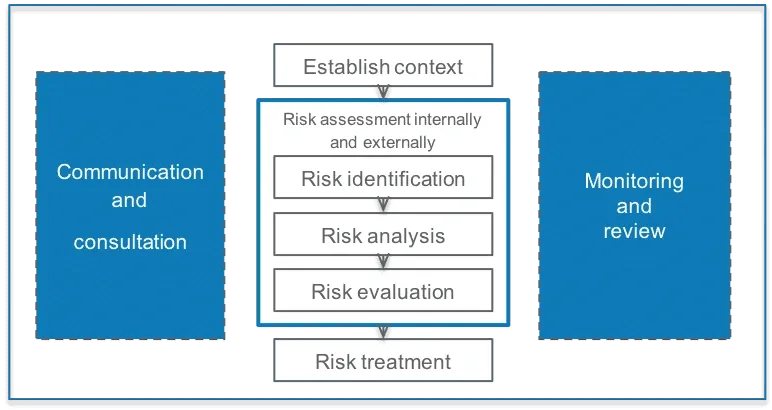
Image Source: ISMS.online
Risk management is the life-blood of Clause 6 in ISO 27001. It gives organizations a structured way to spot, review, and deal with information security threats. This planning phase connects your organization’s context and leadership commitment with real security actions.
Risk Assessment Criteria and Methodology
You need a consistent risk assessment methodology to get ISO 27001 certification. The standard requires your organization to create and use a risk assessment process that has risk acceptance criteria and guidelines to perform assessments. Your methodology should help produce consistent, valid results each time you do an assessment. This stops different departments from reviewing risks in different ways.
Your risk assessment methodology needs these five elements:
- Risk identification approach (assets-threats-vulnerabilities method is still popular though not required in the 2022 revision)
- Risk owner assignment process
- Method to assess consequences and likelihood
- Risk calculation approach (addition or multiplication)
- Criteria to accept risks
Start by setting your risk acceptance criteria. This tells you when you’ll accept risks instead of treating them. The easiest way is to use risk scoring and set a threshold score that determines risk acceptance.
Many organizations make risk identification harder than it needs to be. They build complex frameworks that nobody can manage. Keep it simple – focus on critical risks that could affect your information assets’ confidentiality, integrity, and availability within your ISMS scope.
Each risk needs an owner – a specific person, not a team. This ensures clear accountability. Risk owners will then:
- Check what might happen if risks become real
- Figure out how likely risks are to occur
- Set appropriate risk levels
Risk Treatment Options and SoA Justification
After assessment, you need to decide how to handle each unacceptable risk. ISO 27001 gives you four main options:
- Mitigate: Use controls to reduce the risk
- Avoid: Change processes to eliminate the risk
- Transfer: Move the risk to someone else (insurance, outsourcing)
- Accept: Live with lower-impact risks
These options help you pick the right controls based on your risk assessment. Small organizations usually stick to Annex A controls. Larger companies might use controls from other frameworks like NIST or SOC2.
The Statement of Applicability (SoA) connects your risk assessment to control implementation. This required document from ISO 27001 section 6.1.3 must show:
- Which Annex A controls apply to your organization
- Why you included specific controls
- How far along you are in implementing controls
- Why you left out any Annex A controls
Auditors use your SoA to get a complete view of your security controls. They look at this document first, along with your ISMS scope, during certification. Your documentation must cover all your organization’s products, services, information assets, systems, people, and business processes.
Clause 6.3: Managing Planned ISMS Changes
The 2022 version of ISO 27001 added Clause 6.3. It says you must plan your ISMS changes carefully. This new rule stops random changes that could hurt your ISMS.
Your organization must spell out:
- Which changes need formal control
- Who can approve major changes
- What decisions matter when authorizing changes
You don’t have to document every change, but larger organizations usually create formal processes for ISMS updates. These might include new risk assessments, policy updates, new technology rollouts, or organizational changes.
Match your approach to the change size. Fixing a document typo doesn’t need formal management. Adding new technology needs proper planning, risk assessment, and security requirements. This clause helps your ISMS grow in an organized way, keeping it working well through changes.
Clause 7: Building ISMS Support Infrastructure
Support resources are the foundations of a working ISMS as outlined in Clause 7 of ISO 27001. This clause will give organizations the infrastructure they need to implement and keep security controls. We focused on having skilled personnel, good awareness programs, and well-laid-out communication channels.
Training and Awareness Programs
Security awareness is a basic requirement under Clause 7.3. The focus lies on making sure staff members know their role in keeping information secure. Organizations need to check if employees understand:
- The information security policy and its importance
- Their specific contribution to ISMS effectiveness
- The potential risks of not following requirements
Good awareness programs should match your company culture and blend with onboarding processes. New employees should get copies of relevant policies, attend a session about the company’s security approach, and complete general information security awareness training. Staff members should sign documentation after their original training.
Security awareness needs regular updates beyond the first training session. Most companies run yearly refresher training and send updates about new threats. This repeated approach creates a security-minded culture where protecting information becomes natural.
Documenting Competence and Evidence
Clause 7.2 states that staff handling ISMS-related work need the right skills from education, training, or experience. Companies first need to figure out what skills each security role needs, then check if people have these abilities.
Companies must act when they find skill gaps through extra training, mentoring, or moving staff around. They also need to review if these actions worked to achieve the needed skill levels.
You must document competence. Many companies use a training and competency matrix that shows key ISMS roles, required skills, and notes about meeting these requirements. Proof can include training certificates, documented experience, or professional certifications.
Auditors usually check competence by talking to staff and looking at records. They might ask specific people about their qualifications and training to see if the company has properly reviewed and dealt with skill requirements.
Communication and Documentation Requirements
ISO 27001 Clause 7.4 asks organizations to decide what ISMS information needs sharing, when to share it, who should get it, and how to send it. This well-laid-out approach makes sure everyone knows what they need to about security.
A communication plan helps meet this requirement by showing:
- What to communicate (policies, incident procedures, responsibilities)
- When to communicate (during onboarding, yearly, after incidents)
- Who needs to know (all employees, management, external parties)
- How to communicate (email, meetings, training sessions)
The standard doesn’t require specific documentation for communication planning. However, keeping records of actual communications helps during audits. Auditors check if you’ve identified relevant parties, picked appropriate content, set communication timing, and chosen the right channels.
Clause 7.5 covers documented information management. Your ISMS documentation needs proper identification, formatting, review, approval, secure storage, and updates. This organized approach to documentation supports other ISMS elements by making clear information available to those who need it.
Clause 8: Executing and Controlling ISMS Operations
Your ISMS’s operational core lies in Clause 8 of ISO 27001. This phase turns plans into real actions and security requirements into actual controls that shield your information assets every day.
Operational Planning and Control
Clause 8.1 needs your organization to plan, carry out, and monitor processes that meet information security requirements. You must set clear process criteria to keep things consistent across departments. The next step involves putting controls in place based on these criteria to handle risks.
Operational planning works toward three main goals:
- Ensuring consistency – Building mature processes that make security practices standard throughout your organization
- Providing evidence – Showing how well you manage information security through measurable results
- Reducing errors – Fewer security incidents happen when controls work consistently
ISO 27001:2022 expanded this clause beyond “operational control” to “operational planning and control.” The new standard now needs you to set process criteria, use controls based on these criteria, and keep documented proof.
Your organization should match day-to-day operations with risk treatment decisions from the planning stage. Security requirements from risk assessment should guide your operational procedures and help reach security goals.
Managing Changes and Outsourced Activities
Change management plays a vital role in Clause 8. You need to control planned changes and deal with unexpected ones. A proper change management process under Annex A.8.32 helps keep IT operations running smoothly when critical systems need updates.
A good ISO 27001 change management policy has:
- Ways to check how changes might affect other systems
- Rules about who can approve changes
- Ways to tell stakeholders what’s happening
- Testing steps before making changes
- Methods for rolling out changes
- Plans for emergencies
- Rules about what needs to be documented
The ISMS itself needs careful handling when changes happen. The 2022 version added Clause 6.3 just for this. You must show proof that changes followed a proper plan.
For outside vendors, Clause 8.1 says you must control “externally provided processes, products or services relevant to the information security management system.” When vendors help develop systems, Annex A.8.30 requires controls like:
- Clear agreements about who owns the code
- Security rules in contracts
- Ways to test and accept work
- Checks for privacy and security
- Proof of testing for weak spots
Maintaining Documented Evidence of Execution
Documentation proves your ISMS works. You need “documented information to show processes worked as planned.” This proof helps during audits.
Your documentation should have:
- Steps for keeping information secure
- Records of changes made
- Reviews of who can access what
- Notes from ISMS meetings
- System maintenance records
- Logs of monitoring and incidents
Set up a secure place to store evidence before audits. Add version control, limit access, and make files easy to find. ISO 27001 suggests keeping logs for at least 12 months to show controls work over time.
Running internal audits before certification helps find gaps in your evidence. This way, you’ll know your documentation shows not just what controls you have, but how they work day-to-day. Try finding random controls and checking if you can show how they work through complete documentation.
Clause 9: Evaluating ISMS Performance and Compliance
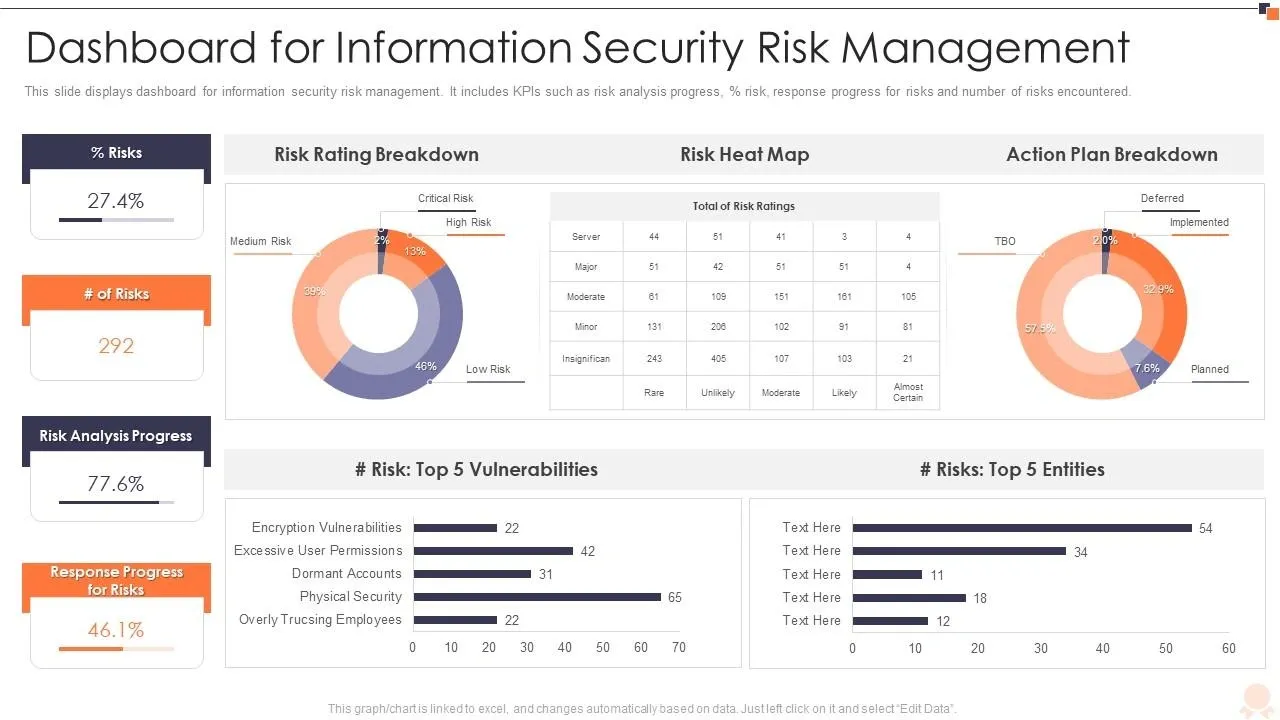
Image Source: SlideTeam
Performance evaluation lies at the core of ISO 27001’s Clause 9. Your ISMS must work well and show continuous improvement over time. The evaluation uses three connected activities that show clear evidence of your security program’s health.
Conducting Internal Audits and Reporting
Internal audits act as vital checkpoints to assess if your ISMS meets both your organization’s needs and ISO 27001 standards. Clause 9.2 requires organizations to run internal audits regularly. These audits help verify if the ISMS works as planned and stays on track. The audit process needs a well-laid-out approach:
You should start by reviewing documentation to set clear audit boundaries. The next step involves working with management to set timelines and resources. A field review follows where you talk to employees, verify evidence, and record findings. The process ends with analysis and a detailed report.
Your internal audit reports need specific elements: scope and objectives, participants and roles, executive summary, intended recipients, deep analysis with improvement opportunities, and a statement about constraints. Ready to ensure your audit program meets certification requirements? Book a Readiness Call with our experts to review your internal audit approach.
Management Review: Inputs, Outputs, and Frequency
ISO 27001 doesn’t specify exact timing for management reviews, but they should happen at least yearly. More frequent reviews work better in practice. Weekly or monthly reviews help especially when you first implement the system.
Management reviews need a structured agenda. This includes previous action status, changes to internal/external issues, information security performance trends, audit results, stakeholder feedback, risk assessment status, and ways to improve. The outputs must show decisions about ongoing improvement and needed ISMS changes.
Using KPIs to Measure ISMS Effectiveness
Requirement 9.1 states that organizations must define what they monitor, how they measure it, when they do it, and who looks at the results. Good monitoring can cut compliance costs by about 30% by catching problems early.
Your key performance indicators should be SMART (Specific, Measurable, Achievable, Relevant, Time-bound). Technical KPIs might track incident response time and monthly security incidents. Strategic indicators often look at training completion rates and how quickly teams fix vulnerabilities.
Regular measurement helps you track your ISMS development and see how well it works. The right metrics let you show improvements against targets and compare current performance with past results.
Conclusion
This detailed overview of ISO 27001 Clauses 4-10 examines mandatory requirements that serve as foundations for certified information security management systems. Your organization’s information assets receive practical protection through these interconnected framework clauses, which turn security concepts into reality.
Understanding your organization’s unique context starts with Clause 4. Leadership must show steadfast dedication in Clause 5, while Clause 6 develops systematic risk management approaches. Clause 7 outlines support resources that build reliable infrastructure before Clause 8 turns plans into operational reality. Your ISMS stays effective and evolves through evaluation mechanisms in Clause 9 and improvement processes in Clause 10.
Organizations develop mature security practices beyond certification by implementing these requirements thoughtfully. They protect critical information, build stakeholder trust, and create competitive advantages. Security leaders can establish clear direction while addressing unique organizational risks through these structured clauses.
Book a Readiness Call with our experts who can assess your current state and give tailored guidance for your ISO 27001 trip if you feel overwhelmed by the certification process.
ISO 27001’s strength lies in fostering a security-first mindset across your organization rather than rigid compliance. These clauses create a responsive management system that improves continuously. Your valuable information assets stay protected as the system adapts to emerging threats effectively.
Key Takeaways
Understanding ISO 27001 Clauses 4-10 is essential for CISOs building compliant information security management systems. These mandatory requirements create a structured framework that transforms security planning into operational excellence.
• Clauses 4-10 contain 140-150 mandatory requirements that every organization must satisfy for ISO 27001 certification, unlike optional Annex A controls
• Leadership commitment is non-negotiable – top management must actively demonstrate involvement through policy approval, resource allocation, and audit participation
• Risk assessment methodology must produce consistent results across departments, with clear criteria for risk acceptance and systematic treatment options
• ISMS integration into business processes is required – security cannot exist in isolation but must be embedded throughout organizational operations
• Internal audits and management reviews provide critical feedback for continuous improvement, with structured approaches to measure ISMS effectiveness
The sequential arrangement of these clauses mirrors the natural ISMS lifecycle, creating a Plan-Do-Check-Act cycle that ensures information security remains aligned with business objectives while continuously evolving to address emerging threats and organizational changes.
FAQs
Q1. What are the key components of ISO 27001 Clauses 4-10? Clauses 4-10 of ISO 27001 cover organizational context, leadership, planning, support, operation, performance evaluation, and improvement. These clauses outline the mandatory requirements for establishing, implementing, maintaining, and continually improving an information security management system (ISMS).
Q2. How often should management reviews be conducted for ISO 27001 compliance? While ISO 27001 doesn’t specify an exact frequency, management reviews should be conducted at least annually. However, more frequent reviews (weekly or monthly) are recommended, especially during the initial implementation phases of an ISMS.
Q3. What is the importance of the Statement of Applicability (SoA) in ISO 27001? The Statement of Applicability is a crucial document that links risk assessment to control implementation. It outlines which Annex A controls are applicable to the organization, justifies their inclusion or exclusion, and indicates their implementation status. The SoA is one of the first documents auditors examine during certification.
Q4. How does ISO 27001 address change management? ISO 27001 requires organizations to control planned changes and address unintended ones. The 2022 revision introduced Clause 6.3, which mandates that changes to the ISMS be carried out in a planned manner. This includes defining which types of changes require formal control and who has the authority to approve significant changes.
Q5. What are some effective Key Performance Indicators (KPIs) for measuring ISMS effectiveness? Effective KPIs for measuring ISMS effectiveness should be SMART (Specific, Measurable, Achievable, Relevant, Time-bound). Examples include incident response time, number of security incidents per month, awareness training completion rates, and vulnerability resolution times. Regular measurement of these KPIs helps track ISMS development and demonstrate improvements over time.