
Starting an ISO 27001 readiness assessment might feel daunting at first. This globally accepted framework helps manage and secure sensitive information, and needs careful planning with detailed documentation. Your organization’s current security setup will determine the timeline, which typically ranges from three to twelve months.
ISO 27001 certification proves your organization follows information security best practices. The certification isn’t a one-time achievement – it needs constant monitoring, yearly surveillance audits, and regular recertification. SaaS companies usually complete this process in three to six months. The audit preparation takes one to four weeks. A detailed audit readiness checklist becomes crucial to prevent delays that could stretch the process to six months.
This piece covers key steps of an ISO 27001 readiness assessment. You’ll learn to define your Information Security Management System (ISMS) scope, run a gap analysis, put controls in place, and prove readiness through internal audits. This structured approach will boost your organization’s information security, build customer trust, and meet compliance needs in many sectors.
Step 1: Define Your ISMS Scope and Readiness Goals
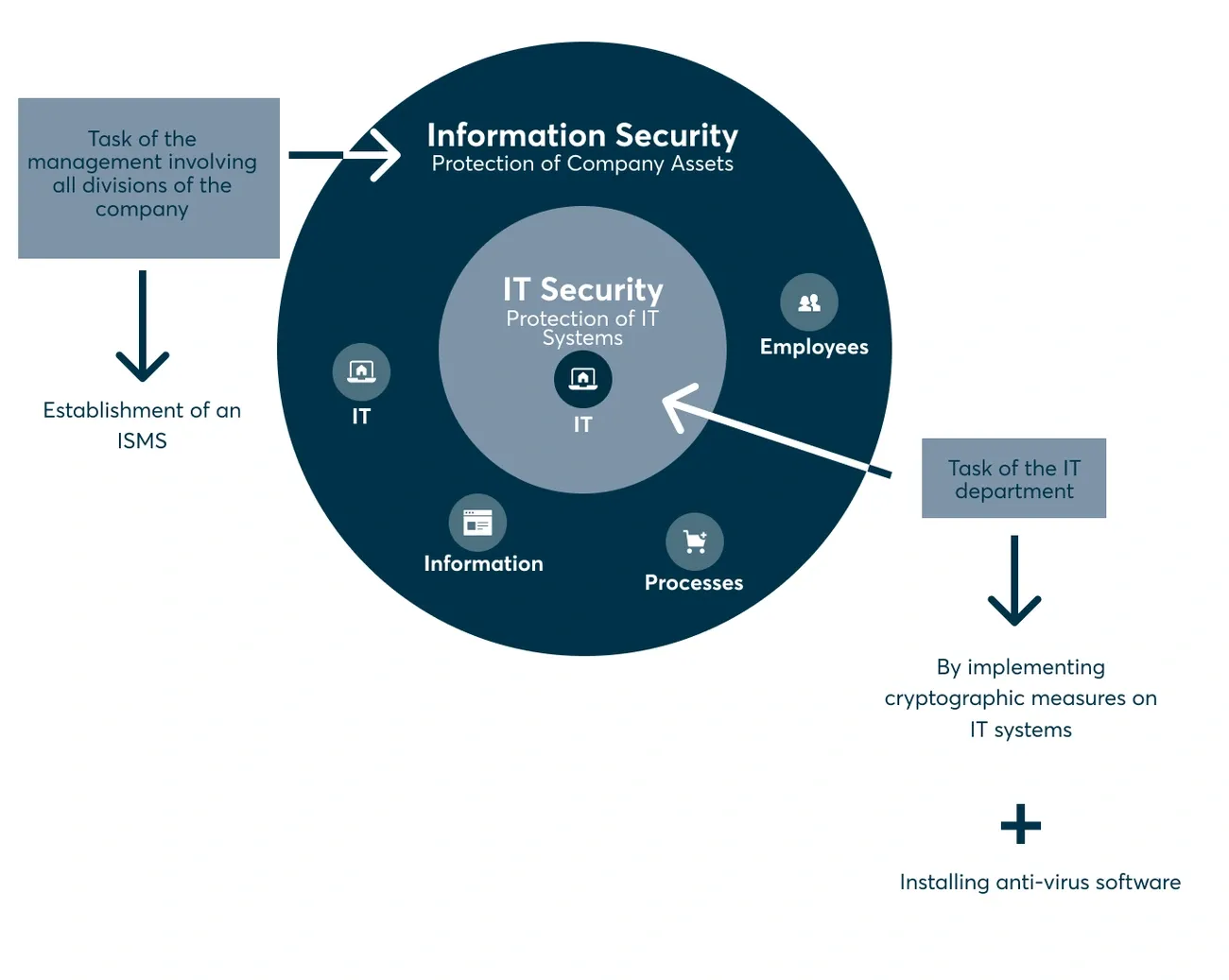
Image Source: DataGuard
A successful ISO 27001 implementation starts with a clear definition of your Information Security Management System (ISMS) scope. The original step needs you to think over what information you want to protect. This sets the boundaries where your security controls will work.
Clarify organizational boundaries and assets in scope
Your ISO 27001 readiness assessment trip needs you to make one of the most important decisions – determining organizational boundaries. You need to identify which parts of your organization will be under the ISMS umbrella:
- Physical locations and premises
- Organizational units and departments
- Information systems and technology infrastructure
- Key processes that create or handle sensitive information
The scope must identify all information assets that need protection, whatever their location—on premises, in the cloud, or accessed remotely. On top of that, it should document the interfaces and dependencies between internal activities and those handled by external parties.
Asset identification is a vital part of scope definition. Each information asset needs designated owners who will manage them through their lifecycle—from creation and processing to storage, transmission, and eventual deletion.
Line up scope with business objectives and compliance needs
Your ISMS should deliver real value by matching your organization’s strategic goals. A well-laid-out scope helps information security boost business objectives instead of being just a compliance exercise. The requirements of interested parties—customers, shareholders, regulators—play a big role in setting scope boundaries.
Small organizations might find it easier to include everything in scope. Larger enterprises could benefit from targeting specific products, services, or departments. All the same, you should review these challenges of partial scoping:
- Staff confusion about which information falls under ISMS protection
- More complex management of dual processes
- Possible negative perception from customers or certification bodies
Certification bodies prefer “whole organization” scope nowadays. Important customers generally expect this approach too. Your scope statement should be brief yet clear about what falls within and outside your ISMS boundaries. It should show how your security controls support broader business goals.
Step 2: Perform a Readiness Gap Assessment
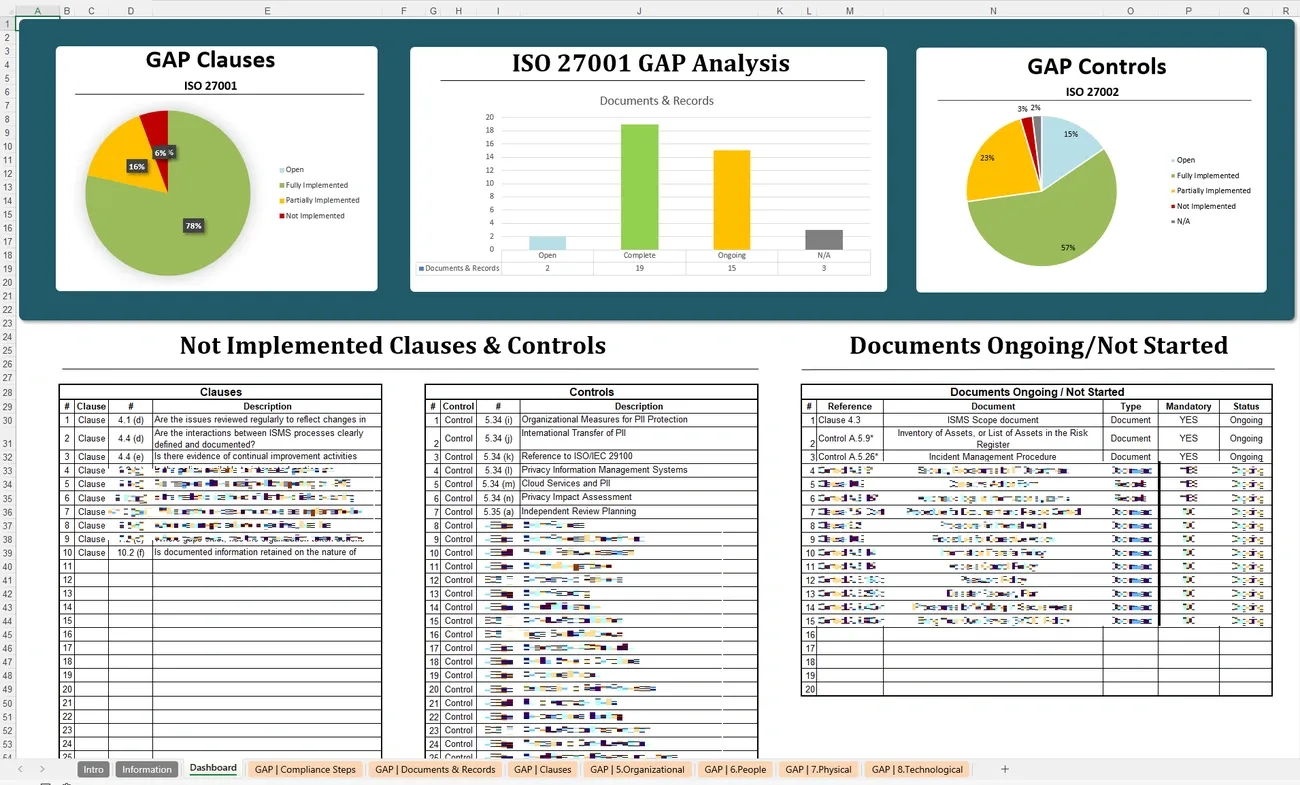
Image Source: Cyberzoni.com
Your next crucial step after defining the ISMS scope is to get a full picture through a gap analysis. This assessment shows how your current security measures stack up against what the standard requires.
Compare current practices with ISO 27001 readiness assessment guide
A well-laid-out gap analysis matches your existing practices with ISO 27001 requirements through several steps. You’ll need to review documents of current policies and procedures, talk to stakeholders, and see how your controls line up with ISO 27001 requirements.
The assessment must look at both mandatory clauses (4-10) and Annex A controls. Going through each clause might take time, but you need this to spot technical gaps like missing policies and procedures, plus management system gaps such as weak leadership support.
The quickest way to work is to create a detailed checklist. Mark each requirement as compliant, partially compliant, or non-compliant. This method helps you catch all critical security elements during your ISO 27001 readiness assessment.
Use readiness assessment platforms to streamline analysis
Special platforms can make gap analysis much easier. These tools break down ISO 27001 requirements into simple tasks. They assign responsibilities to team members using straightforward “yes/no” surveys.
Many platforms offer questionnaires that tell you right away how ready you are. To cite an instance, a good assessment checks management awareness, information asset inventory, risk identification, and incident response capabilities.
Create a remediation roadmap with owners and deadlines
Once you spot the gaps, build a clear plan that has:
- What each gap is about
- Why it exists
- Steps to fix it
- Priority levels (high, medium, low)
- Who’s responsible
- When it needs to be done
Set priorities based on how risks affect you, the work needed, and any urgent regulations. One expert puts it well: “Not all gaps are equal—and a good report reflects that”.
Give each gap to a specific person or team. Don’t use vague assignments like “IT to resolve”. Instead, be specific: “Security Officer to implement audit logging on server ABC by this date”.
Book a Readiness Call with certified ISO 27001 consultants who can guide you through gap assessment, especially if this is your first certification experience.
Step 3: Implement Controls and Prepare Documentation
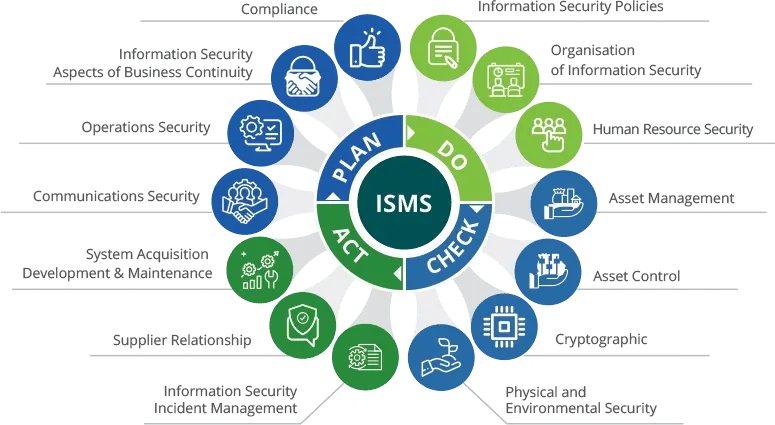
Image Source: Omnex
The implementation phase starts after you spot gaps in your security posture. This significant stage needs proper documentation and execution to make sure your ISO 27001 readiness assessment ends with a soaring win.
Apply relevant ISO 27001 Annex A controls
ISO 27001:2022 gives you a catalog of 93 controls in four main sections that are the foundations of your security blueprint. Your risk assessment outcomes and Statement of Applicability (SoA) requirements should guide your control selection. The four control categories are:
- Organizational controls (37 controls) that cover governance and management aspects
- People controls (8 controls) that handle human resources security
- Physical controls (14 controls) that protect tangible assets
- Technological controls (34 controls) that focus on IT systems security
Develop required policies: access, incident response, business continuity
Your policy framework needs three key areas. You’ll need an access control policy that sets who can access specific information and systems. Next comes an incident management policy with clear steps for security events. So you’ll want a business continuity policy that will give a stable security setup during disruptions.
Train employees and collect implementation evidence
Employee training is the life-blood of ISO 27001 compliance. Your team needs to know their security duties and get the right awareness education. Getting evidence is a vital part of certification audits. System logs, incident reports, security monitoring outputs, and access records make up typical evidence. You should set up clear collection steps that show who’s responsible and list approved ways to preserve evidence.
Step 4: Validate Readiness Through Internal Audit
Your organization needs to prove its ISMS works through an internal audit before applying for ISO 27001 certification. This step helps you practice for the actual certification audit. The audit team will spot any remaining gaps and check if everything works as intended.
Select an independent internal auditor
Your internal auditor must be both independent and competent. The auditor should not have set up or currently manage the controls under review. A qualified auditor needs relevant information security expertise from experience, training, or technical background. You can choose qualified people from your team or bring in external consultants who meet these requirements.
Conduct audit interviews and evidence reviews
The audit team should start with a detailed review of your ISMS documentation. They can create an audit checklist after understanding the processes. The evidence gathering process includes:
- Reviewing documents and records
- Watching processes across departments
- Talking to staff members at different levels
Address findings and finalize audit readiness checklist
The audit team creates a detailed report that shows which controls passed and where improvements are needed. A good report contains an executive summary, analysis of what they found, and suggestions for improvement. Management needs to see these findings and create clear fix-it plans with owners for each gap. The team must implement corrective actions and check if they work before moving to the certification audit.
Conclusion
ISO 27001 certification will boost your organization’s information security and build credibility with customers and partners. The certification process may seem overwhelming at first. Breaking it down into four key steps makes it systematic and manageable.
A well-defined scope creates the foundation for your ISMS and guides all future security work. A full picture of your current practices shows exactly where you need to improve to meet ISO requirements. You’ll need to implement controls and document processes. Internal audits prepare you for the final certification step.
ISO 27001 compliance needs continuous dedication rather than just a one-time effort. Companies that see certification as a starting point rather than the end goal get the most value. The benefits extend beyond the certificate – you’ll develop better risk management, improved operations, and a stronger security mindset.
Want to begin your ISO 27001 certification? Book a Readiness Call with expert consultants who provide guidance based on your company’s specific needs. The path to certification is available with proper planning and expert help, whatever your current security maturity level.
Key Takeaways
Successfully implementing ISO 27001 requires a systematic four-step approach that transforms overwhelming certification requirements into manageable, actionable phases.
• Define clear ISMS scope boundaries – Identify which organizational assets, locations, and processes need protection to establish focused security controls.
• Conduct thorough gap analysis – Compare current practices against ISO 27001 requirements using structured assessments to create targeted remediation roadmaps.
• Implement controls with proper documentation – Apply relevant Annex A controls while developing essential policies for access control, incident response, and business continuity.
• Validate readiness through internal audits – Use independent auditors to identify remaining gaps and verify implementation effectiveness before certification.
• Plan for 3-12 month implementation timeline – Most organizations need 3-6 months for certification, with proper planning preventing costly delays and ensuring sustainable compliance.
ISO 27001 certification is an ongoing commitment that strengthens security posture, enhances customer credibility, and improves operational efficiency. The key to success lies in treating certification as the beginning of your security journey rather than the final destination.
FAQs
Q1. How long does the ISO 27001 certification process typically take? The ISO 27001 certification process usually takes between 3 to 12 months, depending on an organization’s current security posture. For most organizations, particularly SaaS companies, the process typically requires 3 to 6 months.
Q2. What is the first step in preparing for ISO 27001 certification? The first step is to define the scope of your Information Security Management System (ISMS). This involves identifying the organizational boundaries, assets, and processes that will be covered by your information security controls.
Q3. Why is conducting a gap analysis important in the ISO 27001 readiness assessment? A gap analysis is crucial because it compares your current security practices against ISO 27001 requirements. This helps identify areas that need improvement and allows you to create a targeted remediation plan to address these gaps.
Q4. What key policies need to be developed during ISO 27001 implementation? Three essential policies that need to be developed are: an access control policy, an incident response policy, and a business continuity policy. These policies address crucial aspects of information security management.
Q5. Why is an internal audit necessary before seeking ISO 27001 certification? An internal audit serves as a practice run for the official certification audit. It helps validate the effectiveness of your ISMS implementation, identifies any remaining gaps, and allows you to address them before the formal certification process begins.