
What does FedRAMP stand for? FedRAMP is the Federal Risk and Authorization Management Program, a standardized approach to security assessment, authorization, and continuous monitoring for cloud services across the federal government. The program, now 12 years old and enacted into law in December 2022, has grown into one of the most rigorous cybersecurity certifications worldwide. It follows 27 applicable laws and regulations along with 26 standards and guidance documents.
Many organizations seeking government contracts ask us about FedRAMP’s meaning and definition. The program sets specific criteria that cloud service providers must meet to work with U.S. government agencies. On top of that, the Office of Management and Budget requires FedRAMP authorization for any cloud services holding federal data. This certification helps federal agencies move away from outdated, insecure legacy IT systems toward budget-friendly cloud-based solutions. In this piece, we’ll explore the components of the FedRAMP acronym, its core purpose, governance structure, and the most important benefits of becoming FedRAMP compliant.
What Does FedRAMP Stand For?
The Federal Risk and Authorization Management Program—commonly known as FedRAMP—is the life-blood of government cloud security. A deeper look at this simple acronym shows how each element plays a vital role in securing federal cloud environments.
Breaking Down the FedRAMP Acronym
FedRAMP stands for Federal Risk and Authorization Management Program. The name captures what the program does and why it exists. Here’s what each part means:
- Federal: A government-wide program that works for all federal agencies
- Risk: Emphasizes the program’s dedication to security risk assessment and management
- Authorization: The formal approval process cloud services must complete
- Management: Ongoing oversight instead of one-time approval
- Program: A well-laid-out system with specific processes and guidelines
The name helps us learn about the program’s role in managing authorization and risk assessment for federal cloud systems.
FedRAMP Meaning in the Context of Cloud Security
FedRAMP provides a standard way to assess cloud services’ security for government use. This standardization matters because agencies used different approaches to assess cloud security before FedRAMP existed.
People often call FedRAMP “FISMA for the cloud” because it adapts the Federal Information Security Management Act framework specifically for cloud environments. Cloud service providers (CSPs) can prove their security capabilities through:
- Standardized security assessments
- Authorization procedures
- Continuous monitoring requirements
FedRAMP makes shared use of approved security packages possible across multiple agencies. This approach cuts down duplicate work while keeping security standards high.
What Does RAMP Stand For in FedRAMP?
The “RAMP” in FedRAMP—Risk and Authorization Management Program—contains the key processes that make the program work:
Risk: Risk assessment sits at the heart of FedRAMP. The program identifies, analyzes, and addresses potential security vulnerabilities in cloud services. Security teams must manage risks to acceptable levels.
Authorization: Cloud services go through a formal approval process. They must meet established security controls. Authorization proves a service has met required security standards.
Management: FedRAMP requires ongoing oversight instead of one-time certification. Teams must reassess services regularly and adapt to new threats.
Program: A structured system connects these elements and creates repeatable processes for effective cloud security across government.
These components help FedRAMP create what the government calls “a core set of processes to ensure effective, repeatable cloud security”. The program wants to speed up the adoption of secure, cloud-based IT to replace old systems while maintaining strong security standards.
Purpose and Goals of the FedRAMP Program
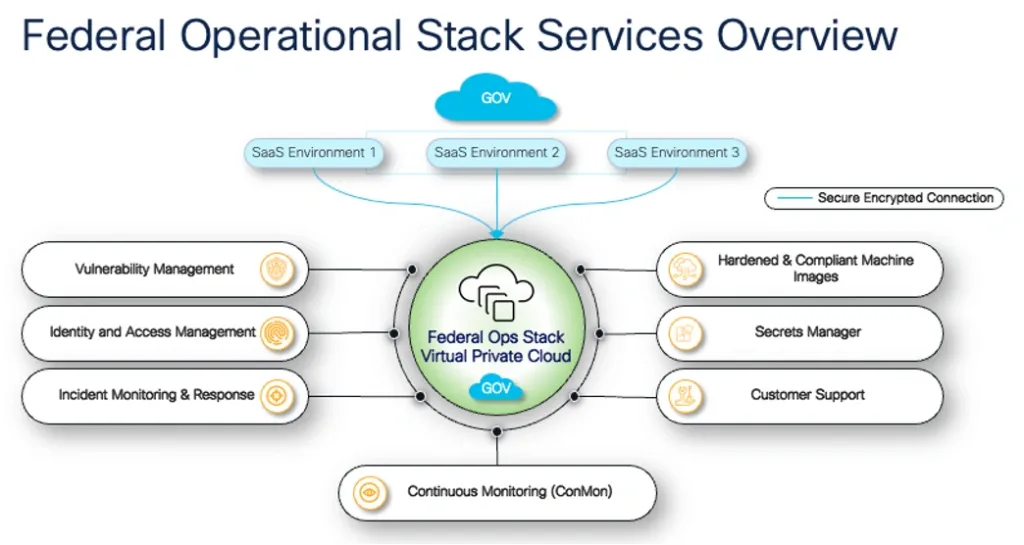
Image Source: Cisco Blogs
Purpose and Goals of the FedRAMP Program
FedRAMP solves a critical challenge for the U.S. federal government: secure and quick adoption of modern cloud technologies. The program speeds up cloud adoption across federal agencies. It serves several connected purposes that benefit government entities and cloud service providers (CSPs).
Standardizing Cloud Security for Federal Agencies
FedRAMP provides a consistent framework to evaluate cloud security. Federal agencies used different approaches to assess cloud services before its launch in 2011. This created inconsistency and uncertainty. The program fixes this through a standardized approach to security assessment, authorization, and continuous monitoring for cloud products.
The program enables agencies to use modern cloud technologies that protect federal information. Agencies can now move from outdated legacy IT to secure, budget-friendly cloud-based solutions that support their mission.
The government’s core processes ensure cloud security practices work repeatedly. This uniformity creates a mature marketplace. Federal agencies now use and understand cloud services better.
Reducing Duplication with ‘Do Once, Use Many’ Model
The program’s most important innovation is its “do once, use many times” framework. This approach eliminates duplicate work by using a common security framework. The process works simply:
- CSPs undergo the authorization process just once
- Any federal agency can reuse their security package after authorization
- Agencies review their security needs against the standardized baseline
This model benefits the entire government. The FedRAMP approach cuts government costs by 30-40%. It also reduces time and staff needed for repeated agency security assessments. The FedRAMP Marketplace now lists over 180 authorized cloud products. These products have been reused more than 1,500 times.
Improving Confidence in Cloud Risk Assessments
FedRAMP builds trust in government cloud security assessments through several ways:
- Using consistent security authorizations with agreed-upon standards
- Applying uniform security practices across government
- Providing up-to-the-minute security visibility through monitoring
- Creating better transparency between government and CSPs
Independent security assessments by accredited third-party assessment organizations (3PAOs) add extra validation. These assessments verify that security controls work properly.
CSPs must monitor their controls and report changes or issues to agencies. This oversight gives agencies clear visibility into their cloud services’ security status. Federal agencies can now adopt state-of-the-art cloud services for critical missions. They save time and money while being more confident about security.
Governance Structure and Legal Foundations
A strong governance framework powers every successful federal program. The 12-year old FedRAMP works with specific policies and regulations under a structured leadership model that gives consistent cloud security across government agencies.
Role of the Joint Authorization Board (JAB)
The JAB has been FedRAMP’s main governing body. It brings together Chief Information Officers from three federal organizations: the Department of Defense, Department of Homeland Security, and General Services Administration. The JAB acts as the life-blood leadership entity and takes charge of defining and updating FedRAMP security authorization requirements.
Resources are limited, so the JAB picks about 12 Cloud Service Offerings each year through the FedRAMP Connect process. The FedRAMP Authorization Act of 2022 brought changes. The new FedRAMP Board replaced JAB and now leads the governance.
OMB and the FedRAMP Policy Memo
The Office of Management and Budget (OMB) laid down FedRAMP’s policy framework through its December 2011 memorandum. The FedRAMP Authorization Act changed things. OMB released new guidance (M-24-15) in July 2024 that took the place of the original memo. This fresh guidance creates a modern vision, scope, and governance structure.
The OMB now decides which cloud computing products get FedRAMP authorizations. It also sets requirements for federal agencies using the program. The FedRAMP Authorization Act made the program part of federal law, making it more than just a policy initiative.
NIST’s Contribution to FedRAMP Standards
The National Institute of Standards and Technology (NIST) serves as a vital technical advisor in the FedRAMP ecosystem. NIST helps in two main areas:
- It recommends ways to apply the Risk Management Framework (NIST SP 800-37)
- It guides on security controls from NIST SP 800-53 for low and moderate security impact cloud systems
FedRAMP security controls build on NIST SP 800-53 baselines. They add extra parameters that address unique cloud computing elements. These improved controls make sure cloud services meet strict federal data protection standards.
FedRAMP and FISMA: How They Relate
People often call FedRAMP “FISMA for the cloud” because it applies FISMA principles to cloud environments. Both frameworks use NIST SP 800-53 security controls. FedRAMP adds cloud-specific controls on top of the standard NIST baseline.
The biggest difference is their reach. FISMA works with all federal information systems, whatever the environment. FedRAMP focuses only on cloud service offerings. FISMA assessments usually support one agency. Vendors need Authority to Operate from each agency they work with. FedRAMP takes a different approach. Its “do once, use many times” model lets agencies use existing authorization packages across government.
This governance structure and legal framework helps FedRAMP create consistent cloud security assessments. It speeds up secure cloud adoption throughout the federal government.
FedRAMP Authorization Types and Pathways
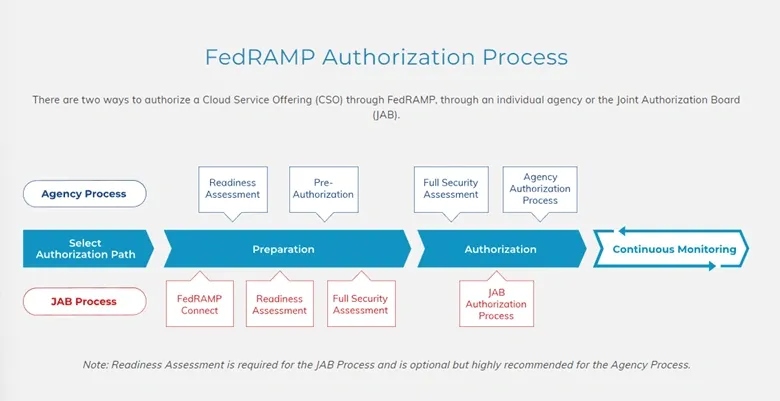
Image Source: AuditBoard
Organizations must follow specific pathways to get FedRAMP authorization that proves their cloud service’s security posture. Let’s get into the available routes to FedRAMP compliance and see how they work.
Agency Authorization vs JAB P-ATO
The traditional Agency Authorization process is now the main path to FedRAMP authorization. Cloud Service Providers (CSPs) work directly with a sponsoring federal agency to get authorized. The process works like this:
- Submitting an In Process Request (IPR) letter and work breakdown structure
- Conducting a Kickoff Meeting with the agency partner
- Completing security assessment and documentation
- Receiving an Authority to Operate (ATO) from the sponsoring agency
The Joint Authorization Board (JAB) used to offer another path through Provisional Authorization to Operate (P-ATO). The JAB, which had CIOs from the Department of Defense, Department of Homeland Security, and General Services Administration, picked about 12 cloud products each year for this detailed assessment.
All the same, FedRAMP is moving to one “FedRAMP Authorized” designation instead of different authorization tiers. The FedRAMP Board has taken over from the JAB and now manages former JAB authorizations while developing program strategy.
Tailored Authorization for Low-Impact Systems
FedRAMP Tailored is a quick path for cloud services that have minimal risk profiles. This route is perfect for Low-Impact Software as a Service (LI-SaaS) providers.
A cloud service must meet these requirements to qualify:
- Operate in a cloud environment
- Contain no personally identifiable information (except login credentials)
- Be categorized as low-security-impact under FIPS 199 standards
FedRAMP Tailored needs far fewer security controls—about 35 compared to 125 for standard FedRAMP Low. This makes it a great fit for collaboration tools, project management applications, and development platforms that don’t handle sensitive data.
Role of 3PAOs in the Authorization Process
Third-Party Assessment Organizations (3PAOs) are crucial in proving security implementations work. These accredited independent assessors give a full picture of a CSP’s security controls and create assessment reports that help make authorization decisions.
CSPs have some flexibility with Agency Authorization since working with a 3PAO is recommended but not required. The assessment usually involves preparing a Security Assessment Plan, doing the evaluation, and creating a Security Assessment Report (SAR) with the findings.
3PAOs offer an outside view that often spots security gaps internal teams might miss. Their independent assessment builds a stronger security posture and helps federal agencies trust the authorization process more.
Benefits of Being FedRAMP Compliant
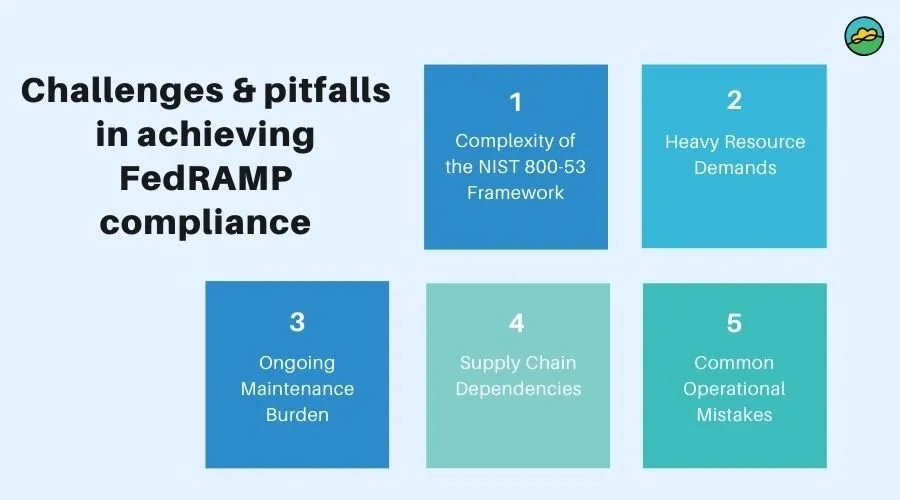
Image Source: TrustCloud
Getting FedRAMP authorization opens up many opportunities for cloud service providers beyond just meeting compliance requirements. The benefits reach far into both government and private sectors.
Access to the FedRAMP Marketplace
FedRAMP certification puts organizations directly in the FedRAMP Marketplace—a searchable database of authorized cloud offerings. This central directory helps federal agencies find and assess secure cloud services. Note that this listing helps providers stand out to government buyers. The Marketplace puts the “do once, use many” concept into action, which makes it easy for agencies to find and reuse authorizations.
Competitive Advantage in Public and Private Sectors
FedRAMP authorization creates real competitive benefits:
- Mandatory for Government Business: Cloud providers need this certification to work with federal agencies
- Improved Credibility: Tough security standards prove trustworthiness to potential clients
- Market Expansion: Commercial organizations, state and local governments actively look for FedRAMP-authorized providers
- Long-Term Partnerships: Government contracts bring stable and predictable revenue
Simplified Security Assessments for Agencies
The FedRAMP framework helps agencies save time, effort, and money through its standard approach. A single assessment creates an authorization package that works for all federal agencies. This cuts down duplicate work by about 30-40%.
Want to see how FedRAMP authorization can help your organization grow? Book a Readiness Call to assess your compliance readiness today.
Conclusion
FedRAMP has been the gold standard for cloud security across federal agencies for 12 years. The Federal Risk and Authorization Management Program helps agencies adopt secure cloud solutions while upholding strict security standards. The program’s “do once, use many times” approach creates major efficiency and saves government agencies 30-40% in costs by eliminating duplicate security reviews.
Cloud service providers gain access to profitable government contracts through FedRAMP authorization, which builds credibility in both public and private sectors. The standardized security framework will give a reliable way to review detailed controls made specifically for cloud environments. Authorized providers can connect with agencies looking for secure cloud solutions through the FedRAMP Marketplace.
The FedRAMP Authorization Act of 2022 brought major changes by making the program federal law. This legal foundation works alongside NIST’s technical guidance to create reliable standards that balance security needs with real-world use.
Cloud providers need to get ready for certification, whether they choose Agency Authorization, the new unified “FedRAMP Authorized” designation, or the efficient Tailored Authorization for low-impact systems. Your organization should review its readiness early in the process. You can book a Readiness Call today to get a full picture of your compliance status and begin your trip toward FedRAMP authorization.
Key Takeaways
Understanding FedRAMP is crucial for any organization looking to work with federal agencies or enhance their cloud security posture. Here are the essential insights from this comprehensive overview:
• FedRAMP stands for Federal Risk and Authorization Management Program – a standardized framework for security assessment, authorization, and continuous monitoring of cloud services used by federal agencies.
• “Do once, use many” model saves 30-40% in government costs by allowing cloud providers to complete authorization once and reuse it across all federal agencies, eliminating redundant assessments.
• Three authorization pathways exist: Agency Authorization (primary route), JAB P-ATO (being phased out), and FedRAMP Tailored for low-impact systems with minimal security requirements.
• FedRAMP authorization is mandatory for federal cloud contracts and provides significant competitive advantages in both government and private sectors through enhanced credibility and market access.
• The program operates under robust governance with NIST providing technical standards, OMB setting policy framework, and the new FedRAMP Board replacing the traditional Joint Authorization Board structure.
FedRAMP represents more than just compliance—it’s a strategic business enabler that opens doors to stable government contracts while demonstrating the highest levels of cloud security to all potential clients.
FAQs
Q1. What is the main purpose of the FedRAMP program? FedRAMP aims to accelerate the adoption of secure cloud solutions across federal agencies by providing a standardized approach to security assessment, authorization, and continuous monitoring for cloud services.
Q2. Who is required to obtain FedRAMP authorization? Cloud Service Providers (CSPs) that intend to sell cloud offerings to U.S. federal agencies must obtain FedRAMP authorization. This is mandated by federal policy to ensure that agencies only use cloud systems with proper security clearance.
Q3. How does FedRAMP differ from other compliance programs? While FedRAMP and other programs like FISMA are based on NIST standards, FedRAMP specifically focuses on cloud security with controls tailored for distributed computing environments. It applies exclusively to cloud services, whereas FISMA covers all federal information systems.
Q4. What does “FedRAMP In Process” mean? “FedRAMP In Process” is a designation given to Cloud Service Providers that are actively working towards obtaining FedRAMP authorization. It indicates that the provider has initiated the formal assessment and authorization process.
Q5. What are the key benefits of being FedRAMP compliant? FedRAMP compliance offers several advantages, including access to the FedRAMP Marketplace, a competitive edge in both public and private sectors, enhanced credibility, and the ability to form long-term partnerships with government agencies. It also streamlines security assessments for agencies, saving time and resources.