
Companies spend $30 to $40 billion on AI initiatives, yet 95% of them see no returns on their investment. This reality shows a big gap between adopting AI and making it work effectively. AI governance consulting helps businesses overcome these challenges and deliver real results.
The numbers tell an interesting story. About 52% of organizations are rushing to adopt Generative AI, and 76% of leaders believe AI will change everything within three years. But many hit roadblocks with execution. The problem is clear – businesses want to implement AI solutions but lack proper governance frameworks. Timing plays a vital role when companies compare AI governance consulting prices and look for the best business partners. Understanding what AI governance consulting includes helps teams pick from consulting firms of all sizes that offer expert guidance.
This piece dives into the right time to bring in external governance experts and ways to check your company’s readiness. You’ll learn where consulting adds the most value, different pricing options, and tips to find your ideal partner. The main focus remains simple – to help you get better returns on AI investments through solid governance.
Identifying the Right Time to Engage AI Governance Consulting
Organizations struggle to find the right time to bring in external AI governance expertise. The timing can affect both implementation success and return on investment by a lot. A smart approach to scheduling your AI governance consulting can determine whether your AI delivers value or just stagnles.
Early-stage AI strategy development
Getting governance consultants during the original strategy planning helps organizations avoid costly mistakes. Research shows that 80% of AI projects fail because companies rush to implement technology without proper planning. Consultants offer vital guidance by helping organizations:
-
Line up AI initiatives with business goals before major investments
-
Build a responsible AI framework that balances breakthroughs with risk management
-
Review your current technology stack, data quality, and team skills to check AI readiness
Organizations still developing their AI maturity model benefit the most from early consultation. McKinsey’s research shows that connecting digital strategies with AI strategies leads to clearer policies on data security and accountability. Getting governance expertise at this stage creates guardrails that keep security intact without stopping innovation.
Post-pilot phase with scaling challenges
Moving from successful pilot to enterprise-wide implementation is another key moment to get consulting help. Companies often run into pattern recognition problems that stop them from scaling.
A consumer packaged goods company started by using AI in customer service but found greater gains when they spotted similar patterns across multiple business functions. On top of that, only 18% of organizations have enterprise-wide councils that can make decisions on responsible AI governance. This creates a big gap in scaling oversight.
Governance consultants help spot technical roadblocks, data quality problems, and organizational barriers early. This prevents expensive mistakes that could derail projects months into implementation. Their expertise becomes essential to create policies for consistent governance in a variety of AI applications.
Regulatory or compliance-driven triggers
New regulations often push organizations to seek governance expertise. The EU Artificial Intelligence Act, coming in 2026, could fine companies up to €35 million or 7% of global revenue for breaking rules. New York City’s AI bias audit requirements for hiring tools also create urgent compliance needs.
The numbers show why this matters: 95% of leaders think their business will face impacts from proposed EU regulations. More than 80% of organizations plan to spend at least 10% of their AI budget on meeting regulatory requirements.
Organizations facing these triggers should focus on:
-
Building automated compliance frameworks that adapt to regulatory changes
-
Creating AI-specific risk management approaches
-
Setting documentation standards that prove compliance
Only 2% of companies say they’ve fully implemented responsible AI across their organization. Getting consultants when regulatory pressures first appear helps organizations stay ahead instead of playing catch-up with compliance requirements.
Your organization’s specific situation determines when to get AI governance consulting—whether you’re creating your original strategy, scaling successful pilots, or handling regulatory pressures. Knowing these triggers helps you intervene at the right time to maximize AI’s value while reducing potential risks.
Assessing Internal Readiness Before Consulting Engagement
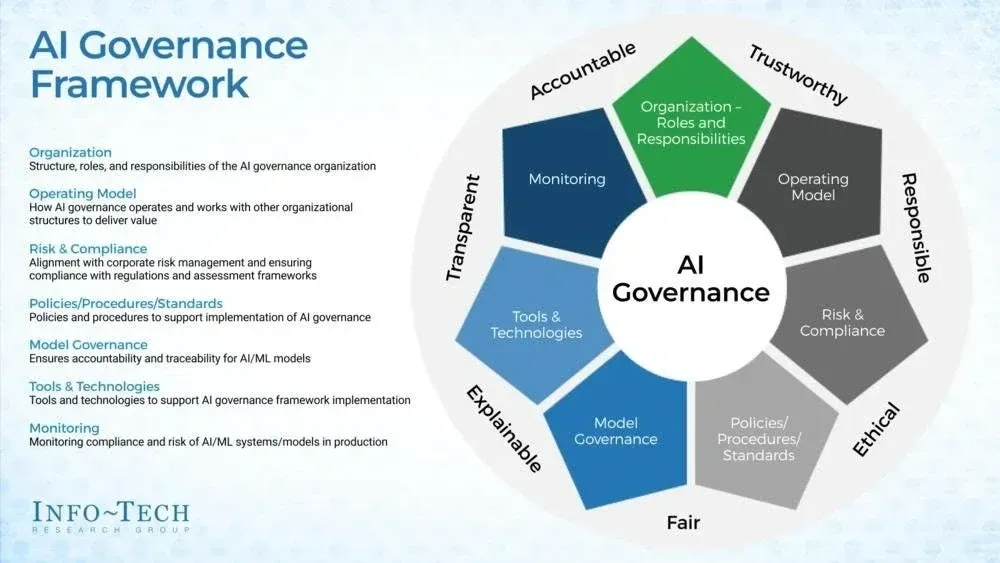
Image Source: Elevate Consult
Companies need a full picture of their needs before they invest in AI governance consulting services. This self-evaluation helps them spot specific needs and pick areas to improve. They can then get more value from their consulting partnerships. Recent data from the Thomson Reuters Foundation’s AI Company Data Initiative shows that only 48% of companies have reliable governance frameworks to handle AI-related risks.
AI maturity model evaluation
Maturity models give organizations a way to review their AI governance capabilities. These evaluations help organizations set their current position against industry standards. They use established frameworks like the NIST AI Risk Management Framework as their foundation.
Most maturity models show growth through these stages:
-
Initial/Reactive: No documented governance practices or just random approaches
-
Defined/Proactive: Company-wide standard practices with proper documentation
-
Managed/Optimized: Practices run smoothly with constant monitoring and improvements
A proper assessment needs detailed records and proof-based reviews. Teams should include members who know their stuff from different departments to gather reliable information. The knowledge gap remains wide. Only 14% of smaller companies know about major standards like the NIST AI Risk Management Framework. to see where your company stands and what steps you need to take next.
Existing governance structures and gaps
Many organizations still have big holes in their governance despite having AI strategies. Numbers tell an interesting story. While 76% of companies with an AI strategy have management oversight, only 41% make their policies available to employees. This gap between what’s on paper and what happens creates weak spots in how governance works.
Your review of existing structures should look at:
-
Policy framework and ethical standards
-
Roles and responsibilities definition
-
Risk and compliance programs
-
Architecture and standardized tools
-
AI model management processes
-
Observability and monitoring capabilities
The numbers raise concerns. About 48% of companies don’t watch their AI systems for accuracy, drift, or misuse—simple practices needed for safe operations. Also, 75% of organizations say they have AI usage policies, but less than 60% have specific governance roles. Many see governance as just another box to tick rather than a vital skill.
Board and executive AI fluency levels
Good AI oversight starts with leaders who understand it. Right now, only 8% of business leaders feel ready to handle AI and its governance risks. This lack of knowledge makes it hard to make smart decisions and put proper governance in place.
Board members should know enough about AI to ask good questions about strategy fit, risk management, returns, and market position. They need clear rules about what needs full-board review versus committee-level oversight to avoid confusion about who’s responsible.
Leaders can build their AI knowledge by:
-
Getting regular updates about AI developments
-
Taking part in outside training programs or advisory panels
-
Learning how AI fits their company’s business model
-
Seeing how AI helps their strategy and market edge
Success stories show the real difference between knowing about AI and truly getting it. Leaders who tie AI to business results like customer loyalty and better operations make faster, smarter choices. This speeds up AI adoption across their organizations.
Key Areas Where AI Governance Consulting Adds Value
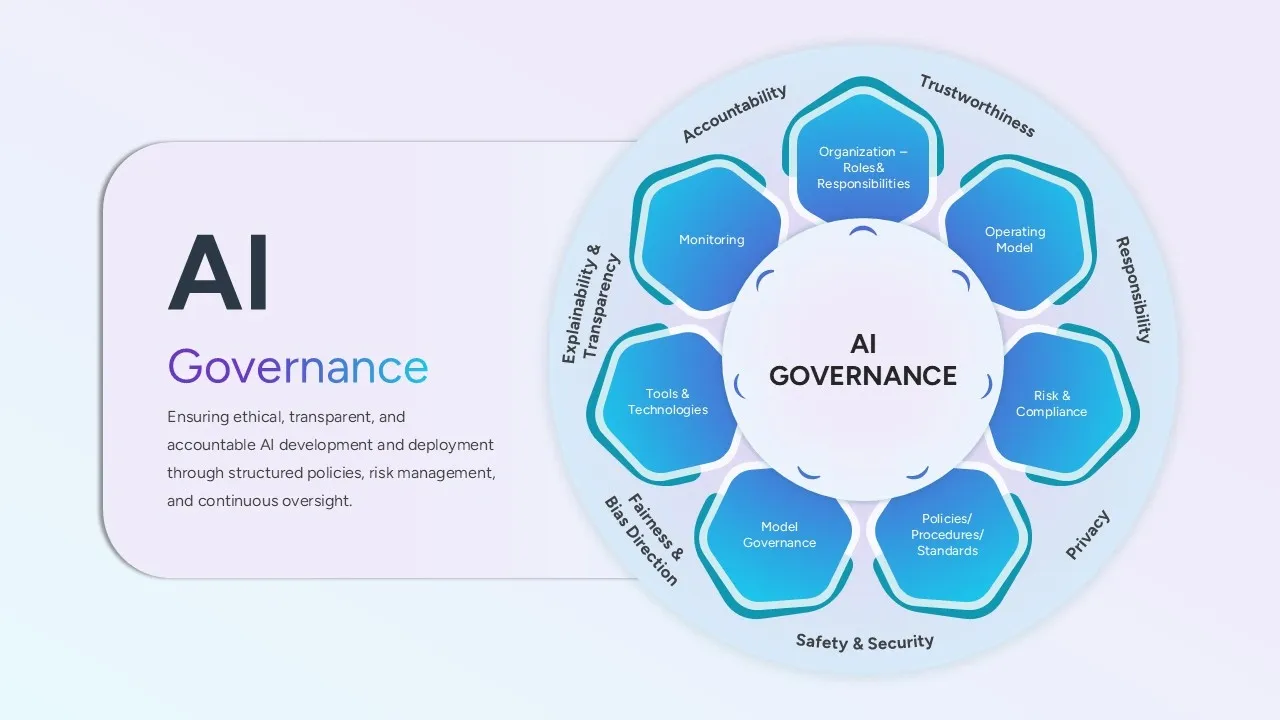
Image Source: SlideBazaar
AI governance consulting creates strategic value as organizations direct their AI implementation challenges. Good governance helps companies reduce risks and enables faster AI deployment. It cuts time to market and maximizes return on investment.
Strategic alignment of AI with business goals
AI governance consulting starts by connecting technology initiatives to organizational objectives. Companies often find their ambitious AI pilots fail because their operating models cannot support them. Consultants help establish documented good practices. They implement effective controls and maintain transparency about AI usage across the enterprise.
To arrange these goals, governance consultants typically:
-
Design AI governance frameworks that define roles, set guidelines, and embed accountability throughout the AI lifecycle
-
Review how AI projects support core business metrics like customer retention and operational efficiency
-
Ensure AI systems protect human dignity and rights while balancing safety with new ideas
Risk management and compliance integration
Adding AI to Enterprise Risk Management (ERM) frameworks lets businesses handle AI-related risks completely and at scale. This integration helps organizations better anticipate, identify, and reduce risks related to AI technologies.
Consultants help organizations prepare for upcoming regulations like the EU AI Act. This act imposes potential fines up to €35 million or 7% of worldwide annual turnover for non-compliance. They also help implement automated compliance frameworks that adapt to regulatory changes.
AI governance framework design and implementation
Consultants bring expertise in frameworks like the NIST AI Risk Management Framework. This framework helps organizations better manage risks to individuals, organizations, and society. They establish governance mechanisms with “teeth”—meaning there must be consequences for non-compliance. Their structured approaches include:
-
Clear roles and responsibilities for AI oversight
-
Transparent documentation standards
-
Monitoring capabilities for production AI systems
Talent and upskilling strategy development
McKinsey’s Global Survey on AI shows 78% of organizations use AI in at least one business function. Yet only 6% have started meaningful workforce upskilling, creating a critical gap.
AI governance consultants develop upskilling strategies that treat learning as a change management experience, not just a training rollout. They focus on three connected dimensions: AI literacy (building simple fluency), AI adoption (embedding tools in processes), and AI domain transformation (developing competitive advantage through specialized use cases).
Comparing AI Governance Consulting Services and Pricing Models
AI governance consulting costs play a crucial role in making informed decisions. The market features various pricing models and service packages that align with different organizational needs and budgets.
Fixed-fee vs. retainer-based models
Fixed pricing gives clients budget certainty and works best with projects that have clear deliverables and timelines. Organizations with strict cost controls, such as government agencies and non-profits, prefer this approach. Project-based fees typically fall into these ranges:
-
Small AI strategy assessments: $5,000-$25,000
-
Mid-size opportunity analyzes: $25,000-$100,000
-
Enterprise-wide AI transformations: $100,000-$500,000+
Retainer models let clients access expertise through monthly payments. These arrangements come in tiers:
-
Essential advisory (5-10 hours/month): $2,000-$5,000
-
Standard support (10-25 hours/month): $5,000-$15,000
-
Comprehensive partnership (25+ hours/month): $15,000-$50,000
The market shows a notable shift toward value-based pricing. About 73% of consulting clients now want pricing tied to measurable business outcomes rather than time invested.
Specialized vs. full-service consulting firms
Specialized firms tackle industry-specific AI governance challenges. Their domain expertise commands these premiums:
-
Healthcare AI expertise: 25-40% premium
-
Financial services specialization: 20-35% premium
-
Manufacturing/industrial knowledge: 15-30% premium
Full-service consulting firms provide complete implementation support but at higher costs. Their enterprise consulting projects start at $150,000 and can reach beyond $500,000 for complete transformation programs.
How to evaluate ROI from consulting engagements
Companies with mature AI governance frameworks get 3-5x better returns on AI investments while reducing risks. Many organizations miss hidden AI initiative costs like cybersecurity, data governance, data storage, and employee upskilling.
ROI maximization needs clear objectives with measurable success metrics. Business outcomes like cost reduction and revenue growth matter more than technical goals. A consultant’s experience, technical credibility, business sense, and past results should matter more than their price tag.
Companies that follow structured implementation methods see positive ROI from AI initiatives 2.5x faster than those using random approaches.
Selecting the Best AI Governance Consulting Firm for Your Needs
Selecting the right AI governance consulting partner needs a thorough review of key factors. Research shows that 90% of organizations using AI work on governance initiatives, yet they find it hard to get qualified talent.
Industry-specific expertise and case studies
Domain knowledge plays a vital role in successful governance implementation. Healthcare organizations need consultants who know about patient safety and HIPAA compliance. Financial services need experts in fair lending and fiduciary duties. Look at case studies from potential firms to check if they have solved problems like yours. to see how well a firm’s industry background fits your needs.
Alignment with organizational values and risk appetite
Your organization’s core values and risk thresholds must shape AI governance. The right consulting partner should know your risk tolerance and help build frameworks that protect your institutional independence. Look for firms whose governance methods balance human judgment with AI optimization. This becomes vital as AI systems grow more common.
Client onboarding and engagement process
The way firms structure their work and share knowledge matters. Top consultants provide continuous support and training to enable your internal team. Check if they give post-deployment optimization and maintenance support. Mastercard’s AI governance success shows how small, specialized teams can create big changes with proper structure.
Conclusion
The right AI governance makes all the difference between companies that see real returns on AI investments and the 95% that report zero ROI. This piece explores the best times to bring in governance expertise – whether during early planning, scaling after pilots, or when dealing with regulatory demands.
A good look in the mirror matters before getting outside help. Companies need to know their AI maturity level, spot governance gaps, and gage how well their leaders understand AI to get the most from consultants. Without this groundwork, even the finest governance frameworks might not deliver results.
AI governance consulting creates value in many ways. It helps arrange tech initiatives with business goals, builds risk management frameworks, creates implementation plans, and develops talent strategies. This detailed approach speeds up deployment and cuts down risks and compliance issues.
Smart companies weigh different pricing options when picking consulting services. They can choose between fixed-fee projects or ongoing relationships while deciding between specialists and full-service providers. The ROI calculation needs to look past immediate costs to see long-term value creation and risk protection benefits.
Finding the right consulting partner comes down to picking a firm that knows your industry, shares your values, and can transfer knowledge well. Companies that guide these choices carefully set themselves up to tackle implementation challenges and turn AI from an expensive experiment into a strategic asset. As AI keeps changing the digital world, reliable governance frameworks remain key to responsible innovation and lasting competitive edge.
Key Takeaways
Organizations struggling with AI implementation can significantly improve their success rates by strategically timing governance consulting engagements and selecting the right expertise for their specific needs.
• Timing is critical: Engage AI governance consultants during early strategy development, post-pilot scaling challenges, or when facing regulatory compliance requirements to avoid costly missteps.
• Assess internal readiness first: Evaluate your AI maturity level, existing governance gaps, and leadership fluency before consulting engagement to maximize value and ROI.
• Focus on strategic alignment: Effective AI governance consulting connects technology initiatives directly to business objectives, enabling faster deployment while managing risks and compliance.
• Choose specialized expertise: Select consultants with relevant industry experience and proven case studies rather than focusing solely on price, as domain knowledge significantly impacts implementation success.
• Measure ROI beyond costs: Organizations with mature AI governance frameworks achieve 3-5x greater returns on AI investments while minimizing risks compared to those without proper governance structures.
The stark reality is that 95% of organizations report zero return on their AI investments, making strategic governance consulting not just beneficial but essential for transforming AI from costly experiments into competitive advantages.
FAQs
Q1. When is the best time to engage AI governance consulting? The best times to engage AI governance consulting are during early-stage AI strategy development, when facing scaling challenges after successful pilots, or when triggered by regulatory or compliance requirements. Early engagement can help avoid costly mistakes and ensure proper alignment with business goals.
Q2. How can organizations assess their readiness for AI governance consulting? Organizations can assess their readiness by evaluating their AI maturity level using established frameworks, identifying gaps in existing governance structures, and assessing the AI fluency levels of their board and executives. This self-assessment helps prioritize areas for improvement and maximizes the value of subsequent consulting engagements.
Q3. What are the key areas where AI governance consulting adds value? AI governance consulting adds value in strategic alignment of AI with business goals, risk management and compliance integration, AI governance framework design and implementation, and talent and upskilling strategy development. These areas help organizations maximize AI benefits while minimizing potential risks.
Q4. How do pricing models for AI governance consulting services compare? AI governance consulting services typically offer fixed-fee or retainer-based pricing models. Fixed-fee models are suitable for projects with defined deliverables, while retainer models provide ongoing access to expertise. Specialized firms may charge premiums for industry-specific knowledge, and pricing can range from a few thousand dollars for small assessments to over $500,000 for comprehensive enterprise-wide transformations.
Q5. What should organizations consider when selecting an AI governance consulting firm? When selecting an AI governance consulting firm, organizations should consider the firm’s industry-specific expertise and case studies, alignment with organizational values and risk appetite, and the client onboarding and engagement process. It’s crucial to choose a partner that understands your specific needs and can effectively transfer knowledge to your internal team.