
AI governance in academic medical centers faces a crucial turning point as artificial intelligence becomes a driving force that revolutionizes healthcare settings. More than 1,300 Critical Access Hospitals deliver front-line care to rural communities throughout our country. These hospitals face limitations that AI could help solve – from bed count restrictions to stay duration constraints and the need to maintain round-the-clock emergency services.
Our research shows AI’s dramatic evolution in healthcare, which has advanced from simple rule-based systems to sophisticated generative models. Modern healthcare technologies fit into three categories: diagnosis and treatment applications, patient engagement solutions, and administrative tools. The responsible implementation of these advances demands careful evaluation of regulatory, legal, and ethical implications.
AI offers remarkable possibilities, but major challenges persist. Health systems’ uneven distribution of information technology resources threatens health equity. Only a small number of stakeholders say they think over inequity, racism, or bias when creating AI governance frameworks. We need complete strategies that balance innovation with responsible oversight.
This piece explores AI governance fundamentals that researchers need in academic medical centers. We provide practical approaches to help you navigate this complex field and tap into AI’s full potential for patient care. You will learn everything from building effective oversight committees to addressing algorithmic bias.
Understanding AI Governance in Academic Medical Centers
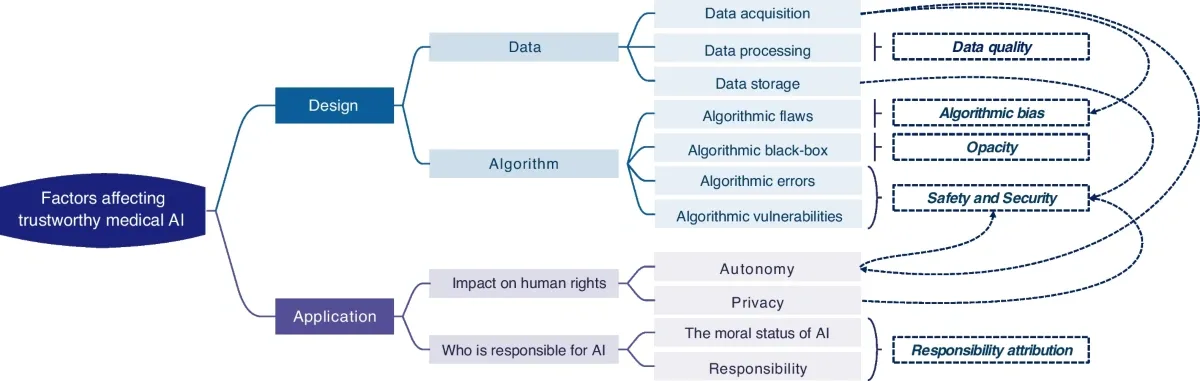
Image Source: BMC Medical Informatics and Decision Making – BioMed Central
“Governance is necessary for the safe, impactful, and trustworthy adoption of AI. Use case and vendor selection, validation, education, clinical implementation, and post-deployment monitoring all require transparent, integrated, and expert governance.” — Institute for Healthcare Improvement (IHI), Leading healthcare improvement organization and authority on AI governance in healthcare systems
Academic medical centers (AMCs) create unique spaces where teams develop, test, and implement AI technologies. These centers need specific frameworks to direct their twin goals: pushing research forward while taking care of patients.
Defining AI Governance in Healthcare Contexts
AI governance sets up the frameworks, policies, and processes that direct the ethical and responsible design, development, procurement, deployment, and use of artificial intelligence. Healthcare organizations now use AI systems more often in both admin work and clinical decisions. Good governance lays the groundwork to make sure these systems help rather than hurt patient outcomes.
Healthcare AI governance differs from regular IT governance. It tackles specific challenges like algorithmic bias, data privacy issues, and possible AI errors that could affect patient safety. AMCs face extra layers of complexity. They must balance new breakthroughs with proper oversight across research, education, and patient care.
A detailed AI governance framework includes:
- Ethical standards and principles that guide AI development and implementation
- Risk assessment protocols to assess potential harm before deployment
- Accountability structures that spell out who’s responsible for AI outcomes
- Monitoring systems to track performance and spot collateral damage
- Decommissioning procedures to retire unsafe AI systems
Most healthcare institutions still work on developing these frameworks. Studies show AI governance lacks clear definition. There’s no agreement on what it should include, which leads to differences between organizations and countries. This scattered approach slows AI adoption, creates market gaps, and might put clinical safety at risk.
Why AI Governance Matters for Translational Research
AI can transform translational research—turning basic science into real-world solutions. But this process needs proper oversight. Without it, AI systems might make healthcare inequalities worse instead of better.
Trust forms the foundation for successful tech integration, and good governance builds that trust. A newer study published by academic medical centers revealed few participants thought over inequity, racism, or bias in their governance plans. Health systems and policy makers should focus on building equity awareness among leaders. They need strong oversight policies and ways to assess AI tools critically.
Governance provides a framework to handle the “pacing problem”—when tech develops faster than laws can keep up. Laws change slowly compared to AI advances. Many experts support “soft law” approaches that can adapt quickly to new AI capabilities while keeping needed safeguards.
AMCs play a vital role as testing grounds for healthcare breakthroughs. Good governance helps them do this job better. Researchers need clear ways to check AI risks, follow regulations, and blend AI safely into clinical work.
On top of that, translational research relies more on AI to analyze big datasets and find patterns. Governance frameworks help researchers direct complex questions about who’s responsible. When something goes wrong with AI in research or practice, responsibility must be shared between researchers, implementers, and users. This sharing needs everyone to understand AI basics [17, 18].
Good governance creates structure to assess AI models before and after they go live. Recent studies show three main approaches to healthcare AI governance: dedicated governance groups and ethics committees, standard ethical review systems, and regular ethics checks to spot and reduce risks.
Strategic Roles of AMCs in AI Development
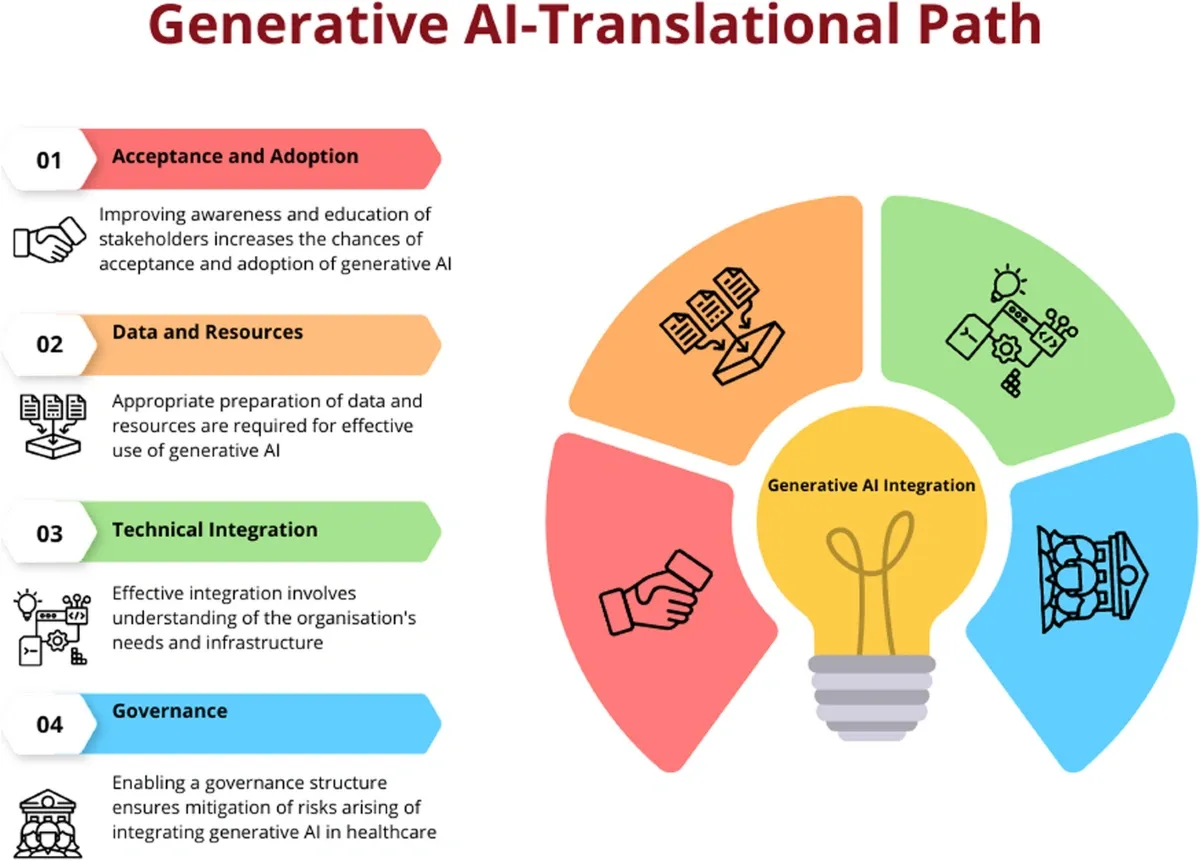
Image Source: Implementation Science – BioMed Central
Academic medical centers are powerful drivers of AI advancement in healthcare. They work at the intersection of state-of-the-art research and clinical practice. These institutions utilize three distinct strategic roles in the AI ecosystem that create a detailed foundation for healthcare innovation.
AI for Research Productivity: Automation and Efficiency
AMCs now use AI to magnify research capabilities through automation of labor-intensive processes. Research is the life-blood of academic medicine—the National Institutes of Health provided $29.50 billion in extramural funding in 2019 alone. AI tools now act as critical accelerators for scientific findings.
AI-driven automation brings exceptional benefits to clinical trials, where traditional timelines often extend into months or years. Companies that use AI for patient recruitment and protocol optimization have shown remarkable results. Recruitment cycles now shrink from months to days, and study builds that needed days are completed in minutes. This explains why over 80% of healthcare AI startups focus on automation to eliminate cost-driving inefficiencies.
AI improves researcher productivity by a lot throughout the research lifecycle. Large language models (LLMs) help draft manuscripts, rephrase sections for clarity, review grammar, and suggest improvements to study designs. These tools can summarize lengthy papers, critique published articles, and explain complex statistics. Faculty members who balance clinical duties with research obligations save valuable time.
AI as a Testing Platform for Clinical Integration
AMCs serve as essential testing platforms where emerging AI technologies undergo thorough evaluation before wider deployment. Their combination of large unique patient datasets, strong research programs, and subject matter experts creates ideal infrastructure to assess new digital health tools with feedback at the point of care.
Several institutions already embrace this testing function. The University of Pittsburgh Medical Center and University of California, San Francisco merge artificial intelligence into their electronic medical records to help clinicians identify chronic diseases and improve imaging interpretation. UCHealth University of Colorado Hospital proves wireless wearable patient motion sensors right. These sensors communicate with electronic records to identify patients at risk for pressure ulcer injuries.
AMCs provide vital evidence about AI system performance in ground settings through structured validation processes. This “silent testing” phase allows thorough evaluation of AI tools before full implementation. Only technologies that showed benefits advance to broader clinical adoption.
AMCs as AI Innovation Incubators
AMCs now function as innovation incubators—places where new AI solutions originate and mature. These centers make up only 6% of the United States’ healthcare system yet possess extraordinary innovation capacity through their advanced health information systems, unique patient datasets, and research infrastructure.
The MESH Incubator at Mass General Brigham stands as a prime example. This first-of-its-kind incubator integrated into a hospital system has supported over 1,000 clinicians and researchers through projects, patents, and company formation since 2016. The incubator helped launch 10 companies with clinician founders and teams from MIT, Harvard, and industry partners.
These innovation centers serve multiple strategic purposes. They improve organizational reputation, attract top talent, and potentially generate new revenue streams. Staff can experiment with emerging technologies and workflows in controlled environments before broader implementation.
AMCs fulfill a central role in advancing responsible AI development across the healthcare ecosystem through this multi-faceted approach—boosting research productivity, proving clinical applications right, and incubating innovations.
Assessing Institutional Readiness for AI Integration
Healthcare institutions must assess their AI technology readiness through systematic frameworks. These frameworks help measure technical capabilities and human resources. A clear picture of current resources versus future needs helps bridge the gap between theory and practice.
Capability Mapping: Data Infrastructure and Talent
You can measure capabilities with specific metrics. The AI Readiness Index (AIRI) offers a well-laid-out way to measure institutional readiness. It looks at three key areas:
- Institutional Talent (scored out of 20) – Shows formal AI training, expertise levels, specialist availability, and investment in ongoing education
- AI Applications Implementation (scored out of 20) – Shows the number, maturity, and how deployed AI applications affect outcomes
- Internally Generated AI Tools (scored out of 10) – Shows in-house AI development capabilities
Real-world assessments often reveal big gaps. One academic medical center scored just 6.3 out of 40 on their AIRI assessment. They scored especially low in applications implementation (1 out of 10) and internally generated tools (0 out of 10). These results show how many healthcare settings are still in early stages of AI integration.
Talent assessment needs special focus. About 45% say lack of training stops them from adopting AI. Healthcare professionals must learn specialized AI knowledge. This includes machine learning, deep learning, and natural language processing to use these tools well. They must know:
- AI fundamentals (86% of studies say this is critical)
- Data analysis and management skills (43% of studies highlight this)
- How to assess AI tools
Right now, healthcare organizations face big workforce challenges. While 78% say they’re adopting AI, only 1% have mature implementation. This shows organizations often think they’re more ready than they really are.
Gap Analysis for AI-Driven Research Programs
A full gap analysis should look at four areas: technology adoption, human capital readiness, financial adequacy, and strategic arrangement. This detailed view shows strategy gaps are often the biggest problem. Less than 20% of organizations track AI performance indicators.
Research programs at academic medical centers should check:
- Data Quality and Accessibility – AI needs quality data access, not just billing or administrative data
- Technical Support Infrastructure – AI calibration needs advanced technical capabilities and proper IT governance strategies
- Business Planning Flexibility – AI might need big strategic investments for contextual validation
Academic medical centers should also check if they can do “silent testing.” This critical phase lets them fully assess AI tools before implementation. They need to document development workflows through detailed algorithm trip maps that show both social and technical activities.
Expert help often makes gap identification easier. Book a Readiness Call with specialists who can help assess your institution’s AI readiness challenges and create targeted improvement strategies.
Healthcare leaders are learning about AI implementation more than ever. A recent survey shows 85% are learning or adopting generative AI. Many don’t deal very well with moving past the original exploration phase. Good gap analyzes should check if current IT setups, separated data sources, and governance frameworks block deployment.
Building a Governance Framework for AI Research
“Governance structures should bring together relevant stakeholders, such as medical informatics, clinical leadership, legal, compliance, safety and quality, data science, bioethics, and patient advocates.” — Institute for Healthcare Improvement (IHI), Leading healthcare improvement organization providing guidance on multidisciplinary AI governance
Building effective oversight mechanisms is a significant step for academic medical centers that accept new ideas in AI research. Technology advances faster each day, and structured governance provides essential guardrails to ensure both breakthroughs and safety.
Establishing Oversight Committees and Review Boards
AI governance starts with dedicated committees that provide systematic oversight. Research indicates these committees should work as specialized subcommittees that report to existing Digital Health Committees rather than operating alone. This strategy uses existing expertise and enables smoother implementation across the organization.
Effective AI governance committees need interdisciplinary representation including:
- Healthcare providers and researchers
- AI and data science experts
- Ethics and legal advisors
- Patient representatives
- Information technology specialists
- Compliance officers
The MRCT Center’s Framework for Review of Clinical Research with AI gives institutional review boards (IRBs) and similar oversight entities a structured approach to assess AI research protocols. This framework specifically tackles emerging challenges unique to AI—such as algorithmic bias, adaptive learning systems, and data identifiability issues—while lining up with foundational ethical principles.
These committees establish their scope of authority, which includes:
- Policy development for AI governance
- Ethical reviews of proposed AI research projects
- Approval procedures for AI implementations
- Ongoing monitoring of deployed AI systems
Traditional IRBs excel at protecting human subjects in conventional research but don’t deal very well with big data and AI research. Some experts suggest that Data Access Committees (DACs) could serve as alternative sites for ethical review since they possess greater technical expertise and governance knowledge around data sharing.
Defining Accountability and Escalation Protocols
AI systems distribute responsibility across multiple stakeholders—researchers, developers, clinicians, and institutions—unlike conventional clinical interventions. Clear accountability frameworks become essential to ensure patient safety.
A well-laid-out accountability model should specify responsibility at each stage of the AI lifecycle. Most governance experts recommend a distributed accountability approach that has:
- Chief Medical Officers for clinical appropriateness
- Technology leaders for system integration and security
- Clinical governance boards for safety oversight
- AI ethics committees for ethical alignment
- Regulatory teams for compliance assurance
Effective governance needs clear protocols for escalation when problems arise. Book a Readiness Call with governance specialists who can help design escalation pathways that fit your institution’s specific needs and structure.
Organizations must implement strong monitoring systems that continuously assess AI performance alongside these accountability structures. The Health AI Partnership recommends oversight plans that:
- Identify specific metrics to track AI tool effectiveness
- Include routine checks on data quality and algorithm performance
- Monitor for performance degradation due to data or concept drift
- Clearly define who gathers performance information and how often they check it
Best practices suggest establishing multi-tier review processes for high-risk AI applications. Recent research shows that teams should escalate all high-risk AI solutions to the governance committee for multidisciplinary discussion. This results in one of three outcomes: proceed with implementation, conduct a pilot study, or halt development due to intolerable risk.
Governance frameworks must stay adaptable. Subject matter experts should regularly review and update processes as technology evolves, while the overarching governance structure remains consistent.
Addressing Algorithmic Bias and Equity in AI Tools
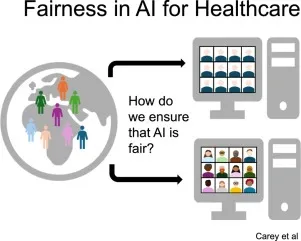
Image Source: ScienceDirect.com
AI governance faces a critical challenge in algorithmic fairness. This issue becomes the life-blood of academic medical centers. Biased systems could make health disparities worse instead of easing them. Research shows AI tools can reinforce inequities that vulnerable groups face without proper oversight.
Bias Within the Tool: Dataset and Model Audits
Bias often starts with the data itself. AI systems learn from training datasets that carry historical biases. These biases lead to unfair outcomes in healthcare applications. To name just one example, pulse oximeters read oxygen saturation too high in patients with darker skin tones. This error results in Black patients receiving inadequate care.
Regular audits serve as a vital defense against these built-in biases. Medical algorithmic audits should follow these steps:
- Get into potential error types in clinical contexts
- Map components that cause algorithmic errors
- Test for bias through subgroup and adversarial testing
- Assess performance differences across demographics
A major problem stems from training data composition. Most data comes from White populations or lacks ethno-racial information. Studies show many datasets don’t reflect the diversity of target populations. Experts call this problem “Health Data Poverty”. Algorithms perform poorly for underrepresented groups because they lack sufficient data from these populations.
Model development teams also lack diversity. This makes it hard to spot bias in their work. The problem becomes clear when you look at the numbers. Only 5% of active physicians identified as Black in 2018. The percentage drops even lower among AI developers.
Bias Beyond the Tool: Social Implications of Deployment
AI deployment brings major social consequences. The National Academy of Medicine states equitable AI needs “proof of appropriate steps to ensure fair and unbiased development and access to AI-associated benefits and risk mitigation measures”. Meeting this standard requires understanding how AI systems work with broader social factors.
AI algorithms often miss social determinants of health. Many models don’t factor in “small data” like access to transportation, healthy food options, and work schedules. These factors affect treatment adherence and outcomes by a lot. The solution lies in bringing patients and communities from different backgrounds into AI development and implementation.
Healthcare organizations must take charge of continuous measurement and reassessment. This becomes crucial when implementing new processes. Constant alertness through systematic monitoring of AI models after deployment proves essential. These efforts must happen within a broader health equity framework. AI systems should avoid creating new disparities while actively addressing existing inequities.
Managing Vendor Relationships and External Tools
AI tool procurement creates unique challenges for academic medical centers. About 65% of U.S. hospitals now use AI-assisted predictive models. Medical researchers need to guide complex vendor relationships and ensure these tools help their specific patient populations.
Reviewing Off-the-Shelf AI Solutions for Healthcare
Academic medical centers need to think over several vital factors when looking at vendor AI solutions. Healthcare experience should be the top priority. Vendors must show they understand clinical workflows and regulatory requirements. Any new AI tool must combine smoothly with electronic health records and current IT infrastructure, making interoperability essential.
Data governance stands out as another vital evaluation criterion. Researchers need full transparency about data storage locations, access permissions, model training usage, and HIPAA compliance. Vendors must be clear about model performance beyond combined metrics. They should include specific subgroup performance data for different patient demographics.
The Health AI Partnership’s Vendor Disclosure Framework provides structured guidance in five assessment areas:
- System capabilities and intended use
- System performance and compliance
- Data stewardship
- Integration requirements
- Lifecycle management
This make-versus-buy choice has major financial impact. Large language model implementation costs range from $115,000 to $4.60 million annually for in-house development. Commercial solutions cost between $10,000-$100,000 yearly. All the same, they often end up being nowhere near as expensive as internal development.
Silent Testing and Local Validation Protocols
Academic medical centers should run “silent trials” before using any vendor AI solution. This method reviews AI models on current patients while keeping clinicians unaware of predictions. This prevents any influence on clinical decisions. These trials bridge the gap between model development and clinical use. They check safety, reliability, and feasibility with minimal risks.
The need for local validation becomes clear when looking at demographic differences. Studies show that well-resourced hospitals building their own models checked both accuracy (61%) and bias (44%). Under-resourced hospitals often bought “off-the-shelf” products designed for patient groups that might differ greatly from their actual patients.
AI vendors and healthcare organizations must work together on governance and oversight. Vendors should create algorithms that minimize bias and use representative datasets. Local institutions must prove these systems work for their specific populations and clinical settings.
Legal, Ethical, and Compliance Considerations
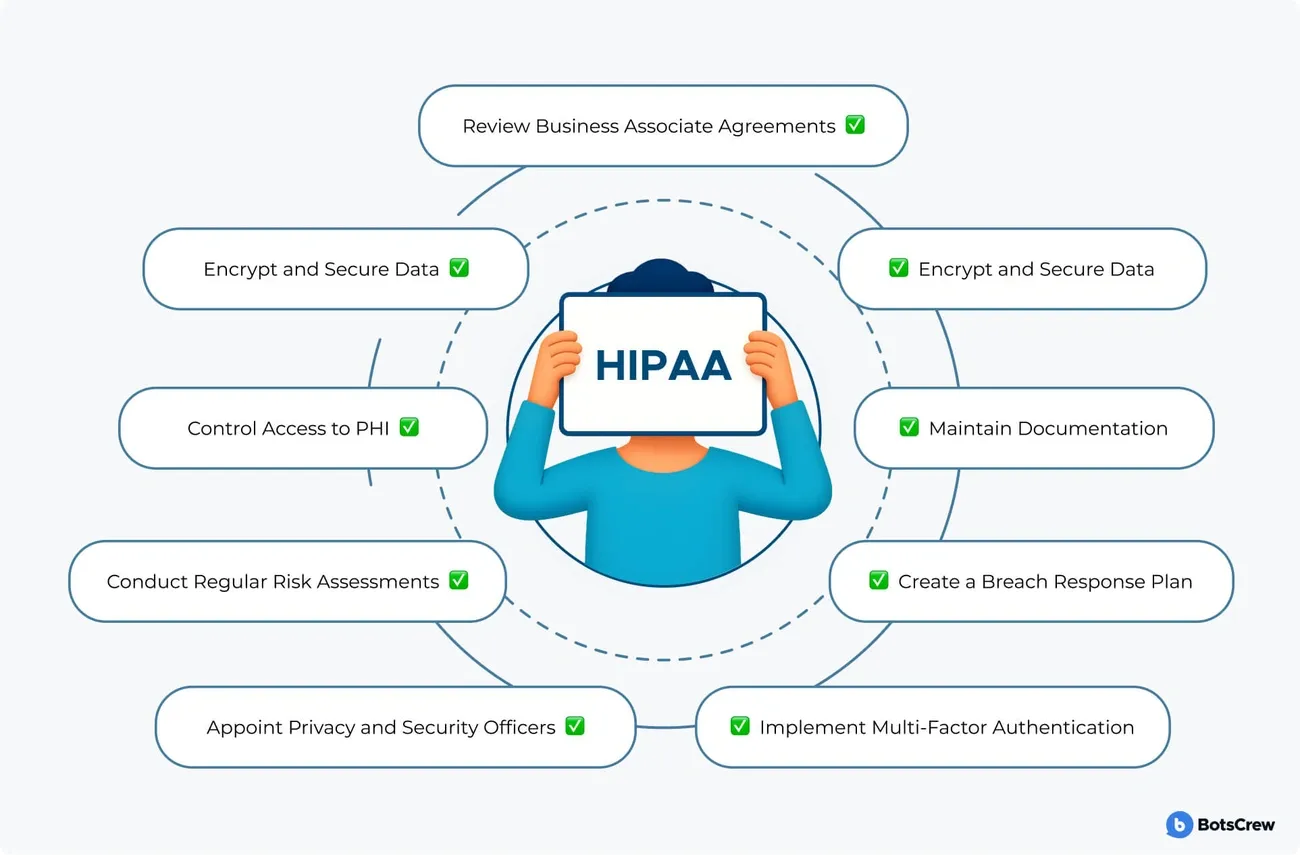
Image Source: Botscrew
Legal and ethical guidelines create boundaries for AI research in healthcare. These guidelines are the foundations of responsible state-of-the-art development. Researchers need to guide through these requirements as they work toward better patient care.
HIPAA and Data Privacy in AI Research
The Health Insurance Portability and Accountability Act (HIPAA) stands as America’s main federal health privacy law. This law protects individually identifiable health information. AI researchers must know the difference between protected health information (PHI) and de-identified data that falls outside HIPAA’s scope.
HIPAA allows two methods for de-identification:
- Expert Determination (certification by an outside expert)
- Safe Harbor method (removal of 18 specific identifiers)
This difference creates problems now. De-identified health datasets face re-identification risks through “data triangulation” with advanced AI systems. Research showed algorithms could re-identify 85.6% of adults and 69.8% of children in a physical activity cohort after removing protected identifiers.
Researchers should use stronger protections like differential privacy and encryption to alleviate these re-identification risks. All external AI partners must sign Business Associate Agreements when they handle PHI.
IRB Requirements for AI-Enabled Studies
Institutional Review Boards face unique challenges in AI research assessment. Current regulations require IRB review only for studies using “identifiable private information” that aren’t exempt from secondary use requirements. Such research usually qualifies as minimal risk and can get accelerated review.
IRBs should know that AI systems might not always reveal complete information, especially with proprietary algorithms or external data sources. They need to assess:
- If informed consent covers all data use including secondary or future uses
- How teams alleviate potential algorithmic bias
- The research’s compliance with HIPAA security requirements
The Belmont Report’s core principles—Respect for Persons, Beneficence, and Justice—still matter for AI studies. Big data research needs a nuanced interpretation of these principles. Projects must follow these ethical guidelines even with exempt research involving AI.
AI raises ethical concerns even when studies don’t involve “human subjects” under regulations. These include group harms, profiling, and resource diversion from addressing why inequity happens.
Policy Recommendations and Future Governance Models
Creating effective ai governance frameworks needs institutional commitment that lines up with evolving regulations. A thoughtful implementation helps build sustainable models to balance state-of-the-art with proper oversight.
Equity Literacy for Leadership and Researchers
Healthcare AI education investment forms the foundation of resilient ai governance in academic medical centers. Decision makers need simple knowledge to make informed choices, spot risks, and guide implementation challenges with success. A major governance gap exists because ethical consultations apply only to clinical research—not AI tools meant for clinical practice.
Organizations should create training plans with:
- Simple education for all healthcare workers on AI applications
- Advanced modules for specialists using AI systems daily
- Regular updates on evolving technologies and regulations
A successful governance structure needs experts from all organizational levels to work together, including those who execute governance. Book a Readiness Call with specialists to create customized equity-focused training programs for your institution.
Lining Up with Federal and State AI Regulations
The regulatory landscape changes faster than ever. Healthcare institutions face growing compliance requirements with 250 health AI-related bills in 34 states. Medical centers must watch developments like the European Union’s AI Act, the first detailed AI legislation worldwide. The World Health Organization’s framework stresses transparency, risk management, data validation, privacy protection, and stakeholder cooperation.
The AMA’s STEPS Forward toolkit offers an eight-step guide to create governance frameworks that implement, manage, and expand AI solutions responsibly. These emerging standards help create policies that ensure regulatory compliance and ethical implementation.
Conclusion
AI has become a game-changing force in academic medical centers. It brings amazing opportunities and key responsibilities for researchers. This piece explores the basic elements needed for AI governance that balance progress with proper oversight.
Academic medical centers hold a unique position where state-of-the-art research meets clinical practice. They must develop governance frameworks that protect patients and enable scientific progress. Their strategic role spans three areas: boosting research output, serving as testing grounds, and acting as innovation hubs. These aspects make thoughtful governance crucial.
Success starts with a realistic look at institutional readiness. Most organizations think they’re more prepared than they really are. They face gaps in their information infrastructure, talent growth, and technical backing. A systematic assessment through tools like the AI Readiness Index helps address these gaps.
Oversight committees with experts from different fields set up vital guardrails for AI research projects. These groups need clear accountability rules and problem-solving steps while staying flexible with new technologies. The best setup often involves specialized subgroups that report to existing Digital Health Committees rather than standalone units.
Algorithm bias remains a key challenge that needs constant attention. AI tools might worsen health disparities without proper oversight. Regular data checks, model testing across different groups, and input from varied communities help reduce these risks.
Academic medical centers should carefully review their relationships with external AI vendors. They need silent testing and local validation to ensure off-the-shelf products help their specific patient groups before clinical use. This build-or-buy choice has major cost implications but remains vital for responsible use.
Healthcare AI rules keep changing faster. Researchers must work within complex guidelines from HIPAA to new state and federal laws. Training programs that build fairness awareness among leaders and technical teams create the foundation to tackle these challenges.
As researchers in academic medical centers, we must expand innovation while keeping AI use ethical, fair, and compliant. Healthcare still lacks standard governance frameworks. Our joint work to create responsible oversight will determine if AI can truly improve research and patient care for everyone.
Key Takeaways
Academic medical centers must establish comprehensive AI governance frameworks to balance innovation with patient safety and ethical responsibility. Here are the essential insights for researchers navigating AI implementation:
• Establish multidisciplinary oversight committees with representatives from clinical, technical, ethics, and patient advocacy groups to ensure comprehensive AI governance across research and clinical applications.
• Conduct systematic institutional readiness assessments using frameworks like the AI Readiness Index to identify gaps in data infrastructure, talent, and technical capabilities before AI implementation.
• Implement “silent testing” protocols for all AI tools to validate performance in your specific patient population before clinical deployment, preventing potential harm from biased algorithms.
• Address algorithmic bias proactively through regular dataset audits, demographic performance testing, and community involvement to prevent AI from perpetuating healthcare disparities.
• Develop clear accountability structures that define responsibility across the AI lifecycle, from development through deployment, with established escalation protocols for safety concerns.
• Invest in equity-focused education for leadership and researchers to build AI literacy and ensure compliance with evolving federal and state regulations governing healthcare AI.
Effective AI governance in academic medical centers requires viewing these institutions as unique testing grounds where innovation meets responsibility, demanding frameworks that protect patients while enabling scientific advancement.
FAQs
Q1. What is AI governance in academic medical centers? AI governance in academic medical centers refers to the frameworks, policies, and processes that guide the ethical and responsible design, development, deployment, and use of artificial intelligence in healthcare research and clinical settings. It aims to ensure AI technologies enhance patient outcomes while addressing challenges like algorithmic bias and data privacy.
Q2. Why is AI governance important for researchers in academic medical centers? AI governance is crucial for researchers as it provides structure for addressing ethical concerns, regulatory compliance, and potential risks associated with AI in healthcare. It helps establish trust, ensures responsible innovation, and provides mechanisms to assess AI risks and integrate AI safely into clinical workflows and research practices.
Q3. How can academic medical centers assess their readiness for AI integration? Academic medical centers can assess their AI readiness through structured frameworks like the AI Readiness Index (AIRI). This involves evaluating institutional talent, AI applications implementation, and internally generated AI tools. Additionally, gap analysis across technology adoption, human capital readiness, financial adequacy, and strategic alignment helps identify areas needing improvement.
Q4. What steps should be taken to address algorithmic bias in AI tools? To address algorithmic bias, academic medical centers should conduct regular dataset and model audits, perform subgroup testing across different demographics, involve diverse communities in AI development, and implement continuous monitoring of AI performance after deployment. It’s also crucial to ensure diversity within AI development teams.
Q5. How can researchers navigate legal and ethical considerations in AI-enabled studies? Researchers should ensure compliance with HIPAA regulations, particularly regarding data privacy and de-identification. For AI-enabled studies, they should work closely with Institutional Review Boards to address unique ethical challenges, including informed consent for data use, mitigation of algorithmic bias, and adherence to core ethical principles even in exempt research.