
The state of agentic AI security and governance has reached a critical juncture as autonomous systems handle sensitive operations. Agentic AI systems can now make decisions and interact with external tools independently. This creates unprecedented security challenges for organizations. The gap between rapid GenAI adoption and resilient security frameworks continues to widen.
We’ve analyzed the latest data from industry reports, the OWASP state of agentic AI security and governance findings, to understand how organizations approach AI security standards. This piece examines key security statistics and explores governance models in practice. It provides useful guidance to build secure Agentic AI systems.
What the 2026 Data Shows: Agentic AI Security Statistics

Image Source: Thunderbit
“By 2026, autonomous copilots may surpass humans as the primary source of data leaks.” — Proofpoint Security Research Team, Cybersecurity firm specializing in threat analysis and CISO perspectives
Enterprise Agents now operate with privileged access to proprietary business data, customer information, and intellectual property through RAG pipelines and direct database connections. Enforcement of RBAC policies varies by a lot, creating discrepancies between intended access controls and actual agent behavior. Coding Agents have escalated this risk profile by connecting to source-control platforms, CI/CD pipelines, and cloud APIs with read/write access to sensitive repositories and deployment keys.
The threat landscape has taken shape around specific attack vectors. Tool Misuse occurs when attackers manipulate AI agents through deceptive prompts to abuse integrated tools within authorized permissions. Identity Spoofing & Impersonation exploits authentication mechanisms and enables unauthorized actions under false identities. Overwhelming Human in the Loop targets systems with human oversight and exploits cognitive limitations in validation frameworks.
Regulators have moved from policy papers to enforcement. The Federal Trade Commission imposed a twenty-year audit order on Workado after the company promoted a “98 percent accurate” AI detector that achieved coin-flip accuracy. NIST sharpened its red-team playbook with the Adversarial Machine Learning Taxonomy and standardized attack terminology for auditors. ENISA released its Cyber Stress Test Handbook for critical sectors. The UK AI Safety Institute’s RepliBench now quantifies self-replication risk and turns abstract concerns into measurable compliance metrics.
Governance Models and Oversight Mechanisms in Practice
Governance frameworks have expanded across jurisdictions, each targeting specific risk profiles. Texas HB 149 requires state agencies to develop AI policy plans, conduct impact assessments, and maintain audit trails. Agentic AI systems under this law must include human oversight checkpoints and bias mitigation protocols. South Korea’s AI Basic Law mandates risk certification, transparency, and continuous compliance for evolving systems. China’s framework enforces algorithmic transparency and data localization. Singapore offers voluntary guidelines that emphasize ethics and explainability.
Adaptive governance has emerged as the operational standard. Agents start in assisted mode. Organizations promote them only when logs show stable precision, low false-positive rates, and controllable replication behavior. Performance gates establish clear thresholds so auditors can trace autonomy levels. Runtime risk policies evolve through automated red teaming. Exploits feed into policy engines that patch guardrails without waiting for software releases. These policies deploy as machine-readable rules with models and propagate updates in minutes rather than quarters.
Human oversight mechanisms vary by implementation. Texas mandates human override capabilities for decisions made in real time. The EU AI Act requires human review and explainability for high-risk applications. Safe harbor provisions exist where substantial compliance with NIST’s Generative AI Risk Management Profile can rebut liability, with a 60-day cure window before penalties apply.
Building Secure Agentic AI Systems: Tools and Implementation
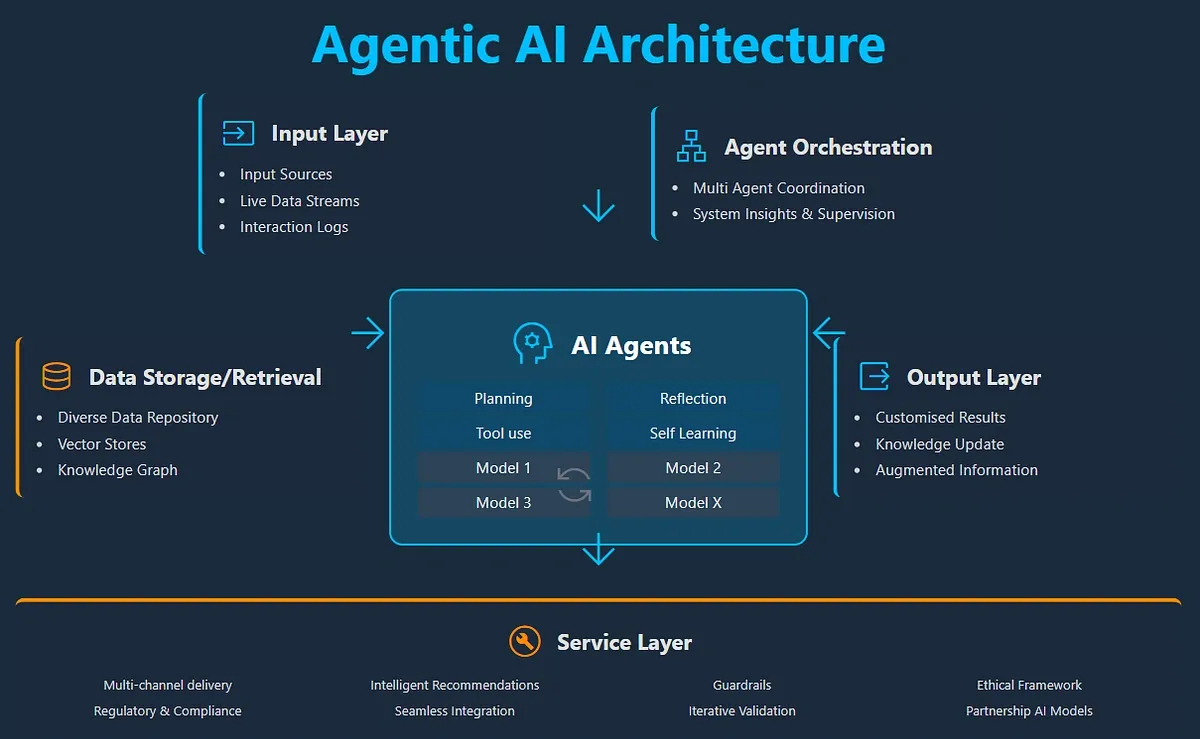
Image Source: Medium
“While the threat is already here, the information available about this new attack vector is overwhelming. Effectively protecting a company against Agentic AI requires not only strong security intuition but also a deep understanding of how AI agents fundamentally operate.” — Keren Katz, Senior Group Manager of AI Security at Tenable, Top 10 for Agentic AI Applications Co-Lead at OWASP
Production environments now deploy platform-specific security controls that address agentic AI risks at the infrastructure level. Salesforce Agentforce provides a low-code Agent Builder with Salesforce-managed guardrails that block off-topic or hallucinated responses, plus field-level data masking for CRM automation workflows. Azure AI Foundry groups agents, models, RBAC, networking and policies under unified project workspaces and orchestrates multi-agent workflows through its Foundry Agent Service. The platform applies Azure AI Content Safety filters with tunable policies, integrates Purview DLP and has an AI Red Teaming Agent for production testing. Replit Agent supports full-stack applications with Google Cloud-backed isolation through GCP Armor DDoS protection and per-app sandboxing. API keys get stored in an encrypted Secrets vault that agent-generated code accesses by default.
Adoption patterns reveal sector-specific priorities. ISO/IEC TR 24027:2021 has seen major adoption in finance, healthcare and human resources since publication. Fortune 500 companies have incorporated bias mitigation principles into development pipelines. IBM, Microsoft and Google have integrated these standards. IEEE Ethically Aligned Design gained traction among research-oriented companies and academic institutions since its March 2019 release. NIST AI RMF 1.0 achieved rapid adoption among U.S. federal contractors following its January 2023 release. Procurement process integration expected in January 2024 drove this trend.
Conclusion
We got into how agentic AI security has evolved from theoretical concern to measurable compliance challenge. The 2026 data reveals gaps between adoption rates and security maturity. Practical solutions have emerged through adaptive governance models and platform-specific controls. Organizations that implement runtime risk policies and establish autonomy gates can build secure agentic systems while adopting sector-appropriate frameworks. The path forward requires continuous monitoring and automated red teaming that arranges with evolving regulatory standards.
Key Takeaways
The 2026 data reveals critical insights about agentic AI security challenges and practical solutions for organizations deploying autonomous AI systems.
• Security gaps are widening: Enterprise AI agents now handle privileged data access, but RBAC policy enforcement varies significantly, creating dangerous discrepancies between intended controls and actual agent behavior.
• Adaptive governance is the new standard: Organizations must start agents in assisted mode and promote them through performance gates based on measurable thresholds like precision rates and replication behavior.
• Platform-specific security controls are essential: Solutions like Azure AI Foundry and Salesforce Agentforce provide built-in guardrails, content safety filters, and encrypted secrets management for production environments.
• Regulatory enforcement has arrived: The FTC imposed a 20-year audit order on companies with inaccurate AI claims, while NIST and ENISA released standardized frameworks turning abstract risks into measurable compliance metrics.
• Runtime risk policies enable real-time protection: Automated red teaming feeds exploits into policy engines that patch guardrails within minutes, allowing security updates without waiting for software releases.
The shift from theoretical AI security to practical implementation requires continuous monitoring, clear autonomy thresholds, and alignment with sector-specific regulatory frameworks to build truly secure agentic systems.
FAQs
Q1. What are the main security risks associated with agentic AI systems in 2026? The primary security risks include tool misuse through deceptive prompts, identity spoofing and impersonation that exploits authentication mechanisms, and overwhelming human-in-the-loop oversight systems. Additionally, enterprise agents with privileged access to proprietary data face significant RBAC policy enforcement discrepancies, creating gaps between intended access controls and actual agent behavior.
Q2. How do adaptive governance models work for agentic AI systems? Adaptive governance starts agents in assisted mode and promotes them to higher autonomy levels only when performance logs demonstrate stable precision, low false-positive rates, and controllable replication behavior. Organizations establish clear performance gates with measurable thresholds that auditors can trace, allowing systematic progression through autonomy levels based on proven reliability.
Q3. What platform-specific security controls are available for deploying secure AI agents? Major platforms offer built-in security features: Salesforce Agentforce provides guardrails that block off-topic responses and field-level data masking, Azure AI Foundry integrates Content Safety filters with Purview DLP and includes AI Red Teaming capabilities, and Replit Agent offers GCP Armor DDoS protection with encrypted Secrets vault for API key management.
Q4. How are regulators enforcing agentic AI security compliance? Regulatory enforcement has moved from policy to action, with the FTC imposing 20-year audit orders on companies making inaccurate AI claims. NIST released its Adversarial Machine Learning Taxonomy to standardize attack terminology, ENISA published its Cyber Stress Test Handbook for critical sectors, and various jurisdictions now require impact assessments, audit trails, and human oversight checkpoints.
Q5. What is the difference between runtime risk policies and traditional security updates? Runtime risk policies enable real-time protection through automated red teaming that feeds discovered exploits directly into policy engines, allowing guardrails to be patched within minutes. This approach deploys updates as machine-readable rules alongside models, eliminating the need to wait for traditional software release cycles that can take quarters to implement.