
AI security challenges have reached unprecedented levels. Enterprises now face an 82:1 machine-to-human identity ratio. Each machine identity represents a potential point of compromise, from agents and tools to APIs. OWASP’s Gen AI Security Project addresses these evolving agentic AI security threats through practical guidance and open-source tools. The Solutions Landscape monitors the full Agentic AI lifecycle with quarterly updates. It focuses on the DevOps-SecOps intersection. This complete framework helps organizations implement generative AI security best practices and understand AI security risks. It also establishes resilient AI security posture management across autonomous systems.
The Shift from Static LLMs to Autonomous Agentic AI
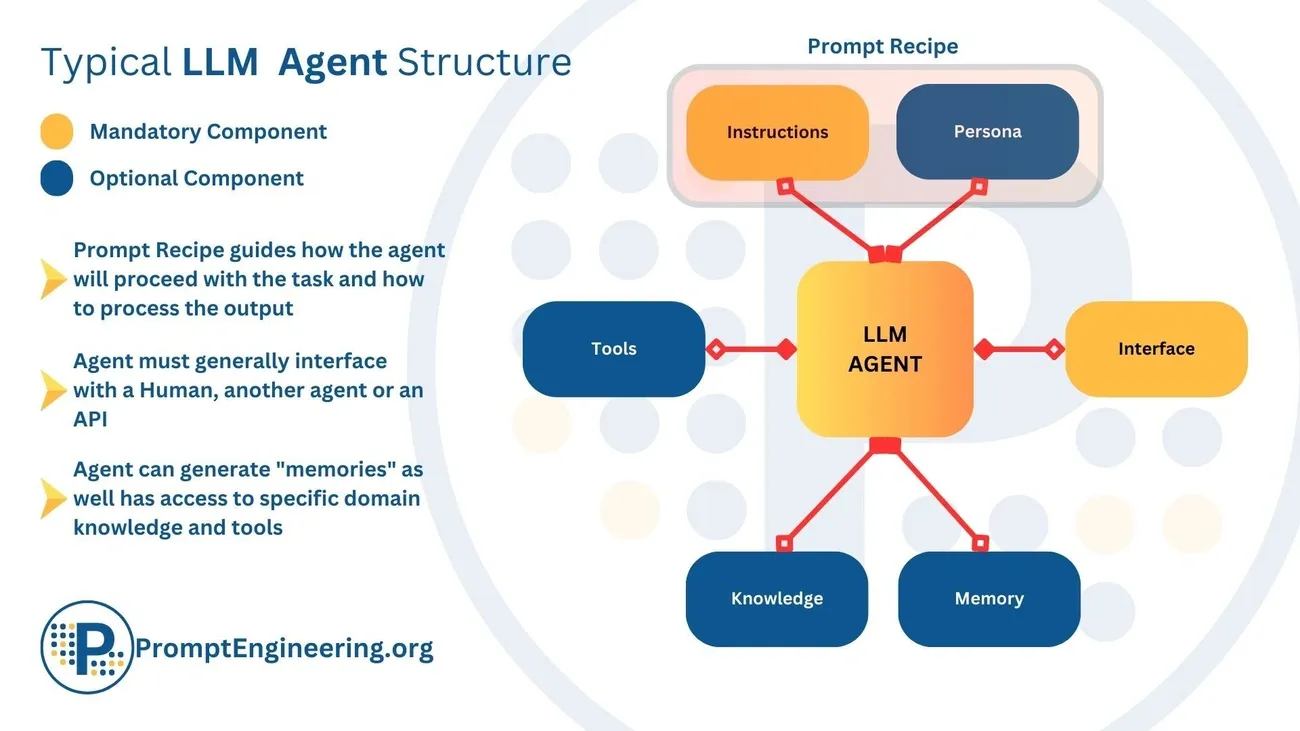
Image Source: The Prompt Engineering Institute
Traditional large language models respond to prompts and return text. Agentic AI operates in a different way. These systems plan multi-step tasks on their own, select and execute tools, make decisions without human oversight, and adapt based on results. Static LLMs generate single responses. Agentic AI follows continuous loops where agents observe their environment, reason about objectives, execute actions, and iterate. This architectural change introduces what IBM describes as systems that “notice, reason, act, and learn” with agency to make context-based decisions.
The security implications are significant. OWASP’s Agentic Top 10 represents a change from securing “what AI says” to securing “what AI does”. ASI01 (Agent Goal Hijack) merges prompt injection with excessive autonomy, where multi-step execution on its own amplifies the effect beyond single-response attacks. New vulnerability classes are especially concerning: ASI07 (Insecure Inter-Agent Communication), ASI08 (Cascading Failures), and ASI10 (Rogue Agents) don’t exist in traditional LLM applications. ASI04 addresses dynamic runtime composition where agents discover and integrate components during execution, unlike traditional supply chain risks that focus on pre-deployment.
Dark Reading poll data shows 48% of cybersecurity professionals now identify agentic AI as the number-one attack vector heading into 2026. It outranks deepfakes, ransomware, and supply chain compromise.
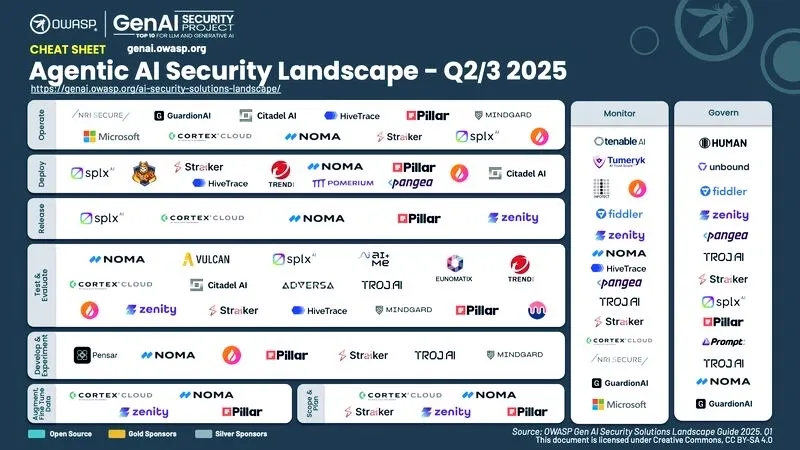
OWASP 2026 Landscape: Mapping Agentic AI Security Solutions
“The launch of the Agentic Top 10 represents a remarkably quick turnaround from OWASP in addressing security gaps for AI agents.” — Tal Skverer, Head of Research at Astrix Security
OWASP’s AI Security & Privacy Guide delivers over 200 pages of practical advice designed for protecting AI and data-centric systems. The resource contributes to international standards including ISO/IEC and the AI Act through official partnerships. The Solutions Landscape for Agentic AI monitors the full lifecycle with quarterly updates focused on the DevOps-SecOps intersection.
The 2026 OWASP Top 10 for Agentic Applications identifies ten consistent risk categories in autonomous systems: agent goal hijacking, tool misuse and unintended execution, identity and privilege abuse, missing or weak guardrails, sensitive data disclosure, data poisoning, resource exhaustion, supply chain vulnerabilities, and advanced prompt injection. None of these represent edge cases.
OWASP provides a structured decision path for threat identification through six critical questions. When the agent determines steps needed to achieve goals independently, this surfaces Intent Breaking and Goal Manipulation (T6), Misaligned and Deceptive Behaviors (T7), and Repudiation and Untraceability (T8). Reliance on stored memory makes Memory Poisoning (T1) and Cascading Hallucination (T5) attack vectors. Action execution using tools brings Tools Misuse (T2), Privilege Compromise (T3), and Resource Overload (T4) as threats.
Prompt injection remains the biggest threat in most agentic systems. The lethal trifecta for leaking sensitive data requires three elements: attacker control of data reaching an LLM, LLM access to sensitive information, and knowing how to send data out.
Implementing Agentic AI Security in Your Organization

“Agentic Security requires real-time intent controls and adaptive guardrails that keep agents aligned with authorized behavior, organizational policies, and compliance.” — Apostol Vassilev, Adversarial AI Lead, NIST
Organizations that deploy agentic AI face a sobering reality: implementation consumes 80% of effort through data engineering, stakeholder alignment, governance, and workflow integration rather than prompt engineering or model tuning. Only 18% of organizations have high confidence their current IAM systems can manage agent identities. Another 35% report moderate confidence and 29% slight confidence. But 40% already run agents in production with another 31% conducting pilots, despite this readiness gap.
The challenge to find agents compounds these risks. Only 21% of organizations maintain up-to-the-minute agent registries. Another 32% rely on non-real-time records and 8% have no registry at all. Static credentials dominate authentication methods through API keys, username-password combinations, and shared service accounts. So organizations need progressive autonomy deployment starting with Scope 1 or 2 implementations before advancing through higher agency levels as security capabilities mature.
Governance requires organizational-level boards that oversee accountability while delegating specific responsibilities like safety monitoring to the core team. What’s more, 40% of organizations report increasing overall identity and security budgets to accommodate AI agents, with 34% allocating dedicated budget lines. Book a Readiness Call to assess your current agent inventory, IAM readiness, and governance framework gaps before scaling autonomous systems in critical workflows.
Conclusion
Agentic AI security represents a fundamental move from securing text outputs to governing autonomous actions. OWASP’s 2026 framework provides the structured guidance we need to address these evolving threats, from goal hijacking to cascading failures. Organizations must assess their current readiness before scaling autonomous systems. You should assess your agent inventory, IAM capabilities and governance frameworks. The security challenges are most important, but the roadmap for addressing them is clear.
Key Takeaways
OWASP’s 2026 framework reveals critical insights for securing autonomous AI systems that go far beyond traditional LLM protection.
• Agentic AI creates entirely new attack vectors – Unlike static LLMs, autonomous agents introduce risks like goal hijacking, cascading failures, and rogue agent behavior that don’t exist in traditional AI applications.
• Organizations face an 82:1 machine-to-human identity crisis – Only 18% express confidence their current IAM systems can manage agent identities, while 40% already run agents in production.
• Implementation requires 80% governance, 20% technology – Success depends on data engineering, stakeholder alignment, and workflow integration rather than just prompt engineering or model tuning.
• Real-time discovery and monitoring are critical gaps – Only 21% maintain real-time agent registries, creating blind spots in security posture as autonomous systems scale across organizations.
• Progressive deployment prevents security disasters – Start with limited-scope implementations and mature security capabilities before advancing to higher autonomy levels in critical workflows.
The shift from securing “what AI says” to “what AI does” demands immediate action. Organizations must assess their agent inventory, IAM readiness, and governance frameworks before autonomous systems become unmanageable security liabilities.
FAQs
Q1. What makes agentic AI security different from traditional AI security? Agentic AI security focuses on securing autonomous actions rather than just text outputs. Unlike static large language models that simply respond to prompts, agentic AI systems independently plan multi-step tasks, execute tools, make decisions without human oversight, and adapt based on results. This creates entirely new vulnerability classes like insecure inter-agent communication, cascading failures, and rogue agents that don’t exist in traditional LLM applications.
Q2. What is the 82:1 machine-to-human identity challenge in agentic AI? The 82:1 ratio represents the unprecedented number of machine identities (agents, tools, APIs, and orchestration pipelines) compared to human identities that enterprises now manage. Each machine identity represents a potential point of compromise, creating significant security challenges. Only 18% of organizations express confidence that their current identity and access management systems can effectively manage agent identities.
Q3. What are the top security risks identified in OWASP’s 2026 framework for agentic AI? The OWASP Top 10 for Agentic Applications identifies ten critical risk categories: agent goal hijacking, tool misuse and unintended execution, identity and privilege abuse, missing or weak guardrails, sensitive data disclosure, data poisoning, resource exhaustion, supply chain vulnerabilities, advanced prompt injection, and over-reliance on autonomous decision making. These risks specifically address what autonomous AI systems do rather than what they say.
Q4. How should organizations approach implementing agentic AI security? Organizations should start with progressive autonomy deployment, beginning with limited-scope implementations before advancing to higher agency levels. Implementation requires 80% focus on governance aspects like data engineering, stakeholder alignment, and workflow integration, with only 20% on technology. Organizations need real-time agent registries, robust IAM systems, organizational-level governance boards, and dedicated security budgets to manage autonomous systems effectively.
Q5. Why is real-time discovery and monitoring critical for agentic AI security? Real-time discovery addresses a critical security gap, as only 21% of organizations maintain real-time agent registries while 32% rely on non-real-time records and 8% have no registry at all. Without continuous monitoring, organizations create blind spots in their security posture as autonomous systems scale. This becomes especially problematic since 40% of organizations already run agents in production, making untracked autonomous systems a significant security liability.