
The key to certification success lies in proving actual implementation rather than simply producing documentation. Organizations that establish disciplined evidence mapping practices identify vulnerabilities 67% more frequently and achieve sustainable compliance with minimal ongoing effort.
Many organizations find ISO IEC 27001 certification a big challenge when preparing their Stage 2 audit. ISO/IEC 27001 leads the way as the global standard in information security management. The standard offers a clear path to protect sensitive company data through complete risk management that covers people, processes, and IT systems.
The ISO 27001 audit process needs more than just putting controls in place. You’ll go through two main steps: checking if you’re ready internally and then facing the official external audit. Most companies don’t know that mapping their evidence the right way can make or break their certification. On top of that, the new ISO/IEC 27001:2022 comes with a simpler control structure. The controls fall into four main areas: Organizational, People, Physical, and Technological. Your internal audit must show proof of these controls working well – that’s what Clause 9.2 demands.
The ANSI National Accreditation Board (ANAB) tells us something interesting. Only 21 firms can give official ISO 27001 certification to businesses in the United States. With so few certified auditors available, you need solid preparation. In this piece, we’ll show you our tested evidence mapping method. This approach will help you nail your Stage 2 audit and cut down your audit time and stress by a lot.
The Critical Role of Evidence Mapping in ISO 27001 Certification Process
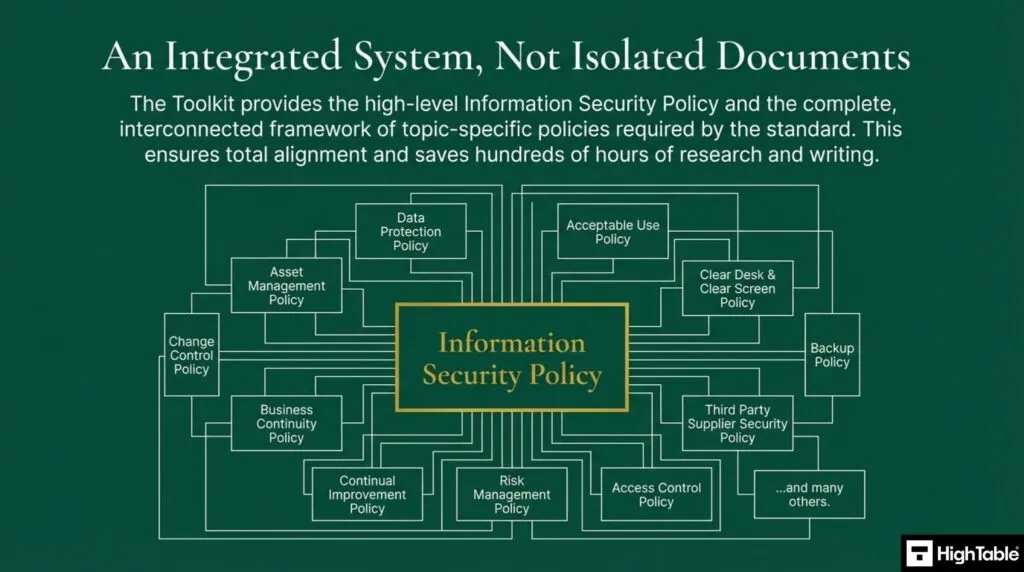
Image Source: High Table ISO 27001 Toolkit
“Organizations that succeed go beyond static documentation: every mapped requirement is assigned an accountable owner (including board- or exec-level for key areas, per NIS 2 Art. 20), scheduled review cycles are visible and automatically prompted, and every evidence log is tied to the living Statement of Applicability (SoA).” — ISMS.online Compliance Framework, NIS 2 and ISO 27001 compliance authority
Evidence mapping is the life-blood of a successful ISO 27001 certification trip, especially when you have organizations preparing for the Stage 2 audit. Unlike document collection, evidence mapping creates a well-laid-out relationship between your implemented controls and proof that shows they work.
Why Most Organizations Fail Stage 2 Without Evidence Maps
Stage 1 to Stage 2 represents a transformation from documentation review to implementation verification. Stage 2 audit gets into whether your organization has put into practice the policies and procedures defined in your Information Security Management System (ISMS).
Organizations often struggle because they focus only on producing documentation instead of ensuring practical implementation. Risk Crew Director Richard Hollis points out: “The first area where an organization is likely to fail an ISO 27001 audit is in documentation. This might mean that important documents are missing, out-of-date, or even unpublished”.
The core team’s involvement plays a vital role. The audit quickly derails when employees can’t find policies or show compliance with security procedures. Teams often overlook staff preparation and send out rushed communications that staff can’t process properly.
There’s another reason organizations fail during surveillance audits, which happen nine months to a year after the original certification. Teams often slow down after getting certified and let internal audit schedules and risk committee meetings slip. Without evidence mapping, these gaps stay hidden until the auditor shows up.
Evidence Mapping vs Traditional Documentation Approaches
Traditional documentation approaches use scattered spreadsheets, isolated tools, and manual processes that create version control problems. These disconnected methods make it hard to maintain consistent security controls and documentation standards in a variety of departments.
Evidence mapping offers these advantages:
-
Organizes evidence by control domains (organizational, people, physical, technological)
-
Creates clear traceability between risks, controls, and implemented measures
-
Establishes ownership and accountability for each control
-
Provides live visibility into compliance status
Evidence mapping stops “mapping drift”—the dangerous gap that grows when static documents don’t match current operational processes. This drift isn’t just an administrative issue but a most important risk that auditors look for during assessment.
How Evidence Mapping Reduces ISO 27001 Audit Time by 40%
A well-implemented evidence mapping system cuts down audit preparation time dramatically. Organizations using evidence mapping solutions save weeks through automation. Some clients reach ISO 27001 readiness in weeks instead of quarters and reduce preparation time by over 50% through integration-generated evidence and continuous monitoring.
The quickest way to gain efficiency comes from multiple sources. Evidence uploaded once can automatically map to relevant controls across multiple frameworks. Smart tagging and categorization features track which evidence meets which requirements and eliminate redundant work. Live dashboards show control effectiveness, evidence gaps, and non-conformities in one place.
Automated evidence mapping captures timestamped snapshots and links them directly to appropriate controls instead of manually collecting logs, screenshots, or configuration files from multiple systems. This continuous approach changes ISO 27001 compliance from a yearly audit scramble into an integrated, ongoing practice with clear accountability.
Evidence mapping before your Stage 2 audit increases your certification success chances and builds green practices that support ongoing compliance easily.
Preparing for Your ISO 27001 Stage 2 Audit: What Auditors Expect
Getting ISO 27001 certification depends on knowing what auditors inspect during the Stage 2 audit. Stage 1 focuses on document review, while Stage 2 tests how well your Information Security Management System (ISMS) works in real life.
The Stage 2 Audit Methodology: Document Review to Evidence Testing
Stage 2 audit moves from document review to checking actual implementation. Auditors visit your site to review if your organization’s ISMS meets ISO 27001 standards and your policies. This phase has:
-
Interviews with the core team to confirm they understand and follow security procedures
-
Scrutinizing operational processes to ensure controls match documentation
-
Reviews of logs, records, and security incident management evidence
-
Tests of your risk treatment plan implementation
Organizations with regular audit cycles find and fix serious vulnerabilities 67% more often before external assessors arrive. Your ISMS should run smoothly for at least three months before Stage 2 audit to show it works.
Clause 9.2 Internal Audit Requirements and Evidence Trail
ISO 27001 sub-clause 9.2 requires internal audits at set times to review ISMS effectiveness and compliance with ISO standards and company policies. Your internal audit program needs:
-
A schedule that shows when and what to audit (high-risk areas need more frequent audits)
-
Rules for independence and objectivity (auditors can’t review their own work)
-
Clear audit criteria and scope for each audit
-
Management reports with documented results
A complete evidence trail is significant—without proper internal audits, your ISO 27001 program relies on guesswork. Digital audit tools that connect findings to logs, screenshots, or meeting notes boost external trust by 45% and reduce last-minute issues.
Statement of Applicability (SoA) as Your Evidence Roadmap
The Statement of Applicability connects your risk assessment to implemented controls. Auditors usually check this document first. Your SoA must show:
-
Every one of the 93 Annex A controls from ISO 27001:2022
-
Clear reasons for including or excluding each control
-
Current status of each control
-
Links to evidence that shows controls work
During Stage 2, auditors check if your company follows the controls listed in your SoA. So, this document helps you organize evidence and prove compliance.
PDCA Cycle Evidence: Planning Through Improvement
Auditors use the Plan-Do-Check-Act cycle to review your ISMS maturity. Each phase needs specific evidence:
-
Plan: Risk assessment files, security goals, and reasons for control choices
-
Do: Implementation proof, staff training records, and security measures
-
Check: Internal audit results, performance data, and incident logs
-
Act: Records of fixes and proof of ongoing improvements
Companies that link audit areas to their risk register make 60% more meaningful improvements after each cycle. You need to finish at least one full PDCA cycle and show proof of fixes based on internal audit findings to get certified.
Creating an ISO 27001 Evidence Repository Structure
A good ISMS needs proper organization of evidence. Your auditors and management team will thank you for a well-laid-out repository structure.
Organizing Evidence by Control Domains: Organizational, People, Physical, Technological
ISO 27001:2022 Annex A gives us 93 controls in four domains. This creates a natural way to organize your evidence repository:
-
Organizational Controls (37): Your policies, information classification, supplier relationships, and incident management docs
-
People Controls (8): Everything about training, employment terms, security awareness, and how people report issues
-
Physical Controls (14): Details of security boundaries, equipment care, and safe disposal methods
-
Technological Controls (34): Your access control setup, encryption use, and how you handle vulnerabilities
This setup helps auditors check each control area quickly. They can find what they need during tight audit schedules.
Folder Hierarchy and Naming Conventions for Quick Retrieval
A clear folder structure and consistent naming make life easier. The best repositories use three layers:
-
Top Level: Documents that cover the whole organization, matching ISO clauses 4-10
-
Middle Level: Step-by-step procedures that bring Annex A controls to life
-
Evidence Level: Records from your ground application systems
Name your files in a standard way like [PREFIX]-[TYPE]-[NUMBER]_[Description]_v[Version]. To cite an instance, “ISMS-POL-001_InfoSec_Policy_v2.0.pdf” tells you exactly what it is and which version you’re looking at.
Cloud Storage vs On-Premise Evidence Management
Storage location is a big decision. Cloud storage gives you pay-as-you-go pricing, quick scaling, and guaranteed uptime. On-premise systems let you keep full control, might cost less in the long run if your needs stay steady, and often work faster locally.
Access Controls and Evidence Integrity Protection
Evidence integrity matters whatever storage you pick. ISO 27001 control A.5.28 says you need to keep information safe for legal reasons. This means you should:
-
Set up proper user registration and removal
-
Give special access only to key people
-
Keep detailed audit records of who accessed what
-
Track evidence carefully during security incidents
A thoughtful evidence structure saves time during audits. Your compliance requirements stay on track without extra hassle.
Mapping Evidence to ISO 27001 Controls and Audit Criteria
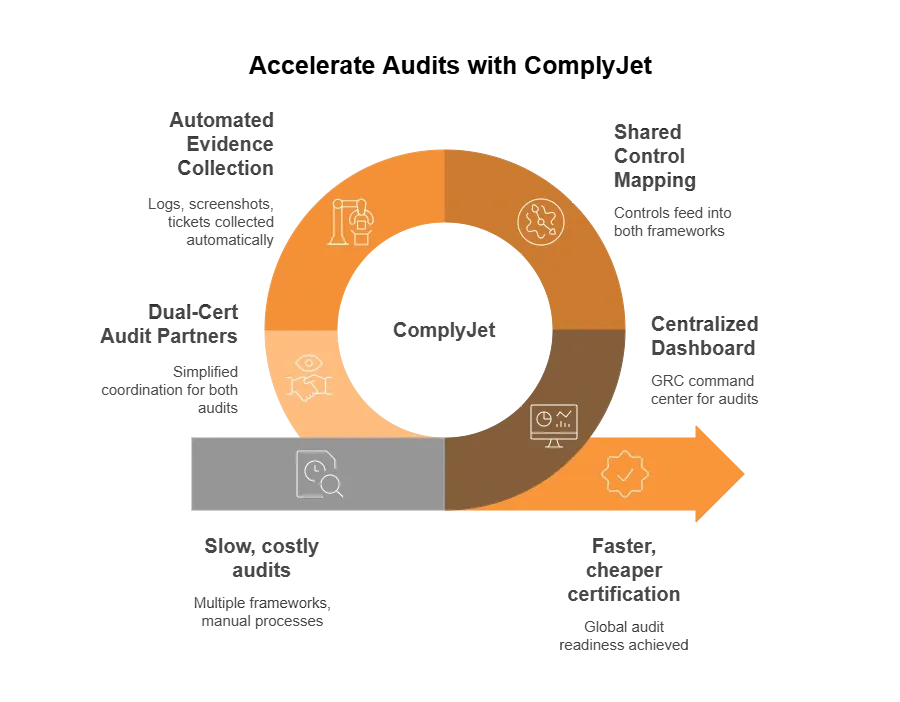
Image Source: ComplyJet
The life-blood of a successful ISO IEC 27001 implementation depends on connecting your security controls to tangible evidence systematically. Your preparation for audit scrutiny will be solid when you create systematic relationships between your claims and their proof.
Control-to-Evidence Matrix: Building Your Core Document
A control-to-evidence matrix acts as the central mapping document for your ISO 27001 certification. This matrix links each of the 93 Annex A controls to specific evidence items. Raw security logs and hardware documentation revolutionize into verifiable proof for audits that directly supports both internal reviews and certification assessments.
Identifying Single Evidence Supporting Multiple Controls
The quickest way to optimize your process involves recognizing when one piece of evidence satisfies multiple ISO 27001 requirements. You can identify overlaps by cross-referencing control requirements and use the same evidence to fulfill various compliance needs. We reduced redundant work during evidence collection with this approach.
Risk Assessment Evidence Mapping Techniques
Your matrix must connect identified risks to relevant ISO 27001 controls for risk assessment documentation. Your Statement of Applicability (SoA) should document which Annex A controls apply to your organization and justify exclusions. Auditors will see how control selection addresses your specific risk environment through this evidence roadmap.
Incident Response and Corrective Action Evidence Links
ISO 27001:2022 Annex A 5.28 requires organizations to establish procedures that identify, collect, acquire, and preserve evidence related to security incidents. Your evidence must show that systems operated as intended during evidence collection and you managed to keep proper chain-of-custody.
Supplier and Third-Party Risk Evidence Requirements
Your supplier management controls must meet ISO requirements with mapped evidence. This evidence should include documented supplier risk assessments, access control policies, and incident response plans.
to learn how our evidence mapping methodology can cut your audit preparation time by 40% while ensuring complete control coverage.
Evidence Mapping Tools and Templates for ISO IEC 27001 Compliance
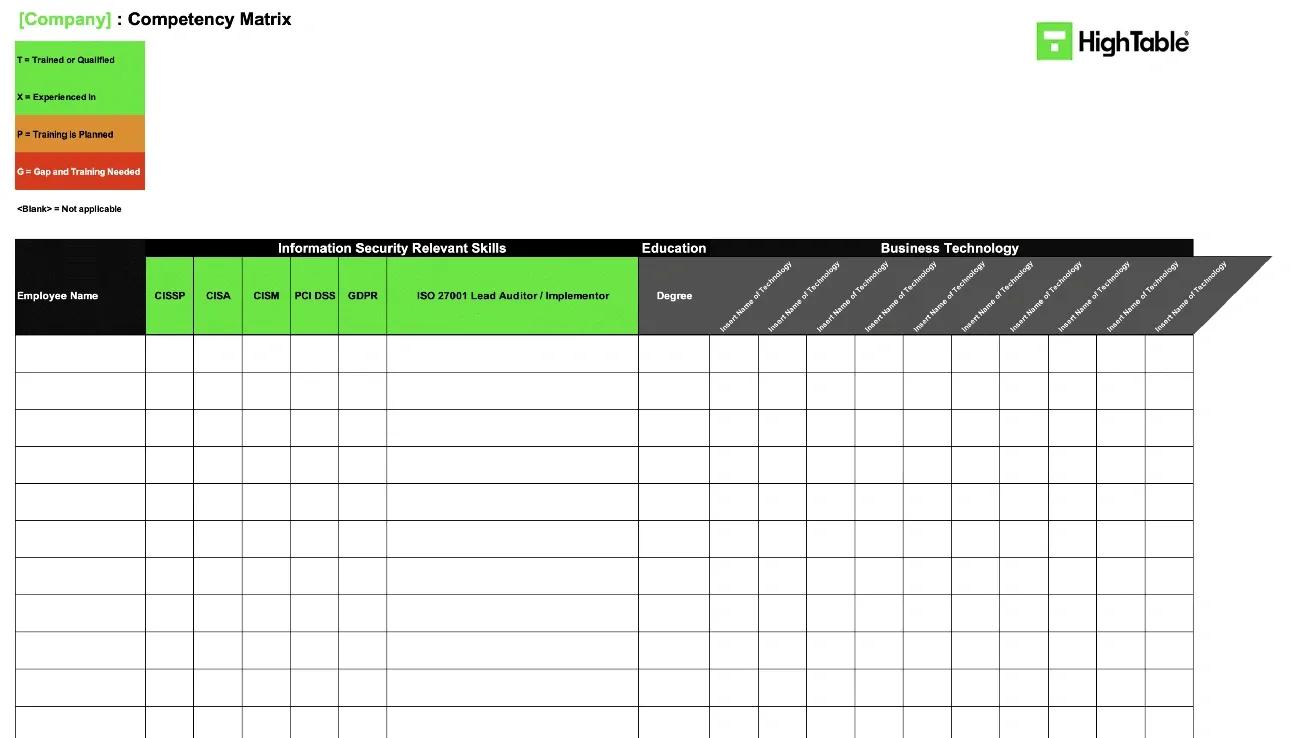
Image Source: High Table ISO 27001 Toolkit
“A mapping tool should never replace stakeholder reviews, versioned change logs, or drift alerts. The system must auto-prompt review on sector change, legal update, or incident, and export mapping trails (who did what, when) to the auditor or board on demand.” — ISMS.online Compliance Framework, NIS 2 and ISO 27001 compliance authority
Excel-Based Evidence Mapping Template Walkthrough
Excel templates offer the most straightforward starting point for ISO 27001 evidence management. A well-designed template has control mapping, evidence references, and implementation status tracking. Organizations can use these spreadsheets to cross-reference requirements, assign ownership, and maintain version history. The core structure should match the updated control domains (organizational, people, physical, technological) and link each control to specific evidence items.
Automated Evidence Collection Using GRC Platforms
GRC platforms turn manual evidence collection into an automated process. Companies using these tools see a 90% reduction in time spent gathering audit evidence. These platforms connect to cloud providers, identity systems, and HR tools. They capture evidence continuously and flag compliance drift before it becomes an audit problem. The evidence is timestamped, tamper-resistant, and comes directly from systems of record, giving greater assurance during audits.
Evidence Gap Analysis Checklist Before Stage 2
Your Stage 2 audit needs a full gap analysis to spot missing documentation. Book a Readiness Call to review your evidence map and identify potential gaps. These commonly missed evidence items need attention:
-
Access review logs showing who reviewed what and when
-
Backup restore test records verifying recovery capability
-
Incident postmortems documenting security events
Real-Life Evidence Mapping Example for Tech Startups
Tech startups pursuing ISO 27001 should arrange evidence mapping with their existing workflows. Document your actual processes if you use Jira for change management or GitHub for code reviews. Connecting your Statement of Applicability to operational practices creates a reliable evidence trail that strikes a chord with auditors.
Conclusion
Evidence mapping is the life-blood of ISO 27001 certification success. It turns a potentially chaotic audit into a structured, manageable process. In this piece, we explored how proper mapping builds clear connections between your controls and the proof that shows they work. This approach cuts down audit time and stress by a lot.
Companies that map their evidence before Stage 2 audits boost their certification chances. They also build environmentally responsible compliance that needs minimal effort to maintain. The move from collecting documents to mapping evidence shows a basic change in thinking. You prove real implementation instead of just creating paperwork.
Evidence organization across the four control domains creates clarity for teams and auditors alike. Quick retrieval during time-pressed audits becomes possible through consistent naming and proper storage structure.
The Statement of Applicability is your evidence roadmap that links risk assessment to implemented controls. Auditors can’t verify your control setup without this vital document. A complete, current SoA becomes essential to get certified.
Evidence mapping stops the risky “mapping drift” when documents don’t match your actual processes. ISO 27001 compliance becomes an ongoing practice with clear ownership instead of a yearly scramble.
The work pays off. Organizations using mapping tools report they save weeks of audit prep time through automation. Some get ISO 27001 ready in weeks instead of months. Integration and continuous monitoring cut prep time in half.
This piece shows a tested path to certification. The experience needs dedication to evidence quality and proper mapping methods. You’ll need the right tools that fit your company’s needs. Certification isn’t just a checkbox – it shows your company’s strength in handling information security risks.
Key Takeaways
Evidence mapping transforms ISO 27001 certification from a chaotic audit scramble into a structured, manageable process that dramatically improves your chances of Stage 2 success.
• Evidence mapping reduces audit preparation time by 40% through automated collection and clear control-to-evidence relationships across organizational, people, physical, and technological domains.
• Stage 2 audits test implementation, not documentation – auditors verify that your ISMS actually works in practice through staff interviews, process examination, and evidence testing.
• Your Statement of Applicability serves as the evidence roadmap – this critical document connects all 93 Annex A controls to specific evidence and guides auditor verification.
• Organize evidence by the four control domains using consistent naming conventions and proper repository structure to ensure quick retrieval during time-constrained audits.
• Single evidence can satisfy multiple controls – cross-referencing requirements eliminates redundant work and streamlines documentation while maintaining comprehensive coverage.
FAQs
Q1. How can I efficiently manage both SOC 2 and ISO 27001 compliance? To efficiently manage both SOC 2 and ISO 27001 compliance, focus on evidence reuse rather than just control mapping. Your existing SOC 2 evidence can satisfy most ISO 27001 requirements. Use a centralized compliance platform to automatically map controls, identify overlaps, and highlight gaps between the two frameworks. This approach can reduce audit preparation time by up to 40% and help maintain a unified compliance strategy.
Q2. What are the key differences between SOC 2 and ISO 27001? While SOC 2 and ISO 27001 have significant overlap (about 80%), the main difference lies in ISO 27001’s focus on the Information Security Management System (ISMS). ISO 27001 requires specific components like a risk register, Statement of Applicability, and mandatory internal audits. Additionally, ISO 27001 is a certification standard, while SOC 2 results in an attestation report.
Q3. How can I prepare for an ISO 27001 Stage 2 audit? To prepare for an ISO 27001 Stage 2 audit, ensure your ISMS has been fully operational for at least three months. Organize evidence by control domains (organizational, people, physical, technological), maintain a comprehensive Statement of Applicability, and conduct thorough internal audits. Use evidence mapping to link each control to specific evidence items, and perform a gap analysis to identify any missing documentation before the audit.
Q4. What tools can help with ISO 27001 evidence mapping? Several tools can assist with ISO 27001 evidence mapping. Excel-based templates offer a basic starting point. However, specialized GRC (Governance, Risk, and Compliance) platforms provide more advanced features like automated evidence collection, real-time compliance monitoring, and cross-framework control mapping. These tools can significantly reduce the time and effort required for audit preparation and ongoing compliance management.
Q5. How long does it typically take to achieve ISO 27001 certification? The time to achieve ISO 27001 certification can vary depending on an organization’s size, complexity, and existing security practices. For companies already SOC 2 compliant, the process can be expedited. With proper planning and use of automated compliance tools, some organizations can achieve ISO 27001 readiness in weeks rather than months. However, you’ll need to demonstrate several months of documented ISMS operation before the external audit, so plan accordingly.