EU AI Act Compliance & Readiness
AI inventory + risk classification (prohibited / high-risk / transparency / minimal risk) with a practical compliance roadmap
High-risk requirements pack (risk management, data governance, technical documentation, logging, human oversight, robustness & cybersecurity)
GPAI model due diligence + downstream readiness (documentation, copyright policy, training-data summary, integration guidance)

What the EU AI Act is (and what it changes)
We’re in the final runway before the “full applicability” milestone.
Entered into force: 1 August 2024
Prohibited practices + AI literacy obligations apply: 2 February 2025
GPAI obligations + governance rules apply: 2 August 2025
Most obligations fully apply: 2 August 2026
High-risk AI embedded in regulated products (extended): 2 August 2027
Extra transition nuance:
Certain high-risk AI systems that are components of EU “large-scale IT systems” listed in Annex X have a longer path (compliance by 31 December 2030 for systems placed before 2 Aug 2027).
What this means right now (2026)
If you build, buy, or deploy AI in the EU, 2026 is your execution year:
• Finalize your AI system inventory and risk classification .
• Implement high-risk controls where applicable.
• Stand up AI literacy and transparency disclosures.
• Validate GPAI provider compliance and bake requirements into procurement/contracts.
Who the EU AI Act applies to
The AI Act applies broadly to both public and private actors inside and outside the EU involved in placing AI on the EU market or using it in the EU. Obligations apply to providers, deployers, and providers of general-purpose AI models, among others.

What “EU AI Act-ready” means in practice
Risk classification you can defend
You need a documented basis for how each AI use case is categorized:
Prohibited AI practices (banned)
High-risk AI systems (regulated under strict requirements; Annex III use cases + safety components in regulated products)
Transparency obligations for certain interactive or generative systems (e.g., chatbots, deepfakes)
Minimal-risk (generally no additional AI Act duties beyond existing law, though transparency practices and adherence to a voluntary code of conduct are still encouraged)
High-risk controls + evidence (Articles 8–15)
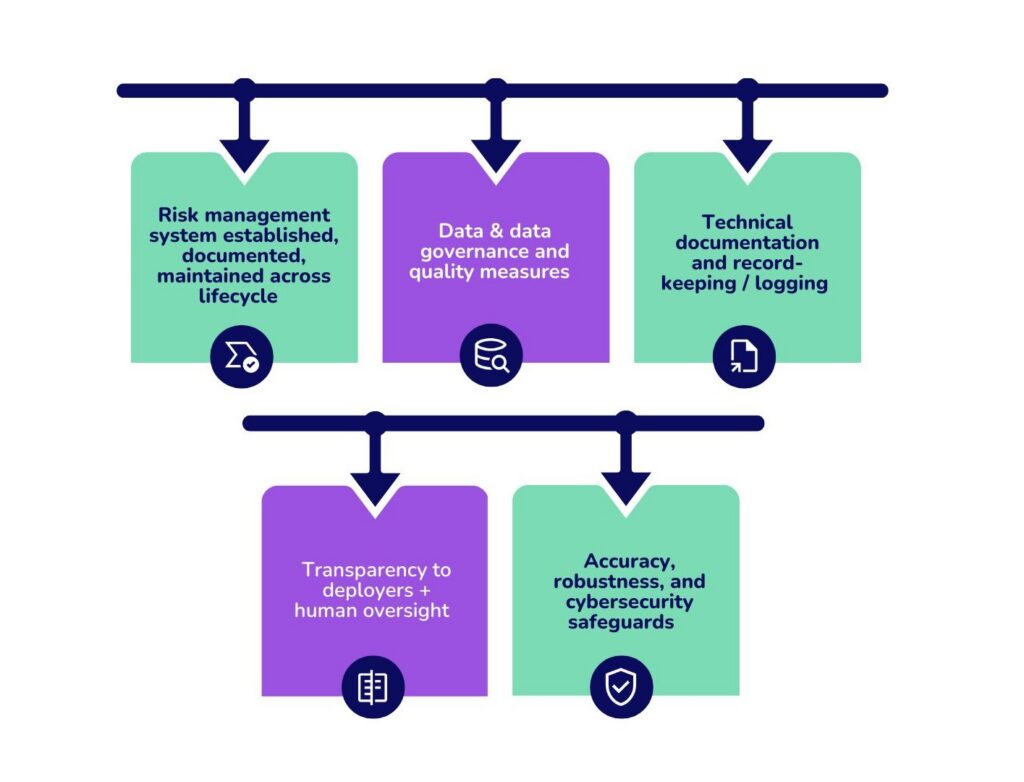
For high-risk AI systems, you need implementable controls and auditable artifacts, including:
Risk management system established, documented, maintained across lifecycle
Data & data governance and quality measures
Technical documentation and record-keeping/logging
Transparency to deployers + human oversight
Accuracy, robustness, and cybersecurity safeguards
GPAI model obligations (for model providers and for enterprises who rely on them)
Transparency obligations
(Article 50)
Enforcement and fines (enterprise due diligence reality)
The regulation includes maximum administrative fines such as:
- up to $41,100,000 USD or 7% of worldwide turnover for prohibited practices
- up to $17,600,000 USD or 3% for other operator/notified-body obligations
- up to $8,800,000 or 1% for supplying incorrect/incomplete/misleading information
(with SME proportionality rules).
How Elevate Consult supports EU AI Act readiness
EU AI Act Readiness Assessment (Inventory → Classification → Roadmap)
- AI system inventory and risk classification logic you can defend to buyers/regulators
- Identify high-risk candidates (Annex III + regulated-product safety components) and scope obligations
- Build a prioritized remediation roadmap to meet Aug 2, 2026 applicability
High-Risk Controls Implementation (Evidence-led)
We turn requirements into an auditable operating model:
- Risk management lifecycle + testing evidence
- Data governance + documentation templates
- Logging/record-keeping design
- Human oversight procedures + user instructions
- Robustness & cybersecurity control testing
GPAI Due Diligence + Procurement Readiness
- Vendor diligence checklist aligned to provider obligations
- Contract clause pack + integration governance
- Downstream documentation mapping for teams building on GPAI
Transparency & Labeling Program (Article 50)
- Chatbot disclosures, deepfake labeling workflows, content review governance
- Alignment with emerging AI Office Codes of Practice
AI Literacy Enablement
- Role-based AI literacy baseline + training evidence program (policy + attestations)
What you get (deliverables)
- AI Inventory + Risk Classification Register (defensible logic + owner mapping)
- High-Risk Requirements Matrix (Articles 8–15) with gap ratings + remediation plan
- High-Risk Evidence Library (tech documentation, logs, oversight, testing artifacts)
- GPAI Due Diligence & Downstream Pack (provider obligations checklist + integration evidence)
- Article 50 Transparency Pack (disclosures + labeling workflows + governance)
- AI Literacy Program Pack (policy, training plan, tracking, attestations)
Engagement options
- EU AI Act Readiness Sprint (2–4 weeks): inventory, classification, gap assessment, roadmap
- Implementation Support (co-sourced): build controls + evidence + operational workflows
- Continuous Oversight: ongoing control testing, vendor/GPAI monitoring, and audit support

Why Elevate Consult for EU AI Act Readiness
Buyer-grade proof, not policy PDFs: We build the artifacts enterprise risk teams ask for: classification logic, model/system documentation, testing evidence, and operational controls.
Procurement-ready GPAI governance: We translate provider obligations into a vendor diligence and contract posture you can scale across teams using foundation models.
High-risk readiness by August 2026: We run execution toward the EU AI Act applicability milestone—closing control gaps with evidence you can defend.
Reduced duplication across frameworks: We map AI Act governance to existing security/privacy programs so you don’t rebuild governance from scratch.
FAQ
1) What is the EU AI Act?
It’s the EU’s risk-based regulation for AI systems and general-purpose AI models, setting obligations based on risk level (prohibited, high-risk, transparency obligations, minimal risk).
6) What are the transparency obligations (Article 50)?
Certain interactive or generative AI systems (like chatbots or deepfakes) must provide disclosures and labeling/marking to reduce deception, manipulation, and consumer harm.
2) Who does the EU AI Act apply to?
It applies to organizations inside and outside the EU that place AI systems or GPAI models on the EU market, put AI systems into service, or use them in the EU—especially providers and deployers.
7) What is “AI literacy” under the EU AI Act?
AI literacy obligations started Feb 2, 2025—organizations should ensure staff operating or overseeing AI have appropriate understanding and training, supported by governance evidence.
3) When do the key EU AI Act obligations apply?
Prohibitions and AI literacy applied from Feb 2, 2025; GPAI obligations from Aug 2, 2025; most rules apply from Aug 2, 2026; certain regulated-product high-risk AI has an extended period until Aug 2, 2027.
8) What obligations exist for general-purpose AI (GPAI) models?
GPAI model providers must maintain technical documentation, enable downstream compliance with information and documentation, implement copyright compliance policy, and publish a training-content summary (with limited open-source exceptions).
4) What counts as a high-risk AI system?
High-risk systems include specific Annex III use cases that can impact safety or fundamental rights, plus AI that is a safety component of certain regulated products or is itself a regulated product subject to third-party conformity assessment.
9) What are the EU AI Act penalties?
Fines can reach €35M or 7% (prohibited practices), €15M or 3% (other key obligations), and €7.5M or 1% (misleading information), subject to proportionality rules for SMEs.
5) What are the core high-risk requirements?
High-risk systems must meet requirements such as lifecycle risk management, data governance, technical documentation, record-keeping/logging, transparency to deployers, human oversight, and accuracy/robustness/cybersecurity safeguards.
10) Are we “late” if it’s already 2026?
Not necessarily—but the key is execution now: classification, controls, transparency workflows, and evidence so you’re ready for Aug 2, 2026 applicability (and any extended timelines that apply to your product category).