EU & UK GDPR Compliance & Audit Readiness
GDPR gap assessment + remediation roadmap mapped to accountability, lawful basis, and operational controls
DPIA program + high-risk processing governance with templates and decision logic
Breach response readiness with 72-hour notification workflows and evidence capture

What GDPR is (and what it changes) / EU GDPR
EU GDPR
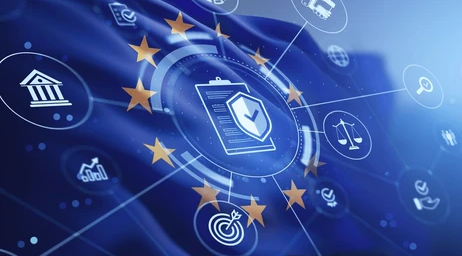
The General Data Protection Regulation (Regulation (EU) 2016/679) is the EU’s core privacy law governing personal data processing and data subject rights, with direct applicability across Member States.
UK GDPR
In the UK, data protection is governed by the UK GDPR and the Data Protection Act 2018, enforced by the ICO.
- Core shift (buyers + regulators): privacy is no longer a policy exercise, GDPR requires
- Operational proof: documented decisions (lawful basis, purpose, retention), measurable controls, and evidence that processes actually work (rights handling, DPIAs, vendor oversight, breach response).

EU GDPR
GDPR timeline (dates you can plan to)
- Entered into force: 24 May 2016 (20 days after publication)
- Applies from: 25 May 2018
UK GDPR + recent UK reform
- UK data protection is governed by UK GDPR + Data Protection Act 2018
- The Data (Use and Access) Act 2025 (DUAA) received Royal Assent on 19 June 2025, introducing changes to the UK’s data protection and privacy framework.
- Government commencement plans indicate many data protection and privacy provisions were brought into force on 5 February 2026 (with further phased commencement).
What this means right now (2026)
GDPR expectations are mature: enterprise buyers and regulators expect evidence and in the UK, 2026 also means adjusting to DUAA-driven updates (process changes, updated guidance, and governance expectations as they commence).
Who GDPR applies to
- Controllers and processors processing personal data in the EU/EEA (EU GDPR), or under UK law (UK GDPR).
- Extraterritorial reach (EU GDPR): applies to organizations outside the EU when processing relates to offering goods/services to people in the EU or monitoring their behavior in the EU.
What “GDPR-ready” means in practice
1) Accountability that is provable
2) DPIAs for high-risk processing
3) DPO triggers handled
correctly
4) Data subject rights execution (DSAR-ready)
4) Data subject rights execution (DSAR-ready)
5) Breach response readiness (72-hour rule)
6) Vendor and processor governance that survives due diligence
7) International transfers done defensibly
8) Enforcement exposure is real
How Elevate Consult supports GDPR readiness
GDPR Readiness Assessment (Scope → Gaps → Roadmap)
- EU/UK applicability and gap assessment
- Risk-ranked remediation plan aligned to your business workflows (not generic templates
DPIA + high-risk processing governance
- DPIA trigger criteria, templates, and review cadence
- Practical guardrails for new products/features
DSAR + privacy operations enablement
- Request intake → identity verification → search/extraction → exemptions → response pack
- Evidence capture so you can prove compliance
Breach response + reporting runbooks
- 72-hour operational workflow, roles/RACI, and regulator-facing documentation packets
Vendor/processor governance + transfers
- DPA + subprocessor governance
- SCC / transfer assessment workflow design
What you get (deliverables)
- EU & UK GDPR Requirements Matrix + Gap Assessment
- DPIA Program Pack (trigger logic + templates + evidence requirements)
- ROPA / data inventory blueprint + maintenance cadence
- DSAR Operations Pack (workflows, SLAs, evidence library)
- Breach Response Pack (72-hour workflow + notification templates + breach log structure)
- Third-party + transfer governance pack (SCC/TIA workflow and documentation)
Engagement options
- GDPR Readiness Sprint (2–4 weeks): scope + assessment + roadmap
- Implementation Support (co-sourced): close gaps and build evidence library
- Continuous Privacy Operations: DSAR/breach readiness, vendor governance, ongoing audit support

Why Elevate Consult for EU & UK GDPR
Audit-ready evidence (not policy theater): We build proof that holds up in enterprise due diligence—traceable decisions, operating controls, and maintained evidence.
Faster deal cycles: We package your privacy posture into buyer-ready artifacts (ROPA, DPIAs, DSAR, vendor controls) to reduce questionnaire churn.
EU + UK aligned: We design one privacy operating model that supports both EU GDPR and UK GDPR obligations, accounting for UK reforms now commencing under DUAA.
Incident readiness you can execute: 72-hour workflows, documentation packets, and evidence capture built for real events—not just tabletop narratives.
FAQ
1) What is the EU GDPR?
EU GDPR is Regulation (EU) 2016/679, the EU’s primary data protection law governing personal data processing and individuals’ rights, applicable across Member States.
6) What is the 72-hour breach notification requirement?
Controllers must notify the supervisory authority without undue delay and, where feasible, within 72 hours after becoming aware of a personal data breach (unless unlikely to risk individuals’ rights and freedoms).
2) What is the UK GDPR?
UK GDPR is the UK’s data protection regime alongside the Data Protection Act 2018, overseen by the ICO.
7) What are the maximum GDPR fines?
For certain infringements, GDPR administrative fines can be up to €20M or 4% of worldwide annual turnover (whichever is higher).
3) Are there new UK changes in 2026?
Yes. The Data (Use and Access) Act 2025 (DUAA) introduced changes to UK data protection and privacy law, and government commencement plans brought many data protection/privacy provisions into force on 5 February 2026, with further phased commencement.
8) Does GDPR apply to companies outside the EU?
Yes—EU GDPR can apply to non-EU organizations offering goods/services to people in the EU or monitoring their behavior in the EU.
4) When is a DPIA required?
A DPIA is required whenever processing is likely to result in a high risk to individuals’ rights and freedoms—such as large-scale sensitive data, systematic monitoring, or extensive profiling.
9) How do international data transfers work under GDPR?
Transfers can rely on safeguards like SCCs, and the EU Commission notes SCCs now incorporate Schrems II expectations, including transfer impact assessments and supplementary safeguards where needed.
5) When do we need a Data Protection Officer (DPO)?
You need a DPO when core activities involve large-scale sensitive data processing or large-scale regular and systematic monitoring, among other scenarios.