
Your ISO/IEC 42001:2023 audit success depends heavily on proper scoping. Many venture-backed SaaS companies now adopt ISO 42001 AI standards, and defining the right scope plays a significant role in successful implementation and certification. A compelling case study highlights this point—a B2B SaaS startup earned ISO/IEC 42001 certification on their first audit attempt. They reduced documentation effort by up to 75% and cut costs by approximately 50% compared to traditional preparation processes.
The international management system standard for AI, ISO/IEC 42001, provides a detailed framework that helps organizations implement AI governance throughout the entire lifecycle. SaaS providers benefit from this standard’s systematic, repeatable process to manage AI risks and ensure ethical development and deployment. The standard’s AI lifecycle management approach requires careful evaluation of organizational structures, policies, and controls. These elements enable responsible, ethical, and safe AI systems. The scope definition of an ISO/IEC 42001 compliance audit lines up with the standard’s requirements, organizational risk factors, and stakeholder expectations early in the process.
This piece will show venture-backed SaaS companies how to effectively scope their Artificial Intelligence Management System (AIMS). A resilient foundation helps address various regional regulations while streamlining the certification process. We’ll get into the key roles defined in ISO/IEC 22989:2022—Provider, Producer, Customer, Partner, Subject, and Relevant authority—and explore how these roles affect your compliance experience.
Defining the Scope of ISO 42001 for SaaS Startups
Setting up the right ISO 42001 scope starts with a clear picture of how your organization uses AI. The standard applies to any organization that develops, provides, or uses AI-based products or services, whatever the size or industry. SaaS companies with venture backing need to set clear boundaries. This helps avoid scope creep and too much paperwork.
Clarifying AI Roles: Provider, Producer, or User
Your startup needs to figure out which AI roles it plays based on ISO 42001:
- AI Provider: Organizations that provide products or services using one or more AI systems. This covers platform providers who help others develop AI and those who offer AI-powered solutions.
- AI Producer: Organizations that design, develop, test and deploy products or services using AI systems. Model designers, implementers, and verification specialists fall into this category.
- AI User: Organizations that use AI products/services directly or provide them to their users.
Your SaaS company might play several roles at once. Take this example – if you use OpenAI’s GPT and blend it into your services, you’re both an AI User (of OpenAI) and an AI Provider to your clients.
Identifying In-Scope AI Systems and Use Cases
Once you’ve sorted out your roles, you’ll need to pick which AI systems should be part of your audit scope. Think about:
- AI components in your SaaS product
- Third-party AI tools you use
- AI systems you’re testing or developing
- High-risk AI applications that need impact assessments
Determining Scope Breadth: Product vs Platform vs Services
The last step is to decide how wide to make your AIMS scope:
- Product-focused scope: Keeps certification to specific AI-powered features
- Platform scope: Covers your entire AI development environment
- Services scope: Takes in all AI-powered services for customers
This choice affects how much documentation you need, how you implement controls, and what certification will cost. Your scope should match what your organization wants to achieve and what your stakeholders expect – from investors to customers to regulators.
Establishing Organizational Boundaries and Context
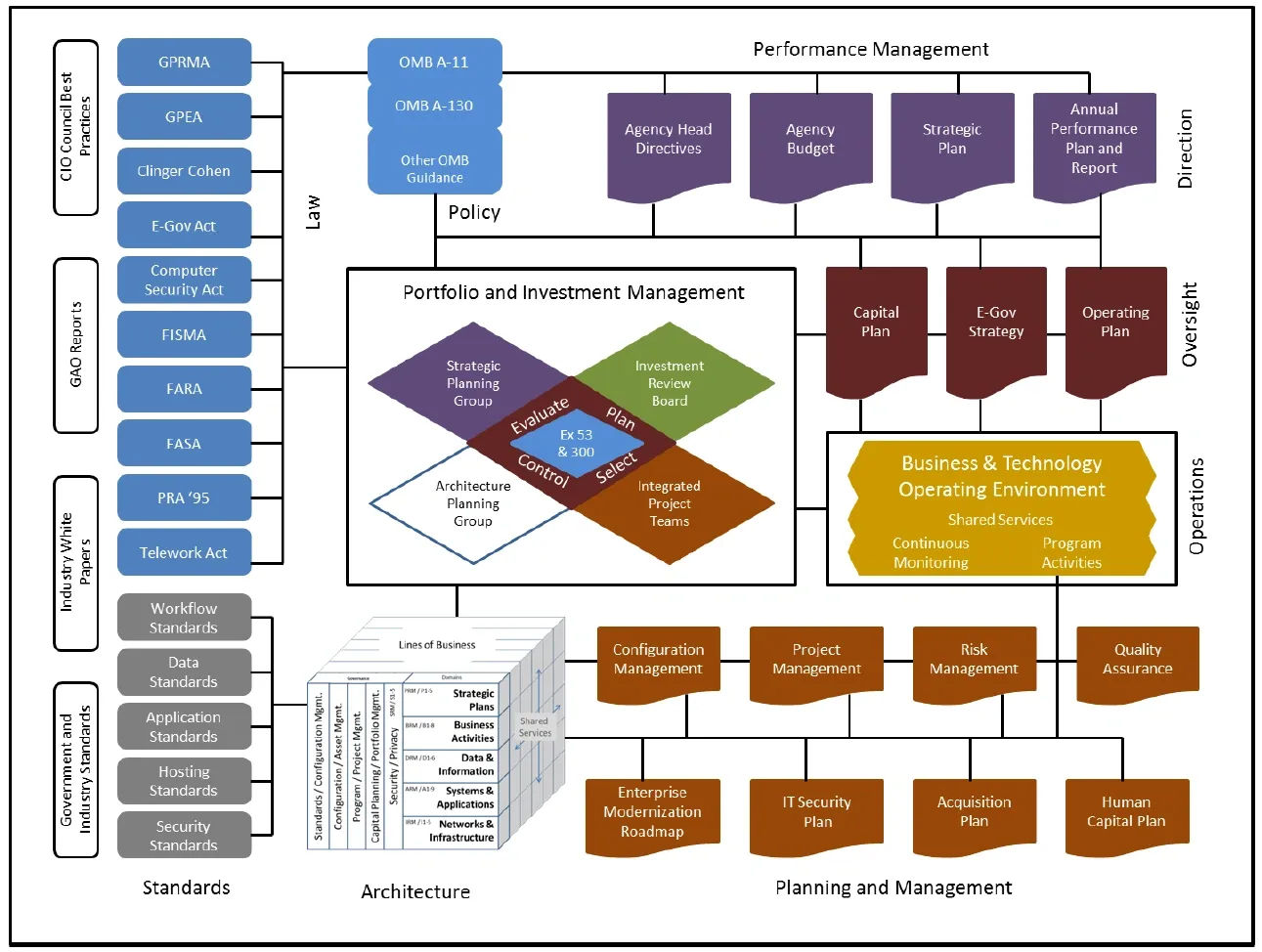
Image Source: The EA Pad
Setting up your AI roles and systems leads to the next key part of ISO 42001 implementation – defining organizational boundaries. The standard needs clear documentation that shows where your AI management system works and which parts of your organization it governs.
Mapping AI Activities Across Departments
Your first step to set AIMS boundaries should identify all departments or teams that develop or use AI in your SaaS organization. This mapping should include:
- Development and engineering teams building AI components
- Data science teams that train and prove models right
- Product teams that add AI functionality
- Operations teams that keep AI systems running
- Support teams that handle AI-related issues
A company-wide view will give a proper distribution of accountability among leadership, developers, operators, and external partners. ISO 42001 lowers the risk of misuse, bias, and harm because decisions don’t rest with technology alone.
Virtual and Physical Locations in Scope
ISO 42001 differs from ISO 27001 as it doesn’t need physical controls in its Annex A, so virtual audits become possible. Your scope statement should still clearly show:
- Office locations where AI development happens
- Cloud environments that host AI systems
- Data centers that process AI workloads
- Remote work environments where applicable
Your documentation of these locations should reflect how they shape your regulatory footprint, since multiple jurisdictions might apply to your AI operations at once.
Stakeholder Expectations and Regulatory Jurisdictions
You need to identify internal and external stakeholders and their needs. These usually include customers, regulators, business partners, investors, and the public. The regulatory map should cover all jurisdictions that apply to your AI operations.
The AI regulatory world changes faster now, with big differences between jurisdictions. The EU AI Act, which should take full effect around June 2026, stands as one of the most detailed frameworks. Many venture-backed SaaS companies face “regulatory fragmentation” that creates compliance work, possible penalties, and reputation risks if not handled well.
ISO 42001 offers a unified approach that helps handle these different regional regulations through one central foundation.
Integrating AI Lifecycle and Risk Management
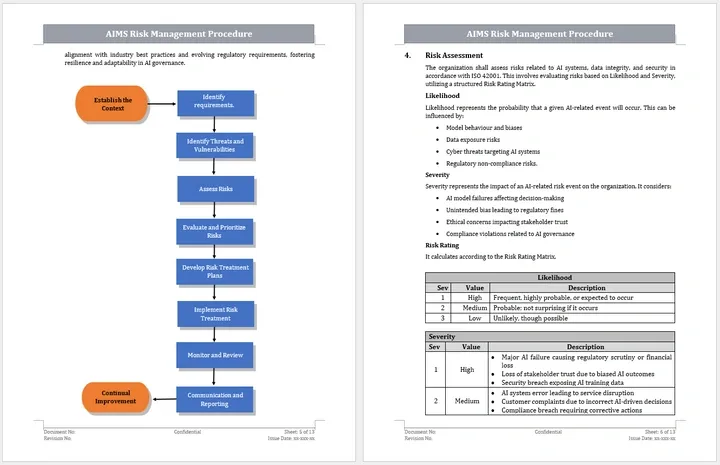
Image Source: GRC Documents
Understanding how AI lifecycle management works with risk assessment processes creates the foundation for ISO 42001 implementation. Organizations need to identify risks proactively and monitor them continuously throughout their AI system’s life to achieve effective governance.
AI Lifecycle Stages per ISO/IEC 22989:2022
Seven critical stages make up the backbone of AI governance according to ISO/IEC 22989:2022: inception (identifying needs and feasibility); design and development (defining architecture and training models); verification and validation (testing against requirements); deployment (releasing into operation); operation and monitoring (logging activity and performance); re-evaluation (assessing continued effectiveness); and retirement (decommissioning and addressing data risks). These stages provide the framework needed to implement controls where risks might emerge.
Clause 6.1 Risk Assessment and Clause 8.2 Controls
Organizations must implement operational controls (Clause 8.2) after identifying AI risks under Clause 6.1. This process requires documented mitigation strategies that cover data governance policies, model validation procedures, and human oversight protocols. Clauses 9 and 10 specify how these controls should be monitored, documented, and improved continuously.
AI Impact Assessments (AIIA) for High-Risk Systems
High-risk AI applications need an Artificial Intelligence Impact Assessment (AIIA). AIIAs differ from standard risk assessments by focusing on societal, ethical, and legal effects. The assessment has seven sections that cover system information, data quality, algorithms details, deployment environment, interested parties, potential benefits/harms, and system failures. Book a Readiness Call to learn if your systems need formal impact assessments.
Mapping Threats Using STRIDE and OWASP for ML
STRIDE framework (Spoofing, Tampering, Repudiation, Information disclosure, Denial of service, Elevation of privilege) helps create effective threat models by identifying security vulnerabilities systematically. Each lifecycle stage lines up with specific threats in ISO 42001—inception stage connects to spoofing risks while deployment links to information disclosure vulnerabilities. OWASP for machine learning adds value by analyzing AI-specific vulnerabilities, adversarial risks, and privacy threats that regular security frameworks might overlook.
Drafting and Finalizing the AIMS Scope Statement
Your AIMS scope documentation should begin after you complete risk assessments and AI lifecycle mapping. The scope statement is the life-blood document that defines which AI systems your management system will handle.
Referencing the Statement of Applicability (SoA)
The Statement of Applicability (SoA) serves as a living document. It records your decisions about which controls you need and which you don’t based on a full risk assessment. Your organization must create a SoA to justify why you included or excluded Annex A controls. This vital document helps organizations stay compliant and promotes a proactive risk management culture. You should Book a Readiness Call before writing your final scope statement to make sure your SoA properly handles all relevant controls.
Arranging Scope with ISO 42001 Annex A Controls
Annex A offers 9 control objectives supported by 38 individual controls. These controls cover:
- AI Policies and Governance (3 controls)
- Internal Organization & Accountability (2 controls)
- Resource Management (5 controls)
- Impact Assessment (4 controls)
- System Lifecycle (9 controls)
- Data Management (5 controls)
- Transparency (4 controls)
- System Use (3 controls)
- Third-Party Relationships (3 controls)
Sample Scope Statement for Venture-Backed SaaS
A well-laid-out scope statement typically has:
“The scope of certification covers the Artificial Intelligence Management System (AIMS) governing [Company]’s role as an AI Service/Product Provider, delivering solutions through the [Product Name] platform. This has deployment, monitoring, and continuous improvement of AI models that provide advanced analytics and decision-support capabilities in sectors of all types. Headquartered in [Location], with remote employees globally, this certification follows ISO 42001 standards based on SoA version [X.X].”
Conclusion
The life-blood of successful ISO 42001 implementation for venture-backed SaaS companies lies in effective scoping. Companies can substantially streamline their certification process and ensure detailed risk management by carefully defining AI roles, systems, and organizational boundaries. Our strategic approach shows how proper scoping cuts documentation needs by 75% and can halve implementation costs compared to traditional methods.
Venture-backed SaaS companies struggle with complex regulations across different jurisdictions. ISO 42001 implementation offers a unified foundation that handles requirements from various regions through a single management framework. This standardized approach creates competitive advantages and builds stakeholder’s trust in AI systems.
Risk assessment and AI lifecycle management form vital components of the AIMS framework. A deep understanding of the seven lifecycle stages in ISO/IEC 22989:2022 helps organizations implement the right controls where vulnerabilities might surface.
Stakeholders now want transparent, ethical AI governance. SaaS providers who arrange their systems with ISO 42001 stand out in the market while avoiding potential regulatory penalties. You should Book a Readiness Call before finalizing your AIMS scope statement to ensure your approach covers all applicable controls and regulatory needs.
The detailed Statement of Applicability guides you through implementing 38 individual controls across nine objectives. This documentation and clear scope definition build a strong foundation for AI governance that grows with your venture-backed SaaS business. ISO 42001 certification proves your steadfast dedication to responsible AI development and deployment—a powerful way to stand out in today’s AI-driven business world.
Key Takeaways
For venture-backed SaaS companies, proper ISO 42001 scoping can dramatically reduce certification complexity while ensuring comprehensive AI governance across diverse regulatory landscapes.
• Define your AI role clearly: Identify whether you’re an AI Provider, Producer, or User—many SaaS companies fulfill multiple roles simultaneously, affecting scope requirements.
• Map organizational boundaries comprehensively: Document all departments using AI, virtual/physical locations, and stakeholder expectations to prevent scope creep and excessive documentation.
• Integrate AI lifecycle with risk management: Apply the seven ISO/IEC 22989:2022 lifecycle stages alongside STRIDE threat modeling to identify vulnerabilities at each critical point.
• Leverage the Statement of Applicability strategically: Use the SoA to justify which of the 38 Annex A controls apply to your specific AI systems and organizational context.
• Strategic scoping reduces costs by 50%: Proper scope definition can cut documentation effort by 75% and implementation costs by half compared to traditional certification approaches.
The key to successful ISO 42001 implementation lies in understanding that effective scoping creates a unified foundation for addressing fragmented global AI regulations while building stakeholder trust and market differentiation.
FAQs
Q1. What is ISO/IEC 42001 and why is it important for AI systems? ISO/IEC 42001 is an international standard that provides a framework for AI governance and regulatory alignment. It helps organizations build trustworthy AI management systems by outlining requirements for risk management, impact assessment, lifecycle management, and third-party oversight.
Q2. How can proper scoping of ISO 42001 benefit venture-backed SaaS companies? Effective scoping can significantly reduce certification complexity and costs. It can cut documentation efforts by up to 75% and potentially lower implementation costs by half compared to traditional methods, while ensuring comprehensive AI governance across diverse regulatory landscapes.
Q3. What are the key roles defined in ISO/IEC 42001 for AI organizations? ISO/IEC 42001 defines three main roles: AI Provider (organizations that provide AI-powered products or services), AI Producer (those that design, develop, and deploy AI systems), and AI User (organizations that use AI products or services). Many SaaS companies may fulfill multiple roles simultaneously.
Q4. How does ISO 42001 address the challenges of a fragmented regulatory landscape? ISO 42001 provides a unified approach that helps address diverse regional regulations through a single, centralized foundation. This standardized approach creates competitive advantages while building stakeholder trust in AI systems across different jurisdictions.
Q5. What are the main components of an AI Impact Assessment (AIIA) under ISO 42001? An AIIA typically contains seven sections: system information, data quality, algorithm details, deployment environment, interested parties, potential benefits and harms, and system failures. It focuses specifically on the societal, ethical, and legal impacts of high-risk AI applications.