
Organizations must prioritize ISO 42001 compliance since generative AI investment will grow 76.4% in 2025. The surge in AI regulations across the globe demands a well-laid-out system to manage AI responsibly and ethically.
ISO 42001 stands out as the first international standard created specifically for AI management systems. Enterprise ML teams can use it to make their AI practices transparent, ethical, and aligned with global requirements. The standard’s importance shows in the numbers – 76% of compliance professionals will adopt ISO 42001 as their AI governance foundation. They recognize how it helps protect against AI-related risks like bias, security vulnerabilities, and adversarial threats.
Organizations that implement ISO 42001 create clear AI accountability and transparency. They also gain an edge as early adopters in the market. The standard offers a systematic framework that cuts down operational and reputational risks while meeting the requirements of complex AI regulations.
This piece provides a practical ISO 42001 compliance checklist. It will help enterprise ML teams prepare for regulatory challenges and opportunities coming in 2026.
Clarifying ISO 42001 Requirements for AI Compliance
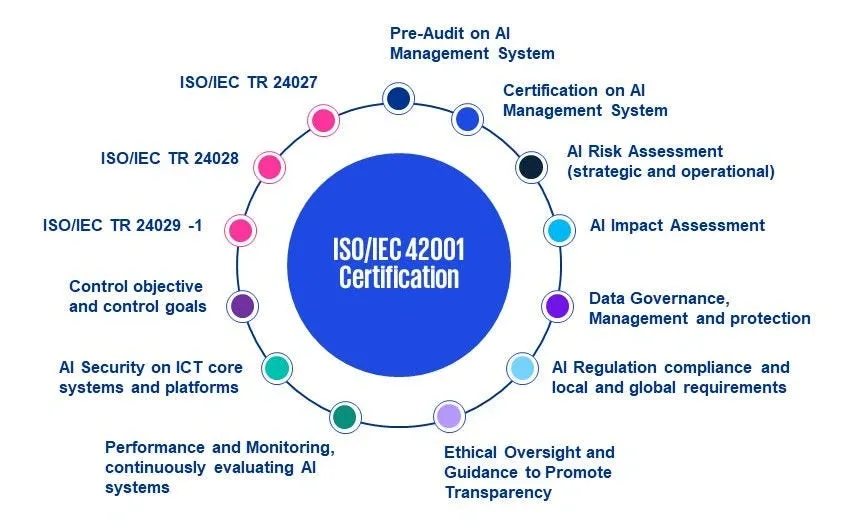
Image Source: KPMG International
The ISO/IEC 42001:2023 standard sets the first worldwide framework built for Artificial Intelligence Management Systems (AIMS). This standard is different from other IT standards because it shows you how to manage AI throughout its lifecycle. Organizations can now develop and use AI in a secure, ethical, and clear way.
Understanding ISO/IEC 42001:2023 Clauses
The standard has ten connected clauses that create a detailed governance framework. The first three clauses give context and definitions that help you get started. The other seven clauses (4-10) list what organizations need to do to get certified:
-
Clause 4: Organizations must know their internal and external setup, set AIMS boundaries, and understand what stakeholders want
-
Clause 5: Shows leadership’s role, AI policy creation, and who does what
-
Clause 6: Looks at risks, effects, and plans for AI goals
-
Clause 7: Covers resources, skills, training, and paperwork
-
Clause 8: Explains how to control AI development and use
-
Clause 9: Requires checking performance and watching progress
-
Clause 10: Focuses on getting better and fixing problems
The standard uses a Plan-Do-Check-Act approach. This helps organizations set up, run, check, and improve their AI governance. They also need to use proper controls from Annex A, which lists suggested ways to handle AI-related risks.
AI-Specific Governance vs Traditional ISMS
ISO 42001 looks like ISO 27001 (Information Security Management Systems), but it handles AI’s unique challenges. Regular security frameworks protect data. AI governance goes beyond that.
AI risk checks must spot bias, ensure fair algorithms, and think about society’s needs. The standard asks organizations to run AI Impact Assessments (AIIAs) for risky projects, just like privacy compliance needs Data Protection Impact Assessments.
The scope of governance reaches further too. Regular ISMS manages information, while AIMS watches over smart systems that can make decisions. ISO 42001 needs controls for explaining AI decisions (Annex A.8) – something regular IT governance doesn’t have.
Teams must work with more stakeholders in AI governance. They need to think about ethics and include different viewpoints to use AI responsibly.
Why ISO 42001 Matters for ML Teams in 2026
ML teams getting ready for 2026’s rules will find ISO 42001 helpful. Deloitte’s State of Generative AI survey shows 35% of people worry most about “mistakes or errors with ground consequences” when adopting AI. ISO 42001 fixes these worries with clear risk management.
Yes, it is true that 87% of executives say they have AI governance frameworks. But only 25% actually use enterprise governance fully. This gap creates a chance for organizations seeking certification.
Getting certified proves an organization knows how to handle AI. Teams go through several steps: setting boundaries, checking risks, reviewing documents, and testing operations. After certification, yearly checks happen with a full review every three years.
ISO 42001 certification helps organizations stand out now and might become the standard measure as rules change. Certified organizations earn trust, cut risks, and protect their reputation.
The standard gives ML teams a solid base to grow AI responsibly without slowing down progress. Teams can create new technology while staying ethical and following rules by building governance into their work.
Checklist Item 1: Define AIMS Scope and Stakeholders
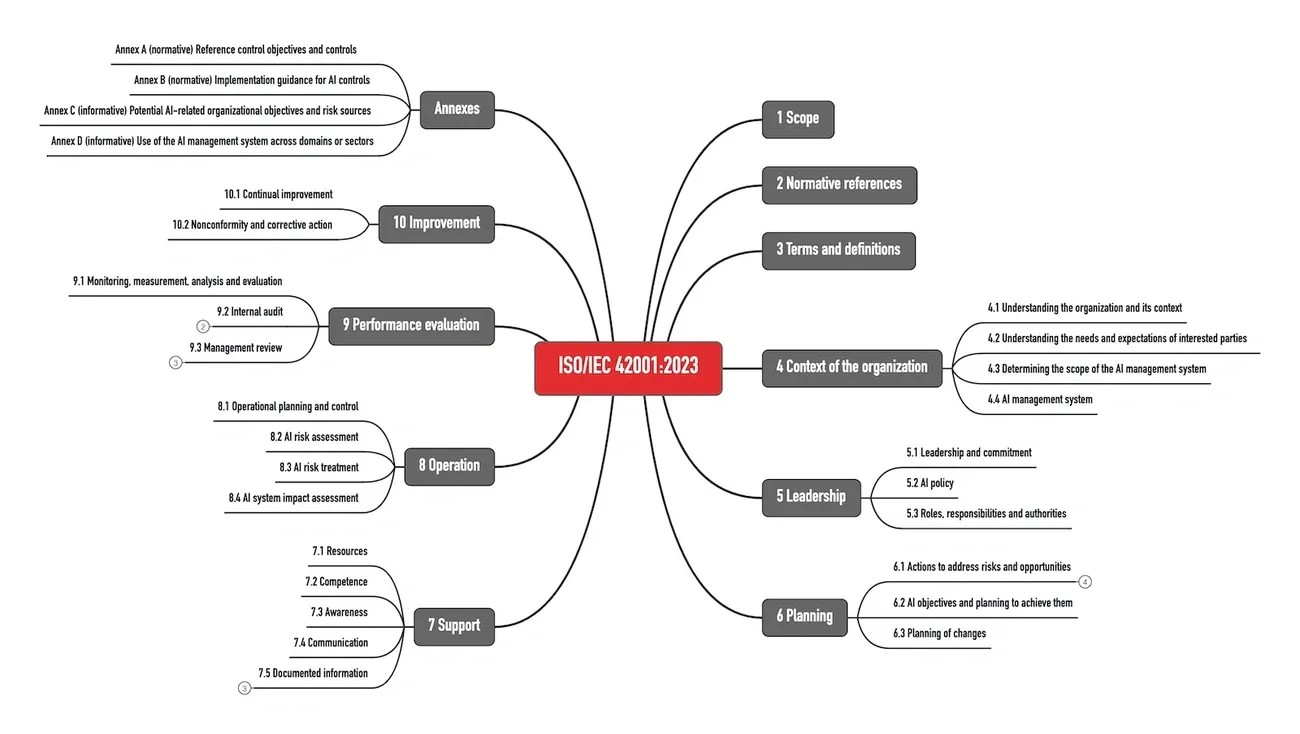
Image Source: Johner Institute
ISO 42001 compliance starts with defining your Artificial Intelligence Management System (AIMS) scope. Organizations must clearly outline which operations, products, services, and processes their AIMS will cover according to Clause 4.3. This original step sets the foundation for AI system governance and oversight responsibilities.
Listing AI Assets and Decision Systems
A detailed inventory of all AI systems in your organization is the first significant task in defining your AIMS scope. This list should have both in-house developed systems and third-party acquisitions. Here’s how to document your AI assets:
-
Know your organization’s role in the AI ecosystem:
-
AI provider: Organizations that supply products or services using AI systems
-
AI producer: Entities that design, develop, test, and deploy AI systems
-
AI user: Organizations that employ AI products or services either directly or through provision to users
-
The next step is to catalog all AI models your organization has developed, acquired, tested, or piloted. Your inventory should list all datasets (training, validation, production) and any third-party data flowing through your systems. Business processes and decision workflows that AI outputs affect need documentation, whatever the human review layers. The strong infrastructure supporting these systems also needs attention.
Identifying Internal and External Stakeholders
ISO 42001 needs a detailed mapping of all parties your AI systems affect or interest. The standard recognizes that stakeholder identification goes beyond traditional boundaries. Your stakeholder analysis should list:
Internal stakeholders:
-
Department teams developing or using AI
-
Executive leadership and investors
-
Cross-functional AI governance committee members
-
Technical teams responsible for implementation
External stakeholders:
-
Regulatory bodies and policymakers
-
Customers and end-users
-
Academic and research institutions
-
Industry partners and suppliers
-
Society and potentially affected communities
Stakeholders have different levels of influence and interest. Document each stakeholder’s role, interests, and potential influence on your AIMS. This information is vital for risk assessment and communication planning throughout your compliance trip.
Documenting Scope Boundaries and Exclusions
ISO 42001 sees scope as “the defense less visible to attackers, but impossible to fool an auditor”. Your scope documentation must be precise—unclear inclusion criteria or poor inventories can derail your entire compliance effort.
Your scope boundaries documentation should list:
-
Geographic boundaries (specific countries, regions, or global operations)
-
Organizational boundaries (departments, functions, physical locations)
-
Technical boundaries (systems, applications, interfaces)
-
Responsibilities for outsourced or third-party AI components
Each AIMS scope exclusion needs clear justification. ISO 42001 takes a different approach by assuming everything that computes, stores, processes, or influences AI outputs should be in scope unless there’s a documented reason against it.
A good scope statement should be clear yet detailed. To cite an instance: “The scope has the development, deployment, and monitoring of AI models used in customer service automation within European operations, including activities conducted by Data Science and Engineering teams”.
Note that scope isn’t just a certification document—it’s the legal and operational boundary that determines which AI systems, data, business units, and outsourced vendors your organization manages. This links scope choices directly to regulatory liability and market trust. This foundation supports all other aspects of your ISO 42001 compliance program.
Checklist Item 2: Assign Roles and Responsibilities
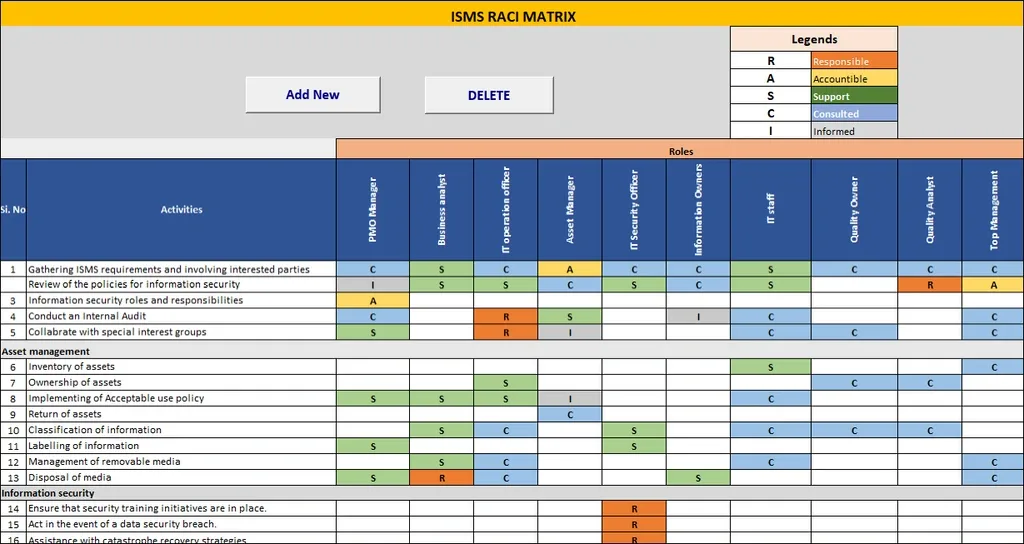
Image Source: ISO Docs
Role clarity is crucial for ISO 42001 compliance. Organizations need clear responsibilities throughout their AI governance structure. This approach ensures accountability and proper oversight of artificial intelligence systems.
Appointing an AIMS Project Lead
The first step toward governance requires a dedicated Artificial Intelligence Management System (AIMS) Lead to oversee implementation. This person coordinates compliance activities and becomes the main contact for ISO 42001 initiatives. Many organizations eventually turn this into a permanent Chief AI Officer (CAIO) role as their AI governance grows.
The AIMS Project Lead handles these key tasks:
-
Running the intake, triage, reviews, and reporting of AI systems
-
Creating and maintaining project plans with defined roles
-
Building RACI matrices (Responsible, Accountable, Consulted, Informed) to avoid duplicate work and reduce delays
-
Managing agency AI use, supporting breakthroughs, and controlling risks
Research shows organizations with strong AIMS leadership deploy AI 40% faster and face 60% fewer compliance issues after deployment compared to fragmented approaches.
Creating a Cross-Functional AI Governance Committee
AI governance needs input from multiple disciplines. A cross-functional committee becomes essential for ISO 42001 compliance. Legal experts, ethicists, compliance officers, privacy specialists, security professionals, researchers, and product managers should all participate.
The most effective structure uses multiple tiers:
-
Executive Committee: C-suite executives provide direction and handle high-risk decisions in monthly meetings
-
Operational Committee: AI product managers, data science leads, legal counsel, risk managers, and ethics officers develop policies and oversee operations in bi-weekly meetings
-
Technical Working Groups: Subject matter experts focus on implementation, testing, and monitoring in weekly meetings
-
Stakeholder Advisory Panel: Community representatives and external experts offer feedback and outside views in quarterly meetings
Committee members have specific roles while smaller groups handle daily reviews. This layered system enables quick, informed decisions and prevents rework during projects.
Defining Executive Accountability
ISO 42001 compliance demands clear executive responsibility for AI outcomes. One expert puts it simply: “When something goes wrong, you need a throat to squeeze”. This direct statement shows why organizations must identify who oversees AI systems and who takes responsibility for unexpected performance.
Executive accountability includes:
-
Determining risk appetite and strategic direction
-
Providing resources for AI governance
-
Supporting AI governance at board level
-
Making sure AI projects match company goals
The committee should create a written charter that spells out structure, roles, and duties. This document helps maintain accountability as AI systems develop.
Key roles organizations should establish:
-
Data stewards who manage data quality and protection
-
Algorithm auditors who check performance and ethical standards
-
Compliance officers who ensure regulatory alignment
This structured approach to governance builds a strong foundation for ISO 42001 compliance. It balances breakthroughs with responsible AI development. Clear roles help everyone understand how they contribute to ethical, transparent, and compliant artificial intelligence systems.
Checklist Item 3: Conduct a Risk-Based Gap Analysis
Image Source: Tech Jacks Solutions
A risk-based gap analysis is the life-blood of ISO 42001 compliance. This assessment shows key differences between your current AI governance practices and what the standard requires, which helps you make targeted improvements.
Mapping Current Controls to ISO 42001 Annex A
Your gap analysis starts with comparing your AI management practices to ISO 42001’s requirements. You should review your policies against the standard’s scope (Requirement 1) to see how it fits your organization’s AI systems. Next, collect data about your AI practices, with focus on data handling (Requirement 7), security (Annex C, C.2.10), ethics (Annex C, C.2.5), and transparency (Annex C, C.2.11).
The quickest way is to check your current state against each requirement in ISO 42001’s structure (Clauses 4–10 and Annex A controls). Look at each control in Annex A and ask: “Do we have this in place? If so, is it working and documented?”
Most organizations find they already meet some requirements through their existing frameworks:
-
Data governance policies might meet some data management requirements
-
IT security controls could match certain AI security controls
-
Privacy protocols might satisfy parts of transparency requirements
You can utilize these overlapping capabilities to add fewer new processes.
Identifying AI-Specific Gaps in Security and Fairness
ISO 42001 tackles unique AI system challenges that regular frameworks don’t deal very well with. Your gap analysis should look for these specific areas:
-
Bias Detection and Mitigation: You need processes to test AI models regularly for biases against protected groups.
-
Explainability and Transparency: The standard requires AI impact assessments (AIIAs) for high-risk cases, like Data Protection Impact Assessments for privacy.
-
Risk Environment Understanding: Document all parts of the risk environment around AI systems before tackling the risks themselves.
-
Accountability Mechanisms: The standard needs clear accountability lines for AI system results and human oversight based on system risk level.
Unlike traditional security frameworks, ISO 42001 needs you to think about broader social effects. Organizations often find gaps in AI-specific areas like prompt injection testing, drift detection capabilities, and model monitoring procedures.
Scoring Risks Based on Likelihood and Impact
After finding gaps, you need to assess and prioritize risks based on their potential risks. A certified AIMS must show processes that measure AI-related risks and their effects on the organization, people, and society.
This means creating a well-laid-out scoring method:
-
Check risk likelihood using historical data and threat intelligence
-
Assess potential effects across multiple areas (financial, reputational, legal, ethical)
-
Use consistent risk criteria that match your organization’s risk appetite
-
Prioritize gaps through a risk-based approach, fixing high-risk issues first
Not all gaps matter equally. Start with high-risk issues (such as missing AI risk assessment procedures) and legal/ethical requirements, then find quick wins to build momentum.
Note that AI risks keep changing. You should use AI-specific risk assessment tools like STRIDE (spoofing, tampering, repudiation, information disclosure, denial of service, and elevation of privilege) or DREAD (damage potential, reproducibility, exploitability, affected users, and discoverability) to keep track of your risk landscape.
Want to find your organization’s AI governance gaps? Book a Readiness Call with our ISO 42001 experts to start your compliance journey.
Checklist Item 4: Implement AI Risk Management Controls
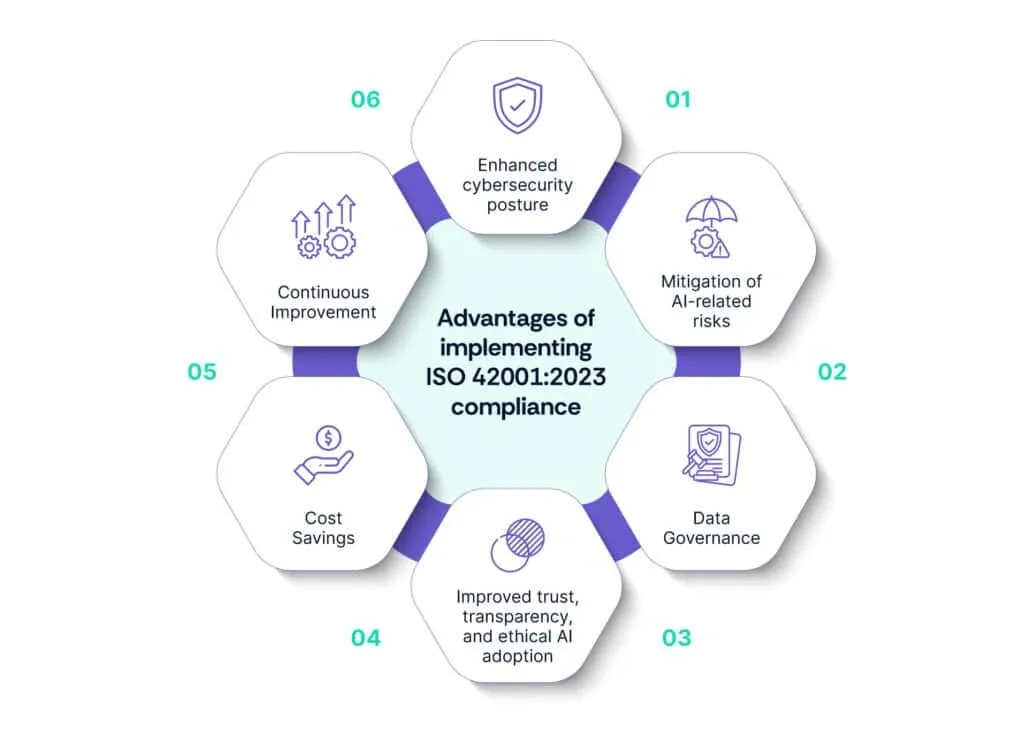
Image Source: Scrut
After identifying gaps in your AI management practices, your next critical task is to put reliable risk management controls in place. ISO 42001 Annex A lists specific controls that organizations need to implement to alleviate AI-specific risks across multiple dimensions.
Bias Detection and Mitigation (Annex A.5)
Bias detection and mitigation controls are the foundation of responsible AI governance. Annex A.5 of ISO 42001 requires a structured approach to review what it all means for AI systems on both individuals and society throughout the system’s lifecycle. The process systematically identifies, analyzes, reviews, and treats effects.
Here’s how to put effective bias detection controls in place:
-
Set up data quality validation processes that document all data sources and check for potential biases
-
Build version control mechanisms for datasets with clear documentation of training data lineage
-
Run regular fairness testing across different demographic groups to spot potential discrimination
Bias mitigation needs to tackle both historical and representation biases. Historical bias surfaces when AI systems trained on past data mirror societal prejudices in datasets, which leads to unfair outcomes. Representation bias happens during data collection and sampling, often through availability bias (picking convenient rather than appropriate datasets) or sampling bias (choosing unrepresentative subsets).
These pre-processing techniques help with implementation:
-
Modify data before model training to hide associations between sensitive variables and outputs
-
Check deployments for potential biases against protected groups
-
Build processes to test AI models regularly for fairness issues
Explainability and Transparency Controls (Annex A.8)
Users trust AI systems more when they understand how outputs are generated. Under Annex A.8, organizations need to determine and distribute essential information about AI systems to users and interested parties. This information has purpose statements, usage instructions, technical limitations, and monitoring capabilities.
Explainability implementation needs several key parts:
-
Documentation that explains model decisions in clear terms
-
Interfaces that show how AI processes data and creates results
-
Processes that track how well model outputs match user expectations
Teams should see explainability as an integral design element rather than an afterthought. Building explainable AI (XAI) techniques into the software delivery lifecycle from the start helps spot potential issues before deployment. This approach helps detect biases or inaccuracies early, which reduces operational risks and builds user confidence.
XAI moves the focus from technical functioning to user understanding. This user-focused approach equips users through greater transparency. Better transparency stimulates adoption, satisfaction, and revenue growth through improved change management.
Adversarial Testing and Model Security (Annex A.10)
Adversarial testing checks AI models by deliberately providing inputs likely to cause problems. This proactive approach tries to “break” applications systematically by feeding data most likely to bring out unsafe responses.
Here’s how to implement adversarial testing effectively:
-
Create test datasets that show different ways users will interact with your AI systems
-
Create and label model outputs to group potential failure modes and harms
-
Set up continuous monitoring for model drift, performance issues, and security vulnerabilities
Organizations must also create detailed incident management procedures as outlined in Annex A.10. This means defining AI-specific incident types, setting up detection processes, analyzing mechanisms, and recording corrective actions.
The best AI security frameworks address unique vulnerabilities like prompt injection (where malicious inputs override system instructions) and model inversion (extracting sensitive training data). AI-specific threats often come from the statistical nature of machine learning rather than typical software bugs.
Regular implementation of these controls creates an integrated defense against AI risks while meeting ISO 42001 requirements. In spite of that, note that technical controls alone can’t fully address AI risks – they must work within a broader governance framework set up in earlier phases of your compliance trip.
Checklist Item 5: Operationalize AIMS Across ML Pipelines
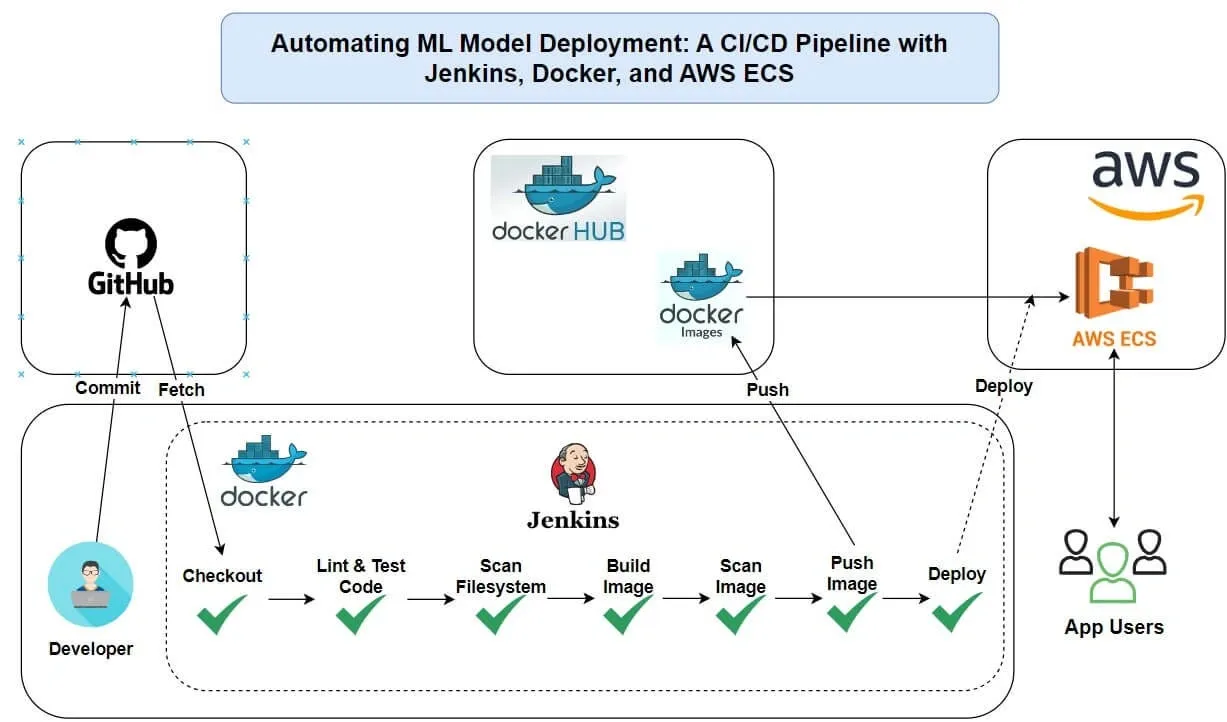
Image Source: Medium
Turning ISO 42001 from theory into reality happens when you embed governance into machine learning workflows. Your Artificial Intelligence Management System (AIMS) works better when you make compliance a natural part of ML pipelines instead of an extra burden.
Embedding Governance in CI/CD Workflows
Leading organizations now build governance directly into development workflows. They use automated controls that make compliance scalable. This works better than old-school governance that kicks in after development ends. Late-stage fixes cost more money and teams often skip them when deadlines loom. Teams create a smooth governance experience that supports innovation by adding AI governance to continuous integration and continuous deployment (CI/CD) pipelines.
Organizations see real benefits when they add specific controls to their pipelines:
-
Dataset validation against privacy rules
-
Performance minimum enforcement
-
Drift detection monitoring
-
Bias detection thresholds
-
Compliance logging to audit
Rapid7 showed how well this works. They connected machine learning with DevOps tools and used GitHub to control versions. Jenkins handled build automation, which created automated compliance throughout their model development lifecycle. These technical controls plus structured governance follow a Plan-Do-Check-Act method. This helps organizations watch AI systems, make them better, and tackle new challenges.
Automating Risk Scoring and Model Audits
Automated risk assessment is the life-blood of ISO 42001 compliance at scale. Amazon SageMaker Clarify lets organizations spot bias in datasets and models automatically. It also helps explain predictions. Teams get instant feedback on how models perform against governance rules.
Risk scoring automation works best with two types of controls:
-
Preventive: Compliance gates stop deployments that fail standards
-
Detective: Systems watch for and alert when models drift or get worse
Good model audits create compliance documents automatically. They connect test results to specific regulatory needs. Automated pipelines detect and alert teams when a model’s accuracy drops below set limits.
Maintaining Versioned Model Registries
A central model registry fixes visibility issues that many AI projects face. SageMaker Model Registry organizes model artifacts into Model Groups with model packages. New model versions get numbered in order, which makes tracking changes easy over time.
Model registry governance needs these elements:
-
Version control for models with their data and code
-
Metadata management including performance metrics
-
Approval workflows with risk assessments
-
Complete audit trails
These registries work like central governance databases. Organizations use them to track AI models throughout their life. Beyond meeting regulations, they help operations by showing how models develop and get used across the company.
Checklist Item 6: Prepare for ISO 42001 Certification Audit

Image Source: AI Teammate for Sales
Organizations need systematic preparation and evidence of their adherence to AI governance standards before they undergo a formal ISO 42001 audit. The certification process demands proper documentation that shows compliance with all requirements.
Pre-Audit Documentation Checklist
Documentation readiness serves as the foundation for a successful audit. Auditors will need to review several key documents that show your AIMS implementation:
-
AIMS Manual/AI Governance Policy outlining your framework and leadership’s steadfast dedication to safe, ethical AI
-
Scope document defining exactly which AI technologies and business units fall under your AIMS
-
Risk assessment and treatment plans formally documenting identified risks linked to controls
-
Management review records showing regular oversight by senior leadership
Your team should store these documents in a well-laid-out, available repository. Auditors quickly recognize this level of organization as a sign of governance maturity.
Internal Audit and Corrective Actions
Teams can get familiar with audit procedures through structured internal audits before starting the official certification process. This proactive approach helps you find documentation gaps early and ensures the core team can explain their responsibilities clearly.
Internal audits help you assess AIMS process implementation and track your progress toward certification readiness. Senior management should review these results to get a full picture of the system’s effectiveness.
The audit records should show a complete cycle: audit → findings → corrections. This evidence highlights your dedication to continuous improvement.
Working with ISO 42001 Certification Bodies
The right certification body becomes your partner for years to come. You need a partner who offers a shared approach and digital tools that support risk management and continuous improvement.
Many organizations benefit from a structured pre-certification assessment before they start formal certification. This readiness check builds confidence and helps avoid surprises during the official audit.
The relationship with auditors continues through surveillance audits even after certification. Book a Readiness Call with experienced consultants to assess your certification readiness and identify any remaining gaps.
Checklist Item 7: Post-Certification Monitoring and Updates
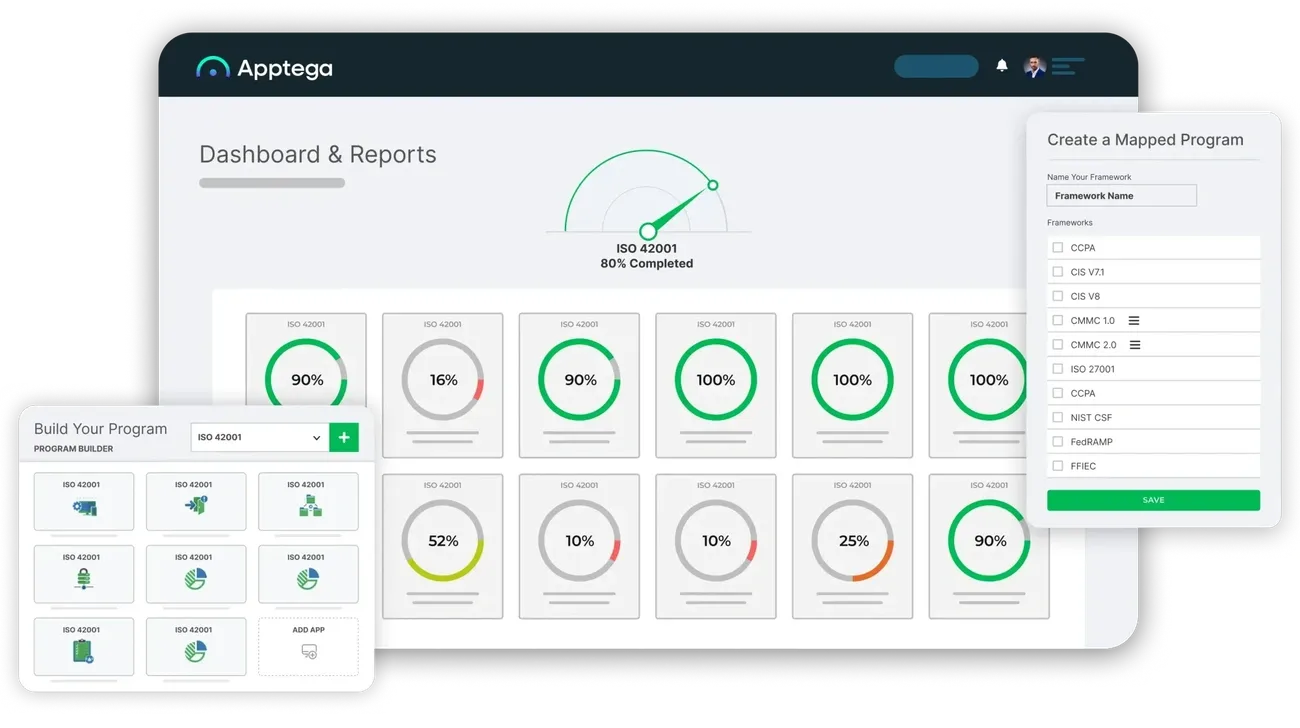
Image Source: Apptega
Getting ISO 42001 certification requires constant alertness after the first achievement. Your organization must monitor systems and adapt AI governance practices to stay compliant as technologies and rules change.
Surveillance Audit Readiness
ISO 42001 certification lasts three years. Organizations must go through yearly surveillance audits to check ongoing compliance and implementation of work to be done. These reviews take less time than the original certification audits. They focus on recent updates, AI risk management, and proof of continuous improvement.
You should prepare for these yearly checks by:
-
Creating meaningful KPIs that line up with governance goals
-
Making sure monitoring activities have clear owners
-
Setting up automated monitoring when possible
-
Doing reviews every quarter or after major events
These documented reviews prove due diligence under AI regulations of all types. They help strengthen your compliance position throughout certification.
Updating AIMS for New AI Use Cases
AIMS must change as AI systems grow and organizations roll out new applications. Many organizations don’t monitor their systems after the first reviews. This becomes a serious issue since AI systems learn, grow, and change behavior over time.
Your governance will work better when you:
-
Watch AI performance to meet changing regulations
-
Create steps for handling incidents and retraining
-
Take action based on performance metrics
You should document why AI systems got approval, identified risks, risk reduction methods, and performance tracking over time. This documentation is a great way to get through audits, resolve disputes, or answer regulatory questions.
Keeping Up With Evolving AI Regulations
After certification, you must stay current with regional AI rules and standards. Organizations should understand data protection laws, privacy regulations, and guidelines for their industry.
The best approach includes:
-
Fixing gaps found during audits systematically
-
Having someone responsible for timely fixes
-
Updating policies to match current operations
-
Making monitoring better based on audit feedback
ISO 42001 works best as a living framework rather than a one-time certification. This helps organizations keep AI governance effective, transparent, and ready for the future in an increasingly regulated digital world.
Conclusion
This piece explores what you need to do for ISO 42001 compliance as AI revolutionizes enterprise operations. The standard gives ML teams a well-laid-out foundation to direct them through complex regulatory requirements while keeping their innovative edge.
Our seven-point checklist helps organizations build strong AI governance that covers everything from scope definition to post-certification monitoring. Teams that follow these steps don’t just get certified. They build stakeholder trust, reduce operational risks, and gain competitive advantage through responsible AI practices.
ISO 42001 compliance is an ongoing process, not a one-time achievement. Your governance framework needs to grow with AI technologies and regulatory requirements. Regular reviews, stakeholder feedback, and continuous improvement are the foundations of keeping your certification.
Enterprise ML teams often feel overwhelmed by implementing complete AI governance frameworks. Many don’t deal very well with finding the right starting point for compliance. A Readiness Call with our ISO 42001 specialists gives you the clear direction to assess your current position and create a tailored path to certification.
Looking toward 2026 and beyond, organizations that adopt structured governance frameworks like ISO 42001 will lead the pack. These pioneers will earn regulatory compliance and public trust needed for successful AI adoption at scale. This proactive approach turns governance from a limitation into a strategic driver of responsible innovation.
Key Takeaways
ISO 42001 compliance is becoming essential for enterprise ML teams as AI investment grows 76.4% in 2025 and regulations accelerate globally. Here are the critical insights for preparing your organization:
• Define clear AIMS scope and stakeholders early – Map all AI assets, decision systems, and affected parties to establish governance boundaries and avoid compliance gaps.
• Implement AI-specific risk controls beyond traditional IT security – Focus on bias detection, explainability requirements, and adversarial testing that address unique AI vulnerabilities.
• Embed governance directly into CI/CD workflows – Automate compliance checks, risk scoring, and model audits to scale governance without hindering innovation.
• Prepare comprehensive documentation for certification audits – Organize AIMS manuals, risk assessments, and management reviews in accessible repositories to demonstrate governance maturity.
• Maintain continuous monitoring post-certification – Conduct annual surveillance audits, update AIMS for new use cases, and align with evolving AI regulations to preserve compliance.
• Establish cross-functional governance committees with clear accountability – Assign dedicated AIMS leads and create multi-tiered committees spanning legal, ethics, compliance, and technical teams.
Organizations that proactively implement ISO 42001 frameworks gain competitive differentiation, build stakeholder trust, and transform governance from a compliance burden into a strategic enabler of responsible AI innovation at scale.
FAQs
Q1. What are the key steps to comply with ISO 42001? To comply with ISO 42001, organizations should start by purchasing the standard and securing top management commitment. Next, select a certification body, identify gaps in current practices, conduct training to build awareness, and establish an artificial intelligence management system. Finally, undergo an independent audit to obtain certification.
Q2. How does ISO 42001 differ from traditional IT governance frameworks? ISO 42001 specifically addresses unique challenges posed by AI systems. Unlike traditional frameworks, it focuses on bias detection, explainability requirements, and AI-specific risk assessments. It also requires broader consideration of societal impacts and stakeholder engagement throughout the AI lifecycle.
Q3. What role does automation play in ISO 42001 compliance? Automation is crucial for scaling ISO 42001 compliance. Organizations should embed governance controls directly into CI/CD workflows, implement automated risk scoring and model audits, and use tools for continuous monitoring of AI system performance. This approach helps maintain compliance without hindering innovation.
Q4. How should organizations prepare for ISO 42001 certification audits? Preparation involves organizing comprehensive documentation, including an AIMS manual, scope documents, risk assessments, and management review records. Conducting internal audits helps identify gaps and familiarize teams with the process. Many organizations also benefit from a pre-certification assessment before the official audit.
Q5. What is required for ongoing ISO 42001 compliance after certification? Post-certification compliance requires annual surveillance audits, continuous monitoring of AI systems, and updates to the AIMS for new use cases. Organizations must stay aligned with evolving AI regulations, implement corrective actions based on performance metrics, and maintain clear documentation of AI system approvals and risk mitigation strategies.