
Artificial intelligence governance represents a major gap for financial institutions today. A staggering 55% of organizations operate without an implemented framework. Banking leaders consider regulatory compliance one of their biggest concerns. The regulatory burden and compliance costs keep growing, which leaves banks struggling to handle more testing and monitoring with existing resources.
Generative AI has altered the map of financial services, from customer service to executive decision-making. Traditional AI risk governance systems can’t manage these new layers of complexity effectively. Organizations must recognize that inadequate oversight can result in regulatory penalties, biased decision-making, and privacy breaches that damage their reputation and cause major financial losses. A reliable artificial intelligence governance framework helps balance innovation with risk management. Artificial intelligence governance professionals serve a vital role to ensure AI in corporate governance matches strategic objectives. A complete artificial intelligence governance policy automates compliance monitoring of transactions and activities.
This piece explores how banking institutions can create effective AI governance structures that protect their organizations and enable innovation in an increasingly complex regulatory world.
Establishing an AI Governance Foundation in Banking
Banks just need strong organizational structures to support AI governance that works. AI technologies need more than technical expertise. They need well-designed oversight, clear professional roles, and specialized knowledge centers.
Creating Cross-Functional AI Governance Committees
Cross-functional AI governance committees are the life-blood of effective oversight. These committees unite stakeholders from various backgrounds to give complete supervision of AI initiatives. A recent survey shows only 32% of financial services firms have AI committees or governance groups. This highlights a major governance gap in the industry.
The Bank of England offers a good model with its AI governance committee. The Chief Data Officer and Chief Information Officer co-chair this committee. They develop the bank’s AI governance framework, spot potential risks, and create AI implementation policies.
These committees work best with representatives from:
- Risk management and compliance
- Information technology
- Legal and ethics
- Business units
- Data privacy and security
- Research and development
- Product management
The core team’s accountability with clear C-Suite ownership creates proper escalation paths for decisions and concerns. This approach stops governance silos and arranges AI initiatives with strategic goals.
Defining Roles for AI Governance Professionals
Clear roles build the foundation of any successful AI governance framework. Leading banks now appoint dedicated Responsible AI (RAI) leaders alongside existing Governance, Risk, and Compliance teams. These experts embed specialized AI oversight throughout the organization.
AI governance professional roles change based on staff types. The Bank of England points out that managers have different duties than non-managers. Technical staff face different expectations than non-technical personnel. Organizations must document these distinct responsibilities for smooth operations.
Board-level accountability matters equally, with human operators keeping final responsibility for AI decisions. This applies to all AI technologies, whether built in-house or bought from others. It’s worth mentioning that despite widespread interest in AI across finance, 92% of firms lack policies for AI use by third parties.
Setting Up AI Centers of Excellence (CoE)
An AI Center of Excellence acts as the hub for strategy, governance, and implementation. It arranges AI projects with institutional goals. These units standardize model development, testing, and deployment while maintaining consistency across departments.
Effective CoEs follow a five-phase framework:
- Assess and classify proposed changes
- Break down and recommend solutions
- Review and confirm opportunities
- Prioritize initiatives based on value and complexity
- Build, implement, and maintain AI solutions
Banks should think over a federated approach to CoE implementation. This enables knowledge sharing and standardization while cutting duplicate work. Such a balanced approach gives divisional flexibility with centralized control—significant for managing banking’s unique regulatory challenges.
The CoE structure works best with product and project managers who have strong connections in business and technical areas. Team composition adapts to support specific departments. This mix of expertise keeps AI initiatives practical, ethical, and in line with business goals.
Designing an Artificial Intelligence Governance Framework
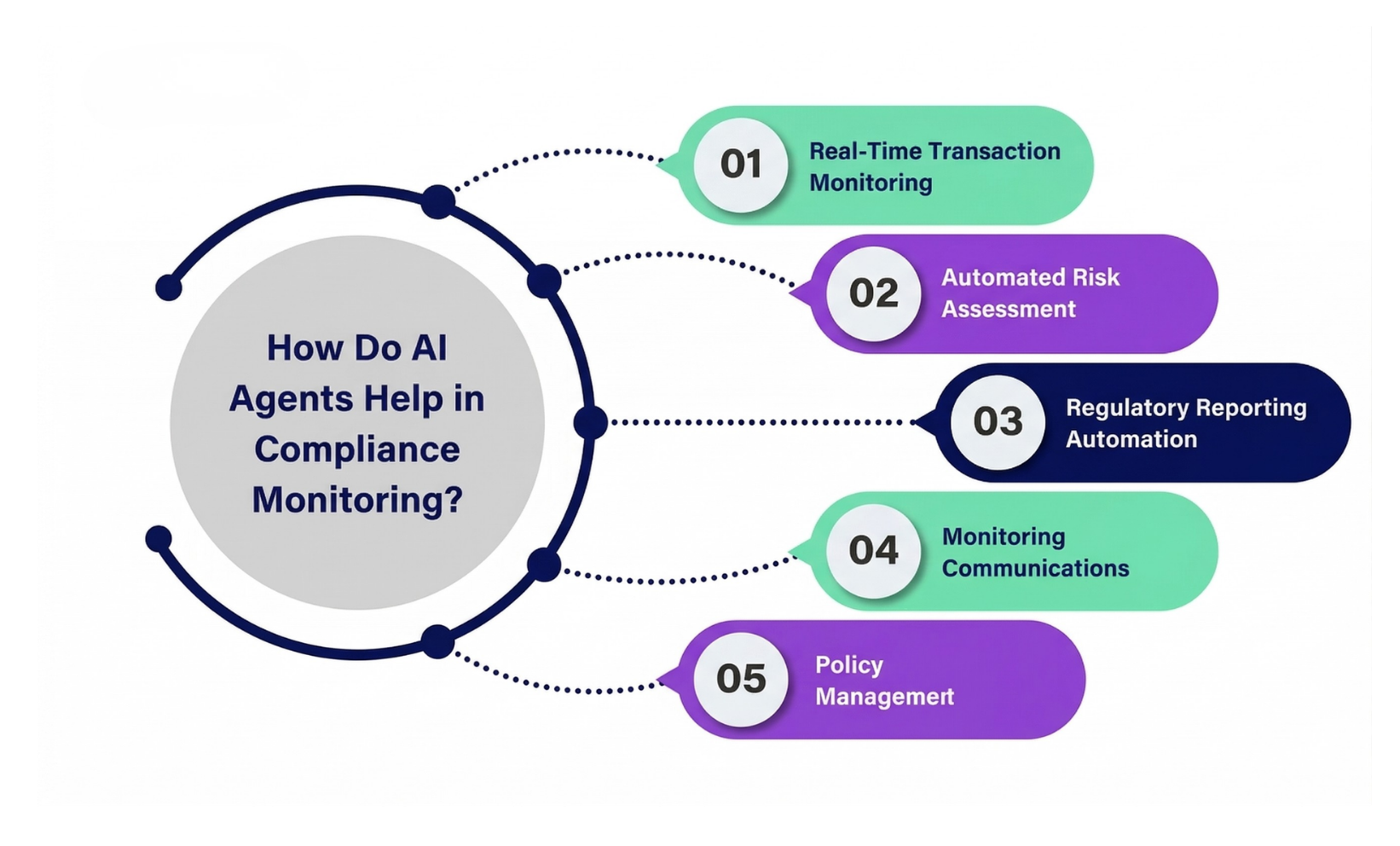
Image Source: Auxiliobits
Banks need well-designed policies, proper organizational models, and compliance with global standards to build an effective artificial intelligence governance framework. They must create structured ways to manage risks while accepting new ideas as regulatory expectations around AI keep changing.
Policy Development for Data Use and Model Validation
Detailed policies are the foundations of effective AI governance in banking. These policies should specify allowed AI tools, set clear usage rules, and add ethical safeguards to reduce vulnerabilities. Good data governance sits at the heart of these policies because data quality directly affects AI results and performance.
High-quality data policies should address:
- Bias mitigation through diverse review teams
- Security protocols to prevent unauthorized access
- Privacy considerations that match existing regulations
- Clear authorization procedures for data usage
Model validation policies need special focus. They help with regulatory compliance and ensure customer fairness, better business results, and lower risks. Financial institutions that use AI for lending decisions must make their decision-making transparent with explainability tools and check for demographic biases through fairness audits.
You should talk to governance experts who know the financial services’ regulatory world when you check if your organization is ready to develop these policies. Book a Readiness Call to check your current framework and find policy gaps.
Choosing Between Centralized vs Federated Governance Models
Your AI governance framework’s organizational structure will affect how well it works. Three main models exist, each with its own benefits:
Centralized Governance puts all AI oversight under one authority, usually at the executive level. This approach gives uniform compliance and clear accountability but might slow things down and reduce flexibility. Small institutions or those with heavy regulation often do better with this approach.
Federated Governance balances central control with local freedom. A central group sets main policies while business units handle implementation based on their needs. This model scales better and moves faster—key features for large financial institutions working across multiple regions.
Hybrid Governance mixes both approaches and works best for medium-sized institutions. Research shows that “many asset managers find that a hybrid model strikes the right balance combining the control and consistency of a centralized approach with the adaptability of a federated one”.
Your choice should match your organization’s size, complexity, and risk profile. Banks handle sensitive financial data in many departments, so a federated or hybrid model usually gives the best balance of standardization and flexibility.
Aligning with Global Standards: EU AI Act, NIST AI RMF
Global standards help develop strong governance. The EU AI Act, which started in August 2024, is one of the most important AI regulations yet. It affects any company offering AI services to EU citizens.
Banks should know that AI credit scoring systems are labeled “high-risk” because they might discriminate. These systems must meet strict requirements:
- Robust accuracy standards
- Strong risk management frameworks
- Human oversight mechanisms
- Proper documentation of decisions
The NIST AI Risk Management Framework (AI RMF), released on January 26, 2023, offers a voluntary but detailed approach to managing AI risks. This framework uses four connected functions—Govern, Map, Measure, and Manage—to improve AI trustworthiness throughout its lifecycle.
Good artificial intelligence governance frameworks balance several needs: regulatory compliance, operational flexibility, and ethical considerations. Banks can build frameworks that protect against risks and support innovation in this fast-changing field by creating thoughtful policies, picking the right governance models, and following global standards.
Implementing Controls for AI Risk Management
Banking institutions need reliable control mechanisms to manage AI risks effectively. A layered control approach helps institutions balance breakthroughs with regulatory compliance and proper AI system oversight.
Business Controls: Central Oversight and Flexibility
The size, risk profile, and operational complexity of financial institutions determine their risk-based policies and procedures. These policies should blend with broader governance frameworks to establish clear accountability lines. Cross-functional teams with legal and ethics professionals play a key role to ensure detailed risk assessment. The board’s accountability must extend to all AI technologies developed in-house or acquired from third parties.
Procedural Controls: Updating MRM Standards
Model Risk Management (MRM) frameworks adapt to meet AI’s unique challenges. Banking institutions should create policies that cover the full model lifecycle—from identification and inventory to risk ratings and governance requirements. This approach revolutionizes governance from periodic validation to ongoing oversight. Each AI model needs thorough pre-implementation testing, and teams must document the assessed results comprehensively.
Manual Controls: Redaction and Human Review
Human oversight plays a vital role throughout AI deployment. The “human-in-the-loop” approach keeps processing accurate and compliant with agency-specific requirements. Banking institutions must keep human oversight in decision loops, especially when dealing with high-impact or sensitive financial decisions. Human operators retain final responsibility for AI decisions. Even accurate decisions can become liabilities without proper explanation.
Automated Controls: Third-Party Tools and Self-Checks
AI makes monitoring and testing of internal controls continuous, which improves accuracy and response time compared to periodic manual reviews. Organizations should explore tools that analyze DNS traffic and web data to spot potential AI use by vendors. Effective monitoring systems detect model drift, data drift, and unexpected anomalies automatically. These solutions flag signs of ineffective controls, including inadequate monitoring, weak access controls, and limited oversight.
Successful AI governance in banking needs automated efficiency and human judgment to work together—protecting stakeholders while welcoming breakthroughs.
Ensuring Compliance and Regulatory Alignment
“AI tools are useful in creating and testing Compliance Management System (CMS) programs because they can quickly match the most recent guidance provided by regulators to the bank’s CMS plan and monitoring routines and ensure they align with any new or updated regulations.” — Leslie Watson-Stracener, Managing Director and Regulatory Compliance Capability Leader, Grant Thornton Advisors LLC
Banks now face more regulatory oversight as AI changes how they communicate with clients and make investment choices. These organizations must do more than just add controls – they need clear methods to keep their AI systems following new rules.
Mapping AI Systems to Regulatory Requirements
Banks must arrange their AI systems to match complex regulations. We mapped which rules apply to specific AI tools based on their risk levels. The EU AI Act, to cite an instance, ranks AI applications by risk – credit scoring and fraud detection systems rank as “high-risk” with strict rules.
This risk-based method asks banks to:
- Match each AI system with local and international standards like GDPR, PSD2, and other banking rules
- Find common ground between different rules to make compliance easier
- Pick compliance leaders who watch over these matching efforts
The EU AI Act brings strict requirements, but current AI regulations in banking already focus on being open, responsible, and protecting data.
Conducting Data Protection Impact Assessments (DPIAs)
DPIAs help find and reduce risks from AI systems. The European Data Protection Board states that high-risk processing needs DPIAs for scoring activities, automated choices with major effects, and handling sensitive financial data.
Banks should run DPIAs when they use AI systems that handle personal data, especially before launch. These checks must look at four key parts: what the processing does, why it’s needed, what risks people face, and how to reduce those risks.
Maintaining Documentation for AI-Driven Decisions
Good records are the foundations of regulatory compliance for AI systems. Banks must explain and support AI-driven choices to regulators. This makes sure processes stay clear and checkable.
Strong documentation should have:
- Full records of model development and training
- Testing and launch steps
- Regular performance standards and monitoring results
- Simple explanations of how AI models decide things
Banks using AI must keep audit-ready records and AI systems that explain themselves. Regulators just need transparency in all customer activities. These records help regular checks, optimize improvements, and give stakeholders a clear picture of AI’s strengths and limits.
Monitoring, Auditing, and Continuous Improvement
Successful AI governance runs on constant watchfulness. AI models evolve and data changes, so even the best-designed frameworks become less effective without reliable monitoring systems.
Real-Time Monitoring of AI Model Behavior
Real-time analysis processes transaction data instantly to act quickly against potential fraud or compliance violations. Banks must set up systems that evaluate transaction patterns right away and trigger alerts when they spot unusual behavior. Today’s AI monitoring tools track several key metrics:
- Explanation stability (consistency of explanations for similar inputs)
- Explanation coverage (percentage of predictions with clear documentation)
- Bias indicators (warnings flagging potential discrimination)
- Stakeholder confidence index (trust levels across departments)
Regular Audits and Transparency Reports
Regular assessments play a crucial role beyond daily monitoring. Audit trails are the foundations of compliance and help regulators trace activities. Budget-friendly AI governance frameworks need complete records of training data, testing processes, unlabeled datasets, and version controls. Transparency reports should document both the model’s performance and its limits while proving it right that outputs line up with the organization’s values.
Stakeholder Feedback Loops for Governance Updates
Organizations learn best through steady feedback. Teams should create ways for stakeholders to flag potential risks. This helps keep governance current as technology rapidly changes. Banking applications benefit greatly when customer and employee responses improve model accuracy. Teams first focus on proving sensitive outputs right, then move toward automated processes once systems show they’re reliable.
AI technology advances rapidly, so yearly reviews of governance frameworks help them stay relevant as the field changes.
Conclusion
AI governance is the life-blood of financial institutions as they navigate complex regulatory compliance. In this piece, we got into how banks must build frameworks that balance innovation with risk management. Cross-functional committees, defined professional roles, and specialized Centers of Excellence create the foundation for effective oversight. Clear policy development, governance models, and alignment with global standards like the EU AI Act help banks manage AI risks in a systematic way.
Layered controls from business oversight to automated monitoring tools provide reliable infrastructure that maintains compliance and encourages innovation. Banks struggling with these frameworks should reach out to governance experts for a Book a Readiness Call. This helps assess their capabilities and spots areas for improvement. Financial institutions can then shift from periodic validation to continuous oversight through up-to-the-minute monitoring and regular audits.
Banking’s future depends on artificial intelligence. Success depends on governance structures that grow with technological capabilities. Stakeholder feedback must shape governance updates to keep frameworks relevant during rapid change. Banks that invest in reliable AI governance today position themselves well beyond just regulatory compliance. They build sustainable innovation that keeps customer trust. AI governance ended up serving as both shield and catalyst—it protects institutions from risks while enabling AI’s transformative benefits in financial services.
Key Takeaways
Banking institutions need comprehensive AI governance frameworks to balance innovation with regulatory compliance while managing increasing complexity and risk.
• Establish cross-functional governance committees with representatives from risk, IT, legal, and business units to ensure comprehensive AI oversight and accountability.
• Implement layered control mechanisms including business policies, updated MRM standards, human oversight, and automated monitoring for effective risk management.
• Align with global standards like the EU AI Act and NIST AI RMF while conducting regular DPIAs and maintaining audit-ready documentation.
• Deploy real-time monitoring systems to track model behavior, bias indicators, and performance metrics for continuous compliance validation.
• Create stakeholder feedback loops and conduct regular audits to ensure governance frameworks evolve with technological advances and regulatory changes.
With 55% of organizations still lacking implemented AI governance frameworks, banks that invest in robust oversight structures today position themselves for both regulatory compliance and sustainable innovation. The key is transforming from periodic validation to continuous oversight while maintaining human accountability in AI-driven decisions.
FAQs
Q1. How does AI enhance banking compliance? AI automates compliance monitoring, eliminates human error in auditing, and ensures banking interactions adhere to regulations. It provides a scalable solution to manage the growing regulatory burden while safeguarding customer trust.
Q2. What role does AI governance play in ensuring compliance? AI governance establishes robust control structures, including policies and frameworks, to address compliance challenges. It sets up mechanisms for continuous monitoring and evaluation of AI systems, ensuring they align with ethical norms and legal regulations.
Q3. What are the key components of an effective AI governance framework in banking? An effective AI governance framework in banking typically includes cross-functional committees, clearly defined roles for AI professionals, Centers of Excellence, comprehensive policies, and alignment with global standards like the EU AI Act and NIST AI RMF.
Q4. How can banks implement controls for AI risk management? Banks can implement a layered approach to controls, including business oversight, updated Model Risk Management standards, human review processes, and automated monitoring tools. This helps balance innovation with regulatory compliance while maintaining proper oversight of AI systems.
Q5. Why is continuous monitoring important in AI governance for banking? Continuous monitoring is crucial because it allows for real-time analysis of AI model behavior, enabling quick detection of potential issues like fraud or compliance violations. It helps maintain the effectiveness of governance frameworks as models evolve and data changes over time.