
FedRAMP 20x is pushing a modernization effort that aims to make federal cloud security authorization faster, more scalable, and more automation-friendly, without losing the rigor agencies rely on.
Based on the latest FedRAMP 20x CWG (Community Working Group) meeting notes, the most important theme for 2026 is this: the direction is clear, but specific timelines are not final. The CWG explicitly flagged that phase timelines are notional and can shift due to approvals, shutdowns, or other unforeseen events. That means agencies should prepare for change by building internal capability now: machine-readable artifacts, stronger continuous monitoring practices, and faster decision workflows.
This piece explores what the FedRAMP 20x initiative means for federal organizations. We’ll look at the significant developments expected in 2026 and help your agency prepare for what’s ahead.
Understanding FedRAMP 20x and Its 2026 Vision
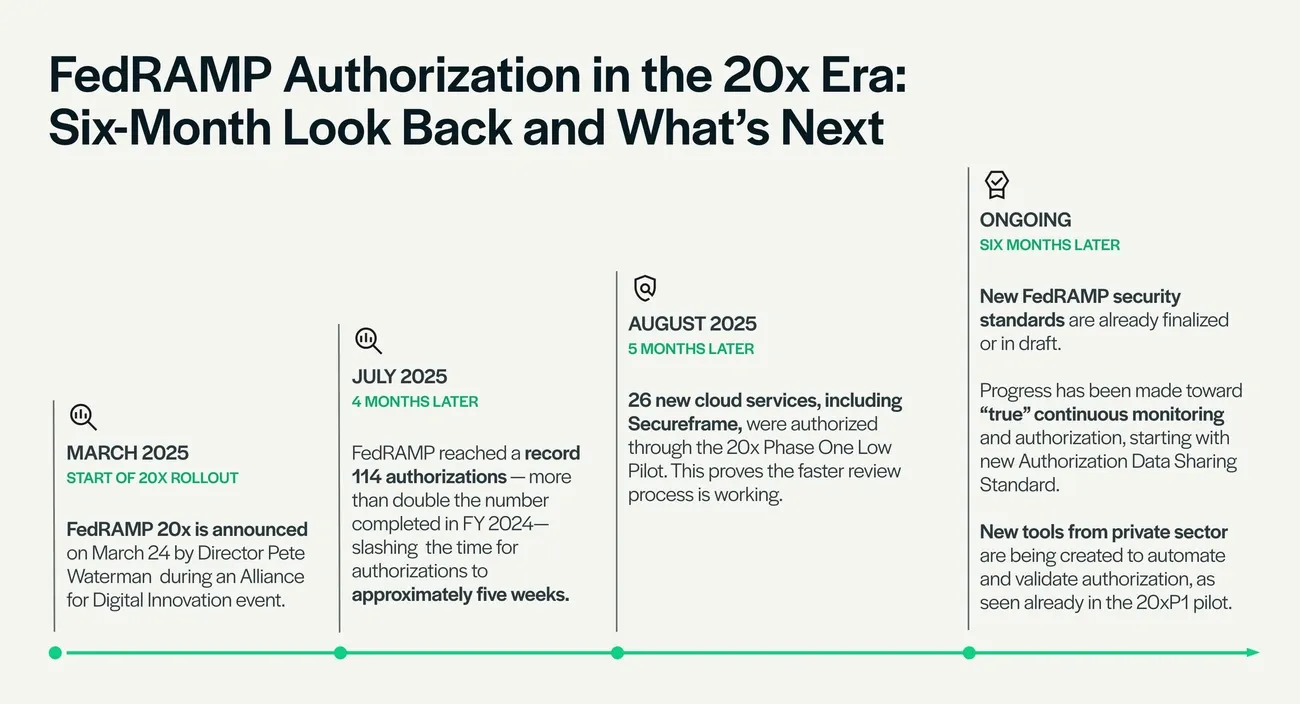
Image Source: Secureframe
“FedRAMP 20x will focus on innovating alternative approaches to make automated authorization simpler, easier, and cheaper while continuously improving security.” — General Services Administration (GSA), U.S. Federal Government Agency overseeing FedRAMP program
FedRAMP sets a standardized approach for assessing and authorizing cloud services used by federal agencies. FedRAMP 20x is the program’s modernization track focused on reducing friction in authorization and improving clarity between FedRAMP processes and agency-specific authorization decisions.
A recurring point in the CWG meeting was the need to reduce confusion between FedRAMP authorization and agency authorizations, and to make the overall system easier to operate at scale through better documentation, better artifacts, and more automation-ready approaches.
What is FedRAMP 20x and why is matters
FedRAMP 20x matters because agencies are operating in cloud-native environments where security posture changes continuously, but traditional authorization approaches can still feel document-heavy and point-in-time.
In the CWG meeting, FedRAMP leaders emphasized modernization across multiple fronts: clearer guidance, more automation, and updated ways of publishing and consuming documentation. Agencies should expect continued evolution in how artifacts are packaged, validated, and reviewed as 20x develops.
FedRAMP 20x vs traditional FedRAMP process
The biggest difference agencies should expect is how evidence is represented and consumed.
Traditional approaches often rely on manual review workflows and static documentation. In contrast, the CWG discussion leaned heavily into:
- Machine-readable packages as a core direction (with evolving expectations)
- Clearer alignment between “point-in-time certification” and “ongoing validation”
- More accessible documentation (including changes in how documents are published and linked)
Importantly, the CWG discussion suggested the program wants to modernize without locking the ecosystem into a single tooling path forever.
Overview of the FedRAMP 20x pilot outcomes
The meeting notes indicate that Phase One has been completed and that Phase Two is active, with ongoing work and updates continuing through the CWG channel.
One specific workstream discussed was AI prioritization, where the meeting referenced three services in the prioritization route: Perplexity, OpenAI, and Gemini, with anticipated authorizations by early February after awards (per the meeting discussion).
The Role of CWG in Shaping FedRAMP 20x
The CWG is one of the clearest signals agencies can watch to understand what’s changing, what’s still being debated, and what’s likely coming next.
What is the FedRAMP 20x CWG?
The CWG is a forum where FedRAMP shares updates, releases requests for comment (RFCs), and captures questions and feedback from stakeholders. The meeting notes emphasized transparency improvements, including a live Q&A feature and continued publication of materials.
A key practical takeaway for agencies: CWG participation is not just informational. It’s one of the earliest ways to spot shifts in expectations before they hit “final guidance.”
Key agency participants in the CWG
Instead of treating CWG as a closed working group with a fixed list of agency leads, the meeting notes point to it as an engagement mechanism that actively welcomes feedback.
For agencies, the actionable implication is: assign owners to track CWG updates, monitor RFCs, and consolidate internal feedback so your team can respond consistently when commenting or adjusting internal plans.
Other major agency players include:
- Department of Homeland Security (DHS) – Adds expertise about threat intelligence and continuous monitoring needs
- Department of Defense (DoD)/ Department of War (DoW) – Shows how to line up FedRAMP 20x with Defense security frameworks
- Department of Justice (DOJ) – Explains compliance needs and legal frameworks
- National Institute of Standards and Technology (NIST) – Makes sure everything matches current cybersecurity standards
These agencies often put their senior security officials in CWG leadership roles. This helps spread changes across federal agencies quickly. Their involvement creates natural champions for FedRAMP 20x within their organizations.
How CWG feedback influenced the 20x roadmap
The meeting makes this point very clear through process details:
- FedRAMP released six RFCs at once and encouraged participants to review them collectively before forming hard opinions.
- The team noted they may release future materials all at once or in themed chunks, based on public feedback and reactions.
- FedRAMP also emphasized the importance of public comments and engagement as updates continue.
In other words, CWG feedback isn’t cosmetic. It influences packaging, release timing, and prioritization. .
FedRAMP 20x Phase Two: What to Expect in 2026
Phase Two is active, and agencies should expect ongoing refinements and clarifications as RFC feedback is processed and implementation details mature.
Timeline and milestones for Phase Two
FedRAMP 20x Phase Two implementation follows key milestones:
- Q1 2026: Full deployment of machine-readable Security Assessment Plans (SAPs) across all participating agencies
- Q2 2026: Automated control validation systems will cut manual review needs by about 60%
- Q3 2026: Standardized APIs roll out for security status sharing between agencies
- Q4 2026: Move to continuous authorization monitoring framework completes
Each agency must complete technical readiness assessments before Q1 ends. This ensures their systems work with new automated frameworks. The groundwork sets up success for later implementation phases.
However, based on the meeting discussion, agencies should expect movement toward:
- Clearer differentiation between ongoing validation and point-in-time certification
- Evolving requirements for how cloud service providers supply evidence and how agencies consume it
- Better cost visibility signals, including interest in understanding assessment cost drivers (raised in the meeting as an area needing more insight)
The theme is less about “one new form” and more about “a new operating model.”
Expected changes in authorization workflows
Based on the meeting discussion, agencies should expect movement toward:
- Clearer differentiation between ongoing validation and point-in-time certification
- Evolving requirements for how cloud service providers supply evidence and how agencies consume it
- Better cost visibility signals, including interest in understanding assessment cost drivers (raised in the meeting as an area needing more insight)
The theme is less about “one new form” and more about “a new operating model.”
The new process eliminates periodic reauthorization cycles. Continuous monitoring takes over from point-in-time assessments. Security teams now maintain constant awareness of compliance status.
Integration of automation and machine-readable artifacts
MThis is the most consistent thread across the meeting.
The CWG discussion included questions about whether FedRAMP will require machine-readable reports, and the response signaled openness while also emphasizing that the ecosystem should not be locked into a single format forever. OSCAL is part of the conversation, but the meeting also referenced the need for industry demand to support other machine-readable formats over time.
The meeting also discussed changes to the machine-readable documentation on GitHub and broader shifts in how documentation is published and accessed, including movement away from PDF-first documentation.
“We are relying on industry… creativity… So dream big.” — CWG meeting note (FedRAMP team) on secure configuration delivery approaches.
.
How Federal Agencies Can Prepare for FedRAMP 20x
Agencies that do well in 2026 will treat FedRAMP 20x as both a security modernization and an operating model shift.
Getting internal processes ready for 20x requirements
Start by tightening the internal mechanics that get stressed during any authorization transition:
- Decision workflow speed: reduce the time it takes to review evidence, escalate questions, and approve changes
- Ownership clarity: define who owns documentation intake, validation, monitoring, and exception handling
- Evidence readiness: prepare to work with machine-readable artifacts alongside narrative documentation, especially as publication formats evolve
Also, align stakeholders early: security, procurement, IT, and mission owners will all feel the transition differently.
You can Book a Readiness Call with FedRAMP advisors who will give you specific guidance that matches your agency’s needs.
Training and upskilling compliance teams
Teams need new skills as we move to automated validation. Instead of training only on a single standard or format, focus on capability:
- Understanding machine-readable security artifacts (including how they’re versioned, validated, and mapped)
- Operating in documentation ecosystems that increasingly resemble product documentation (web-first, linked, updated frequently)
- Building comfort with continuous monitoring and ongoing validation concepts, not just audit events
If your team still plans around “the authorization moment,” 20x will feel disruptive. If your team plans around “always-on posture,” 20x will feel like acceleration.
Taking part in CWG and pilot programs
The quickest way to prepare involves direct participation in the Community Working Group or related pilot programs. Even if your agency is not in a pilot track, you can benefit directly from CWG participation:
- Track CWG meeting updates and shared slides/materials
- Review RFCs early and coordinate internal feedback
- Ask questions through public engagement channels to reduce ambiguity before guidance hardens
The agencies that participate thoughtfully will have fewer surprises and more influence.
Modernization and Long-Term Impact on Cloud Security
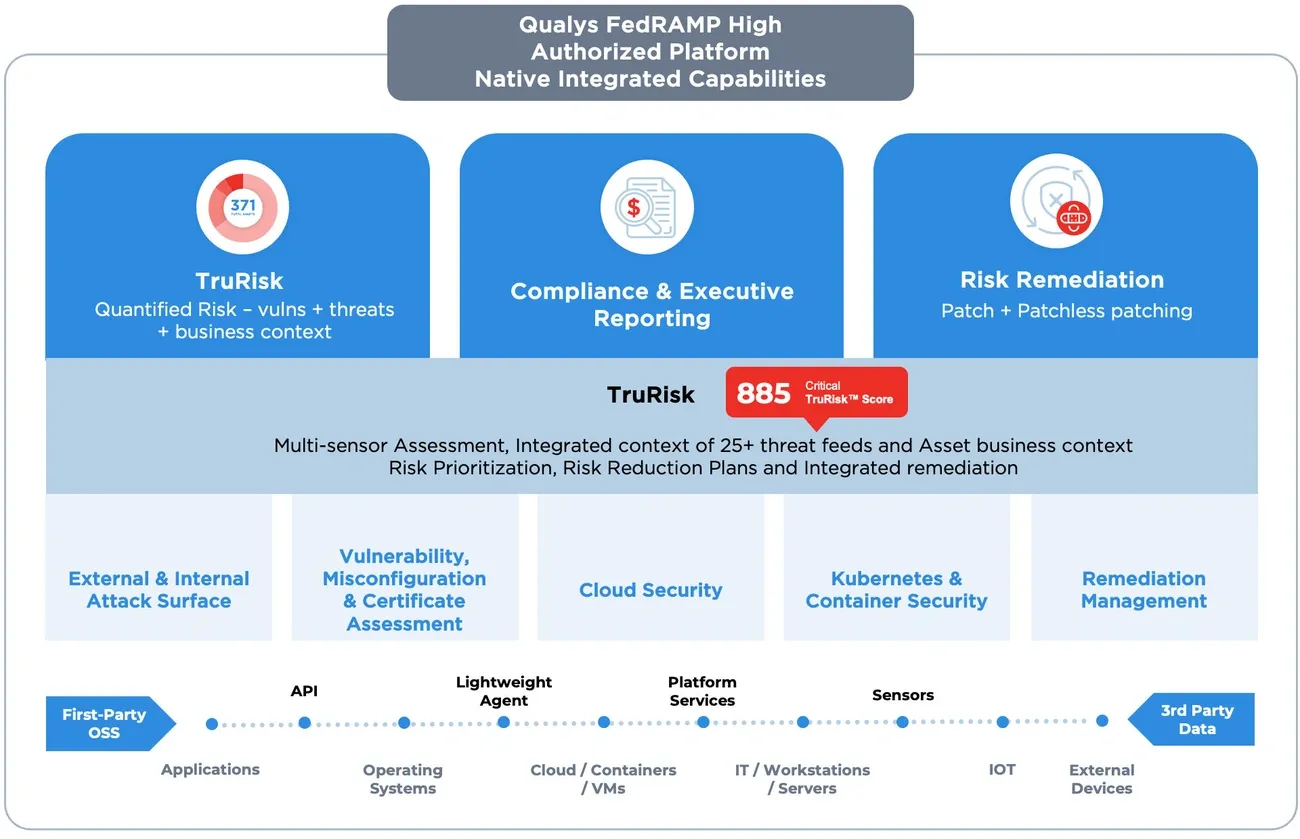
Image Source: Qualys Blog
“In the 20x Phase One pilot, automated validation enables tech companies to rapidly showcase their security posture. This expedited authorization process not only shortens the timeline from months to a few weeks but also delivers a deeper understanding of their security choices.” — Stephen Ehikian, GSA Deputy Administrator, responsible for FedRAMP 20x implementation
FedRAMP 20x is bigger than a process tweak. It represents a shift toward security that scales with cloud.
FedRAMP 20x and the shift to continuous monitoring
The meeting discussion repeatedly referenced the need to clarify ongoing validation versus point-in-time certification, which is a foundational step toward more continuous security assurance.
That shift matters because it reduces security blind spots created when evidence is gathered only for an “event” instead of maintained as a living posture.
Impact on cloud service providers (CSPs)
As evidence expectations evolve, CSPs will feel pressure to produce artifacts that are easier to validate continuously. That typically means better structured evidence, stronger automation, and faster response cycles.
Agencies benefit when CSPs can deliver evidence in formats that support repeatable validation.
Benefits for federal cybersecurity posture
If executed well, agencies should gain:
- Faster adoption of secure cloud services
- More consistent validation practices across environments
- Better ability to spot drift and weakness between formal authorization moments.
Conclusion
For 2026, the most practical way to approach FedRAMP 20x is to plan around direction, not dates.
Phase Two is active, documentation and artifact expectations are evolving, and RFC engagement is shaping what becomes real. Agencies that invest now in machine-readable readiness, faster internal decision workflows, and continuous monitoring maturity will be positioned to move faster and reduce risk as 20x expands.
The perfect time has come to Book a Readiness Call with FedRAMP advisors who can guide your organization’s specific needs.
FedRAMP 20x shows a fundamental change from point-in-time assessments to continuous security validation. This new direction matches federal cloud security practices with modern threats and technologies. The outcome creates a more responsive, evidence-based security stance throughout the federal government.
Agencies that accept these changes before 2026 will protect sensitive information better and deploy cloud services faster. FedRAMP 20x proves to be more than just a process improvement – it’s a complete transformation in federal agencies’ approach to cloud security.
Key Takeaways
Federal agencies must prepare now for the transformative FedRAMP 20x initiative launching in 2026, which promises to revolutionize cloud security authorization processes through automation and continuous monitoring.
- FedRAMP 20x Phase Two is active, and agencies should expect continued evolution through 2026 based on RFC feedback.
- CWG meeting notes emphasize that phase timelines are notional and may shift due to approvals, shutdowns, or unforeseen events.
- Agencies should prepare for more machine-readable artifacts and changing documentation delivery methods, including updates tied to GitHub and web-first publishing.
- The CWG highlighted AI prioritization, referencing three services (Perplexity, OpenAI, Gemini) and expected progress following awards.
- Success in 2026 will depend less on memorizing a timeline and more on building internal capability: continuous monitoring thinking, faster approvals, and evidence that supports ongoing validation.
This modernization represents more than process improvement—it’s a paradigm shift toward responsive, data-driven federal cloud security that aligns with modern threat landscapes and cloud technologies.
FAQs
Q1. What is FedRAMP 20x and how does it differ from traditional FedRAMP?
FedRAMP 20x is the modernization track focused on more scalable authorization models, including greater use of automation and machine-readable artifacts, plus clearer alignment between FedRAMP and agency authorization decisions.
Q2. How can federal agencies prepare for FedRAMP 20x in 2026?
Treat timelines as directional, and focus on readiness: faster internal review workflows, clearer ownership, continuous monitoring maturity, and the ability to consume machine-readable evidence as expectations evolve.
Q3. What role does the CWG play in FedRAMP 20x?
CWG is a primary channel for updates, RFC releases, Q&A, and engagement. It’s also where agencies can influence implementation by reviewing RFCs and providing structured feedback.
Q4. What changes can agencies expect in authorization workflows?
Expect movement toward ongoing validation concepts, evolving evidence packaging, and better clarity around what is “point-in-time” versus what must be maintained continuously.
Q5. How will FedRAMP 20x affect CSPs?
CSPs will likely need to provide more structured, automation-friendly evidence and respond faster to validation needs. Agencies benefit when that evidence is easier to verify continuously and consistently.