ISO IEC 27001 provides essential protection for AI companies that need to safeguard their most valuable assets—data and proprietary models. AI operations face unique challenges during certification. The process needs careful planning and execution of multiple steps. AI organizations must get the scoping right to protect their training environments, datasets, and development pipelines from security vulnerabilities.
The Information Security Management System (ISMS) scope becomes crucial for AI development teams because it sets clear boundaries for standard application. Your organization’s risk appetite and business requirements should line up with this scope. Client demands have changed. Many AI companies now see that potential clients and partners just need ISO 27001 certification before collaboration. This makes compliance both a security essential and a competitive edge. Modern AI-powered platforms like Cyberday help teams work faster through the ISO 27001 implementation process. These platforms turn months of documentation into simplified processes. This piece will show you how to scope your ISMS correctly for AI development environments. Your certification experience will then effectively address the unique security challenges that artificial intelligence systems face.
Why Scoping the ISMS Matters for AI Development

Image Source: Vaporvm
The life-blood of an effective Information Security Management System (ISMS) lies in how well you define its scope when working with artificial intelligence. AI development brings new security challenges that traditional frameworks don’t deal very well with unless you set clear boundaries.
ISO 27001 AI compliance and risk exposure
AI development has changed how organizations must handle security risk management. We focused mainly on data protection in traditional information security. AI brings new vulnerabilities that regular cybersecurity controls can’t fully protect against:
- Model poisoning and adversarial manipulation
- Training data bias and quality issues
- Algorithmic transparency challenges
- Model extraction and inversion threats
- Unintentional use of licensed materials
Organizations risk major exposure across these areas without a well-defined ISMS. AI security breaches can also trigger a chain of problems beyond data loss. These include regulatory penalties, vulnerability exploitation, and serious damage to reputation.
AI models create unique risk profiles that change throughout their lifecycle, unlike conventional systems. To name just one example, see how a model that meets security standards at first might develop biases as it learns from new data. Your ISMS scope must account for this ever-changing nature. You need ongoing monitoring and review processes instead of one-time checks.
Impact of poor scoping on certification and security
Unclear or badly defined ISMS boundaries create major weak spots in AI development environments. Overly broad scopes waste resources and dilute focus. Too narrow scopes might miss key assets or processes vital to AI security.
A hidden danger lies in the “certification illusion” – where ISO 27001 certification gives false confidence. Many organizations think certification automatically protects their AI systems, but gaps exist. A vendor review of a third-party AI analytics provider showed their ISO 27001 certification covered only core infrastructure—not the AI system.
ISO 27001 audits often miss these key AI system checks:
- Model integrity and training data provenance
- Exposure to external queries and model inversion attacks
- Algorithmic bias monitoring mechanisms
- AI-specific threat modeling
Companies can still face serious security risks even with ISO 27001 certification if their scope ignores these AI-specific concerns.
How ISO scope affects AI model governance
Your ISMS scope directly shapes how well you can govern AI models throughout their lifecycle. ISO 27001 focuses on confidentiality, integrity, and availability (CIA). AI governance needs more – including fairness, transparency, and data quality.
A recruitment AI tool shows this difference clearly. From an ISO 27001 view, it might look compliant with encrypted data, proper access logs, and good system availability. In spite of that, the same system could fail AI governance if it learned from biased historical data that unfairly rejects certain demographic groups.
Understanding this difference helps organizations see why they should build on rather than rebuild their governance approach. It also shows why proper scoping must check how models affect people and society before deployment.
The combination of ISO 27001 and newer standards like ISO 42001 (for AI governance) offers a complete solution. Companies that already have ISO 27001 certification can use their existing work to meet AI-specific governance standards. They achieve compliance 30-40% faster than those starting fresh.
A well-planned ISMS scope for AI development needs both traditional security boundaries and special governance requirements for AI systems.
When and How to Start Scoping for ISO IEC 27001
The right timing makes a vital difference when implementing an Information Security Management System for artificial intelligence operations. Companies that start planning their ISMS early have clear advantages over those that update security measures after their AI systems are running.
Security by design: early-stage scoping benefits
Starting your ISO 27001 experience during the development phase creates a base where security becomes part of your AI systems’ DNA instead of an add-on. This “security by design” approach offers several benefits:
- Reduced remediation costs – Building secure systems from scratch costs less than fixing issues later
- Boosted client confidence – Early adoption shows your dedication to security and becomes a major selling point for clients in regulated industries
- Optimized compliance – Security controls develop with your AI operations without disrupting existing systems
“The best time to start thinking about ISO 27001 is early on, especially if you handle sensitive data,” say security experts who stress that building security into original processes creates stronger foundations than later corrections.
Scoping for startups vs. mature AI companies
AI startups often take a practical, step-by-step approach to ISO 27001 that lines up with their limited resources. Implementation documents show that small businesses need clear ISMS boundaries to use resources well and avoid spreading too thin. Many startups focus on:
- Setting a narrow scope for critical AI assets (training datasets, deployed models)
- Adding core controls for sensitive data first
- Growing coverage as the organization expands
Established AI companies usually take a more detailed approach by merging their ISMS across departments and systems. Large organizations often connect ISO 27001 with related standards like ISO 27002 (security controls), ISO 27003 (implementation guidance), and ISO 27005 (risk management).
ISO 27701 extends the standard to include privacy management – a vital factor for AI systems that process personal information.
Using ISO IEC 27001 lead auditor insights for planning
ISO 27001 lead auditors provide key guidance for effective scoping. Their expertise helps organizations:
- Define clear boundaries – Auditors help set audit goals that guide the certification process
- Allocate appropriate resources – Lead auditors help distribute resources by focusing on high-risk areas first
- Create verification strategies – They use various audit methods to check compliance through stakeholder interviews and technical reviews
Book a Readiness Meeting with an experienced ISO 27001 lead auditor to learn about the best scope for your AI operations’ security and compliance.
ISO 27001 works best as an evolving framework that adapts to changing AI technologies, not a one-time project. Security professionals note that ISO 27001 can reshape “from a compliance baseline into a strategic framework for governing AI risk” when properly built into development processes.
Key Elements to Include in the ISMS Scope for AI
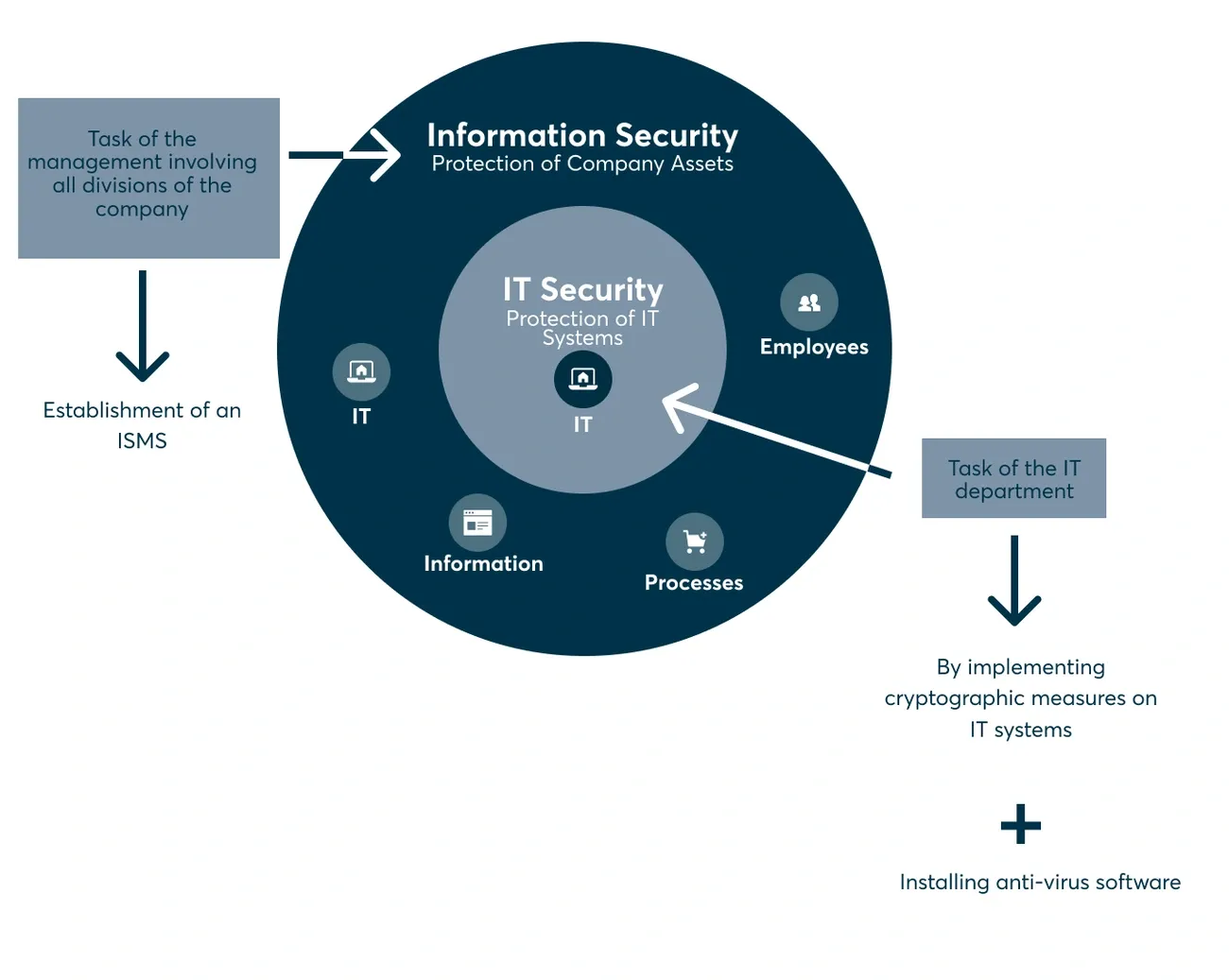
Image Source: DataGuard
A well-laid-out ISMS scope helps identify specific AI components that pose unique security risks. Your implementation should satisfy ISO IEC 27001 requirements and tackle the unique challenges of artificial intelligence systems.
AI model training environments and datasets
Training environments are vital assets you must include in your ISMS scope. AI companies need to focus on their data science team, training datasets, and cloud infrastructure used for model development. You need a full picture of all AI/ML components—models, data sources, and inference endpoints—to analyze risks effectively.
Your scope should cover these aspects of training environments:
- Data quality controls for AI training and operation
- Representativeness assessments and bias prevention mechanisms
- Processes for data anonymization before model training
- Clear ownership assignment for each dataset
The ISO 27001 framework treats AI training data as first-class digital assets under Control A.8.1.1 (asset inventory). Training datasets and model versions need explicit entries. Each entry should have owner information, sensitivity classification, and refresh cadence just like other critical systems.
Development pipelines and CI/CD systems
Strong CI/CD pipelines are the foundations of your ISMS scope. Traditional access rules don’t work very well with AI-powered pipelines that make deployment, configuration, and compliance decisions on their own. Your scope needs to include:
- Build servers and deployment mechanisms
- Automated security testing within pipelines
- Configuration management tools
- Version control systems for model code
Security belongs in these pipelines through static application security testing (SAST), dynamic application security testing (DAST), and dependency checks that catch vulnerabilities early. Without these controls, an ISO 27001 certification might give you false confidence while leaving AI systems vulnerable.
Access control for model repositories and APIs
AI assets need more sophisticated controls than traditional information systems. Your ISMS scope should include:
- Role-based and attribute-based access controls for model repositories
- Authentication mechanisms for API access
- Token management with short-lived credentials
- Separation of permissions by function (training, inference, management)
Implementing least-privilege scopes is vital—patient records’ access should be strictly limited to prevent unauthorized disclosure. Access to model training interfaces and data annotations should follow principle-based provisioning (Control A.9.2.3).
AI endpoints need permissions separated by function—training data upload, inference, or model management—to prevent overprivileged access. On top of that, sensitive operations need multi-factor authentication, especially those that involve model configuration changes.
A well-laid-out ISMS scope helps merge security into your AI systems instead of adding it later. This deepens their commitment to security while meeting ISO IEC 27001 certification requirements.
Aligning ISMS Scope with Legal and Regulatory Requirements
Regulatory compliance drives organizations to implement ISO IEC 27001. AI systems process huge amounts of sensitive data across different jurisdictions. Your ISMS scope needs to match the legal requirements as organizations roll out complex AI solutions.
GDPR and CCPA implications for AI data
The General Data Protection Regulation (GDPR) and California Consumer Privacy Act (CCPA) substantially affect AI operations through their detailed requirements to protect personal data. GDPR requires consent that is “freely given, specific, informed, and unambiguous”. This creates unique challenges when AI systems reuse data to train models. These regulations also give people specific rights over their personal information. The rights include access, correction, deletion and data portability.
Your ISMS scope must clearly address these points for AI development:
- Data minimization principles for training datasets
- Storage limitation policies for model data
- Accuracy verification mechanisms for AI outputs
AI systems need large datasets to work well. The challenge lies in balancing this need with GDPR’s data minimization principle.
ISO 27001 and EU AI Act alignment
The EU AI Act creates the first detailed legal framework that governs artificial intelligence. While different from ISO 27001, both frameworks share similar goals. “If the EU AI Act sets out what you must do, ISO/IEC 42001 provides the framework for how to do it”.
Companies can use their existing ISO 27001 structures to meet AI Act requirements. Both frameworks focus on risk management, documentation, and governance. Adding ISO 42001 helps show regulators your commitment to responsible AI practices.
Using ISO/IEC 27701 for privacy extension
ISO/IEC 27701 works as a certified add-on to ISO 27001 that handles privacy management. The 2025 update made it a standalone Privacy Information Management System (PIMS). Organizations can now extend their ISMS certification to include privacy controls.
This extension helps AI systems that process personal information. It creates clear accountability by naming specific people responsible for privacy functions. The extension also converts general privacy requirements into specific, testable controls that match global privacy regulations.
Tools and Templates to Support ISMS Scoping
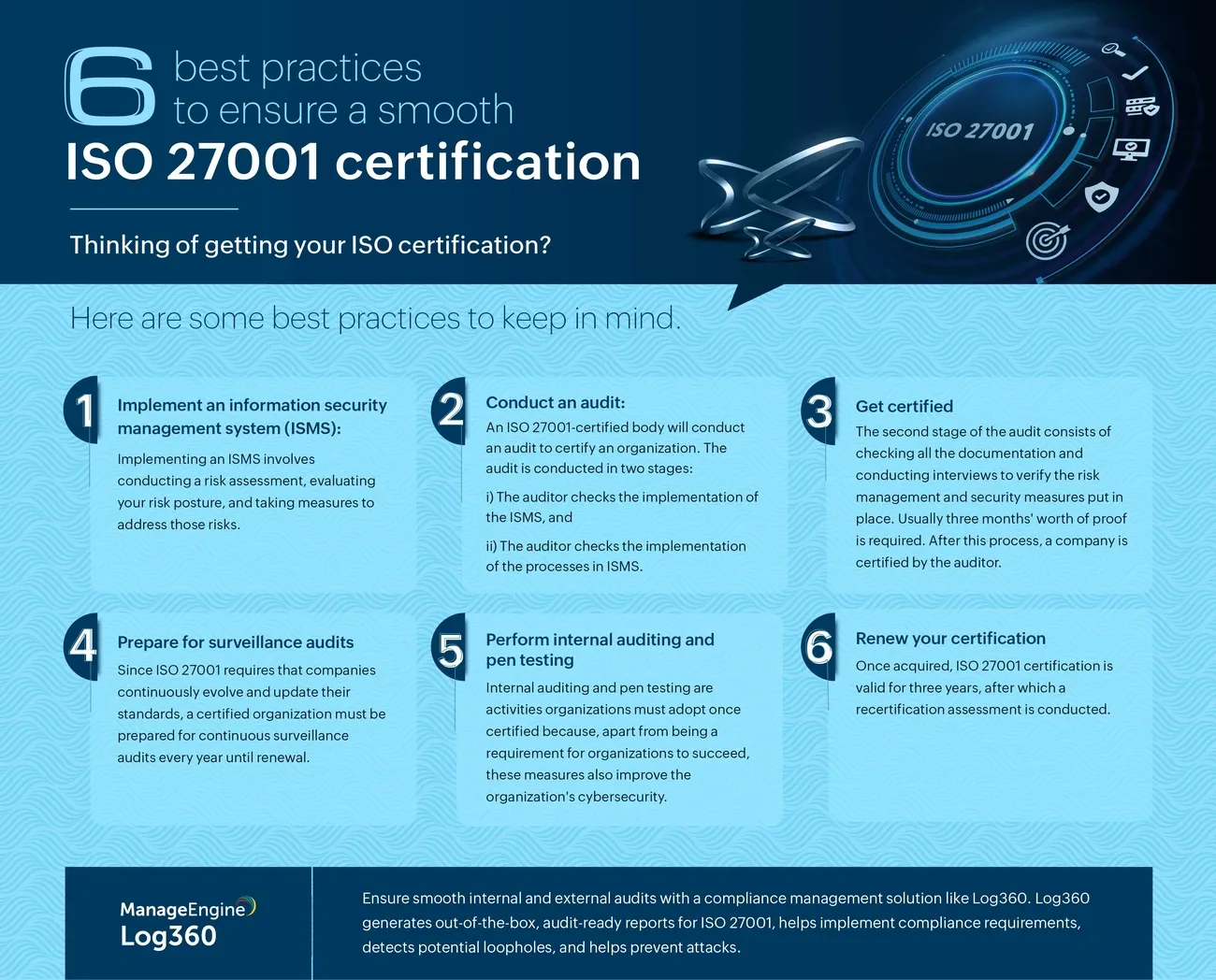
Image Source: ManageEngine
Your organization needs the right resources to make ISO IEC 27001 implementation smooth and efficient. Modern specialized tools can cut down certification time significantly, especially when you develop AI systems.
Using AI-driven ISMS platforms like Cyberday
Platforms like Cyberday AI have revolutionized ISMS implementation. These tools generate your ISMS baseline right away based on your organization’s profile. The AI assistant picks suitable frameworks (ISO 27001, NIS2, etc.) and builds a custom compliance plan that works. You get policies drafted with proven practices, complete with terminology, scope, and responsibilities. Your team saves weeks of paperwork and can focus on implementing security measures instead of handling administrative work.
ISO 27001 toolkit for AI companies
AI organizations seeking certification benefit greatly from pre-built toolkits. These packages come with:
- AI operations-specific policies and procedures
- Templates for required documentation
- Clear implementation guidelines
The ISO 27001 toolkit eliminates the need to create documents from scratch. Most toolkits feature AI-powered wizards that customize documents with your company details automatically. The quality toolkits also include video guides that show how to fill key documents with actual data.
Statement of Applicability (SoA) examples for AI
The Statement of Applicability is a required document that shows which Annex A controls you’ve selected and why. AI companies should use this document to explain controls that help with risks like data bias, model integrity, and other AI-specific issues.
A good SoA connects your risk assessment to your risk treatment plan. It shows how specific controls meet your legal, regulatory, and contractual needs. Book a Readiness Meeting with an ISO 27001 expert who can review your SoA before certification.
Conclusion
ISO IEC 27001 implementation for AI development needs careful attention to security challenges that go beyond regular IT setups. This piece shows how proper ISMS scoping protects AI assets. It also tackles specific issues like model poisoning, training data bias, and algorithmic transparency.
The right timing of implementation makes a big difference in how well it works. Companies that start early get better results with lower fix-up costs and stronger client trust. Your company’s maturity level determines the best approach. Startups do well with targeted, step-by-step implementation. 15-year-old companies usually need detailed coverage in all departments.
Your ISMS scope must cover AI training environments, development pipelines, and access control systems. These parts need special care beyond basic information security practices. A unified approach that follows legal frameworks like GDPR, CCPA, and the EU AI Act helps meet both security and privacy requirements.
New tools have made the certification process much easier. AI-powered platforms create baseline documentation right away and save weeks of paperwork. Teams can use pre-built toolkits with templates made for AI companies. This lets them spend more time on actual security work instead of documentation.
A well-scoped ISO 27001 certification becomes more than just a compliance task – it’s a strategic framework to manage AI risks. This detailed approach meets certification requirements and builds real security strength throughout your AI development lifecycle. Your certification experience, with proper scoping, tackles AI’s unique security challenges and creates an edge in today’s security-focused market.
Key Takeaways
Implementing ISO IEC 27001 for AI development requires specialized scoping that addresses unique security challenges beyond traditional IT environments. Here are the essential insights for AI organizations pursuing certification:
• Start early with security by design – Implementing ISO 27001 during initial AI development phases reduces costs by 30-40% and creates stronger security foundations than retrofitting later.
• Include AI-specific assets in ISMS scope – Training environments, datasets, CI/CD pipelines, and model repositories require explicit coverage to address unique AI vulnerabilities like model poisoning and bias.
• Align with multiple regulatory frameworks – Combine ISO 27001 with GDPR, CCPA, and EU AI Act requirements using extensions like ISO 27701 for comprehensive privacy and security governance.
• Leverage AI-powered implementation tools – Modern platforms like Cyberday can generate ISMS baselines instantly, transforming months of documentation work into streamlined processes.
• Focus on dynamic risk management – Unlike static IT systems, AI models evolve continuously, requiring ongoing monitoring and assessment processes rather than point-in-time evaluations.
When properly scoped, ISO 27001 certification becomes more than compliance—it transforms into a strategic framework for AI risk governance that provides competitive advantage while protecting your organization’s most valuable AI assets and data.
FAQs
Q1. Why is proper scoping of ISO 27001 important for AI companies? Proper scoping is crucial for AI companies as it addresses unique security challenges like model poisoning, training data bias, and algorithmic transparency. It ensures that critical AI assets such as training environments, datasets, and development pipelines are protected, reducing risk exposure and enhancing compliance.
Q2. When should an AI company start implementing ISO 27001? AI companies should start implementing ISO 27001 as early as possible, ideally during the initial development phases. This “security by design” approach reduces remediation costs, enhances client confidence, and creates a stronger security foundation compared to retrofitting security measures later.
Q3. How does ISO 27001 align with AI-specific regulations? ISO 27001 can be aligned with AI-specific regulations like the EU AI Act and privacy laws such as GDPR and CCPA. Using extensions like ISO 27701 for privacy management creates a comprehensive framework that addresses both security and privacy concerns in AI development.
Q4. What key elements should be included in the ISMS scope for AI development? Key elements to include in the ISMS scope for AI development are AI model training environments and datasets, development pipelines and CI/CD systems, and access control for model repositories and APIs. These elements require specialized attention beyond standard information security practices.
Q5. Are there tools available to simplify ISO 27001 implementation for AI companies? Yes, there are several tools available to simplify ISO 27001 implementation for AI companies. AI-driven ISMS platforms like Cyberday can automatically generate baseline documentation, while pre-built toolkits offer templates and guidance specifically designed for AI organizations, significantly reducing the time and effort required for certification.