
Cloud services cost federal agencies billions yearly, yet providers must obtain FedRAMP SaaS authorization to handle federal data. This certification framework not only leads to profitable government contracts but also shows other potential clients a robust security infrastructure.
The path to FedRAMP compliance begins with security control requirements based on impact levels. Low, Moderate, and High categories stem from three key security objectives: Confidentiality, Integrity, and Availability. Most cloud service providers – about 80% – receive authorization at the Moderate Impact level. Systems that could face severe outcomes like mission failures or financial disasters fall under the High Impact category.
This piece will break down FedRAMP controls at different baseline levels and help you pick the right security tier for your SaaS solution. You might opt for the streamlined LI-SaaS route with its 37 security controls, or prepare for full authorization that usually takes 12-18 months. Either way, you’ll learn how to meet FedRAMP SaaS requirements and tap into the federal agency market.
Understanding FedRAMP for SaaS Providers
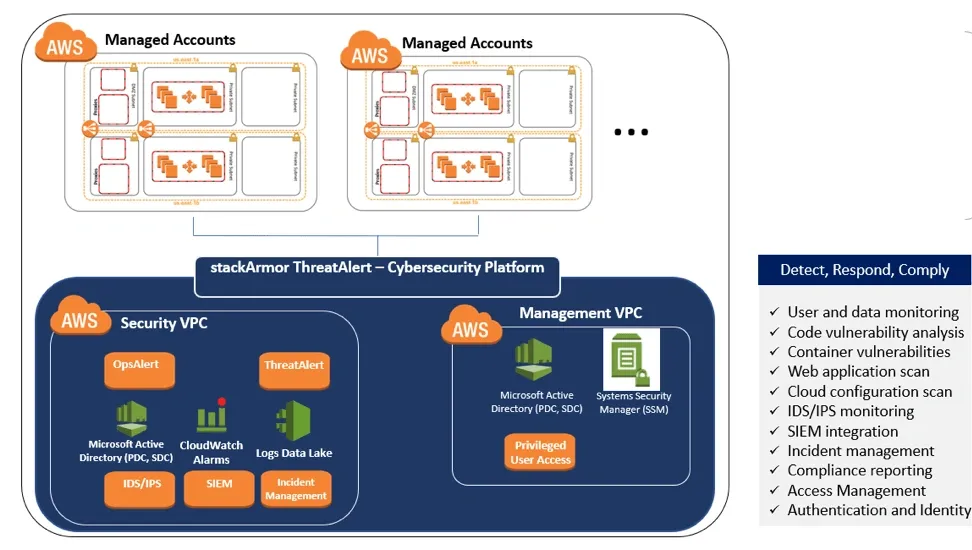
Image Source: stackArmor
“To achieve a FedRAMP authorization, a CSP’s service must reside on a FedRAMP Authorized infrastructure or stand up their own infrastructure.” — FedRAMP Program, U.S. General Services Administration (GSA) – Federal cloud security authorization program
The Federal Risk and Authorization Management Program (FedRAMP) is the life-blood of cloud security for U.S. government agencies. The program started in 2011 to support the federal ‘Cloud First’ initiative and created a standardized framework for cloud service security assessments, authorizations, and ongoing monitoring.
What is FedRAMP and why it matters for SaaS
FedRAMP evaluates cloud services’ security before they can store, process, or transmit federal information. SaaS providers face a tough challenge that is also a great chance to grow. Companies that earn FedRAMP authorization earn a spot in the FedRAMP Marketplace—where federal agencies look first for cloud-based solutions.
FedRAMP authorization proves more than just access to government contracts. This certification tells potential customers that your SaaS meets strict government cybersecurity standards, which boosts your credibility with both public and private sectors.
FedRAMP compliance requirements for cloud services
FedRAMP builds its compliance requirements on National Institute of Standards and Technology (NIST) Special Publication 800-53 security controls and adds specific rules for cloud computing security. The program sorts systems into three levels based on security breach risks:
- Low Impact: Systems where security incidents would have limited adverse effects (requires 125 controls)
- Moderate Impact: Systems where security incidents would have serious adverse effects (requires 325 controls) – this applies to about 80% of all FedRAMP authorizations
- High Impact: Systems where security incidents would have severe or catastrophic effects (requires 421 controls)
SaaS providers can take a simpler route called LI-SaaS (Low Impact-Software as a Service) for low-risk cases. This needs 45 required and 20 conditional controls. This optimized approach saves time, money, and effort for agencies to approve low-impact systems while meeting federal laws and policies.
How FedRAMP supports secure cloud adoption
FedRAMP changes federal cloud security through its “do once, use many times” approach. Cloud services need only one complete assessment that government agencies can share, rather than each agency doing its own security review.
The program makes cloud adoption secure through:
- Consistent security standards that boost confidence in cloud solutions
- Clear processes between government and providers
- Standard continuous monitoring requirements
- Less duplicate work and risk management costs
Federal agencies see real security improvements. Officials from nearly half of the 24 federal agencies surveyed say FedRAMP has made their data more secure. The program’s continuous monitoring ensures cloud services stay secure over time and protects agencies’ critical data.
Today, federal agencies can choose from more than 430 FedRAMP authorized cloud services. This shows how the program helps government agencies adopt cloud services securely.
FIPS 199 Categorization and Security Objectives
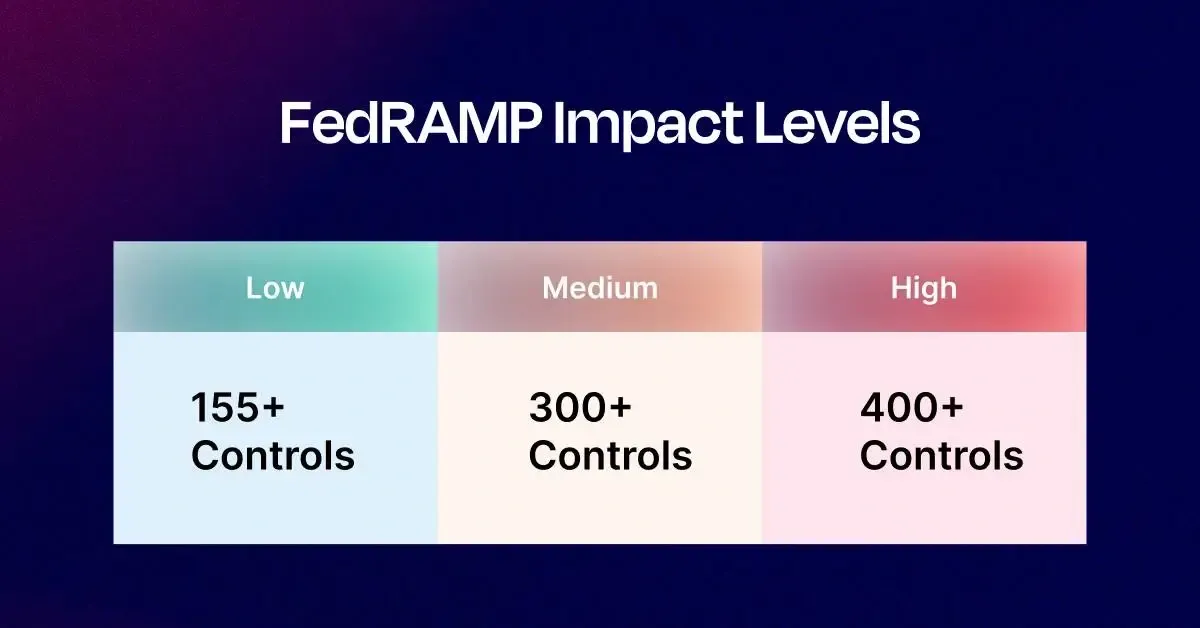
Image Source: Sprinto
Your cloud service’s security posture starts with FIPS 199 categorization. This forms the foundation of all FedRAMP controls. Federal Information Processing Standard (FIPS) Publication 199 creates a well-laid-out method to categorize information and systems. The method looks at what it all means if security breaches happen.
Confidentiality: Preventing unauthorized access
Confidentiality makes sure only authorized people can access and see information. This includes protecting personal privacy and proprietary information. Your sensitive data will be available only to authorized individuals and systems.
To name just one example, see a physician who stores patient data in your SaaS application. This information must stay out of reach from unauthorized parties. A breach happens any time someone discloses information without permission.
A confidentiality breach can have different levels of impact:
- Low impact: Small adverse effects, like minor mission capability drops
- Moderate impact: Serious problems, including big financial losses
- High impact: Severe or catastrophic results that could damage organizational assets badly
Integrity: Ensuring data accuracy and trust
Integrity protects information from wrong changes or destruction. It makes sure information stays authentic and can’t be denied. Your data stays safe from changes, whether someone makes them by accident or on purpose.
A healthcare provider sending lab results through your SaaS platform needs integrity. The results must reach patients exactly as intended, without any changes during transmission. Any unauthorized change or destruction of information breaks integrity.
Organizations need to assess what happens when integrity fails. Bad data can affect operations and decisions. Your SaaS solution must show FedRAMP that it can protect federal information from unauthorized changes.
Availability: Maintaining system uptime and access
Availability gives users reliable access to information when they need it. Your systems need to stay up and running without disruptions.
Government users need access to critical information through your SaaS application. If they can’t get it, that’s an availability breach. This becomes crucial especially when you have mission-critical applications. Long downtimes could hurt agency operations badly.
Systems need different levels of availability:
- Low impact: Brief outages cause small problems
- Moderate impact: Downtime creates serious operational issues
- High impact: System unavailability could lead to catastrophic results, including possible loss of life
Using the high water mark rule for impact level
FedRAMP uses the “high water mark” principle after you check each security objective. This rule says your system’s security level must match the highest impact level from any security objective [34, 35].
Here’s how it works with a SaaS application:
- Confidentiality: Low impact
- Integrity: Moderate impact
- Availability: Low impact
The whole system becomes Moderate impact. You’ll need to implement all related FedRAMP controls.
What does this mean? Your system can only be Low impact if all three security objectives are Low. One Moderate or High objective makes the entire system match that level. This affects how many FedRAMP controls your SaaS must use.
This categorization starts your journey toward FedRAMP Authority to Operate. It guides your security control choices and implementation decisions.
FedRAMP Impact Levels Explained
FedRAMP groups cloud services into three impact levels that show what could happen during a security breach. These levels determine the security controls your SaaS solution needs to serve federal agencies and achieve compliance.
Low Impact: Public or non-sensitive data
Security compromises in Low Impact systems would barely affect agency operations, assets, or people. This level suits cloud services that handle public or non-sensitive data where breaches might cause small operational hiccups or minimal money losses.
FedRAMP has two baselines for Low Impact systems:
- LI-SaaS Baseline: This fits low-impact SaaS applications that don’t store personal identifiable information beyond simple login credentials (username, password, email). The tailored approach needs about 45 required and 20 conditional security controls, which substantially cuts down the compliance work.
- Low Baseline: This needs roughly 156 controls for systems that handle less sensitive data. The baseline shields information where unauthorized access would barely affect organizational operations.
Moderate Impact: Controlled Unclassified Information (CUI)
Moderate Impact sits in the middle of the FedRAMP security spectrum and makes up nearly 80% of all cloud services with FedRAMP authorization[152]. Most SaaS providers choose this standard path when seeking government contracts.
Systems at this level face serious but not catastrophic effects from security incidents. Moderate Impact systems usually process Controlled Unclassified Information (CUI) or sensitive personally identifiable information. They need about 325 security controls[152].
The detailed control set tackles risks where breaches could cause major operational damage, big financial losses, or harm to people – short of physical injury or death[143].
High Impact: Critical systems and sensitive data
High Impact applies to systems that handle the government’s most sensitive unclassified data. Security breaches at this level could be devastating. Critical cloud environments that support law enforcement, emergency services, financial systems, and healthcare platforms need this classification.
A breach at this level could lead to:
- Mission-critical failure
- Catastrophic financial harm
- Threats to life or public safety
This category needs about 410-421 security controls[142], making it the toughest civilian cloud security standard outside classified systems. About 16% of products in the FedRAMP marketplace are High Impact systems. This shows both how hard and valuable this authorization level is.
Your SaaS solution’s impact level shapes which security controls you need. This ended up determining your path to FedRAMP compliance and your access to federal agency customers.
FedRAMP Baselines for SaaS Applications
“The entire authorized Google Workspace security boundary is documented, assessed, and managed against the FedRAMP High baseline of security and privacy controls.” — Google Cloud, Google Cloud Security and Compliance Division
SaaS providers must implement specific controls from FedRAMP security baselines based on their categorized risk level. These baselines are the foundations of serving federal customers.
LI-SaaS Baseline: 45 required + 20 conditional controls
Cloud services with minimal risk profiles can take advantage of the LI-SaaS (Low Impact Software as a Service) baseline. Your SaaS must run in the cloud and have a FIPS 199 Low impact categorization to qualify. You can’t store PII beyond login credentials. This baseline needs 45 security controls with proper documentation and assessment, plus 20 conditional controls for specific cases. You’ll also need to attest to 75 controls without formal documentation or assessment. Simple, low-risk applications benefit from this simplified compliance approach.
Low Baseline: 156 controls for minimal risk systems
Systems where security incidents would have limited effects on operations use the standard Low baseline. You’ll need to implement 156 security controls including base controls and enhancements. The focus is on simple security measures like user access control, basic auditing and monitoring, and encryption for data at rest and in transit. SaaS solutions that handle public information or non-sensitive data are perfect candidates for this baseline.
Moderate Baseline: 323 controls for CUI systems
Systems that process Controlled Unclassified Information (CUI) use the Moderate baseline. This is the most popular FedRAMP path – about 80% of authorized applications use it. You must implement 323 security controls with strong access management, incident response, vulnerability management, and continuous monitoring. Defense Department contractors who handle covered defense information must meet at least this baseline.
High Baseline: 410 controls for mission-critical systems
The High baseline offers maximum protection for federal information when security incidents could have severe consequences. You’ll need 410 security controls including advanced system-wide auditing, continuous security analytics, advanced identity controls, and detailed disaster recovery plans. This baseline protects law enforcement, financial, health, and emergency services systems where breaches could lead to catastrophic damage.
Choosing the Right Baseline for Your SaaS Product
Your SaaS offering’s data characteristics play a key role in choosing the right FedRAMP baseline. This choice shapes your compliance journey and the resources you’ll need.
Mapping your data types to impact levels
The process starts by identifying the data types your SaaS application handles. Your service’s category matches the highest impact level among confidentiality, integrity, and availability based on the “high water mark” principle. A Moderate baseline becomes necessary if your system processes Controlled Unclassified Information (CUI).
Using the FedRAMP FIPS 199 Categorization Template
The SSP’s Appendix K contains FedRAMP’s template that helps determine your system’s security category. This document guides you through evaluating three security objectives. The best first step is filling out this form to understand your authorization path clearly. You might want to Book a Readiness Call with a FedRAMP consultant if you need help with this crucial step.
Aligning with NIST SP 800-60 Volume 2 guidance
NIST SP 800-60 Volume 2 serves as the go-to guide that maps information types to security categories. Federal systems can use this resource to find provisional impact levels for common information types.
When to consider LI-SaaS vs Low vs Moderate
LI-SaaS might be your best option if your SaaS:
- Stores no PII beyond login credentials
- Is categorized as Low impact under FIPS 199
- Runs on FedRAMP-authorized infrastructure
Systems handling non-sensitive information work well with the standard Low baseline (156 controls). The Moderate baseline (325+ controls) becomes necessary when you process CUI or if security breaches would cause serious—but not catastrophic—damage.
Conclusion
Getting FedRAMP authorization marks a major milestone for SaaS providers looking to break into the federal marketplace. This piece explores how the framework’s tiered approach to security categorization—Low, Moderate, and High—gives flexibility while upholding strict standards. The process needs substantial investment, especially when you have higher impact levels where control requirements jump from 156 controls at Low to 410 at High baseline.
Security objectives of Confidentiality, Integrity, and Availability are the foundations of the FedRAMP framework. The high water mark rule makes sure federal information stays protected. Most SaaS providers end up implementing the Moderate baseline with its 323 controls. This baseline protects Controlled Unclassified Information and meets about 80% of federal agency requirements.
SaaS offerings with minimal risk profiles can take advantage of the optimized LI-SaaS pathway with just 45 required controls. This tailored approach substantially cuts down compliance burdens while maintaining crucial security standards for low-impact systems.
Your appropriate FedRAMP baseline depends on a careful review of your data types, security objectives, and intended federal use cases. Expert guidance during this critical assessment phase helps many companies succeed. You should schedule a “Book a Readiness Call” with experienced FedRAMP consultants to review your specific needs and prepare for a successful authorization experience.
FedRAMP authorization proves your commitment to security excellence in every market. The path requires significant resources and typically takes 12-18 months. The boost in security posture brings long-term value beyond government opportunities. Companies that successfully direct FedRAMP requirements come out with stronger security programs that benefit their entire customer base.
Key Takeaways
Understanding FedRAMP baselines is crucial for SaaS providers targeting federal contracts, as the right categorization determines both compliance costs and market access opportunities.
• Impact levels drive control requirements: Low (156 controls), Moderate (323 controls), and High (410 controls), with LI-SaaS offering a streamlined 45-control path for minimal-risk applications.
• The “high water mark” rule determines your baseline: Your system inherits the highest impact level across Confidentiality, Integrity, and Availability objectives—even one Moderate rating requires full Moderate compliance.
• Moderate baseline dominates the market: Nearly 80% of FedRAMP authorizations use Moderate controls, making it the standard path for SaaS providers handling Controlled Unclassified Information.
• Data type mapping is critical: Use the FedRAMP FIPS 199 template and NIST SP 800-60 guidance to accurately categorize your information types before selecting a baseline.
• LI-SaaS offers significant savings: For applications storing only basic login credentials with Low impact ratings, this pathway reduces compliance burden by over 70% compared to standard Low baseline.
The authorization process typically takes 12-18 months and requires substantial investment, but FedRAMP certification opens doors to lucrative government contracts while demonstrating security excellence to all potential customers.
FAQs
Q1. What is FedRAMP and why is it important for SaaS providers? FedRAMP is a standardized security assessment framework for cloud services used by U.S. federal agencies. It’s crucial for SaaS providers because it opens doors to government contracts and demonstrates a high level of security to all potential customers.
Q2. How long does the FedRAMP authorization process typically take? The FedRAMP authorization process typically takes 12-18 months to complete. This timeline allows for thorough security assessments and implementation of required controls.
Q3. What are the different FedRAMP impact levels? FedRAMP has three main impact levels: Low, Moderate, and High. Each level corresponds to the potential impact of a security breach, with Low handling public data, Moderate for controlled unclassified information, and High for critical systems and sensitive data.
Q4. How many security controls are required for FedRAMP Moderate compliance? FedRAMP Moderate compliance requires implementing approximately 323 security controls. This level is the most common, accounting for nearly 80% of all FedRAMP authorizations.
Q5. Is there a streamlined FedRAMP option for low-risk SaaS applications? Yes, FedRAMP offers a tailored path called LI-SaaS (Low Impact Software as a Service) for low-risk applications. It requires only 45 mandatory controls plus 20 conditional controls, significantly reducing the compliance burden for qualifying systems.