
Cybercrime costs continue to rise for businesses of all sizes. The damage reached $1 trillion in 2016 alone. ISO 27001 serves as the cornerstone of international security standards and offers a complete framework to protect your organization’s most valuable information assets.
The world now has 71,550 valid ISO 27001 certifications. Companies with this certification enjoy most important competitive advantages in their markets. Your organization becomes more credible and trustworthy to clients and partners once certified. The certification protects your information’s confidentiality, integrity, availability, and authenticity through an Information Security Management System (ISMS). Your business environment becomes more secure when you line up your organizational controls with ISO 27001 requirements, which helps growth and competitive advantage.
This piece explains everything C-Suite executives should know about ISO 27001. You’ll learn about implementation strategies and certification processes that turn security from a cost center into a business enabler.
Why ISO 27001 Matters for Enterprise Security
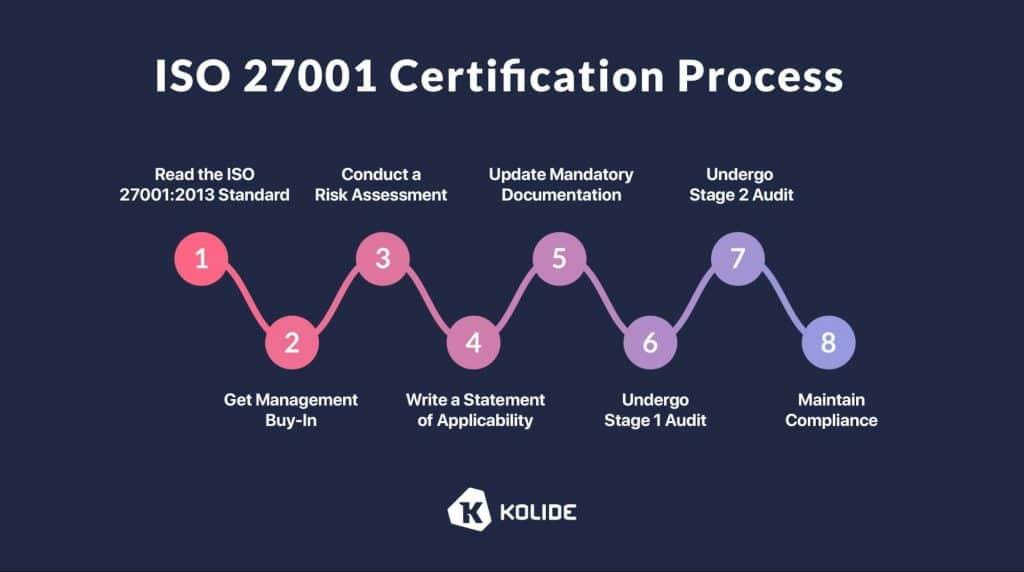
Image Source: Compleye
The modern cybersecurity landscape demands a well-laid-out approach to manage information security risks, and ISO 27001 delivers exactly that. Businesses worldwide now see this framework’s value extends way beyond the reach and influence of basic compliance. It has become a vital business priority.
ISO 27001 vs Other Frameworks: SOC 2, NIST, CMMC
Security frameworks need careful assessment to understand how ISO 27001 stacks up against alternatives. ISO 27001 enjoys worldwide recognition, while SOC 2 leads the pack in the United States, especially among SaaS and cloud service providers. NIST frameworks traditionally benefit government agencies and contractors, though private companies increasingly adopt them.
These frameworks differ in several ways:
- Scope and Focus: ISO 27001 looks at your organization’s entire security management system. SOC 2 focuses specifically on systems that handle customer data. CMMC, built for the U.S. Department of Defense, protects Federal Contract Information (FCI) and Controlled Unclassified Information (CUI).
- Validation Method: ISO 27001 gives you a three-year valid certificate, while SOC 2 provides an attestation report. CMMC offers a three-year certification that needs yearly confirmation.
- Implementation Timeline: ISO 27001 usually takes 12-18 months to set up completely. SOC 2 readiness typically needs 6-12 months.
Many organizations choose to implement multiple frameworks instead of picking just one. The controls in ISO 27001 can match SOC 2 requirements, which makes compliance efforts more efficient.
Competitive Advantage Through ISO 27001 Certification
ISO 27001 certification offers more than just security improvements – it brings real business benefits. The ISO Survey 2022 shows over 70,000 certificates across 150 countries. This certification helps companies stand out in competitive markets.
Your organization’s proactive approach to data privacy and security can transform customer perceptions. Customer trust and confidence in your brand directly benefit from this alignment with their expectations.
Data breaches get pricey. The IBM Cost of a Data Breach Report reveals that breaches cost an average of $4.45 million globally in 2023. ISO 27001’s systematic risk management approach becomes invaluable in preventing such expensive incidents.
Regulated industries find ISO 27001 certification streamlines their compliance processes. It shows regulators a proactive security stance that reduces legal risks. Companies with ISO 27001 certification often face simpler vendor assessments or skip them entirely.
Reducing Vendor Risk and Meeting Regulatory Demands
Supply chain attacks happen more frequently now. ISO 27001 offers a clear path to manage information security, including risks from external vendors and partners. Your organization stays responsible for protecting information, even when third parties handle it.
Vendor risk management under ISO 27001 works as an ongoing process that includes:
- Vendor assessment during onboarding
- Relationship monitoring
- Risk review when services or systems change
ISO 27001 requires documented information security policies for vendor relationships. Organizations must oversee information security in these partnerships and address security concerns in vendor agreements.
This balanced approach combines trust with verification in a variety of industries. Organizations can use an ISO 27001 vendor assessment template to consistently assess each vendor’s security practices and spot potential risks.
International businesses find ISO 27001 simplifies regulatory compliance. It matches global requirements like GDPR, helping businesses meet strict regulatory standards while building their reputation as secure and reliable partners.
Building a Business-Aligned ISMS
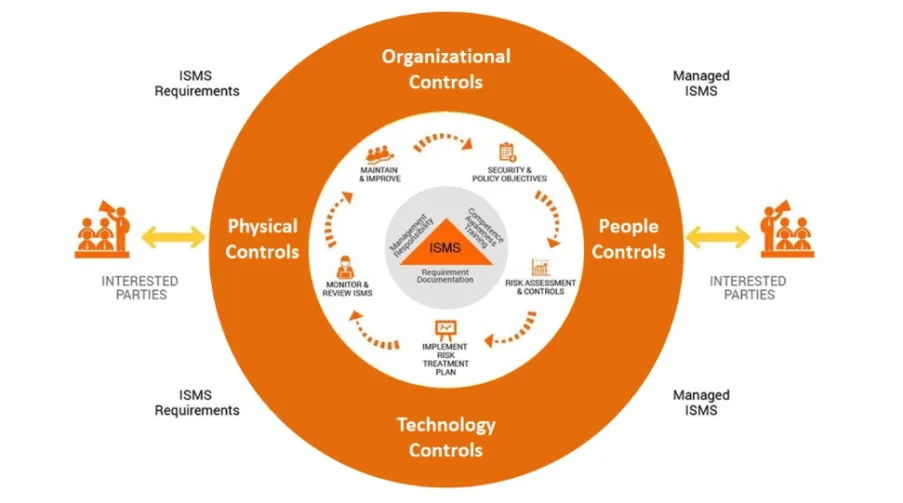
Image Source: ECC International
A successful Information Security Management System (ISMS) must line up perfectly with your core business functions. Unlike standalone security programs, a business-aligned ISMS weaves security right into operational processes. Security professionals often call this the “blueprint” for your enterprise security architecture.
Defining ISMS Scope Based on Business Units
The foundations of your ISMS implementation start with determining the right scope. This crucial decision sets apart leaders who actively manage risk from those who just react to incidents. Your scope definition needs absolute clarity about what your ISMS protects. This includes not just the obvious assets but also the hidden connections between systems and processes.
Your first step is to look at your organization’s structure and spot which business units handle sensitive information. The most critical areas need your attention. Software companies might focus on development environments, while financial institutions could prioritize customer data management systems. You should also think over both internal and external factors that shape your security posture:
Internal considerations need assessment of your:
- Governance structure and company culture
- Available resources and infrastructure
- Existing contracts and commitments
External factors should include:
- Regulatory requirements and legal obligations
- Industry-specific risks and competitive landscape
- Relationships with vendors, customers, and partners
The ISO 27001 standard stays away from being too prescriptive. This gives you flexibility to define scope based on your organization’s unique traits. In spite of that, your scope statement must clearly document boundaries and exclusions with solid reasons for anything left outside the ISMS.
Mapping Business Objectives to Security Controls
An ISMS creates value only when security controls directly back broader business goals. ISO 27001 implementation starts with understanding your organization’s aims, whatever your industry or size. The standard needs organizations to take a systematic approach to risk management that has identification, assessment, and proper treatment options.
Security policies are the backbone of your ISMS. They set rules that work across all organizational levels, from C-suite executives to frontline employees. Each control you put in place should connect to specific business objectives through a documented risk assessment process.
This alignment process needs you to:
- Identify information assets that need protection
- Evaluate threats to those assets in your business context
- Select controls that alleviate risks while enabling business functions
- Document how each control backs specific business goals
Stakeholders play a key role throughout this mapping process. Department heads must ensure processes meet information security objectives because they know operational requirements best. Senior management gives overall direction and makes important risk treatment decisions based on business priorities.
Using ISO 27001 Framework to Support Digital Transformation
Digital transformation often creates tension between innovation and security concerns. The ISO 27001 framework gives you a well-laid-out approach to handle this balance. It ensures protection without holding back progress.
Organizations going through digital transformation get several benefits from ISO 27001:
The standard gives you a detailed framework that fits with cloud security practices. This matters more as businesses move to cloud environments. The ISO framework helps find and fix vulnerabilities that could hurt transformation efforts through full risk assessments.
ISO 27001 puts emphasis on constant monitoring and improvement. This creates an adaptive security posture that grows with technological changes. Organizations can reduce vulnerabilities while staying flexible enough for digital innovation with this systematic approach.
The framework focuses on risk management instead of specific technologies. This makes it valuable during fast-paced change. Rather than forcing rigid solutions, ISO 27001 sets principles that work across evolving technology landscapes.
Organizations create security frameworks that support their digital transformation experience by using controls that match identified risks.
Key ISO 27001 Requirements for the C-Suite
Executive leadership does more than approve budgets or sign policies in ISO 27001 implementation. The standard defines C-suite responsibilities through several significant clauses that need active involvement from top management.
Clause 5.2: Information Security Policy Responsibilities
Clause 5.2 makes senior executives directly accountable for establishing their organization’s information security policy. This foundational document must line up with your strategic direction and business objectives. It should not exist as a mere compliance checkbox. Top management ensures this policy:
- Creates a framework to set specific, measurable security objectives
- Makes explicit commitments to meet regulatory requirements
- Shows an ongoing commitment to improvement
- Stays accessible as documented information for stakeholders
- Reaches everyone in the organization effectively
The policy needs regular management review to stay relevant as threats and business conditions evolve. A resilient policy acts as the backbone of your security program and sets boundaries for all security activities.
The policy shows the organization’s security philosophy. When C-suite leaders get involved, it signals to employees and auditors that security deserves attention. Auditors look for genuine leadership commitment rather than downward delegation without participation.
Clause 7: Resource Allocation and Competency Building
Beyond policy creation, Clause 7 requires top management to provide enough resources to implement, maintain, and improve the ISMS. This clause prevents gaps between security expectations and the means to achieve them.
Resources go beyond money and cover:
- Skilled and trained human resources
- Infrastructure for secure operations
- Time for security activities in workflows
- Tools, technologies, and systems that support security goals
The C-suite must ensure security personnel have the right skills. They need to identify skill requirements, provide training, and check if security education works.
Organizations “must determine and provide the resources needed for the establishment, implementation, maintenance and continual improvement of the information security management system.” Auditors consider insufficient resources a major non-conformance that could risk certification.
Clause 8: Operational Planning and Control
Clause 8 turns security policies into practical processes. Senior leaders ensure the organization plans, implements, and controls processes that meet security requirements identified through risk assessment.
Operational planning requires:
Clear process criteria that define success in your context Control implementation based on set criteria Documentation that proves processes work as intended Management of planned changes and unexpected system modifications
This clause challenges organizations to connect strategy with execution. The C-suite oversees security for external processes, products, or services like cloud computing or outsourced development.
Organizations need clear operational procedures that show how security controls work daily. These procedures turn abstract risk management ideas into real activities across business units.
When the C-suite meets these requirements, they build more than compliance. They create a security-conscious culture where protecting information becomes part of business operations instead of an obstacle or afterthought.
Implementing ISO 27001 Controls Across the Enterprise
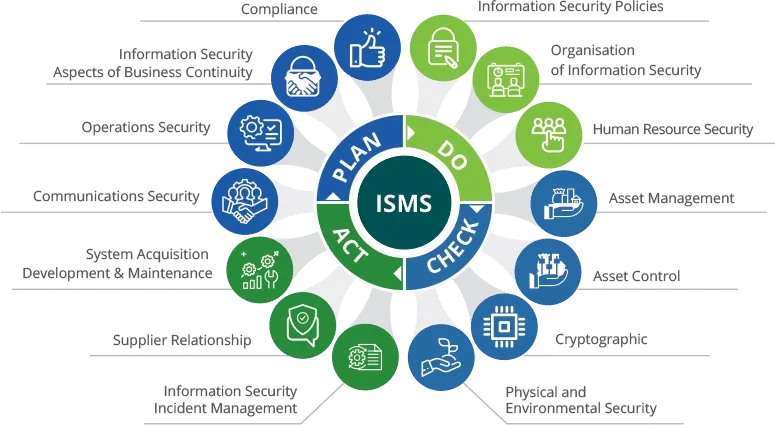
Image Source: Omnex
ISO 27001 needs a well-laid-out approach to add security controls throughout your enterprise. The standard has a detailed set of controls that address different aspects of information security management.
Annex A: 93 Controls in 4 Domains
ISO 27001:2022 standard has changed its controls by a lot. The number dropped from 114 to 93, and they are now organized in four thematic domains. C-suite executives now have an easy-to-use framework to implement security measures across their enterprise.
These four domains has:
- Organizational controls (37 measures): These include governance, policies, third-party management, and access control. They define an organization’s detailed approach to data protection in a variety of matters.
- People controls (8 measures): Businesses can regulate the human side of information security and define how staff handle data and interact with each other[183].
- Physical controls (14 measures): These protect facilities, secure equipment, manage entry systems, control guest access, and handle asset disposal[183].
- Technological controls (34 measures): These handle cryptography, system monitoring, logging, and defend against malware[183].
ISO 27001 uses a risk-based approach. Organizations start by identifying what interested parties need and checking security risks. They then document which controls apply to their situation in the Statement of Applicability.
Access Control, Cryptography, and Secure Development
Three categories of technological controls play a vital role in enterprise security.
Access control protects sensitive data and systems from unauthorized users. It uses multi-factor authentication, role-based access control, and regular access reviews.
Cryptography serves four vital security goals: data confidentiality, information authenticity, preventing action denial, and proving user identities right. Your cryptography policy should cover:
- Business requirements for encryption
- Key management processes
- Types of cryptographic techniques based on data classification
- Legal requirements that affect cryptography use
Secure development lifecycle controls matter for organizations that create and implement software systems. Control 8.25 needs rules for secure development that cover:
- Separate development, testing, and production environments
- Secure coding guidelines
- Security testing procedures
- Source code management
Data masking, web filtering, and configuration management are among other technical controls added in the 2022 standard.
Human Resource and Legal Controls for Compliance
People-centric controls are the foundations of good security implementation. Employees can be your greatest asset or your biggest vulnerability. ISO 27001 handles this through human resource security controls that cover the entire employment lifecycle:
- Prior to employment (A.7.1): Background checks match business needs and information classification. Security responsibilities must be clear in contracts.
- During employment (A.7.2): This focuses on awareness, education, and training. Staff must know about security threats related to their roles and get updates when policies change.
- Termination or change of employment (A.7.3): Some responsibilities continue after employment ends. These include keeping information confidential and returning company assets.
Legal controls provide the regulatory foundation for your security program. Organizations must identify and document relevant laws, regulations, and contractual requirements for information security. They need a detailed legal register that captures requirements from every jurisdiction where they operate.
A resilient security system that protects information assets, meets regulatory needs, and supports business goals comes from implementing these controls systematically.
ISO 27001 Certification Journey: A Step-by-Step Guide
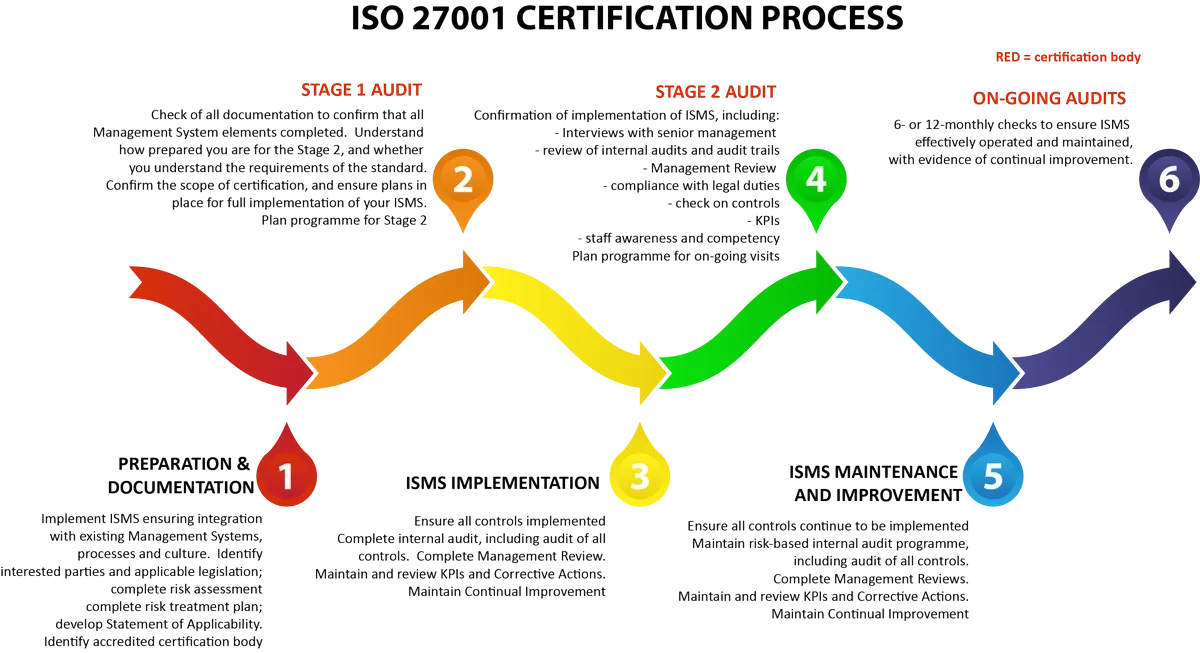
Image Source: Koenig-solutions.com
ISO 27001 certification follows a systematic progression that revolutionizes your security posture from original assessment to formal validation. Your organization needs methodical preparation and execution across several distinct phases to achieve certification.
Gap Analysis and Risk Assessment
Your ISO 27001 certification experience starts when you understand your current security position through two complementary processes. A gap analysis compares your existing security practices against ISO 27001 requirements and identifies areas that need a boost. You get a high-level overview of compliance shortfalls that helps scope your ISMS parameters in any discipline.
A full risk assessment becomes significant because it shows which ISO 27001 controls you need to implement. Gap analysis identifies what controls you have versus what’s required. Risk assessment pinpoints which controls specifically address your organization’s identified information security risks.
Your organization’s maturity determines the timing of these assessments. Organizations with less mature security programs should conduct gap analysis early to determine resource requirements and timeline expectations. Organizations with resilient security frameworks might perform gap analysis later as verification before certification. Book a Readiness Call with an experienced consultant to determine the optimal timing for your situation.
Policy Documentation and Control Mapping
Documentation becomes essential after you identify gaps and assess risks. The ISO 27001 standard requires several mandatory documents, including:
- Information security policy (Clause 5.2)
- Risk assessment methodology (Clause 6.1.2)
- Risk treatment plan and Statement of Applicability (Clause 6.1.3)
- Security objectives documentation (Clause 6.2)
The Statement of Applicability (SoA) is a vital document that summarizes which ISO 27001 controls apply to your organization with justification for implementation or exclusion. External auditors review this document first during certification.
Control mapping strengthens your documentation by creating connections between different frameworks. Your organization should inventory controls, arrange them with other standards, document mapping justifications, and identify any gaps in coverage.
Engaging an ISO 27001 Consultant or Lead Auditor
An ISO 27001 consultant provides value especially when you have no dedicated compliance personnel, implement an ISMS from scratch, or operate in highly regulated industries. These experts offer several key benefits:
Consultants conduct full readiness assessments—essentially dry runs before official certification audits. They identify potential issues early and ensure proper control mapping to ISO 27001:2022 Annex A requirements because they know what auditors expect.
Consultants guide risk assessment processes and help establish continuous monitoring procedures to maintain compliance long-term. Their expertise ensures your organization allocates resources effectively toward addressing genuine risks instead of implementing unnecessary controls.
You should choose accredited auditors with appropriate credentials for certification validity. Accredited certification bodies undergo rigorous processes, including annual week-long audits by accreditation bodies. This accreditation assures stakeholders about your certification’s legitimacy.
Post-Certification: Governance, Audits, and Automation
ISO 27001 certification requires an ongoing commitment to stay compliant. It’s not a one-time achievement. Security governance becomes a continuous process rather than periodic scrambling when you use advanced automation tools.
Internal Audit Planning and Execution
ISO 27001 Clause 9.2 requires internal audits at set intervals to check how well ISMS works. A successful audit needs careful planning. You must define the scope, pick independent auditors, and set clear criteria for each review. Auditors need to collect enough evidence through document reviews, observations, and staff interviews.
Your internal audit should:
- Start with high-risk areas
- Get multiple departments involved
- Review how well people understand ISMS’s purpose, not just compliance
- Give helpful feedback instead of turning it into a “witch hunt”
Using Tools like ISMS.online or AuditBoard
The right platforms can make post-certification governance much easier. ISMS.online gives you automated risk assessments, up-to-the-minute monitoring capabilities, and ready-to-use templates for internal audits. AuditBoard brings ISO controls, policies, and evidence together in one place. It also automates task assignments and evidence collection.
Automating Evidence Collection and Reporting
Automation makes compliance maintenance better by removing manual tasks that can cause errors. Vanta keeps an eye on your systems, creates your Statement of Applicability automatically, and runs control tests every hour. In fact, platforms like Scrut run hundreds of pre-built tests to find gaps in ISO 27001 controls. Daily automated checks flag any misconfigurations right away.
Book a Readiness Call with implementation specialists to learn how these automation tools can blend with your current infrastructure and help you stay compliant.
Conclusion
ISO 27001 is the gold standard for information security management. It gives organizations a well-laid-out path to protect their critical data assets. This piece shows how this framework turns security from basic work into a business advantage.
Organizations get more than just compliance when they adopt ISO 27001. They gain an edge over competitors through better customer trust and simpler vendor assessments. The framework shows their steadfast dedication to security excellence. Its worldwide recognition helps international business operations and makes complex regulations easier to handle.
Success starts with real commitment from C-suite executives. Leaders must create clear information security policies and provide enough resources. They need to make sure operational plans line up with business goals. This approach from the top creates a culture where security becomes a core part of the business, not just an add-on.
The certification trip needs careful preparation. It starts with the original gap analysis and moves through risk assessment, documentation, and control setup. After certification, companies must keep improving through internal audits. They can use special tools and automation platforms that turn compliance from a rush job into a steady process.
Cyber threats grow faster across the digital world every day. Companies that accept ISO 27001 do more than just get certified. They become resilient businesses ready to protect their valuable assets and build stakeholder trust. Security through this framework ends up being more than protection. It becomes a key business driver that propels development and sets companies apart from competitors.
Key Takeaways
ISO 27001 transforms enterprise security from a compliance burden into a strategic business advantage, providing C-suite leaders with a proven framework to protect critical assets while driving competitive differentiation.
• ISO 27001 delivers measurable ROI: Organizations gain competitive advantages through enhanced customer trust, streamlined vendor assessments, and reduced cybersecurity risks that cost an average of $4.45 million per breach.
• Executive leadership drives success: C-suite commitment is non-negotiable—leaders must establish security policies, allocate adequate resources, and ensure operational planning aligns with business objectives for effective implementation.
• 93 controls across 4 domains provide comprehensive coverage: The 2022 standard organizes organizational, people, physical, and technological controls into a structured framework that addresses enterprise-wide security requirements.
• Certification requires systematic preparation: Success demands methodical gap analysis, risk assessment, policy documentation, and control mapping—typically taking 12-18 months from start to certification.
• Post-certification automation ensures continuous compliance: Tools like ISMS.online and AuditBoard transform ongoing governance from periodic scrambling to continuous readiness through automated evidence collection and real-time monitoring.
The framework’s global recognition with over 71,550 valid certifications worldwide demonstrates its effectiveness in protecting information assets while enabling international business growth and regulatory compliance across multiple jurisdictions.
FAQs
Q1. What are the main benefits of ISO 27001 certification for businesses? ISO 27001 certification offers several key benefits, including enhanced customer trust, competitive advantage, streamlined vendor assessments, and improved risk management. It also helps organizations meet regulatory requirements and demonstrates a commitment to protecting sensitive information.
Q2. How long does it typically take to achieve ISO 27001 certification? The ISO 27001 certification process usually takes between 12 to 18 months from start to finish. This timeline includes conducting gap analysis, implementing necessary controls, documenting policies and procedures, and undergoing certification audits.
Q3. What role does the C-suite play in ISO 27001 implementation? The C-suite plays a crucial role in ISO 27001 implementation. They are responsible for establishing information security policies, allocating necessary resources, ensuring operational planning aligns with business objectives, and fostering a security-conscious culture throughout the organization.
Q4. How does ISO 27001 compare to other security frameworks like SOC 2 and NIST? While ISO 27001 is a globally recognized standard for information security management, SOC 2 is more prevalent in the United States, especially for SaaS providers. NIST frameworks are commonly used by government agencies and contractors. ISO 27001 offers a comprehensive approach to security management across an entire organization, whereas SOC 2 focuses on specific systems handling customer data.
Q5. What are the key steps in maintaining ISO 27001 certification after initial achievement? Maintaining ISO 27001 certification requires ongoing effort, including conducting regular internal audits, continuously monitoring and improving the Information Security Management System (ISMS), updating documentation as needed, and leveraging automation tools for evidence collection and reporting. Organizations must also undergo annual surveillance audits and a recertification audit every three years.