
Recent data shows that cyber attacks hit 54% of companies in the last year. This alarming trend has made ISO 27001 certification crucial for healthcare organizations that handle sensitive patient data. The certification offers a detailed framework that helps manage information security risks.
The path to ISO 27001 certification requires substantial investment. Small healthcare practices need to budget around $6,000, while larger organizations might spend over $40,000 based on their size and complexity. On top of that, organizations should expect audit preparation costs up to $40,000. The certification audit costs exceed $15,000, and yearly maintenance and surveillance audits run about $10,000. Smaller businesses with less than 10 team members typically invest between $5,000 and $8,000.
This piece will get into the actual costs and requirements for healthcare organizations seeking ISO 27001 certification in 2026. We’ll break down the certification steps, explain what different-sized healthcare providers need to implement, and outline the ongoing investments needed to stay compliant as healthcare regulations continue to evolve.
Why Healthcare Organizations Need ISO 27001 Certification in 2026
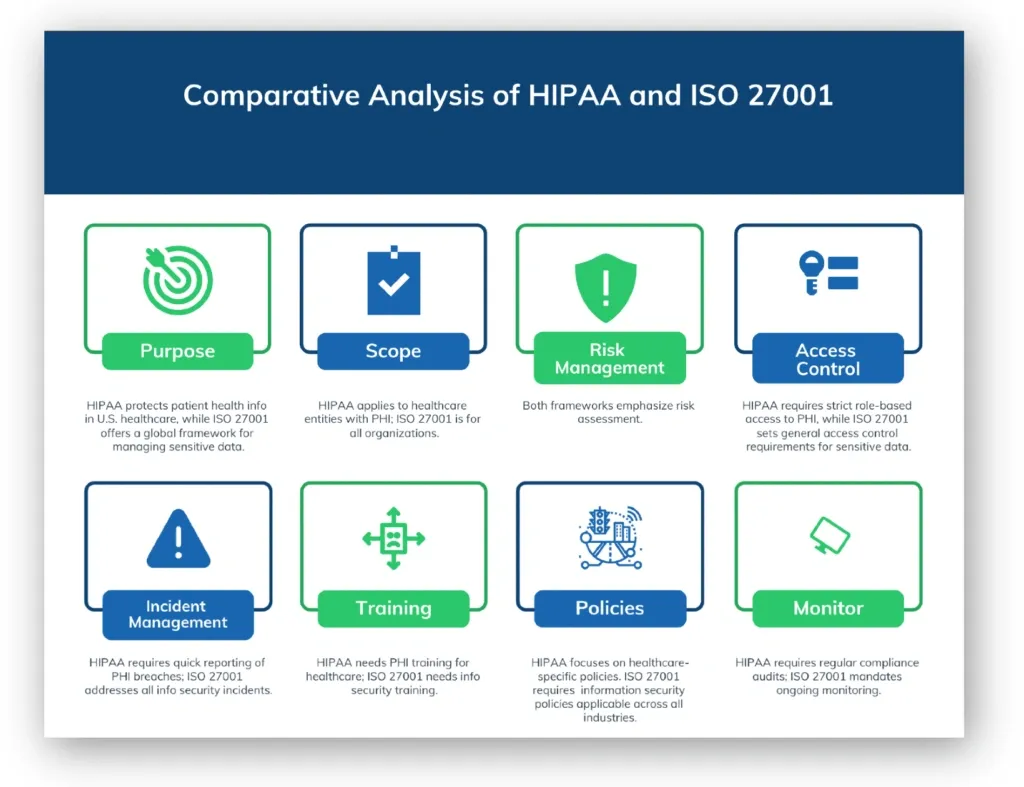
Image Source: Centraleyes
Healthcare organizations will face unique information security challenges in 2026. The digital transformation in this sector has created more attack points, and security measures have become vital.
Why Healthcare Organizations Need ISO 27001 Certification in 2026
Growing Cybersecurity Threats in Healthcare
Healthcare remains one of the most targeted sectors for cyberattacks, and the results can be devastating. Last year, cyberattacks hit over 90% of healthcare organizations, and breaches affected more than 37.5 million people. Attackers keep targeting medical facilities because healthcare data tops the black market’s most wanted list.
Money losses tell an equally worrying story. Healthcare workers fell victim to phishing attacks that cost USD 9.77 million on average in 2024. Overall breach costs averaged USD 7.42 million. The U.S. Department of Health and Human Services handed out USD 12.84 million in HIPAA violation fines related to breaches in 2024.
These attacks hurt patient care directly. Seven out of ten healthcare organizations say cyberattacks disrupt patient care. Procedures get delayed 56% of the time, and death risks go up in 28% of cases. The WannaCry attack shows how bad it can get – it paralyzed 80 NHS trusts and racked up £92 million in costs.
Customer and Partner Requirements for ISO 27001
ISO 27001 certification has become a must-have for many RFPs and vendor partnerships. This makes sense since 60% of organizations have experienced data breaches through third-party vendors.
Big health systems now demand ISO 27001 certification from vendors who handle protected health information or connect to their systems. Hospitals and enterprise healthcare clients expect this certification as standard practice. This creates a domino effect across healthcare, making certification crucial for business relationships.
Regulatory Compliance Benefits Beyond HIPAA
HIPAA compliance might be required, but ISO 27001 brings extra value. The standard shares about 40% of its controls with HIPAA, which makes compliance easier. It helps clear up HIPAA’s fuzzy requirements, cutting down on costly violations and time-wasting confusion.
Getting ISO 27001 certified shows regulators you’re serious about following the HIPAA Security Rule. This can help your case if they investigate a breach. The certification proves you can track and verify compliance, giving you a clear path to handle information security risks.
Cyber insurance companies have gotten stricter. They ask detailed questions about things like multi-factor authentication, encryption, and incident response – all part of ISO 27001.
Competitive Advantage in Healthcare Market
Patients trust organizations more when they see ISO 27001 certification because it shows commitment to protecting personal data. Business partners feel more confident sharing electronic protected health information with certified organizations, which boosts reputation and competitive edge.
The standard optimizes operations by standardizing processes and cutting down duplicate work. This efficiency helps organizations stand out in a crowded market.
ISO 27001’s comprehensive approach lets organizations set up controls that work for multiple frameworks. This reduces audit burnout and saves money on compliance over time. Healthcare’s tight profit margins make this streamlining valuable, along with better security.
Step-by-Step ISO 27001 Certification Process for Healthcare Providers
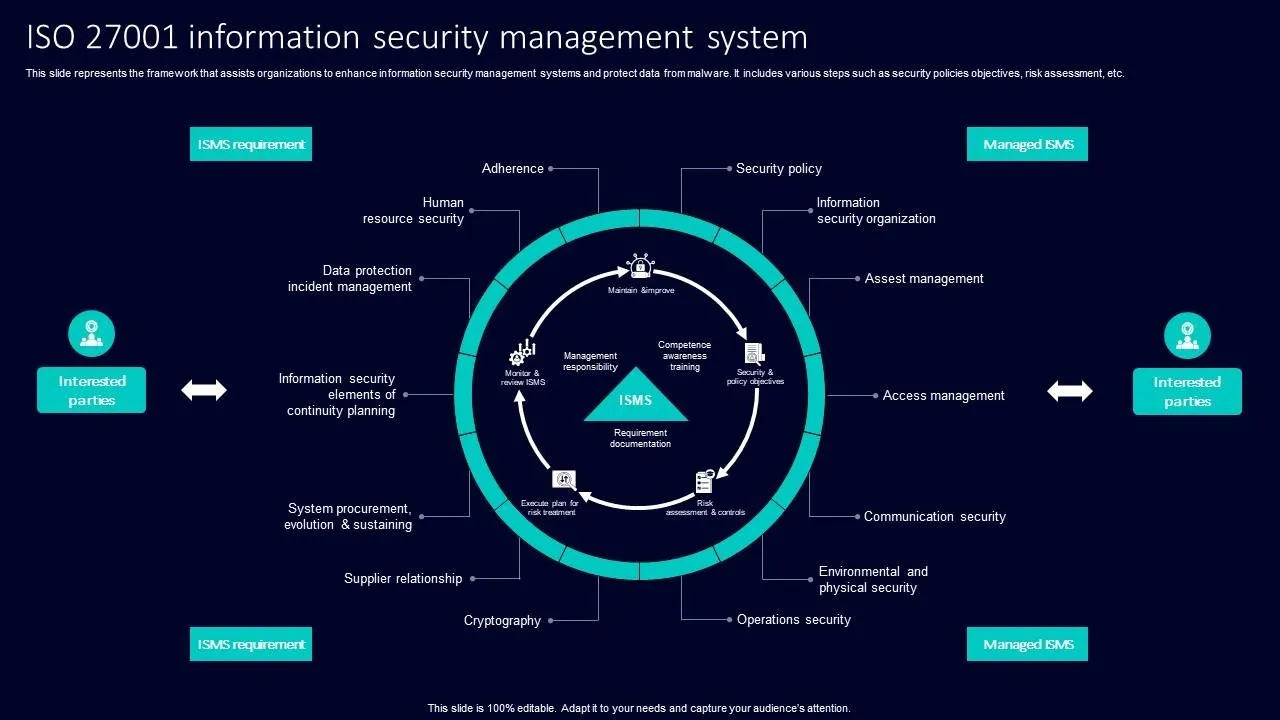
Image Source: SlideTeam
“ISO 27001 certification takes 4 to 6 months to complete. If you are implementing multiple standards at the same time, it could take longer.” — The Core Resolution, ISO 27001 certification and compliance consulting firm
Healthcare organizations need a methodical approach to get ISO 27001 certification. Most organizations take 4-6 months to prepare for the audit when they start from scratch.
Original Gap Analysis and Readiness Assessment
A detailed gap analysis kicks off the certification experience. This analysis shows where current practices don’t meet ISO 27001 requirements. Organizations can spot specific areas that need improvement before going for full certification. Healthcare organizations should focus their analysis on systems that handle protected health information (PHI), clinical workflows, and medical devices.
The gap analysis produces a detailed report. It shows non-compliant areas, partially implemented measures, and existing strengths. This assessment becomes your roadmap. It helps you prioritize critical gaps and estimate the resources and time you’ll need.
You should think over scheduling a readiness call with certification experts. They provide guidance specific to healthcare settings. Book a Readiness Call to make sure your gap analysis covers all healthcare-specific requirements.
Building Your Healthcare ISMS Framework
Once the gap analysis is complete, you need to create an Information Security Management System (ISMS) that fits your organization’s needs. This framework should work with both ISO 27001 requirements and healthcare regulations like HIPAA.
The ISMS development process has these key steps:
- Define your security program’s scope
- Get management’s commitment
- Set up information security policies
- Develop implementation procedures
- Create compliance documentation
Leadership’s dedication drives successful implementation. Top management must help create a culture of security awareness and provide resources for your certification experience.
Risk Assessment for Patient Data and Medical Systems
Risk assessment is the life-blood of your ISO 27001 certification. Healthcare organizations must find potential threats to patient data, clinical applications, and medical devices.
The risk assessment process has these components:
- Find information assets that need protection
- Look at potential threats and vulnerabilities
- Check how likely risks are and their impact
- Put risks in order based on their effects
- Create treatment plans to alleviate identified risks
About 85% of healthcare organizations don’t meet risk assessment expectations. This step needs special attention. Your documentation guides your choice of security controls.
Internal Audit and Pre-Certification Activities
An independent party should run an internal audit to check your ISMS readiness. This could be an uninvolved internal team or external contractors.
Management must review the internal audit findings and decide if fixes are needed. Major non-conformities need addressing before external audits begin.
Leadership also reviews ISMS performance and officially approves the certification initiative during this phase. These activities ensure you’re ready for the formal audit process.
Stage 1 and Stage 2 Certification Audit Process
An accredited certification body conducts two distinct audit stages for formal ISO 27001 certification.
Stage 1 auditors review your ISMS documentation to check ISO 27001 compliance. They look at policies, procedures, and your Statement of Applicability to determine Stage 2 readiness.
Stage 2 takes a deeper look at how you’ve implemented your ISMS. Auditors talk to staff, check documented evidence, and watch processes to verify effective controls. This stage tests actual implementation rather than just documentation.
Your organization gets ISO 27001 certification after passing both stages without major issues. The certification lasts three years, with regular checkups annually or semi-annually to ensure ongoing compliance.
Real ISO 27001 Certification Costs for Healthcare Organizations
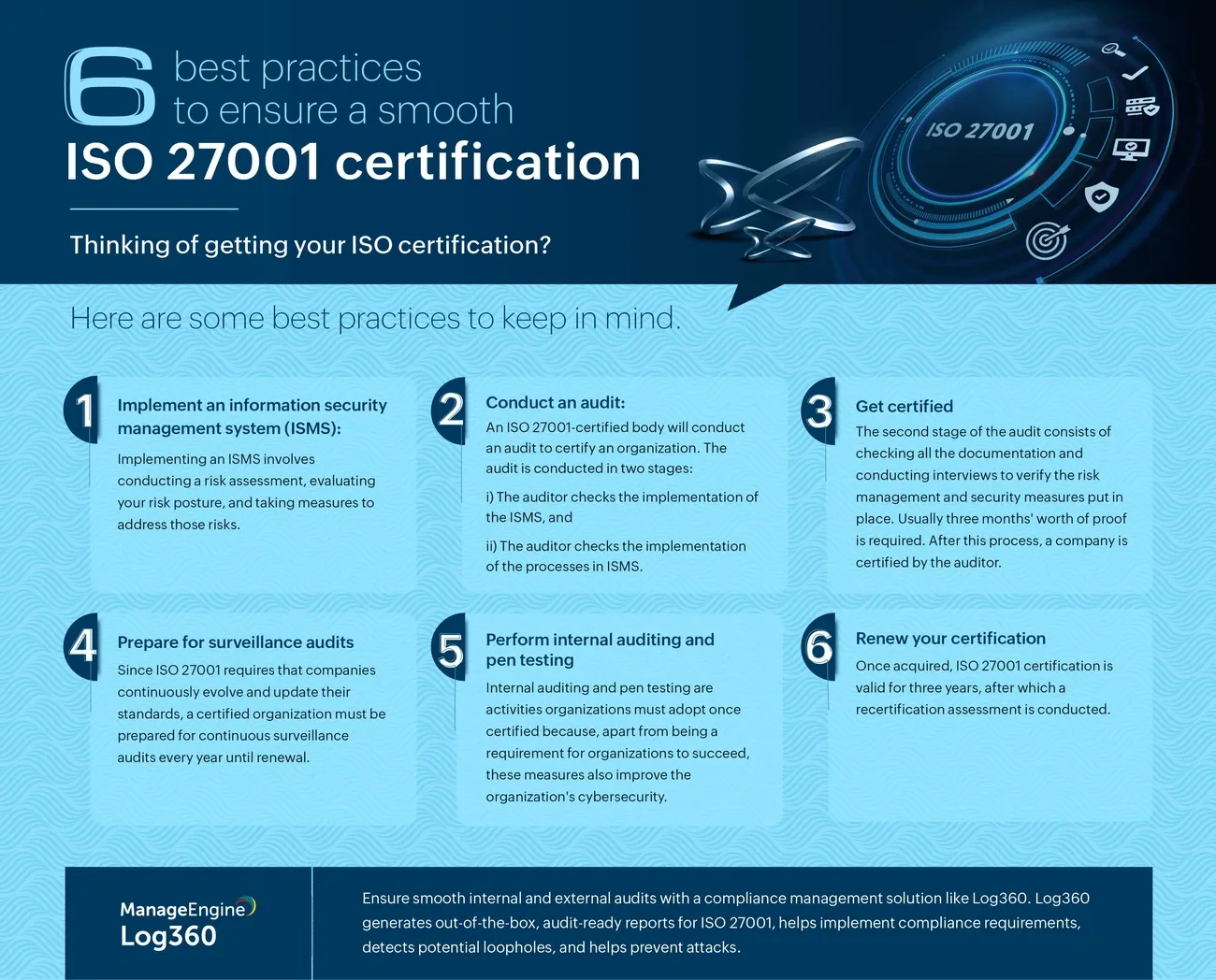
Image Source: ManageEngine
Healthcare organizations need to understand ISO 27001 certification costs to budget appropriately. The certification price tag changes based on organization size, scope complexity, and implementation approach.
Small Healthcare Practices: $10,000-$25,000 Total Investment
Small healthcare practices usually pay between $10,000 and $25,000 for complete ISO 27001 certification. The investment breaks down into these components:
- Gap analysis and readiness assessment: $2,000-$5,000
- Documentation development: $1,000-$3,000
- Staff training: $1,000-$5,000
- Certification audit: $5,000-$8,000
Practices with fewer than 25 employees tend to stay at the lower end of this range because their ISMS implementation requirements are simpler. Book a Readiness Call to get a tailored cost estimate based on your practice’s needs.
Mid-Size Healthcare Organizations: $25,000-$50,000 Range
Mid-sized healthcare organizations (25-100 employees) should budget $15,000-$35,000 for ISO 27001 certification. The costs go up because:
Technology investments alone can reach $5,000-$20,000. The implementation costs rise due to more complex infrastructures. Audits become more detailed, with costs between $10,000-$15,000.
You’ll need to plan for annual surveillance audits that cost $3,000-$10,000 per year. These yearly expenses need to be part of your long-term budget planning.
Large Healthcare Systems: $50,000+ Implementation Costs
Large healthcare systems with 100+ employees see implementation costs starting at $35,000, and this is a big deal as it means that $50,000. These systems face unique challenges:
Their audit scopes cover multiple locations, which leads to longer and pricier certification processes. Enterprise-level technology investments start at $20,000+. Consultant fees can go beyond $30,000 because of complex requirements.
Consultant vs. DIY Approach Cost Comparison
The DIY approach might look affordable at first glance. All the same, unexpected costs often pop up:
Smaller organizations spend $5,000-$15,000 on the DIY route but need to commit substantial internal resources. Consultant-helped certification costs $15,000-$40,000 but cuts down implementation time and prevents expensive audit failures.
Turnkey solutions run $30,000-$60,000 but offer complete support throughout the certification experience. While consultant fees might seem high initially, they can save money over time by avoiding mistakes and speeding up certification.
Healthcare-Specific ISO 27001 Controls and Implementation Requirements
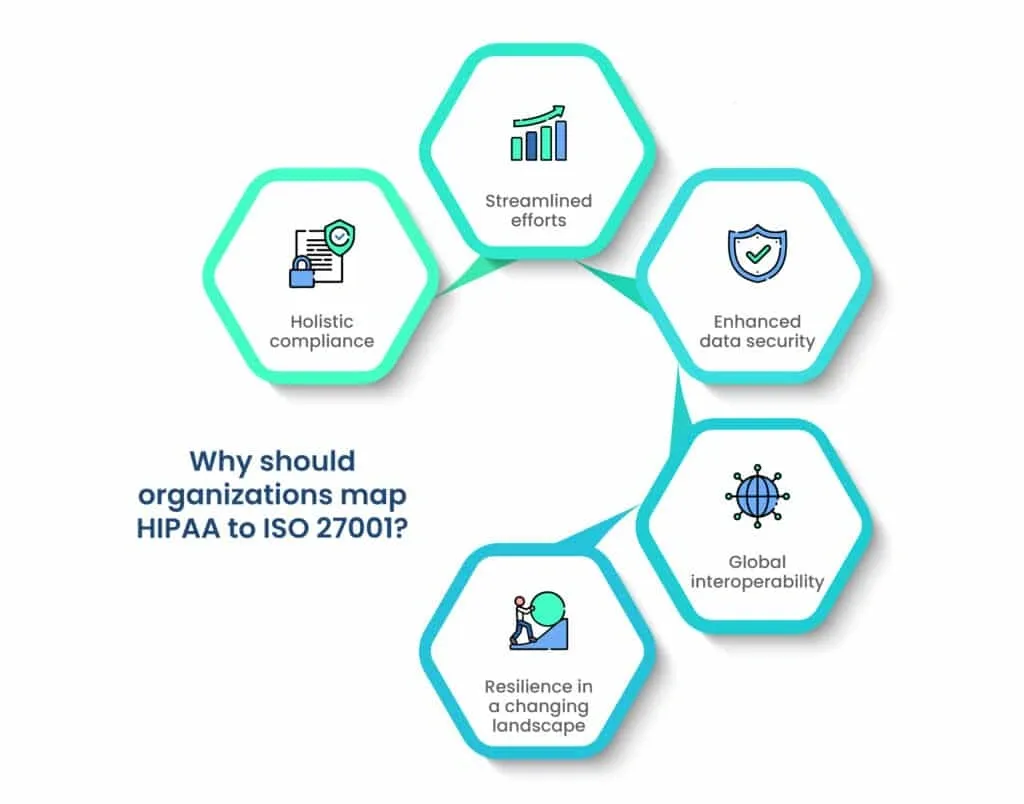
Image Source: Scrut
Healthcare organizations need specific security controls to protect sensitive patient information when implementing ISO 27001. The implementation must go beyond standard requirements to address unique technical and operational needs in healthcare settings.
Access Control for Patient Records and Medical Data
Patient data access in healthcare ISO 27001 implementations must follow the principle of least privilege. The core team should set up formal user registration processes with role-based access control (RBAC). This ensures staff can only view information they need for their duties. Privileged access rights need stricter controls and more frequent reviews. Systems require multi-factor authentication, particularly for remote access to clinical systems.
Encryption Requirements for PHI at Rest and in Transit
HIPAA considers encryption “addressable” rather than mandatory. However, ISO 27001 makes it a requirement for healthcare data. Organizations must encrypt Protected Health Information (PHI) on storage devices and during network transmission. They should use Transport Layer Security (TLS) to secure data transmissions. NIST guidelines recommend AES-256 encryption for stored data.
Incident Response Planning for Healthcare Breaches
A detailed incident response plan forms the foundations of ISO 27001. Swift containment requires healthcare organizations to prepare responses for different breach scenarios. Teams learn to prevent future breaches from documented incidents. Regular training simulations help teams handle real-life scenarios better.
Business Continuity for Critical Healthcare Operations
Critical systems in healthcare must remain accessible without interruption. ISO 27001 framework highlights the need for reliable backup systems, redundant networks, and disaster recovery plans. These help restore operations quickly after disruptions. Manual operation procedures become necessary when systems go down.
Penetration Testing and Vulnerability Assessments
Penetration testing validates security controls by simulating actual attacks. It helps prove ISO 27001 compliance, though not explicitly required. Regular pentests protect sensitive data, especially in facilities handling insurance-related information. Testing focuses on systems with sensitive patient information, such as EHR systems, medical devices, and cloud networks.
Long-Term Investment: Maintenance and Recertification Costs
“Certification audits can cost between $10,000 and $50,000, and ongoing maintenance costs like surveillance audits can range from $6,000 to $40,000 annually.” — TechMagic, Technology consulting and ISO certification cost analysis platform
Getting ISO 27001 certification starts an ongoing investment cycle for healthcare organizations. The three-year certification period demands substantial financial commitment.
Year 2 and Year 3 Surveillance Audit Expenses
ISO 27001 certification stays valid for three years but needs surveillance audits at the end of years one and two. These mandatory reviews cost between $8,000 and $15,000 each year. The cost is about half of the original certification audit. The three-year term expiration triggers a full recertification audit that costs $14,000-$16,000.
Technology Updates and Security Tool Renewals
Healthcare organizations must budget for system maintenance among other audit expenses. Regular updates to ISMS documentation and security systems can reach $30,000 yearly, based on organizational needs. The continuous monitoring needs either 400 hours of in-house time or $6,000-$8,000 for external consultants.
Staff Turnover and Continuous Training Requirements
Employee training adds much to recurring expenses, with yearly costs of $1,000 per employee. External consultants charge up to $15,000 for each training session. Healthcare organizations need to factor these expenses when staff changes occur.
Organizations should streamline maintenance by centralizing documentation and implementing green practices. This strategy helps spot potential threats and manages recertification activities effectively.
Conclusion
ISO 27001 certification requires a major investment from healthcare organizations, but the benefits are worth the costs. This piece explores certification requirements, from the original gap analysis to implementation and maintenance. Small practices can expect to pay $10,000 while large health systems might spend over $50,000. This tiered structure makes security measures accessible to organizations of any size.
Healthcare providers deal with unique challenges that make ISO 27001 valuable. Cybercriminals frequently target patient data, and regulatory requirements keep getting stricter. The certification serves many purposes – it shows HIPAA compliance, meets partner requirements, protects sensitive information, and creates a competitive edge in a crowded market.
The certification needs substantial resources, but organizations should see it as a strategic investment rather than an expense. This well-laid-out approach to information security management reduces breach risks, streamlines operations, and builds patient trust. Organizations ready to begin this experience should Book a Readiness Call to review their needs and create a custom implementation plan.
The work continues after certification. Surveillance audits, technology updates, and regular staff training are ongoing commitments that keep security strong. ISO 27001 certification revolutionizes information security from isolated measures into an integrated, eco-friendly management system that adapts to new threats.
The certification costs vary by organization size and complexity. However, the alternative costs more – data breaches, regulatory penalties, and damaged reputation are nowhere near affordable. Healthcare organizations that accept new ideas about ISO 27001 certification become security leaders and build lasting frameworks that protect their most valuable asset: patient trust.
Key Takeaways
Healthcare organizations face escalating cybersecurity threats that make ISO 27001 certification essential for protecting patient data and maintaining competitive advantage in 2026.
• Healthcare faces unprecedented cyber risks: Over 90% of healthcare organizations experienced cyberattacks last year, with average breach costs reaching $7.42 million and direct impacts on patient care.
• Certification costs vary by organization size: Small practices invest $10,000-$25,000, mid-size organizations spend $25,000-$50,000, while large health systems require $50,000+ for complete implementation.
• ISO 27001 provides competitive advantages beyond compliance: The certification demonstrates HIPAA compliance, meets partner requirements, reduces cyber insurance costs, and builds patient trust through verified security practices.
• Implementation follows a structured 4-6 month process: Organizations must complete gap analysis, build ISMS framework, conduct risk assessments, perform internal audits, and pass two-stage certification audits.
• Ongoing maintenance requires significant annual investment: Surveillance audits cost $8,000-$15,000 yearly, technology updates add up to $30,000 annually, plus continuous staff training expenses of $1,000 per employee.
The certification transforms information security from isolated measures into a comprehensive management system that evolves with emerging threats, making it a strategic investment rather than just a compliance expense for healthcare providers.
FAQs
Q1. What are the main benefits of ISO 27001 certification for healthcare organizations? ISO 27001 certification helps healthcare organizations protect patient data, demonstrate HIPAA compliance, meet partner requirements, reduce cyber insurance costs, and gain a competitive advantage in the marketplace. It also provides a structured approach to managing information security risks.
Q2. How much does ISO 27001 certification typically cost for healthcare providers? The cost varies based on organization size. Small practices can expect to invest $10,000-$25,000, mid-size organizations $25,000-$50,000, and large health systems $50,000 or more for complete implementation. Ongoing maintenance costs should also be considered.
Q3. How long does the ISO 27001 certification process usually take for healthcare organizations? The certification process typically takes 4-6 months for healthcare organizations starting from scratch. This includes time for gap analysis, ISMS framework development, risk assessment, internal audits, and the two-stage certification audit process.
Q4. What are some healthcare-specific ISO 27001 controls that organizations need to implement? Healthcare organizations must implement strict access controls for patient records, encrypt PHI at rest and in transit, develop comprehensive incident response plans for breaches, ensure business continuity for critical operations, and conduct regular penetration testing and vulnerability assessments.
Q5. What ongoing costs should healthcare organizations budget for after achieving ISO 27001 certification? After certification, organizations should budget for annual surveillance audits ($8,000-$15,000), technology updates and security tool renewals (up to $30,000 annually), and continuous staff training (about $1,000 per employee annually). A full recertification audit is required every three years.