
Data leaks impacted over 5.9 million Americans in August 2024 alone. Healthcare organizations face growing cybersecurity and information security threats, making the ISO 27001 framework a vital component of their defense. The framework’s significance in modern security strategies shows in the numbers – more than 40,000 organizations worldwide have earned ISO 27001:2022 certification.
Risk assessment and risk treatment are the foundations of any working information security framework. ISO 27001:2022 serves as the life-blood that strengthens information security frameworks by lining up security measures with business goals. Organizations see real results – those using this standard report 30% fewer security incidents. The newest version brings refined controls and processes that ensure a detailed approach to Enterprise Risk Management (ERM). This piece explores how businesses can protect themselves from embarrassment, lost profits, and potential litigation due to private data leaks by combining Governance, Risk, and Compliance (GRC) practices with ISO 27001.
Aligning ISO 27001 with Enterprise Risk Management (ERM)
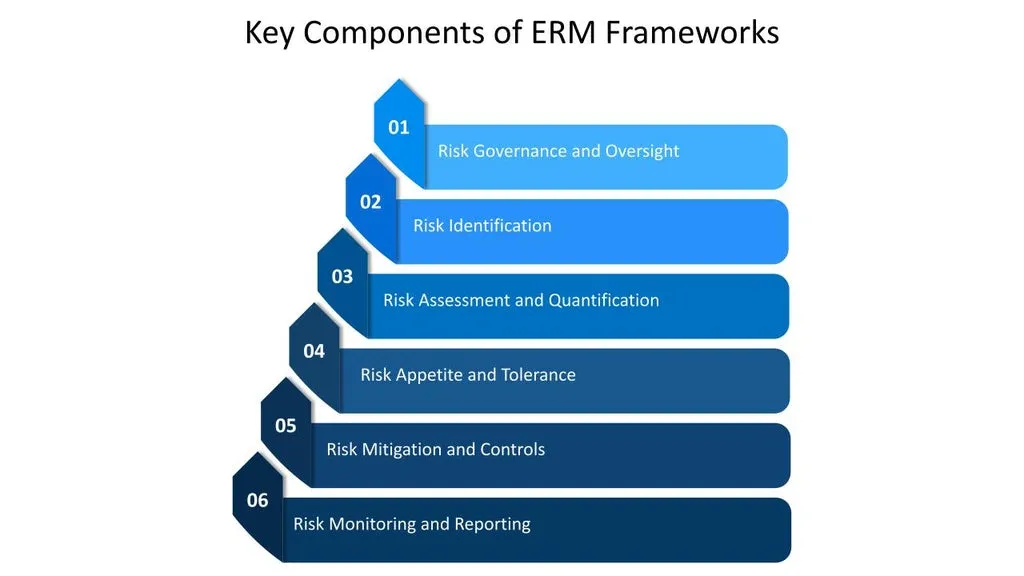
Image Source: GRC Documents
Organizations often use multiple frameworks together to build strong security. When you combine the ISO 27001 framework with Enterprise Risk Management (ERM), it creates a solid base for detailed protection. This combination helps businesses handle information security as part of their bigger risk picture and makes them more resilient.
ERM vs ISMS: Key Differences and Overlaps
Enterprise Risk Management identifies and manages risks throughout an organization. These risks include strategic, financial, operational, IT, cyber, third-party, and compliance-related concerns. The Information Security Management System (ISMS) under ISO 27001 focuses on protecting information assets, data, systems, and networks.
ERM covers more ground, but both frameworks share basic goals. ERM helps organizations reach strategic targets while managing risks. ISO 27001 sets up a systematic way to protect information through confidentiality, integrity, and availability controls. The main difference? ISMS deals with information security risks, while ERM looks at all organizational risks.
These frameworks work well together. ISO 27001 gives specific rules and controls for information security, and ERM methods help manage all types of risks. Organizations can use both frameworks without doing the same work twice.
Strategic Risk Alignment with Clause 5.1
Clause 5.1 of ISO 27001 connects information security with broader enterprise risk management. Top management must show leadership and commitment to the ISMS. The clause sets several requirements that line up security with business strategy:
The clause requires information security objectives to match the organization’s strategic direction. This ensures security efforts support business goals—a key principle of good ERM.
Security controls must become part of existing business operations. This creates a unified approach to risk instead of keeping security separate.
Top managers must set aside budgets for certification and ISMS operations. Neither information security nor risk management can work without proper funding.
The clause makes everyone responsible for information security, not just IT. This matches ERM’s view that everyone owns risk.
Benefits of Unified Risk Governance
Combining ISO 27001 with ERM brings major benefits beyond just following rules:
- Comprehensive Risk Visibility: Organizations see risks across all operations and make better decisions about resources.
- Streamlined Processes: A single approach cuts down on duplicate work and makes compliance easier.
- Enhanced Decision-Making: Leaders get financial data to make smart choices about security investments.
- Strategic Resource Allocation: Organizations can target risks precisely and put resources where they matter most.
- Consistent Assessment Standards: A unified framework creates reliable ways to assess risks and get useful results.
Organizations using this unified approach save money through better monitoring and avoid costly fixes. Clear incident response steps help everyone know what to do when problems occur.
COSO’s Enterprise Risk Management framework helps implement ISO 27001, especially through its focus on strong internal control and governance. This helps meet ISO 27001’s requirement for leadership commitment to ISMS.
Smart organizations don’t treat ISO 27001 as just a checklist. They combine it with ERM to build a system that supports both security and business goals, which makes the organization stronger.
ISO 27001 Risk Assessment Methodologies
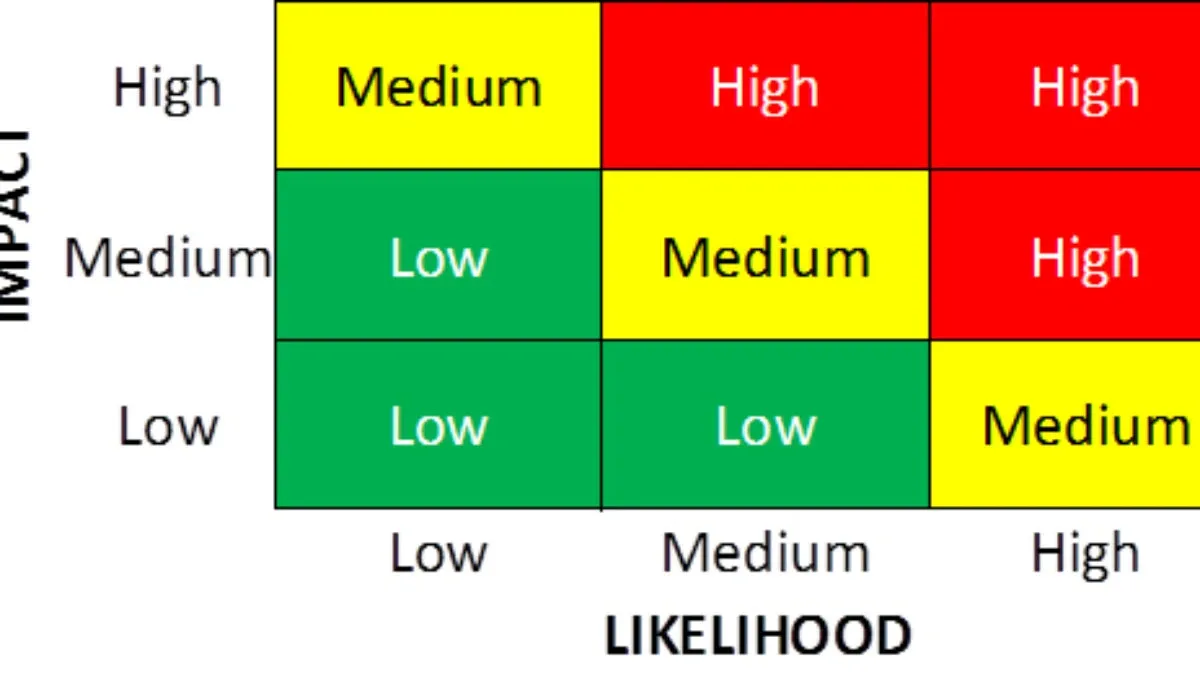
Image Source: Pivot Point Security
Risk assessment is the life-blood of a working ISO 27001 framework. Organizations need to identify, analyze, and assess information security risks in a systematic way. The standard lets businesses pick methods that work best for their specific needs and risk profiles.
Qualitative vs Quantitative Risk Assessment
When implementing ISO 27001, businesses need to choose between qualitative and quantitative assessment methods. They can also combine both to get a complete risk assessment.
Qualitative risk assessment looks at threats based on descriptive factors and expert judgment. It uses risk matrices to score how likely threats are and their effect. This method groups risks into simple terms like “low,” “medium,” or “high.” It’s available to organizations that don’t have much data. Here’s what makes qualitative methods great:
- You can implement them faster as they don’t rely heavily on statistics
- Teams with strong knowledge of assets and processes find them easier to use
- They make risk prioritization straightforward
Quantitative risk assessment uses numbers and math models to work out possible financial losses and probability patterns. This approach gives exact metrics. Teams can build strong business cases to get more security resources. The method puts specific values on likelihood, impact, and costs to reduce risks. This helps teams make data-driven decisions.
The best method depends on what data you have, how mature your organization is, and your security goals. Many organizations use both – they start with qualitative assessment to find key areas and then use quantitative analysis for high-risk areas.
Asset-Based vs Scenario-Based Approaches
Organizations also need to decide if they’ll focus on assets or scenarios when they assess risks.
Asset-based risk assessment starts by finding critical information assets like data, systems, infrastructure, people, and third parties. Then it looks at threats and weak points for each one. This method links risks directly to what matters most to the organization and creates clear ownership. It breaks down each asset assessment into three parts: assets, threats, and weak points. Organizations often create detailed lists of assets, but many make the mistake of defining them too broadly.
Scenario-based risk assessment looks at possible risk events instead of specific assets. This method creates “what-if” situations – like ransomware attacks or distributed denial-of-service incidents – and studies how they might affect the business. Scenario planning helps non-technical stakeholders understand risks better by showing how specific threats could affect business operations.
Both methods work well in different situations. Asset-based assessments are great when regulations require precise data mapping. Scenario-based methods work better for teams from different departments.
Criteria for Risk Acceptance and Evaluation
Clear criteria for risk evaluation and acceptance are essential requirements of the ISO 27001 standard. These criteria help manage risks consistently and make better decisions.
Risk acceptance criteria spell out when an organization will accept risks instead of adding more controls. The quickest way to implement this uses risk scoring with set thresholds for acceptance. Organizations write these criteria in their Risk Assessment Methodology to show external auditors they understand and follow ISO standards.
Organizations need frameworks to assess both impact and likelihood for risk evaluation. Most use a risk prioritization matrix that ranks risks based on set factors. The evaluation should look at:
- How it affects finances and operations
- How likely it is, based on current controls and threat intelligence
- Risk scores calculated using set criteria
After assessment, organizations choose how to handle risks: accept, avoid, transfer, or reduce them. Not all risks are equal – a low-risk issue with expensive fixes might be acceptable, while you’d want to reduce a high-impact threat with affordable controls.
Clear, consistent criteria will give you risk assessment results you can compare across departments and time – something ISO 27001 Clause 6.1.2 specifically asks for.
Risk Treatment and Control Implementation
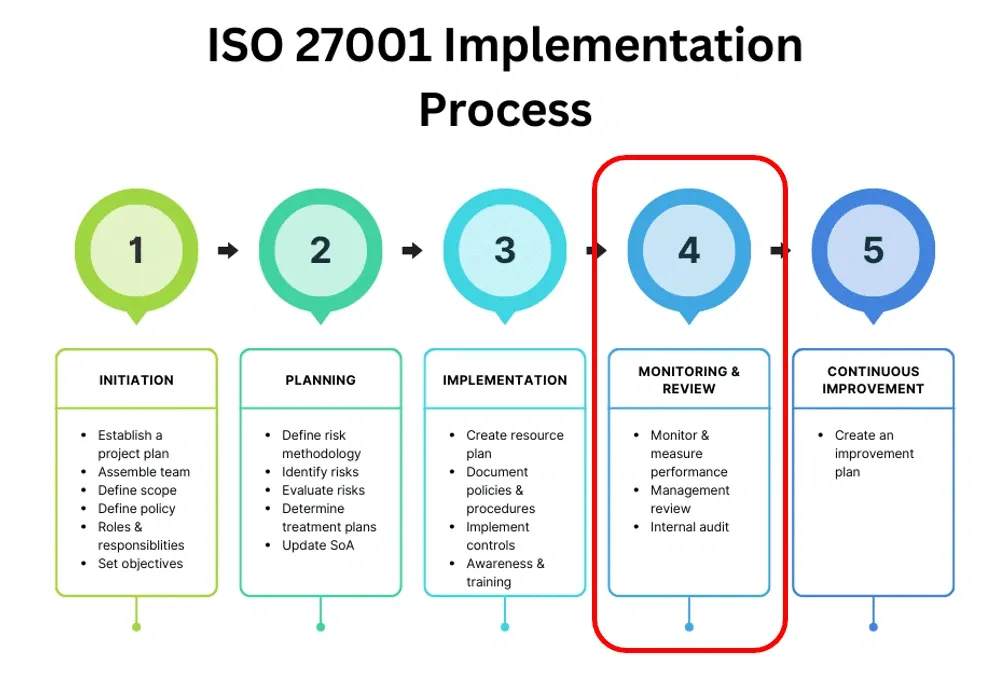
Image Source: Iseo Blue
Organizations must implement appropriate controls through a well-laid-out approach after identifying and assessing risks. The ISO 27001 framework has a complete catalog of security controls in its Annex A. These controls are the foundations of risk treatment strategies that work.
ISO 27001 Annex A: Control Categories Overview
ISO 27001:2022 Annex A has 93 security controls in four distinct categories. Each category addresses specific aspects of information security management. The current structure shows a major improvement from the previous version’s 114 controls. The categories are:
- Organizational Controls (37 controls) – These controls establish governance structures, information classification schemes, and management processes. The organizational controls cover everything not falling under people, technology, or physical security.
- People Controls (8 controls) – Though the smallest category, these controls play a vital role. They focus on employee handling of sensitive information during daily operations. Remote work, screenings, and confidentiality agreements fall under this category.
- Physical Controls (14 controls) – These controls protect physical infrastructure from unauthorized access or damage. Security monitoring, facility security, and protection against environmental threats are key aspects.
- Technological Controls (34 controls) – IT infrastructure security is the main focus here. Authentication, encryption, and data leakage prevention are some key measures.
This combined grouping eliminates redundancies from previous versions. Organizations can now identify controls based on implementation responsibility more easily.
Developing a Risk Treatment Plan (RTP)
Organizations must develop a Risk Treatment Plan after getting a full picture of risks. The RTP documents control implementation details – the who, when, budget, and success metrics.
Organizations must choose one of four treatment options for each risk:
- Risk Avoidance – Stopping activities or processes that create the risk
- Risk Reduction – Using controls to minimize likelihood or impact
- Risk Transfer – Moving responsibility to another party (e.g., insurance)
- Risk Acceptance – Taking on risks that cannot be reasonably reduced
The RTP needs risk summaries, selected controls, implementation responsibilities, deadlines, required resources, and success metrics. A good RTP connects risk identification with practical security implementation.
Organizations must document their control choices in a Statement of Applicability (SoA). The SoA explains why controls are included or excluded based on risk assessment results. This document works both as an implementation reference and management authorization for the ISMS.
Mapping Controls to Business Objectives
Security controls must directly support business objectives for risk management to succeed. ISO 27001 Clause 5.1 requires that information security objectives match the organization’s strategic direction.
A good mapping approach needs these steps:
- Finding how each control supports specific business processes or goals
- Recording these relationships in the Statement of Applicability
- Creating measurement criteria that reflect business priorities
- Making sure controls match business risk appetite
This arrangement creates several benefits. Stakeholders can see that information security supports business success rather than just being a compliance exercise. Security investments become easier to justify when linked directly to risk reduction in critical business areas.
Many organizations find value in connecting ISO 27001 controls with other frameworks they use. To cite an instance, see how mapping to NIST Cybersecurity Framework helps reduce duplication, makes audits simpler, and ensures complete coverage. Organizations can streamline their compliance efforts across multiple standards with this cross-framework approach.
Technology and Tools for ISO 27001 Risk Management
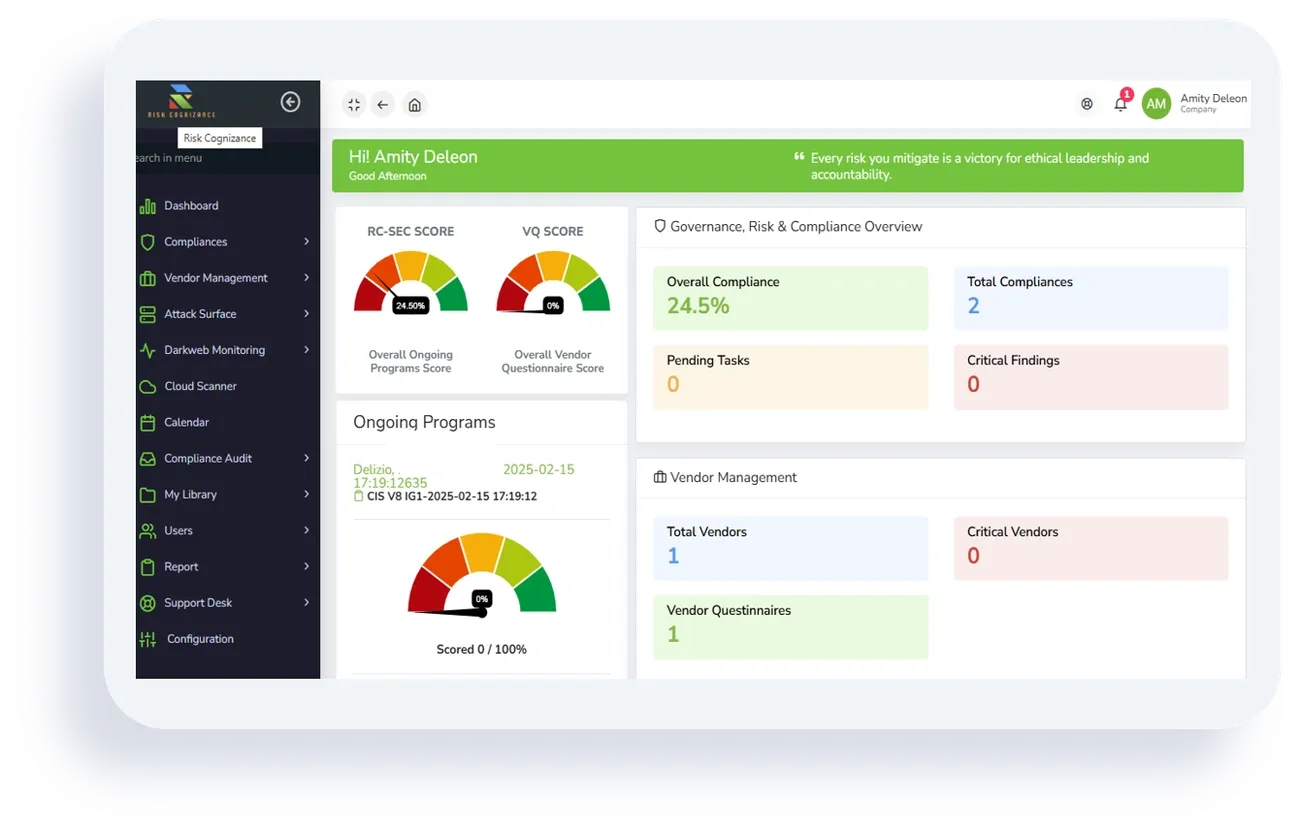
Image Source: Risk Cognizance
Modern organizations now depend on specialized technology solutions to make their ISO 27001 framework work. These tools optimize compliance processes and automate routine tasks. This lets security teams concentrate on strategic initiatives instead of getting bogged down by administrative work.
GRC Platforms for Risk and Compliance
Governance, Risk, and Compliance (GRC) platforms are essential tools that help organizations implement ISO 27001. These complete solutions change compliance from a simple checklist into an ongoing, connected process. The best GRC platforms offer:
- Centralized management of ISO controls, policies, risks, and evidence
- Optimized workflows for task assignment and evidence collection
- Complete reporting and analytics for compliance status tracking
- Pre-built frameworks mapped to regulations like ISO 27001
- Customizable dashboards with immediate metrics on prioritized tasks
To name just one example, ZenGRC brings automation to ISO management and cuts down manual effort through automated reminders and task tracking. AuditBoard puts all ISO controls and documentation in one platform and links each control directly to policies and assets.
Organizations should review a GRC platform’s auditing capability, data reporting, analytics, risk management tracking, workflow management, and customization options before making a choice. The right platform should grow with your organization and work well with your existing technology.
Automation in Risk Monitoring and Reporting
Automation changes how we handle ISO 27001 compliance by removing manual processes that eat up valuable resources. Modern compliance platforms with automation can cut manual effort in half. This gives security teams time to work on strategic projects instead of routine tasks.
Continuous Control Monitoring (CCM) marks a big step forward. It gives you immediate visibility into security posture and catches control failures before they show up in audits. This approach turns ISO 27001 from a box-ticking exercise into a meaningful security program that protects you around the clock.
Vanta’s platform connects with over 300 tools to find compliance gaps and alert teams about issues needing attention. Abriska 27001 helps spread ownership of information risk across organizations. You retain control while teams can easily share risk and control assessments.
Automated compliance platforms bring several benefits:
- Non-stop monitoring that finds possible gaps and risks
- Automated evidence collection that solves version control issues
- Immediate insights for proactive vulnerability management
- Optimized workflows that reduce internal costs
Integration with Existing ITSM and ERP Systems
Good ISO 27001 implementation needs uninterrupted connection between compliance tools and business systems. Modern GRC platforms don’t work alone – they connect directly with IT Service Management (ITSM), Enterprise Resource Planning (ERP), and other vital systems.
ISMS.online makes this integration easier with tools that help map IT landscapes. This aids in finding critical assets and data flows that need protection. LogicManager’s platform brings compliance, risk, and audit teams together in one space. Everyone works from the same live record.
Modern ITSM platforms connect with Security Information and Event Management (SIEM) and Security Orchestration, Automation, and Response (SOAR) tools. This creates immediate alerts, auto-ticketing, and analytical reporting. The integration connects support and protection, so teams review every service incident through a security lens.
Organizations using integrated solutions save 20-60% in costs during their first few years. ITSM integration also adds structure to security operations. It connects incident response, patch management, and compliance workflows into one system.
The best results come from tools that naturally connect with Jira, Okta, AWS, and customer relationship management platforms. These connections sync evidence automatically without manual copying between systems. This creates a stronger and more efficient ISO 27001 risk management program.
Challenges in ISO 27001 Implementation
The ISO 27001 framework creates major hurdles even for organizations that prepare well. These challenges can derail security initiatives and waste valuable resources if teams don’t deal with them properly.
Resource Constraints and Budget Planning
Money becomes the first big obstacle when adopting ISO 27001. Many organizations don’t realize the true investment needed and fail to account for both direct and indirect costs. The first-year certification costs range between $10,000 and $35,000. Smaller organizations (under 50 employees) usually spend less than $15,000 for their original audit. Larger enterprises with complex systems should set aside at least $20,000 just for audit activities.
The hidden costs add up beyond certification through:
- Internal audits ($5,000-$15,000 annually)
- Policy documentation and control setup
- Security awareness training
- Testing, including penetration tests (starting around $4,000)
- Team productivity changes during evidence preparation
Yearly surveillance audits ($5,000-$10,000) and recertification every three years put extra pressure on budgets. Book a Readiness Call with experts to create a realistic budget that helps avoid financial surprises during the project.
Stakeholder Engagement and Training
A successful rollout needs coordination between engineering, IT, HR, legal, operations, and executive leadership. In spite of that, employee participation often falls short, which leads to security risks through negligence or misunderstanding.
Building effective security awareness programs needs:
- Advance planning that matches different roles and duties
- Regular sessions (at least monthly) to include new employees and contractors
- Fresh content that covers new threats
Training options include using internal teams (which affects productivity), hiring external consultants ($25 per employee per session to $1,500 one-time fees), or setting up online self-paced modules.
Overcoming Documentation Fatigue
ISO 27001’s detailed documentation requirements can overwhelm teams, especially those without existing frameworks. The standard needs clear, detailed policies and procedures that match the organization’s ISMS.
These strategies work well:
- Looking at current documentation to find gaps
- Starting with templates as a base
- Getting employees to help create policies that reflect real practices
- Using document control systems to manage versions and distribution
Organizations that take a comprehensive approach to ISO 27001 stay certified by showing proper security practices in their daily operations. This turns documentation from a burden into a valuable business asset.
Continuous Improvement and Audit Readiness
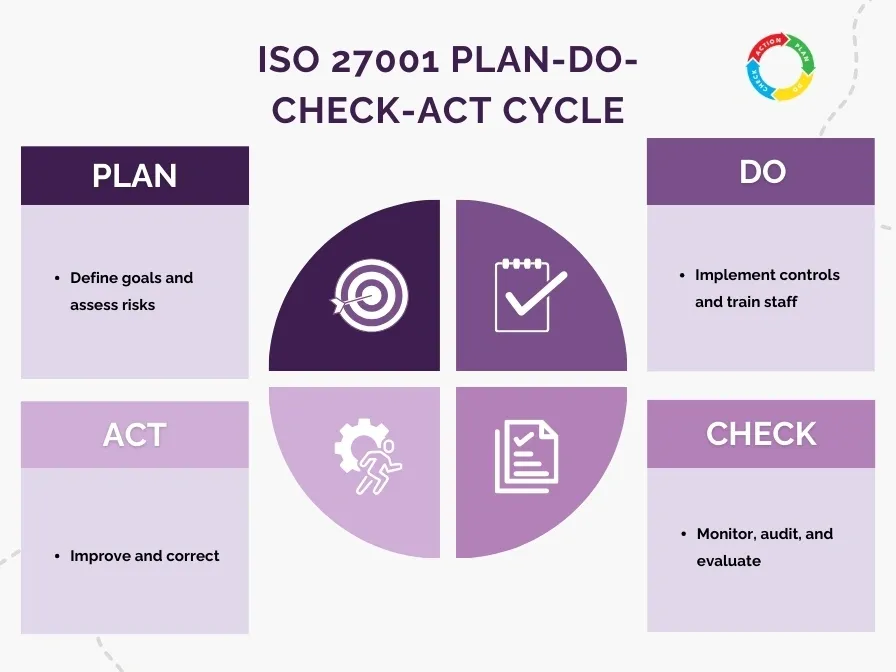
Image Source: Consultants Like Us
Organizations must show steadfast dedication to continuous improvement and audit preparation for their ISO 27001 framework to succeed. The certification needs constant alertness well beyond the original implementation.
Clause 10.1: Continual Improvement Practices
Clause 10.1 requires organizations to “continually improve the suitability, adequacy, and effectiveness of the information security management system“. Living evidence forms the foundation of this requirement. Audit findings, incident reviews, and feedback become catalysts for proactive change. Success depends on three repeatable practices:
- Regular analysis that gets into every audit finding, incident, and staff suggestion
- Clear ownership and deadlines for documented actions
- Verification that improvements address why problems happen
Smart organizations don’t treat improvement as just an audit exercise. This approach prevents shallow security maturity.
Preparing for Certification and Surveillance Audits
ISO 27001 certifications last three years. Organizations typically undergo surveillance audits each year after certification. These audits check how teams resolved previous nonconformities and evaluate ISMS performance. Teams should Book a Readiness Call with implementation specialists 4-6 weeks before scheduled audits. This helps identify and fix potential gaps.
Using Metrics to Drive Security Maturity
Performance indicators should measure how well security controls work. Valuable metrics include:
- Fewer repeat findings that show organizational learning
- Faster issue resolution times
- Higher staff involvement through completed training
Auditors look for behavioral metrics as proof that staff understand and follow security requirements. This becomes a crucial factor in passing ISO 27001 audits.
Conclusion
ISO 27001 framework is the life-blood of organizations that need reliable information security management. This piece shows how the framework reshapes the scene of enterprise risk management through systematic assessment, treatment, and continuous monitoring. Organizations using ISO 27001 see a 30% drop in security incidents, which proves it works against modern cyber threats.
ISO 27001’s integration with Enterprise Risk Management creates powerful synergies beyond just compliance. Organizations can see risks better, work efficiently, and allocate resources strategically. So businesses know how to protect sensitive information while meeting their strategic goals.
Risk assessment methods are the foundations of good implementation. Organizations must set clear evaluation and acceptance criteria, whether they use qualitative or quantitative approaches. On top of that, they choose between asset-based and scenario-based assessments based on their context and security goals.
The implementation trip has its challenges. Resource limits, stakeholder involvement issues, and too much paperwork can stop even well-planned projects. All the same, organizations that take an integrated approach turn these challenges into chances to improve security.
Technology solutions play a vital role in making compliance easier. GRC platforms, automation tools, and system integration cut manual work by 50%. Security teams can focus on strategic projects instead of administrative tasks.
ISO 27001 means more than getting certified—it helps organizations improve security continuously. Getting certified is just the start of a long-term commitment to better security. Success depends on steady improvement, audit readiness, and measuring what matters.
Cyber threats keep getting more complex and frequent. ISO 27001’s structured approach gives organizations a tested way to stay strong. Companies that adopt this framework can protect sensitive data, keep stakeholder trust, and support their business goals in today’s complex risk landscape.
Key Takeaways
The ISO 27001 framework provides a comprehensive approach to information security that goes beyond compliance to create real business value and risk reduction.
• Integrate ISO 27001 with Enterprise Risk Management – Aligning security controls with broader business risks creates 30% fewer security incidents and streamlined governance processes.
• Choose the right risk assessment methodology – Select qualitative vs quantitative and asset-based vs scenario-based approaches based on your organization’s data maturity and specific needs.
• Leverage technology for efficiency gains – GRC platforms and automation tools can reduce manual compliance effort by up to 50%, freeing teams for strategic security work.
• Budget realistically for implementation – Plan for $10,000-$35,000 in first-year costs plus ongoing surveillance audits, training, and internal audit expenses to avoid mid-project surprises.
• Focus on continuous improvement, not just certification – Use Clause 10.1 requirements to transform audit findings and incidents into proactive security enhancements rather than checkbox exercises.
• Prepare for stakeholder engagement challenges – Success requires coordination across engineering, IT, HR, legal, and operations teams with regular security awareness training and clear documentation.
The framework transforms from a compliance burden into a strategic asset when organizations approach it holistically, creating lasting security maturity that protects sensitive information while supporting business objectives in an increasingly complex threat landscape.
FAQs
Q1. How does ISO 27001 function as a risk management framework? ISO 27001 employs a risk-based approach that guides organizations from risk assessment to treatment. It helps identify potential security vulnerabilities, analyzes their impact, and provides options for addressing these risks through specific controls and processes.
Q2. What are the key steps in implementing a risk management framework? The essential steps include: 1) Identifying potential risks, 2) Analyzing and prioritizing risks, 3) Developing risk mitigation strategies, 4) Monitoring and reviewing risks, and 5) Communicating and documenting the process.
Q3. How does an Enterprise Risk Management (ERM) framework benefit organizations? An ERM framework provides a structured approach for identifying, assessing, prioritizing, and managing risks across an entire organization. It establishes consistent processes for understanding and communicating risk, helping achieve business objectives more efficiently.
Q4. What is the relationship between ISO 27001 and Enterprise Risk Management? While ISO 27001 focuses specifically on information security risks, it aligns well with broader Enterprise Risk Management practices. Integration of the two approaches can create synergies, providing a more comprehensive view of organizational risks and more effective risk mitigation strategies.
Q5. What are some challenges in implementing ISO 27001? Common challenges include resource constraints and budget planning, stakeholder engagement and training, and overcoming documentation fatigue. Organizations often underestimate the time and effort required for proper implementation, especially in areas like employee training and maintaining comprehensive documentation.