
Risk management stands as the most complex part of ISO 27001 implementation. You might not realize this, but it’s also the most vital step when you start your information security project.
Data breaches and cyber threats pose constant risks to organizations in today’s digital world. A systematic ISO 27001 risk assessment process helps identify, assess, and address information security risks, which protects sensitive information. Your organization needs to spot potential security risks to information assets and put appropriate measures in place to alleviate these risks.
The development and maintenance of an information security management system (ISMS) follows ISO 27001’s risk-based approach. Organizations seeking ISO 27001 certification must complete a detailed and precise information security risk assessment. These risk management practices will improve your security posture and give you a competitive advantage that shows your steadfast dedication to protecting sensitive information.
Let us guide you through five clear steps to perform an ISO 27001 risk assessment. This complex but significant process will become easier to understand.
Start with Scope and Stakeholder Alignment
You need a solid foundation before getting into the technical details of an ISO 27001 risk assessment. A well-defined scope and stakeholder alignment create a strong base for your Information Security Management System (ISMS). This preparation phase helps you determine what needs protection and who will help protect it.
Define the ISMS boundaries
Your ISMS scope needs to clearly outline which information assets need protection. This basic step determines the boundaries of your information security efforts, whatever the storage location or access method.
Here are some practical steps to define your ISMS scope:
- Document your scope clearly – Create a dedicated document outlining what’s included and excluded from your ISMS. This document should be brief but detailed enough to guide internal teams and external auditors.
- Identify physical locations – Add floor plans or location descriptions to set physical boundaries of your protection efforts. This clarifies where your security measures apply.
- Map organizational units – List which departments or business units fall within your scope using organizational charts where needed.
- Determine dependencies and interfaces – List processes that depend on external providers and mark the boundaries where your control ends and others begin. Software developers using external data centers should distinguish which security aspects they control versus their providers.
Many companies new to the standard find ISMS scope definition challenging. A systematic approach makes this vital decision easier to handle. Note that your scope extends beyond office premises—it covers all information you must protect, even through remote or cloud access.
Get key departments involved and assign roles
Your ISO 27001 risk assessment needs clear role and responsibility assignments. ISO 27001 requires top management to properly assign and communicate information security responsibilities throughout the organization.
Start by identifying internal and external stakeholders interested in your ISMS outcomes. This matches Requirement 4.2 of ISO 27001, which stresses understanding relevant interested parties and their requirements.
Your risk assessment team should include:
- IT department
- Senior leadership
- Department managers
- Legal team
- Compliance/Audit personnel
Early stakeholder participation brings several benefits:
- Risk mitigation – Different points of view ensure identification and proper handling of all potential security risks
- Improved accountability – Clear ownership stops risks from being ignored or mismanaged
- Faster decision-making – Clear roles speed up security decisions
- Business alignment – Stakeholder participation ensures the ISMS supports broader organizational goals
Document and communicate these elements for effective role assignment:
- Risk identification responsibilities
- Risk evaluation and scoring duties
- Risk treatment plan approval authority
- Security control implementation tasks
- Compliance monitoring assignments
Keep these role documents current and review them regularly during ISMS maintenance. They should match your organization’s structure and fit its size, complexity, and nature.
Clarify business objectives and compliance needs
Security controls that line up with business objectives turn information security from a compliance task into a strategic advantage. Your risk assessment process should show how security measures support your organization’s strategic goals.
Your ISMS must address both internal business needs and external compliance requirements. This balanced focus helps security investments deliver maximum value while meeting required standards.
List your organization’s key business objectives and priorities first. Then show how information security measures can support rather than block these goals. You need a clear understanding of:
- Strategic priorities – Which business initiatives drive your organization’s success?
- Customer expectations – What security guarantees do clients expect or require by contract?
- Regulatory landscape – Which laws and regulations affect your information assets?
- Industry standards – What security practices does your sector typically use?
A shared vision highlighting both compliance and business success creates an environment where security boosts business. This method promotes collaboration between departments and breaks traditional barriers that can block effective security implementation.
Through collaboration with finance, marketing, HR, and legal departments, your information security team can protect revenue, build customer trust, and maintain business continuity. This collaborative process embeds security into your company’s core operations instead of leaving it as an IT task.
Finally, check how your ISO 27001 risk assessment process meets contractual obligations and compliance requirements. Well-aligned security controls often satisfy multiple needs—they protect vital information assets while advancing strategic business goals.
Step 1: Build Your ISO 27001 Risk Assessment Framework
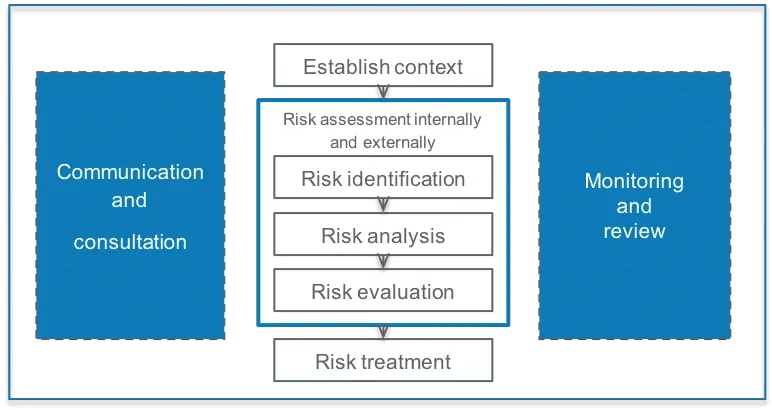
Image Source: ISMS.online
A solid ISO 27001 risk assessment framework forms the base of your information security risk management process. You need to define your scope and get stakeholders on board first. Then you can set up clear rules and methods so everyone in your organization follows the same process.
Document your risk assessment policy
Many organizations make a big mistake when they implement ISO 27001 – they start risk assessment without creating a formal method document first. This leads to mixed results and compliance problems. Your risk assessment policy should work like a rulebook that shows everyone how to handle security risks. It gives you a clear path for the whole process.
Your risk assessment policy document should spell out:
- What risk assessment activities are for and their scope
- Who owns which risks and what they need to do
- Ways to spot and record ISMS weak points
- How to figure out if risks are likely to happen and their effect
- How much risk your organization can handle
- What to do about risks once you find them
This documentation proves your organization takes information security seriously and helps make smart decisions about possible threats. A well-laid-out document helps you stay compliant and face audits with confidence.
ISO 27001’s clause 6.1.2 says you must document your entire risk assessment process in what’s usually called Risk Assessment Methodology. Without these documents, you’ll find it hard to keep things consistent between departments and show compliance during audits.
Choose a consistent scoring system
You need the right scoring system to assess risks properly. ISO 27001 lets you pick either qualitative or quantitative methods based on what works best for your organization.
A qualitative approach uses expert judgment and descriptions to rate risks. You might use risk matrices with simple scales (low/medium/high) to group threats by how likely they are and what damage they could do. Many organizations like this method because it’s simple and practical, especially when they’re just starting with ISO 27001.
To name just one example, a five-level likelihood scale could be:
- Highly unlikely
- Unlikely
- Possible
- Likely
- Highly likely
A quantitative approach uses numbers and statistics to measure risks and their chances. It’s more complex but gives you exact numbers to help decide if security investments are worth it.
Think about these things when picking your scoring system:
- Will employees understand and use it easily?
- Does it match your organization’s risk situation?
- Can it grow with your organization?
- Will it help you make clear decisions?
You also need to decide how much risk your organization can handle while pursuing its goals. This decision shapes your whole risk management strategy and changes based on your industry, rules, and company culture.
Ensure repeatability across departments
ISO 27001 requires that risk assessments give consistent, valid and comparable results every time. Risk assessment becomes pointless if different parts of your organization do it differently.
Organizations struggle most with keeping things uniform in business units of all sizes. When departments use different methods or interpret risk levels differently, you can’t compare or prioritize risks across the company. Auditors specifically check for this consistency during certification.
Here’s how to make your process repeatable:
- Write clear, step-by-step procedures that don’t leave room for guessing
- Use standard templates that collect the same information from every department
- Train everyone involved in risk assessment thoroughly
- Keep central control of the process
- Use automated tools when possible to keep methods consistent
People responsible for specific activities or assets should decide risk levels. Your risk coordinator shouldn’t try to score risks alone – people who work directly with systems and processes know more about possible threats and their effects.
The coordinator’s job is to check that different departments use scoring criteria the same way by reviewing their assessment results.
A central documentation system lets you track risk profile changes with up-to-the-minute accuracy. It makes reassessments easier and gives you a full view of your business. This approach not only helps with ISO 27001 compliance but turns risk assessment into a valuable business tool.
This careful framework-building creates a foundation to spot and handle information security risks consistently across your organization. Once you have this framework, you can move on to finding and documenting specific risks to your information assets.
Step 2: Identify and Document Risks
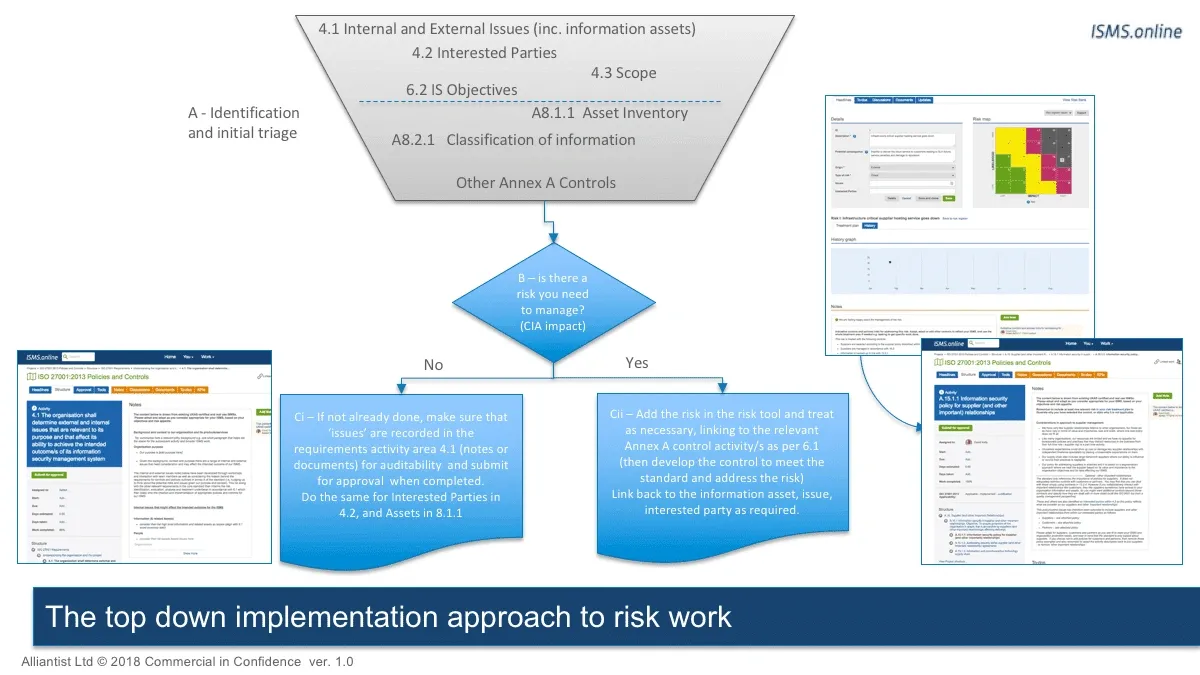
Image Source: ISMS.online
You have created a solid framework. The next important phase of your ISO 27001 risk assessment process requires you to identify and document risks in detail. Traditional approaches often face challenges at this step. Spreadsheets usually fail to capture complex relationships between assets, threats, and vulnerabilities that define your risk landscape.
Use asset-based or scenario-based approaches
You need to select a risk identification methodology that works best for your organization. ISO 27001:2022 gives you flexibility to choose between two main approaches:
The asset-based approach starts by identifying and cataloging your organization’s valuable assets and then reviews the risks associated with each. This method remains central to ISO 27001:2022. It focuses on identifying risks by reviewing potential threats and vulnerabilities linked to information assets (Clause 5.3). This approach has:
- An inventory of assets (physical, digital, human, etc.)
- Identified vulnerabilities and threats to each asset
- A review of potential impact if each asset is compromised
- Protection strategies for high-value assets
The scenario-based approach begins with potential events or situations that could harm your organization. You start with risk situations and work backward to identify contributing factors instead of beginning with elements that lead to risk. This method has:
- Brainstormed possible risk scenarios
- Analysis of likelihood and potential impact for each scenario
- Strategies to prevent or reduce these scenarios
Many experts find the scenario-based approach easier to learn and understand. This makes it valuable for organizations starting their risk assessment process. Users tend to identify risk situations more readily than the elements leading to them. This results in faster risk identification.
Each approach offers unique benefits based on your organizational context:
- Asset-based: Works better for operational security; more detailed but needs more resources
- Scenario-based: Better fits strategic planning; more intuitive but might miss some risks
The best strategy often combines both methods. Start with scenario-based assessment to identify relevant assets, threats, and vulnerabilities. Later expand to include more detailed asset-based evaluation. This combined approach unites the strengths of both methods and ensures thorough risk identification without overwhelming your team.
Include internal, external, and supply chain risks
Your ISO 27001 risk assessment must cover risks from multiple sources in detail. The identification process should look at:
Internal risks that come from within your organization:
- Employee errors or negligence
- Malicious insider actions
- System failures and technical vulnerabilities
- Process inefficiencies
Operations teams help identify operational risks while IT security specialists assess technical vulnerabilities.
External risks that come from outside your organization:
- Targeted cyberattacks
- Natural disasters
- Regulatory changes
- Market changes
Supply chain risk management needs special attention in modern information security. ISO 27001 emphasizes third-party risks because organizations now depend heavily on external vendors for critical services. This creates vulnerabilities that attackers often target.
Supply chain risk assessment needs:
- A structured framework that lines up with ISO 27001 standards
- Mapped supply chain dependencies related to your sensitive assets
- Evaluation of first-tier suppliers and third-party services
- Assessment of geographic concentration risks (if many critical vendors operate in the same region)
Technology dependencies need careful review. System failures can affect other systems and impact core operations. Map how systems interact and note data flows between vendors and internal systems to find potential vulnerabilities.
A detailed supply chain risk review looks at:
- Third-party access vulnerabilities (like weak VPN controls)
- Service and infrastructure exposures from cloud hosting or SaaS applications
- Software component integrity issues
- Reputational and compliance risks
Regular audits and assessments help maintain oversight. This allows you to find security gaps quickly. You should also create thorough vetting processes for potential partners and monitor existing suppliers continuously.
Use ISO 27001 risk assessment templates
Your risk identification process needs standardized documentation for consistency. ISO 27001 risk assessment templates offer structured formats to capture all relevant risk information.
A typical ISO 27001 risk assessment template has fields for:
- Asset Name
- Associated Threats and Vulnerabilities
- Likelihood and Impact Ratings
- Calculated Risk Level
- Selected Treatment Option
- Residual Risk
- Assigned Risk Owner
Here’s an example template entry: Asset: Customer Database Threat: Unauthorized access Vulnerability: Weak password policy Likelihood: High | Impact: Severe | Risk Score: 20 (High)
These templates have three key components:
- ISO 27001 vendor security questionnaire: Gets information about vendors’ compliance with the international information security standard
- Statement of Applicability (SoA): Lists all ISO 27001 controls being implemented, measured against the Annex A control set
- Risk assessment report: Unites alignment data from the questionnaire and SoA
Risk documentation should use both qualitative and quantitative evaluation methods:
- Qualitative approaches use risk matrices to score likelihood and impact
- Quantitative methods calculate potential financial losses and probability distributions
A detailed risk documentation process follows this sequence:
- Conduct asset-based threat modeling with cross-functional teams
- Find vulnerabilities across technology, processes, and human factors
- Review potential impact using financial and operational metrics
- Review likelihood based on current controls and threat intelligence
- Calculate risk scores using your established criteria
- Document identified risks in a centralized risk register
- Prioritize risks based on risk level and business impact
The right stakeholders must participate throughout this process. Operations teams help identify operational risks. IT security specialists assess technical vulnerabilities. Different departments provide information about their processes, assets, and risk owners.
Systematic risk identification and documentation using standard templates creates a strong foundation for your ISO 27001 risk assessment process. Good documentation helps with compliance and turns risk identification from a simple checklist into valuable business intelligence.
Step 3: Analyze and Score Each Risk
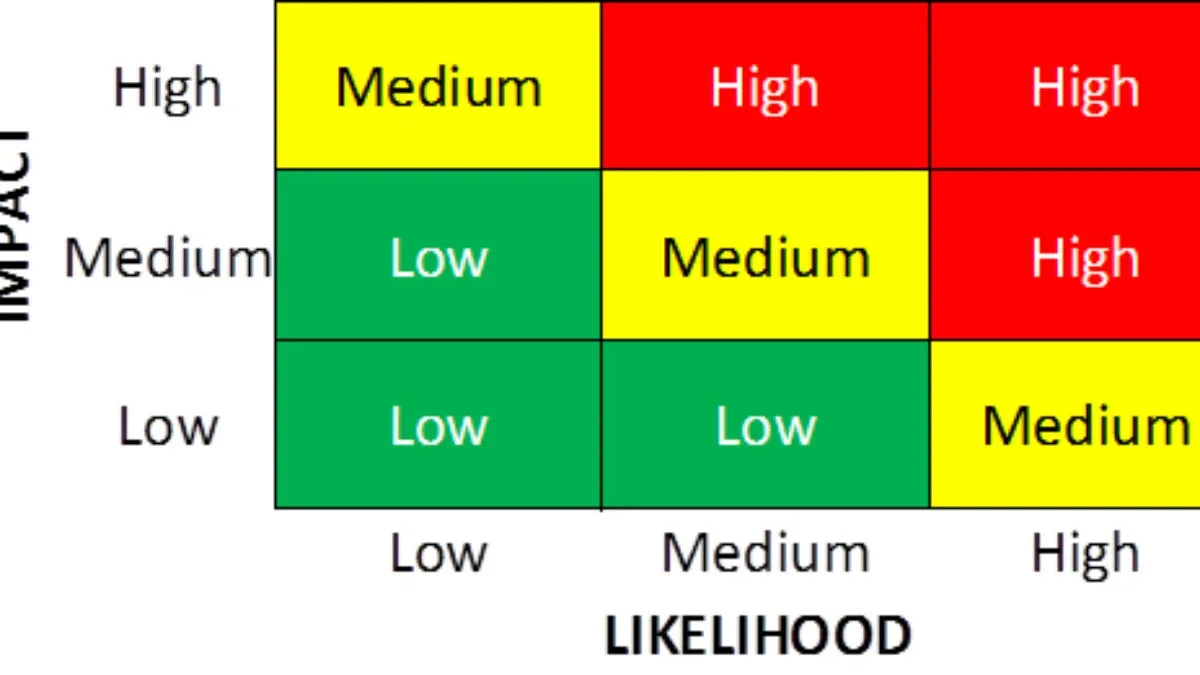
Image Source: Pivot Point Security
Once you identify threats to your information assets, you need to analyze each risk to find out how severe it is. This review creates the base for setting priorities and making treatment decisions in your ISO 27001 implementation.
Evaluate impact and likelihood
Risk analysis focuses on two key aspects: how likely a risk is to happen and what damage it could do. These two factors combined show the full picture of your organization’s risk landscape.
Impact assessment looks at what it all means if a risk becomes real. When you review impact, think over several aspects such as:
- Financial losses
- Operational disruptions
- Reputational damage
- Regulatory penalties
- Customer trust erosion
The likelihood assessment focuses on how probable a risk is, based on current controls and environmental factors.
Organizations usually use a scoring system from 1-5 or 1-10 to calculate both impact and likelihood. To name just one example, a five-level likelihood scale could have: 1) Highly unlikely, 2) Unlikely, 3) Possible, 4) Likely, and 5) Highly likely.
After you set your scales, multiply the likelihood rating by the impact rating to get a risk score. This math turns gut feelings into numbers you can compare and rank properly.
Here’s a real example of a risk assessment entry:
- Asset: Customer Database
- Threat: Unauthorized access
- Vulnerability: Weak password policy
- Likelihood: High (4) | Impact: Severe (5) | Risk Score: 20 (High)
This scoring system ranks risks clearly, so security teams can focus on the biggest threats first. Higher scores need faster action and more complete protection strategies.
Your assessment method must stay the same across all departments for results you can compare. ISO 27001 requires that risk assessments give consistent, valid and comparable results – making standardization vital.
Use a risk register to track scores
A risk register acts as your main hub for documenting, tracking, and managing all identified risks during your ISO 27001 experience. This well-laid-out tool helps you see and manage your organization’s risk landscape effectively.
A proper ISO 27001 risk register has these key fields:
- Risk description and ID
- Associated assets, threats, and vulnerabilities
- Impact and likelihood ratings
- Calculated risk scores
- Selected treatment approaches
- Residual risk after treatment
- Assigned risk owners
- Implementation deadlines
- Required resources
The risk register does more than just document things. Security teams use it to track progress, report to leadership, and show compliance during audits. Beyond compliance, an updated register gives you immediate insight into your organization’s security status.
Many teams show their risk register data in a risk matrix that plots risks by likelihood and impact scores. This matrix splits risks into groups based on scores:
- Critical (15-25): Needs immediate action
- High (10-14): Needs quick attention
- Medium (5-9): Handle within reasonable time
- Low (1-4): Watch but no rush
Leaders can quickly spot which risks need priority attention with this visual tool. Risks scoring high in both areas need the fastest response.
The risk register should change and grow as your risk landscape shifts and you put treatments in place. Regular updates keep it current with your security status.
Define your risk tolerance and acceptance criteria
Risk tolerance—how much risk you’ll accept while pursuing goals—shapes your entire risk management approach. This varies by a lot between organizations based on industry, regulations, culture, and business goals.
Clear “risk acceptance criteria” set the rules for which risks need treatment and which you can accept. These criteria serve several purposes:
- Keep risk evaluation consistent across departments
- Give security teams clear decision guidelines
- Set up risk ownership accountability
- Help allocate resources efficiently
- Line up security with business goals
Leaders must help set these criteria since the thresholds affect organizational goals and priorities. This team effort ensures risk management supports broader business aims.
Your acceptance criteria should look at more than just numbers, including:
- Regulatory requirements and compliance obligations
- Industry standards and best practices
- Organizational culture and risk appetite
- Available resources for risk treatment
- Business impact and strategic importance
These criteria help you choose the right risk treatment for each case. Risks below your acceptance level just need documentation. Those above it need proper controls from ISO 27001 Annex A.
Note that accepting risks doesn’t mean ignoring them—it means making smart choices about which risks need controls and which don’t justify more action. Document all accepted risks and review them regularly as part of your risk management.
By carefully reviewing impact and likelihood, keeping a complete risk register, and setting clear acceptance rules, you build a strong base for risk treatment decisions. This organized approach turns risk management from a checkbox exercise into a strategic tool for your business.
Step 4: Plan and Execute Risk Treatments
You’ve identified and scored your information security risks in your ISO 27001 process. The next critical phase turns assessment into action by implementing controls that address unacceptable risks.
Select appropriate controls from Annex A
ISO 27001:2022 offers a complete catalog of 93 security controls in Annex A across four distinct categories: Organizational (37 controls), People (8 controls), Physical (14 controls), and Technological (34 controls). These controls represent globally accepted best practices that protect information’s confidentiality, integrity, and availability.
Your control selection should target those that directly address specific risks rather than implementing all controls without discrimination. The standard doesn’t require implementing every control—you only need the ones relevant to your identified risks. This flexibility makes ISO 27001 suitable for organizations of all sizes and types, from startups to global enterprises.
These factors should guide your control selection:
- Direct mapping to specific risks, assets, and business processes
- Business context and objectives
- Regulatory and contractual requirements
- Available resources and implementation feasibility
The four fundamental treatment approaches apply to each risk:
- Modification/Reduction: Implement controls to decrease likelihood or effect
- Acceptance: Acknowledge and monitor the risk without further action
- Avoidance: Eliminate the risk by removing the risk source
- Transfer/Sharing: Move risk to third parties through insurance or outsourcing
Assign treatment owners and deadlines
Each risk needs a clear chain of ownership with specific responsibility tied to business outcomes. Risks should be assigned to specific individuals with authority to implement necessary changes, not departments.
Your risk treatment plan should specify:
- The person who approves or improves actions for each risk
- The individual responsible for implementing each control
- Specific timeframes and deadlines for implementation
- Required human and financial resources
Security experts emphasize that “Assign each risk to a specific stakeholder—never ‘the department'”. Individual accountability prevents issues from being overlooked and establishes clear responsibility throughout the organization.
Document decisions in the risk treatment plan
Documentation forms the core of ISO 27001 compliance. The Risk Treatment Plan (RTP) serves as your tactical roadmap and details how each control will be implemented and by whom.
A well-structured RTP has:
- Summaries of identified risks
- Selected controls and implementation strategies
- Assigned risk owners and responsibilities
- Implementation deadlines
- Required resources
- Success criteria for measuring effectiveness
The Statement of Applicability (SoA) must accompany your RTP. This mandatory document shows your security posture by detailing selected Annex A controls, their implementation, and justification for any omissions.
The SoA reveals your organization’s security profile based on risk treatment decisions to auditors and stakeholders. These documents work together to create a traceable, accountable framework that links identified risks to implemented solutions.
Conclusion
An effective ISO 27001 risk assessment process changes compliance from a basic exercise into a strategic business advantage. The five-step approach in this piece gives you a practical roadmap at any stage of your compliance trip. This method will give a clear way to identify, analyze, and address security risks that line up with your business goals.
Risk assessment forms the foundations of your ISMS implementation. Your organization stays vulnerable to security threats whatever your investments, unless you properly identify and evaluate them. Taking time to set clear assessment criteria, involve the right stakeholders, and document your processes really helps improve both security and audit readiness.
Risk management needs to stay flexible, not static. Regular reviews help your controls adapt to new threats and business changes. Clear ownership and accountability throughout the process stops critical risks from slipping through the cracks.
Organizations can Book a Readiness Call to discuss their ISO 27001 implementation challenges and get customized recommendations from experts. This step often saves time and resources while creating better security outcomes.
Getting ISO 27001 certification needs dedication and expertise. In spite of that, this well-laid-out approach makes the overwhelming process more manageable. Your organization will build a resilient information security framework that protects valuable assets through these principles and shows your dedication to data protection.
Key Takeaways
ISO 27001 risk assessment is the cornerstone of effective information security management, requiring systematic identification, evaluation, and treatment of security risks to protect your organization’s most valuable information assets.
• Start with clear scope definition and stakeholder alignment – Define ISMS boundaries, engage key departments, and align security objectives with business goals before diving into technical assessments.
• Build a documented framework with consistent scoring – Create standardized policies, choose uniform risk scoring systems, and ensure repeatability across all departments for audit compliance.
• Use comprehensive risk identification approaches – Employ asset-based or scenario-based methods to identify internal, external, and supply chain risks using standardized templates.
• Analyze risks systematically using impact and likelihood – Score each risk using consistent criteria, maintain a centralized risk register, and define clear risk tolerance thresholds.
• Execute targeted risk treatments with clear ownership – Select appropriate Annex A controls, assign specific treatment owners with deadlines, and document all decisions in formal treatment plans.
The key to successful ISO 27001 implementation lies in treating risk assessment as an ongoing strategic process rather than a one-time compliance exercise. Regular reviews, clear accountability, and alignment with business objectives transform security from a cost center into a competitive advantage that protects your organization’s future.
FAQs
Q1. What are the key steps in conducting an ISO 27001 risk assessment? An effective ISO 27001 risk assessment involves defining your methodology, identifying assets and threats, evaluating risks, determining treatment options, documenting the process, and regularly reviewing and improving your approach.
Q2. How does ISO 27001 approach risk assessment? ISO 27001 takes a process-based approach to risk assessment, requiring organizations to establish a framework, identify potential risk scenarios, evaluate impact and likelihood, create a Statement of Applicability, and develop a risk treatment plan.
Q3. What are the essential components of a risk assessment process? A comprehensive risk assessment process typically includes preparation, hazard identification, risk evaluation, determination of safety measures, implementation of controls, performance review, and regular updates to the assessment.
Q4. What should an ISO 27001 risk assessment methodology include? An ISO 27001 risk assessment methodology should be documented and repeatable, focusing on context, threats, vulnerabilities, and potential impact. It should align with business priorities and risk tolerance, while maintaining simplicity and consistency for effectiveness and audit confidence.
Q5. How often should an ISO 27001 risk assessment be reviewed? ISO 27001 risk assessments should be reviewed regularly, typically at least annually or when significant changes occur in the organization’s environment, assets, or threat landscape. This ensures the risk management process remains current and effective.