
Organizations now place ISO 27001 consultant services at the top of their information security priorities. Recent data shows 81% of organizations report current or planned ISO 27001 certification in 2025, up from 67% in 2024. Companies see a 40% reduction in major security incidents within a year of certification, which explains this upward trend.
Businesses seeking ISO 27001 certification face a key choice. They can hire external iso 27001 consultancy experts or use their internal teams. Each path has its own benefits. Companies that work with external iso 27001 consulting services report better time and cost efficiency. Using internal employees can cut costs by avoiding consultant fees.
Small to mid-sized businesses without full-time security staff might find an iso 27001 certification consultant more economical. Internal specialists offer quick access to cybersecurity expertise that aligns with your business needs. They really understand your operations. This piece analyzes both options to help you pick the approach that saves more time and money during ISO 27001 implementation.
Understanding ISO 27001 Implementation Options
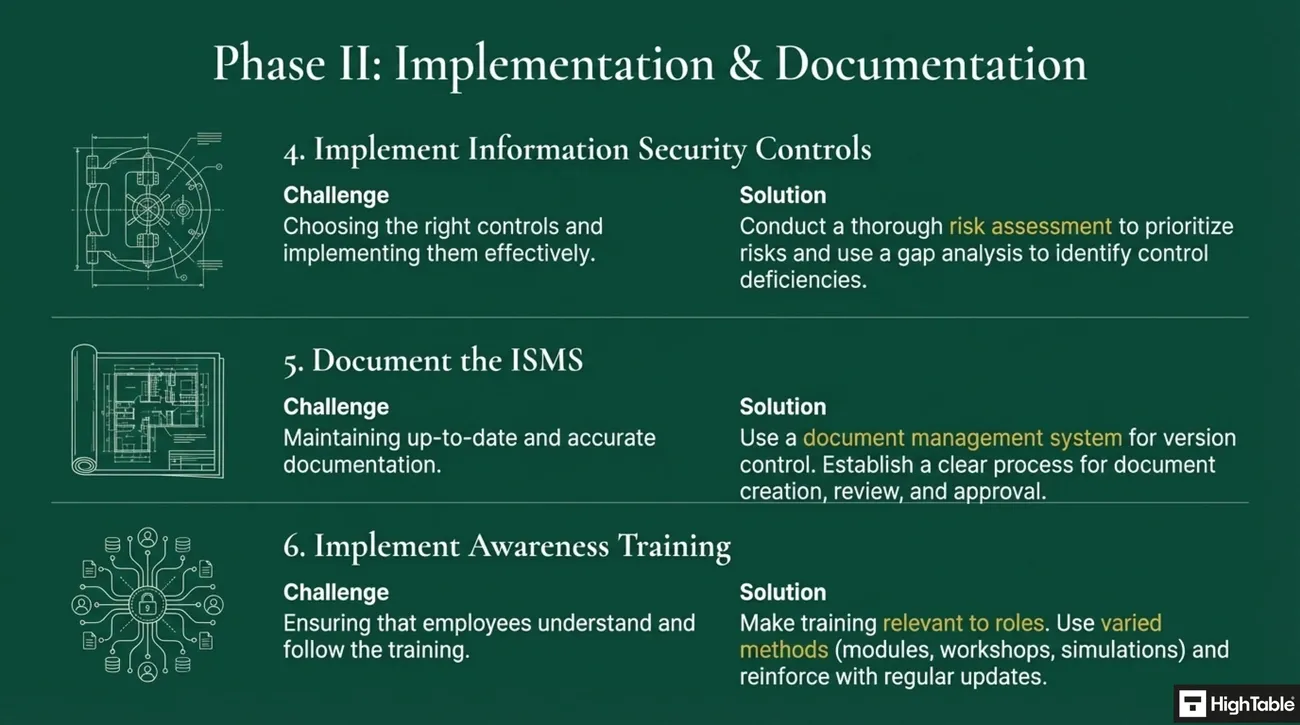
Image Source: High Table
ISO/IEC 27001 standard is the life-blood of organizations that want to establish structured information security governance. Understanding what implementation involves should come before choosing between consultants or in-house teams.
What is ISO 27001 and why it matters
ISO 27001 stands as the leading international standard for information security. The International Organization for Standardization developed it with the International Electrotechnical Commission. This standard goes beyond a simple compliance checkbox and provides a complete framework to establish, implement, maintain, and improve an Information Security Management System (ISMS).
ISO 27001 protects everything in information:
- Confidentiality: Information remains available only to authorized individuals
- Integrity: Data stays accurate and complete
- Availability: Users can access information when needed
The standard uses a risk-based approach to identify potential threats to information assets and implement appropriate controls. Recent surveys show that organizations with ISO 27001 certification face fewer security incidents and build stronger trust with customers and partners. The number of valid ISO 27001 certifications worldwide reached 71,550 in 2022—up from 45,500 in 2016.
Overview of in-house vs consultant-led implementation
Organizations often struggle with several challenges during ISO 27001 implementation:
- Understanding requirements: The standard’s requirements and scope often seem unclear
- Implementation methodology: New processes need specialized knowledge
- Project management: Implementation competes with other priorities
- System maintenance: The ISMS needs to work after implementation
An ISO 27001 consultant brings expert knowledge and experience from multiple industries. They clarify requirements and implementation methods. Their familiarity with audit requirements and common pitfalls speeds up certification. All the same, if consultants handle everything, employees might not understand how to maintain the system long-term.
In-house implementation helps build deeper organizational knowledge and ownership. The process might take longer at first but creates better compliance and integration with existing business processes. Small and medium-sized businesses without dedicated security staff might find iso 27001 consulting services more budget-friendly than building internal capabilities.
Key roles in ISO 27001: ISMS Manager, Risk Officer, Compliance Lead
A successful implementation needs clearly defined roles, whether you choose consultants or internal resources. ISO 27001 requires top management to “ensure that the responsibilities and authorities for roles relevant to information security are assigned and communicated within the organization”.
The core team includes:
- ISMS Manager: This person leads the implementation, develops the ISMS framework, coordinates risk assessments, and reports to management. Their role is vital for maintaining consistency across the system.
- Risk Officer/Owner: They take responsibility for specific risks, decide on risk treatment (acceptance, mitigation, transfer, or avoidance), and ensure controls stay effective.
- Information Security Leadership: They provide direction, approve policies, allocate resources, and show visible commitment. ISO guidance states that leadership must integrate information security requirements into business processes instead of leaving them to technical teams.
Organizations might also need roles like IT Security Manager, HR Lead for security awareness, and Legal Compliance Officer, depending on their size and complexity.
These roles need clear definition to ensure successful implementation and ongoing compliance, regardless of whether internal staff or iso 27001 certification consultants fill them.
Cost Breakdown: In-House Team vs ISO 27001 Consultants
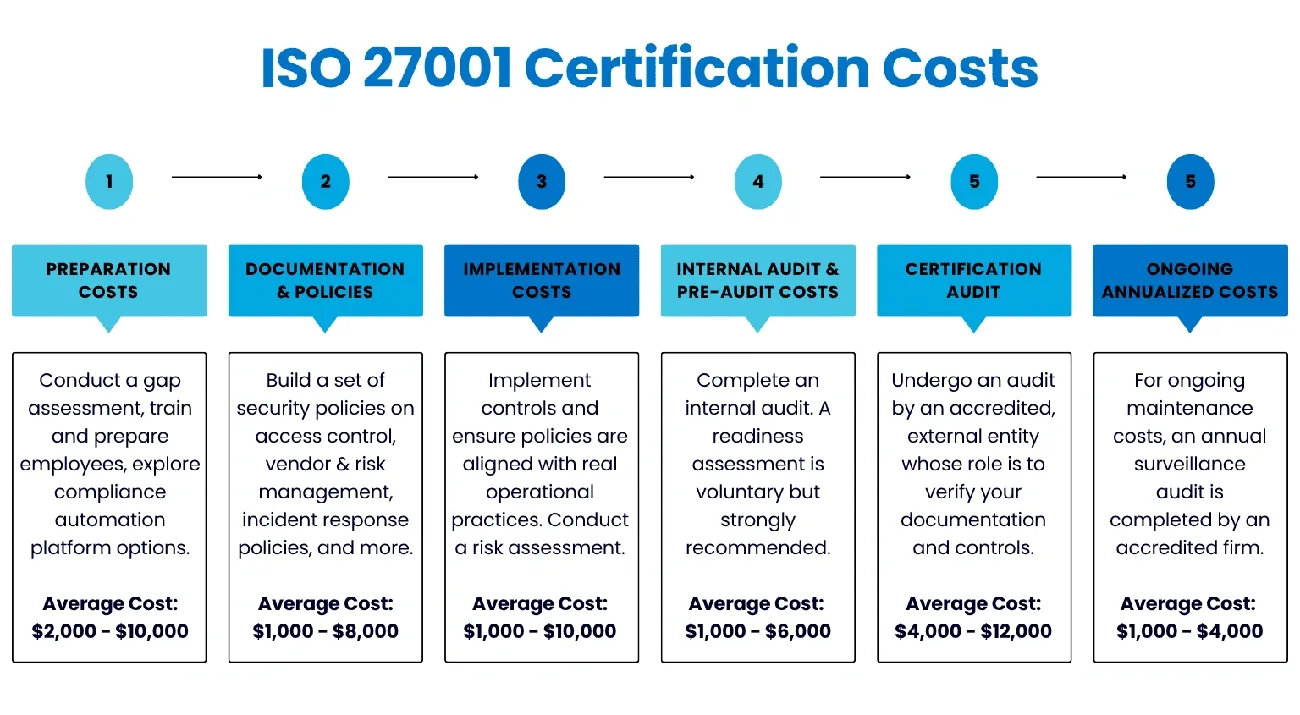
Image Source: Rhymetec
Money plays a vital role in choosing between building your own ISO 27001 team or bringing in outside experts. You need to look at both immediate costs and long-term investments to make an affordable choice.
Training and certification costs for internal staff
Building expertise within your company requires a big upfront investment. ISO 27001 training costs range from $500 to $1,500 per employee. A complete training program can cost up to $15,000, especially when it includes specialized roles like lead implementers and internal auditors.
Companies often underestimate these costs. Basic staff awareness training costs about $25 per user, while trainer-led sessions can reach $150 each. The required cyber security training for ISO 27001 compliance adds about $1,000 each year.
The certification materials add to your expenses. The official ISO standards documentation for both ISO 27001 and ISO 27002 costs around $350. These documents are the foundations of your team’s implementation work.
Consultant fees: hourly vs project-based pricing
ISO 27001 consultants offer different pricing options that affect your budget:
- Hourly rates: Freelance ISO 27001 consultants charge $80 to $200 per hour. This works best if you need help with specific parts of certification.
- Daily rates: Bigger projects cost $1,400 to $1,800 per day. This applies to services like gap analyzes or internal audits.
- Fixed-fee packages: Many ISO 27001 certification consultants offer complete project pricing. Prices range from $3,000-$10,000 for gap analysis to $20,000-$50,000 for full certification support.
Complete consulting support typically costs $20,000-$50,000. This includes expert guidance that speeds up your certification process.
Hidden costs: onboarding, delays, and rework
Internal resource costs catch most companies by surprise. Plan for 200-500 hours of internal work, even with external ISO 27001 consultants.
The workload spreads across your organization:
- Information security team spends 50-75% of their time
- IT department puts in 25-30% of their work hours
- Department heads give 10-15% of their time
- Executive leadership dedicates 5-10% of their schedule
Failed initial audits lead to extra costs for fixes. Companies doing it themselves often take 9+ months instead of 3, which raises opportunity costs substantially.
Book a Readiness Call with experienced ISO 27001 consultants to know your organization’s preparation needs and avoid costly delays.
ROI over 1, 3, and 5 years
The return on investment for ISO 27001 includes both ongoing costs and potential savings:
Your certification lasts three years with yearly checkups in years two and three. These annual audits cost between $5,000 and $7,500. The third year needs a full recertification that costs about the same as your first certification.
The benefits justify the costs for 73% of certified companies. With average data breach costs at $4.24 million, prevention through security measures provides substantial financial protection.
Companies focused on long-term security find better ROI over five years with proactive certification than reactive security measures. This includes benefits from increased customer trust and competitive edge.
Time to Certification: Which Approach is Faster?
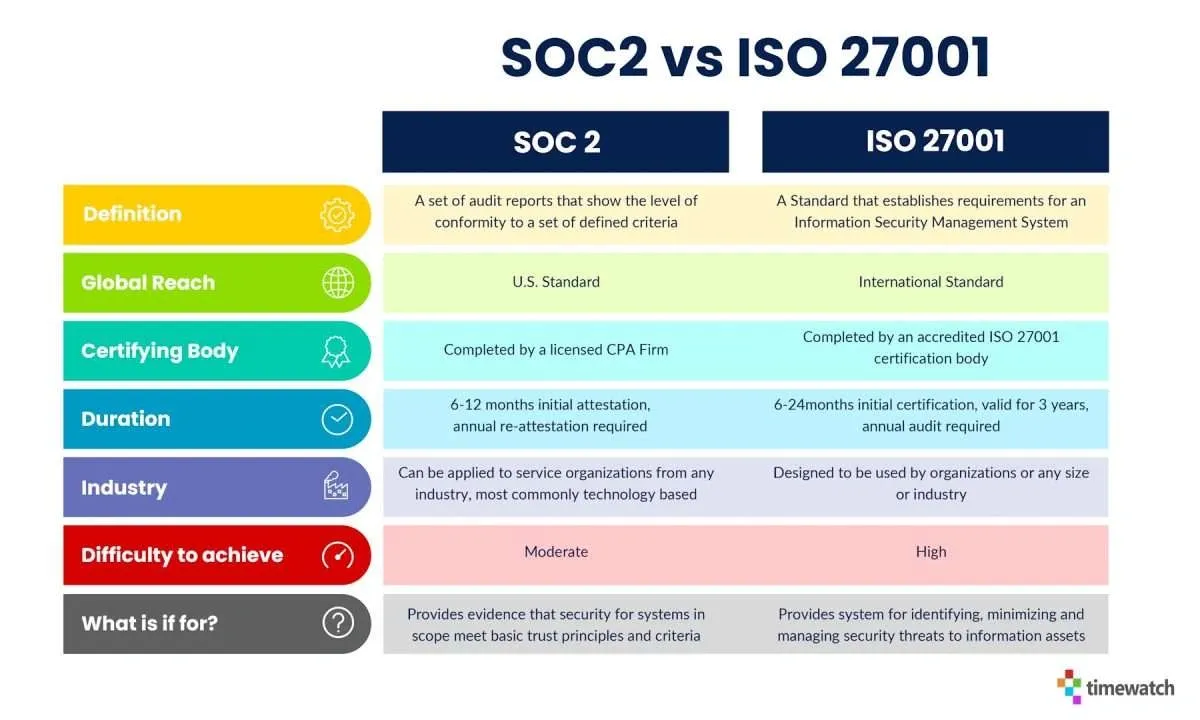
Image Source: Timewatch
Organizations rush to get certified when clients demand it or security deadlines loom. Your approach to ISO 27001 implementation affects how fast you’ll get there, and this directly hits your bottom line.
Average time to certification with consultants
Companies working with ISO 27001 consultants get certified faster than those going solo. The whole process takes 6-12 months from start to finish. Expert ISO 27001 certification consultants can speed this up even more.
Some companies got certification-ready in just 3 months by working with specialized ISO 27001 consultancy services. This happens because consultants:
- Know exactly what documentation you need
- Can spot common audit issues before they happen
- Keep everyone focused on what matters for certification
- Give you battle-tested templates and frameworks
Your organization’s size and IT setup complexity still play a big role in timing. Larger companies or those with complex systems might need extra time, no matter which path they choose.
Time required for internal team ramp-up
Going the DIY route usually takes longer. Teams starting from scratch need 6-12 months or even more. The reason? Your team has to learn the standard while putting it into practice.
Small companies that already have good security practices might wrap things up in about 3 months. Companies with existing security frameworks move faster than those building everything from scratch.
Book a Readiness Call to figure out your ideal timeline based on your security maturity and available resources.
Impact of experience on audit readiness
Experience makes a huge difference in certification speed. The ISO 27001 certification process has two main audit stages:
- Stage 1: Documentation review and audit readiness assessment (about a month)
- Stage 2: Implementation verification and control effectiveness evaluation (1-3 months)
Teams new to this often need more time because of fixes they need to make. When auditors find issues, fixing them can add weeks or months to the process. Each round of corrections pushes your certification date further out.
Case study: 40% faster certification with external help
Here’s a real example: one company earned their ISO 27001 certification in under 3 months with ISO 27001 consulting services. Another company nailed both ISO 27001 and SOC 2 audits in less than 9 months with consultant help—and they passed with zero issues.
Companies that make certification a priority and put enough resources behind it move faster. This matters because certification typically takes 3-12 months depending on how ready you are, what resources you have, and how complex your ISMS is.
ISO 27001 consultants bring specialized knowledge that can cut your certification time way down, especially if this is your first time through the process.
Expertise and Skills: Internal Gaps vs Consultant Strengths
ISO 27001’s technical complexity creates expertise gaps that companies must address. The path you choose doesn’t matter. Companies often underestimate the specialized knowledge needed until they’re halfway through their compliance trip.
Skills gap analysis for ISO 27001 clauses and Annex A controls
A complete implementation demands expertise in both ISO 27001 clauses and Annex A controls. The ISO 27001 framework contains ten main clauses that establish the management framework. Annex A’s 93 security controls are hosted in four categories: organizational, people, physical, and technological. Companies often find expertise shortfalls in multiple domains. These range from technical elements like cryptography implementation to operational aspects like third-party risk management.
Clause 7.2 (Competence) requires companies to “determine the necessary competence of people doing work under their control that affects information security performance”. This goes beyond general security awareness. Security architects must understand threat modeling. Developers need secure coding practices, and system administrators must implement access controls correctly. Most organizations don’t have this specialized knowledge in-house.
Training needs for in-house teams
Companies must invest in complete training programs for internal implementation. ISO 27001 awareness training costs about $25 per employee. Trainer-led sessions can reach $150 per session. Simple awareness isn’t enough. Specialized certifications like Lead Implementer or Internal Auditor training typically cost $500-1,500 per person.
Money isn’t the only factor. In-house implementation demands substantial time commitment. Teams need resources to develop role-based competence in multiple areas—from policy development to risk management. Certification often stalls due to knowledge gaps that companies didn’t see coming.
Specialized knowledge offered by ISO 27001 consulting services
ISO 27001 consultants are a great way to get expertise that tackles common implementation challenges. These professionals have deep knowledge of the standard’s requirements and practical experience implementing controls in companies of all sizes. Their specialized knowledge helps organizations:
- Fill knowledge gaps without hiring full-time compliance staff
- Streamline compliance processes through efficiency improvements
- Improve audit outcomes through expert guidance
- Access specialized compliance tools and templates
Consultants provide targeted expertise where internal teams typically don’t deal very well with—interpreting requirements, conducting gap analyzes, developing appropriate policies, and preparing for certification audits. Their cross-industry experience proves valuable, especially when organizations pursue their first ISO 27001 certification.
Strategic Fit and Long-Term Sustainability
The success of your ISO 27001 implementation depends on how it fits your organization’s culture and grows with your business. Your choice between internal teams and external consultants will affect your information security program’s future.
Knowledge retention and internal culture building
ISO 27001’s success depends on creating a security-conscious culture in your organization. Employees who take part in implementation learn security principles better and understand their roles clearly. Internal teams create systems that match your organization’s unique operations and values.
External ISO 27001 consultants offer valuable frameworks and expertise, but sharing knowledge remains challenging. Companies that only use consultants often face knowledge gaps once the project ends. The entire organization should own information security rather than seeing it as just an IT task or compliance exercise.
Successful organizations set clear roles and responsibilities. They create open channels to report security concerns and reward security-conscious behavior. These actions help develop a culture where security becomes natural in all business functions instead of feeling like an extra task.
Scalability and adaptability to future frameworks
A good ISO 27001 implementation should grow with your organization. It removes obstacles without cutting corners. This lets companies expand their user base or change infrastructure without redoing their compliance framework.
Scalable implementations have these features:
- Policies that adapt to system changes
- Risk assessments that respond to changing conditions
- Evidence gathering that grows automatically
- Asset classification that works in all environments
Companies often add more standards to their ISMS as customer needs and regulations change. A well-laid-out foundation helps avoid rebuilding governance each time you grow.
Ongoing compliance and audit readiness
ISO 27001 certification needs constant attention. You must pass yearly surveillance audits and complete recertification every three years. These reviews make sure your ISMS stays effective and keeps up with your business and security threats.
Staying compliant needs continuous monitoring, evidence collection, and verification of access controls. Simple tracking tools fail as teams grow or people change jobs. Information gets lost, updates stop, and compliance work becomes a constant game of catch-up.
Whether you use ISO 27001 consultants or internal teams, the goal stays the same: create a security program that maintains compliance without slowing down business. The right approach turns security into a business advantage that builds trust and protects vital information.
Decision-Making Framework for Your Organization
Your organization’s unique circumstances play a crucial role in making the right ISO 27001 implementation decision. The right approach chosen early in your planning can save you from getting pricey adjustments later.
Factors to think about: size, budget, urgency, complexity
Your organization’s size directly affects implementation timeframes. Companies with 1-20 employees usually achieve certification within 3 months. This is a big deal as it means that organizations with more than 200 employees might need 8-20 months. Your decision-making process should include these key elements:
- Internal IT maturity and existing security processes
- Budget constraints and resource availability
- Contractual obligations requiring certification
- Complexity of your information systems
- Industry-specific regulatory requirements
The audit duration changes based on personnel count and organizational process complexity. Larger organizations need more extensive audit preparation.
Checklist: at the time to choose in-house vs consultant
ISO 27001 consultants are the right choice if your organization:
- Lacks dedicated compliance personnel
- Needs to implement an ISMS from scratch
- Operates in highly regulated industries
- Has complex, distributed operations
- Is preparing for a first-time certification audit
About 70% of small to medium-sized enterprises use ISO 27001 consulting services to reduce their internal teams’ workload. The in-house implementation works better if your organization has strong information security expertise or needs deep customization that matches unique operational needs.
Hybrid approach: combining internal and external strengths
The best implementation strategy often mixes internal knowledge with external expertise. This model lets ISO 27001 consultancy services provide frameworks and specialized knowledge. Internal teams then adapt these elements to your specific business context.
Internal project managers spend about 25% of their time on implementation while working with ISO 27001 certification consultants. They focus on reviewing and approving documentation. Book a Readiness Call to learn which hybrid implementation structure matches your organization’s capabilities and constraints.
Comparison Table
| Aspect | ISO 27001 Consultants | In-House Teams |
| Costs | – Hourly rates: $80-200/hour – Daily rates: $1,400-1,800 – Full certification support: $20,000-$50,000 |
– Training costs: $500-1,500 per person – Full training sessions: up to $15,000 – Staff awareness training: $25/user |
| Time to Certification | – 3-12 months – Certification possible within 3 months with seasoned consultants |
– 6-12 months typically – Duration may extend due to learning curve |
| Expertise Level | – Ready-to-use specialized knowledge – Experience across industries – Deep understanding of audit needs – Proven templates and frameworks available |
– Needs heavy training investment – Learning happens during implementation – Deep knowledge of company operations – Expertise builds over time |
| Long-term Sustainability | – Knowledge transfer poses challenges – Limited internal culture growth – Reliance on outside expertise |
– Knowledge stays within organization – Security culture grows stronger – Lines up well with organization’s values |
| Best Suited For | – Companies without compliance staff – Businesses needing rapid implementation – Complex, distributed operations – First-time certification seekers |
– Companies with security expertise – Organizations needing deep customization – Businesses with strong IT capabilities |
| Resource Commitment | – 200-500 hours of internal work needed – Project manager dedicates 25% time |
– IT team commits 25-30% workload – Security team dedicates 50-75% time – Department heads spend 10-15% time – Executive leadership invests 5-10% time |
Conclusion
Your organization’s unique circumstances will determine whether to hire ISO 27001 consultants or build an in-house implementation team. Each approach has its own advantages to think about. External consultants bring specialized expertise, faster certification timeframes, and proven methods that help avoid common pitfalls. Internal teams promote deeper organizational knowledge, stronger security culture, and better arrangement with business operations.
The financial analysis should go beyond just certification costs. Consultant fees might look high at first, but they often make up for delays, rework costs, and missed chances that less experienced internal teams face. Building in-house expertise needs substantial upfront investment in training and certification, but this knowledge becomes your organization’s valuable long-term asset.
Time pressure affects this decision by a lot. Companies with contractual deadlines or competitive pressures benefit from consultants who can speed up certification—cutting implementation time by 40% compared to internal-only approaches. Yet rushing implementation without proper knowledge transfer could create an unsustainable compliance framework.
Most successful ISO 27001 implementations ended up taking a hybrid approach. This balanced strategy uses consultants’ specialized knowledge while building internal capability for long-term program success. Organizations find that consultants can build foundational frameworks and provide targeted expertise where internal teams need help most. Meanwhile, employees can focus on adapting these frameworks to match their specific operational needs.
True information security needs security awareness throughout your organization’s culture. The end goal remains similar whether you choose consultants, internal teams, or both—creating an ISMS that protects critical information assets while supporting business growth.
The best approach balances quick certification needs against long-term sustainability. Whatever implementation method you choose, successful organizations see ISO 27001 not as a compliance checkbox but as a strategic investment in their security posture. This investment builds customer trust, reduces risks, and creates lasting competitive advantage through steadfast dedication to security.
Key Takeaways
Organizations pursuing ISO 27001 certification face a critical choice between external consultants and internal teams, each offering distinct advantages for time and cost optimization.
• Consultants accelerate certification by 40% – External ISO 27001 experts typically achieve certification in 3-12 months versus 6-12+ months for internal teams due to specialized knowledge and proven frameworks.
• Total consultant costs range $20,000-$50,000 while internal training requires $500-$1,500 per person plus 200-500 hours of staff time, making consultants cost-effective for smaller organizations.
• Hybrid approach maximizes ROI – Combining consultant expertise with internal ownership delivers faster certification while building sustainable security culture and knowledge retention.
• Internal teams build stronger long-term compliance – While slower initially, in-house implementation creates deeper organizational security awareness and better alignment with business operations.
• Decision factors include urgency, complexity, and existing expertise – Organizations lacking dedicated security personnel or facing tight deadlines benefit most from consultant services, while those with strong IT capabilities may prefer internal development.
The most successful implementations blend external expertise with internal ownership, treating ISO 27001 as a strategic investment in information security rather than merely a compliance requirement. This balanced approach ensures both rapid certification and sustainable long-term security posture.
FAQs
Q1. How can an ISO 27001 consultant benefit my organization? An ISO 27001 consultant can provide specialized expertise to guide your compliance project from design to implementation. They can help develop a robust Information Security Management System (ISMS), implement necessary security controls, and identify ways to strengthen your existing security practices in line with ISO 27001 requirements.
Q2. Is ISO 27001 certification worth pursuing for my business? ISO 27001 certification is valuable for organizations handling sensitive information, particularly in industries like SaaS, healthcare, finance, and other regulated sectors. It demonstrates a commitment to information security and data privacy, which can enhance trust with clients and partners.
Q3. What are some common pitfalls to avoid during ISO 27001 implementation? A frequent mistake is inadequate risk assessment. Organizations often fail to identify all relevant risks or prioritize them properly. It’s crucial to conduct a thorough risk assessment with input from across the organization to ensure comprehensive coverage of potential security threats.
Q4. How long does it typically take to achieve ISO 27001 certification? The timeframe for ISO 27001 certification varies depending on the approach taken. With external consultants, organizations can potentially achieve certification in 3-12 months. In-house teams typically require 6-12 months or longer, especially if starting from scratch.
Q5. What factors should I consider when choosing between in-house implementation and hiring consultants? Key factors include your organization’s size, budget, urgency for certification, existing IT maturity, and the complexity of your information systems. Consultants may be preferable for organizations lacking dedicated compliance personnel or needing rapid implementation, while in-house teams can be better for companies with strong existing IT capabilities seeking deep customization.