
Organizations are adopting AI faster than ever. Latest data shows 72% now use AI in at least one business function, up from 55% last year. The speed of adoption brings real risks since only 37% of organizations check their AI systems regularly for potential issues. This gap between how companies use AI and how they manage it makes ISO 42001 artificial intelligence standards a vital part of the process.
ISO 42001 stands out as the world’s first complete framework that helps organizations set up and improve their Artificial Intelligence Management System (AIMS). Companies can now get certified through this standard, which offers a well-laid-out way to manage AI systems responsibly and ethically. The standard splits requirements into 10 key areas that focus on managing AI risks. Companies with ISO 27001 certification have an advantage – they can get ISO 42001 certified 40% faster than others starting fresh.
Let’s walk through the steps you need to plan internal audits for ISO 42001. We’ll cover everything from setting your audit’s scope to getting ready for external certification. You’ll learn how to spot AI systems in your company, get a full picture of risks, create an audit program that works, and prepare for certification success.
Defining the Scope of ISO 42001 Internal Audit
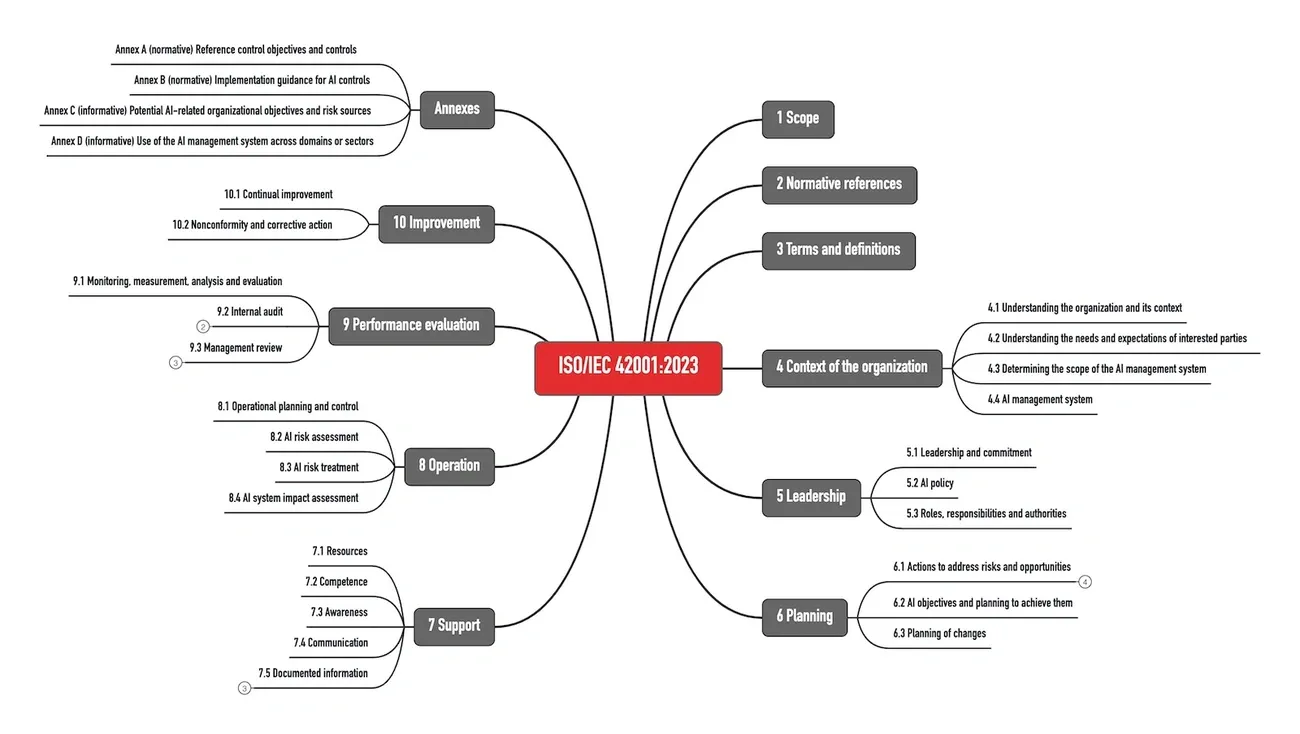
Image Source: Johner Institute
Your AI Management System (AIMS) certification journey for ISO 42001 starts with a clear definition of its scope. This crucial first step sets the boundaries for your internal audit and guides all future governance activities.
Identifying AI systems in scope of AIMS
Organizations need a detailed inventory of all AI systems that might fall under AIMS before starting an internal audit. The first step is to review your current AI applications, third-party tools, and systems you’re testing or developing. Risk level, complexity, and how they affect operations should determine each system’s category. Your scope statement should clearly list:
- Each AI system’s intended purpose
- Where the AIMS applies geographically
- Which departments handle AI activities
- Internal and external factors that shape your AI implementation
Watch out for scope definitions that are too broad or forgetting to update them when you add new AI systems.
Clarifying organizational roles: AI provider, user, or developer
ISO 42001 needs you to know which AI roles your organization plays. This shapes which requirements and controls apply to you. The main organizational roles are:
- AI Producer: Designs, develops, tests, and deploys AI products/services
- AI Provider: Sells AI products/services to customers (including platform providers)
- AI User/Customer: Works with AI systems others have developed
Organizations often play multiple roles at once. A company that builds client services using OpenAI’s technology becomes both an AI Customer (to OpenAI) and an AI Provider (to its clients). The Annex A.3.2 control needs specific people assigned to each AI lifecycle stage, which ensures someone is accountable from design through decommissioning.
Mapping ISO 42001 clauses to business functions
After identifying your systems and roles, you’ll need to connect ISO 42001 clauses to specific business functions. This links standard requirements to your daily operations. Companies that already use ISO 27001 or ISO 9001 will find it easier to add AI controls to their existing frameworks.
Clauses 4-10 deserve special attention as they cover essential requirements for context, leadership, planning, support, operation, performance evaluation, and improvement. Each clause needs clear connections to relevant departments, processes, and the people who will implement them.
Conducting Risk and Impact Assessments for AIMS
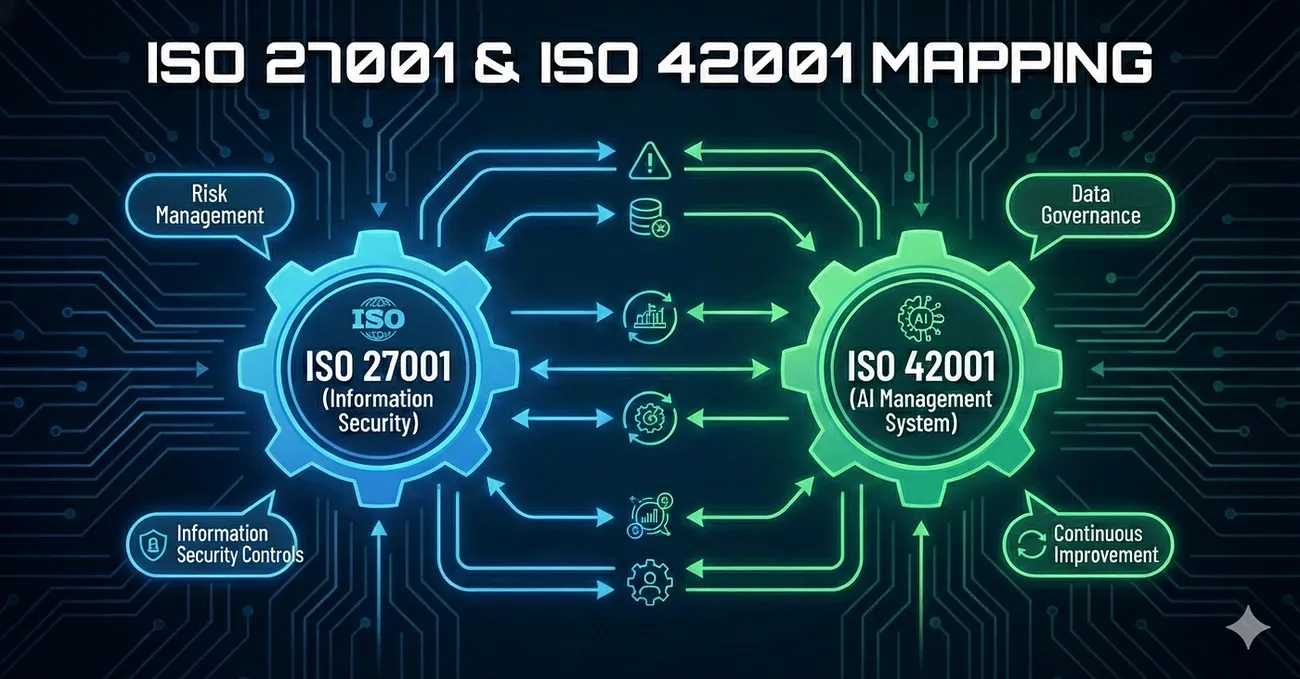
Image Source: Medium
Risk assessment is the life-blood of a working Artificial Intelligence Management System (AIMS) under ISO 42001. Organizations need to really review both technical risks and how their AI implementation might affect society during their experience.
AI-specific risk categories: bias, transparency, and explainability
ISO 42001 requires a systematic way to identify unique AI risks beyond traditional IT concerns. AI systems can develop bias from skewed or discriminatory training data, which could increase unfair outcomes as time passes. These biases can create legal and ethical problems, especially in regulated sectors like finance or human resources if left unchecked.
Transparency means making internal workflows, data sources, and decision logic visible or auditable. Explainability helps provide clear justifications for specific AI outputs to people affected by them. Recent studies show that organizations see transparency as vital, and explainability plays a key role in it.
Organizations should take these steps to deal with these risks:
- Document potential biases within training data
- Put in place bias reduction strategies like data reweighing
- Set up controls for transparent data preparation
- Use tools that create automated explanations for high-risk decisions
Using ISO 42005 for AI impact assessments
ISO 42005 offers a detailed framework to conduct AI system impact assessments that show how AI systems affect individuals, groups, and society. These evaluations look specifically at ethical, social, and legal implications throughout the AI lifecycle, unlike standard risk assessments.
The standard helps organizations create a well-laid-out system of potential harms and benefits, which makes trade-off evaluations more transparent. This approach helps identify clear accountability roles to review, approve, and update each assessment.
Linking risk outcomes to Annex A control selection
Organizations must implement operational controls (Clause 8.2) to reduce risks after identifying and reviewing AI risks under Clause 6.1 of ISO 42001. The assessment results help choose which Annex A controls to apply.
Annex A controls handle AI environment complexity through multiple aspects including accountability, fairness, privacy, robustness, security, and explainability. Organizations create a standards-based risk framework that guides ongoing AI governance efforts by connecting identified risks to corresponding controls.
Designing the Internal Audit Program for ISO 42001
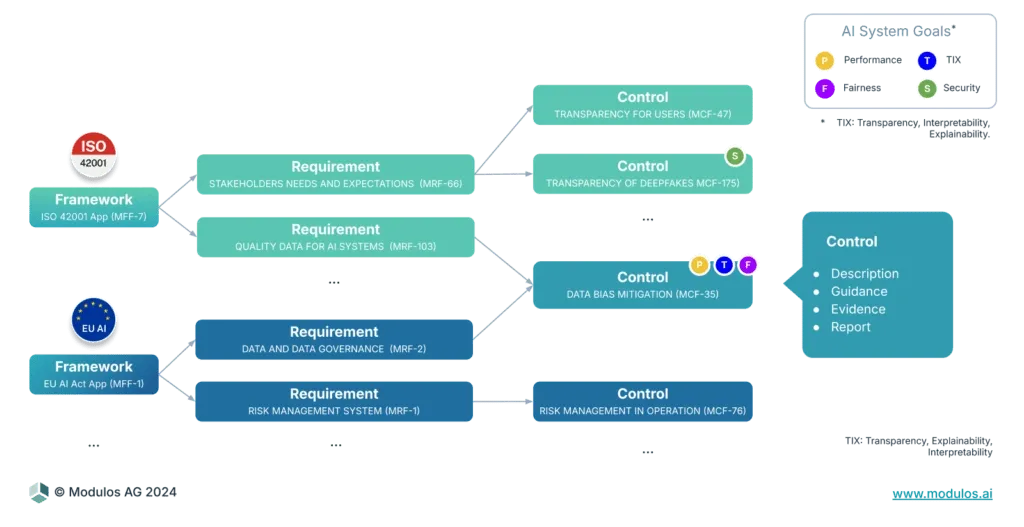
Image Source: Modulos AI
A reliable internal audit program plays a vital role to prove ISO 42001 compliance right and will give a properly working Artificial Intelligence Management System (AIMS). Internal audits show that organizations manage AI systems responsibly throughout their lifecycle.
Audit frequency and scope based on Clause 5.16
Clause 5.16 states that organizations should conduct internal audits based on AI system complexity and risk levels. The audit intervals should match how AIMS integrates with other management systems. High-risk AI applications need more frequent audits. Lower-risk systems work fine with less oversight. Organizations should write down their audit criteria as “the set of policies, procedures, and requirements used as a reference against which audit evidence is compared”.
Selecting internal auditors with AI governance knowledge
Internal auditors should know both audit methods and AI-specific risks well. The independence of auditors is a vital part – they should not work on AIMS operations. This clear separation helps get unbiased results and keeps the audit’s integrity intact. Organizations should pick auditors who know machine learning lifecycle, privacy/security, and model risk.
Creating an audit checklist that lines up with ISO 42001 clauses
The best audit checklists check compliance with all ISO 42001 clauses. They focus on:
- Leadership commitment (Clause 5)
- Risk assessment methodologies (Clause 6)
- Operational controls (Clause 8)
- Performance evaluation (Clause 9)
Documenting nonconformities and corrective actions
Audits should spot gaps between current practices and standard requirements. Teams should classify all findings, assign owners, and track solutions. This corrective action process matches Requirement 10.2. It deals with problems through root cause analysis and systematic fixes.
Preparing for External Certification Audit
The path to ISO 42001 certification concludes with the external audit – a detailed review of your AIMS by an accredited certification body. You need to understand the audit structure and documentation requirements to prepare for this milestone.
Stage 1 vs Stage 2 audit readiness
ISO 42001 certification follows a two-stage approach. Stage 1 works as an initial review of your AIMS design and takes 1-2 days. Auditors review documentation, policies, and check if your management system is ready during this phase.
Stage 2 digs deeper into operational effectiveness. This phase looks at implementation evidence across processes, confirms controls, and reviews how well your AIMS works in practice. The scope size determines the duration, which typically runs for 1-3 weeks.
Evidence collection and documentation best practices
Your certification needs complete documentation. The key items should include:
- AIMS manual outlining your AI governance framework
- Risk assessment and treatment documentation
- Internal audit reports with findings and corrective actions
- Management review records showing oversight
Auditors look for operational proof rather than static files. They want living artifacts that map to each clause, get regular reviews, and can’t be falsified. You can show evidence traceability better by keeping documentation in a secure, available repository.
Using internal audit results to close gaps
Internal audits serve as practice runs for external certification. They help you learn about areas that need improvement. You should fix all nonconformities through root cause analysis and systematic remediation. This approach shows your steadfast dedication to continuous improvement (Requirement 10.1) and builds a stronger compliance position.
Conclusion
ISO 42001 marks a major leap forward for organizations that want to manage their AI systems responsibly. This piece shows you the key parts of internal audit planning for AI Management Systems, starting with the right scope definition. A solid governance structure starts with clear identification of AI systems, organizational roles, and business function mapping.
Risk assessment is the life-blood of successful AIMS implementation. Companies need to tackle AI-specific risks like bias, transparency, and explainability. They should also get a full picture that lines up with ISO 42005. These findings help pick the right controls from Annex A to build a standards-based risk framework.
A well-laid-out internal audit program verifies compliance and shows how well operations work. System complexity and risk levels should determine how often audits happen. Auditors must know AI governance inside out. Complete checklists and systematic tracking of issues will drive ongoing improvements.
External certification needs careful preparation through two stages. The first stage looks at system design and documentation. The second stage inspects how well everything works in practice. Organizations must collect detailed evidence and fix any gaps found during internal audits to get certified.
AI adoption keeps growing faster in every industry. ISO 42001 gives organizations the structure they need to balance state-of-the-art technology with responsible governance. The standard helps bridge the gap between implementation and risk management. It builds stakeholder trust. Smart internal audit planning supports certification and strengthens AI governance maturity. This positions organizations to grow sustainably with AI.
Key Takeaways
Organizations implementing AI systems need structured governance to bridge the gap between rapid adoption and responsible risk management, which ISO 42001 provides through comprehensive internal audit planning.
• Define clear AI system scope: Inventory all AI applications, clarify organizational roles (provider/user/developer), and map ISO 42001 clauses to specific business functions for targeted governance.
• Conduct comprehensive AI risk assessments: Address unique AI risks like bias, transparency, and explainability using ISO 42005 impact assessments to inform Annex A control selection.
• Design systematic internal audit programs: Schedule audits based on AI system complexity, select auditors with AI governance expertise, and document nonconformities for continuous improvement.
• Prepare strategically for external certification: Understand the two-stage audit process, collect comprehensive evidence documentation, and use internal audit results to close compliance gaps.
• Leverage existing management systems: Organizations with ISO 27001 certification can achieve ISO 42001 compliance up to 40% faster by integrating AI controls into established frameworks.
The structured approach of ISO 42001 internal audit planning transforms AI governance from reactive risk management to proactive system optimization, ultimately building stakeholder trust while enabling sustainable AI-driven growth.
FAQs
Q1. What is ISO 42001 and why is it important for organizations using AI? ISO 42001 is the world’s first comprehensive framework for establishing and managing an Artificial Intelligence Management System (AIMS). It’s crucial for organizations as it provides a structured approach to govern AI systems responsibly and ethically, helping to bridge the gap between rapid AI adoption and proper risk management.
Q2. How should organizations define the scope of their ISO 42001 internal audit? Organizations should start by creating a comprehensive inventory of all AI systems, clarifying their roles (provider, user, or developer), and mapping ISO 42001 clauses to specific business functions. This helps determine the boundaries of the internal audit and shapes subsequent governance activities.
Q3. What are some key AI-specific risks that need to be addressed in ISO 42001 compliance? Key AI-specific risks include bias in AI systems, lack of transparency in decision-making processes, and challenges in explainability of AI outputs. Organizations must systematically evaluate these risks, along with broader societal impacts, throughout their AI implementation journey.
Q4. How often should internal audits be conducted for ISO 42001 compliance? The frequency of internal audits should be based on the complexity and risk levels of the AI systems in use. High-risk AI applications demand more frequent audits, while lower-risk systems may require less oversight. Organizations should document their audit criteria and intervals clearly.
Q5. What is the process for external ISO 42001 certification? External ISO 42001 certification follows a two-stage process. Stage 1 is a preliminary review of the AIMS design, typically lasting 1-2 days. Stage 2 is more thorough, focusing on operational effectiveness and can span 1-3 weeks depending on the scope. Proper preparation includes comprehensive documentation and addressing gaps identified in internal audits.