Data breaches cost businesses an average of $4.45 million as of 2023, and this figure keeps climbing. ISO 27001 stands as the gold standard for information security management systems, especially when you have SaaS companies where customer data drives the business. Companies that lose trust in their security practices risk losing deals, renewals, and market share.
Enterprise customers increasingly just need ISO 27001 certification before signing contracts with SaaS vendors – we’ve seen this firsthand. This makes sense since ISO 27001 ranks among the most trusted standards for information security worldwide. On top of that, it helps SaaS companies meet multiple regulatory requirements through a single recognized framework [-3]. To cite an instance, ISO 27001:2022 controls satisfy 84% of the control requirements for GDPR.
Your company’s security posture and market position can revolutionize through ISO 27001 certification. Let’s get into why this certification proves critical for securing enterprise contracts, how the framework specifically benefits SaaS businesses, and the step-by-step process to get certified.
Why ISO 27001 Certification is a Deal-Maker for SaaS
Enterprise procurement teams expect ISO 27001 certification—they don’t just ask if you have it anymore. Many organizations won’t put your SaaS solution on their vendor shortlist without this globally recognized security standard. This transformation shows how information security has become a fundamental business requirement, not just a technical concern.
Enterprise procurement requirements for ISO 27001
Big enterprises now include ISO 27001 certification requirements right in their vendor selection process. Some buyers won’t even talk to you without ISO 27001 certification. This rule applies especially to financial services, government, and critical infrastructure sectors where reducing third-party risk matters most.
The business effects are clear. SaaS companies with certification report dramatic improvements. Security questionnaires and negotiations that used to take weeks now wrap up in half a day. This can cut the sales cycle by up to a month. Sales advisory firms report that vendors who give self-serve access to security documentation close deals 30-60% faster than those who share documents manually.
Trust signals and due diligence in B2B SaaS sales
Trust works like currency in today’s security-focused market. A 2023 SaaS buyer survey revealed striking numbers. About 72% of respondents said missing security documentation would block a deal. Another 56% would immediately disqualify vendors without recent audit certifications.
ISO 27001 certification works as a powerful trust signal because it:
- Shows prospective clients you’ve put resilient infrastructure in place to protect their data from unauthorized access, breaches, and misuse
- Proves your maturity, transparency, and serious investment in security and compliance
- Offers independent verification of your security practices through thorough third-party audits
Enterprise buyers see your ISO 27001 certification and trust you more. You look less like a “shiny new startup” and more like a reliable partner. SaaS startups report closing deals 30-50% faster, and some close twice as fast when their trust center shows high maturity.
ISO 27001 vs SOC 2 in enterprise vendor selection
ISO 27001 and SOC 2 both show dedication to information security, but they serve different roles in vendor selection. ISO 27001 has international recognition and remains the preferred standard outside North America. SOC 2 sees more use in the US, where American buyers often request it.
The key differences include:
ISO 27001 focuses on building, implementing, and maintaining an Information Security Management System (ISMS). It needs all 93 controls across four themes: organizational (37), human resources (8), physical (14), and technological (34). SOC 2 lets organizations pick which criteria fit their needs. This makes it more flexible but possibly less thorough.
SaaS companies targeting international customers or running global operations find ISO 27001 certification more valuable. Many organizations get both certifications since many requirements overlap. This helps build a strong security program and win customer trust worldwide.
Understanding the ISO 27001 Framework for SaaS
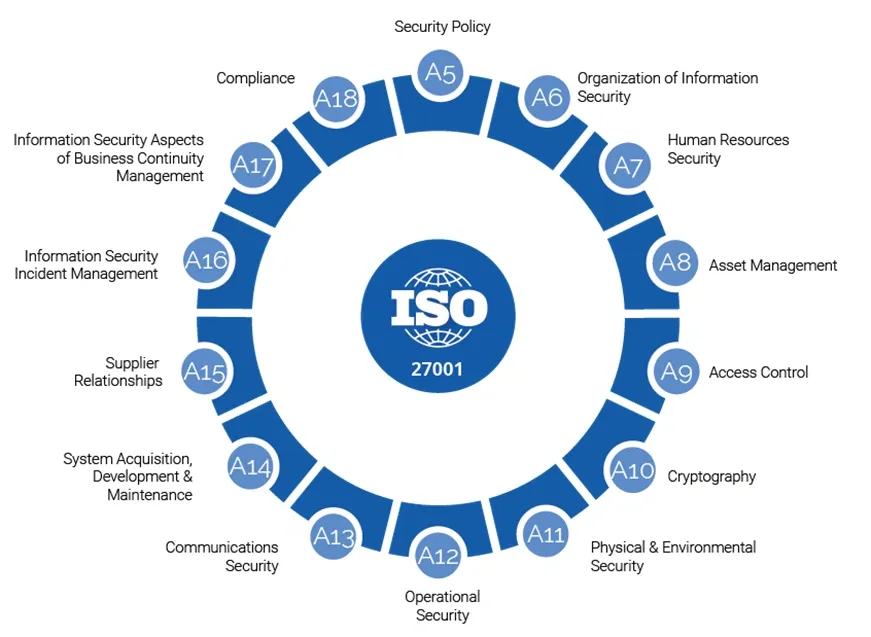
Image Source: LinkedIn
The ISO 27001 standard provides a detailed blueprint that helps create, implement, and improve information security management. SaaS companies with cloud-based operations need to understand this framework to build customer trust and show their operational maturity.
What is ISO 27001 and how it applies to SaaS
ISO 27001 stands as an internationally recognized standard that sets structured guidelines to secure sensitive information through a formal Information Security Management System (ISMS). This framework gives SaaS businesses a systematic way to manage information security risks related to data, infrastructure, and service delivery.
SaaS companies benefit because ISO 27001 stays technology-agnostic. This lets organizations adapt security controls to their cloud architecture and business model. Such flexibility is vital for SaaS environments where multi-tenant architectures, cloud infrastructure, and third-party integrations create unique security challenges.
ISO 27001 differs from other standards by focusing on building a detailed security program instead of implementing isolated technical fixes. Cloud-native SaaS businesses can establish security processes that protect customer data throughout its lifecycle—from collection and storage to processing and deletion.
Clauses 4–10: ISMS structure and documentation
ISO 27001’s mandatory clauses (4-10) form the foundations of establishing and maintaining an effective ISMS. These clauses define what creates trust and compliance, setting up the management framework where security operates.
Each clause covers specific aspects of the ISMS:
- Clause 4 (Context): Your SaaS operating environment needs understanding, including cloud infrastructure usage and customer data sensitivity
- Clause 5 (Leadership): Executive teams must commit and define security roles rather than just endorse them
- Clause 6 (Planning): Risk assessment and treatment take center stage, including cloud environment security risks
- Clause 7 (Support): Resources, awareness, communication, and documentation requirements matter
- Clause 8 (Operation): Daily operations must execute security processes and risk treatments
- Clause 9 (Evaluation): Security effectiveness needs monitoring, measuring, and internal auditing
- Clause 10 (Improvement): Continuous improvement becomes an ongoing necessity
These clauses create an integrated security management approach instead of a technical controls checklist.
Annex A: Overview of 93 controls across 4 domains
Annex A supports the management system requirements with 93 specific security controls (down from 114 in the 2013 version) in four domains:
- Organizational controls (37): Policies, roles, responsibilities, and governance practices
- People controls (8): Human factors including training, screening, and responsibilities
- Physical controls (14): Protection for physical assets and locations from environmental and physical threats
- Technological controls (34): System safeguards through access control, encryption, and network security
SaaS companies should focus on specific controls like data encryption, access management, secure development practices, and cloud service security. ISO 27001:2022 added a new control (A.5.23) for cloud services security that requires “processes for acquisition, use, management and exit from cloud services”.
Note that your SaaS company doesn’t need every single control. You can select applicable controls based on your risk assessment and document your choices in the Statement of Applicability (SOA).
Mapping ISO 27001 Controls to Enterprise Buyer Expectations
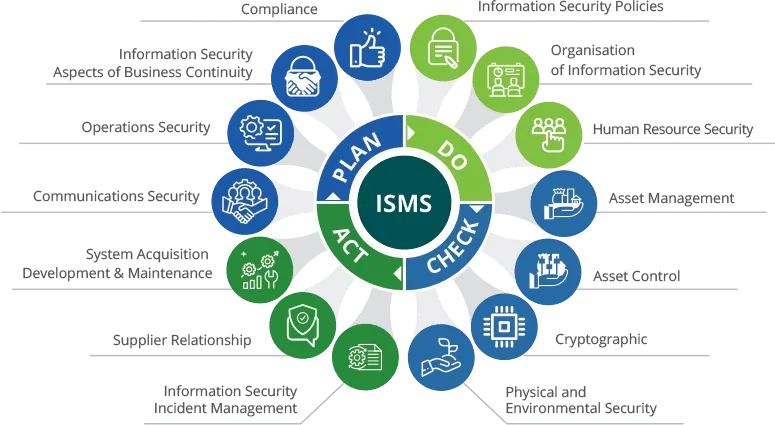
Image Source: Omnex
Enterprise security teams look for specific security measures from their SaaS vendors. ISO 27001 certification meets these expectations through targeted controls that line up with what buyers need. This certification will give a clear signal that SaaS providers meet enterprise security standards when handling sensitive information.
Access control and encryption for customer data
Protecting data is what enterprise buyers care about most. ISO 27001 tackles this through detailed access control requirements that enforce least privilege principles and role-based access limits. These controls let developers access only the environments they work on, which cuts down risk exposure.
The framework requires encryption for data both at rest and in transit using resilient protocols like TLS 1.2+ and AES-256. Customer information stays safe throughout its lifecycle, and remains confidential even if other security layers fail.
SaaS companies that put these controls in place show they take data security seriously—a key factor in enterprise buying decisions. Enterprises can check if your security practices connect attribute-based access controls cryptographically to their data, which keeps sensitive information safe wherever it goes.
Vendor risk management and third-party assessments
SaaS companies depend on many third-party vendors—from cloud providers to payment processors and monitoring tools. ISO 27001:2022 has improved this area with controls A.5.19 through A.5.23, which set detailed requirements for managing supplier relationships.
These controls require organizations to:
- Do full risk assessments that look at security posture and incident susceptibility
- Put strict access control policies in place that limit sensitive data access
- Create documented incident response and contingency plans with suppliers
- Keep track of fourth-party risks from supplier relationships
Control A.5.23 focuses on cloud services security and spells out processes for “acquisition, use, management and exit from cloud services”. Cloud service agreements are different from other supplier contracts because they’re mostly non-negotiable, so they need careful review before acceptance.
Incident response and business continuity planning
Enterprise customers expect SaaS providers to keep their services secure and available during problems. ISO 27001 control A.5.24 creates “a consistent and practical approach to managing information security incidents, events, and weaknesses”. Controls A.5.29 and A.5.30 help maintain information security during disruptions.
The incident response rules spell out steps for detection, triage, analysis, communication, and recovery. Business continuity controls make sure organizations know how to keep basic security running or restore it during disruptions.
Regular testing and validation of these controls matters a lot to enterprise buyers evaluating SaaS providers. SaaS companies that implement these measures show they’re ready for unexpected events, which addresses a key enterprise worry about operational resilience.
Step-by-Step ISO 27001 Certification Process for SaaS
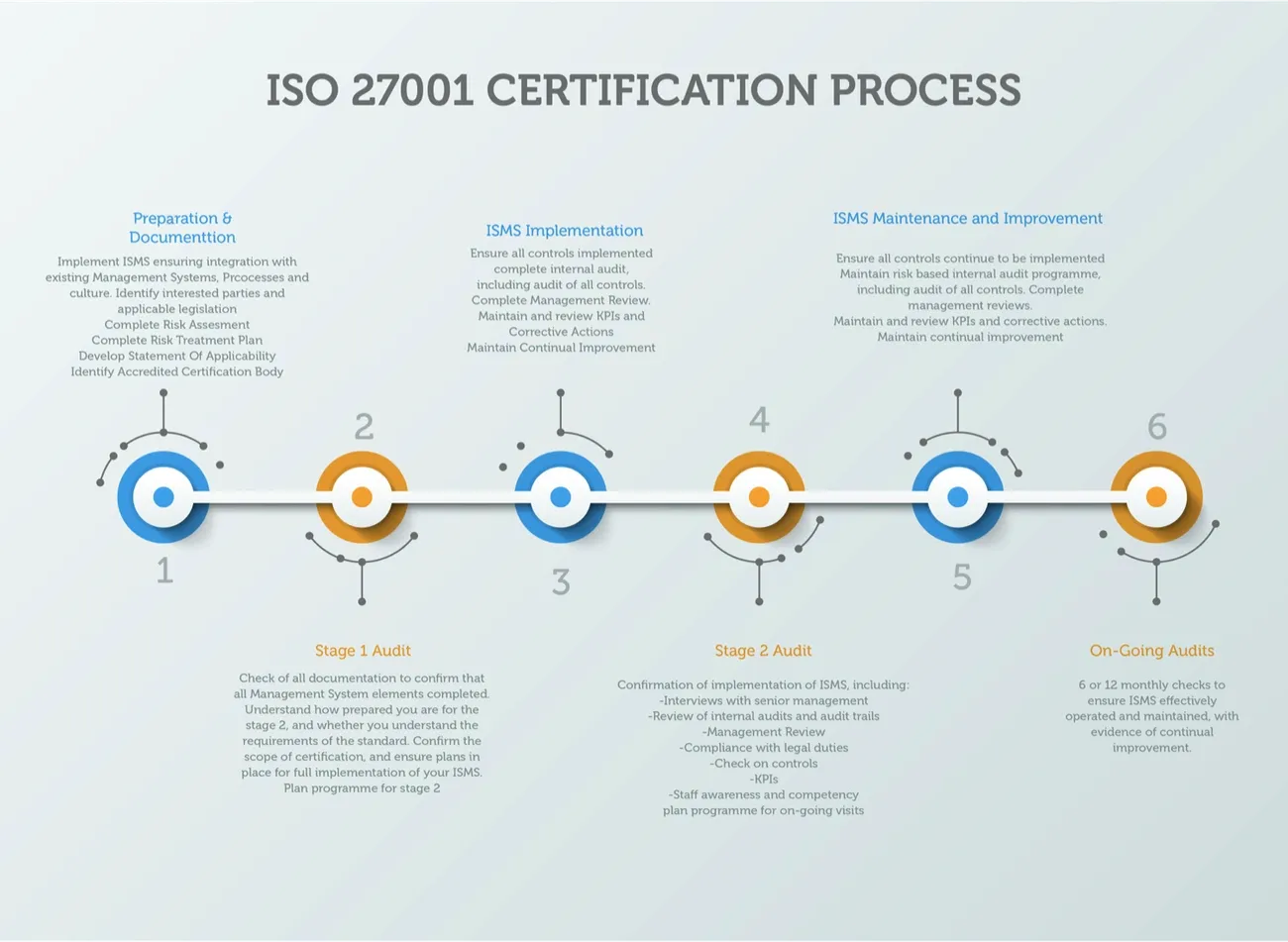
Image Source: Device42
Getting ISO 27001 certification needs a well-laid-out process that SaaS companies must guide with care. The path needs proper planning and execution through several phases.
Defining ISMS scope for cloud-native environments
SaaS companies need a clear view of their cloud architecture to set up their Information Security Management System (ISMS) scope. The first step is to identify which information assets need protection, whether they’re in your offices or the cloud. Cloud-native SaaS offerings should include these in their scope:
- Customer data flows and hosting environments
- Internal systems and third-party dependencies
- Multi-tenant platforms and API integrations
- Cloud service models (IaaS, PaaS, or SaaS) that affect control boundaries
Your scope document should spell out what’s included and excluded, with clear links between internal and external processes. Public cloud deployments might not include physical infrastructure in their scope. However, you still need to protect your data throughout its lifecycle.
Conducting ISO 27001 risk assessment and treatment
Risk assessment creates the foundation of your ISO 27001 implementation. You need to spot security risks, check how likely they are to happen, and decide how to handle them. SaaS companies should watch out for common risks such as account takeover, misconfigured cloud services, and insecure APIs.
After assessment, create a risk treatment plan that shows who handles each control, when they’ll do it, and what budget they have. Document your chosen controls from Annex A in the Statement of Applicability based on your risk assessment.
Internal audit and management review requirements
Your organization needs internal audits to check if your ISMS meets ISO 27001 requirements before external certification. Schedule these audits based on risk assessment. You might want to Book a Readiness Call with an expert. Remember that auditors must stay neutral – they can’t audit their own work.
ISO 27001 requires management reviews at least once a year to check how well your ISMS works. These reviews look at security performance feedback, problems found, audit results, and monitoring data to help you keep improving.
Stage 1 and Stage 2 external audit walkthrough
The certification process happens in two stages. Stage 1 has auditors checking your ISMS documentation against ISO 27001 requirements. This “tabletop audit” looks at your policies and procedures design, going through each clause of the standard.
Stage 2 takes a closer look at how everything works in practice. Auditors gather evidence through checks, observations, and questions to make sure controls work as planned. Success means you get ISO 27001 certification lasting three years, with yearly check-ups.
Overcoming Common SaaS Compliance Challenges
SaaS companies face a bigger challenge after implementing ISO 27001 – they must manage ongoing compliance. This creates unique challenges that need adaptable solutions.
Documentation gaps and evidence collection issues
Evidence collection stands out as one of the trickiest parts of maintaining ISO 27001. CSA’s 2025 survey reveals that 61% of organizations find it hard to arrange their SaaS application settings with compliance standards. Most companies operate without clear, documented processes that make evidence collection spotty and unreliable. Teams often see documentation as just paperwork instead of a security essential when proper procedures are missing. Note that evidence should prove records remain complete and untampered.
Security awareness training for distributed teams
Human factors continue to be the most important vulnerability in SaaS environments. Data shows 55% of employees use SaaS applications without security approval. ISO 27001 requires simple security training, regular awareness programs, and role-specific training for staff. Teams spread across locations need training customized to their roles in engineering, DevOps, customer support, and legal departments. Companies can prove their compliance during certification audits through well-maintained learning modules, completion reports, and attendance records.
Maintaining continuous compliance post-certification
SaaS startups often view ISO 27001 as a one-off achievement rather than an ongoing process. The certification demands yearly surveillance audits to check if controls meet compliance standards. Book a Readiness Call to prepare for these requirements. Manual compliance work doesn’t scale well in dynamic SaaS environments—automatic evidence collection removes repetitive work and stops control drift.
Conclusion
ISO 27001 certification acts as a powerful business enabler for SaaS companies targeting enterprise customers. In this piece, we looked at how this globally recognized standard transforms your security posture and opens doors to lucrative contracts that were once out of reach.
Enterprise customers these days don’t just ask for ISO 27001 certification – they expect it before they’ll look at SaaS vendors. This transformation shows how information security has become non-negotiable in procurement practices. So, certified SaaS providers see much shorter sales cycles, often closing deals 30-50% faster.
The detailed framework tackles the most important enterprise concerns through a structured approach to managing information security risks. The 93 controls spread across organizational, people, physical, and technological domains build resilient protection for customer data, vendor management processes, and incident response capabilities that enterprises just need.
Getting certified definitely takes time and resources. All the same, faster sales cycles, fewer security questionnaires, and boosted market credibility make it worth the investment. Companies that stick to the structured certification process end up well-positioned to meet enterprise expectations.
Certification is just the start of your security trip, not the finish line. Keeping compliance means you need ongoing monitoring, regular internal audits, and yearly surveillance reviews to stay certified. This steadfast dedication to security excellence becomes part of your operational DNA, creating value beyond simple compliance checkmarks.
SaaS companies face unique challenges with ISO 27001, especially when you have evidence collection, distributed team awareness, and ongoing compliance needs. But those who clear these hurdles gain a strong competitive edge in enterprise sales.
ISO 27001 certification changes how enterprises see your SaaS offering. They don’t just see innovative technology – they see a mature, security-focused organization they can trust and invest in. This change in perception might be the most valuable outcome: knowing how to compete confidently for contracts at the market’s highest levels.
Key Takeaways
ISO 27001 certification has become essential for SaaS companies pursuing enterprise contracts, transforming security compliance from a nice-to-have into a business-critical requirement.
• Enterprise procurement now mandates ISO 27001 – Large buyers embed certification requirements directly into vendor selection, often disqualifying vendors without it before initial conversations.
• Certification dramatically accelerates sales cycles – SaaS companies report 30-50% faster deal closures and reduced security questionnaire processes from weeks to half-day completions.
• The framework addresses core enterprise security concerns – ISO 27001’s 93 controls across four domains directly map to buyer expectations for data protection, vendor management, and incident response.
• Implementation requires structured approach but delivers lasting ROI – Following the step-by-step certification process creates embedded security excellence that provides competitive advantage beyond compliance.
• Ongoing compliance demands continuous commitment – Annual surveillance audits and evidence collection require systematic processes, but maintain the trust and market access that drive enterprise revenue growth.
The certification serves as a powerful trust signal that elevates SaaS companies from “shiny startups” to dependable enterprise partners, unlocking access to lucrative contracts previously out of reach.
FAQs
Q1. What is ISO 27001 and why is it important for SaaS companies? ISO 27001 is an internationally recognized standard for information security management. It’s crucial for SaaS companies as it demonstrates a commitment to protecting customer data, helps meet enterprise procurement requirements, and can significantly accelerate sales cycles with large clients.
Q2. How does ISO 27001 certification impact the sales process for SaaS companies? ISO 27001 certification can dramatically shorten sales cycles, sometimes by 30-50%. It reduces the time spent on security questionnaires from weeks to hours and often serves as a prerequisite for enterprise buyers to even consider a SaaS vendor.
Q3. What are the main components of the ISO 27001 framework? The ISO 27001 framework consists of two main parts: Clauses 4-10, which outline the core requirements for establishing and maintaining an Information Security Management System (ISMS), and Annex A, which provides 93 security controls across organizational, people, physical, and technological domains.
Q4. How does a SaaS company go about getting ISO 27001 certified? The certification process involves defining the ISMS scope, conducting risk assessments, implementing necessary controls, performing internal audits and management reviews, and then undergoing external audits (Stage 1 and Stage 2) by a certified body. Upon successful completion, certification is granted for three years, subject to annual surveillance audits.
Q5. What are some common challenges SaaS companies face in maintaining ISO 27001 compliance? Common challenges include addressing documentation gaps and evidence collection issues, providing effective security awareness training for distributed teams, and maintaining continuous compliance post-certification. Overcoming these challenges often requires implementing systematic processes and potentially leveraging automated tools for evidence collection and compliance monitoring.