
AI and machine learning security threats can create severe effects on businesses through widespread data breaches and the spread of inaccurate information. ISO 27001 serves as a critical framework that helps AI companies protect their most valuable assets.
Business partnerships now depend heavily on ISO 27001 certification, as large organizations require their partners to maintain this standard. The framework reliably addresses unique challenges that artificial intelligence systems present. Companies that comply with ISO 27001 build stronger, more trusting relationships with clients who worry about data security. This international standard allows us to detect and respond to potential security threats quickly and maintains a strong security position for AI operations.
This piece will get into ISO 27001’s significance for AI companies and show you how to properly scope your machine learning data assets. You’ll learn the steps needed for certification and how this framework helps manage AI system risks while meeting regulatory requirements.
Understanding ISO 27001 in the Context of AI

Image Source: ISMS.online
ISO 27001 is a worldwide standard that creates a step-by-step framework to manage information security. This standard has become more important now that organizations use artificial intelligence in their daily operations.
What is ISO 27001 certification and why it matters for AI
ISO 27001 certification confirms that organizations have set up a reliable Information Security Management System (ISMS) that follows international best practices. AI companies use this certification to prove they have the right controls to protect their sensitive data, intellectual property, and AI models from threats.
Independent auditors conduct thorough checks to see how well companies spot security risks, put controls in place, and track compliance. AI companies need this because their most valuable assets—proprietary algorithms, training datasets, and machine learning models—need special protection against unique threats like data poisoning and model inversion attacks.
What is ISO 27001 intended to ensure in ML environments
ISO 27001 works to protect everything in machine learning environments: confidentiality, integrity, and availability. This means only the right people can access sensitive AI training data. The data’s accuracy stays intact, and systems work when needed.
The standard helps organizations:
- Spot and handle AI-specific risks through systematic assessment
- Keep machine learning model’s intellectual property safe
- Create secure coding practices for ML engineers
- Set up access controls for training datasets
What is ISO 27001 ISMS and how it applies to AI systems
An Information Security Management System (ISMS) covers all policies, procedures, and controls that manage information security risks. For AI systems, ISMS looks after the whole AI lifecycle—from collecting data and training models to putting them to use and maintaining them.
The ISMS gives you a well-laid-out way to secure AI operations. It defines responsibilities, creates security incident response plans, and keeps improving. Unlike other standards that just look at specific security controls, ISO 27001 creates an all-encompassing system. This makes it valuable to handle new threats in the fast-changing world of AI.
Scoping Your Machine Learning Data Assets
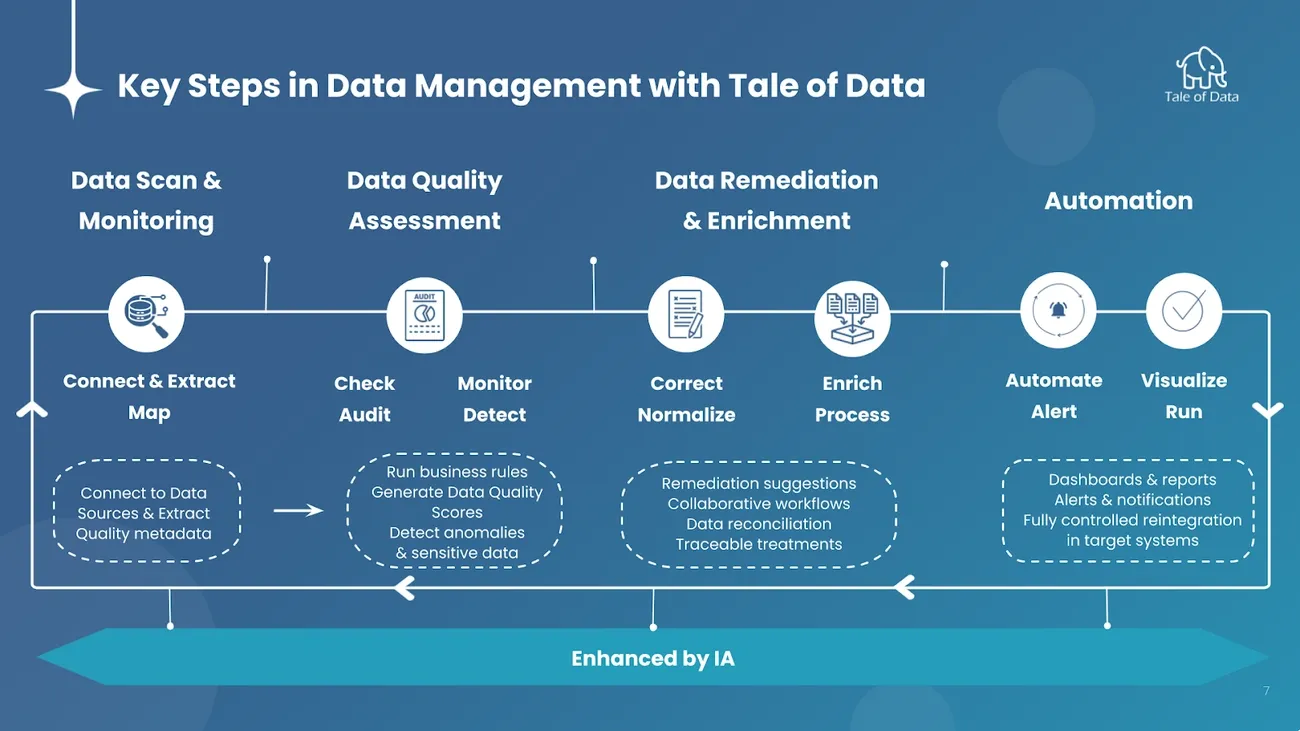
Image Source: Tale of Data
A critical foundation for any ISO 27001 implementation in AI environments starts with proper definition of machine learning data assets. Your security controls will protect what matters most through effective scoping.
Identifying ML data types: training, validation, inference
ML systems make use of three distinct data categories that need identification when implementing ISO 27001 for AI:
- Training data: The dataset that fits model parameters (weights of connections between neurons in neural networks) through supervised learning methods like gradient descent
- Validation data: The data evaluates performance without bias while tuning hyperparameters such as the number of hidden units in neural networks
- Test data: A “holdout set” gives final unbiased evaluation of model fit when never used before
Each dataset needs different security controls based on sensitivity and usage. The validation sets play a crucial role in preventing overfitting during model architecture optimization.
Mapping data flows across AI pipelines
Visual tracking of information movement throughout ML systems defines data flow mapping. ML pipelines separate data into logical components naturally.
AI systems can run data flows in sequence or parallel, with separate processing clusters for each activity in parallel execution. Data flow mapping helps spot critical transfer points that need protection. Risk management becomes better across your pipeline once you understand sink groups and parallel processing options.
Defining asset boundaries for ISO 27001 scope
Documentation of clear boundaries matters for ISO 27001 certification. Your scope statement should capture:
- Physical boundaries: Offices, data centers, remote work environments
- Organizational boundaries: Departments or subsidiaries included
- Technological boundaries: IT infrastructure, networks, systems, applications
Critical assets that match your organization’s risk appetite deserve the first focus rather than including everything. Your scope should think about interfaces and dependencies between your organization’s activities and others’ work.
Handling third-party datasets and open-source models
Third-party data and models create unique challenges in ISO 27001 scope definition. The best approach focuses on implementing controls that manage associated risks rather than including these directly in your ISMS.
Your controls should watch third-party providers to meet security expectations. The ISMS records should document this monitoring. Open-source models can be safely added to your system with proper risk management processes, despite security risk concerns.
AI-Specific Risks and ISO 27001 Control Mapping
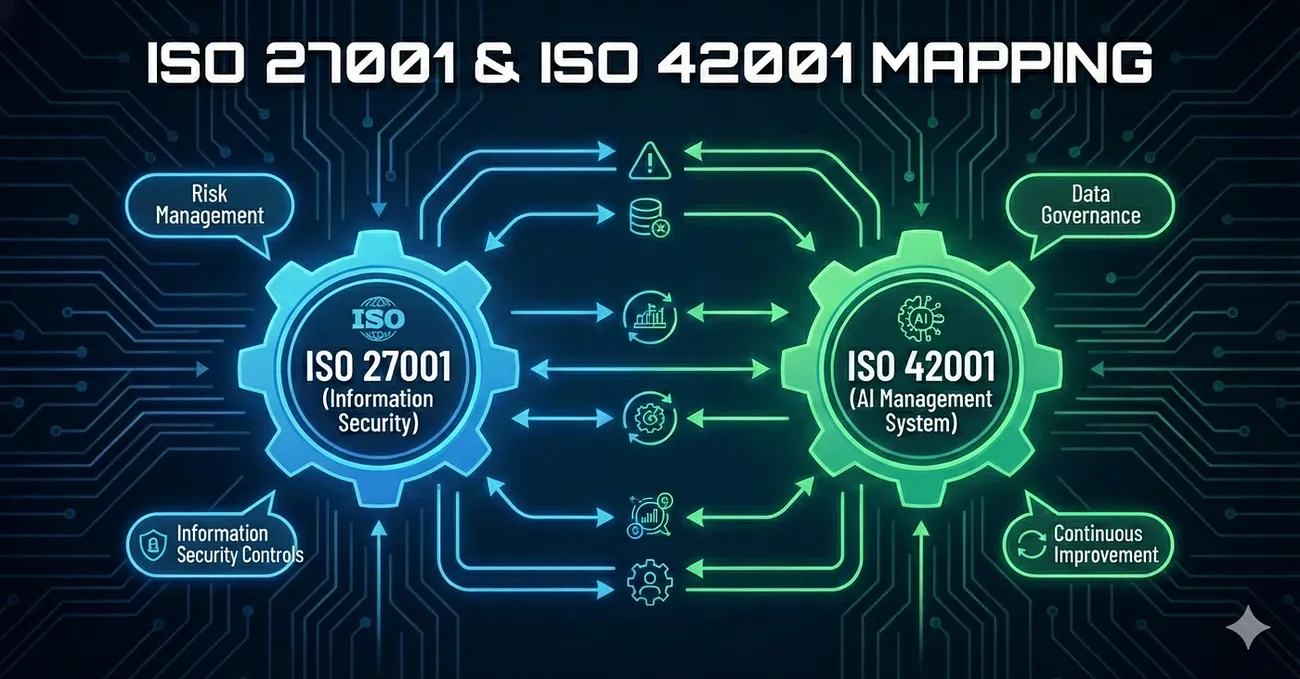
Image Source: Medium
Machine learning systems face unique security challenges beyond traditional software vulnerabilities. These systems’ statistical, data-based nature creates new attack vectors. Security teams must address these vectors within ISO 27001 guidelines to protect systems effectively.
Data poisoning and adversarial input risks
Attackers can poison data by intentionally contaminating training datasets to influence model behavior. They execute this attack through false data injection, information modification, or strategic dataset deletion. A tiny amount of poisoning—just 0.001% of data—can cause major failures.
Adversarial inputs pose another critical threat. Attackers craft specific inputs to deceive AI models during inference. These inputs can bypass security filters, expose sensitive information, or make models produce wrong outputs. Large language models (LLMs) are vulnerable to prompt injection attacks that can cause unexpected or harmful behaviors.
Model inversion and data leakage threats
Model inversion attacks let adversaries reverse-engineer AI models and potentially extract sensitive training information. Malicious actors can rebuild training data by analyzing model outputs. To name just one example, Typical Instance Reconstruction Attacks (TIR) help adversaries create near-accurate images of people from training data.
Data leakage happens when information unavailable during real-life prediction affects model training accidentally. This appears in two main forms: target leakage uses future information unavailable at prediction time, while train-test contamination improperly mixes training and validation data.
Annex A controls relevant to AI: A.5.12, A.8.25, A.5.14
ISO 27001’s Annex A offers specific controls for AI environments:
- A.5.12 (Classification of information): ML training datasets need integrity protection as security assets. Sources, preprocessing scripts, and annotations need classification labels.
- A.8.25 (Secure development lifecycle): Security practices should change from classical logic to token-level content validation. Teams must embed security into prompt engineering and fine-tuning governance.
- A.5.14 (Information transfer): AI systems need secure policies for data transfer, including encryption and proper access controls.
Access control for ML models and datasets
Access control is a basic security measure for AI systems. ISO 27001 requires strict controls so only authorized personnel can access training data, models, and outputs.
Organizations need zero-trust access control over training datasets, model snapshots, and performance evaluation outputs. ML training data’s sensitive nature means teams should treat these datasets as potential sources of personally identifiable information (PII) and protect them accordingly.
Steps to Achieve ISO 27001 Certification for AI Companies
The ISO 27001 certification trip for AI components requires special attention artificial intelligence components. ML environments just need unique considerations throughout the certification process, unlike traditional IT systems.
Scoping and risk assessment for ML systems
Your AI systems’ boundaries should include data science teams, training data, and cloud infrastructure. A full picture follows to identify AI-specific threats like data poisoning and model inversion attacks. The risk treatment plan must detail ways to alleviate, accept, avoid, or transfer each identified risk.
Creating a Statement of Applicability for AI assets
A Statement of Applicability (SoA) documents which of the 93 security controls from Annex A apply to your AI operations. Each control requires an explanation of implementation choices or exclusion reasons. This document shows your comprehensive approach to AI security requirements.
Implementing controls and conducting internal audits
Implementation creates new security policies and deploys appropriate tools while training staff. AI companies must establish rules to handle sensitive data and implement strict access controls. Internal audits verify ISMS effectiveness at planned intervals before certification.
Preparing for external ISO 27001 audit
The two-stage external audit needs careful preparation. Book a Readiness Call to ensure readiness for documentation review (stage 1) and implementation verification (stage 2).
Conclusion
Getting ISO 27001 for artificial intelligence systems is a strategic investment, not just another compliance box to check. Companies that properly scope their machine learning data assets end up with major advantages in risk management and security. On top of that, it provides structure to handle unique AI vulnerabilities like data poisoning, adversarial inputs, and model inversion attacks that regular security methods don’t deal very well with.
The certification process needs close attention to detail, especially when mapping controls to AI-specific assets. Most companies discover that identifying and classifying their training datasets, validation data, and inference processes are the foundations for success. This detailed approach ends up making your security stronger and builds trust with clients.
A methodical approach works best for companies starting their ISO 27001 certification process. The right preparation can make external audits much easier. You can Book a Readiness Call to make sure your AI systems and documentation meet all certification requirements before formal evaluation.
ISO 27001 and artificial intelligence together create a robust framework. It tackles both standard information security issues and new threats in machine learning environments. The certification takes considerable effort, but the improvements to security practices, competitive edge, and client trust provide lasting value to AI organizations that want to protect their critical assets.
Key Takeaways
ISO 27001 certification is becoming essential for AI companies as it provides a systematic framework to protect machine learning assets and address unique AI-specific security threats.
• Properly scope ML data assets by categorizing training, validation, and inference data with distinct security controls for each type
• Map AI-specific risks like data poisoning and model inversion attacks to relevant ISO 27001 Annex A controls (A.5.12, A.8.25, A.5.14)
• Implement zero-trust access controls for ML models and datasets, treating training data as potentially containing PII by default
• Follow a structured certification path: scope definition → risk assessment → Statement of Applicability → control implementation → internal audits → external audit
• Focus on critical assets aligned with risk appetite rather than attempting to include everything in your initial ISMS scope
The certification process requires meticulous attention to AI-specific vulnerabilities that traditional security approaches often miss. Organizations that successfully implement ISO 27001 for AI gain competitive advantages through improved security posture, enhanced client trust, and better risk management capabilities across their machine learning operations.
FAQs
Q1. What is ISO 27001 and how does it relate to AI? ISO 27001 is an international standard for information security management systems. For AI companies, it provides a framework to protect sensitive data, intellectual property, and AI models from various threats, including those specific to machine learning environments.
Q2. Why is ISO 27001 certification important for AI companies? ISO 27001 certification validates that an AI company has implemented robust security measures. It helps build trust with clients, meets regulatory requirements, and provides a competitive advantage in the market. Many large organizations now require their partners to have this certification.
Q3. How does ISO 27001 address AI-specific risks? ISO 27001 helps manage AI-specific risks such as data poisoning, adversarial inputs, and model inversion attacks. It provides controls for secure development practices, information classification, and data transfer policies tailored to AI systems.
Q4. What are the key steps to achieve ISO 27001 certification for AI companies? The main steps include scoping and risk assessment for ML systems, creating a Statement of Applicability for AI assets, implementing controls, conducting internal audits, and preparing for external audits. Each step requires special attention to AI components.
Q5. How should AI companies scope their machine learning data assets for ISO 27001? AI companies should identify and categorize their ML data types (training, validation, and inference), map data flows across AI pipelines, define clear asset boundaries, and establish protocols for handling third-party datasets and open-source models. This scoping forms the foundation for effective ISO 27001 implementation.