
Federal agencies have spent over $4 billion on federal FedRAMP accredited cloud services. Projections show this number will reach $11.4 billion by 2023. Service providers seeking authorization need to understand the FedRAMP Program Management Office (PMO) as cloud adoption grows across government.
The FedRAMP PMO leads the official federal team that manages the Federal Risk and Authorization Management Program. Major changes are coming soon. The PMO will become a smaller, more focused team by 2025. This new structure will improve efficiency, standardization, and community-led innovation through the FedRAMP 20x initiative. These changes will help create an ecosystem where Cloud Service Providers (CSPs) can direct the authorization process with greater independence.
FedRAMP readiness goes beyond just documentation. The process needs the right people, systems, and documentation backed by strong executive support. Nearly 80% of authorized applications run at the Moderate Impact level. This shows the extensive requirements needed to achieve compliance. This piece will get into how the PMO’s new role affects your organization’s readiness strategy. You’ll learn what you need to know to guide your way through the federal authorization process effectively.
Understanding the FedRAMP PMO’s Original Role
The Program Management Office (PMO) began as the central authority in the Federal Risk and Authorization Management Program (FedRAMP) ecosystem. The PMO managed to keep control over the authorization process back then, unlike today’s efficient approach. It served as both gatekeeper and guide for cloud service providers who wanted federal authorization.
Policy and Template Management by the PMO
The PMO worked as the main architect of the program’s policy framework during FedRAMP’s early years. The team created and managed detailed documentation templates that became the foundations of security package submissions. These templates covered System Security Plans (SSPs), Security Assessment Reports (SARs), and Plan of Actions & Milestones (POA&Ms). They set standard language to show security compliance at all impact levels. The team also gave explanations through detailed implementation guides to help CSPs understand the complex NIST 800-53 security controls.
3PAO Accreditation and Marketplace Oversight
The PMO’s role included protecting the assessment ecosystem’s integrity through careful oversight of Third-Party Assessment Organizations (3PAOs). The team set qualification criteria for assessment bodies to confirm they had the technical expertise needed. The PMO also ran the official FedRAMP Marketplace—a trusted registry of compliant cloud offerings for federal agencies. This marketplace showed which services had provisional authorizations from the Joint Authorization Board (JAB) or specific agencies.
Technical Assistance and Training Programs
The PMO offered direct technical guidance through several programs before changing to automation and self-service. The team ran detailed pre-assessment consultations with CSPs preparing for FedRAMP assessments. They also provided specialized training workshops for cloud providers and federal agencies. Regular in-person events let stakeholders work directly with FedRAMP experts, which promoted a community focused on federal cloud security standards. These activities helped simplify the authorization process when government cloud adoption was just starting to grow.
The PMO’s original setup focused on direct involvement throughout the authorization lifecycle—quite different from its current role in today’s FedRAMP 20x environment.
How FedRAMP 20x Reshaped the PMO in 2026
July 2024 brought a major turning point to the federal FedRAMP landscape. The Office of Management and Budget’s Memorandum M-24-15 replaced all previous policies with an updated vision and governance structure. These changes fundamentally altered how the PMO operates in 2026.
Discontinuation of JAB Authorization Path
The federal FedRAMP ecosystem saw its biggest change with the Joint Authorization Board (JAB) dissolution. GSA announced the JAB’s replacement with the FedRAMP Board in May 2024. The dual-track authorization system vanished as the program moved to a single “FedRAMP Authorized” designation whatever the authorization path. This change removed the old difference between JAB and Agency authorizations that the FedRAMP Marketplace displayed since its start.
Shift to Agency-led Authorization and Automation
The FedRAMP PMO strengthened agency capabilities and advanced technology after these structural changes. The 20x initiative showed amazing results – pilot participants got authorizations in under two months instead of years. The system now validates 80% of security requirements automatically without written explanations. FedRAMP has kept updates to current Rev5 processes minimal and now focuses on machine-readable OSCAL formats for security documentation. This automation-focused approach lets cloud service providers deploy changes at their pace without getting advance approval from authorizing officials.
Reduction in PMO’s Direct Review Responsibilities
The PMO team went through major downsizing and ended multiple contractor relationships to become “a much smaller team with all efforts focused on maximizing efficiency”. March 2025 marked the end of PMO’s “triple check” reviews of agency-issued ATOs. Agencies now handle detailed reviews themselves while the PMO just confirms if authorizations are complete rather than proper. The PMO also stopped managing centralized continuous monitoring activities that the JAB previously handled. Federal agencies using cloud services now handle these tasks directly. The PMO’s focus has shifted to setting standards, automating processes, and removing bottlenecks instead of acting as a gatekeeper.
The PMO’s Role in FedRAMP Readiness Today
The FedRAMP PMO has transformed from a central approval authority to a strategic enabler in 2026. Their work now revolves around three vital functions that help cloud service providers get through the federal authorization process.
Support for Rev 5 Backlog Clearance
The PMO’s resources are largely focused on clearing the huge Rev 5 implementation backlog from the transition period. Rather than reviewing documents, they now run consulting sessions to help CSPs implement challenging controls. Their weekly office hours give specific guidance about Rev 5 control families, with extra attention to areas where authorization packages often fall short.
Guidance on Machine-readable Templates
FedRAMP 20x’s automation needs have prompted the PMO to create detailed reference implementations of machine-readable OSCAL templates. These templates create a standard way to document security control implementations for federal cloud services. The PMO also provides conversion tools that help organizations turn their existing documents into OSCAL-compliant formats. This bridges the gap between old and new requirements without forcing organizations to completely rewrite their security documentation.
Enablement of Self-service Authorization Tools
The PMO’s biggest contribution is maintaining the infrastructure for self-service authorization. They develop and refine automated validation tools that check control implementations against FedRAMP baselines instantly. On top of that, they manage the community-driven Knowledge Sharing Infrastructure (KSI) where agencies exchange verification scripts and assessment methods. The PMO has changed from being a process bottleneck to becoming the architect of a system that needs minimal PMO involvement for authorizations.
Pilot Programs and the Future of PMO Involvement
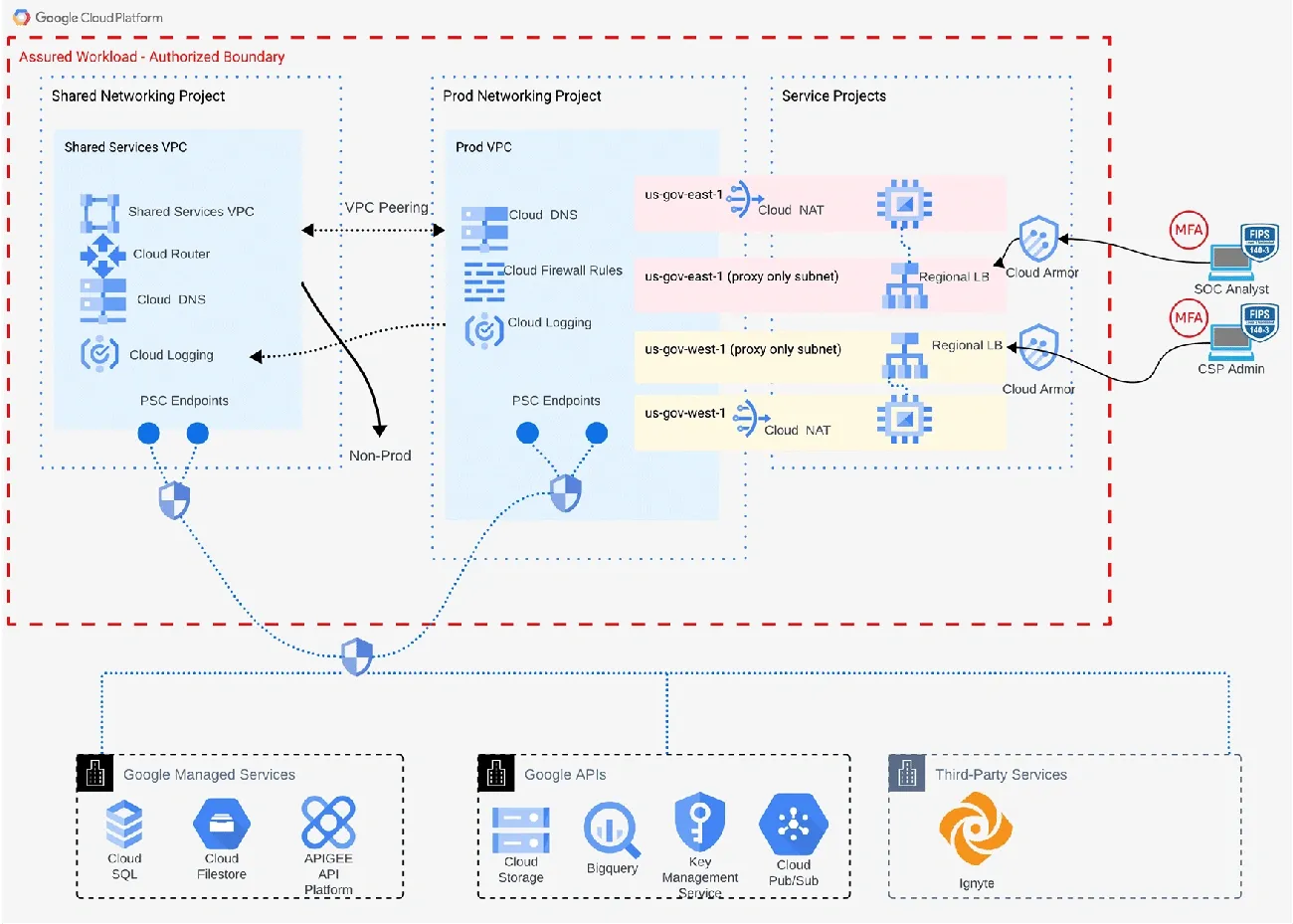
Image Source: Ignyte Assurance Platform
The FedRAMP 20x initiative has brought a fundamental change to federal cloud security through its pilot programs that are the foundations of the PMO’s future direction.
FedRAMP 20x Phase One: Low Baseline Pilot
The PMO ran Phase One from April to September 2025 as a proof-of-concept for automation-based validation. They received 26 complete submission packages, and 13 earned pilot authorizations. This pilot needed just 51 Key Security Indicators (KSIs) instead of traditional documentation. The removal of agency sponsorship requirements opened up market entry opportunities. First authorizations came in July 2025, which proved that automation-based validation could speed up timelines dramatically.
Moderate Baseline and Rev 5 Pilot Initiatives
Phase Two began in late 2025 and expanded to Moderate impact systems with enhanced requirements. The phase aims to grant about 10 Moderate pilot authorizations with over 200 requirements and recommendations—four times more than Phase One. The PMO will continue Phase Two through March 31, 2026. A structured cohort-based model replaced open submissions with three original participants: Confluent Cloud for Government, Meridian LMS, and Paramify Cloud. Book a Readiness Call to learn if your organization fits future cohorts.
Community-driven Standards and KSIs
The pilots’ success depends on Community Working Groups that create standards through public collaboration. Four groups work on continuous monitoring, assessment automation, framework application, and reporting. These groups created Key Security Indicators that automate traditional controls verification. Automated validation now handles 80% of requirements without narrative explanations. This shows a fundamental change from static compliance to continuous assurance.
Conclusion
FedRAMP has changed dramatically since it began, moving from a centralized approval model to an efficient, automation-focused ecosystem. Organizations seeking authorization in 2026 and beyond must understand the PMO’s changing role.
FedRAMP 20x and the JAB’s dissolution have fundamentally changed how cloud service providers guide federal compliance. The PMO once acted as both gatekeeper and guide through the authorization process. In spite of that, today’s PMO mainly sets standards, enables automation, and encourages community-led breakthroughs instead of conducting detailed reviews.
This new approach has already shown remarkable results. Pilot programs showed authorizations completed in under two months—a huge improvement from the years-long processes of the past. On top of that, the move toward machine-readable formats using OSCAL lets 80% of security requirements undergo automated validation without narrative explanations.
Organizations must therefore adapt their strategies when preparing for FedRAMP authorization. Successful providers now build robust, automation-ready security systems that arrange with Key Security Indicators instead of focusing only on documentation preparation. They must also know how to produce and maintain machine-readable security documentation.
Community involvement shapes FedRAMP’s future, as working groups drive standards development through public collaboration. The ecosystem has become more available to new entrants while maintaining strict security standards through continuous assurance rather than point-in-time assessments.
The PMO’s strategic importance remains clear even though it has stepped back from direct involvement in authorization decisions. It now designs the system that enables more efficient, transparent federal cloud security assessments. Organizations that understand this development and prepare accordingly will succeed in the federal marketplace of 2026 and beyond.
Key Takeaways
The FedRAMP PMO has transformed from a central gatekeeper to a strategic enabler, fundamentally changing how organizations approach federal cloud authorization in 2026.
• FedRAMP 20x eliminated the JAB path: All authorizations now follow a single “FedRAMP Authorized” designation through agency-led processes, removing the dual-track system.
• Automation drives 80% of validations: Machine-readable OSCAL templates and automated tools now handle most security requirements without narrative explanations.
• Pilot programs achieve sub-60-day authorizations: Phase One demonstrated authorizations in under two months versus years previously required through streamlined processes.
• PMO shifted from reviewer to enabler: The office now focuses on standards development, automation infrastructure, and community support rather than direct authorization reviews.
• Community working groups drive standards: Four collaborative groups develop Key Security Indicators and assessment methodologies through public participation and shared innovation.
The PMO’s evolution represents a fundamental shift toward continuous assurance and self-service authorization, requiring organizations to build automation-ready security systems rather than focusing solely on traditional documentation approaches.
FAQs
Q1. What is the current role of the FedRAMP Program Management Office (PMO)? The FedRAMP PMO now focuses on setting standards, enabling automation, and fostering community-led innovation. It provides guidance on machine-readable templates, supports Rev 5 backlog clearance, and maintains infrastructure for self-service authorization tools.
Q2. How has FedRAMP 20x changed the authorization process? FedRAMP 20x has eliminated the JAB authorization path, shifting to agency-led authorizations and automation. It has introduced a single “FedRAMP Authorized” designation and enabled 80% of security requirements to be validated through automation without narrative explanations.
Q3. What are the key components of FedRAMP readiness in 2026? FedRAMP readiness now involves building automation-ready security systems, aligning with Key Security Indicators, and developing the capability to produce and maintain machine-readable security documentation using OSCAL formats.
Q4. How long does the FedRAMP authorization process take under the new system? Pilot programs have demonstrated that authorizations can now be completed in less than two months, a significant improvement from the years-long processes of the past. This is achieved through streamlined, automation-focused procedures.
Q5. What role do community working groups play in FedRAMP? Community working groups are crucial in developing standards through public collaboration. They focus on continuous monitoring, assessment automation, framework application, and reporting. These groups establish Key Security Indicators that can be verified through automation, shifting from static compliance to continuous assurance.