
Your AI solution’s FedRAMP level choice will determine your access to the federal government market. The FedRAMP certification process takes 6-18 months and needs major financial investment. Companies must spend anywhere from hundreds of thousands to millions of dollars based on their chosen authorization level.
FedRAMP has three impact levels that depend on potential risks if systems or information get compromised. FedRAMP Moderate strikes the best balance between security investment and market opportunities. It makes up almost 73% of all authorized Cloud Service Offerings (CSOs). FedRAMP High sets the strictest civilian cloud security standard with 421 security controls spread across 17 control families. This level protects systems where breaches could cause severe damage. Getting authorized is just the start – cloud service providers need monthly security scans, yearly audits and must keep reporting to stay compliant.
In this piece, we’ll show you how to match your AI data sensitivity with the right impact levels. You’ll learn the differences between FedRAMP Moderate and High requirements for AI workloads and get a practical compliance roadmap that guides your certification process.
Mapping AI Data Sensitivity to FedRAMP Impact Levels
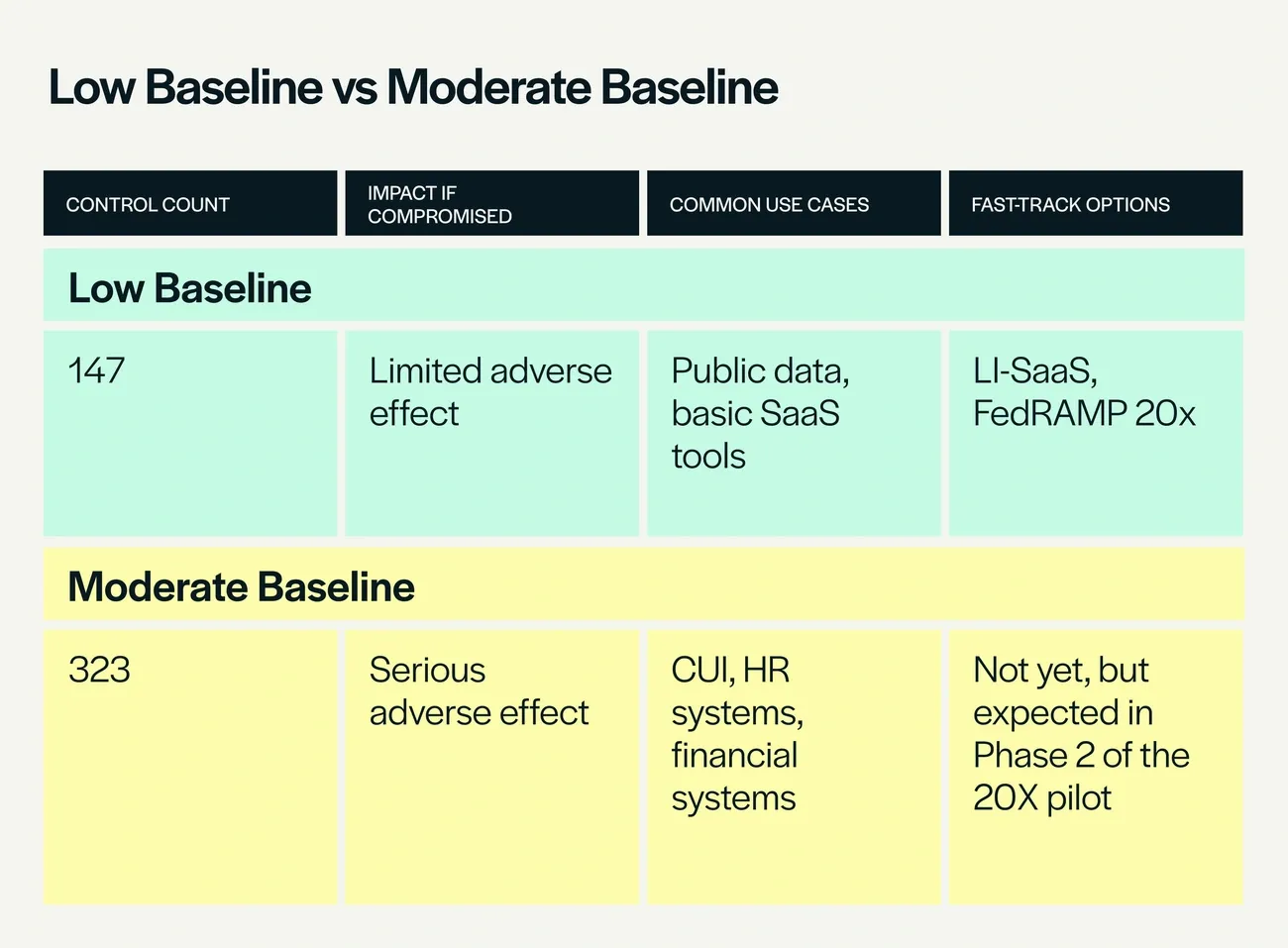
Image Source: Secureframe
“The emphasis on AI adoption within government meets agencies where they are by providing them with access to authorized emerging technologies that have been vetted using FedRAMP’s security standards.” — Thomas Shedd, Technology Transformation Services Director, overseeing FedRAMP compliance for AI workloads
Security categorizations are the foundations of choosing suitable FedRAMP levels for your AI solution. Your AI data’s mapping to security standards determines this process.
FIPS 199 categorization for AI: Confidentiality, Integrity, Availability
The Federal Information Processing Standard (FIPS) 199 defines three key security objectives that directly affect AI systems:
- Confidentiality: Your AI data needs protection from unauthorized access and disclosure, which includes personal privacy and proprietary information
- Integrity: Your AI data requires safeguards from unauthorized changes or destruction
- Availability: Your AI data and systems must remain accessible and reliable
Your AI solution needs categorization based on security breach effects. A breach could create Low (limited adverse effects), Moderate (serious adverse effects), or High (severe/catastrophic effects) impact on your organization’s operations, assets, or people.
Examples of AI data types and their impact levels
AI systems work with data types that need different FedRAMP impact levels:
- Low Impact: Public information AI chatbots face limited damage from breaches (needs 125 security controls)
- Moderate Impact: Sensitive but unclassified data processing AI platforms could face major operational damage (needs 325 security controls)
- High Impact: Healthcare, law enforcement, or emergency services AI systems could face severe consequences including loss of life (needs 421 security controls)
Most FedRAMP authorizations (80%) happen at the Moderate level. AI workloads often need Moderate or High authorization due to their sensitivity.
Using the high-water mark rule for AI system classification
Your AI system’s impact level follows the “high-water mark” principle – the highest security objective value sets your system’s classification.
A public dataset AI system (Low confidentiality) that supports critical decisions (High integrity) with moderate availability needs would get a High impact rating. This rating decides which FedRAMP certification level your AI solution must target.
These mappings help you match your AI solution with the right FedRAMP authorization level before certification begins.
FedRAMP Certification Levels Explained for AI Workloads
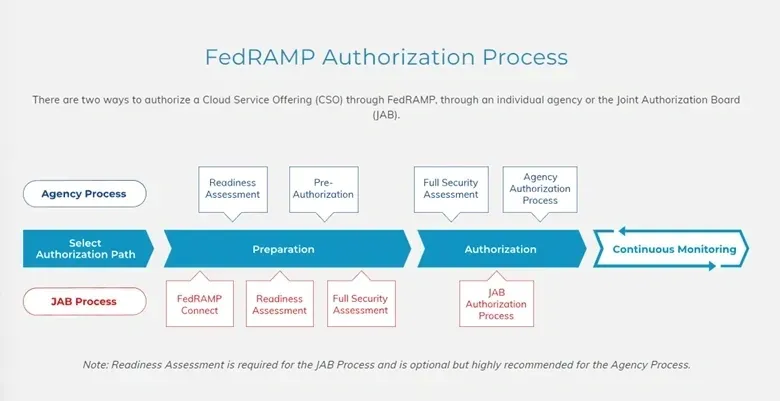
Image Source: Elevate Consult
AI vendors can match their solutions to appropriate government use cases by understanding the different FedRAMP certification levels. Security requirements for each tier depend on data sensitivity and how much damage a breach could cause.
FedRAMP Low: AI chatbots and public datasets
AI systems that handle data with minimal sensitivity need FedRAMP Low authorization. A security breach at this level would only have limited negative effects. This tier includes 125 security controls and works best for:
- Public-facing AI chatbots that don’t process sensitive data
- AI tools that analyze open government datasets
- Development and testing environments for AI models
Low certification serves as an important starting point for AI vendors working with government agencies on non-sensitive tasks. The FedRAMP PMO has started to speed up approval for qualifying Low-impact AI services through their 20x authorization pilot, which focuses on conversational AI engines.
FedRAMP Moderate: AI models using sensitive but unclassified data
The Moderate level makes up about 80% of all FedRAMP authorizations. This tier uses 325 security controls and fits most AI systems that handle:
- Controlled Unclassified Information (CUI)
- Sensitive Personally Identifiable Information (PII)
- Business-critical AI applications
Getting Moderate authorization means implementing strong security measures like multi-factor authentication, monthly vulnerability scans, and detailed incident response plans. This level gives access to most federal contracts while keeping security costs reasonable.
FedRAMP High: AI systems in critical infrastructure and defense
FedRAMP High stands as the toughest civilian cloud security standard with 421 security controls. This level suits AI systems where security breaches could lead to severe or catastrophic damage. The protection covers:
- Law enforcement and emergency services AI applications
- Healthcare AI systems that process Protected Health Information
- Defense and intelligence AI workloads
- Financial AI systems with mission-critical functions
High-impact AI platforms need phishing-resistant authentication, detailed logging, and almost immediate incident reporting. Major AI providers like Microsoft’s Azure OpenAI Service and Claude in Amazon Bedrock now offer FedRAMP High compliant options. These services let agencies use advanced AI capabilities in secure environments.
FedRAMP Moderate vs High: Which One Fits Your AI Architecture?
Choosing between FedRAMP impact levels is a significant strategic choice for AI solution providers. The right level depends on your specific architecture, data handling needs, and target agencies.
Security control depth and operational maturity
The main difference lies in control volume—Moderate requires adherence to 325 security controls, while High needs 421 controls. These numbers reflect more than just quantities. They show the operational maturity requirements. High needs advanced cryptographic protections and phishing-resistant multi-factor authentication. This becomes vital for AI models that process sensitive datasets.
Monitoring and incident response for AI inference and training
AI workloads have different monitoring requirements at each level. Moderate requires monthly vulnerability scans with standard remediation timeframes. High level needs live analytics, immediate remediation deadlines, and detailed logging of AI training pipelines. On top of that, AI platforms must implement model behavior monitoring to detect drift when models gradually lose effectiveness over time.
Deployment models: SaaS, IaaS, and hybrid AI platforms
Your deployment architecture helps determine the appropriate FedRAMP certification level. To cite an instance, Microsoft’s Azure OpenAI Service operates within FedRAMP High boundaries. This makes it suitable for mission-critical AI applications. Moderate provides sufficient protection for most agency AI needs—covering about 80% of all authorizations.
Book a Readiness Call with compliance experts to determine which level lines up with your AI solution’s architecture. Choosing incorrectly means either excessive costs or limited market access.
Building a FedRAMP Compliance Roadmap for AI Vendors
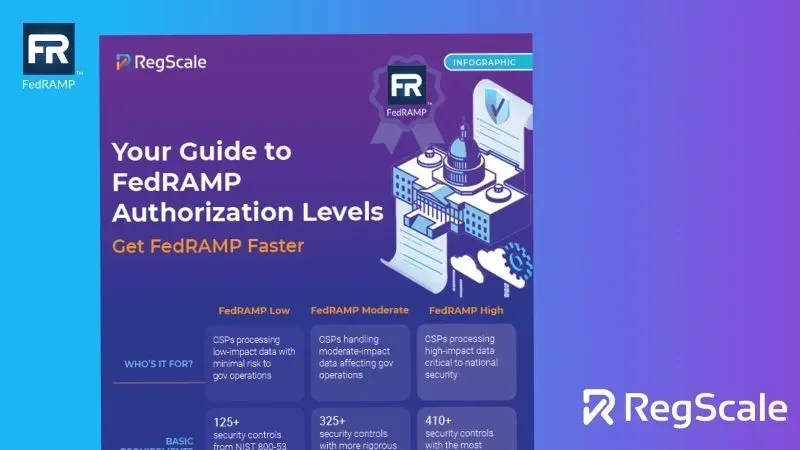
Image Source: Elevate Consult
“In the 20x Phase One pilot, automated validation enables tech companies to rapidly showcase their security posture. This expedited authorization process not only shortens the timeline from months to a few weeks but also delivers a deeper understanding of their security choices.” — Stephen Ehikian, GSA Deputy Administrator, leading FedRAMP AI acceleration efforts
A strategic roadmap helps AI vendors save time and money during the FedRAMP authorization process. You can enter the market faster by taking a step-by-step approach that matches your AI solution’s maturity. This approach lets you build toward higher compliance levels over time.
Start with LI-SaaS or Low for early-stage AI tools
Early-stage AI vendors should look at LI-SaaS (Low-Impact Software-as-a-Service) as their starting point. It needs only 37 security controls compared to Low’s 125. This efficient path works well for AI chatbots or applications that store just simple login credentials instead of personal information. The FedRAMP 20x pilot program has made conversational AI engines a priority, which could cut down authorization time from months to just weeks for vendors who qualify.
Gap analysis for upgrading from Moderate to High
The move from Moderate to High requires a Significant Change Request (SCR) form. This form details the extra 87 controls and 70+ controls that need stricter parameters for High authorization. The assessment shows where your current security measures need improvement to meet High requirements. Many companies do this analysis during their Annual Security Assessment to avoid multiple audits.
Leveraging existing certifications like SOC 2 or ISO 27001
Companies with security certifications can speed up their FedRAMP compliance. The FedRAMP 20x program now lets providers with SOC 2 Type II, ISO 27001, HITRUST, StateRAMP, or CMMC Level 2 certifications get temporary FedRAMP Validated Level 1 status. They can do this by matching these frameworks to FedRAMP Key Security Indicators. This lets them reuse some existing assessment materials without full reciprocity.
Working with a 3PAO and cloud partner for faster authorization
A FedRAMP Third-Party Assessment Organization (3PAO) partnership can cut authorization time from 18+ months and USD 2 million+ to under six months at a lower cost. The right 3PAO brings cloud security expertise and maintains clear communication throughout the process. They also provide specialized services like readiness assessments and continuous monitoring. Book a Readiness Call with compliance experts to see if using AWS, Azure, or GCP’s existing FedRAMP authorized infrastructure could speed up your authorization process.
Conclusion
Picking the right FedRAMP level for your AI solution needs a good look at your data sensitivity, security needs, and target government markets. This piece explores how FedRAMP’s tiered system lines up with AI use cases – from public-facing chatbots to critical systems that handle sensitive information.
Your choice will affect both your original certification costs and future market access by a lot. Most AI vendors find FedRAMP Moderate hits the sweet spot. It offers good security for controlled unclassified information while keeping compliance costs in check. Organizations that handle law enforcement, healthcare, or defense data need High authorization, even with its extra 96 controls and tougher requirements.
On top of that, getting certified needs smart planning no matter which level you’re after. You can start with LI-SaaS or Low authorization to enter the market early and build toward higher levels. This step-by-step approach spreads out costs and keeps your security teams from getting overwhelmed.
The FedRAMP 20x initiative brings good news for AI vendors. It might speed up authorization for solutions that qualify. Companies that already have certifications like SOC 2 or ISO 27001 can benefit from faster processing through control mapping and temporary validation status.
Getting FedRAMP authorized is just the start of your compliance path. After certification, you’ll need to run monthly security scans, yearly assessments, and keep monitoring things. These practices are tough but they make your security stronger and show your dedication to protecting government data.
Working with experienced 3PAOs and using authorized cloud infrastructure makes sense. Their know-how helps guide you through complex requirements. They can cut authorization time from 18+ months to under six months and lower your costs. As federal agencies use more AI, properly authorized solutions will find more opportunities in this growing market.
Key Takeaways
Understanding FedRAMP levels is crucial for AI vendors targeting federal markets, as the right choice impacts both compliance costs and market access opportunities.
• Map AI data sensitivity using FIPS 199 framework: Categorize your AI system’s confidentiality, integrity, and availability requirements to determine appropriate FedRAMP impact levels.
• FedRAMP Moderate offers optimal balance for most AI solutions: With 325 security controls, it covers 80% of authorizations and suits AI systems processing sensitive but unclassified data.
• Start with LI-SaaS or Low for early-stage AI tools: Begin with 37-125 controls to enter the market faster, then upgrade as your solution matures and handles more sensitive data.
• Leverage existing certifications to accelerate compliance: SOC 2, ISO 27001, or HITRUST certifications can map to FedRAMP requirements through the 20x pilot program, reducing authorization timeframes.
• Partner with experienced 3PAOs for faster authorization: Expert guidance can reduce typical 18+ month timelines to under six months while significantly lowering compliance costs.
The FedRAMP 20x initiative specifically prioritizes AI solutions, creating unprecedented opportunities for qualified vendors to achieve authorization in weeks rather than months. Success requires strategic planning, proper level selection, and leveraging existing security frameworks to build a sustainable compliance roadmap.
FAQs
Q1. What are the different FedRAMP levels for AI solutions? FedRAMP offers three main levels for AI solutions: Low, Moderate, and High. Each level corresponds to different security requirements based on data sensitivity and potential impact of breaches. Low is suitable for public-facing AI with minimal sensitivity, Moderate for sensitive but unclassified data, and High for critical systems where breaches could cause severe damage.
Q2. How long does the FedRAMP certification process typically take? The FedRAMP certification process typically takes 6-18 months. However, by working with experienced Third-Party Assessment Organizations (3PAOs) and leveraging existing certifications, this timeline can potentially be reduced to under six months.
Q3. What is the FedRAMP 20x initiative and how does it benefit AI vendors? The FedRAMP 20x initiative is a program that prioritizes and accelerates the authorization process for AI solutions. It allows qualifying vendors to potentially reduce authorization timeframes from months to weeks, especially for conversational AI engines and other eligible AI tools.
Q4. Can existing certifications like SOC 2 or ISO 27001 help with FedRAMP compliance? Yes, existing certifications can accelerate FedRAMP compliance. The FedRAMP 20x initiative enables providers with current SOC 2 Type II, ISO 27001, HITRUST, StateRAMP, or CMMC Level 2 certifications to achieve temporary FedRAMP Validated Level 1 status by mapping these frameworks to FedRAMP Key Security Indicators.
Q5. What ongoing requirements are there after achieving FedRAMP authorization? After achieving FedRAMP authorization, cloud service providers must conduct monthly security scans, perform annual audits, and engage in ongoing reporting to maintain compliance. This includes continuous monitoring, vulnerability management, and demonstrating ongoing commitment to protecting sensitive government data.