Gap Remediation: The Critical Path to ISO 27001 Compliance
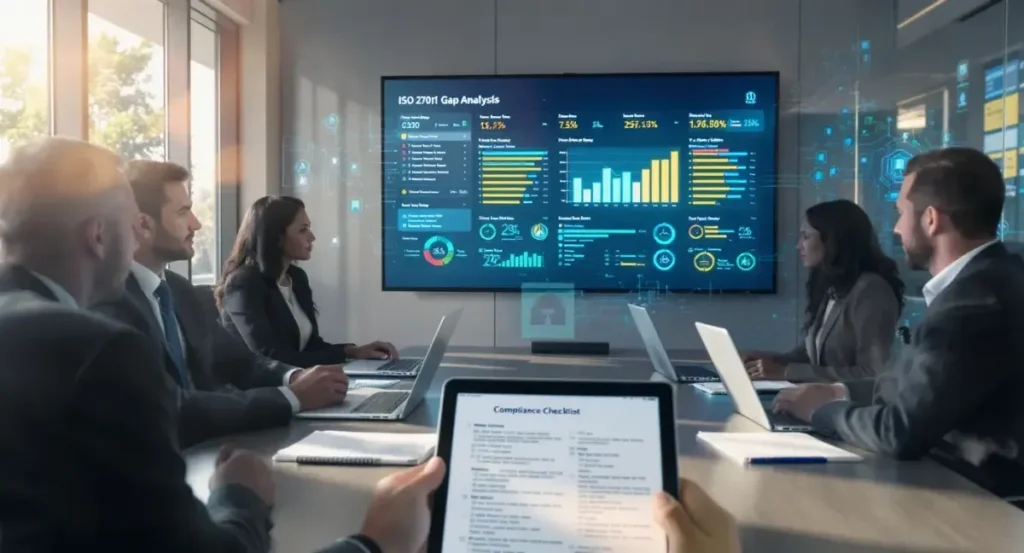
The just need for ISO 27001 compliance grows faster as organizations realize strong information security practices matter. We see how this internationally recognized standard has become vital for businesses that want to protect their data assets and show their dedication to security excellence. An ISO 27001 gap analysis is a significant first step toward meeting the standard’s requirements. This systematic approach helps us review our security posture against what we need. Organizations that skip this key assessment often end up rushing to meet compliance requirements at the last minute. This leads to delays that get pricey and security setups that don’t work well. A solid gap analysis usually reveals problems in three key areas: governance, risk management, and operational security. Getting ISO 27001 certified means more than just earning a badge for your organization. It validates your dedication to data protection, regulatory compliance, and operational resilience. Most organizations take 6 to 18 months to get certified. That’s why understanding the remediation process is key to success. In this piece, we’ll look at how gap remediation paves the way to ISO 27001 compliance and how you can guide your team through this experience effectively. Understanding the Gap Remediation Framework Image Source: EC-Council Global Services A successful ISO 27001 implementation needs solid gap remediation as its foundation. Your organization must develop a well-laid-out plan to address findings after spotting discrepancies through a full gap analysis. Gap remediation works like your navigation system – it shows you the way forward and helps you arrange solutions that meet compliance requirements. How Gap Remediation Connects to ISO Gap Analysis Results Your ISO 27001 gap analysis findings directly shape gap remediation. The analysis reveals problems in governance, risk management, and operational security. A proper gap analysis produces specific outputs that guide remediation: A detailed report mapping current practices against ISO 27001 clauses and Annex A controls Documentation of what’s compliant, partially compliant, or missing entirely A prioritized list of areas needing improvement Gap remediation turns these learnings into concrete steps. Organizations that rush through analysis often struggle to meet compliance requirements at the last minute. This leads to higher costs and security implementations that don’t work well. Your remediation plan serves as a strategic guide to bridge the gap between your current security and ISO 27001 requirements. The Critical Path Concept in ISO 27001 Compliance Requirements The critical path concept helps you prioritize remediation efforts based on their effect and complexity. Not all gaps matter equally – some block your certification path while others need minor tweaks. A good remediation strategy groups gaps by: Risk level – High, medium, or low priority Implementation complexity Resource requirements Interdependencies with other controls High-priority gaps need immediate attention to reduce potential vulnerabilities. This approach tackles the most significant compliance barriers early and smooths your path to certification. Root cause analysis becomes vital during remediation – you need to fix the real problems behind each gap instead of using quick fixes. When to Start Gap Remediation Activities Start your gap remediation right after completing the gap analysis. The original gap assessment phase usually takes 2-4 weeks, but remediation planning should begin as soon as you have the findings. Full ISO 27001 implementation typically needs 6-18 months, making quick remediation significant. Early action brings major benefits. You have three years to match updated standards, but waiting increases your risk exposure. Remediation needs constant monitoring and adjustment. Regular checks help track progress and review control effectiveness. Your remediation efforts need clear governance to work. This means: Assigning each gap to specific teams or individuals Creating realistic timelines that consider dependencies Using project management tools to track milestones Running weekly or bi-weekly reviews to measure progress Resource allocation matters too – teams need adequate time, tools, and budget to fix identified gaps. Some organizations handle remediation in-house, while others benefit from outside experts, especially with complex requirements or limited internal knowledge. Gap remediation bridges the gap between finding security shortfalls and achieving ISO 27001 compliance. Careful planning and systematic execution help your organization turn gaps into strengths. This builds a resilient information security management system that meets both compliance requirements and security goals. Creating Your Gap Remediation Action Plan Image Source: Cyberzoni.com Your next crucial step toward ISO 27001 compliance starts with a structured remediation plan once you spot security gaps. A well-laid-out action plan will give a clear roadmap with specific responsibilities, timelines, and priorities based on your analysis. Categorizing Gaps: Critical, High, Medium, and Low Priority Security gaps don’t carry equal weight. The best way to start remediation is to rank each gap by its risk level and how it might affect your organization. Most organizations use a four-tier model: Critical Priority – Gaps that directly threaten sensitive data or core operations High Priority – Major vulnerabilities needing quick fixes Medium Priority – Important issues with moderate risk levels Low Priority – Minor concerns with minimal security impact This ranking system lets you tackle the biggest risks first, such as weak spots in sensitive data or outdated access controls. Each gap needs a root cause analysis to fix the actual problem, not just patch the visible issues. This matches perfectly with ISO 27001’s emphasis on constant improvement and risk management. Defining Clear Objectives and Success Metrics ISO 27001 Clause 6.2 requires measurable security objectives. Your remediation plan needs specific, actionable goals. Poor objectives create more than audit problems—they let risks grow unchecked. Good objectives must meet three standards: Operational – Clear changes and ownership Measurable – Specific metrics you can check Aligned – Direct links to company risk tolerance or regulations Each objective needs a specific timeframe (“by fiscal year end” instead of “ongoing”), data source (logs, dashboards), and success markers. This turns abstract compliance goals into real actions you can track. Establishing Governance Structure for Remediation Strong delegation drives successful remediation. Someone must own each identified gap. Skip vague tasks like “IT to resolve” and name who will handle which control and when. Project management tools help you: Track
ISO 27001 Healthcare Certification: Costs & Requirements 2026

Recent data shows that cyber attacks hit 54% of companies in the last year. This alarming trend has made ISO 27001 certification crucial for healthcare organizations that handle sensitive patient data. The certification offers a detailed framework that helps manage information security risks. The path to ISO 27001 certification requires substantial investment. Small healthcare practices need to budget around $6,000, while larger organizations might spend over $40,000 based on their size and complexity. On top of that, organizations should expect audit preparation costs up to $40,000. The certification audit costs exceed $15,000, and yearly maintenance and surveillance audits run about $10,000. Smaller businesses with less than 10 team members typically invest between $5,000 and $8,000. This piece will get into the actual costs and requirements for healthcare organizations seeking ISO 27001 certification in 2026. We’ll break down the certification steps, explain what different-sized healthcare providers need to implement, and outline the ongoing investments needed to stay compliant as healthcare regulations continue to evolve. Why Healthcare Organizations Need ISO 27001 Certification in 2026 Image Source: Centraleyes Healthcare organizations will face unique information security challenges in 2026. The digital transformation in this sector has created more attack points, and security measures have become vital. Why Healthcare Organizations Need ISO 27001 Certification in 2026 Growing Cybersecurity Threats in Healthcare Healthcare remains one of the most targeted sectors for cyberattacks, and the results can be devastating. Last year, cyberattacks hit over 90% of healthcare organizations, and breaches affected more than 37.5 million people. Attackers keep targeting medical facilities because healthcare data tops the black market’s most wanted list. Money losses tell an equally worrying story. Healthcare workers fell victim to phishing attacks that cost USD 9.77 million on average in 2024. Overall breach costs averaged USD 7.42 million. The U.S. Department of Health and Human Services handed out USD 12.84 million in HIPAA violation fines related to breaches in 2024. These attacks hurt patient care directly. Seven out of ten healthcare organizations say cyberattacks disrupt patient care. Procedures get delayed 56% of the time, and death risks go up in 28% of cases. The WannaCry attack shows how bad it can get – it paralyzed 80 NHS trusts and racked up £92 million in costs. Customer and Partner Requirements for ISO 27001 ISO 27001 certification has become a must-have for many RFPs and vendor partnerships. This makes sense since 60% of organizations have experienced data breaches through third-party vendors. Big health systems now demand ISO 27001 certification from vendors who handle protected health information or connect to their systems. Hospitals and enterprise healthcare clients expect this certification as standard practice. This creates a domino effect across healthcare, making certification crucial for business relationships. Regulatory Compliance Benefits Beyond HIPAA HIPAA compliance might be required, but ISO 27001 brings extra value. The standard shares about 40% of its controls with HIPAA, which makes compliance easier. It helps clear up HIPAA’s fuzzy requirements, cutting down on costly violations and time-wasting confusion. Getting ISO 27001 certified shows regulators you’re serious about following the HIPAA Security Rule. This can help your case if they investigate a breach. The certification proves you can track and verify compliance, giving you a clear path to handle information security risks. Cyber insurance companies have gotten stricter. They ask detailed questions about things like multi-factor authentication, encryption, and incident response – all part of ISO 27001. Competitive Advantage in Healthcare Market Patients trust organizations more when they see ISO 27001 certification because it shows commitment to protecting personal data. Business partners feel more confident sharing electronic protected health information with certified organizations, which boosts reputation and competitive edge. The standard optimizes operations by standardizing processes and cutting down duplicate work. This efficiency helps organizations stand out in a crowded market. ISO 27001’s comprehensive approach lets organizations set up controls that work for multiple frameworks. This reduces audit burnout and saves money on compliance over time. Healthcare’s tight profit margins make this streamlining valuable, along with better security. Step-by-Step ISO 27001 Certification Process for Healthcare Providers Image Source: SlideTeam “ISO 27001 certification takes 4 to 6 months to complete. If you are implementing multiple standards at the same time, it could take longer.” — The Core Resolution, ISO 27001 certification and compliance consulting firm Healthcare organizations need a methodical approach to get ISO 27001 certification. Most organizations take 4-6 months to prepare for the audit when they start from scratch. Original Gap Analysis and Readiness Assessment A detailed gap analysis kicks off the certification experience. This analysis shows where current practices don’t meet ISO 27001 requirements. Organizations can spot specific areas that need improvement before going for full certification. Healthcare organizations should focus their analysis on systems that handle protected health information (PHI), clinical workflows, and medical devices. The gap analysis produces a detailed report. It shows non-compliant areas, partially implemented measures, and existing strengths. This assessment becomes your roadmap. It helps you prioritize critical gaps and estimate the resources and time you’ll need. You should think over scheduling a readiness call with certification experts. They provide guidance specific to healthcare settings. Book a Readiness Call to make sure your gap analysis covers all healthcare-specific requirements. Building Your Healthcare ISMS Framework Once the gap analysis is complete, you need to create an Information Security Management System (ISMS) that fits your organization’s needs. This framework should work with both ISO 27001 requirements and healthcare regulations like HIPAA. The ISMS development process has these key steps: Define your security program’s scope Get management’s commitment Set up information security policies Develop implementation procedures Create compliance documentation Leadership’s dedication drives successful implementation. Top management must help create a culture of security awareness and provide resources for your certification experience. Risk Assessment for Patient Data and Medical Systems Risk assessment is the life-blood of your ISO 27001 certification. Healthcare organizations must find potential threats to patient data, clinical applications, and medical devices. The risk assessment process has these components: Find information assets that need protection Look at potential threats
ISO IEC 27001 Evidence Mapping: Proven Method to Ace Your Stage 2 Audit

The key to certification success lies in proving actual implementation rather than simply producing documentation. Organizations that establish disciplined evidence mapping practices identify vulnerabilities 67% more frequently and achieve sustainable compliance with minimal ongoing effort. Many organizations find ISO IEC 27001 certification a big challenge when preparing their Stage 2 audit. ISO/IEC 27001 leads the way as the global standard in information security management. The standard offers a clear path to protect sensitive company data through complete risk management that covers people, processes, and IT systems. The ISO 27001 audit process needs more than just putting controls in place. You’ll go through two main steps: checking if you’re ready internally and then facing the official external audit. Most companies don’t know that mapping their evidence the right way can make or break their certification. On top of that, the new ISO/IEC 27001:2022 comes with a simpler control structure. The controls fall into four main areas: Organizational, People, Physical, and Technological. Your internal audit must show proof of these controls working well – that’s what Clause 9.2 demands. The ANSI National Accreditation Board (ANAB) tells us something interesting. Only 21 firms can give official ISO 27001 certification to businesses in the United States. With so few certified auditors available, you need solid preparation. In this piece, we’ll show you our tested evidence mapping method. This approach will help you nail your Stage 2 audit and cut down your audit time and stress by a lot. The Critical Role of Evidence Mapping in ISO 27001 Certification Process Image Source: High Table ISO 27001 Toolkit “Organizations that succeed go beyond static documentation: every mapped requirement is assigned an accountable owner (including board- or exec-level for key areas, per NIS 2 Art. 20), scheduled review cycles are visible and automatically prompted, and every evidence log is tied to the living Statement of Applicability (SoA).” — ISMS.online Compliance Framework, NIS 2 and ISO 27001 compliance authority Evidence mapping is the life-blood of a successful ISO 27001 certification trip, especially when you have organizations preparing for the Stage 2 audit. Unlike document collection, evidence mapping creates a well-laid-out relationship between your implemented controls and proof that shows they work. Why Most Organizations Fail Stage 2 Without Evidence Maps Stage 1 to Stage 2 represents a transformation from documentation review to implementation verification. Stage 2 audit gets into whether your organization has put into practice the policies and procedures defined in your Information Security Management System (ISMS). Organizations often struggle because they focus only on producing documentation instead of ensuring practical implementation. Risk Crew Director Richard Hollis points out: “The first area where an organization is likely to fail an ISO 27001 audit is in documentation. This might mean that important documents are missing, out-of-date, or even unpublished”. The core team’s involvement plays a vital role. The audit quickly derails when employees can’t find policies or show compliance with security procedures. Teams often overlook staff preparation and send out rushed communications that staff can’t process properly. There’s another reason organizations fail during surveillance audits, which happen nine months to a year after the original certification. Teams often slow down after getting certified and let internal audit schedules and risk committee meetings slip. Without evidence mapping, these gaps stay hidden until the auditor shows up. Evidence Mapping vs Traditional Documentation Approaches Traditional documentation approaches use scattered spreadsheets, isolated tools, and manual processes that create version control problems. These disconnected methods make it hard to maintain consistent security controls and documentation standards in a variety of departments. Evidence mapping offers these advantages: Organizes evidence by control domains (organizational, people, physical, technological) Creates clear traceability between risks, controls, and implemented measures Establishes ownership and accountability for each control Provides live visibility into compliance status Evidence mapping stops “mapping drift”—the dangerous gap that grows when static documents don’t match current operational processes. This drift isn’t just an administrative issue but a most important risk that auditors look for during assessment. How Evidence Mapping Reduces ISO 27001 Audit Time by 40% A well-implemented evidence mapping system cuts down audit preparation time dramatically. Organizations using evidence mapping solutions save weeks through automation. Some clients reach ISO 27001 readiness in weeks instead of quarters and reduce preparation time by over 50% through integration-generated evidence and continuous monitoring. The quickest way to gain efficiency comes from multiple sources. Evidence uploaded once can automatically map to relevant controls across multiple frameworks. Smart tagging and categorization features track which evidence meets which requirements and eliminate redundant work. Live dashboards show control effectiveness, evidence gaps, and non-conformities in one place. Automated evidence mapping captures timestamped snapshots and links them directly to appropriate controls instead of manually collecting logs, screenshots, or configuration files from multiple systems. This continuous approach changes ISO 27001 compliance from a yearly audit scramble into an integrated, ongoing practice with clear accountability. Evidence mapping before your Stage 2 audit increases your certification success chances and builds green practices that support ongoing compliance easily. Preparing for Your ISO 27001 Stage 2 Audit: What Auditors Expect Getting ISO 27001 certification depends on knowing what auditors inspect during the Stage 2 audit. Stage 1 focuses on document review, while Stage 2 tests how well your Information Security Management System (ISMS) works in real life. The Stage 2 Audit Methodology: Document Review to Evidence Testing Stage 2 audit moves from document review to checking actual implementation. Auditors visit your site to review if your organization’s ISMS meets ISO 27001 standards and your policies. This phase has: Interviews with the core team to confirm they understand and follow security procedures Scrutinizing operational processes to ensure controls match documentation Reviews of logs, records, and security incident management evidence Tests of your risk treatment plan implementation Organizations with regular audit cycles find and fix serious vulnerabilities 67% more often before external assessors arrive. Your ISMS should run smoothly for at least three months before Stage 2 audit to show it works. Clause 9.2 Internal Audit Requirements and Evidence Trail ISO 27001
Selecting the Best ISO 27001 Consultants: Credentials, Costs & Service Models (2026)

Choosing among ISO 27001 consultants is one of the highest-leverage decisions in a certification project, because the right partner turns an overwhelming process into a sequenced plan and the wrong one turns it into wasted months. Most organizations pursuing ISO 27001 lack the internal expertise to build an information security management system alone, and a specialized consultant supplies the method, the pace, and the experience of what an auditor will actually expect. This guide walks through what ISO 27001 consultants provide, how the engagement and delivery models of ISO 27001 consultants differ, the criteria that separate a strong partner from a weak one, and the practical checks that make the final decision. The distinction that matters most before you start: a consultant prepares you for certification, and an accredited certification body independently audits and certifies you. The two roles cannot be filled by the same organization for the same scope. Keep that line in view as you evaluate ISO 27001 consultants, because it shapes both what to look for and what to be wary of. What ISO 27001 Consultants Provide ISO 27001 consultants provide services across the full certification lifecycle. They help organizations build durable information security practices, and their experience makes it faster to achieve and maintain compliance. ISMS Design and Implementation Expert consultants start with a full gap analysis of your information security framework. They examine documentation and working practices to identify the difference between your current state and the ISO 27001 requirements, covering the mandatory clauses 4 through 10 and the security controls in Annex A. Consultants usually offer two implementation styles. In one, the consultant leads the development while your team reviews and approves. In the other, your team drives implementation with expert guidance. Both approaches aim to fit policies and processes to your organization’s culture while meeting the standard. Risk Assessment and Treatment Planning ISO 27001 is built on risk management, so organizations must identify threats to their information assets. Consultants help you identify threats, assess likelihood and impact, and produce the core documents: the Statement of Applicability, the risk register, and the risk treatment plan. This structured approach helps you prioritize treatment activities to make the best use of time, effort, and budget. Consultants then help select the right controls from Annex A based on your risk appetite and context. The risk treatment plan records asset owners, required controls, timelines, and evaluation methods. Employee Training and Awareness Programs ISO 27001 requires that all employees, and relevant contractors, receive appropriate security awareness education and training. Quality consultants build custom training that shares consistent security information, helps staff learn company policies and procedures, and includes ways to check understanding. Programs cover topics such as incident reporting, password security, malware controls, and clean desk practices. Consultants track completion and generate audit-ready records to demonstrate compliance with the awareness requirements in clause 7.3 and the related Annex A control. Certification Audit Preparation Expert consultants run pre-certification dry-run audits that mirror the real assessment, which helps find and fix issues before the official evaluation. They prepare documentation and guide the core team through both audit stages: Stage 1, the documentation review, and Stage 2, the implementation verification. Experienced support during these evaluations improves confidence and first-time success. After certification, many consultants continue support through surveillance preparation, internal auditing, and improvement guidance across the three-year cycle. ISO 27001 Consultant Engagement Models Beyond who delivers the work, ISO 27001 consultants structure engagements differently by what you actually buy. Organizations searching for a consultant are usually looking for one of three distinct kinds of help, and the strongest partners are clear about which they provide rather than blurring them. Gap Assessment and Readiness A gap assessment maps your current posture against the ISO 27001 requirements and turns the difference into a prioritized plan. It is the fastest way to see how far you are from certification before committing budget to remediation, and it is often the first engagement a consultant runs. When comparing a gap assessment service, look for one that produces a concrete, sequenced roadmap with owners and timelines, not a generic checklist. The value is in the prioritization, because it sets how quickly you reach audit-readiness. Implementation Support Implementation support covers the build itself: writing policies, standing up the ISMS, and putting the Annex A controls in place that your risk assessment calls for. Firms and consultants that specialize in implementation are useful when you have direction from a gap assessment but lack internal capacity to execute. The right implementation partner supplies method and pace while leaving your team able to operate the controls afterward, rather than creating a program only the consultant understands. Managed and Ongoing Compliance Certification is not the finish line. ISO 27001 requires surveillance audits in the years after certification and continuous operation of the management system in between. Managed compliance services keep that running: maintaining evidence, tracking corrective actions, running internal audits, and preparing for each surveillance cycle. This model fits organizations that want to hold the certificate without dedicating internal headcount to it. When comparing providers of managed ISO 27001 compliance, confirm exactly what the ongoing scope includes, because it ranges from light advisory to full operational ownership. Consultant Delivery Models and How They Differ ISO 27001 consultants reach the market through several delivery models. Each suits a different mix of resources, timeline, and internal capability, and the cost profile of each varies enough that you should price it against your own scope rather than a headline figure. Traditional Consulting Firms Large consultancies use structured approaches with dedicated teams and broad coverage across standards. They tend to cost more because of team size and infrastructure, and they are strongest at complex, multi-site implementations that need simultaneous work across departments. Traditional firms usually provide complete packages with templates, tools, training, and post-certification support, delivering value through bundled services and proven methods that suit larger organizations. Independent Consultants Independent consultants are typically more budget-friendly and offer customized service with direct communication and flexible arrangements. They
ISO 42001 Checklist: The Five Stages a CEO Owns Before Certification

An ISO 42001 checklist turns scattered AI practices into a certifiable AI Management System (AIMS), and it works only if leadership owns the front of it rather than the end. ISO/IEC 42001:2023 is the first international management system standard for artificial intelligence, and a certificate against it answers the AI governance question that enterprise procurement, regulators, and boards now ask in writing. The five stages below run from scope definition through the certification audit and the surveillance cycle that follows it. Each stage is written as a set of decisions a CEO can assign, date, and hold someone accountable to. One note on what this piece is and is not. It sets out the readiness path and the decisions leadership owns. It does not restate the licensed text of the standard, and it does not publish a single headline cost or duration figure, because the reported ranges vary so widely by organization size and AI footprint that any one number is misleading as a budget input. Why the ISO 42001 Checklist Changed in 2026 The standard itself has not changed since publication. What changed is the machinery around it, and that shifts where the risk sits in a readiness program. The Certification Market Matured Around ISO/IEC 42006 ISO/IEC 42006:2025 was published in July 2025 and sets the additional requirements a certification body must meet, on top of ISO/IEC 17021-1, to audit and certify an AI management system. Through 2026, accreditation bodies moved it from a published document into operational criteria: ANAB lists it in its AIMS accreditation requirements, European Accreditation made it mandatory for member programs, and national bodies have been writing transition policies for certification bodies already operating in the market. The practical effect for a CEO is that the vetting question about a certification partner is now specific and answerable. A body that certifies information security competently may still lack the AI audit competence that ISO/IEC 42006 requires, and the certificate it issues carries correspondingly less weight with the buyers it was meant to reassure. This also means auditor capacity is a scheduling constraint, not just a quality one. ISO/IEC 42006 expects auditors with knowledge spanning AI technology, management systems, legal obligations, and the ISO 42001 controls themselves. The pool of qualified personnel is growing rather than fixed, and availability differs meaningfully between countries and providers. An organization that starts its certification body search at the end of the checklist rather than partway through can find that the timeline is set by someone else’s calendar. Procurement Asks for Proof, Not Assertion Enterprise buyers increasingly put AI governance questions into vendor due diligence, and the difference between a certificate and a self-attestation is the difference between answering once and answering per deal. That is the commercial case, and it is a stronger driver in most organizations than any regulatory deadline. It is also why the scope of the certificate matters as much as the certificate: an AIMS scope narrower than the product the buyer is evaluating does not answer the question the buyer asked. The Real AI Footprint Is Larger Than Leadership Assumes The first stage of the checklist usually produces a surprise. Once AI embedded in everyday tools is counted alongside the models a team built deliberately, the inventory is routinely larger than the number leadership carried into the exercise. That gap is not a governance failure in itself. It becomes one when scope is drawn against the assumed footprint instead of the actual one, because an auditor checks the boundary against the documented organizational context and looks specifically for high-risk systems that were quietly left outside it. What the Standard Requires Before the ISO 42001 Checklist Starts ISO/IEC 42001:2023 sets out ten clauses, with the auditable management system requirements in Clauses 4 through 10. It carries a normative Annex A providing 38 controls grouped under nine control objectives numbered A.2 through A.10, covering AI policy, internal organization, resources, impact assessment, the AI system life cycle, data, information for interested parties, use of AI systems, and third-party relationships. Annex B gives implementation guidance for those controls, and Annexes C and D are informative. The structure follows the same Harmonized Structure as ISO 27001 and ISO 9001, which is the single largest factor in how much work a readiness program actually takes. An organization with a mature ISO 27001 program already runs the risk management, internal audit, management review, and corrective action machinery that Clauses 6, 9, and 10 require. For a detailed view of what transfers, see how ISO 42001 overlaps with ISO 27001 and ISO 9001. Clause group What it governs Common CEO-level decision Clause 4 Context and AIMS scope Which products, systems, and entities sit inside the boundary Clause 5 Leadership and policy Who sponsors the program and who owns it day to day Clause 6 Planning, risk, and impact assessment Risk appetite for AI decisions that affect people Clauses 7 and 8 Support and operation Resourcing, competence, and lifecycle process ownership Clauses 9 and 10 Performance evaluation and improvement Cadence of internal audit and management review The table separates what an implementation team executes from what leadership has to decide. Clauses 7 and 8 are where most of the labor sits, but Clauses 4, 5, and 6 are where the cost of the program is set. An organization that delegates scope and risk appetite downward usually pays for it later in rework, because those decisions get made implicitly by whoever is closest to the system rather than deliberately by whoever carries the consequence. Annex A Is a Reference Set, Not a To-Do List The most common misreading of the 38 Annex A controls treats them as a checklist to implement from top to bottom. They are a catalogue an organization draws from, and the drawing is justified by its AI risk and impact assessments and recorded in the Statement of Applicability. An auditor examines the reasoning behind inclusion and exclusion, not only the implementation of what was included. For a control-level walkthrough, see the
ISO 27001 Certification Cost in 2026: What Actually Drives the Number

ISO 27001 certification cost is not a price you look up. It is an output, and three inputs produce it: how many people sit inside your ISMS scope, how mature your existing controls are, and how much of the work you do yourself. Scott Moody, GRC Manager at Elevate Consult, puts the range plainly. For most small and mid-sized organizations, first-year ISO 27001 costs covering gap analysis, implementation, training, and the audit typically fall between $15,000 and $60,000. That is a scoped statement, not a slogan: it names what is included, it names who it applies to, and it comes from someone who has sat on both sides of these engagements. This guide explains where that range comes from. It covers how certification bodies actually calculate audit fees, what the three-year cycle costs you in years two and three, which preparation expenses are real and which are avoidable, and the single decision that moves your ISO 27001 certification cost more than any other. What ISO 27001 Certification Cost Covers Before any number means anything, agree on what is being counted. Most published ranges quietly include or exclude different things, which is why they disagree with each other so violently. Cost component What it is What drives it Gap analysis Comparing your current posture against the standard Scope size, whether it is run internally or externally Implementation Building the ISMS: policies, risk assessment, SoA, controls Existing maturity, internal capacity Training Awareness for staff, specialist training for the core team Headcount, delivery method Certification audit Stage 1 and Stage 2, performed by a certification body Audit days, which come from a standard. See below. Surveillance audits Years two and three A fraction of the initial audit days Recertification Year three A larger fraction of the initial audit days Tooling Security and compliance technology you did not already own What you already run Two of these seven are quoted to you by a third party against a published rule. The rest depend on decisions you control. That asymmetry is the whole story of ISO 27001 certification cost. How Certification Bodies Actually Price the Audit This is the part almost every cost article gets wrong, and it is the part you can actually verify before signing anything. Audit Days Come From ISO/IEC 27006-1 Certification bodies do not invent audit fees. They are accredited against ISO/IEC 17021-1 and, for information security specifically, ISO/IEC 27006-1, which tells them how to calculate audit duration. ISO/IEC 27006-1:2024 replaced the 2015 edition and is the current version, so confirm your certification body has transitioned to it. The standard provides an audit time chart giving a starting point for the number of initial audit days, meaning Stage 1 and Stage 2 combined, based on the number of persons doing work under the organization’s control within the ISMS scope. An audit day is normally eight hours. The chart is a starting point rather than a final answer: the certification body must then adjust for complexity, the criticality of the information handled, the type of business inside the scope, and previously demonstrated performance. Your audit fee is therefore audit days multiplied by the certification body’s day rate. Days come from a standard. The rate comes from the market. Ask any certification body to show you both, and compare quotes on the same basis. Who Counts as a Person in Scope The 2024 revision changed this materially, and it changed it in a direction that costs some organizations money. Persons in scope now include people doing work under the organization’s control regardless of whether they are members of the organization. Contractors and freelancers inside the ISMS scope count. Meanwhile, the number of sites is no longer a driver of the calculation on its own, and groups of people performing identical activities can be accounted for differently. The practical consequence is that your effective headcount for audit-time purposes is rarely your payroll headcount. It can be lower, if large groups perform identical in-scope activities. It can be higher, if you rely on contractors. Get this number right before you request quotes, because every quote you receive is built on it. What Reduces Audit Days Certification bodies may reduce audit time where a client can evidence lower complexity or risk, but the reductions are bounded and must be documented. Accreditation bodies audit the certification bodies on exactly this, which is why a quote dramatically below the others deserves scrutiny rather than celebration. The lever you control is not the day rate. It is what sits inside the scope in the first place. The Three-Year Certification Cycle ISO 27001 certificates run on a three-year cycle, and the cost profile across those three years is not flat. Initial Certification: Stage 1 and Stage 2 The initial certification audit is conducted in two stages under ISO/IEC 17021-1. Stage 1 is a readiness review: the auditor examines your documented ISMS, evaluates site-specific conditions, and determines whether you are prepared for Stage 2. Passing Stage 1 is not certification, and Stage 1 findings do not constitute a recommendation to certify. Stage 2 evaluates your ISMS in operation, testing whether the controls you documented are implemented and effective. Certification can only follow a completed Stage 2. Elevate’s brief on ISO 27001 clauses 4 through 10 covers what Stage 2 examines. Surveillance Audits in Years Two and Three Surveillance audits are required at planned intervals not exceeding twelve months from the certification date. They are on-site audits, but they are deliberately not full system audits. They do not re-examine every element of your ISMS. They focus on the performance of key processes, your internal audit results, complaint handling, and progress against previously identified nonconformities, testing a subset of controls rather than the whole set. Because they cover less ground, they consume a fraction of the initial audit days. Ask your certification body to state the surveillance day count in your original quote rather than discovering it in year two. Recertification in Year Three Recertification confirms the continued conformity and effectiveness of
ISO 27001 Audit in 60 Days: Your Fast-Track Readiness Blueprint

Getting ready for an ISO 27001 audit might feel daunting at first. The good news is that thousands of organizations complete this process successfully each year. The ISO certification market shows promising growth with an expected CAGR of 8.3%, reaching $34.5 billion by 2028. This globally recognized security standard has become crucial in today’s business landscape. Major tech players like Apple, Google, Amazon, and Intel have all earned their ISO 27001 certification. These companies clearly see its value in today’s security-focused marketplace. Organizations need a clear audit readiness checklist to speed up their certification process, especially since ISO 27001:2022 is now active with a transition deadline of October 31, 2025. A well-laid-out security audit plays a vital role in cutting risks and staying accountable to regulators, partners, and clients. This piece lays out ISO 27001 audit preparation steps to get your organization ready in just 60 days. You’ll be all set for both Stage 1 documentation reviews and Stage 2 effectiveness evaluations after implementing this blueprint. The certification stays valid for three years, and you’ll learn how to maintain it through required annual surveillance audits. Day 1–5: Define Scope and Assign Ownership Image Source: Iseo Blue A successful ISO 27001 audit starts with a clear definition of your organizational boundaries and leadership roles. You should spend the first five days of your 60-day preparation timeline to set these building blocks and put your implementation on the right track. Appointing an ISO 27001 Project Lead Your first step is to choose a dedicated project manager who will serve as your ISO 27001 Lead Implementor. This person needs specialized knowledge and skills to manage information security management systems (ISMS). Their expertise will help you navigate through the complexities of the iso 27001 audit process. The project lead makes sure everyone follows ISO 27001 standards closely. This reduces the risk of non-compliance that could happen from oversight or split focus. The approach matches perfectly with Clause 5.3’s emphasis on clear organizational roles and responsibilities. The lead should: Take charge of developing, implementing, and maintaining the ISMS Build strong relationships with stakeholders to get resources Put standards into practical, enforceable security controls Build a clear audit readiness checklist for implementation Defining ISMS Scope and Boundaries The ISMS scope stands as one of your most important decisions during iso 27001 audit preparation. Your scope tells everyone which information you plan to protect, no matter where it sits or how people access it. Your scope document should look at: How internal and external processes depend on each other Where everything is located and how teams are organized What information assets need protection How third-party relationships affect information security ISO 27001 needs a documented ISMS scope statement. This short, simple document shows your ISMS boundaries clearly. Auditors will only look at what’s inside your defined scope during certification. A software company might write something like: “The ISMS covers all business processes related to software development and customer support activities performed at our headquarters”. Identifying Stakeholders and Business Context Your organization’s context serves as the foundation of your ISMS, as ISO 27001 clause 4.1 points out. You need to spot both internal and external issues that matter to information security. Internal issues include how your organization is structured, what drives it (values, mission, vision), its processes, available resources, and contracts. External issues cover market trends, what others think of you, laws you must follow, political situations, and new technology. You also need to identify stakeholders who can affect your ISMS or be affected by it. These usually include: Top management and employees Customers and suppliers Regulators and government entities Good stakeholder engagement helps build trust, meet regulations, and find potential problems early. Regular talks with these groups during your iso 27001 audit process will help make sure your security policies and controls match real-life expectations and needs. Day 6–10: Conduct a Gap Analysis and Readiness Assessment Your next significant phase in the iso 27001 audit trip starts after setting up your ISMS scope and leadership structure. You need a full picture of your current security posture. The focus during days 6-10 should be on finding gaps between your existing practices and ISO 27001 requirements to build your implementation plan. Using an ISO 27001 Self-Assessment Checklist A well-laid-out self-assessment shows how ready your organization is for certification. A complete checklist helps pinpoint where your information security management system stands compared to the standard, eliminating random guesswork. The best ISO 27001 self-assessment tools look at five key areas: Context of the organization Leadership and commitment Planning for risks and opportunities Support resources and documentation Operational controls and processes Self-assessment questionnaires usually have 19-20 questions that take about 20 minutes to complete. These questions get into areas such as: “Have you determined the external and internal issues that are relevant to your organization’s purpose that affects your knowing how to achieve the intended results of your Information Security Management System?” “Has the information security risk assessment process been defined and developed to be repeatable and ensure consistent, valid and comparable results?” The readiness score you receive helps determine how much support you’ll need to achieve certification. You should Book a Readiness Call with a certification body if your score shows major gaps that need expert guidance. Mapping Current Controls to Annex A Your gap analysis centers on comparing your existing security practices with ISO 27001’s Annex A controls. The control mapping process remains vital even though the 2022 version removed the “A.” prefix. Start by gathering evidence of your current security controls—audit logs, incident management tickets, training records, and vendor contracts. Then review each control’s implementation status: Fully implemented Partially implemented Not implemented Not applicable The updated ISO 27001:2022 standard groups controls into four themes: Organizational, People, Physical, and Technological. Your analysis should line up with this structure as you review each control’s effectiveness. Identifying Documentation and Process Gaps Review your documentation against ISO 27001 requirements after mapping controls. This policy review confirms whether you have all required compliance documents.
ISO 27001 Gap Remediation: The Critical Path to Compliance
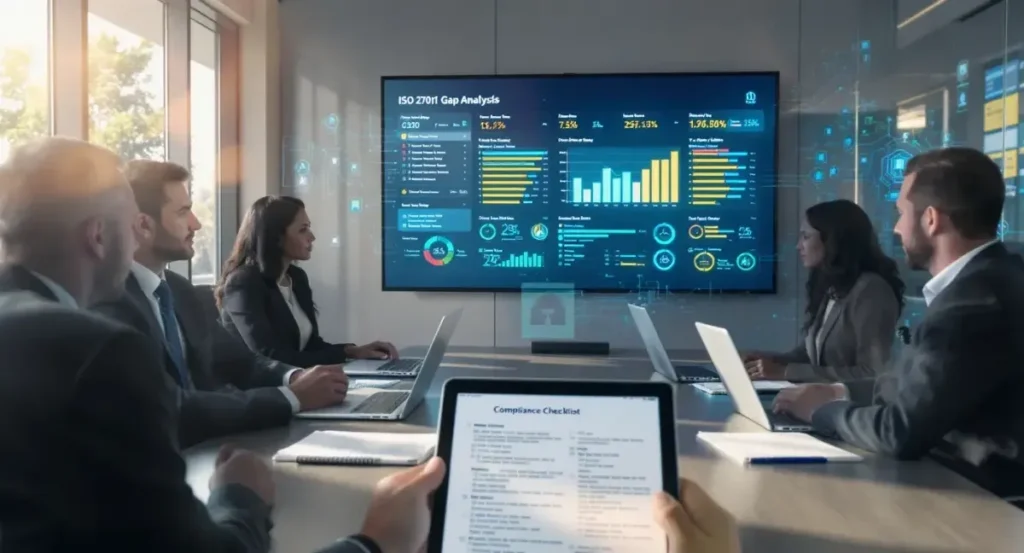
The just need for ISO 27001 compliance grows faster as organizations realize strong information security practices matter. We see how this internationally recognized standard has become vital for businesses that want to protect their data assets and show their dedication to security excellence. An ISO 27001 gap analysis is a significant first step toward meeting the standard’s requirements. This systematic approach helps us review our security posture against what we need. Organizations that skip this key assessment often end up rushing to meet compliance requirements at the last minute. This leads to delays that get pricey and security setups that don’t work well. A solid gap analysis usually reveals problems in three key areas: governance, risk management, and operational security. Getting ISO 27001 certified means more than just earning a badge for your organization. It validates your dedication to data protection, regulatory compliance, and operational resilience. Most organizations take 6 to 18 months to get certified. That’s why understanding the remediation process is key to success. In this piece, we’ll look at how gap remediation paves the way to ISO 27001 compliance and how you can guide your team through this experience effectively. Understanding the Gap Remediation Framework Image Source: EC-Council Global Services A successful ISO 27001 implementation needs solid gap remediation as its foundation. Your organization must develop a well-laid-out plan to address findings after spotting discrepancies through a full gap analysis. Gap remediation works like your navigation system – it shows you the way forward and helps you arrange solutions that meet compliance requirements. How Gap Remediation Connects to ISO Gap Analysis Results Your ISO 27001 gap analysis findings directly shape gap remediation. The analysis reveals problems in governance, risk management, and operational security. A proper gap analysis produces specific outputs that guide remediation: A detailed report mapping current practices against ISO 27001 clauses and Annex A controls Documentation of what’s compliant, partially compliant, or missing entirely A prioritized list of areas needing improvement Gap remediation turns these learnings into concrete steps. Organizations that rush through analysis often struggle to meet compliance requirements at the last minute. This leads to higher costs and security implementations that don’t work well. Your remediation plan serves as a strategic guide to bridge the gap between your current security and ISO 27001 requirements. The Critical Path Concept in ISO 27001 Compliance Requirements The critical path concept helps you prioritize remediation efforts based on their effect and complexity. Not all gaps matter equally – some block your certification path while others need minor tweaks. A good remediation strategy groups gaps by: Risk level – High, medium, or low priority Implementation complexity Resource requirements Interdependencies with other controls High-priority gaps need immediate attention to reduce potential vulnerabilities. This approach tackles the most significant compliance barriers early and smooths your path to certification. Root cause analysis becomes vital during remediation – you need to fix the real problems behind each gap instead of using quick fixes. When to Start Gap Remediation Activities Start your gap remediation right after completing the gap analysis. The original gap assessment phase usually takes 2-4 weeks, but remediation planning should begin as soon as you have the findings. Full ISO 27001 implementation typically needs 6-18 months, making quick remediation significant. Early action brings major benefits. You have three years to match updated standards, but waiting increases your risk exposure. Remediation needs constant monitoring and adjustment. Regular checks help track progress and review control effectiveness. Your remediation efforts need clear governance to work. This means: Assigning each gap to specific teams or individuals Creating realistic timelines that consider dependencies Using project management tools to track milestones Running weekly or bi-weekly reviews to measure progress Resource allocation matters too – teams need adequate time, tools, and budget to fix identified gaps. Some organizations handle remediation in-house, while others benefit from outside experts, especially with complex requirements or limited internal knowledge. Gap remediation bridges the gap between finding security shortfalls and achieving ISO 27001 compliance. Careful planning and systematic execution help your organization turn gaps into strengths. This builds a resilient information security management system that meets both compliance requirements and security goals. Creating Your Gap Remediation Action Plan Image Source: Cyberzoni.com Your next crucial step toward ISO 27001 compliance starts with a structured remediation plan once you spot security gaps. A well-laid-out action plan will give a clear roadmap with specific responsibilities, timelines, and priorities based on your analysis. Categorizing Gaps: Critical, High, Medium, and Low Priority Security gaps don’t carry equal weight. The best way to start remediation is to rank each gap by its risk level and how it might affect your organization. Most organizations use a four-tier model: Critical Priority – Gaps that directly threaten sensitive data or core operations High Priority – Major vulnerabilities needing quick fixes Medium Priority – Important issues with moderate risk levels Low Priority – Minor concerns with minimal security impact This ranking system lets you tackle the biggest risks first, such as weak spots in sensitive data or outdated access controls. Each gap needs a root cause analysis to fix the actual problem, not just patch the visible issues. This matches perfectly with ISO 27001’s emphasis on constant improvement and risk management. Defining Clear Objectives and Success Metrics ISO 27001 Clause 6.2 requires measurable security objectives. Your remediation plan needs specific, actionable goals. Poor objectives create more than audit problems—they let risks grow unchecked. Good objectives must meet three standards: Operational – Clear changes and ownership Measurable – Specific metrics you can check Aligned – Direct links to company risk tolerance or regulations Each objective needs a specific timeframe (“by fiscal year end” instead of “ongoing”), data source (logs, dashboards), and success markers. This turns abstract compliance goals into real actions you can track. Establishing Governance Structure for Remediation Strong delegation drives successful remediation. Someone must own each identified gap. Skip vague tasks like “IT to resolve” and name who will handle which control and when. Project management tools help you: Track
Getting Started: The ISO 27001 Readiness Assessment Steps

Starting an ISO 27001 readiness assessment might feel daunting at first. This globally accepted framework helps manage and secure sensitive information, and needs careful planning with detailed documentation. Your organization’s current security setup will determine the timeline, which typically ranges from three to twelve months. ISO 27001 certification proves your organization follows information security best practices. The certification isn’t a one-time achievement – it needs constant monitoring, yearly surveillance audits, and regular recertification. SaaS companies usually complete this process in three to six months. The audit preparation takes one to four weeks. A detailed audit readiness checklist becomes crucial to prevent delays that could stretch the process to six months. This piece covers key steps of an ISO 27001 readiness assessment. You’ll learn to define your Information Security Management System (ISMS) scope, run a gap analysis, put controls in place, and prove readiness through internal audits. This structured approach will boost your organization’s information security, build customer trust, and meet compliance needs in many sectors. Step 1: Define Your ISMS Scope and Readiness Goals Image Source: DataGuard A successful ISO 27001 implementation starts with a clear definition of your Information Security Management System (ISMS) scope. The original step needs you to think over what information you want to protect. This sets the boundaries where your security controls will work. Clarify organizational boundaries and assets in scope Your ISO 27001 readiness assessment trip needs you to make one of the most important decisions – determining organizational boundaries. You need to identify which parts of your organization will be under the ISMS umbrella: Physical locations and premises Organizational units and departments Information systems and technology infrastructure Key processes that create or handle sensitive information The scope must identify all information assets that need protection, whatever their location—on premises, in the cloud, or accessed remotely. On top of that, it should document the interfaces and dependencies between internal activities and those handled by external parties. Asset identification is a vital part of scope definition. Each information asset needs designated owners who will manage them through their lifecycle—from creation and processing to storage, transmission, and eventual deletion. Line up scope with business objectives and compliance needs Your ISMS should deliver real value by matching your organization’s strategic goals. A well-laid-out scope helps information security boost business objectives instead of being just a compliance exercise. The requirements of interested parties—customers, shareholders, regulators—play a big role in setting scope boundaries. Small organizations might find it easier to include everything in scope. Larger enterprises could benefit from targeting specific products, services, or departments. All the same, you should review these challenges of partial scoping: Staff confusion about which information falls under ISMS protection More complex management of dual processes Possible negative perception from customers or certification bodies Certification bodies prefer “whole organization” scope nowadays. Important customers generally expect this approach too. Your scope statement should be brief yet clear about what falls within and outside your ISMS boundaries. It should show how your security controls support broader business goals. Step 2: Perform a Readiness Gap Assessment Image Source: Cyberzoni.com Your next crucial step after defining the ISMS scope is to get a full picture through a gap analysis. This assessment shows how your current security measures stack up against what the standard requires. Compare current practices with ISO 27001 readiness assessment guide A well-laid-out gap analysis matches your existing practices with ISO 27001 requirements through several steps. You’ll need to review documents of current policies and procedures, talk to stakeholders, and see how your controls line up with ISO 27001 requirements. The assessment must look at both mandatory clauses (4-10) and Annex A controls. Going through each clause might take time, but you need this to spot technical gaps like missing policies and procedures, plus management system gaps such as weak leadership support. The quickest way to work is to create a detailed checklist. Mark each requirement as compliant, partially compliant, or non-compliant. This method helps you catch all critical security elements during your ISO 27001 readiness assessment. Use readiness assessment platforms to streamline analysis Special platforms can make gap analysis much easier. These tools break down ISO 27001 requirements into simple tasks. They assign responsibilities to team members using straightforward “yes/no” surveys. Many platforms offer questionnaires that tell you right away how ready you are. To cite an instance, a good assessment checks management awareness, information asset inventory, risk identification, and incident response capabilities. Create a remediation roadmap with owners and deadlines Once you spot the gaps, build a clear plan that has: What each gap is about Why it exists Steps to fix it Priority levels (high, medium, low) Who’s responsible When it needs to be done Set priorities based on how risks affect you, the work needed, and any urgent regulations. One expert puts it well: “Not all gaps are equal—and a good report reflects that”. Give each gap to a specific person or team. Don’t use vague assignments like “IT to resolve”. Instead, be specific: “Security Officer to implement audit logging on server ABC by this date”. Book a Readiness Call with certified ISO 27001 consultants who can guide you through gap assessment, especially if this is your first certification experience. Step 3: Implement Controls and Prepare Documentation Image Source: Omnex The implementation phase starts after you spot gaps in your security posture. This significant stage needs proper documentation and execution to make sure your ISO 27001 readiness assessment ends with a soaring win. Apply relevant ISO 27001 Annex A controls ISO 27001:2022 gives you a catalog of 93 controls in four main sections that are the foundations of your security blueprint. Your risk assessment outcomes and Statement of Applicability (SoA) requirements should guide your control selection. The four control categories are: Organizational controls (37 controls) that cover governance and management aspects People controls (8 controls) that handle human resources security Physical controls (14 controls) that protect tangible assets Technological controls (34 controls) that focus on IT systems security Develop required policies:
Vendor Vetting: Using ISO 27001 Requirements for Supplier Audits
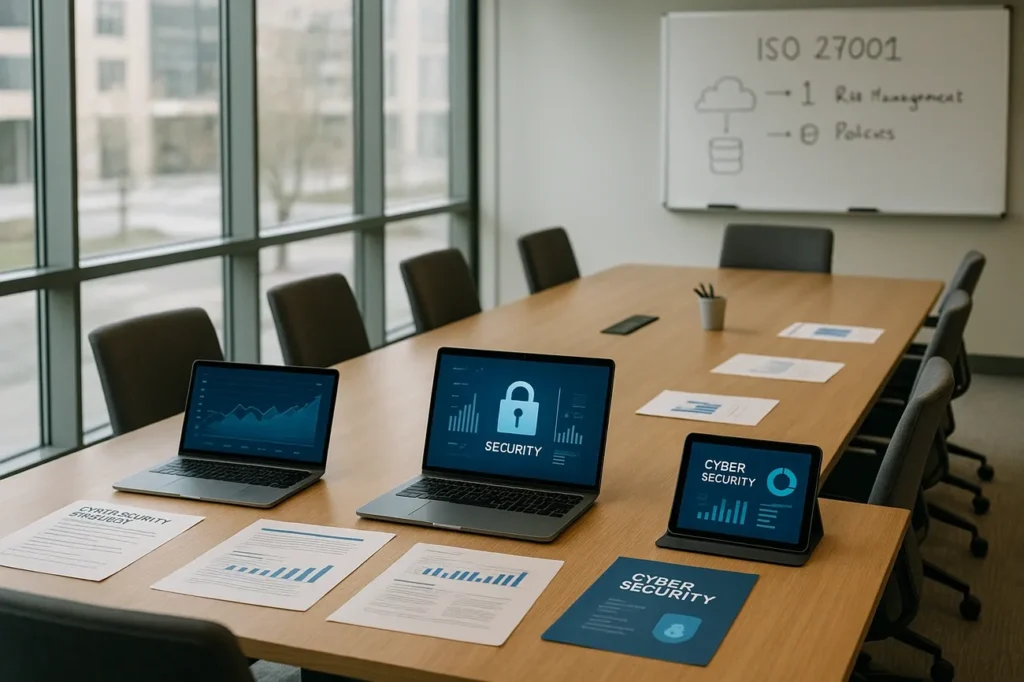
A shocking 60% of data breaches involve third-party vendors. This fact expresses why a proper ISO 27001 risk assessment is crucial for organizations of all sizes. Your organization must protect sensitive information, even when functions are outsourced to external partners. A vulnerable vendor can become your defense strategy’s weak point and expose your environment to data breaches, compliance issues, or operational outages. ISO 27001 demands that you identify vendors, control their access, and monitor how they comply with your Information Security Management System (ISMS). Vendor risk management helps us identify, analyze, and control supplier risks before they become major threats. This piece will show you how to utilize ISO 27001 requirements to build a strong vendor assessment process. We’ll provide practical guidance to strengthen your third-party risk management framework and maintain compliance with this critical security standard. You’ll learn everything from creating complete questionnaires to setting up continuous monitoring practices. Key Elements of ISO 27001 Vendor Assessment Templates Image Source: Centraleyes A well-laid-out ISO 27001 vendor assessment template helps organizations assess third-party security practices. Three essential components are the foundations of any detailed vendor risk management framework. Vendor classification and risk scoring Categorizing suppliers based on their risk profiles starts the vendor assessment process. ISO 27001 guidelines recommend classifying vendors into high, medium, or low-risk tiers based on: Data criticality and sensitivity they handle Depth of system integration and access levels Operational dependency on their services Regulatory implications of the relationship Risk classification drives the level of scrutiny needed. Vendors handling regulated data like personal information, health records, or financial details need stronger controls. High-risk vendors need more detailed security assessments and frequent monitoring than their low-risk counterparts. Security policies and governance checks The template should assess the vendor’s security governance structure after classification. This section determines if the supplier has formal information security policies that arrange with ISO 27001 requirements. Key areas include: Documented security ownership and leadership roles Regular policy reviews and updates Clear roles and responsibilities for information security Evidence of risk assessment methodologies Industry certifications (existing ISO 27001 certification substantially speeds up this process) Access control and data protection The third vital element looks at how vendors protect sensitive information. This component assesses: Authentication methods and password policies Role-based access controls implementation Data encryption standards (both at rest and in transit) Secure deletion and media disposal protocols Physical media handling procedures A well-designed ISO 27001 vendor assessment template provides a consistent framework that helps make informed risk decisions about your supplier ecosystem. Designing and Using ISO 27001 Questionnaires Image Source: TrustCloud Well-designed questionnaires are the foundations of any ISO 27001 vendor assessment program. Studies of over 500 vendor assessments reveal that questionnaires with 12-15 core security domains catch 89% of critical vulnerabilities. These surveys help collect standard information about cybersecurity practices, data privacy, and regulatory compliance to assess each vendor’s risk posture. Map questions to ISO 27001 controls Questions must line up with ISO 27001 controls to work properly. Each question needs to connect directly to specific sections of the standard. Questions about data handling connect to Annex A.8 (Asset Management), while access control questions match with Annex A.9. This mapping serves two vital purposes. It gives a complete coverage of all relevant security domains and provides clear tracking during audits. This shows that vendor risks follow ISO standards. Studies show organizations using multiple frameworks find 43% more security gaps than those using just one. You should think over adding other frameworks based on your industry needs. Include both qualitative and quantitative items The best questionnaires mix structured and open-ended questions. This helps gather measurable data and valuable context. Yes/no and multiple-choice questions give clear metrics. Descriptive responses help learn about implementation details. Here are some examples that work well: “Does your organization maintain ISO 27001 certification?” (quantitative) “How often do you conduct internal security audits?” (quantitative) “Describe your data backup and recovery process.” (qualitative) Research shows questionnaires that focus on implementation details rather than just policy existence cut down false security assurances by 67%. Assign scoring and risk weights A weighted scoring system helps critical controls carry more weight. Scores should match how well responses line up with your internal standards or external frameworks. This gives you the quickest way to assess vendors and group them into risk tiers (low, medium, high). Teams can then focus on fixing issues where they matter most. Your scoring method should reflect your company’s risk tolerance and compliance needs. This turns your questionnaire from a basic compliance task into a strategic tool that drives smart risk decisions. Conducting Supplier Audits with ISO 27001 Framework The implementation of an ISO 27001 vendor risk management framework moves beyond theoretical planning into practical action. ENISA’s 2023 report highlighted third-party incidents as the leading cause of large data leaks, surpassing internal breaches. This sobering reality underscores the importance of a structured supplier audit process. Distribute and evaluate vendor responses Initially, share your ISO 27001 vendor assessment template with selected suppliers, establishing clear timelines and accountability mechanisms. Encourage vendors to provide detailed, evidence-backed responses rather than simple yes/no answers. This approach transforms your questionnaire from a compliance exercise into a strategic risk management tool. Verify evidence and certifications Subsequently, thorough verification becomes critical. Review supporting documents including: Current ISO 27001 certificates and SOC 2 reports Recent penetration test results and vulnerability scan outputs Business continuity test documentation Incident response procedures Indeed, enterprise buyers now demand evidence-based security validation before contract execution—not aspirational statements about security posture. Organizations without structured evidence collection invest 550-600 hours annually managing compliance reactively. Develop risk treatment plans For vendors with identified gaps, create specific risk treatment plans. These documents should clearly outline: Selected treatment approach (avoid, mitigate, transfer, or accept the risk) Specific corrective actions with deadlines Responsible parties for implementation Expected post-treatment risk scores Book a readiness Call to evaluate your vendor assessment maturity and identify improvement opportunities. Maintaining Compliance Through Continuous Monitoring Image Source: Tenable ISO 27001 highlights that vendor management needs constant watchfulness. ENISA’s 2023