
AI risk management plays a vital role as artificial intelligence revolutionizes businesses at an unprecedented pace. Organizations using some form of artificial intelligence have increased by 17% since 2023, reaching 72%. Many companies rush to implement AI systems without establishing proper safeguards.
Leaders show a striking contrast between enthusiasm and caution. A newer study published by IBM reveals that 96% of leaders expect generative AI to increase security breach risks, yet only 24% secure their current generative AI projects. About 62% of companies are waiting for clear AI-specific regulations before full adoption. Employee sentiment differs as 84% see AI’s positive effect on their careers.
ChatGPT demonstrated AI’s remarkable power by reaching 100 million users in just two months after launch. The lack of resilient risk management can result in collateral damage like biased decision-making, operational failures, or reputation damage. This piece explores artificial intelligence risk management strategies that founders can use to protect their businesses while utilizing AI’s tremendous potential. Companies that make AI risk management frameworks a priority from the start can scale AI solutions with confidence and minimize potential risks.
Understanding AI Risk in the Startup Context
Early-stage companies struggle with AI technology adoption. Unlike big companies that are decades old with strong infrastructure, startups must direct AI risks with limited resources. They need to stay nimble to keep their edge in the market. These unique challenges shape how founders should handle ai risk management.
Why AI risk management matters for early-stage companies
AI systems create different kinds of risks for startups compared to regular software. These technologies can fail in ways that normal software doesn’t. The stakes are high when AI powers critical services like healthcare diagnostics, self-driving cars, or financial services. Any failures could harm people, damage finances, and ruin company reputation.
Startups need structured frameworks built just for AI systems. Teams should look at technical aspects like algorithm selection, data quality, and how well models perform. The broader picture matters too – how and where people will use these systems. Many forward-thinking companies now see artificial intelligence risk management as crucial to staying in business, not just checking boxes.
AI costs can add up fast. Companies often aim too high or miss hidden challenges. The numbers tell the story – only 26% of companies have working AI products. A tiny 4% see any real returns on what they spent. Startups need a clear plan to transform with AI. They should tackle big questions without losing sight of daily operations.
Planning different scenarios and running “red-team” tests helps find problems regular testing might miss. These methods push systems to their limits. Teams try hostile inputs, weird user behavior, and changing conditions to spot weak points early.
Common misconceptions about AI safety and innovation trade-offs
People often get the wrong idea about AI safety and innovation:
- Myth: Strong AI safety rules kill innovation.
Reality: Smart rules and market forces work together well. Public-private teams can solve hard problems and push responsible AI forward.
Some think AI will take most jobs soon. Research shows a different story. Machine learning has grown for more than 50 years. Despite recent jumps forward, we’re nowhere near true AI that thinks like humans. News media loves AI success stories but stays quiet about the many failures.
People also think AI makes everything better and should go everywhere. The truth? Getting AI right is tough. Poor data or unclear goals lead to disappointing results.
Unsafe AI looks like “handing the keys of an organization to cybercriminals”. Many researchers prefer tested machine learning methods over new large language models that still make mistakes. This matters most in cybersecurity, where being mostly right isn’t good enough.
Founders who understand these facts can make smart choices about ai for risk management. They can protect their business while pushing innovation forward responsibly.
Breaking Down the Four Core AI Risk Categories
Founders need to identify specific threat categories that show up during AI system lifecycles to manage risks well. A good protection strategy needs a clear understanding of how these risk areas connect with each other.
Data Risks: Bias, privacy, and integrity issues
Training data is the foundation of AI systems and a key weak spot. AI apps process huge amounts of data – terabytes or even petabytes. This includes sensitive content like health records, social media data, financial details, and biometric IDs. The sheer scale of data makes AI systems more vulnerable than regular software.
Data privacy risks show up at every stage of AI development. Companies that collect training data without proper consent face ethical and legal risks. AI models can also make existing data biases worse, which leads to wrong outputs. To cite an instance, Amazon’s AI hiring tool showed bias against women because past hiring data favored men.
Data integrity is crucial – AI systems using bad or tampered data will give dangerous results. Companies need reliable data management practices, including ways to check data quality and security measures like encryption.
Model Risks: Adversarial attacks and model theft
AI models become targets for smart attacks once they’re built. In model inversion attacks, attackers query systems repeatedly to figure out the training data, which can expose private or regulated information. Bad actors can get sensitive data even from systems built to keep information private.
Backdoor attacks work by hiding triggers during training that make models act strangely when specific patterns appear. These triggers stay hidden until used, making them very hard to spot during normal testing.
Model theft is a growing problem where attackers query prediction APIs enough times to rebuild private models. Unlike stealing regular IP, these attacks look like normal API use, making them hard to catch. Stolen models reveal business secrets, competitive edges, and security weak spots.
Operational Risks: System failures and scalability issues
AI brings unique challenges beyond regular tech setup problems. Systems might develop unexpected behaviors in new situations. Unlike regular software that fails in predictable ways, AI can surprise us with outcomes that tests miss.
Key risks include models getting worse over time, problems working with existing systems, and limits to scaling up. These issues matter most in critical areas like medical diagnosis or self-driving cars where failures could hurt people.
Ethical and Legal Risks: Discrimination and regulatory non-compliance
Artificial intelligence risk management now includes ethical and regulatory issues. AI systems might accidentally make existing social inequalities worse without proper oversight. This risk matters most in important areas like hiring, lending, law enforcement, and healthcare.
Regulations are changing faster worldwide. The EU’s AI Act leads the way as the first detailed regulatory framework for AI, ranking applications by risk level. Companies that don’t follow proper governance rules face big fines, legal problems, and damage to their reputation.
Companies must balance innovation with responsible practices as they use AI. A structured ai risk assessment helps spot weak points across these four risk areas. This helps founders build reliable safeguards that protect their business and stakeholders.
Implementing Guardrails Across the AI Lifecycle
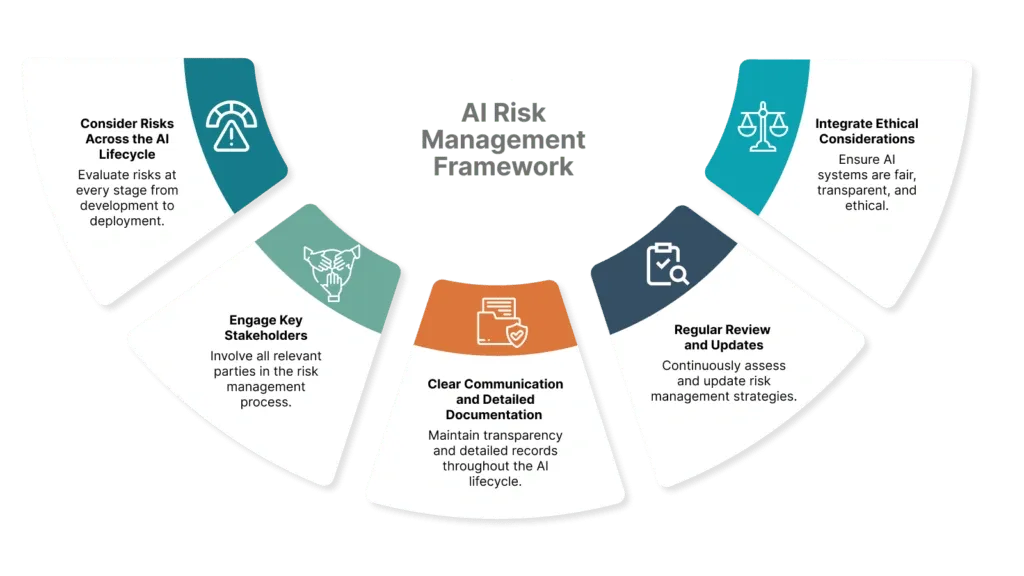
Image Source: Modulos AI
Your AI system needs effective safeguards throughout its lifecycle. These safeguards will give a solid foundation that balances breakthroughs with safety. Well-laid-out guardrails help address vulnerabilities at each development phase. They reduce potential harm without slowing down progress.
Data governance from collection to deployment
ai risk management depends on reliable data governance as its life-blood. Companies need strict security protocols. These include data encryption during transit, rest, and deployment phases. Regular security audits help maintain data integrity. Data lineage tracking systems document the history of all AI training data clearly. This helps avoid future biases and explains decision-making processes.
These essential steps will protect sensitive information:
- Finding sensitive elements that need protection
- Using privacy techniques like anonymization
- Creating complete documentation of data handling practices
Quality assurance processes should verify data integrity quickly. Automated pipelines help with preprocessing and include statistical checks. These assess diversity and how well the data represents real scenarios.
Model validation and robustness testing
After building models, validation confirms “that requirements for specific intended use have been fulfilled”. Artificial intelligence risk management frameworks need complete testing against adversarial attacks and potential weak points before deployment.
Robustness testing finds vulnerabilities and makes sure performance stays stable when data gets noisy and unpredictable. Models must maintain their performance levels under different conditions. This protects against unplanned failures and targeted attacks.
The NIST AI Risk Management Framework suggests testing algorithms for security and safety. This helps identify weaknesses against malicious actions like prompt injection or data poisoning. In fact, validation should test models against ground scenarios. Bringing realistic data early in development might get pricey. However, failing tests and retraining later costs just as much.
Monitoring and auditing AI outputs in production
Continuous monitoring becomes crucial as systems go live. Risks might not show up right away but grow as AI systems adapt. Therefore, telemetry provides vital data through logs, traces, and metrics. This maintains visibility into system performance.
Good monitoring tracks important elements like request rates, error rates, latency metrics, and model-specific performance indicators. On top of that, it tracks cost metrics like tokens consumed to manage operational expenses.
Regular audits verify how well controls work by looking at explainability reviews and bias assessments. These audits make sure AI outputs match intended goals. They also find emerging problems before causing harm.
Founders who implement these guardrails throughout their AI lifecycle can build artificial intelligence in risk management practices. This protects their innovations while supporting responsible growth.
Frameworks Founders Should Know
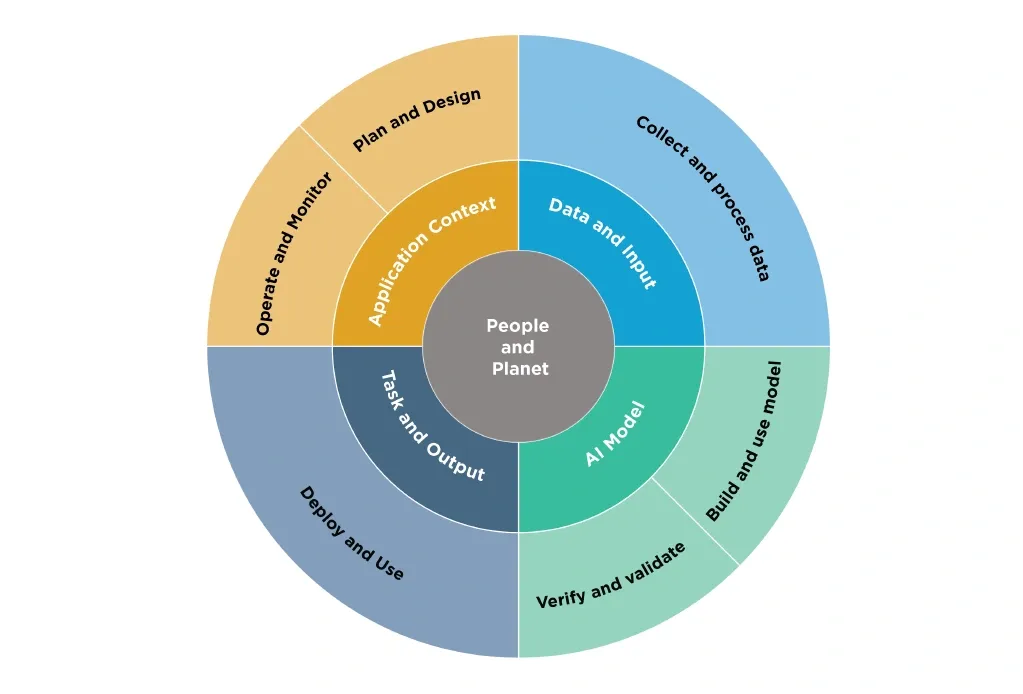
Image Source: LinkedIn
Startup founders can rely on several proven frameworks to guide them through the complex world of ai risk management. These frameworks provide clear direction that works well for businesses of all sizes.
NIST AI Risk Management Framework (AI RMF) Core Functions
The NIST AI Risk Management Framework, launched in January 2023, is a chance for companies to manage their AI-related risks voluntarily. This framework breaks down artificial intelligence risk management into four core functions:
- Map: Sets the context to frame risks related to an AI system
- Measure: Uses quantitative and qualitative tools to analyze and track AI risks
- Manage: Assigns resources to address mapped and measured risks
- Govern: Fosters a culture of risk management within organizations
The framework started as a consensus-driven approach and has a companion NIST AI RMF Playbook that helps organizations achieve their goals through specific actions. A July 2024 update added a Generative AI Profile with over 200 targeted actions to address unique risks from large language models. This update gives founders a complete roadmap to tackle emerging AI challenges.
ISO/IEC 23894:2023 for AI risk management
ISO/IEC 23894:2023 stands as an international standard specifically built for AI risk management. Unlike NIST’s flexible approach, this standard follows a more structured process with five key risk management phases:
- Risk identification
- Risk assessment
- Risk treatment
- Monitoring and review
- Recording and reporting
Organizations that already use ISO 31000:2018 (general risk management) can extend their current processes to cover AI risks without creating separate governance structures. This easy integration makes it valuable for startups that already have risk management frameworks.
Microsoft Responsible AI Standard: Practical applications
Founders should think about how these standards fit their specific AI use cases before implementation. Early integration of ai risk assessment practices in the development cycle prevents expensive rework and potential damage to reputation. These frameworks work best as guidelines rather than strict checklists, adapt them based on your organization’s unique risk profile and resources.
Benefits of Proactive AI Risk Management for Startups
Early adoption of ai risk management brings clear benefits to startups beyond just meeting regulations. Companies can build a strong foundation for growth and avoid getting pricey mistakes by setting up protective measures early.
Faster regulatory compliance and investor confidence
Investors now see strong risk management as a key factor in their funding choices. Companies that show they understand their risk landscape prove they’re ready for challenges, which improves investor interest. A well-laid-out framework like the NIST AI RMF helps organizations line up with evolving regulations. Startups can stay ahead of compliance requirements rather than scrambling to catch up. Organizations that adapt to regulations early gain advantages over their competitors. They reduce their risk of penalties and build trust with stakeholders.
Improved model performance and user trust
Good guardrails do more than meet regulations – they make AI systems work better. Effective model risk management builds supervisory expectations into every step of the AI/ML lifecycle, which builds trust with customers and stakeholders. AI-driven predictive analytics helps businesses spot potential problems before they happen. Regular model monitoring ensures outputs match intended goals. Users trust AI systems more when operations are transparent this is vital as stakeholders need explainable AI models.
Reduced long-term technical debt and rework
Technical debt has reached huge numbers, with a cost of $2.41 trillion yearly in the United States alone. Companies that tackle tech debt usually spend about 15% of their IT budgets on fixing it. Teams that manage AI risks early can launch AI features faster and spend less on maintenance throughout the system’s life. This creates a foundation for ongoing innovation instead of piling up technical problems that slow development and drive up costs.
Conclusion
Today’s founders face a critical challenge at the intersection of AI breakthroughs and responsibility. More than seven out of ten organizations now use AI solutions, yet many lack proper protection mechanisms. This gap creates serious vulnerabilities that need immediate attention.
Risk management doesn’t slow down innovation – it actually speeds up sustainable growth. Founders need to focus on four key risk areas: data vulnerabilities, model weaknesses, operational failures, and ethical considerations. Each development stage needs its own complete approach to handle these connected challenges.
Strong data governance lays the groundwork for responsible AI deployment. Model validation protects against accidental failures and targeted attacks. Systems need continuous monitoring after deployment to track their performance. These practices create a protective framework that grows with AI capabilities.
Startups can find valuable guidance in standardized frameworks like the NIST AI Risk Management Framework and ISO/IEC 23894:2023. Of course, these resources work best as flexible guidelines rather than strict checklists, adapting to each organization’s specific needs.
Smart risk management does more than just meet regulations. It builds investor confidence, improves model performance, and reduces technical debt by a lot. Organizations gain user trust and edge out competitors who still struggle with basic safety issues.
Companies that balance powerful AI capabilities with smart risk strategies will end up winning. This approach helps founders avoid problems and build lasting advantages while supporting responsible AI development. Success requires both bold vision and careful planning, where safety measures become steppingstones to real innovation.
Key Takeaways
AI risk management isn’t just about compliance; it’s a strategic advantage that enables sustainable innovation while protecting your startup from costly failures and reputational damage.
• Implement guardrails early: 96% of leaders believe AI increases security breach likelihood, yet only 24% of AI projects are properly secured, early risk management prevents expensive rework.
• Address four core risk categories: Data risks (bias, privacy), model risks (adversarial attacks), operational risks (system failures), and ethical/legal risks (discrimination, non-compliance).
• Use structured frameworks: NIST AI Risk Management Framework and ISO/IEC 23894:2023 provide proven roadmaps for managing AI risks without stifling innovation.
• Monitor continuously throughout AI lifecycle: From data collection to deployment, continuous monitoring and validation ensure AI systems remain safe and effective in production.
• Gain competitive advantages: Proactive risk management attracts investor confidence, improves model performance, builds user trust, and reduces the $2.41 trillion annual cost of technical debt.
The most successful AI implementations balance powerful capabilities with thoughtful risk mitigation, making guardrails enablers of transformation rather than barriers to innovation.
FAQs
Q1. What are the main risks associated with AI implementation for startups? The main risks include data-related issues like bias and privacy concerns, model vulnerabilities such as adversarial attacks, operational failures, and ethical and legal challenges including potential discrimination and regulatory non-compliance.
Q2. How can founders implement effective AI risk management practices? Founders can implement AI risk management by establishing data governance protocols, conducting thorough model validation and robustness testing, and implementing continuous monitoring and auditing of AI outputs in production.
Q3. What are some key frameworks for AI risk management? Important frameworks include the NIST AI Risk Management Framework (AI RMF), which offers core functions like Map, Measure, Manage, and Govern, and the ISO/IEC 23894:2023 standard, which provides a structured approach to AI risk management.
Q4. What are the benefits of proactive AI risk management for startups? Proactive AI risk management can lead to faster regulatory compliance, increased investor confidence, improved model performance and user trust, and reduced long-term technical debt and rework costs.
Q5. How does AI risk management impact innovation in startups? Contrary to common misconceptions, effective AI risk management doesn’t stifle innovation. Instead, it enables sustainable growth by addressing potential issues early, allowing startups to innovate responsibly and avoid costly mistakes or reputational damage.