
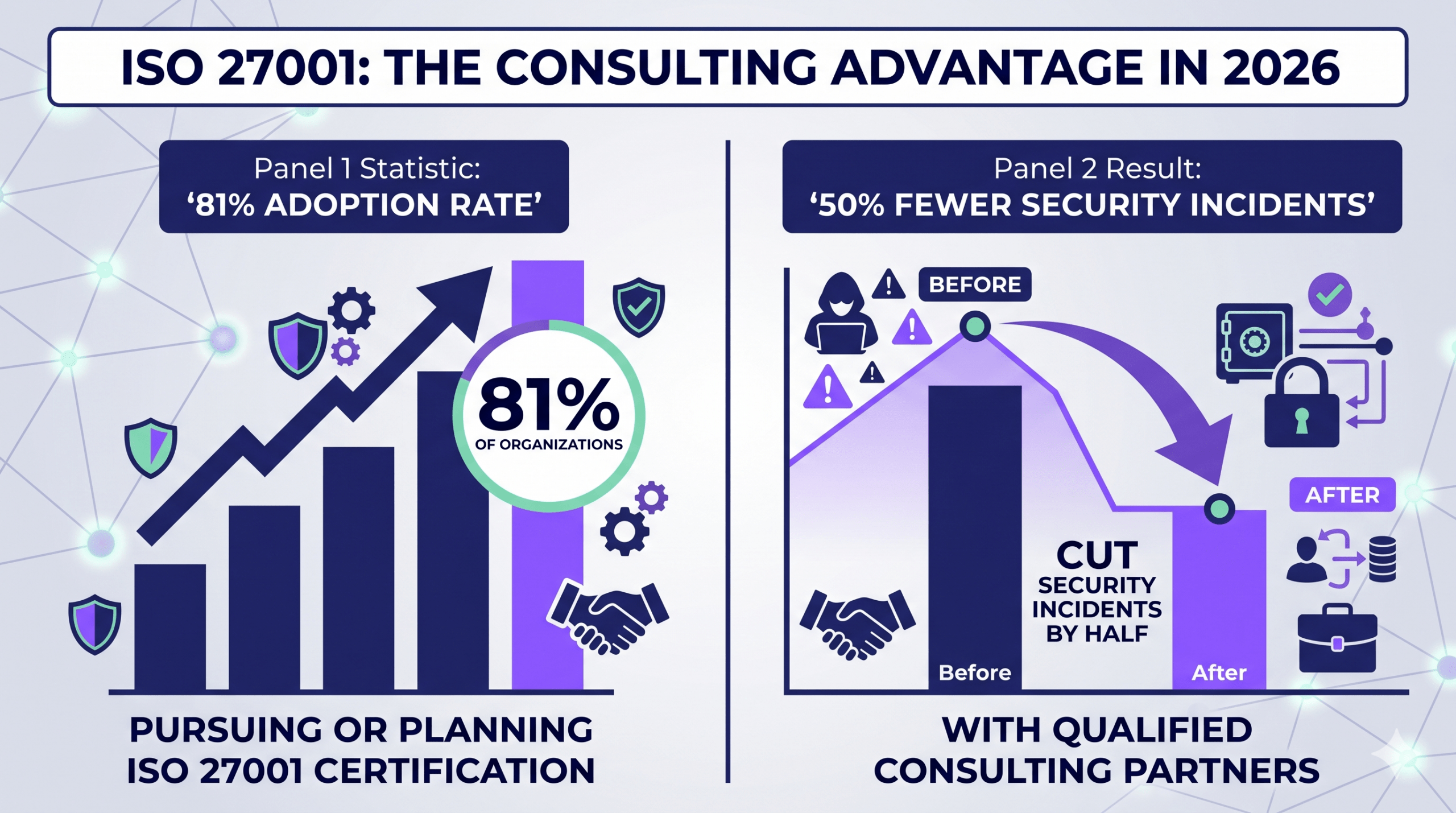
ISO 27001 certification has reached mainstream adoption, with 81% of organizations having pursued or actively planning certification consulting partnerships. Companies that work with qualified consultants cut their security incidents by half, making partner selection one of the most consequential compliance decisions an organization can make in 2026. With more than 70,000 ISO 27001 certificates now active worldwide, the market for consulting services has expanded dramatically and so has the variation in quality between providers.
Choosing from thousands of ISO 27001 consulting services requires careful evaluation beyond price and availability. In this piece, we’ll get into the criteria that actually differentiate consulting firms: credentials, service scope, cost structures, audit preparation support, and long-term compliance maintenance.
Consultant Credentials and Industry-Specific Expertise
Evaluating consultant qualifications starts with understanding the formal credentials that separate experienced professionals from general advisors. The certification landscape for iso 27001 consulting services has multiple paths, each with distinct requirements and verification processes.
Official Accreditation Requirements
The Certified ISO/IEC 27001 Consultant credential requires candidates to pass three specific exams: ITC-074 (Information Security Management Foundation), ITC-067 (Lead Implementer), and ITC-089 (Management Consultancy Services Foundation). Candidates must also have at least two years of work experience as a consultant in information security. This combination verifies both theoretical knowledge and practical application abilities. Consultants must adhere to professional codes of ethics as part of their certification maintenance.
So these requirements ensure that certified consultants understand the ISO 27001 standard and proper consultancy methodologies. Organizations should verify these credentials through certification body databases rather than relying just on consultant claims.
Sector-Specific Implementation Experience
Industry expertise matters because compliance challenges vary by a lot in different sectors. Healthcare organizations face HIPAA requirements with ISO 27001. Financial services manage PCI DSS obligations. Consulting firms with experience in gambling, healthcare and technology sectors bring proven methodologies to address industry-specific risks.
Technical infrastructure knowledge separates capable consultants from those offering generic guidance. Firms with expertise in standard IT infrastructure, public and private cloud environments, and operational technology (OT) can implement controls that fit organizational structures. As with other sectors, consultants who have worked with SaaS companies, healthcare providers and finance institutions can anticipate common regulatory challenges specific to each.
Some iso 27001 consulting firms demonstrate their commitment by achieving certification themselves. Consultants who have managed their own compliance projects from start to finish are a great way to get hands-on experience for client engagements.
Lead Auditor Certifications
Lead auditor credentials follow a progression based on experience and audit hours. The PECB certification structure has four levels: Provisional Auditor (no experience required), Auditor (two years experience with one year in information security management plus 200 audit hours), Lead Auditor (five years experience with two years in information security management plus 300 audit hours), and Senior Lead Auditor (ten years experience with seven years in information security management plus 1,000 audit hours).
The training process itself requires commitment. Lead auditor courses last five days, with examinations on the final day based on ISO 19011:2018 concepts and guidelines. Missing even one day of training disqualifies candidates from taking the exam. More, certification bodies require trainee programs lasting about 20 audit days. Candidates observe experienced auditors conducting real certification audits during this time.
Multi-Framework Knowledge
Cross-framework expertise adds value during implementation. Consultants holding certifications such as PCI DSS QSA, CISA, CISM, ISO/IEC 27001 Lead Implementer, CISSP, and CRISC can line up overlapping controls across multiple compliance requirements. This knowledge helps organizations avoid duplicate work when pursuing multiple certifications.
Firms understanding related standards like SOC 2 and PCI DSS can streamline compliance efforts by mapping common controls. Organizations planning to pursue multiple frameworks should prioritize iso 27001 consulting firms with demonstrated multi-standard experience rather than single-framework specialists.
Service Scope and Implementation Approach
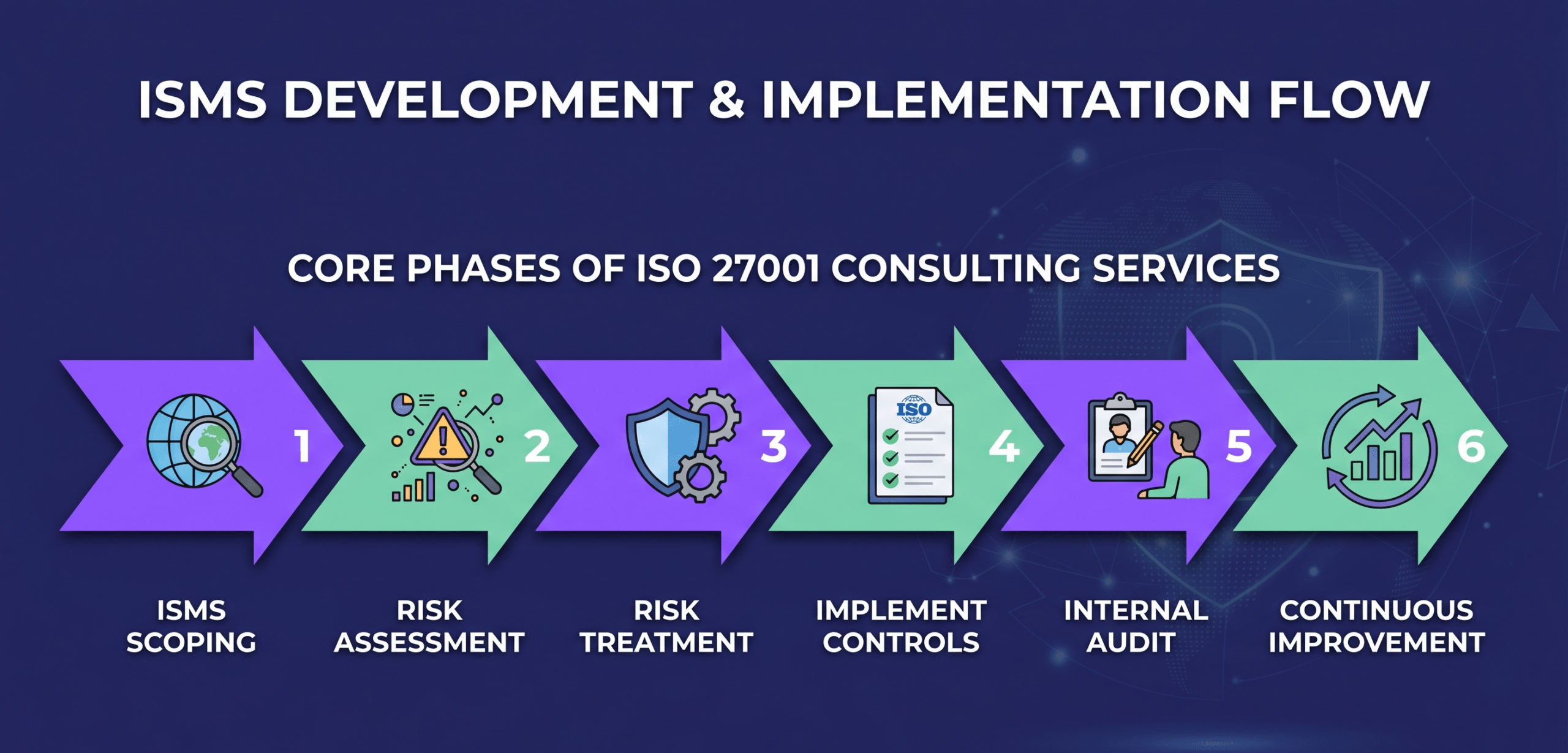
Understanding what ISO 27001 consulting services actually deliver helps separate complete support from superficial guidance. The implementation process spans multiple phases. Each phase requires specific expertise and documented outputs that certification bodies will examine.
Gap Analysis and ISMS Development
Gap analysis compares current security practices against ISO 27001:2022 requirements and identifies missing policies, controls and evidence across people, processes and technology. Consultants should review both mandatory clauses (4 to 10) and all 93 Annex A controls grouped into organizational, people, physical and technological themes. Industry measures show mid-size organizations find 45% of requirements fully compliant, 35% partially compliant and 20% non-compliant. Organizations with mature security programs start at 60-70% compliance. Those building from scratch may be closer to 30-40%.
ISMS development follows six core steps: scoping the ISMS, assessing risk, responding to risk, implementing controls, performing internal audits and ensuring continuous improvement. Consultants must help define information assets and establish asset valuations. They document technology requirements and map contractual agreements that affect information assets. The scoping phase determines which business areas, systems and assets fall within the ISMS boundaries.
Policy Documentation and Risk Assessment Support
The 2022 revision requires fewer mandatory documents compared to the 2013 version. Consultants should deliver 11 mandatory documents. These include ISMS Scope, Information Security Policy, Risk Assessment and Treatment Methodology, Statement of Applicability, Risk Treatment Plan and Security Objectives. Seven mandatory records must be managed to keep covering training certificates, monitoring results, internal audit programs, management review minutes, corrective actions and system logs.
Risk assessment support involves establishing threat inventories and attributing vulnerabilities. Consultants attach probability and impact ratings, determine risk levels, define improvements and calculate residual risk. They must document the entire risk management methodology as required by clause 6.1.2. The Statement of Applicability shows the security profile based on risk treatment results and lists implemented controls with justifications. This document guides certification auditors during examination.
Internal Audit and Pre-Certification Review
Internal audits conducted at planned intervals verify ISMS effectiveness before external certification. Consultants should establish audit programs covering frequency, methods, responsibilities and reporting requirements per clause 9.2. The audit timeline spans one to three weeks for most organizations. Auditors review ISMS documentation and collect evidence from system logs and access records. They conduct staff interviews and identify nonconformities.
Pre-assessment simulates actual certification by reviewing the entire management system. This includes scope, policies, procedures and processes. This optional phase reveals oversights or weaknesses that require remediation before formal audits.
Post-Certification Maintenance Programs
Surveillance audits occur annually for three years and ensure ongoing compliance. Consultants should support access reviews quarterly and log review documentation. They handle risk register updates triggered by infrastructure changes, supplier security reviews scaled to risk tiers and annual policy reviews. Organizations must conduct internal audits at planned intervals and ensure full ISMS coverage over the three-year certification cycle. Management reviews capture inputs reviewed, decisions made and actions assigned. Recertification becomes necessary after three years and requires preparation approximately nine months before expiration.
Cost Structure and Timeline Expectations for 2026
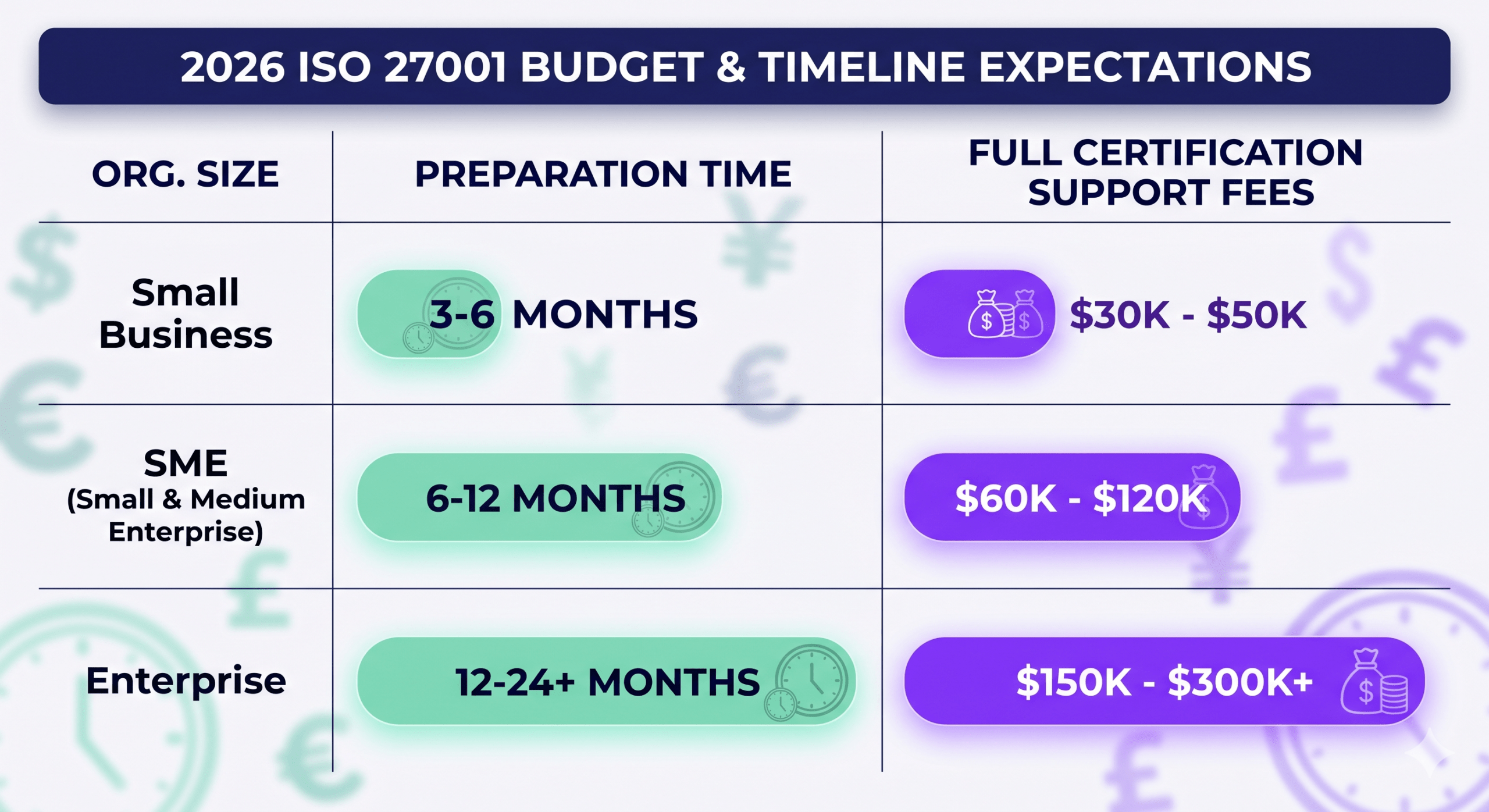
Budget planning for iso 27001 certification consulting requires understanding both direct fees and variables that shift costs by a lot in different organizational profiles. Consultant expenses ranged from £9,000 to £15,000 in the UK in 2024, while US-based firms charge around $1,500 per day. Organizations between 1-10 employees face baseline certification costs of about £6,250 based on mandatory 5-day audits at £1,250 daily rates. Companies with 46-65 employees need roughly 10 audit days. This pushes costs to about $15,800.
Typical Consultant Fee Ranges by Organization Size
Full certification support from iso 27001 consulting firms runs between $30,000 and $50,000. Hourly arrangements vary from $100 to $300 per hour depending on consultant experience and geographic location. Organizations preferring project-based structures face total first-year expenditures spanning £15,000 to £40,000 for a 50-person technology company. Preparation costs alone range from $5,000 to $60,000 based on software purchases and consultant needs. Internal audit outsourcing adds $5,000 to $10,000, while gap analysis services cost an additional $5,000 to $6,000.
Hidden Costs in Multi-Site Implementations
Multi-site deployments introduce substantial overhead beyond base audit fees. Each additional location adds flights, hotels and per-diem expenses that accumulate to roughly $3,000 per site. Every extra office requires one to two additional audit days at $2,500 daily. Three low-value sites can consume about $7,500 without improving security posture. Organizations spanning 20 site visits across a three-year cycle face about $60,000 in travel-related expenses before accounting for smaller day-rate reductions. Skipping five duplicate incident-response interviews alone trims one audit day and saves about $2,500 in combined fees and travel.
Average Timeline from Engagement to Certification
Small businesses already dedicated to information security can complete certification in as little as three months. Larger organizations with complex processes require around one year. Most small-to-medium businesses reach audit readiness in four months, then go through the audit process over six additional months. Organizations with 50-250 employees average 6-9 months total. Enterprises exceeding 1,000 employees need 12-18 months. Companies maintaining mature security frameworks like SOC 2 or Cyber Essentials move much faster since many controls already exist.
Payment Models and Retainer Options
Retainer arrangements offer predictable budgeting compared to daily rates. Monthly fees range from £500 to £2,000 depending on service scope. Basic retainers covering telephone and email support plus occasional document reviews cost £500-£800 monthly. Mid-range packages including quarterly site visits and surveillance audit preparation run £1,000-£1,500 monthly. Comprehensive retainers with regular internal audits and frequent on-site presence reach £1,500-£2,000 monthly. Annual payment options provide 10-15% discounts compared to monthly billing. Book a Readiness Call to discuss your specific situation and ensure transparent pricing aligned with your organization’s needs before committing to any payment structure.
Audit Preparation and Certification Body Relationships
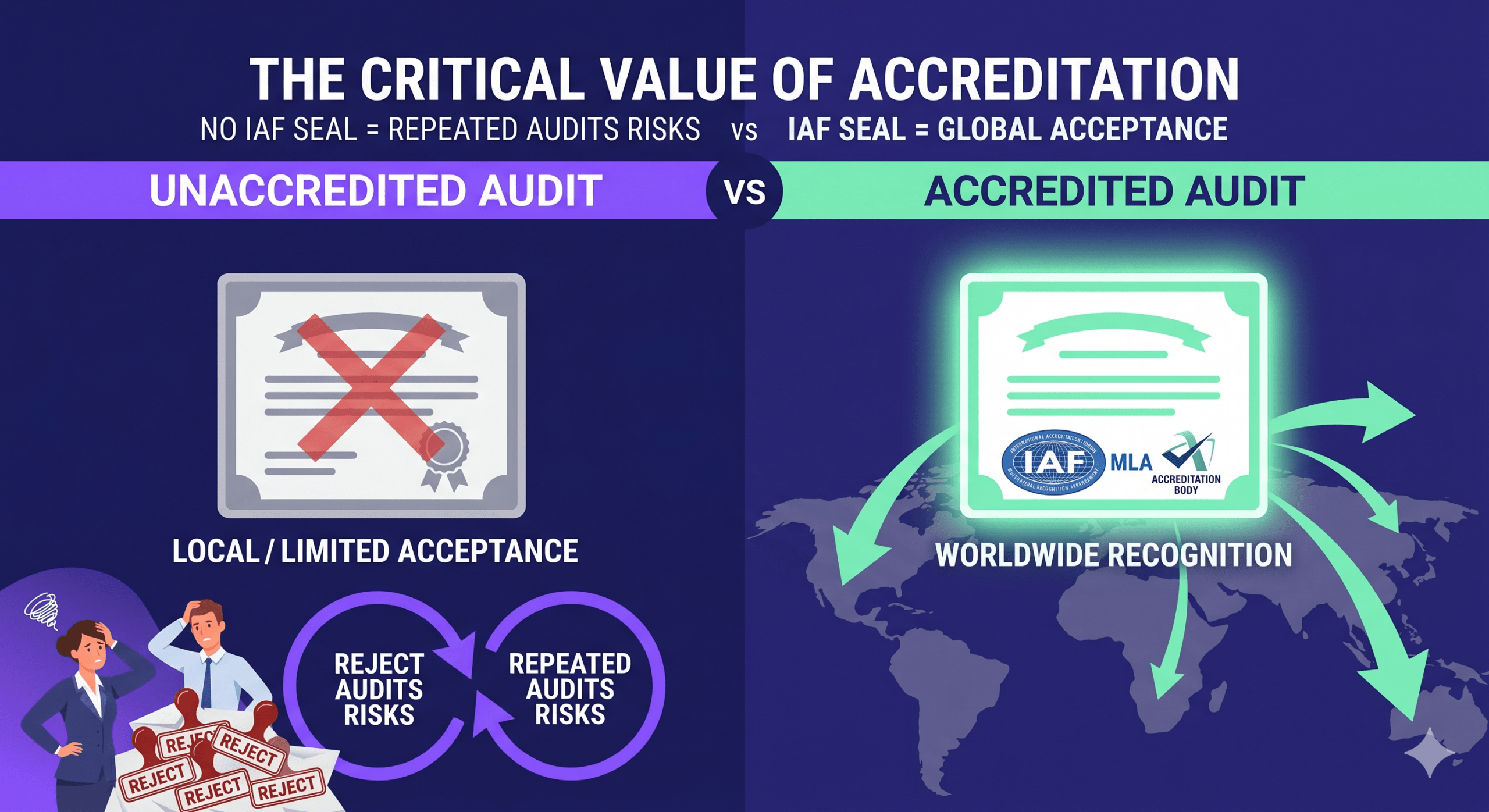
Certification body selection shapes audit outcomes more than most organizations realize when starting their ISO 27001 certification consulting experience. We need partners holding accreditation from recognized bodies, not just technical competence.
Working with Accredited Certification Bodies
Accreditation bodies confirm that certification bodies conduct audits according to ISO/IEC 17021 requirements. Organizations receiving certificates from accredited bodies get the IAF seal included, illustrating worldwide acceptance. Major accreditation bodies include ANSI National Accreditation Board (ANAB) for the U.S., Standards Council of Canada (SCC), Deutsche Akkreditierungsstelle GmbH (DAkkS) for Germany, United Kingdom Accreditation Service (UKAS), and Joint Accreditation System of Australia & New Zealand (JASANZ).
Certification bodies undergo annual office and witness audits to maintain accreditations. Selecting an unaccredited body means going through the certification process twice when an accredited certificate becomes required. Verify their accreditation status through official directories before engaging any certification body. Organizations with international operations should choose bodies with strong global presence that ensure consistency across regions.
Mock Audit Processes
Internal audits or mock audits test ISMS readiness under conditions close to actual certification. We conduct these assessments with neutral external consultants who haven’t been involved in ISMS setup. This guarantees objective viewpoints arranged with auditing practices. Mock audits confirm documentation completeness, detect remaining discrepancies, and train teams for the actual exercise.
Selecting independent auditors not involved in daily ISMS operations maintains objectivity. Organizations should document findings and remediation actions before scheduling Stage 1 audits. ISO 27001 consulting firms often provide pre-assessment services that simulate full certification reviews and reveal oversights requiring attention.
Documentation Organization Standards
Stage 1 audits review existing policies and procedures against ISO 27001 requirements. We must prepare Statement of Applicability, ISMS Scope, asset inventory, risk assessment methodologies, risk treatment plans, and access control policies. Standard reporting formats should include policy creation reasons, responsible departments, approval dates, affected systems, and user acceptance tracking.
Hundreds of documents require creation, collection, and organization with proper controls. Available evidence placement saves time during audits since information security proof becomes vital.
Remediation Support During External Audits
Organizations must develop and implement corrective actions when nonconformities surface. Major nonconformities require remediation before certificate issuance. Minor nonconformities receive specified timeframes for addressing with evidence submission to certification bodies. To cite an instance, Book a Readiness Call with your ISO 27001 consulting services provider to establish remediation protocols before audits begin. Setting clear expectations with auditors early produces smoother certification cycles. Auditors expect honesty and accountability over surface-level perfection.
Long-Term Support and Compliance Maintenance
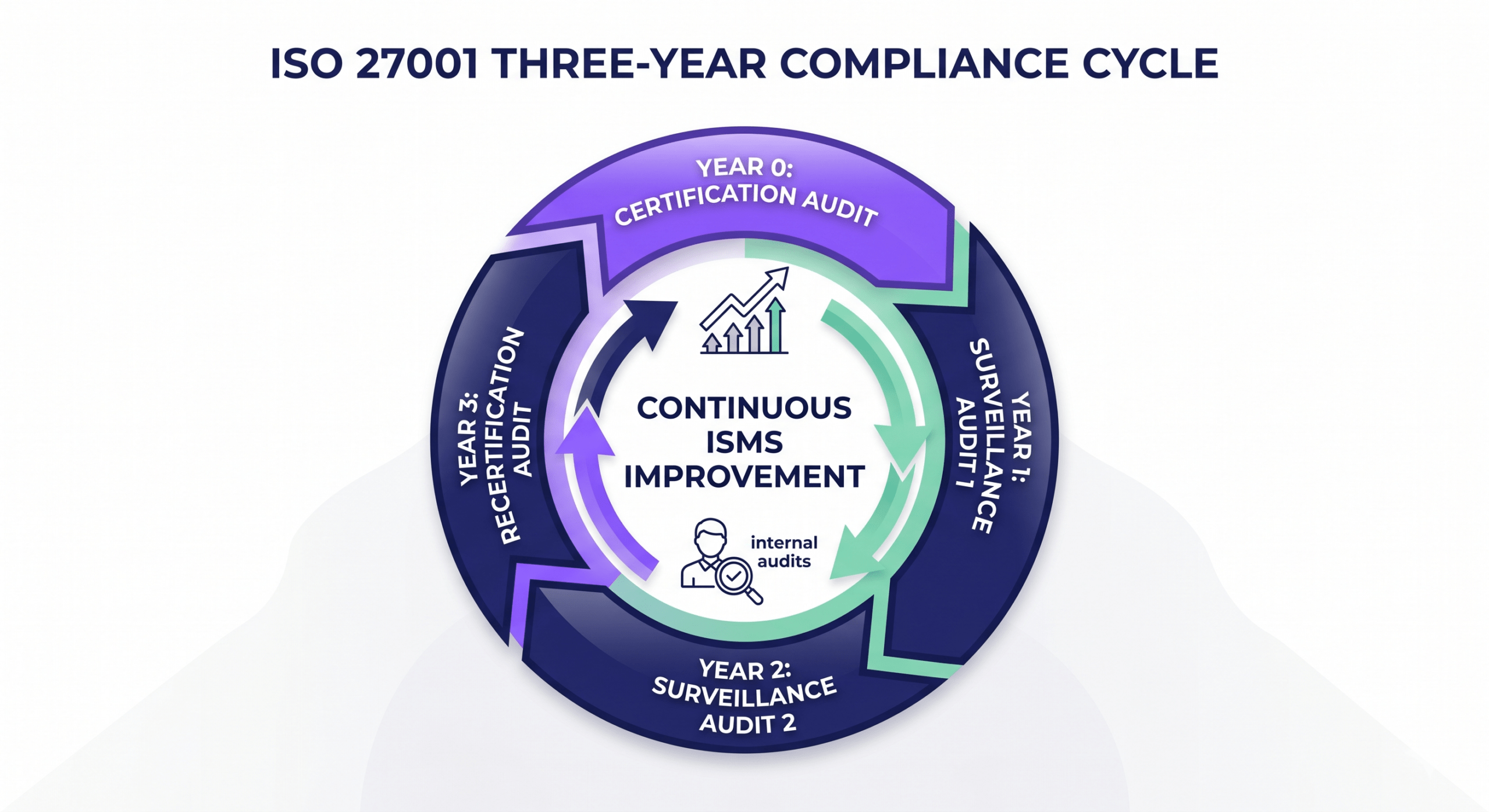
Once you achieve certification, you need structured support from ISO 27001 consulting firms to maintain compliance. Annual surveillance audits verify continued conformity throughout the three-year certification cycle.
Surveillance Audit Preparation Services
Organizations need three months to prepare for surveillance audits conducted in years one and two. Consultants should coordinate evidence collection and close nonconformities from previous audits. They conduct mock reviews four to six weeks before scheduled audits. If major nonconformities surface, we have just 15 days after receiving audit summaries to complete mandated corrective actions. Consultants help schedule quarterly risk reviews and maintain evidence trails that show controls operate as intended.
Continuous ISMS Improvement Programs
ISO 27001 operates on a philosophy of ongoing improvement rather than static compliance. Continuous improvement activities involve revising risk assessments based on new technologies and updating security policies. Organizations track key performance indicators related to incident response and introduce automation tools for monitoring. They must conduct internal audits at planned intervals and ensure full ISMS coverage over the certification period.
Regulatory Update Monitoring
Consultants monitor technological and regulatory changes affecting ISMS requirements over the three-year cycle. Automated notifications alert teams to compliance failures or threats. Live monitoring helps organizations adapt to evolving standards.
Incident Response Planning Support
Annex A Control 5.24 requires formal, documented procedures for managing information security incidents, events and weaknesses. Consultants help establish incident response teams and develop detection protocols. They create classification systems based on severity and design communication plans that outline escalation procedures.
Conclusion
Selecting the right ISO 27001 consultant requires evaluating credentials, service scope, cost structures and audit preparation capabilities. Organizations that really assess these criteria improve their certification success rates by a lot while avoiding pricey implementation mistakes. Verified lead auditor certifications, multi-framework expertise and industry-specific experience separate qualified consultants from generic advisors. Transparent pricing models and detailed documentation support ensure smooth audit processes. Book a Readiness Call before committing to any consulting engagement. This lets you discuss your specific requirements and confirm alignment with your organizational goals. The right consulting partnership transforms ISO 27001 certification from a compliance burden into a strategic security advantage.
Key Takeaways
Choosing the right ISO 27001 consultant is critical for certification success, with qualified partners helping organizations reduce security incidents by 50% while navigating complex compliance requirements.
• Verify consultant credentials including Certified ISO/IEC 27001 Consultant status, lead auditor certifications, and industry-specific implementation experience • Expect total consulting costs between $30,000-$50,000 for full certification support, with timelines ranging from 3 months for small businesses to 12-18 months for large enterprises • Ensure comprehensive service scope covering gap analysis, ISMS development, policy documentation, internal audits, and post-certification maintenance programs • Select consultants with established relationships with accredited certification bodies and proven mock audit processes for smoother certification outcomes • Plan for ongoing surveillance audit preparation and continuous improvement support throughout the three-year certification cycle
The right consulting partnership transforms ISO 27001 from a compliance burden into a strategic security advantage, making thorough evaluation of these criteria essential for long-term success.
FAQs
Q1. What credentials should I look for when selecting an ISO 27001 consultant? Look for consultants with Certified ISO/IEC 27001 Consultant credentials, which require passing three specific exams and at least two years of consulting experience in information security. Lead auditor certifications are also important, with higher levels requiring up to ten years of experience and 1,000 audit hours. Additionally, seek consultants with multi-framework knowledge such as PCI DSS, CISA, CISM, or CISSP certifications, as they can align overlapping controls across multiple compliance requirements.
Q2. How much does ISO 27001 consulting typically cost? Full certification support from consulting firms typically ranges between $30,000 and $50,000. Hourly rates vary from $100 to $300 per hour depending on consultant experience and location. For organizations with 1-10 employees, baseline certification costs start around £6,250, while companies with 46-65 employees may need approximately $15,800. Monthly retainer arrangements range from £500 to £2,000 depending on the scope of services provided.
Q3. How long does the ISO 27001 certification process take? The timeline varies significantly by organization size and existing security maturity. Small businesses with dedicated information security practices can complete certification in as little as three months, while larger organizations with complex processes typically require around one year. Most small-to-medium businesses reach audit readiness in four months, then navigate the audit process over six additional months. Enterprises exceeding 1,000 employees generally need 12-18 months for full certification.
Q4. What services should be included in an ISO 27001 consulting engagement? Comprehensive consulting services should include gap analysis comparing current practices against ISO 27001 requirements, ISMS development covering scoping and risk assessment, policy documentation support for all mandatory documents, internal audit preparation, and pre-certification reviews. Post-certification services should cover surveillance audit preparation, continuous improvement programs, regulatory update monitoring, and incident response planning support throughout the three-year certification cycle.
Q5. Why is working with accredited certification bodies important? Accredited certification bodies undergo validation to ensure they conduct audits according to ISO/IEC 17021 requirements, and certificates from these bodies include the IAF seal demonstrating worldwide acceptance. Choosing an unaccredited body may require going through the certification process twice when an accredited certificate becomes necessary. Accredited bodies undergo annual office and witness audits to maintain their accreditation status, ensuring consistent audit quality and international recognition of your certification.