
Data breaches cost businesses an average of $4.45 million as of 2023. This makes ISO 27001 compliance more important than ever for FinTech SaaS companies. FinTech organizations handle massive amounts of sensitive financial data that puts them at risk for security incidents that can get pricey.
A whopping 98.3% of organizations work with at least one third-party vendor that faced a breach in the last two years. ISO 27001 certification has then become the gold standard for information security management. It offers a well-laid-out approach to manage security risks and controls.
Our experience shows that ISO 27001 compliance goes beyond just security—it’s now a business must-have. Most fintech investors demand it during their due diligence process. Banks, lenders, and enterprise partners often call it a basic requirement before they start vendor evaluations. On top of that, implementing ISO 27001:2022 controls covers 84% of GDPR requirements. This helps protect your business against potential fines that could reach up to 4% of your annual revenue.
This piece will show you why ISO 27001 matters to FinTech SaaS companies. You’ll learn about the most relevant clauses and controls, and get practical steps to achieve and maintain compliance through certification.
Why ISO 27001 is Important for FinTech SaaS Companies
Trust acts as the key currency that determines long-term survival in the financial technology sector. ISO 27001 compliance gives FinTech SaaS companies a resilient foundation for security and operational excellence through a structured approach to managing sensitive information.
Protecting sensitive financial and personal data
FinTech companies manage vast amounts of sensitive financial data, from payment details to personal information, transaction records, banking data, and digital assets. Cyber attackers see these companies as prime targets, with risks that include data breaches, digital identity fraud, and malware attacks.
Companies pay a heavy price for poor security. IBM’s report shows data breaches in the financial sector cost an average of USD 5.85 million. These breaches happen because of technical vulnerabilities or systemic weaknesses that proper security controls could prevent.
ISO 27001 helps companies tackle these challenges by requiring them to:
- Identify and catalog all information assets – from source code to customer databases
- Implement systematic vulnerability management
- Establish resilient incident response plans
- Deploy critical security measures like multi-factor authentication and encryption
The standard’s risk-based approach protects assets like financial statements, employee data, and third-party information. This ensures the data stays intact, confidential, and available when needed.
Meeting enterprise procurement and audit requirements
ISO 27001 certification offers clear commercial advantages beyond simple security in today’s competitive market. The certification proves operational maturity and speeds up due diligence processes.
ISO 27001 certification has become a must-have for many FinTech investors during their due diligence. Banks, lenders, and enterprise partners often call it a baseline requirement before starting vendor evaluations. Most standard security questionnaires get answered automatically with this certification, which makes procurement faster.
FinTech startups looking for investment find that ISO 27001 certification speeds up the investor’s due diligence process by a lot. This certification does more than protect data—it creates opportunities for partnerships and funding that might stay out of reach otherwise.
Supporting multi-region compliance frameworks
ISO 27001 works like a “skeleton key” that unlocks multiple regulatory frameworks across regions. Companies find it easier to enter new international markets because the standard gets recognized worldwide and lines up well with various privacy laws.
Companies that implement ISO 27001 meet 84% of GDPR control requirements. This matters because GDPR fines can reach up to 4% of annual revenue. The standard also works well with SOC 2 and PCI DSS requirements, matching over 20 global regulations.
FinTech companies operating in different jurisdictions benefit from ISO 27001’s comprehensive approach to streamline compliance. The standard helps meet requirements for the EU’s Digital Operational Resilience Act (DORA), PSD2, and strict FCA expectations in the UK. ISO 27001’s access control and cryptography domains provide the governance framework these technical requirements need.
FinTech SaaS companies that establish a resilient information security management system through ISO 27001 can handle multiple compliance needs while building trust that drives growth and customer retention.
Key ISO 27001 Clauses Relevant to FinTech
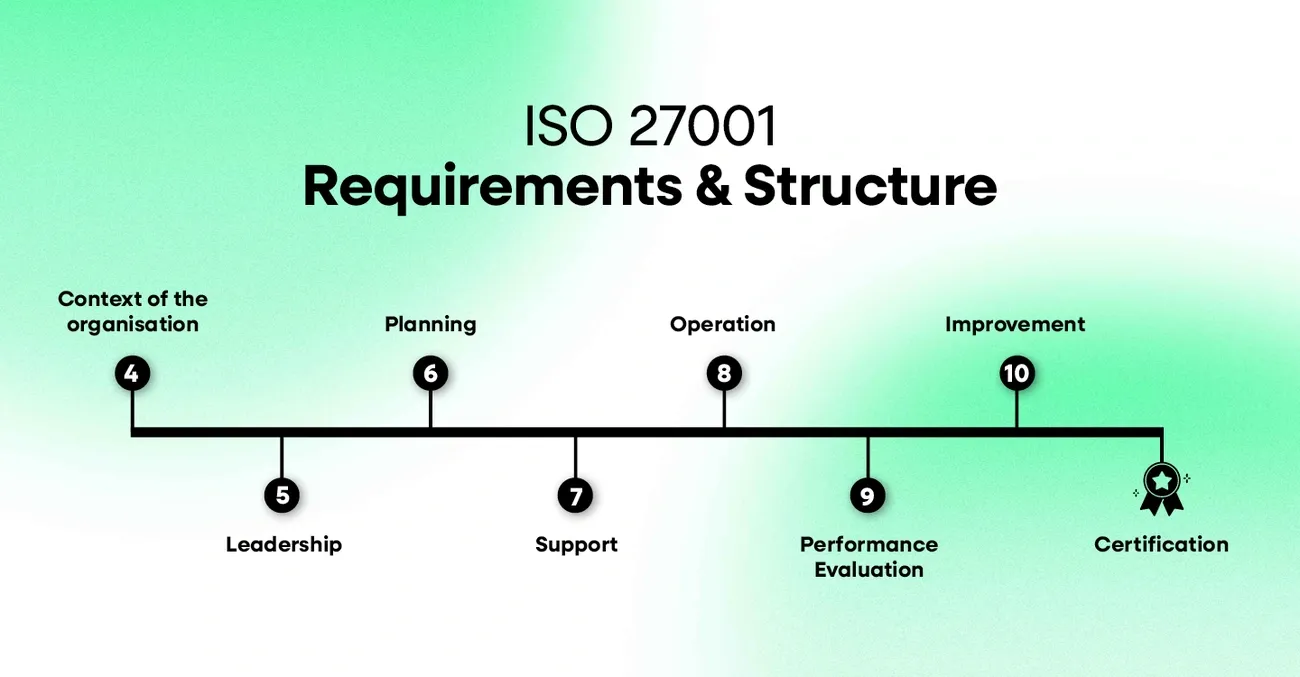
Image Source: ISMS.online
ISO 27001’s well-laid-out approach breaks down information security into manageable clauses that are the foundations of a reliable security management system. FinTech companies that handle sensitive financial data need to learn about these clauses to protect both their customers and organization.
Clause 4: Understanding business and regulatory context
FinTech organizations must analyze their business environment under Clause 4. This includes internal and external factors that affect information security. Your Information Security Management System (ISMS) starts here by identifying what needs protection and why.
FinTech companies must document:
- Financial services’ regulatory landscape
- Cloud and API-based architecture considerations
- Security implications of high transaction volumes
- Third-party dependencies and their risks
- Requirements from global users across jurisdictions
This clause helps you define your ISMS scope. You’ll protect the right assets without spreading resources too thin or leaving critical systems exposed.
Clause 5: Leadership commitment and policy approval
The core team, not just IT, bears the ultimate responsibility for information security under Clause 5. Security becomes a board meeting topic and integrates into business goals. Leaders show their steadfast dedication by:
- Making sure security policy matches strategic direction
- Providing ISMS resources
- Spreading the word about security’s importance
- Supporting staff who contribute to ISMS effectiveness
- Pushing for ongoing improvement
ISO 27001 implementations don’t work very well without leadership buy-in. This clause matters most – the system will likely fail if management sees compliance as a burden rather than a strategic advantage.
Clause 6: Risk planning and treatment
Clause 6 sets up a systematic approach to risk management. FinTech companies must:
- Spot information security risks specific to financial data
- Check how likely threats are and their effects
- Build complete risk treatment plans
- Set risk acceptance criteria that match business goals
Companies shift from reactive security to proactive risk management here. FinTechs typically face risks like account takeover, API abuse, insider threats, and financial fraud.
Clause 7: Training, documentation, and communication
The ISMS needs key support elements covered in Clause 7:
- Competence: Staff must have the right skills and knowledge
- Awareness: Employees must know security policies and their duties
- Communication: Clear plans for sharing security information
- Documentation: Controlled records of policies and procedures
Many companies underestimate documentation’s importance until audit time. Each policy needs clear ownership, version control, approval records, and regular reviews to stay compliant.
Clause 8: Operational security and incident response
Daily security operations fall under Clause 8. Companies must:
- Check risks at set times
- Put the risk treatment plan to work
- Control operations based on set criteria
- Handle planned changes and unexpected problems
This clause gives operational resilience against threats and incidents for FinTech systems that need round-the-clock security.
Clause 9–10: Performance evaluation and improvement
These last clauses wrap up the Plan-Do-Check-Act cycle. Clause 9 tracks how well the ISMS works through:
- Risk-based internal audits
- Management’s ISMS performance reviews
- Measuring results against set goals
Clause 10 focuses on getting better by:
- Recording when things go wrong
- Taking corrective steps
- Making controls stronger based on results
These clauses create a feedback loop. FinTech companies can adapt to new threats and boost their security over time.
Annex A Controls Critical for FinTech SaaS
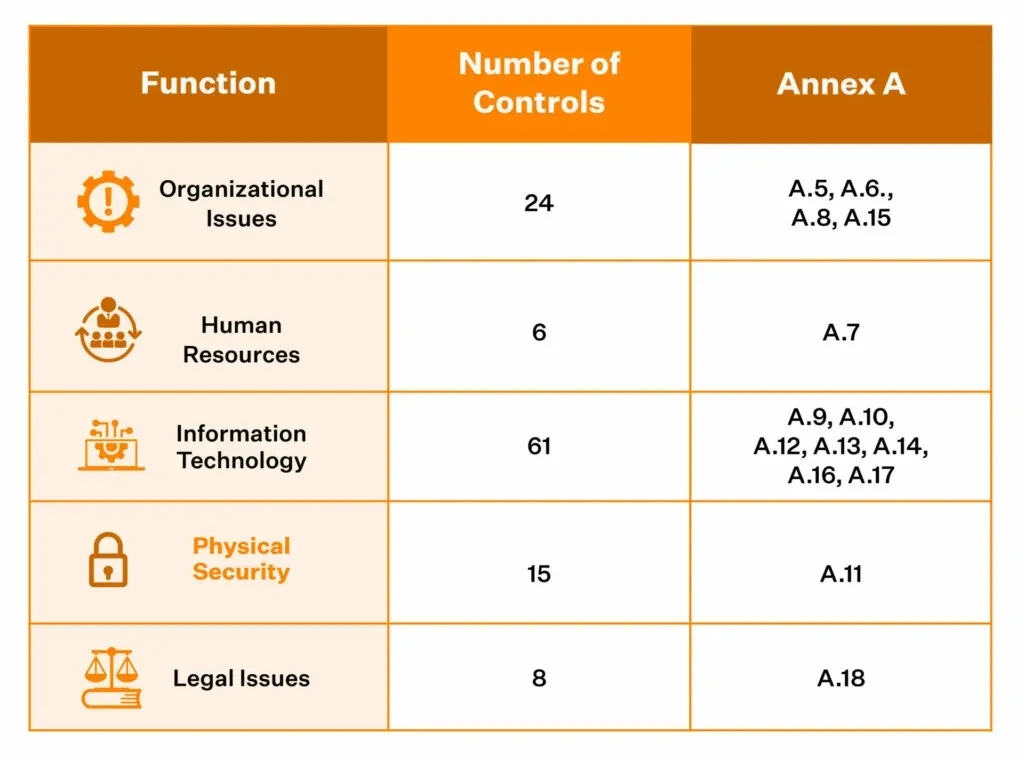
Image Source: Sprinto
Beyond the core ISO 27001 clauses, Annex A controls give FinTech SaaS companies practical security measures to protect sensitive financial data. These controls matter even more since financial technology platforms are prime targets for attacks.
A.9 Access control and MFA enforcement
Access control serves as the first defense line against unauthorized access to sensitive information in FinTech platforms. The key components include:
- Implementing least privilege access principles
- Enforcing multi-factor authentication (MFA)
- Establishing role-based permissions
- Creating secure API authentication mechanisms
Financial data sensitivity makes regular access reviews mandatory for FinTech companies. Your specific operational model will determine whether to use discretionary access control (DAC), mandatory access control (MAC), or role-based access control (RBAC) frameworks.
A.10 Cryptography for data in transit and at rest
Encryption protects financial information during storage and transmission. The main goal of Annex A.10 is to use cryptography effectively to protect information confidentiality, authenticity, and integrity.
FinTech companies need these cryptographic measures:
- Data-at-rest encryption for stored financial records
- Transport Layer Security (TLS) for data in transit
- Robust key management procedures
- Compliance with regional encryption requirements
Key management often becomes the weak point—attackers target key material instead of trying to break the encryption.
A.12 Logging, patching, and malware protection
Operations security keeps FinTech platforms running smoothly and securely. This area includes:
- Complete event logging and monitoring
- Systematic patch management
- Advanced malware protection
- Secure backup and recovery procedures
FinTech downtime can lead to serious financial losses beyond just disrupted operations. The team must approach operations security rigorously and test recovery capabilities regularly.
A.14 Secure development and code review
FinTech SaaS providers cannot compromise on secure development. This control domain needs:
- Establishing secure development policies
- Implementing secure coding standards
- Conducting regular code reviews
- Testing security functionality during development
Security must be part of the entire system development lifecycle rather than an afterthought.
A.15 Vendor risk management and contracts
FinTech companies work with many third-party vendors that could become security risks without proper management. ISO 27001 requires:
- Performing vendor risk assessments
- Including security requirements in contracts
- Conducting ongoing supplier monitoring
- Managing subcontractor risks
Recent data shows 98.3% of organizations work with at least one third-party vendor that had a breach in the last two years. This statistic highlights why this control area matters so much.
A.17 Business continuity and disaster recovery
FinTech services must stay available during disruptions. Business continuity controls include:
- Developing complete disaster recovery plans
- Implementing data redundancy measures
- Testing backup and recovery procedures
- Creating information security continuity procedures
A solid business continuity plan helps organizations recover and restore functionality quickly while minimizing disruption effects.
ISO 27001 Compliance Services and Tools for SaaS
Getting ISO 27001 compliance takes lots of resources. The process works better with the right tools. Many fintech organizations now use specialized platforms to optimize their certification journey.
Choosing a compliance automation platform
A few platforms really shine for fintech SaaS companies that want ISO 27001 certification. Vanta connects with over 400 tools and runs 1,200+ automated tests to gather evidence and spot gaps. Scrut offers another option with prebuilt controls that line up with ISO 27001 requirements. Teams that use automation tools usually get certified in 12–24 weeks – about half the time of manual methods.
Mapping controls to AWS, GCP, and Azure
Cloud provider compliance remains tricky. Here’s what works best:
- Policy-as-Code implementation enforces compliance at code level across AWS S3, Azure Blob, and GCP Cloud Storage
- Native tools like AWS Config, Azure Policy, and GCP Config Validator help with continuous compliance monitoring
- Unified control frameworks that connect to multiple regulatory requirements cut down audit complexity
Using policy templates and evidence collectors
Template-based methods can cut prep time by 75%. The essential parts include:
- Pre-built, auditor-approved policy templates that match ISO 27001
- Standard evidence collection workflows
- Automated document tracking with fields for dates, owners, and version history
- Connection to ticketing systems and compliance portals
Preparing for ISO 27001 Certification and Audit
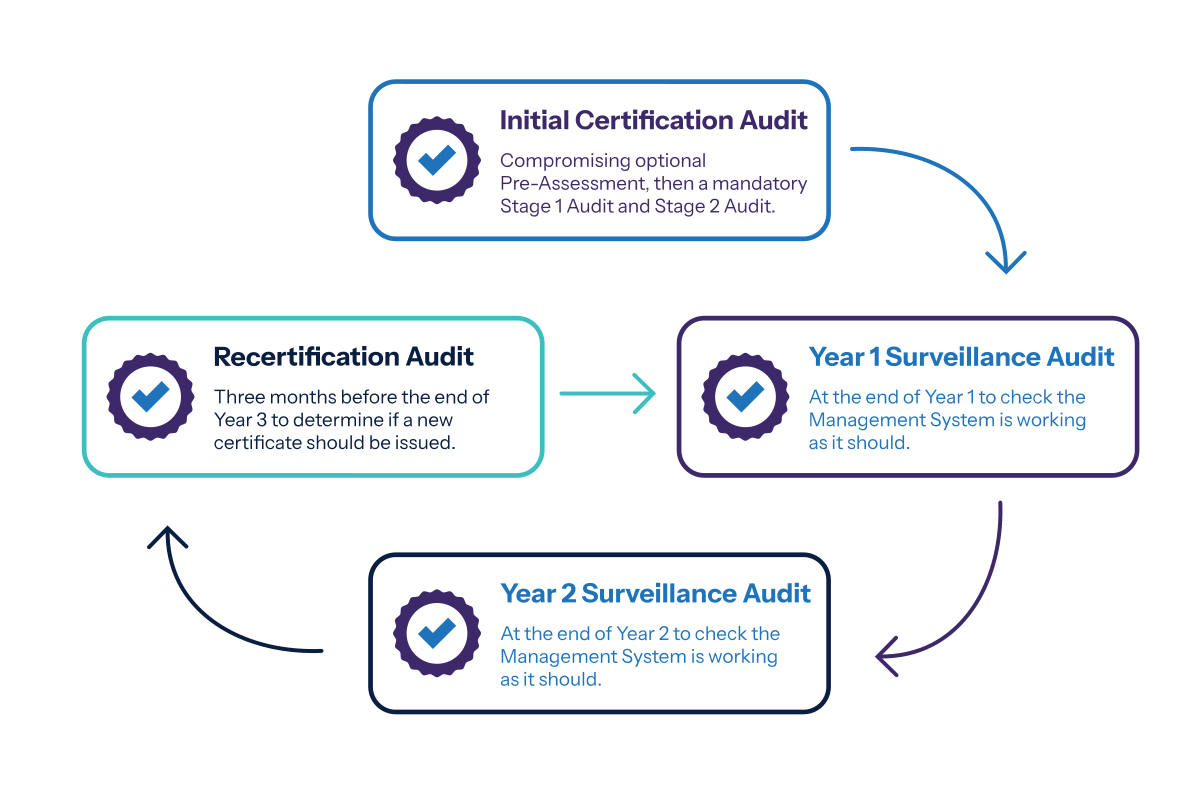
Image Source: ISOQAR
Getting ISO 27001 certification needs good preparation before you bring in external auditors. Your FinTech organization must follow several key steps to get ready for the formal assessment.
Internal audit and gap analysis
A complete gap analysis helps you spot where your current Information Security Management System (ISMS) doesn’t meet ISO 27001 requirements. This evaluation compares your existing controls with what the standard needs and reveals weak spots in your people, processes, and technology.
Your best bet is to have an independent party handle the internal audit – either contractors or a separate team in your organization. Management needs to look at what they find and decide if fixes are needed before moving forward. This gives you a clear picture of the security gaps you need to fix for compliance.
Mock audit and remediation planning
Think of a mock audit as your dress rehearsal for certification. It builds team confidence and catches compliance issues early. Your team can practice their responses, fine-tune processes, and get everyone on the same page about their roles.
Your remediation plan should focus on quick practical wins before external evaluation:
- Multi-factor authentication enforcement
- Tighter privileged access controls
- Better endpoint protection
- Stronger backup systems
- Better logging for critical systems
After you handle the biggest issues, a pre-audit check or “mock audit” helps clean up minor problems and gets your evidence ready for the auditor. Book a Readiness Call with seasoned consultants to make sure you’re fixing the right things.
Final certification audit: Stage 1 and Stage 2
ISO 27001 certification happens in two stages. Stage 1 looks at your ISMS design and reviews documentation to check if you’re ready for the next phase. Auditors check if your policies and procedures match what the standard needs and label issues as critical or non-critical.
Stage 2 digs deeper and focuses on how well things work, not just how they’re designed. Auditors gather evidence about implemented clauses and controls through inspections, observations, and questions. Your team must explain their design choices and show that controls work effectively. Problems found here get sorted into major non-conformities, minor non-conformities, observations, or areas to improve.
Success means you get ISO 27001 certification good for three years, with yearly check-ups.
Conclusion
ISO 27001 certification is a vital investment for FinTech SaaS companies that face complex security challenges today. This piece explores why this framework matters to the financial technology sector. With data breach costs reaching $4.45 million, companies need resilient information security practices, particularly when they handle sensitive financial data.
The advantages go way beyond the reach of simple security protection. FinTech companies with ISO 27001 certification enjoy substantial competitive edges through optimized procurement processes and stronger investor confidence. The framework acts as a master key that helps meet multiple regulatory requirements in different jurisdictions. It meets 84% of GDPR controls while supporting compliance with regional financial regulations.
The framework’s core clauses help create a detailed security approach that fits your FinTech environment’s needs. From understanding business context to performance evaluation, everything works together. Annex A controls provide practical safeguards to protect financial data throughout its lifecycle by addressing access management, cryptography, secure development, and business continuity.
Your path to certification needs careful preparation. You should analyze gaps, put controls in place, and complete internal audits before formal certification. Book a Readiness Call with experienced consultants to guide your team through mock audits and remediation planning. This support will boost your chances of success in the first attempt.
ISO 27001 implementation takes considerable work, but its returns are clear. This certification shows your steadfast dedication to information security excellence. It builds lasting trust with customers, partners, and investors. FinTech SaaS companies that handle sensitive financial data now see ISO 27001 certification as a fundamental business requirement in today’s security-focused market.
Key Takeaways
ISO 27001 compliance has evolved from a security nice-to-have to a business necessity for FinTech SaaS companies handling sensitive financial data and seeking sustainable growth.
• Data breaches cost FinTech companies $5.85M on average – ISO 27001’s risk-based approach prevents costly incidents through systematic vulnerability management and incident response planning.
• 98% of enterprise partners require ISO 27001 for vendor evaluations – Certification accelerates procurement processes and unlocks funding opportunities that remain closed to non-compliant companies.
• ISO 27001 fulfills 84% of GDPR requirements – The framework serves as a “skeleton key” for multi-regional compliance, supporting over 20 global regulations including DORA and PSD2.
• Critical controls focus on access management, encryption, and secure development – FinTech companies must prioritize MFA enforcement, data-at-rest encryption, comprehensive logging, and vendor risk management.
• Automation platforms reduce certification time by 50% – Tools like Vanta and Scrut streamline evidence collection and control mapping, achieving certification in 12-24 weeks versus manual processes.
• Two-stage certification requires thorough preparation – Success depends on conducting internal audits, gap analysis, and mock audits before engaging external auditors for formal assessment.
The certification process demands significant upfront investment but delivers measurable returns through reduced security incidents, faster sales cycles, and enhanced investor confidence. For FinTech organizations serious about scaling globally while maintaining customer trust, ISO 27001 certification represents a strategic competitive advantage rather than merely a compliance checkbox.
FAQs
Q1. Why is ISO 27001 certification crucial for FinTech SaaS companies? ISO 27001 certification is essential for FinTech SaaS companies as it provides a structured approach to managing sensitive financial data, helps meet enterprise procurement requirements, and supports multi-region compliance frameworks. It also demonstrates a commitment to information security, which builds trust with customers, partners, and investors.
Q2. How does ISO 27001 help with regulatory compliance in the FinTech sector? ISO 27001 serves as a comprehensive framework that addresses multiple regulatory requirements. It fulfills 84% of GDPR requirements and aligns with over 20 global regulations, including DORA and PSD2. This makes it easier for FinTech companies to comply with various financial and data protection laws across different jurisdictions.
Q3. What are the key ISO 27001 controls that FinTech SaaS companies should focus on? FinTech SaaS companies should prioritize controls related to access management, encryption, secure development, and business continuity. This includes implementing multi-factor authentication, data-at-rest encryption, comprehensive logging systems, and robust vendor risk management processes.
Q4. How long does it typically take to achieve ISO 27001 certification? With the use of compliance automation platforms, most organizations can achieve ISO 27001 certification within 12-24 weeks. This is significantly faster than manual processes, which can take twice as long. However, the exact timeline depends on the organization’s size, complexity, and existing security measures.
Q5. What are the stages involved in the ISO 27001 certification audit? The ISO 27001 certification audit consists of two main stages. Stage 1 involves a review of the organization’s Information Security Management System (ISMS) documentation and design. Stage 2 is more rigorous, focusing on the operating effectiveness of the implemented controls. Successful completion of both stages results in ISO 27001 certification, which is valid for three years with annual surveillance audits.