
A POA&M could be your ticket to keeping defense contracts even when you’re not fully CMMC compliant. Sounds interesting, right?
The Plan of Action and Milestones (POA&M) plays a crucial role for defense contractors seeking CMMC certification. Technical leaders often misread what POA&Ms actually do during certification.
Defense contractors need a minimum assessment score of 80% (88/110 points) to qualify for conditional certification at CMMC Level 2 and Level 3. The Department of Defense lets organizations put certain unmet controls on a POA&M while still getting conditional certification.
Your conditional status won’t last forever. You need to fix all POA&M items within 180 days and clear a closeout assessment for final certification. NIST POA&M requirements matter a lot since POA&Ms only work under specific, limited conditions.
This piece will show you how to build your CMMC POA&M template, which controls you can defer, and ways to handle the whole process from a CTO’s point of view. Let’s prepare your organization for assessment day!
The CTO’s Role in CMMC Readiness
Your technical leadership as a CTO managing CMMC certification efforts shapes your organization’s cybersecurity stance and contract eligibility. Many technical leaders see Plans of Action and Milestones (POA&Ms) as simple compliance documents. However, their strategic value goes way beyond the reach of basic paperwork.
Why POA&Ms matter to executive leadership
POA&Ms give executive leadership powerful risk management tools and strategic opportunities. They bridge the gap between your current security state and desired compliance position. These documents do more than create to-do lists – they show executives:
- Critical security gaps that could jeopardize contracts – Smart POA&Ms rank vulnerabilities based on how they might hurt business operations and contractual duties.
- Resource allocation justification – POA&Ms spell out security gaps that need investment. This gives CTOs solid proof when they ask for security budget.
- Compliance timeline planning – A 180-day fix window for conditional certification means leadership teams must know repair schedules to plan business moves.
- Accountability framework – Well-laid-out POA&Ms make someone responsible for each control gap. This builds accountability across teams.
POA&Ms also let leaders see compliance progress clearly. Tracking POA&M completion rates helps executives learn about implementation success without diving into technical details.
Making POA&M strategy work for business goals
Smart CTOs know POA&M development isn’t just about ticking compliance boxes – it builds competitive edge. Here’s how to make it work:
Put business impact first. Don’t fix POA&M items randomly. Match fixes to business needs:
- Start with controls that protect sensitive Controlled Unclassified Information (CUI)
- Fix items that might affect upcoming contracts
- Time big architecture changes with natural business cycles
Blend POA&M work into product development. Don’t treat security as separate work. Build POA&M fixes into your normal development process. This cuts disruption and helps teams think security-first.
Use POA&Ms to keep getting better. After certification, your POA&M process should drive security growth. Track fix metrics over time to show security ROI to leaders and stakeholders.
Set real deadlines. Good CTOs don’t promise too much on fix timelines. Your NIST POA&M should factor in resource limits and other priorities. Set achievable deadlines that work within your 180-day fix window.
Talk strategy. Turn your POA&M from a technical report into a strategic story. Show POA&M progress in business terms leaders get – less risk, protected contract eligibility, and competitive edge.
Making POA&Ms more than compliance papers helps you stand out as a business leader, not just a tech expert. This approach ties security spending to company goals and builds support for your CMMC program among executives.
Building a Strategic POA&M Framework
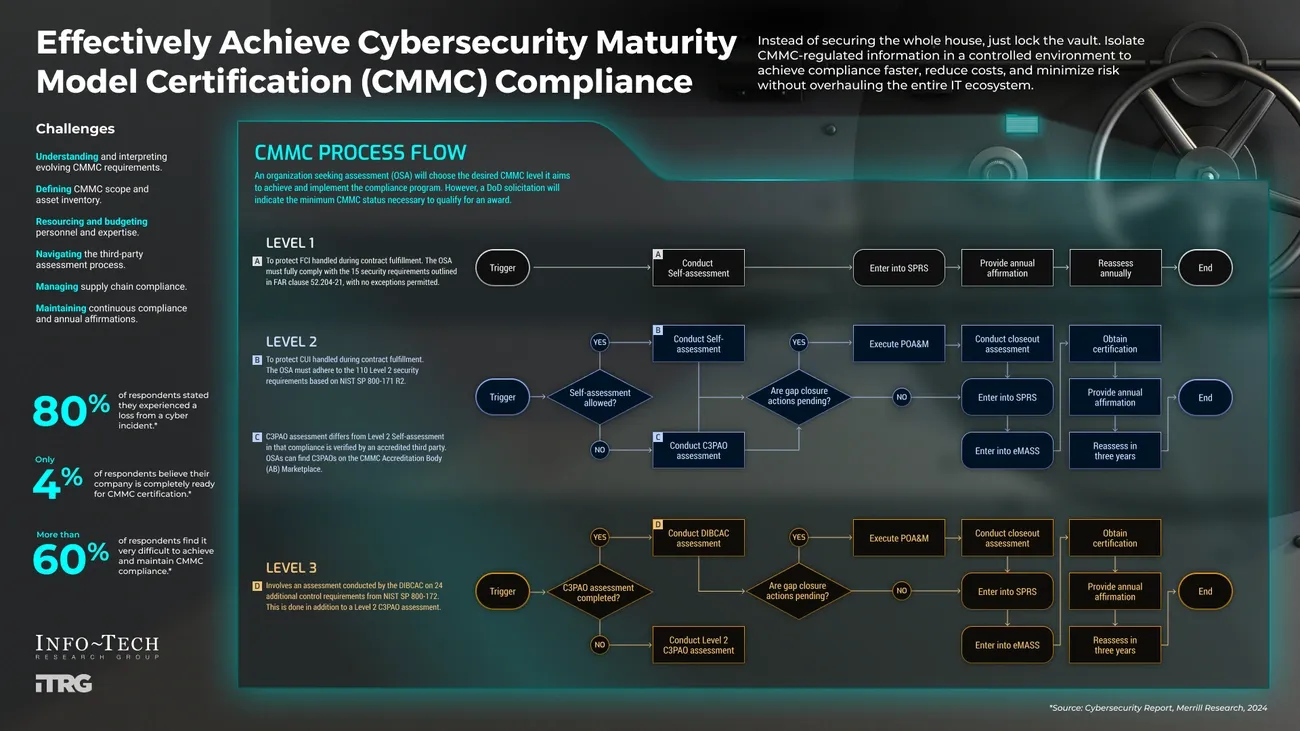
Image Source: Info-Tech
A good POA&M goes beyond checking boxes. You need a strategic framework that addresses security gaps and shows your compliance maturity. Let me show you how to build a POA&M that will satisfy assessors and make your security posture stronger.
Start with a NIST-based gap analysis
The best POA&Ms start with a full gap analysis that compares your organization’s current practices against CMMC requirements. This systematic process needs:
A multi-faceted assessment that combines automated scanning, manual testing, documentation review, and staff interviews. This complete approach will help you spot both technical vulnerabilities and procedural weaknesses that might slip through the cracks.
Each security gap needs a unique identifier, control reference, detailed description, severity classification, and someone responsible for fixing it. This level of detail shows assessors you fully understand your compliance gaps.
Your gap analysis works as a three-way tool that spots non-compliance areas, reveals vulnerabilities, and maps out your path to certification. Without these foundations, your POA&M won’t give you meaningful ways to fix issues.
Define remediation actions and assign owners
After identifying gaps, turn these findings into a strategic fix-it plan by:
Ranking actions based on risk severity and how they’ll affect your organization. Fix high-risk vulnerabilities first to strengthen your security quickly.
Create specific, practical steps with clear timelines for each security gap. Your plan should spell out exactly how you’ll fix each issue—vague solutions won’t work for assessors or real security improvements.
Each remediation task needs a clear owner. This makes sure someone’s responsible for getting each task done and helps manage risks better.
Want help picking which controls to tackle first? Book a Readiness Call with our CMMC experts who can guide your strategy.
Use SMART goals for milestone planning
Your POA&M becomes an active management tool when you break down your fix-it plan into measurable milestones:
Each action needs Specific details, Measurable outcomes, Achievable objectives, Relevant controls, and Time-bound deadlines. This SMART framework helps you track progress and hold people accountable.
Set timelines that match each risk level—bigger risks need faster fixes. Your POA&M should show you know which vulnerabilities pose the biggest threats.
Keep in mind that Level 2 and 3 compliance gives you exactly 180 days to complete all remediation actions in your POA&M. This tight timeline means your milestone planning must be realistic but ambitious.
Your milestone tracking should include:
- Start and completion dates for each action
- Interim completion dates for complex tasks
- Status indicators (ongoing or complete)
- Actual actions taken during fixes
A well-laid-out POA&M does more than list problems—it shows how your organization spots, tackles, and fixes security gaps. This framework will help you create a POA&M that makes assessors happy while making your security stronger.
Navigating CMMC POA&M Rules and Scoring
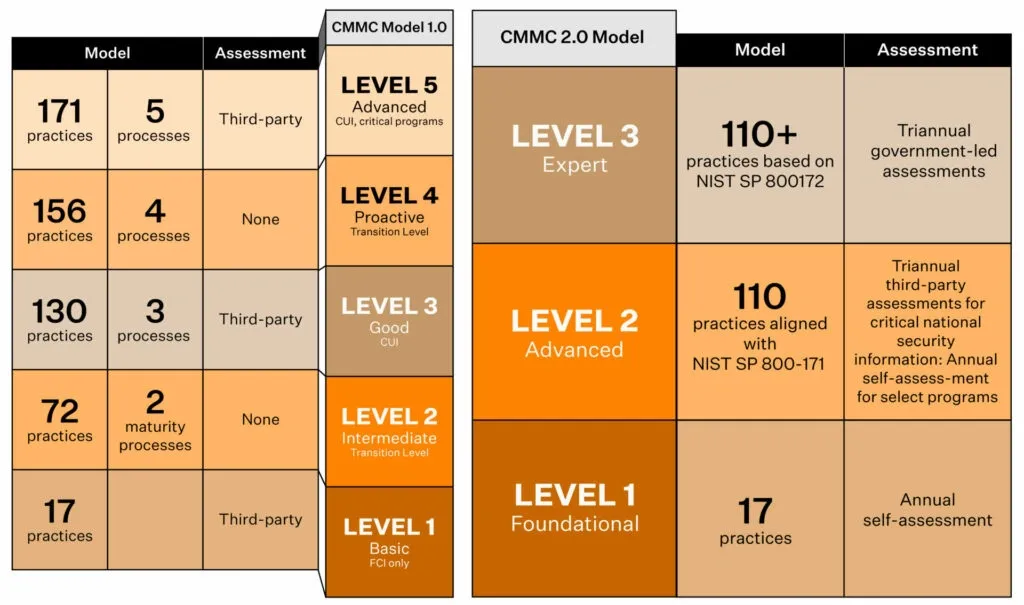
Image Source: Sprinto
You need to become skilled at CMMC POA&Ms rules to achieve certification. The Department of Defense’s specific guidelines determine how Plans of Action and Milestones work in the certification process.
Understanding the 80% minimum score rule
You must score 80% minimum (88 out of 110 points) to qualify for Conditional Level 2 certification with a POA&M. This score will give organizations proof they implemented most critical security controls before receiving conditional approval.
The scoring system assigns point values—1, 3, or 5 points—to each security requirement based on how it affects security. Conditional certification remains impossible whatever controls are unimplemented without this 80% threshold.
You’ll receive a Conditional Level 2 status (Self or C3PAO) if you hit this minimum score and meet all critical requirements, depending on your assessment type. Your assessment POA&M must document every “NOT MET” requirement.
Which controls can and cannot be deferred
Not every control fits on a POA&M. Yes, it is possible to defer only select 1-point controls that have lower impact. You must fully implement all 3-point and 5-point controls at assessment time, with one exception—encryption controls can have partial POA&M if encryption exists but lacks FIPS validation.
These controls cannot go on a POA&M for Level 2:
- External connections control (AC.L2-3.1.20)
- Public information control (AC.L2-3.1.22)
- System Security Plan (CA.L2-3.12.4)
- Visitor escort requirements (PE.L2-3.10.3)
- Physical access logs (PE.L2-3.10.4)
- Physical access management (PE.L2-3.10.5)
You must implement these critical requirements fully before assessment—conditional certification isn’t possible otherwise.
How to prepare for a POA&M closeout assessment
The clock starts ticking after conditional certification. You get exactly 180 days to fix all items on your POA&M. Start preparing for your closeout assessment right after receiving conditional status.
Your organization handles the closeout assessment internally for Level 2 self-assessments. The original C3PAO must verify remediation for C3PAO assessments.
The quickest way to prepare:
- Set realistic internal deadlines well before the 180-day cutoff
- Document all remediation steps clearly
- Test implemented controls before the formal closeout
- Update your System Security Plan to reflect changes
Your Conditional status expires if you don’t close all POA&M items within the 180-day window. Book a Readiness Call with our experts to figure out your next steps, as standard contractual remedies apply after certification expires.
Note that POA&Ms aren’t shortcuts around security requirements—they represent time-bound commitments with strict verification rules and real consequences if you don’t complete them.
Tools and Templates to Streamline POA&M Management
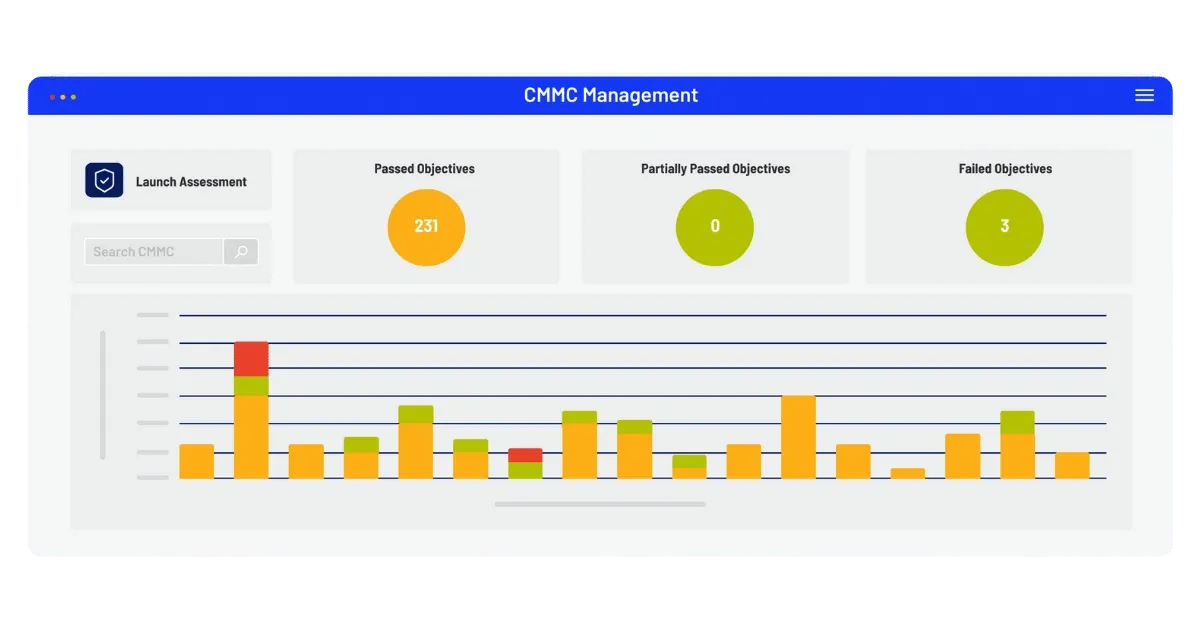
Image Source: Onspring Technologies
The right tools can turn POA&M management from a compliance headache into a business advantage. Let me show you how proper templates and platforms can help streamline your CMMC readiness journey.
Using a CMMC POA&M template effectively
A well-laid-out POA&M template needs three key components: a detailed POA&M sheet, clear guidance instructions, and built-in validation mechanisms. The best templates have fields that connect directly to CMMC practices and assessment objectives, so nothing gets missed.
Your POA&M template should focus on these key elements:
- Direct traceability – Every item should link back to specific CMMC practices and controls
- Risk-based prioritization – Include scoring that helps leadership tackle serious issues first
- Binary closure criteria – Define clear acceptance criteria and evidence requirements upfront
- Complete evidence chain – Maintain links to SSP sections, policies, and repositories
Note that auditors look at hundreds of POA&Ms each year, so precise language makes a difference. Skip vague verbs like “review” or “break down” and use action verbs that show definitive evidence.
Top platforms: FutureFeed, Exostar, Archer
Several platforms offer specialized tools to manage CMMC POA&Ms:
FutureFeed lets you rate POA&M items by their effect, effort, and cost. This rating system helps teams prioritize compliance actions based on business needs. The platform also builds projects to handle the typical 100-250 different tasks organizations face after assessment.
Exostar’s Certification Assistant™ makes the self-assessment process automatic while creating POA&M documentation. The tool has an accessible interface to track tasks, set due dates, and alert responsible parties about overdue items. It also keeps all evidence secure in one place for C3PAO assessments.
RSA Archer’s CMMC Management solution helps spot and track deficiencies and remediation plans. This platform creates organizational structure for accountability and offers applications to create, approve, and manage POA&Ms. The system routes POA&Ms through formal approval processes.
Integrating POA&M tracking with SSP updates
These platforms show their real value through integration with System Security Plan management. Manual management becomes impossible since POA&Ms and SSPs must stay in sync.
Your SSP needs updates whenever remediation actions finish. Platforms like Exostar generate updated SSPs based on your assessment progress, which eliminates manual update work. Archer’s integration features help organizations keep their documentation consistent across POA&Ms and SSPs.
This integration keeps your documentation accurate throughout the 180-day remediation window and sets you up for a successful closeout assessment.
Driving Continuous Improvement Through POA&Ms
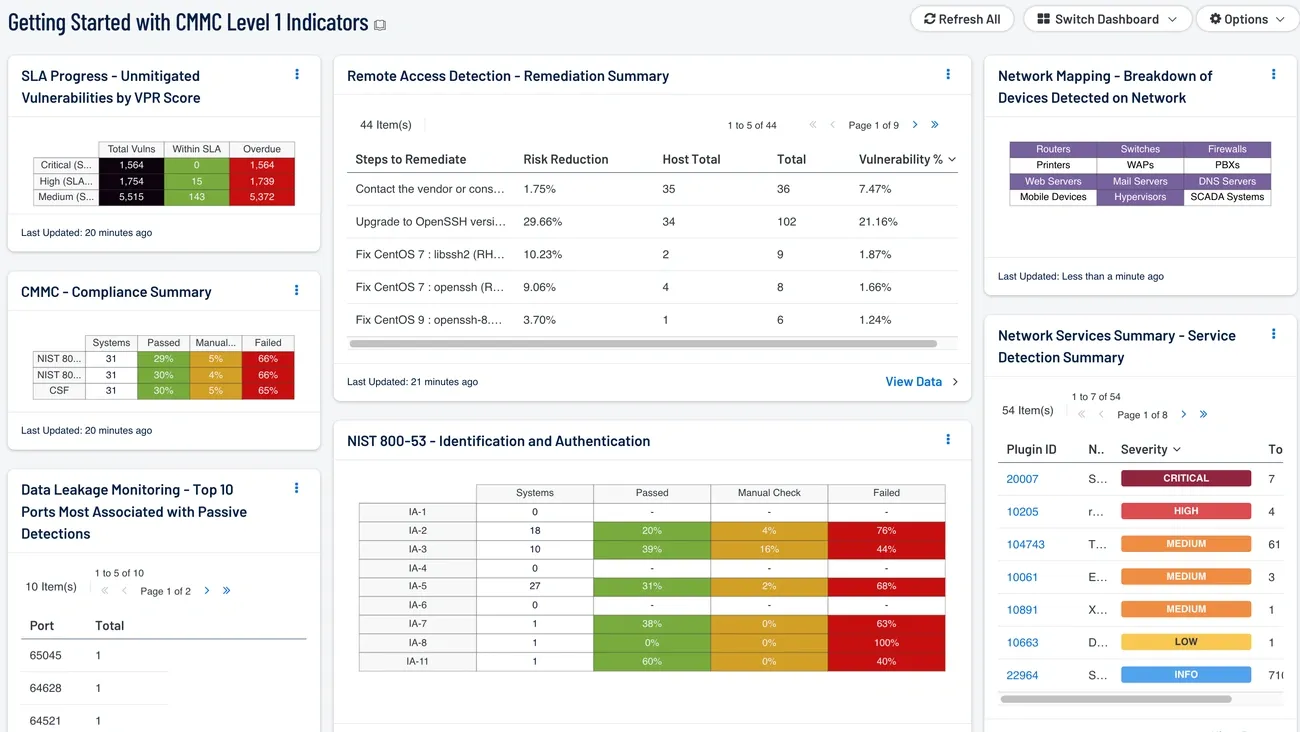
Image Source: Tenable
Your POA&M can be more than just a compliance checkbox – it can become an engine that drives security maturation. Here’s how to make this happen.
Using metrics to track remediation progress
Security management runs on measurable outcomes, not guesswork. These key performance indicators show real improvement:
- Remediation Rate: Target 85% of gaps closed quarterly
- Process Efficiency: Complete corrective actions within 14 days
- Resource Utilization: Keep budget variance within ±5% of allocation
Color-coded dashboards help you spot delays quickly. Red cards highlight late tasks, green shows completed ones, and yellow indicates items waiting for vendor action.
Review cycles and stakeholder reporting
A strong POA&M needs regular evaluation to keep momentum. Teams should meet monthly or quarterly to check progress, adjust timelines, and shift priorities based on new risks.
Quick fifteen-minute stand-ups each week let owners share completions, next steps, and roadblocks. Leaders can hear challenges immediately. The team can then create specific reports that work for both technical staff and executives.
Linking POA&M outcomes to long-term security posture
Your POA&M should do more than just help with certification – it should support ongoing risk management and help develop a continuous compliance culture. The System Security Plan needs updates as remediation moves forward.
A well-managed POA&M shows your organization’s steadfast dedication to cybersecurity maturity, regulatory accountability, and lasting resilience.
Conclusion
Defense contractors must become skilled at CMMC POA&M development to stay eligible while working toward full compliance. POA&Ms are more than compliance documents – they are strategic tools. They help executives see security gaps, make decisions about resources, and create clear frameworks for fixing issues.
Your organization needs to meet the 80% minimum score and fix all high-impact controls to get conditional certification. You’ll have 180 days to complete all POA&M items for final certification. A strategic approach to POA&M development from the start will help you succeed now and build better security for the future.
Smart CTOs turn POA&Ms into tools for constant improvement. They set up clear metrics, regular reviews, and solid reporting systems. This method meets compliance needs and makes your security stronger against new threats.
Need help with POA&M requirements? Not sure which controls you can put off? Our CMMC experts can help streamline your certification process. Book a Readiness Call today.
Your POA&M is more than just a step toward certification – it’s your guide to cybersecurity excellence. When you match fixes with business needs, set realistic deadlines, and track progress carefully, you’ll be ready for compliance and better security in the defense industrial base.
Key Takeaways
Master these essential POA&M strategies to navigate CMMC certification successfully while strengthening your organization’s cybersecurity posture and maintaining defense contract eligibility.
• Achieve 80% minimum score (88/110 points) to qualify for conditional CMMC certification, then complete all POA&M remediation within 180 days for final approval.
• Only select 1-point controls can be deferred on POA&Ms; all 3-point and 5-point controls must be fully implemented before assessment.
• Start with NIST-based gap analysis, assign clear ownership for each remediation task, and use SMART goals to create actionable milestone planning.
• Transform POA&Ms from compliance documents into strategic business tools by aligning remediation efforts with business priorities and demonstrating security ROI.
• Leverage specialized platforms like FutureFeed, Exostar, or Archer to automate tracking, maintain SSP synchronization, and streamline the entire remediation process.
POA&Ms aren’t shortcuts around security requirements—they’re time-bound commitments that, when managed strategically, drive continuous improvement and position your organization for long-term cybersecurity excellence in the defense industrial base.
FAQs
Q1. What is the minimum score required for conditional CMMC certification? To qualify for conditional CMMC certification, organizations must achieve a minimum score of 80% (88 out of 110 points) on their assessment. This threshold ensures that most critical security controls are implemented before receiving conditional approval.
Q2. How long do organizations have to complete POA&M items after receiving conditional certification? Organizations have exactly 180 days to remediate all items listed in their Plan of Action and Milestones (POA&M) after receiving conditional certification. Failing to close all POA&M items within this window results in the expiration of the conditional status.
Q3. Can all security controls be deferred using a POA&M? No, not all controls can be placed on a POA&M. Only select 1-point controls, considered lower impact, can be deferred. All 3-point and 5-point controls must be fully implemented at the time of assessment, with the exception of encryption controls which can be partially POA&M’d if encryption is used but not yet FIPS-validated.
Q4. What are some effective tools for managing CMMC POA&Ms? Several platforms offer specialized capabilities for managing CMMC POA&Ms, including FutureFeed, Exostar’s Certification Assistant™, and RSA Archer’s CMMC Management solution. These tools help with detailed rating of POA&M items, automating self-assessments, tracking tasks, and integrating POA&M management with System Security Plan updates.
Q5. How can organizations use POA&Ms to drive continuous improvement in cybersecurity? Organizations can drive continuous improvement through POA&Ms by using metrics to track remediation progress, establishing regular review cycles, and linking POA&M outcomes to long-term security posture. Key performance indicators like remediation rate, process efficiency, and resource utilization should be monitored. Regular reassessment of progress, adjustment of timelines, and reprioritization based on emerging risks are crucial for maintaining momentum and cultivating a continuous compliance culture.