

Research shows managers squander over half their decision-making time. This waste translates to 530,000 lost workdays. Fortune 500 companies lose about $250 million in labor costs each year because of this. The FedRAMP process just needs clear decision-making authority and well-laid-out roles to avoid such waste. Teams without clarity about responsibilities make the path to authorization complex.
Getting FedRAMP authorization requires precision and accountability. Studies reveal 96% of organizations struggle with system governance. This can substantially affect your FedRAMP certification process. A properly designed RACI chart helps balance workloads and boosts team efficiency. This applies whether you’re starting the FedRAMP ATO process or are deep into your compliance experience. Your FedRAMP process flow becomes easier to understand with clearly defined responsibilities.
This piece explains how to create and maintain an effective RACI chart for FedRAMP compliance. You’ll learn about the core team, their roles at each stage, and practical steps to use this tool in your organization. Our client work has taught us that “transparency builds trust faster than any contract clause”. A well-built RACI chart delivers exactly that.
Understanding RACI in the Context of FedRAMP
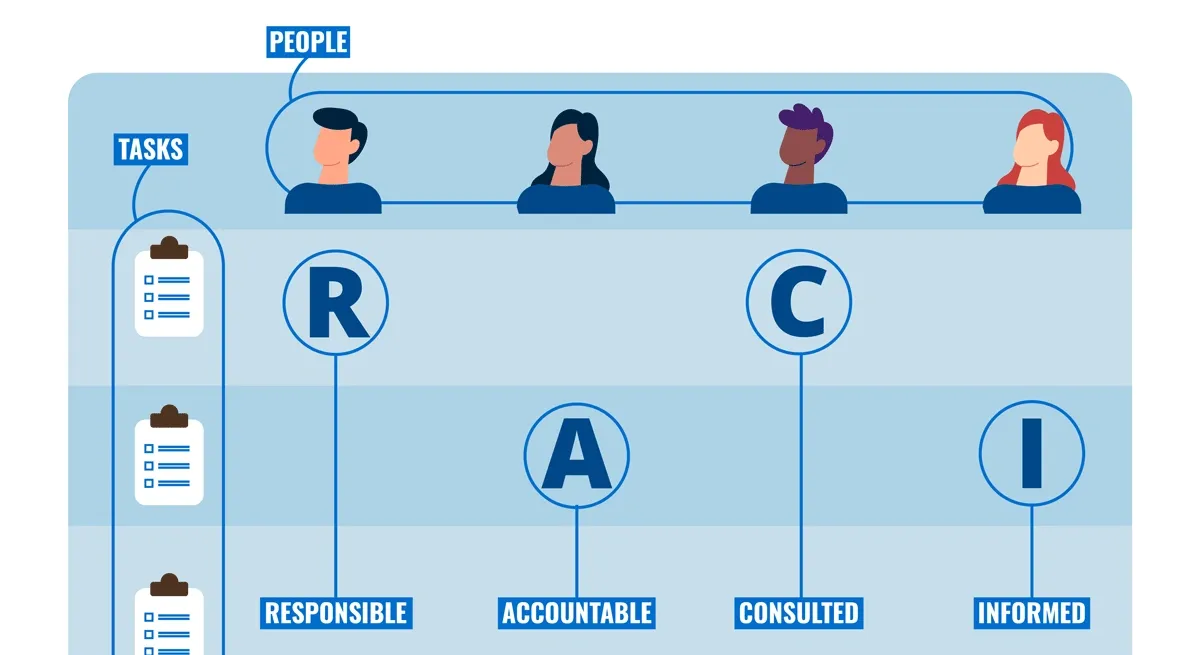
Image Source: SlideModel
“The responsible individual is delegated a responsibility from the accountable person and must complete that responsibility within agreed-upon parameters and an agreed-upon deadline.” — Atlassian, Project Management Software Provider
The FedRAMP process brings multiple stakeholders together through complex compliance workflows. Success depends on clear role assignments. A RACI framework adds structure by defining each person’s responsibilities during your compliance experience.
What RACI Stands For: Responsible, Accountable, Consulted, Informed
RACI is an acronym that defines four key roles in project management:
- Responsible (R): These team members complete specific tasks. They do the work needed for FedRAMP deliverables. Each task needs at least one responsible person, though several people can share this role when it makes sense.
- Accountable (A): This person owns the task’s outcome and quality. Unlike the responsible role, only one person should be accountable per task to keep decision-making clear. The accountable person approves work from responsible team members.
- Consulted (C): Subject matter experts who give input, feedback, or expertise. These stakeholders work directly with responsible team members before finalizing decisions.
- Informed (I): People who need progress updates but don’t take part in the work. Communication with informed stakeholders flows one way.
Why RACI Matters in the FedRAMP Authorization Process
The FedRAMP authorization process needs exceptional coordination between internal teams and external stakeholders. Role confusion can create delays or compliance gaps.
RACI charts remove any doubt about task ownership. Security processes can’t rely on vague assignments—they need specific people in charge. This clarity helps teams stay stable during staff changes, keeping your FedRAMP process on track.
Teams that use RACI charts for security often see better audit results, faster assessments, and stronger connections between technical, security, and compliance groups.
RACI also helps manage shared responsibilities in cloud security. Cloud service providers (CSPs) must submit a Control Implementation Summary/Customer Responsibility Matrix (CIS/CRM) workbook with their System Security Plan. This document shows whether the CSP, customer, or both must implement specific security controls.
How RACI Lines Up with FedRAMP Process Flow
Different stakeholders take the lead at various phases of the FedRAMP timeline. A well-laid-out RACI chart matches this dynamic workflow.
Your RACI chart shows which team members prepare documents and who approves submissions during the original readiness assessment. This prevents bottlenecks where multiple people might try to control the same decisions.
Roles often change between internal teams and external assessors like Third Party Assessment Organizations (3PAOs) during security assessment. Your RACI matrix helps everyone understand their evolving roles at this vital stage.
For continuous monitoring activities, all stakeholders need clear assignments to maintain compliance. Successful FedRAMP organizations suggest: “Start with a RACI chart in your own organization. When you know who’s Responsible, Accountable, Consulted, and Informed, the CRM conversation with partners becomes sharper, faster, and more productive”.
A good RACI chart builds behaviors needed for successful security cultures and promotes clear communication between developers, operations, and security teams.
Key Roles in the FedRAMP Process and Their RACI Assignments
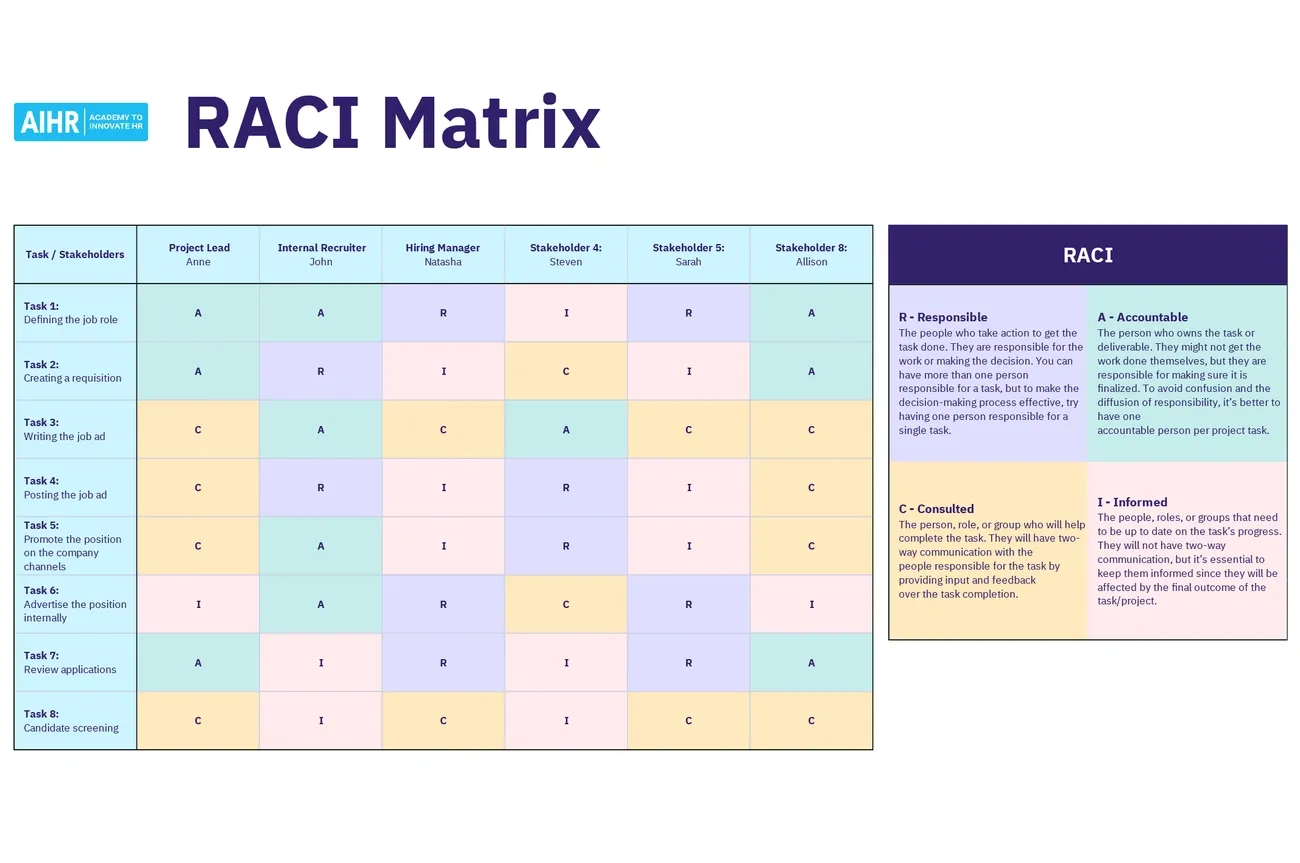
Image Source: AIHR
A successful FedRAMP authorization relies on clear roles and responsibilities between multiple entities. Each organization has a specific role in the RACI matrix that will give a proper accountability throughout the certification experience.
Cloud Service Provider (CSP) Responsibilities
CSPs take on the Responsible (R) role in the FedRAMP process. They implement security controls, prepare detailed documentation, and keep up with compliance through continuous monitoring. The core team must implement and maintain the security controls listed in their System Security Plan (SSP).
One of CSP’s vital tasks is creating the Control Implementation Summary/Customer Responsibility Matrix (CIS/CRM) workbook as Appendix J to their SSP. This document shows which security controls CSPs handle, which ones customers manage, which need both CSP and customer input, and which come from existing FedRAMP Authorized infrastructure.
CSPs also need to:
- Find and fix vulnerabilities before they become issues
- Handle security incidents
- Give accurate updates to agency AOs, the FedRAMP PMO, and assessors
- Keep a secure database of continuous monitoring deliverables
Third Party Assessment Organization (3PAO) Accountability
3PAOs act as the Accountable (A) stakeholders who validate security assessments. They check cloud systems regularly to make sure they meet FedRAMP requirements. Federal government agencies use these independent reviews as the foundations of their risk-based authorization choices for cloud services.
3PAOs that provide advisory services can’t assess the same Cloud Service Offering for two years. This rule keeps assessments independent and trustworthy. 3PAOs must also get accreditation from the American Association for Laboratory Accreditation (A2LA). They go through yearly reviews and complete on-site reassessments every two years.
Joint Authorization Board (JAB) and Agency Roles
The JAB leads FedRAMP governance and decision-making. It includes chief information officers from the Department of Homeland Security, General Services Administration, and Department of Defense. They are both Accountable (A) for governance choices and Consulted (C) for technical matters throughout the FedRAMP timeline.
Agencies take the Accountable (A) role for their own authorizations. Agency Authorization Officials (AOs) watch CSP’s continuous monitoring to ensure security stays strong enough for their agency. Their duties include:
- Looking at monthly Plan of Action and Milestones (POA&M)
- Approving changes and deviation requests
- Reviewing yearly assessment results
- Making risk-based choices about ongoing authorization
FedRAMP PMO: Consulted and Informed Functions
The FedRAMP Program Management Office (PMO) serves both Consulted (C) and Informed (I) roles in the authorization process. The PMO, which sits within the General Services Administration (GSA), runs the program’s daily operations.
The PMO helps agencies and CSPs with guidance, support, and training while managing 3PAO accreditation. They also make sure agencies can access continuous monitoring materials for review.
Within the RACI framework, the PMO:
- Watches over all FedRAMP authorizations
- Partners with agency staff and authorizing officials
- Makes key risk management choices
- Helps different authorization paths reach their goals
This well-laid-out assignment of duties makes the FedRAMP process clearer. Teams can see exactly who owns each part of getting certified.
When to Use a RACI Chart in the FedRAMP Certification Process
“FedRAMP provides a standardized approach for security assessment, authorization, and continuous monitoring of cloud services.” — Microsoft, Cloud Services Provider and FedRAMP Authorized Partner
Timing is everything in the FedRAMP process timeline. A RACI chart placed at strategic points will work better and create clearer paths to authorization.
During Original Readiness Assessment
RACI charts prove most valuable as you prepare for your Readiness Assessment. This stage determines if your Cloud Service Offering (CSO) has the right security capabilities to get FedRAMP authorization. The Readiness Assessment might not succeed on the first try, so a RACI chart helps clarify who handles remediation tasks when gaps appear.
Your RACI matrix should establish decision-making processes before you work with a Third Party Assessment Organization (3PAO). This preparation helps make rapid, informed decisions even with limited information or team availability. Ready to get started? Book a Readiness Call with our experts to help structure your RACI chart before your assessment begins.
Throughout the Security Assessment Phase
The RACI chart is a vital part of the Full Security Assessment after your Readiness Assessment. This phase lets the 3PAO perform independent testing of your system’s security controls, proving it right through vulnerability scans and penetration testing.
Your RACI chart should clearly show:
- Who provides access to systems and documentation
- Which team members respond to assessor questions
- Who reviews preliminary findings
- The person accountable for approving remediation plans
During Continuous Monitoring and Reporting
Continuous Monitoring (ConMon) needs steadfast dedication rather than a one-time effort. CSPs must identify vulnerabilities, respond to incidents, and give timely information to agency Authorizing Officials and the FedRAMP PMO. A well-laid-out RACI chart shows exactly who handles monthly POA&M updates, vulnerability management, and incident reporting.
FedRAMP requires CSPs to update Key Security Metrics monthly and managed to keep them available to agencies for 24 months after the original reporting. Your RACI chart should assign specific roles to maintain these metrics, typically one week before monthly monitoring meetings.
In Organizational Change or Role Transitions
Personnel changes often disrupt compliance activities. A well-maintained RACI chart reduces these disruptions by documenting role responsibilities instead of relying on specific individuals.
Team members who take over new roles understand their responsibilities right away. The “decider” (Accountable party) ensures someone can make final decisions, even during organizational changes. This accountability becomes vital when addressing issues that might affect your FedRAMP certification process’s quality or feasibility.
How to Build a FedRAMP-Specific RACI Chart
A practical plan that arranges with your FedRAMP authorization process just needs to work when creating a RACI chart. Your compliance experience needs this framework as its foundation right from the start.
Step 1: Identify FedRAMP Milestones and Tasks
The core milestones within the FedRAMP process timeline should be listed first. These include preparation, security package development, assessment, authorization, and post-authorization. Your RACI chart should reflect specific FedRAMP artifacts. Key deliverables include:
- System Security Plan (SSP)
- Security Assessment Plan (SAP)
- Security Assessment Report (SAR)
- Plan of Action and Milestones (POA&M)
Step 2: Map Internal and External Stakeholders
Your FedRAMP certification process involves multiple stakeholders that need identification. Federal agencies, internal teams, and 3PAO representatives should be included. Successful implementations show that a core group’s original draft produces better results than gathering everyone’s input from scratch.
Step 3: Assign RACI Roles to Each Task
The matrix completion requires designating who’s Responsible, Accountable, Consulted, and Informed for each activity. CSPs develop and verify SSP documentation, while 3PAOs check its accuracy and completeness. Our experts can help fine-tune your RACI chart through a Readiness Call.
Step 4: Verify Role Clarity and Avoid Overlap
The matrix requires horizontal review to ensure each activity has at least one responsible and only one accountable party. A vertical review clarifies each stakeholder’s responsibilities. Team members should review your completed matrix before external stakeholders receive it. The FedRAMP ATO process maturity requires reviews at 3-month, 6-month, and 12-month intervals.
Best Practices for Maintaining Your FedRAMP RACI Matrix
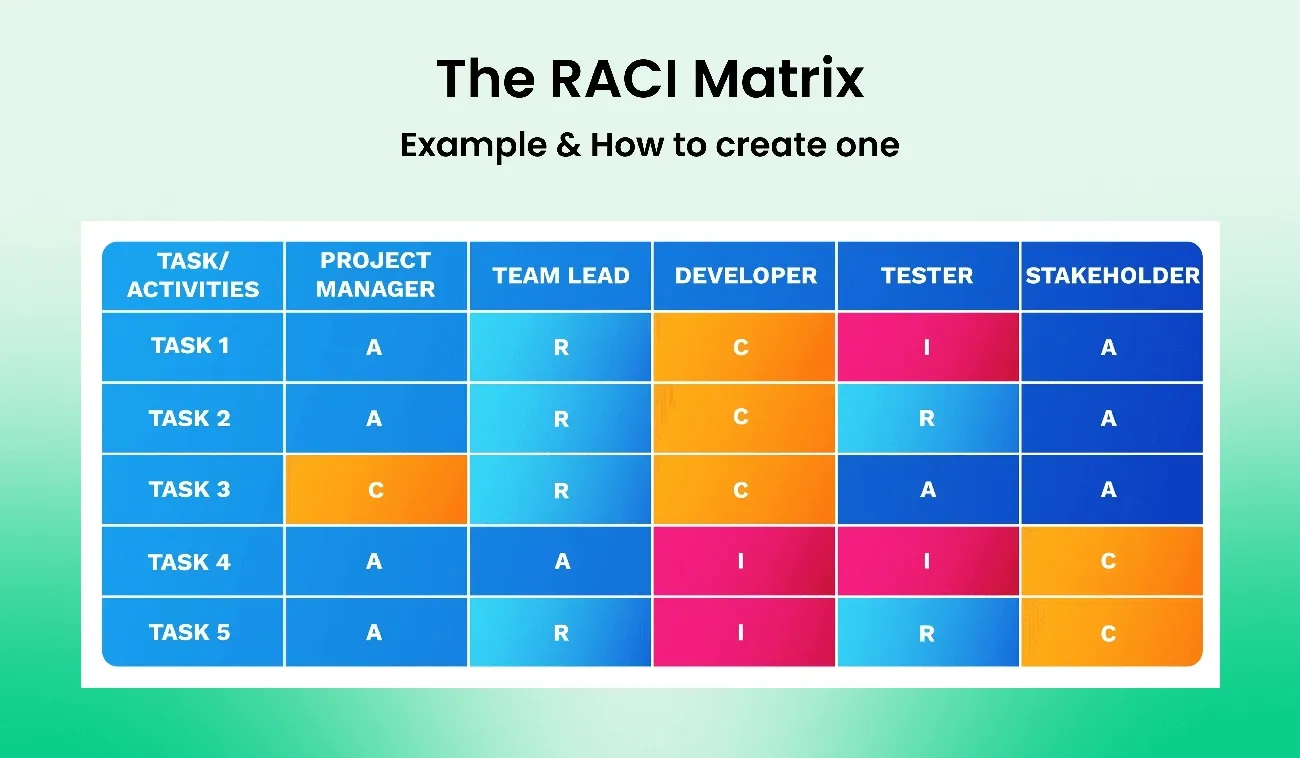
Image Source: Rework
Your RACI matrix needs continuous attention and proper governance throughout the fedramp process. Best practices will give a solid foundation to keep your compliance efforts organized as you work toward authorization.
Review and Update RACI During FedRAMP Process Timeline Changes
Your RACI chart must stay arranged with the evolving fedramp process timeline. Project phases and personnel changes require immediate updates to the chart. You should document every modification with dates, responsible team members, and reasons behind the changes. The complexity of timeline adjustments can be challenging. Our experts can help you review your RACI matrix during critical transition points through a Book a Readiness Call.
Limit Accountable Roles to One Per Task
Each task needs exactly one person who is Accountable to maintain clear ownership and decision-making authority. Teams can share other responsibilities, but a single accountable party speeds up progress throughout the fedramp authorization process and eliminates confusion.
Ensure Stakeholder Buy-In and Visibility
Teams need clear guidelines to use RACI effectively. Yes, it is true that successful FedRAMP implementations include review sessions where stakeholders confirm they understand their responsibilities. Verbal confirmation creates stronger accountability than documentation alone.
Use Confluence or Jira for Version Control and Access
Confluence and Jira have FedRAMP Moderate Authorization. These platforms excel at managing your RACI matrix with features that include:
- Complete version control of matrix modifications
- Stakeholder access management
- Seamless integration with other FedRAMP documents
Conclusion
This piece explores how RACI charts serve as vital tools for organizations working through the complex FedRAMP authorization process. A clear definition of roles creates the foundation for successful compliance efforts that prevent confusion among team members and help avoid getting pricey.
RACI matrices built specifically for FedRAMP compliance help balance workloads while establishing precise accountability at each stage. Your team can turn abstract compliance requirements into concrete tasks with clear ownership by assigning Responsible, Accountable, Consulted, and Informed roles.
RACI charts that are properly managed give stability when roles change or organizations restructure – a challenge many teams face during FedRAMP authorization. Your compliance efforts will continue smoothly despite personnel changes or shifting priorities.
FedRAMP authorization requires teamwork between multiple stakeholders – your internal team, Cloud Service Providers, Third Party Assessment Organizations, and federal agencies. A detailed RACI framework creates a shared understanding of responsibilities that bridges organizational boundaries and promotes productive partnerships.
RACI charts grow with your FedRAMP process timeline. Your matrix should reflect changing responsibilities and emerging compliance needs from the original readiness assessment through continuous monitoring. Regular reviews keep your RACI chart relevant rather than letting it become outdated after initial authorization.
Start your RACI implementation early in your FedRAMP experience. This proactive approach sets clear expectations from the beginning and saves valuable time and resources as you progress toward authorization. Teams with well-defined responsibility frameworks face fewer delays and keep better documentation throughout the compliance process.
FedRAMP authorization requires precision, accountability, and collaboration. A carefully designed RACI chart delivers all three elements and turns compliance challenges into simplified processes with clear ownership. Creating and maintaining this framework will benefit your entire FedRAMP experience.
Key Takeaways
Understanding RACI roles in FedRAMP eliminates confusion and accelerates your path to authorization by clearly defining who’s responsible, accountable, consulted, and informed at each stage.
• Implement RACI charts early in your FedRAMP journey – Starting during readiness assessment prevents costly delays and establishes clear expectations from the beginning.
• Assign only one accountable person per task – Multiple responsible parties are acceptable, but single accountability ensures clear decision-making authority and prevents confusion.
• Map RACI roles to specific FedRAMP deliverables – Align your matrix with key artifacts like SSP, SAP, SAR, and POA&M to ensure comprehensive coverage.
• Review and update your RACI matrix regularly – Schedule updates during phase transitions, personnel changes, and at 3, 6, and 12-month intervals to maintain accuracy.
• Use FedRAMP-authorized tools for version control – Platforms like Confluence or Jira (both FedRAMP Moderate authorized) provide proper access management and change tracking.
A well-structured RACI chart transforms complex FedRAMP compliance requirements into manageable workflows with clear ownership, ultimately reducing the risk of authorization delays and ensuring sustainable continuous monitoring practices.
FAQs
Q1. What is a RACI chart and why is it important for FedRAMP? A RACI chart defines roles and responsibilities in a project, standing for Responsible, Accountable, Consulted, and Informed. For FedRAMP, it’s crucial as it clarifies who handles specific tasks, ensuring smooth progress through the complex authorization process and preventing delays due to role confusion.
Q2. How often should a FedRAMP RACI chart be updated? A FedRAMP RACI chart should be reviewed and updated regularly, especially during key transitions in the authorization process, personnel changes, and at 3, 6, and 12-month intervals. This ensures the chart remains accurate and aligned with the evolving compliance journey.
Q3. Who should be designated as “Accountable” in a FedRAMP RACI chart? In a FedRAMP RACI chart, only one person should be designated as “Accountable” for each task. This ensures clear ownership and decision-making authority, preventing confusion and accelerating progress throughout the authorization process.
Q4. What role do Third Party Assessment Organizations (3PAOs) play in the FedRAMP process? 3PAOs serve as the accountable stakeholders for security assessment validity in the FedRAMP process. They perform initial and periodic assessments of cloud systems to ensure they meet FedRAMP requirements, providing independent validation for federal agencies’ authorization decisions.
Q5. How can organizations effectively manage their FedRAMP RACI chart? Organizations can effectively manage their FedRAMP RACI chart by using FedRAMP-authorized tools like Confluence or Jira for version control and access management. These platforms allow for tracking changes, managing stakeholder access, and integrating with other FedRAMP documentation.