
FedRAMP authorization gives access to more than 430 federal agencies. Still, only 451 cloud services made it to this elite status by mid-2025. The FedRAMP process usually takes 12-18 months from start to finish, and some organizations need more than 24 months to complete it. This timeline stretches because FedRAMP demands strong security controls along with detailed documentation, non-stop monitoring, and third-party assessments that go well beyond regular commercial compliance frameworks.
The total cost of FedRAMP compliance catches many organizations off guard. It costs by a lot more than typical commercial cloud security offerings. Manual handling of the FedRAMP process drains time, resources, and money. It can take 8-24 months and run up bills in hundreds of thousands or even millions of dollars. The silver lining is that organizations can speed up their FedRAMP certification with the right evidence mapping method. Teams using automated approaches can get their authorization in just 1-15 months.
This piece will show you our tested evidence mapping method that gets results for FedRAMP assessment success. You’ll learn about each phase of the FedRAMP process, from preparation to continuous monitoring. We’ll give you applicable steps to create a quick evidence pipeline that makes auditors happy and speeds up your path to authorization.
Phase 1: Preparing for Evidence Mapping in FedRAMP Final Audit
You need thorough preparation before any assessment when starting your FedRAMP experience. A well-planned evidence mapping process will help your cloud service meet federal security requirements. Let’s get into the key first steps to prepare for your final audit.
Identifying FedRAMP Moderate or High Impact Level
Your FedRAMP certification strategy’s foundation depends on choosing the right impact level. This choice determines how many controls you’ll need and how strict your security measures must be.
FedRAMP puts cloud services into three impact levels based on data sensitivity: Low, Moderate, and High. Cloud Service Provider (CSP) applications that get FedRAMP authorization are mostly Moderate Impact systems – about 80%. These systems work with controlled unclassified information where security breaches would seriously affect agency operations, assets, or individuals.
High Impact authorization is needed for systems that handle highly sensitive data like:
- Law enforcement and emergency services information
- Financial systems data
- Health systems records
- Data where compromise could have severe or catastrophic consequences
Impact levels make a big difference in control requirements. Moderate Impact needs 323 controls, while High Impact needs 410 controls. This affects your certification’s scope, cost, and timeline.
You’ll need a Federal Information Processing Standards (FIPS) 199 categorization assessment to find your level. This assessment looks at three security objectives—confidentiality, integrity, and availability—for your system’s information types. Your overall impact level comes from the highest rating across these objectives.
Scoping the System Boundary for Audit Readiness
A clear system boundary definition is vital for preparation. The FedRAMP boundary covers all Cloud Service Offering (CSO) aspects that:
- Handle federal information
- Directly affect federal information’s confidentiality, integrity, or availability
Your boundary must include customer-used services and the components, infrastructure, and services handling federal information. It also covers security tools, authentication systems, management tools, and keying material.
When defining your boundary, you should:
- Document all components, relationships, data flows, encryption methods, access points, security components, and ports/protocols/services in your System Security Plan (SSP)
- Document only the configuration of FedRAMP-authorized services you use, following the Customer Responsibility Matrix guidelines
- Leave out services that pose little risk to federal information
A clear boundary stops assessment scope creep and ensures complete security coverage. Third-party assessors will check your boundary through discovery scans and architecture reviews.
Arranging with NIST SP 800-53 Rev. 5 Control Families
NIST SP 800-53 controls are the source of FedRAMP security requirements. These controls come in 20 different families, each focusing on specific security functions. Each family handles different security aspects, from access management to incident response.
NIST SP 800-53 Rev. 5‘s control families include:
- Access Control (AC): Restricts system access to authorized users
- Audit and Accountability (AU): Tracks and monitors system activities
- Configuration Management (CM): Maintains secure baseline configurations
- Identification and Authentication (IA): Verifies user identities before granting access
- System and Information Integrity (SI): Protects against malicious code and vulnerabilities
Rev 5 brought important updates, especially about privacy across control families. Role-based training now needs privacy training with security training, and configuration management must include privacy impact analysis.
Keep detailed records of your control implementation during preparation. These records will help build your evidence mapping pipeline later. Note that good preparation reduces time and resources needed during your FedRAMP certification assessment.
Phase 2: Automating Control Implementation and Documentation
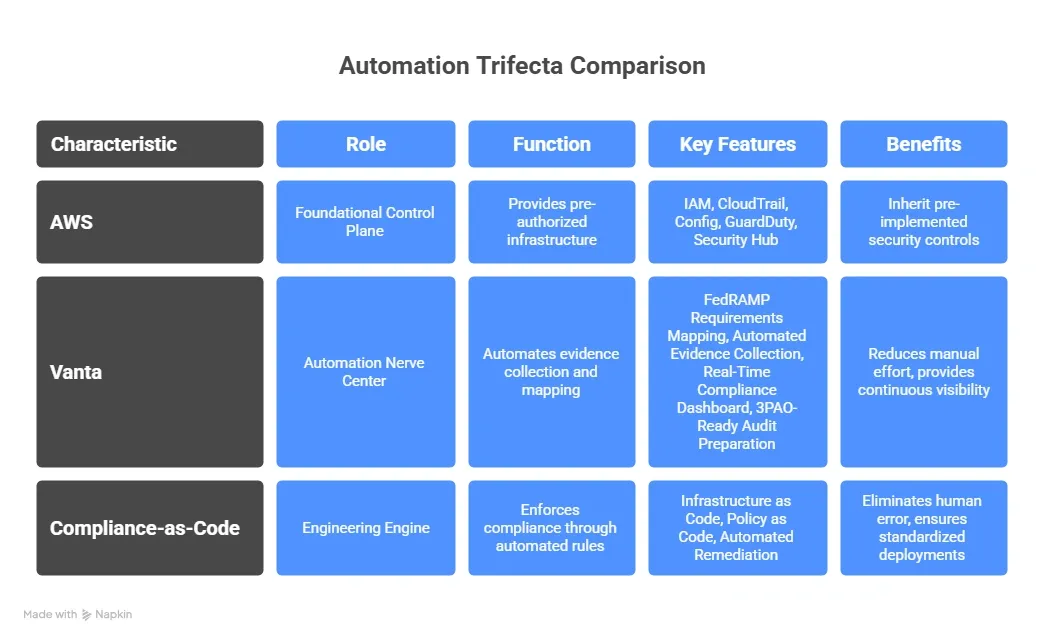
Image Source: Medium
Automation changes FedRAMP compliance from a manual, error-prone process into a system you can repeat and rely on. When organizations code their security controls, they cut down human errors and create audit-ready proof that speeds up certification.
Using Terraform for Infrastructure as Code Compliance
Infrastructure as Code (IaC) forms the foundation to build FedRAMP controls right into your cloud setup. Terraform lets you code security requirements into your infrastructure definitions. This makes compliance a core feature rather than something you add later.
Teams working with FedRAMP High Baseline environments can use Terraform to lock down security at every level while deploying quickly. Instead of setting up environments by hand and risking mistakes, teams can create infrastructure templates. These templates enforce encryption, access controls, and logging requirements from day one.
Terraform turns FedRAMP’s 400+ NIST controls from basic checklists into code you can run. Here are the key patterns that work best:
- Immutable infrastructure: Replace resources instead of patching to stop configuration drift
- Role-based access templates: Set up least privilege rules when deploying
- Encrypted resources by default: Meet FIPS 140-2 requirements through code
- Centralized logging configurations: Send events straight to secure SIEM endpoints
Teams running FedRAMP High-authorized environments face unique challenges. External CI/CD runners and SaaS-based Terraform tools usually don’t meet compliance standards. Teams need to host their own solutions to stay compliant while getting automation benefits.
Policy-as-Code for Enforcing Security Baselines
Policy-as-Code takes security rules beyond infrastructure. It turns them into code you can version and automate. This beats the old way of keeping policies in PDF files. Now, requirements become part of your development and deployment process.
This stops non-compliant setups from reaching production. Access management policies become IAM rules checked during deployment. Data encryption requirements turn into Terraform code that enforces standards across resources.
Policy-as-Code brings three big wins for FedRAMP compliance:
Your DevSecOps tools can test security policies automatically. The risk of human error drops since policies run on their own. You get better reporting through custom dashboards or APIs.
AWS Config conformance packs show how this works in practice. They come with rule sets built for FedRAMP compliance. These rules check your resources against requirements and flag any issues right away.
Version-Controlled SSP and POA&M Generation
Getting FedRAMP certified takes time, and documentation is often the biggest hurdle. New tools can help by creating System Security Plans (SSPs) and Plans of Action and Milestones (POA&Ms) automatically.
FedRAMP is moving to adopt the Open Security Controls Assessment Language (OSCAL) standard. This lets organizations submit SSPs and other documents in a format machines can read. Security Assessment Plans, Security Assessment Reports, and other key documents are part of this.
POA&Ms need careful tracking of plans to fix security weak spots. Tools that generate POA&Ms automatically keep these documents current with fresh evidence. This changes a huge manual task into an automated, living document.
Your automated POA&M system needs to:
- Match POA&M items with the Risk Exposure Table in your Security Assessment Report
- Watch vendor dependencies for fixes to vulnerabilities
- Record how you’ll handle risks you can’t fix right away
Automation helps keep documentation fresh as your security setup changes. It also shows auditors exactly how each control works, which helps speed up FedRAMP authorization.
Phase 3: Building the Evidence Mapping Pipeline
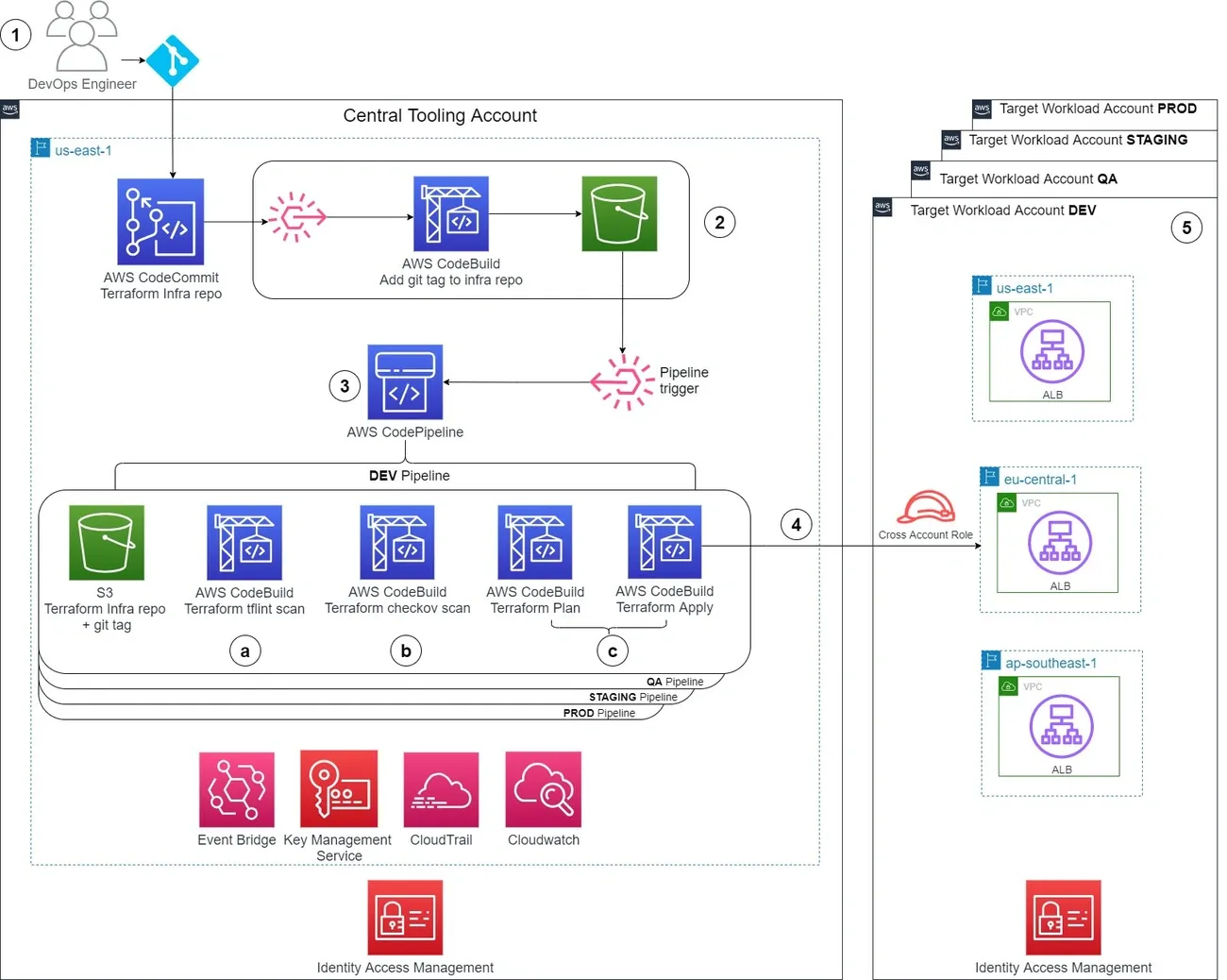
Image Source: Noise
Traditional assessment snapshots don’t work anymore in the ever-changing world of cloud environments. A resilient infrastructure that maps evidence helps you check compliance continuously. This approach turns FedRAMP from a periodic certification task into ongoing security monitoring.
Integrating AWS CloudTrail, Config, and GuardDuty
Building an evidence pipeline starts with native cloud security services. AWS environments need three essential services that are the foundations of automated evidence collection:
- AWS CloudTrail creates a complete audit trail by logging every API call in your environment. This establishes the detailed record-keeping that FedRAMP needs
- AWS Config watches resource configurations against FedRAMP security standards and spots non-compliant settings right away
- Amazon GuardDuty spots threats as they happen. It watches for suspicious activity and works with Security Hub to create a unified response system
These services work together to create an automated evidence chain that checks security controls continuously. More importantly, this setup shows how control implementations connect to their effectiveness – something FedRAMP assessors need to see.
Mapping Evidence to FedRAMP Controls in Real-Time
The best FedRAMP evidence pipelines move away from periodic documentation. They check compliance continuously. This changes compliance from a heavy, reactive process into a light, ongoing part of daily operations.
Immediate mapping brings several benefits:
You can spot control failures or FedRAMP baseline drift right away. The system creates an unchangeable evidence trail with cryptographic certainty. Every build, test, scan, and deployment creates signed proof. Auditors get timestamp-verified proof of ongoing compliance instead of snapshots.
The pipeline becomes your security boundary. A secure, compliant, and reproducible pipeline passes these traits to the deployed system. This creates a clear link between your infrastructure definitions from Phase 2 and proof they work properly.
Automated Evidence Collection with Vanta or Paramify
Specialized compliance automation platforms speed up FedRAMP evidence collection. Vanta and Paramify stand out as good options.
Vanta helps during assessment phases by collecting evidence automatically. It looks at key security indicators (KSIs) rather than standard NIST 800-53 control mapping used in FedRAMP. This lines up with FedRAMP 20x requirements that value ongoing monitoring over documentation.
Paramify works well with evidence collection tools. It helps create System Security Plans (SSP), map controls, and manage Plans of Action and Milestones (POA&M) automatically. The automation creates compliance documents while experts guide implementation and provide oversight.
A great evidence mapping pipeline needs:
- Cloud-native security services (CloudTrail, Config, GuardDuty) for ongoing monitoring
- Immediate evidence mapping that connects data to FedRAMP controls
- Tools like Vanta or Paramify to organize evidence efficiently
This combined approach creates a central evidence hub that manages and automates collection for constant audit readiness. The pipeline checks compliance across your environment continuously. It shows control effectiveness immediately, gathers evidence automatically, and connects smoothly with third-party assessment organization (3PAO) workflows.
Phase 4: Internal Validation Before 3PAO Engagement
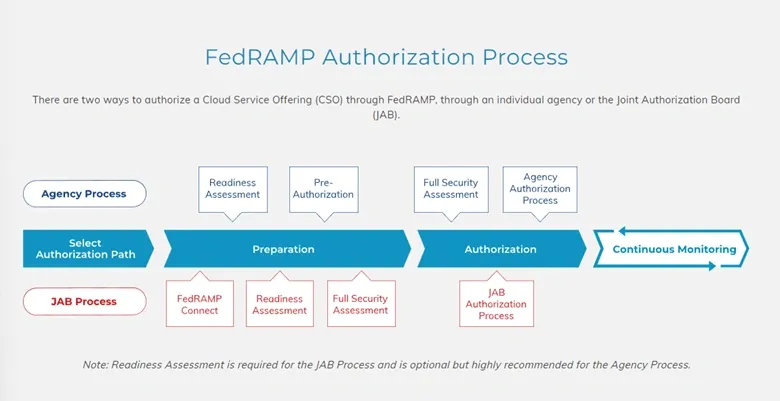
Image Source: AuditBoard
A successful FedRAMP authorization starts with internal validation. This crucial step helps you prepare your cloud service offering for the external assessment by a Third Party Assessment Organization (3PAO).
Running Pre-Audit Tests on Control Effectiveness
Your security controls need a full test run to prove they work as designed. Active testing gives you solid proof of control effectiveness, beyond just reviewing documents. The FedRAMP Program Management Office (PMO) requires Cloud Service Providers (CSPs) to build ongoing verification programs into their core engineering workflow.
Here’s how to verify controls before working with a 3PAO:
- Make sure you meet all Federal Mandate requirements – these are non-negotiable
- Put your technical capabilities to the test through interviews, observations, demonstrations, and examinations
- Check data flow diagrams and authorization boundary accuracy with discovery scans
- Run authenticated vulnerability scans to fix all Critical and High findings
Note that 3PAOs will review both automated and human-driven processes that verify controls. Your testing should prove control effectiveness in both areas before external assessment begins.
Generating Readiness Reports for 3PAO Review
A well-prepared readiness report shows 3PAOs clear evidence of your compliance status. CSPs should do an honest self-review using the Readiness Assessment Report (RAR) template before 3PAO engagement. This internal check helps spot compliance gaps that could slow down authorization.
Your readiness report needs these key elements:
The system overview comes first, with clear descriptions and diagrams of components within the authorization boundary. Next, you’ll need to show how you meet federal mandates and FedRAMP requirements. The report should end with data flow diagrams showing all sensitive federal data movements through the authorization boundary.
Base your readiness reports on real observations and evidence. Focus on showing what you’ve actually built into your cloud service rather than just copying documentation.
Role-Based Access for Secure Auditor Collaboration
The right role-based access setup lets auditors review your controls without compromising sensitive information. You’ll need collaboration protocols that protect your environment while giving auditors enough visibility to do their job.
Automated evidence collection platforms work best for auditor collaboration. These give secure, read-only access to your evidence repository. This approach cuts out manual sharing and keeps access controls tight. Make sure your collaboration channels leave proper audit trails to keep evidence intact.
Role-based access makes assessments run smoother and reduces back-and-forth with auditors. Assessors who can easily find their way through your evidence repository will work more efficiently.
Your system will undergo various assessment methods by the 3PAO. Get ready to provide access for interviews, documentation reviews, and testing sessions. Let the 3PAO know ahead of time about sensitive demonstrations so they can document their observations without capturing sensitive details in screenshots.
A complete internal validation, detailed readiness reports, and secure collaboration setup will substantially boost your chances of passing the 3PAO assessment on your first try.
Phase 5: Navigating the 3PAO Final Audit Process
A Third-Party Assessment Organization (3PAO) conducts the final audit that marks the end of your FedRAMP preparation journey. Qualified 3PAOs perform independent security assessments to confirm your compliance with federal security standards and FedRAMP requirements.
Audit Trail Navigation for Each Control
The security assessment involves 3PAOs carefully checking how well each control works. They review configuration management, evaluate security controls, and perform complete penetration testing. Your centralized logs need timestamps with NTP synchronization, event types, user IDs, source IPs, and outcomes (success/failure) to navigate audit trails effectively.
Your audit logs must meet these requirements:
- You need them to be unchangeable and available on demand
- They need encryption and access control mechanisms to prevent unauthorized changes
- They should alert automatically for failed logins, privilege escalation, and configuration changes
The 3PAO tests each control through interviews, observations, demonstrations, and direct examinations. This process needs complete audit trails that show controls work consistently.
Responding to Findings and Creating POA&Ms
The 3PAO creates a Security Assessment Report (SAR) after completing their assessment. This report details vulnerabilities, threats, and remaining risks. You must then create a Plan of Action and Milestones (POA&M) that includes:
- Steps to fix each weakness
- People responsible for each task
- When you expect to complete each item
- How severe each finding is
FedRAMP rules say you must fix critical and high risks within 30 days, moderate risks within 90 days, and low risks within 180 days. Each risk in the Risk Exposure Table (RET) needs a matching POA&M item.
Maintaining Audit Logs and Evidence History
FedRAMP has strict rules about keeping audit logs and evidence. Control AU-11 requires you to keep audit records online for at least 90 days and offline according to NARA requirements. You also need to help agencies follow M-21-31 rules for investigating and fixing issues.
Only authorized staff should see or change logs, and their actions must be logged to protect evidence history. You should encrypt logs during storage and transfer and use strong access control systems.
Your team should maintain steady communication with the federal agency during this final audit phase. The federal agency Authorizing Official (AO) will grant an Authority to Operate (ATO) for your cloud service once you pass the assessment.
Phase 6: Continuous Monitoring After Authorization
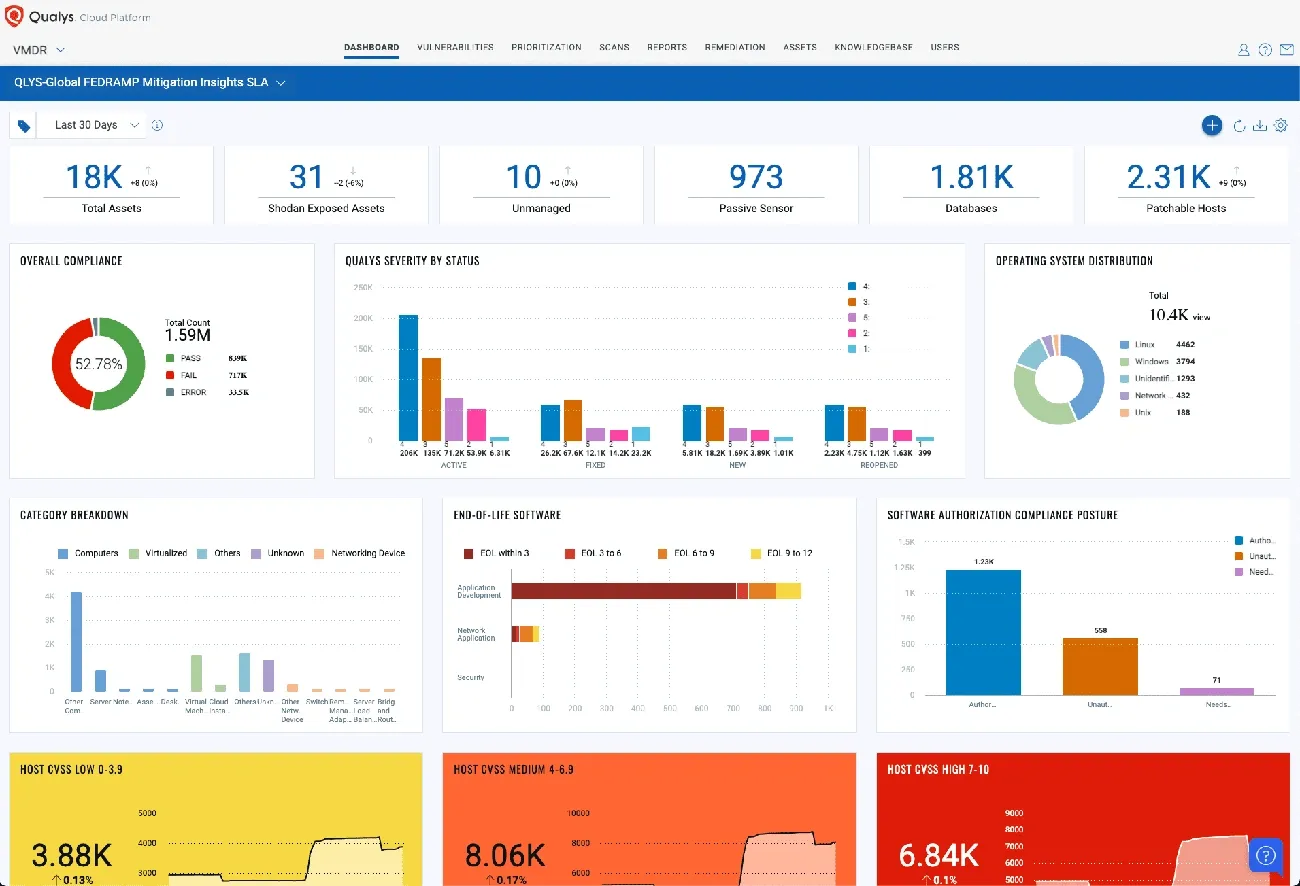
Image Source: Qualys Blog
FedRAMP authorization is just the start of your compliance experience. Cloud Service Providers (CSPs) need to run a strict continuous monitoring program after authorization. This program shows their security controls work through regular testing, reporting, and evidence retention.
Hourly Control Tests and Drift Detection
Smart organizations turn continuous monitoring from a burden into environmentally responsible security practice. Modern automation tools run tests every hour to verify that implemented controls work and configurations stay compliant. Quick testing helps detect any changes in security posture fast.
Security teams get instant alerts when control tests fail. This lets them investigate and fix problems before they grow or show up in monthly reports. Manual reviews often missed subtle changes between assessments in the past. Today’s automated systems constantly check if resources keep their authorized configurations.
Automated Monthly Reporting and Vulnerability Scans
FedRAMP requires monthly continuous monitoring deliverables. These include updated Plans of Action and Milestones (POA&Ms), system inventory, and vulnerability scan results. CSPs must run authenticated vulnerability scans on their entire inventory for all but one of these moderate and high impact systems. The authorization boundary’s complete inventory needs operating system-level scans monthly at minimum.
Automation makes this process easier. It creates FedRAMP-required monthly executive summary reports quickly and includes all needed metrics and compliance status information. with compliance experts to set up the quickest monthly reporting workflow that meets agency requirements and FedRAMP standards.
Maintaining 90-Day Log Retention and 1-Year Evidence
Log retention requirements are the foundations of FedRAMP continuous monitoring. CSPs must keep audit records online in “hot storage” for at least 90 days. They also need to store records offline based on National Archives and Records Administration (NARA) requirements. Most audit logs need about 12 months of cold storage.
Automated evidence retention tools help organizations meet these requirements automatically. They support both 90-day audit event history and longer retention periods for specific security events. Immutable audit logs prove security, show monitoring effectiveness, and document responses to detected risks.
Conclusion
This piece gets into a proven evidence mapping methodology that transforms the FedRAMP certification experience from a time-consuming ordeal into a quick, simplified process. The six-phase approach shows how organizations can tackle each aspect of FedRAMP compliance and reduce the typical 12-24 month timeline.
Proper preparation creates the foundation. The right impact level identification and system boundary definition set the stage for success. Automation becomes the game-changer that allows teams to embed compliance directly into infrastructure through code instead of treating it as a separate documentation exercise.
Evidence mapping pipelines are the life-blood of modern FedRAMP compliance. They link control implementations directly to verifiable evidence. This continuous verification approach creates a radical alteration from point-in-time assessments to ongoing compliance postures and eliminates the last-minute scramble before audits.
Organizations should definitely verify their readiness internally before engaging a 3PAO. This step increases first-time authorization success rates substantially. After authorization, continuous monitoring becomes your steadfast dedication to federal agencies and their data security.
The whole FedRAMP experience becomes more manageable when teams treat it as a systematic, evidence-driven process rather than a documentation exercise. Teams often struggle because they focus on control documentation while undervaluing automated evidence collection and mapping. Successful organizations build evidence pipelines that verify their security posture continuously.
Without doubt, your organization needs expert guidance through this complex process. Book a Readiness Call with compliance specialists who understand both the technical and documentation aspects of FedRAMP certification. Their expertise helps identify gaps in your current approach and provides practical recommendations to accelerate your authorization timeline.
Automated evidence mapping shapes the future of compliance – not just for FedRAMP but for regulatory frameworks of all types. Organizations that become skilled at this approach gain security advantages and competitive differentiation in the federal marketplace. Your path toward FedRAMP authorization starts with understanding the evidence mapping method that works.
Key Takeaways
FedRAMP authorization doesn’t have to be a 12-24 month ordeal. With the right evidence mapping methodology, organizations can streamline their path to federal compliance while building robust security postures that satisfy the most demanding government requirements.
• Automate from the start: Use Infrastructure as Code (Terraform) and Policy-as-Code to embed FedRAMP controls directly into your cloud architecture, eliminating manual configuration errors and creating audit-ready evidence automatically.
• Build continuous evidence pipelines: Integrate AWS CloudTrail, Config, and GuardDuty with specialized tools like Vanta or Paramify to create real-time control validation instead of relying on point-in-time assessments.
• Validate internally before 3PAO engagement: Run comprehensive pre-audit tests and generate readiness reports to identify compliance gaps early, dramatically increasing your chances of first-time authorization success.
• Shift to continuous monitoring mindset: Implement hourly control tests, automated monthly reporting, and proper log retention (90-day hot storage, 1-year cold storage) to maintain authorization long-term.
• Focus on evidence mapping over documentation: Modern FedRAMP success comes from linking control implementations directly to verifiable evidence through automated pipelines, not just creating comprehensive documentation.
The organizations that succeed with FedRAMP treat it as a systematic, evidence-driven engineering process rather than a compliance documentation exercise. This approach not only accelerates authorization timelines but creates sustainable security practices that benefit your entire organization.
FAQs
Q1. What is FedRAMP and why is it important for cloud service providers? FedRAMP (Federal Risk and Authorization Management Program) is a standardized approach to security assessment and authorization for cloud products used by U.S. federal agencies. It’s important because it allows cloud service providers to offer their services to government agencies by demonstrating compliance with strict security requirements.
Q2. How long does the FedRAMP authorization process typically take? The FedRAMP authorization process traditionally takes 12-18 months, with some organizations requiring over 24 months. However, with automated approaches and efficient evidence mapping methods, this timeline can be reduced to 1-15 months.
Q3. What are the key components of an effective evidence mapping pipeline for FedRAMP? An effective evidence mapping pipeline for FedRAMP includes integrating cloud-native security services (like AWS CloudTrail, Config, and GuardDuty), implementing real-time mapping of evidence to FedRAMP controls, and using specialized automation tools for evidence collection and organization.
Q4. How does continuous monitoring work in the context of FedRAMP compliance? Continuous monitoring for FedRAMP involves hourly control tests to detect configuration drift, automated monthly reporting including vulnerability scans, and maintaining audit logs for at least 90 days online and up to a year offline. This ensures ongoing compliance and rapid detection of security posture changes.
Q5. What are some common challenges organizations face during the FedRAMP certification process? Common challenges include underestimating the total cost of ownership for FedRAMP compliance, managing the extensive documentation requirements, implementing and validating the numerous security controls, and maintaining continuous monitoring after authorization. Many organizations also struggle with the lengthy timeline and resource-intensive nature of the process.