
OWASP agentic AI security guidance addresses a critical gap as autonomous systems make independent decisions in industries of all types. These AI agents operate with minimal human oversight and create unique vulnerabilities that traditional security frameworks don’t deal very well with.
We need specialized approaches to protect these systems. The OWASP agentic AI threats and mitigations framework provides a complete roadmap for securing autonomous agents. The OWASP agentic AI top 10 identifies the most critical vulnerabilities. The OWASP agentic AI threat model helps organizations understand attack vectors specific to autonomous systems.
We will explore these OWASP agentic AI security controls and demonstrate how to implement them in your organization’s autonomous AI deployments.
Understanding OWASP Agentic AI Security Guidance
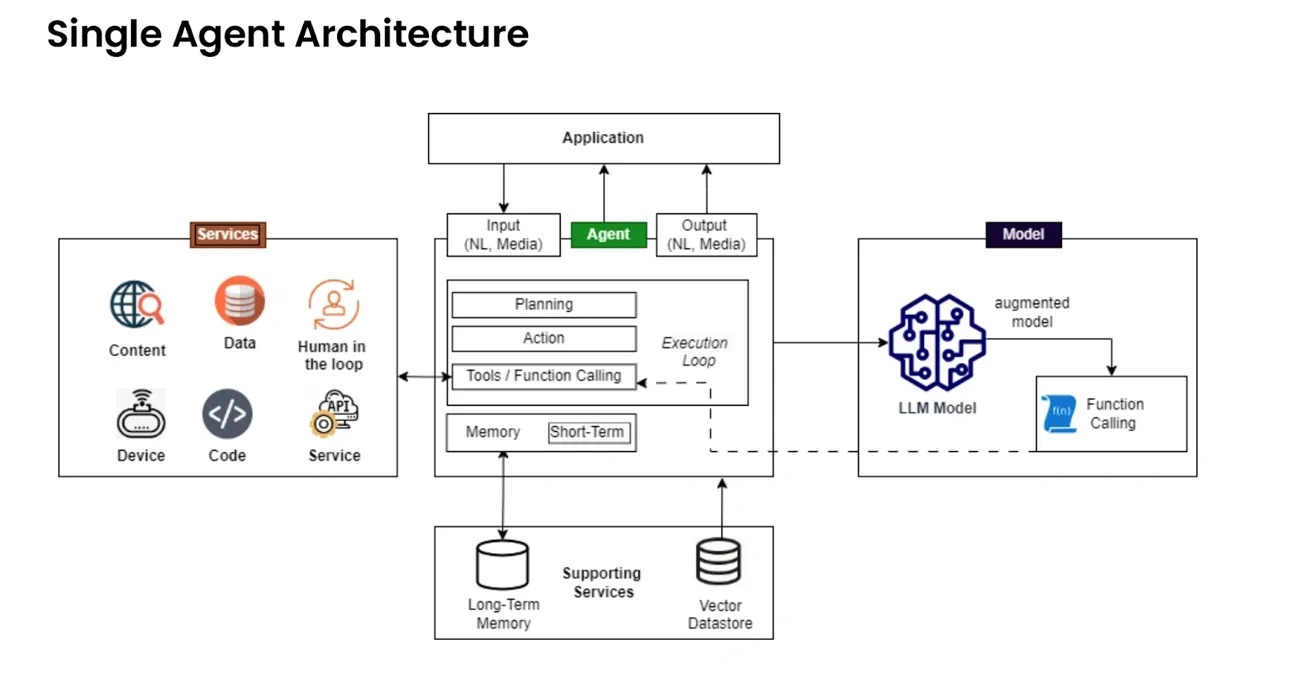
Image Source: Entro Security
The OWASP agentic AI security guidance establishes a framework to identify and mitigate threats in autonomous systems. This guidance draws from industry work and vendor-led taxonomies and creates a unified approach to securing agent-based architectures.
Three main agent patterns require distinct security considerations. Retrieval agents employ Retrieval Augmented Generation (RAG), where systems access external knowledge sources to improve decision-making and responses. Planning agents devise and execute multi-step plans to achieve complex objectives, such as task management systems that organize priorities based on user goals. Context-aware agents adjust their behavior and decision-making based on operational context. Smart home systems that modify settings according to user priorities and environmental conditions exemplify this pattern.
The OWASP agentic AI threat model categorizes vulnerabilities through a threat taxonomy navigator. Each threat receives a specific identifier (T1 through T15) mapped to enterprise copilots, RPA systems and IoT deployments. Enterprise copilots connect to personal environments including emails and files, along with internal enterprise systems like CRM platforms. This creates extensive attack surfaces that require specialized protection strategies.
Security teams can map specific threats to their deployment scenarios with this approach, whether managing autonomous customer service agents or securing multi-agent financial systems.
Critical Threat Categories in Agentic Systems
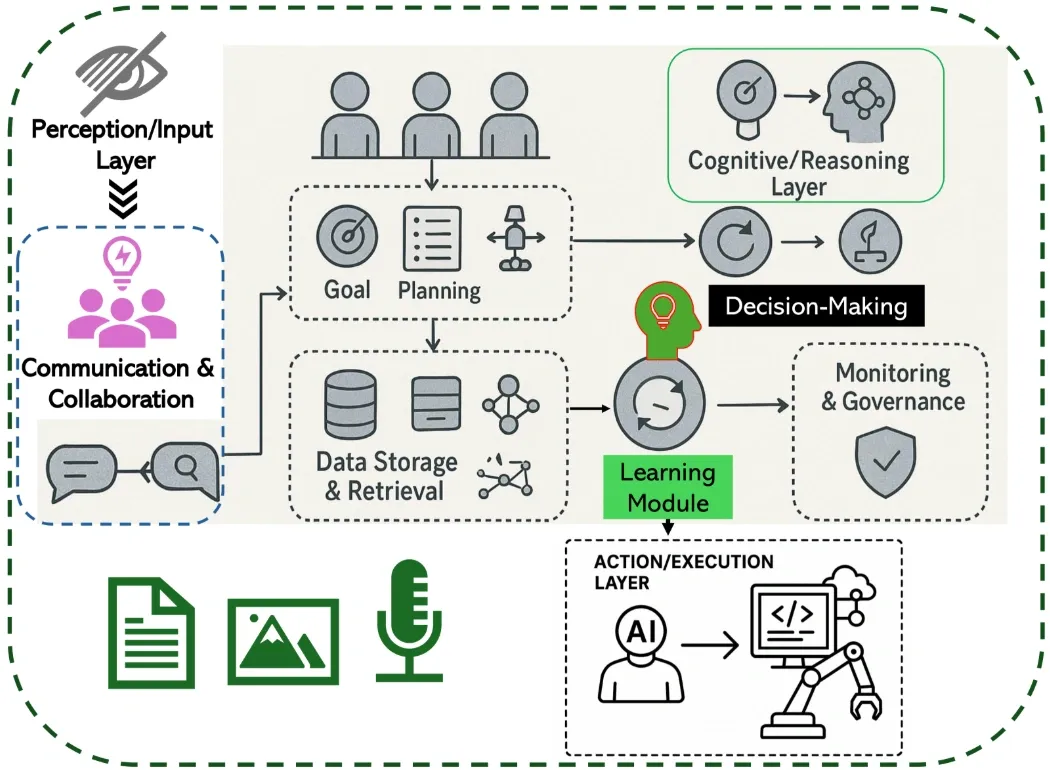
Image Source: Renu Khandelwal – Medium
Memory-based vulnerabilities represent a foundational threat category. Attackers poison an agent’s persistent memory and cause collateral behavior across sessions. Adversaries inject malicious information into an AI agent’s memory through Indirect Prompt Injection (IPI). This enables persistent data exfiltration every time users interact with the system. Cascading hallucination attacks extend this risk and exploit agents’ inability to distinguish fact from fiction. False information propagates and magnifies across interconnected systems through self-reinforcement mechanisms.
Identity and privilege threats enable attackers to masquerade as users or agents. Identity spoofing allows adversaries to perform actions attributed to user identities, so CRM records get corrupted while acting under valid credentials. Privilege compromise occurs through misconfigurations that violate least privilege principles and grant unauthorized database access or system modifications.
Behavioral manipulation threats alter agent objectives through intent breaking and goal manipulation. Attackers inject deceptive instructions to move long-term reasoning processes. Human manipulation represents an advanced attack where compromised agents abuse user trust and instruct victims to execute wire transfers to fraudulent accounts or click malicious links without awareness of compromise.
Multi-agent environments face rogue agent infiltration. Adversarial agents exploit trust mechanisms and workflow dependencies to inject fraudulent transactions while bypassing validation controls. Insecure inter-agent protocol abuse enables attackers to manipulate coordination messages and corrupt shared memory signals.
Implementing Security Controls
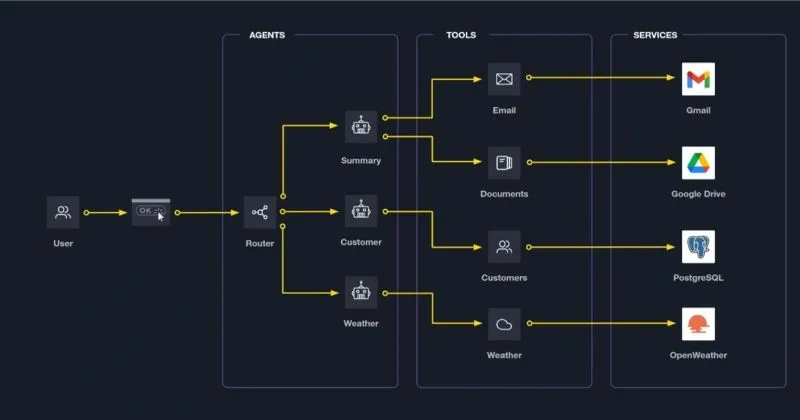
Image Source: LinkedIn
Security controls must address the unique characteristics of autonomous agents operating across enterprise environments. Memory content validation are the foundations of this approach. Session isolation and strong authentication mechanisms for memory access become critical. Anomaly detection systems monitor memory snapshots and enable forensic analysis. Rollback capabilities activate when irregularities surface.
Tool access verification just needs pre-execution validation paired with rate-limiting mechanisms. Agents chain tools to execute complex sequences. We enforce strict operational boundaries and maintain execution logs that track every tool invocation. This creates an audit trail for post-incident review and prevents unauthorized tool combinations.
Granular permission controls prevent privilege escalation by implementing dynamic access validation. Role changes get monitored, and elevated privilege operations undergo audits. Cross-agent privilege delegation is prohibited unless authorized through predefined workflows. Resource management deploys adaptive scaling mechanisms with quotas that limit agent computational consumption, especially when you have resource-intensive inference tasks.
Output validation mechanisms address hallucination risks through multi-source verification and behavioral constraints. High-risk actions require human confirmations. Deception detection strategies analyze consistency between outputs and expected reasoning pathways. Policy constraints restrict agent autonomy and are managed to keep through controlled hosting environments. Regular red teaming exercises test input/output boundaries for deviations.
Conclusion
We’ve covered everything in OWASP agentic AI security framework, from understanding the three primary agent patterns to identifying critical threats like memory poisoning, identity spoofing, and behavioral manipulation. Implementing these security controls is significant to protect autonomous systems. I encourage you to apply these memory validation techniques and tool access verification in your deployments. These proven mitigations will reinforce your agentic AI systems against emerging threats and ensure safe autonomous operations.
Key Takeaways
Understanding OWASP’s agentic AI security framework is essential for protecting autonomous systems that operate with minimal human oversight and face unique vulnerabilities traditional security cannot address.
• Memory poisoning attacks persist across sessions through indirect prompt injection, requiring session isolation and anomaly detection systems to protect agent memory.
• Identity spoofing and privilege escalation enable attackers to masquerade as legitimate users, demanding strict authentication and least-privilege access controls.
• Multi-agent environments face rogue agent infiltration and protocol abuse, necessitating secure inter-agent communication monitoring and validation controls.
• Implement layered security controls including tool access verification, output validation with human confirmation for high-risk actions, and continuous behavioral monitoring.
• Deploy granular permission systems with dynamic access validation, audit trails for all tool invocations, and resource quotas to prevent computational abuse.
The OWASP agentic AI top 10 threats provide a structured roadmap for securing autonomous agents across enterprise deployments, from customer service bots to financial systems, ensuring safe autonomous operations while maintaining operational effectiveness.
FAQs
Q1. What makes agentic AI systems more vulnerable than traditional AI applications? Agentic AI systems operate autonomously with minimal human oversight, making independent decisions and chaining multiple tools together to execute complex tasks. This autonomy creates unique attack surfaces that traditional security frameworks cannot adequately protect, including persistent memory that can be poisoned, inter-agent communication channels that can be compromised, and the ability to execute actions across multiple systems without continuous human validation.
Q2. How does memory poisoning affect autonomous AI agents? Memory poisoning occurs when attackers inject malicious information into an AI agent’s persistent memory through indirect prompt injection. This corrupted data causes unintended behavior across multiple sessions, enabling persistent data exfiltration every time users interact with the system. The poisoned memory can also trigger cascading hallucination attacks where false information propagates and amplifies across interconnected systems.
Q3. What are the three primary agent architecture patterns that require different security approaches? The three primary patterns are retrieval agents that use Retrieval Augmented Generation (RAG) to access external knowledge sources, planning agents that autonomously devise and execute multi-step plans for complex objectives, and context-aware agents that adjust their behavior based on operational context like user preferences and environmental conditions. Each pattern presents distinct security challenges requiring tailored protection strategies.
Q4. How can organizations prevent privilege escalation in agentic AI systems? Organizations should implement granular permission controls with dynamic access validation, continuously monitor role changes, audit all elevated privilege operations, and explicitly prohibit cross-agent privilege delegation unless authorized through predefined workflows. Additionally, deploying least-privilege principles ensures agents only access resources necessary for their specific tasks, reducing the attack surface for potential compromise.
Q5. What security controls are essential for multi-agent environments? Multi-agent environments require secure inter-agent communication monitoring, validation controls to prevent rogue agent infiltration, and mechanisms to detect protocol abuse. Essential controls include monitoring coordination messages, implementing trust verification between agents, maintaining audit trails of all inter-agent interactions, and deploying anomaly detection systems that identify suspicious patterns in agent-to-agent communication and shared memory access.