
Getting AWS FedRAMP compliance means working with a comprehensive security framework that has 421 security controls spread across 17 control families for FedRAMP High environments. FedRAMP High sets the toughest security standards for cloud systems that handle sensitive unclassified government data. The Joint Authorization Board (JAB) selects just 12 Cloud Service Providers each year for authorization.
Our team knows what it takes to build reliable cloud security for U.S. government workloads. AWS GovCloud Regions meet FedRAMP High standards and can handle workloads up to Department of Defense Security Requirements Guide – Impact Level 5. AWS GovCloud (US) runs as a separate AWS region built to host regulated and sensitive data in the cloud. AWS Security Lake has earned FedRAMP High authorization and provides a compliant platform for centralized security logging. This piece will show you practical ways to implement and maintain FedRAMP compliance in AWS GovCloud environments, with focus on logging architecture, data management, and security controls that meet these strict requirements.
Designing a FedRAMP High-Compliant Logging Architecture
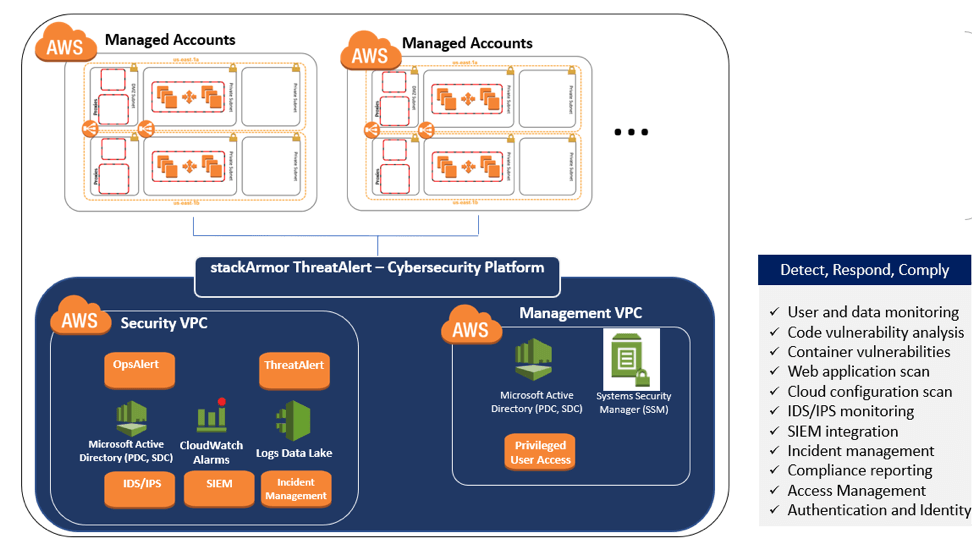
Image Source: stackArmor
Building a solid logging architecture is essential to meet aws fedramp high compliance standards. Security teams need to collect, store, and analyze security events across their AWS infrastructure to meet government requirements. Let’s take a closer look at how to build a logging system that meets FedRAMP High standards while keeping costs in check.
Why AWS Security Lake is Ideal for GovCloud
AWS Security Lake became available in AWS GovCloud (US) Regions recently, making it a great foundation for FedRAMP-compliant logging. This service automatically brings together security data from AWS environments, SaaS providers, on-premises sources, and third-party systems into a specialized repository in your AWS account.
The sort of thing I love about Security Lake for aws govcloud fedramp compliance is its use of the Open Cybersecurity Schema Framework (OCSF). This open standard makes security data from different sources work together seamlessly. The standardization makes audits easier and keeps data formats consistent across your security setup.
All the same, GovCloud comes with specific requirements. The subscriber HttpsNotificationConfiguration operation doesn’t work in AWS GovCloud (US) Regions. AWS also won’t use Customer Content processed by Amazon Security Lake to improve services in GovCloud regions, which adds extra protection for sensitive government data.
Mapping to NIST 800-53 AU Control Families
NIST 800-53 Audit and Accountability (AU) control family plays a vital role in aws fedramp compliance requirements. Security Lake helps meet these controls by gathering and centralizing security events while protecting their integrity.
Security Lake works best with other AWS services to achieve detailed compliance. AWS CloudTrail handles non-repudiation by recording AWS Management Console actions and API calls. It captures user identities, source IP addresses, and timestamps. Amazon CloudWatch brings together log events and management, including CloudTrail data, to show detailed API activity in your AWS account.
Amazon GuardDuty boosts monitoring by using threat intelligence and machine learning to spot unusual activities. AWS Security Hub adds value by collecting, organizing, and prioritizing security findings from various AWS services, which gives you a clear view of your security status.
Multi-Region Deployment Strategy in us-gov-east-1 and us-gov-west-1
aws fedramp services that need maximum reliability should use Security Lake across both AWS GovCloud regions (us-gov-east-1 and us-gov-west-1). AWS documentation states that “using both AWS GovCloud (US) Regions for architecture is preferred”.
This two-region setup offers key benefits. GovCloud regions are physically and logically separate from other AWS Regions, which creates stronger security boundaries. They use FIPS 140-3 approved encryption modules for all AWS service API endpoints to ensure robust security.
GovCloud’s environment comes with strict personnel controls. AWS limits physical and logical access for GovCloud (US) staff to US Citizens. Only screened U.S. citizens with special access controls can manage these regions. AWS GovCloud (US) authentication stays completely separate from Amazon.com.
Your logging setup across both regions should use region-specific collection points while keeping analysis centralized. This approach balances regional isolation needs with practical operations. The result is a logging system that meets aws fedramp high standards while remaining easy for security teams to manage.
Ingesting and Normalizing Logs at Scale
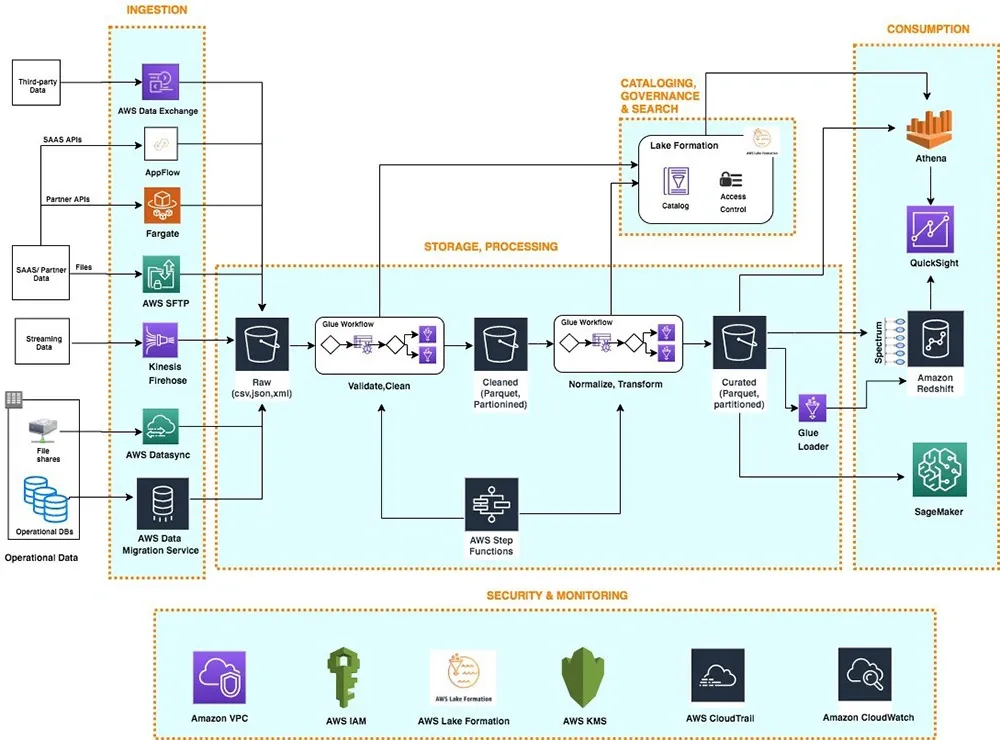
Image Source: Amazon AWS
A reliable log collection strategy is the life-blood of aws fedramp compliance. FedRAMP High environments produce so much security-relevant data that you need to capture, normalize, and analyze it to meet audit requirements. Let’s head over to practical ways we can handle different types of data.
Automatic Ingestion for Native AWS Sources
Security Lake substantially cuts down operational complexity. It automatically collects logs from supported AWS services without custom pipelines. This native integration helps you save time and resources while ensuring detailed coverage in your GovCloud environment. You only need to enable the service through Security Lake’s management console.
These services allow automatic ingestion in aws govcloud fedramp environments:
- VPC Flow Logs for network traffic analysis
- Route 53 Resolver Query Logs for DNS monitoring
- CloudTrail for API activity tracking
- Security Hub Findings from GuardDuty and other services
- Lambda Execution Logs for function monitoring
- AWS WAF Logs for web application security events
- EKS Audit Logs for Kubernetes control plane activity
S3-Based Ingestion for Batch Logs
The S3-SQS ingestion pattern offers a reliable and adaptable approach to batch-oriented logs that don’t need live processing. Logs first go to an S3 bucket that acts as the central repository. S3 then triggers an event notification to a designated SQS queue when new files arrive (ObjectCreate event).
This pattern works well to ingest log files from:
- Application logs stored periodically
- ALB access logs
- Service-generated log files
- Windows Event Logs
- Third-party security tools
The SQS queue handles notifications about new files reliably and ensures single processing of each file. Lambda functions then transform and process these files before sending them to your central logging repository.
Streaming Ingestion via Kinesis and Lambda
Kinesis Data Streams paired with Lambda functions creates a responsive pipeline that processes millions of events per second. Lambda checks each shard in your Kinesis stream once per second and scales up automatically with volume increases.
Here’s what you need to think about when setting up streaming ingestion for aws fedramp high environments:
Start by picking between standard iterators (shared throughput) or enhanced fan-out consumers (dedicated throughput) based on your speed needs. Next, set up parallelization factors to process one shard with multiple Lambda invocations at once—up to 10 concurrent batches per shard.
Lambda scales efficiently in high-throughput scenarios to handle your workload. It maintains ordered processing within each shard and provides “at-least-once” delivery guarantees.
Custom Log Transformation using OCSF
Standardizing logs is a vital part of aws fedramp services. The Open Cybersecurity Schema Framework (OCSF) offers a common schema that standardizes security data from various sources. This makes it perfect for FedRAMP environments.
The parseToOCSF processor transforms logs from AWS services into OCSF events during ingestion. This standardization makes security analytics easier by using consistent field names and data structures across log types.
Transformation functions can map fields from custom sources to the OCSF schema using mapping configurations. These mappings show how raw log fields convert to standardized OCSF attributes, which creates consistent data representation throughout your security infrastructure.
Managing Data Lifecycle and Storage Costs
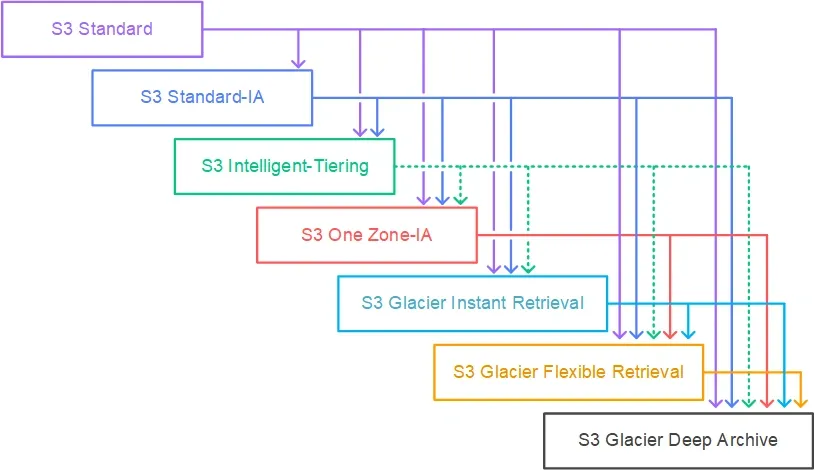
Image Source: AWS Documentation
Managing data well is crucial for aws fedramp environments. Security logs pile up fast, and you need smart lifecycle management to stay compliant and keep storage costs in check across GovCloud regions.
S3 Lifecycle Policies for 90/365 Day Retention
FedRAMP environments need strict data retention periods. Most organizations keep operational logs for 90 days and compliance data for 365 days. S3 Lifecycle policies make this process automatic through two main ways:
You can use transition actions to move objects between storage classes as they age. Expiration actions will automatically delete objects. This automation keeps retention policies consistent without manual work.
To make your aws fedramp compliance complete, you should set up policies in stages:
- Days 0-29: S3 Standard works best for active analysis
- Days 30-89: S3 Standard-IA suits less frequent access
- Days 90-364: S3 Glacier Instant Retrieval gives quick access to archives
- Days 365+: You can delete or move to S3 Glacier Deep Archive based on your needs
Lifecycle rules can target specific object prefixes or tags. This lets you create different policies based on how you classify data in your aws fedramp high environment.
Cost Optimization with S3 Standard-IA and Glacier
Smart tiering helps you save money while staying compliant. S3 Standard-IA costs 40% less than standard storage and keeps the same durability by storing data across three Availability Zones.
S3 Glacier storage classes save you even more money for rarely accessed data. Glacier Instant Retrieval cuts costs by up to 68%. S3 Glacier Deep Archive is the cheapest option for long-term storage, perfect for aws govcloud fedramp environments that need to keep data for years.
Remember that cheaper storage classes have minimum duration charges. You’ll pay for 90 days with Glacier Instant and Flexible Retrieval, and 180 days with Deep Archive. So if you delete data early, you still pay the full minimum charge.
Terraform Configuration for Lifecycle Management
Infrastructure-as-code helps manage lifecycles consistently across aws fedramp services. Here’s a simple Terraform configuration:
resource "aws_s3_bucket_lifecycle_configuration" "example" {
  bucket = aws_s3_bucket.logs.id

  rule {
    id      = "compliance-retention"
    status  = "Enabled"

    transition {
      days          = 30
      storage_class = "STANDARD_IA"
    }

    transition {
      days          = 90
      storage_class = "GLACIER_IR"
    }

    expiration {
      days = 365
    }
  }
}
This setup automates lifecycle policies through version control. Your environment stays consistent and ready for audits without configuration drift.
Implementing Strong Encryption and Access Controls
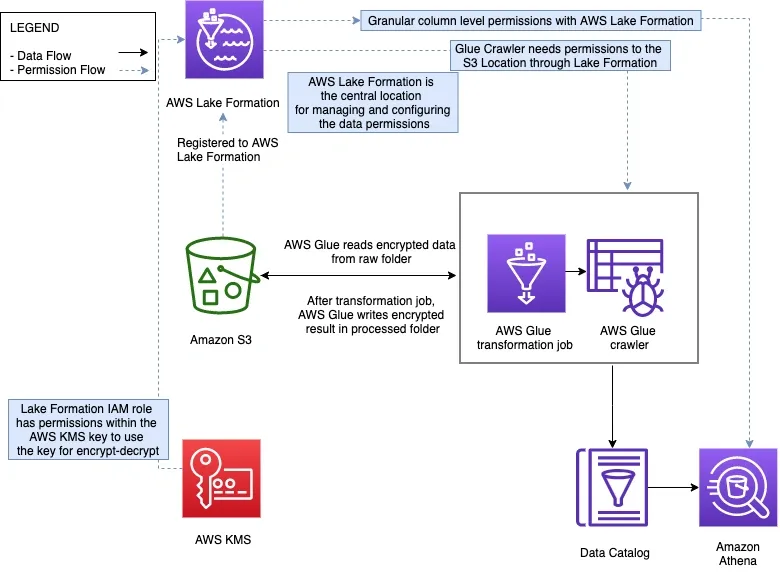
Image Source: AWS
Strong encryption and access controls are the life-blood of any aws fedramp compliant environment. FedRAMP requirements need meticulous attention to both cryptographic standards and identity management to protect sensitive government data.
KMS Key Separation: Ingestion, Storage, and Analysis
FedRAMP mandates FIPS 140-2 (or higher) validated cryptographic modules to protect sensitive data, both in transit and at rest. AWS Key Management Service (KMS) meets this requirement through FIPS 140-3 validated hardware security modules that generate and protect encryption keys.
A multi-key strategy will give a proper separation of duties:
- Ingestion Keys – Control who can write logs to your system
- Storage Keys – Manage encryption of data at rest
- Analysis Keys – Restrict who can decrypt and analyze log data
This separation stops a compromise in one area from affecting others. Separate KMS keys should be used for distinct application stages (development, staging, production) to isolate environments and reduce potential security risks.
IAM and Lake Formation for Fine-Grained Access
Multiple layers of protection are essential to control data access. AWS Lake Formation improves IAM’s capabilities by enabling column, row, and cell-level permissions on data lake resources.
To implement fine-grained access:
- Create a data lake administrator using the Lake Formation console
- Configure databases with Lake Formation permissions control enabled
- Define specific table and column-level permissions for different user roles
- Use resource links to grant selective access to external accounts when needed
This granular approach ensures authorized users can only access what they need. You might grant certain teams access to security findings but restrict their view of sensitive fields containing personally identifiable information.
Least Privilege Enforcement for Audit Readiness
The principle of least privilege is the life-blood of aws fedramp compliance. This approach grants identities only the smallest set of actions they need to fulfill specific tasks, while optimizing usability, efficiency, and security.
Audit-ready least privilege requires you to:
- Start users with no permissions by default rather than administrator access
- Assign permissions to IAM groups and roles based on job functions
- Implement permissions boundaries to limit maximum permissions
- Review access regularly to revoke unnecessary permissions quickly
AWS CloudTrail helps track API usage and provides auditors with detailed records of resource access and timing. This documentation becomes crucial during FedRAMP assessments to confirm proper controls and knowing how to detect potential violations.
Operationalizing Security Lake for Long-Term Compliance
Long-term aws fedramp compliance requires more than the original setup—you need excellent operational practices. Your security infrastructure’s operation and monitoring will shape your compliance status in FedRAMP High environments.
Monitoring Ingestion Health with CloudWatch
Log ingestion health stands as a vital security control for aws fedramp high environments. CloudWatch alarms should monitor these essential metrics:
- Kinesis Iterator Age (indicates processing delays)
- Lambda throttles and errors (shows processing problems)
- Success metrics for each vendor’s data ingestion
Security events must arrive quickly to avoid major audit concerns if ingestion lags behind. Amazon CloudWatch gathers raw data from Security Lake every minute and converts it into applicable information.
Using VPC Endpoints for Boundary Protection
Your aws govcloud fedramp implementation’s ingestion traffic should stay within AWS’s private network. VPC Interface Endpoints for S3, Kinesis, and Lambda keep log data away from the public internet. This method supports SC-7 Boundary Protection requirements and reduces potential attack surfaces.
Infrastructure as Code for Consistency and Auditability
Regulated environments need consistent systems. Terraform helps deploy Security Lake in GovCloud development, staging, and production environments. IaC offers version control, reproducibility, and auditability—vital elements for aws fedramp services certification. This approach creates an audit trail of your logging platform’s construction and maintenance that simplifies compliance reviews.
Conclusion
Getting AWS FedRAMP High compliance definitely shows a deep commitment from organizations that handle sensitive government data. This piece explores practical strategies that give you a complete security framework for GovCloud environments. AWS Security Lake serves as the life-blood service that provides the foundation you just need for centralized logging. It meets strict control requirements in both us-gov-east-1 and us-gov-west-1 regions.
Our layered approach connects several key parts of successful FedRAMP implementation. A resilient logging architecture captures all security-relevant events. Adaptable ingestion methods ensure you can see everything across your infrastructure. The strategic data lifecycle management helps balance compliance requirements with cost optimization. Strong encryption and access controls protect sensitive information and maintain proper separation of duties.
Your long-term compliance success ended up depending on operational excellence. Regular monitoring, boundary protection through VPC endpoints, and infrastructure-as-code practices create the consistent, auditable environment FedRAMP assessors expect. This strategy revolutionizes the daunting 421 security controls into manageable, repeatable processes that work smoothly within AWS GovCloud’s specialized environment.
Organizations still finding their way through compliance should think about their specific requirements and readiness before starting this path. You can book a Readiness Call with our team to get a full picture of your current posture. We’ll help develop a tailored roadmap toward FedRAMP authorization. Expert guidance can streamline your path to compliance by a lot while helping you avoid common pitfalls that delay authorization.
The experience of getting FedRAMP High certification just needs thorough preparation. The resulting security posture offers both compliance advantages and genuine protection for sensitive government workloads. This framework builds the foundation for secure, compliant government cloud operations that meet the highest standards to protect sensitive unclassified data.
Key Takeaways
Master these essential strategies for implementing AWS FedRAMP High compliance in GovCloud environments to protect sensitive government data and streamline authorization processes.
• AWS Security Lake provides FedRAMP-ready foundation: Leverage this fully managed service in GovCloud regions with OCSF standardization for centralized, compliant security logging across your infrastructure.
• Deploy multi-region architecture for maximum resilience: Use both us-gov-east-1 and us-gov-west-1 regions with isolated networks and FIPS 140-3 cryptographic modules for enhanced security boundaries.
• Implement automated data lifecycle management: Configure S3 lifecycle policies with 90/365-day retention periods and intelligent tiering to reduce storage costs by up to 68% while maintaining compliance.
• Enforce separation of duties through KMS key strategy: Use distinct encryption keys for ingestion, storage, and analysis phases combined with Lake Formation’s fine-grained access controls for audit-ready security.
• Maintain operational excellence with Infrastructure as Code: Deploy consistent, version-controlled environments using Terraform while monitoring ingestion health through CloudWatch for long-term compliance success.
The path to FedRAMP High authorization requires mastering 421 security controls, but with proper AWS GovCloud implementation, organizations can achieve both compliance and operational efficiency for sensitive government workloads.
FAQs
Q1. Is AWS GovCloud FedRAMP certified? Yes, AWS GovCloud (US) is FedRAMP certified. It includes additional compliance certifications such as FedRAMP High, which are specifically designed to meet the stringent security requirements of certain government agencies.
Q2. How does AWS Security Lake support FedRAMP compliance in GovCloud? AWS Security Lake, available in GovCloud regions, provides a fully managed security data lake service that automatically centralizes security information from various sources. It adopts the Open Cybersecurity Schema Framework (OCSF) for data normalization, simplifying audit processes and ensuring consistent data formats across security infrastructure.
Q3. What are the key strategies for implementing FedRAMP High compliance in AWS GovCloud? Key strategies include designing a multi-region architecture across us-gov-east-1 and us-gov-west-1, implementing automated data lifecycle management, enforcing separation of duties through KMS key strategies, and maintaining operational excellence with Infrastructure as Code practices.
Q4. How can organizations manage data lifecycle and storage costs in FedRAMP environments? Organizations can use S3 Lifecycle policies to automate data retention periods, typically 90 days for operational logs and 365 days for compliance-related information. Implementing intelligent tiering with S3 Standard-IA and Glacier storage classes can reduce storage costs by up to 68% while maintaining compliance requirements.
Q5. What role does encryption play in AWS FedRAMP compliance? Encryption is crucial for FedRAMP compliance. AWS Key Management Service (KMS) fulfills the requirement for FIPS 140-3 validated cryptographic modules. A multi-key strategy should be implemented, using separate keys for ingestion, storage, and analysis to ensure proper separation of duties and enhance overall security.