
FedRAMP has transformed cloud security standards for government agencies since 2011. We created this standardized program to assess, authorize, and monitor cloud products and services that federal agencies use.
Government work requires FedRAMP certification because federal organizations can only use cloud service providers with FedRAMP authorization. This authorization shows a provider’s steadfast dedication to federal security standards. FedRAMP compliance builds on NIST SP 800-53, a framework that the US federal government uses extensively. Cloud service providers who want to work with government agencies need FedRAMP authorization, though getting it takes considerable time and effort.
This piece explains what FedRAMP is and why it matters. You’ll learn how to get FedRAMP authorization and understand different impact levels. The High impact level, which includes about 410 controls, serves organizations in law enforcement, emergency services, financial systems, and health systems.
Understanding FedRAMP and Its Role in Federal Cloud Security
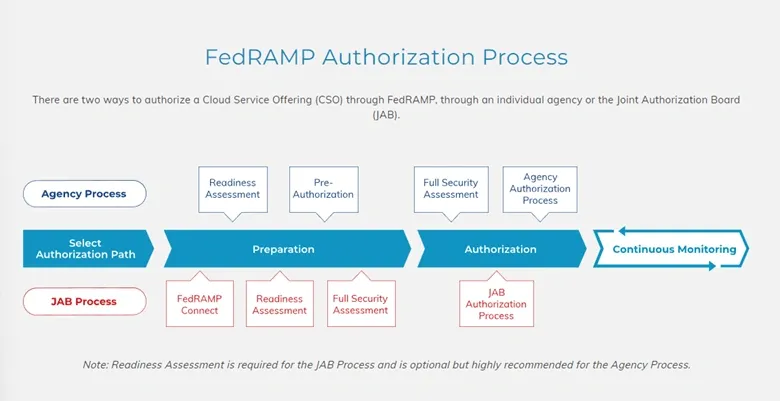
Image Source: AuditBoard
The Federal Risk and Authorization Management Program (FedRAMP) serves as the life-blood of government cloud services security. Let’s get into how this program works and why it has become vital for federal IT modernization.
What is FedRAMP and why it was created
This 12-year old program provides a standardized approach to security assessment, authorization, and continuous monitoring for cloud products and services that federal agencies use. The government needed FedRAMP because cloud technologies were becoming more popular, and agencies needed a unified security approach. Federal agencies used to evaluate cloud services independently, which created inconsistencies and duplicate work.
Two primary entities run FedRAMP: the Joint Authorization Board (JAB) and the Program Management Office (PMO). The JAB includes chief information officers from the Department of Defense, Department of Homeland Security, and General Services Administration. The GSA houses the PMO. Cybersecurity experts from GSA, NIST, DHS, DOD, and NSA worked together to create this structure.
FedRAMP vs traditional cloud security models
FedRAMP uses a “do once, use many times” framework that saves 30-40% of government costs. This approach eliminates duplicate security evaluations while keeping high standards. Traditional models required each agency to conduct separate assessments.
Key differences from traditional models:
- Standardized security controls based on NIST 800-53 with additional cloud-specific requirements
- Certified organizations (3PAOs) must conduct third-party assessments
- Agencies can utilize authorization packages multiple times
- Continuous monitoring requirements replace one-time assessments
How FedRAMP supports federal cloud adoption
FedRAMP helps government agencies adopt cloud services faster by providing a consistent evaluation framework. Agencies can move quickly from “old, insecure legacy IT to mission-enabling, secure, and budget-friendly cloud-based IT”.
The program has improved data security for almost half of federal agencies surveyed. FedRAMP keeps evolving through initiatives like FedRAMP 20x, which wants to streamline processes with automation and immediate monitoring capabilities.
Cloud services in FedRAMP fall into impact levels (Low, Moderate, and High). These levels reflect how certain events might affect an organization’s mission. About 80% of FedRAMP-authorized services are moderate-impact systems.
Who Needs FedRAMP Authorization and Why It Matters
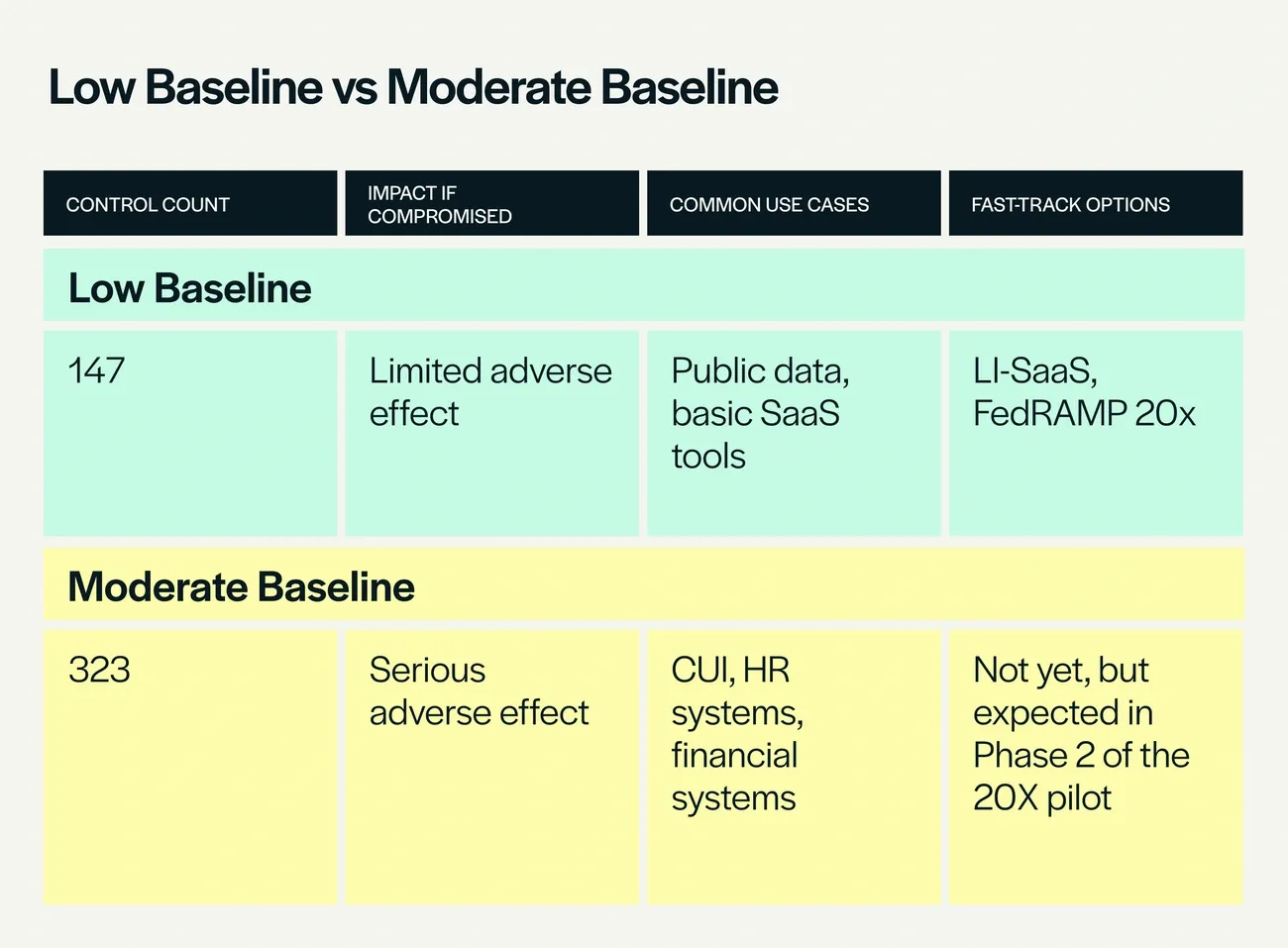
Image Source: Secureframe
Cloud service providers need to know their way around the Federal Risk and Authorization Management Program (FedRAMP). This program creates a clear path for organizations that want to provide cloud services to government entities.
Cloud Service Providers (CSPs) and federal contracts
CSPs need FedRAMP authorization to sell cloud offerings to U.S. federal agencies. Federal policy makes this mandatory – agencies can only use FedRAMP-authorized cloud systems for data storage or processing. Without this authorization, CSPs cannot tap into the profitable federal market.
FedRAMP authorization brings major business benefits. Authorized CSPs become visible on the FedRAMP Marketplace, which helps government agencies find cloud-based solutions. The “do once, use many” approach lets providers use a single authorization with multiple federal agencies. This eliminates the need to repeat security assessments.
International vendors and FedRAMP applicability
These rules apply to international companies too. Any vendor providing cloud solutions to U.S. federal customers must meet FedRAMP standards. The company’s headquarters location doesn’t matter – securing federal data remains the priority.
What is FedRAMP compliance for SaaS providers
Software-as-a-Service (SaaS) providers face unique challenges. FedRAMP covers all cloud service layers—SaaS, IaaS, and PaaS—and each needs its own evaluation. SaaS offerings with lower security needs can use the Low-Impact SaaS (LI-SaaS) baseline. This requires about 50 controls and independent assessment.
To qualify as LI-SaaS, services must:
- Contain no personally identifiable information beyond basic login credentials
- Operate in a cloud environment
- Be fully operational
- Meet the NIST definition of SaaS
- Qualify as low-security-impact according to FIPS PUB 199
SaaS providers can speed up authorization by using existing FedRAMP-authorized platforms. Some providers with their own infrastructure might use other certifications like ISO-27001 or SOC 2, Type 2 to show compliance.
FedRAMP Authorization Process: From Readiness to ATO
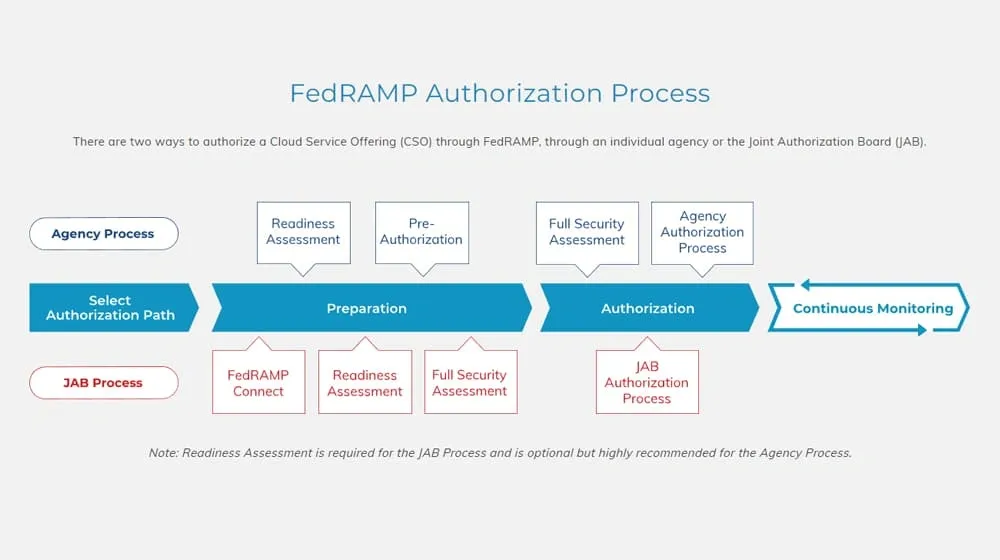
Image Source: Ignyte Assurance Platform
Getting FedRAMP authorization requires a well-laid-out process that organizations need to guide with care.
FedRAMP Ready status and pre-authorization steps
Your experience starts when you get FedRAMP Ready status. You’ll need to complete a Readiness Assessment with an accredited Third-Party Assessment Organization (3PAO). This status shows that a Cloud Service Provider’s (CSP) offering meets federal security requirements. The status stays valid for twelve months on the FedRAMP Marketplace. During this time, CSPs can look for agency sponsorship.
Ready to start your FedRAMP experience? Book a Readiness Call today to assess your organization’s preparedness.
System Security Plan (SSP) and 3PAO assessment
The SSP works as the “security blueprint” for the cloud service offering. It details the system’s architecture, data flows, security controls, and authorization boundary. Once the SSP is ready, the 3PAO does a detailed assessment. They test security controls and run penetration tests.
Security Assessment Report (SAR) and POA&M
The 3PAO puts all assessment results in the Security Assessment Report with findings and recommendations. The CSP then creates a Plan of Action and Milestones (POA&M). This plan shows how they’ll fix any vulnerabilities or weaknesses found.
Agency Authorization and FedRAMP Marketplace listing
The federal agency reviews the complete package and might grant an Authority to Operate (ATO) letter. After authorization, the CSP appears on the FedRAMP Marketplace under three possible labels: Ready, In Process, or Authorized.
Continuous monitoring and monthly deliverables
CSPs must keep monitoring their systems after authorization. They need to submit monthly reports that show vulnerability scans, POA&M updates, and inventory changes. A 3PAO must also do yearly assessments to keep the authorization active.
FedRAMP Impact Levels and the 20x Modernization Initiative
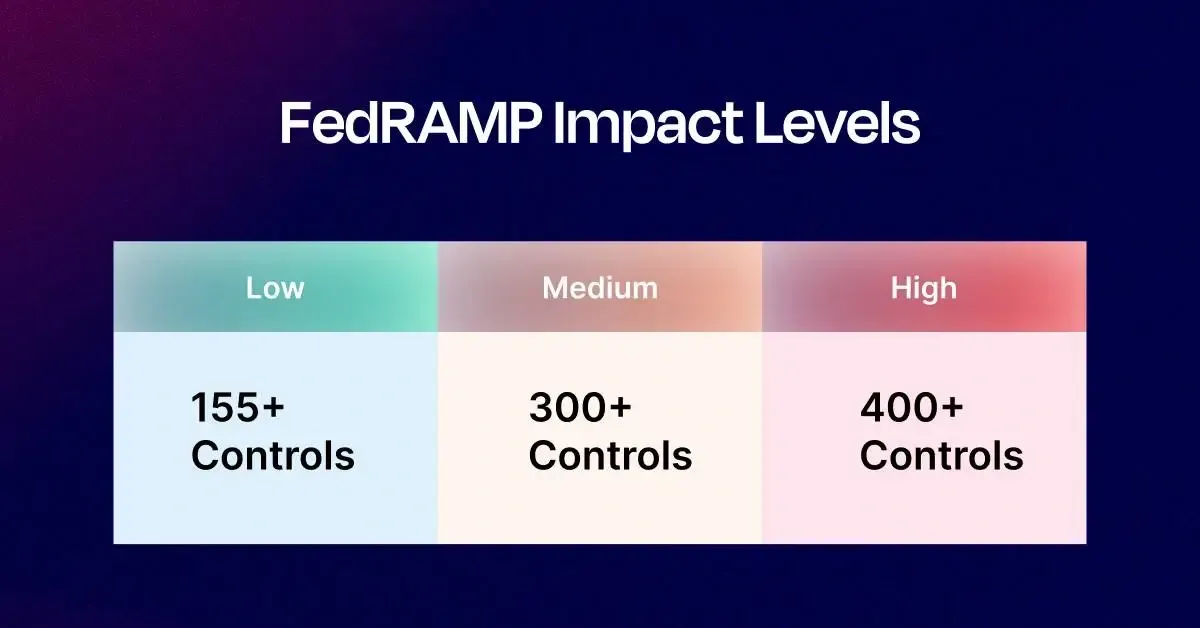
Image Source: Sprinto
FedRAMP categorization serves as the foundation of cloud security requirements for government services. Organizations working with federal agencies must understand these categories and ongoing modernization efforts.
Low, Moderate, and High impact level definitions
FedRAMP classifies cloud services based on the risks associated with data breaches. The classification looks at three security objectives:
- Low Impact: This applies to services that handle publicly available information where breaches would minimally affect operations. These systems typically contain no sensitive data and need 155+ security controls.
- Moderate Impact: About 80% of all FedRAMP-authorized cloud services fall into this category. They handle sensitive but unclassified data where breaches could cause “serious adverse effects” on agencies or individuals. The systems need 300+ security controls.
- High Impact: Critical systems in law enforcement, emergency services, financial, and healthcare sectors use this level. Data breaches could have “severe or catastrophic” consequences that might affect national security. These systems require 400+ security controls.
LI-SaaS baseline and its use cases
Low Impact Software-as-a-Service (LI-SaaS) baseline provides an optimized path for certain providers. LI-SaaS systems must meet these criteria:
- No storage of personally identifiable information except basic login credentials
- Operation as fully functional SaaS offerings
- Minimal security risk
Collaboration tools, project management applications, media editors, and educational software make ideal candidates.
Modernizing the Federal Risk and Authorization Management Program FedRAMP 20x
FedRAMP 20x reimagines the authorization process through these phases:
- Phase 1 (Completed): Low impact pilot shows feasibility
- Phase 2 (Active): Moderate impact pilot provides additional confirmation
- Phase 3-5 (Future): More people can access it, High impact pilot runs, and traditional authorizations get replaced
Automation and immediate monitoring in FedRAMP 20x
Automation drives FedRAMP 20x, aiming to confirm 80%+ of requirements automatically. Machine-readable data replaces narrative-based explanations. The improvements include:
- Immediate security confirmation instead of annual assessments
- Better trust through direct provider-agency relationships
- Continuous progress without artificial checkpoints
The program focuses on AI-based cloud services and reduces authorization time from months to weeks.
Conclusion
FedRAMP has changed federal cloud security since it started in 2011. This standard approach eliminates duplicate security checks while keeping strong protection standards for government data. The program’s “do once, use many times” framework helps agencies save resources and speeds up cloud adoption in federal agencies.
Clear differences between Low, Moderate, and High impact levels create a structured path for cloud providers based on their offerings and data sensitivity. The streamlined LI-SaaS baseline lets providers with minimal security needs enter the federal marketplace faster.
Getting authorization needs careful planning and expertise. Organizations should book a Readiness Call with compliance experts to learn how they match up against FedRAMP requirements. This first step often leads to successful authorization.
FedRAMP keeps evolving through programs like FedRAMP 20x that want to improve authorization processes with automation and real-time monitoring. These changes will reduce timelines from months to weeks while maintaining the strong security framework that federal agencies need.
As cloud technologies grow, FedRAMP stays vital for organizations that want to serve government agencies. The process needs big investment, but authorization opens doors to the federal market and shows dedication to the highest security standards.
Key Takeaways
Understanding FedRAMP is crucial for any organization seeking to provide cloud services to federal agencies, as this standardized program has become the mandatory gateway to the government market.
• FedRAMP authorization is mandatory for federal cloud contracts – All cloud service providers must obtain FedRAMP certification to sell services to U.S. federal agencies, regardless of company location.
• “Do once, use many times” approach saves 30-40% in government costs – Single authorization can be leveraged across multiple federal agencies, eliminating redundant security assessments.
• Three impact levels determine security requirements – Low (155+ controls), Moderate (300+ controls), and High (400+ controls) based on data sensitivity and potential breach consequences.
• LI-SaaS baseline offers streamlined path for low-risk services – Software handling only basic login credentials can use simplified authorization with approximately 50 controls.
• FedRAMP 20x modernization reduces authorization timelines from months to weeks – New automation and real-time monitoring capabilities aim to validate 80%+ of requirements automatically.
• Continuous monitoring is required post-authorization – Monthly vulnerability reports and annual 3PAO assessments are mandatory to maintain FedRAMP status and marketplace listing.
The authorization process requires significant investment but opens access to the lucrative federal market while demonstrating commitment to the highest cybersecurity standards that government agencies demand.
FAQs
Q1. What is FedRAMP and why is it important for cloud service providers? FedRAMP is a standardized approach to security assessment and authorization for cloud products used by federal agencies. It’s crucial for cloud service providers because it’s mandatory for selling cloud services to U.S. federal agencies, regardless of the company’s location.
Q2. How does FedRAMP benefit government agencies? FedRAMP’s “do once, use many times” approach saves government agencies 30-40% in costs by eliminating redundant security assessments. It also accelerates secure cloud adoption across the government by providing a consistent evaluation framework.
Q3. What are the different FedRAMP impact levels? FedRAMP has three impact levels: Low (155+ controls), Moderate (300+ controls), and High (400+ controls). These levels are based on the sensitivity of data and the potential consequences of a security breach.
Q4. What is the FedRAMP authorization process? The FedRAMP authorization process involves several steps, including achieving FedRAMP Ready status, developing a System Security Plan, undergoing a 3PAO assessment, creating a Security Assessment Report and Plan of Action and Milestones, and obtaining an Authority to Operate from a federal agency.
Q5. How is FedRAMP being modernized? FedRAMP is being modernized through the FedRAMP 20x initiative, which aims to streamline the authorization process using automation and real-time monitoring. This modernization effort is expected to reduce authorization timelines from months to weeks while maintaining robust security standards.