
Breaking into government cloud services contracts can feel like navigating a complex maze of compliance requirements and lengthy approval processes. We understand the challenges cloud service providers face when trying to serve federal agencies. FedRAMP Class A authorization offers a simplified pathway designed for low-risk, low-impact cloud solutions that need faster market entry.
This new authorization tier addresses specific FedRAMP requirements without the extensive overhead of traditional pathways. More, FedRAMP Class A makes it possible for qualifying providers to demonstrate security compliance. We’ll walk you through the authorization framework and outline the step-by-step process to get Class A FedRAMP authorization. We’ll also explore the benefits and constraints you should think about before pursuing this route.
Understanding FedRAMP Class A Authorization Framework
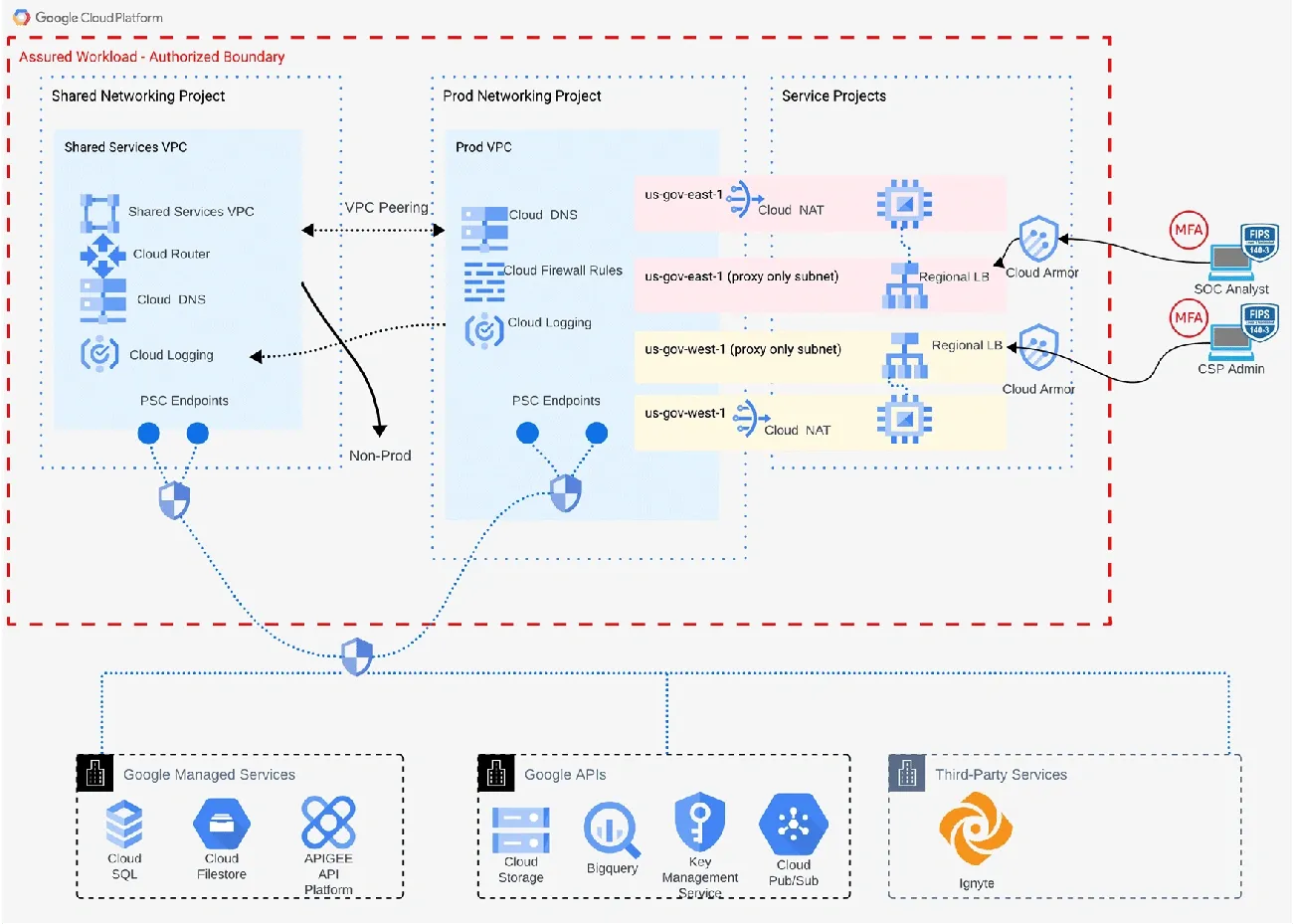
Image Source: Ignyte Assurance Platform
Class A FedRAMP authorization emerged from mandate M-24-15. It was designed to address a persistent gap in federal cloud adoption. Federal agencies conducted their own pilot authorizations outside the standard FedRAMP process. This prevented government-wide reuse and created redundant security assessments. The new framework establishes an official pathway for cloud services to get FedRAMP authorization by using existing external security frameworks.
The authorization operates through Program Certification. We apply to the FedRAMP PMO without requiring an agency sponsor. This represents a fundamental change from traditional FedRAMP requirements. Class A certifications accommodate both Rev5 and FedRAMP 20x pathways, though each carries distinct requirements. The 20x path assesses security posture through Key Security Indicators. Rev5 follows procedures detailed in RFC-0023.
SOC 2 Type II serves as the original approved external framework for 20x implementations. FedRAMP acknowledges concerns about SOC 2 audit quality but positions Class A as transitory by design. Providers receive a two-year window to schedule Independent Verification & Validation (20x) or Independent Assessment (Rev5) for Class B, C, or D certification. Services remain in the Preparation phase on the FedRAMP Marketplace during this period. They are authorized for negligible or low-risk pilot deployments only. No reciprocity exists between Class A and higher certification levels.
Step-by-Step Process to Obtain Class A FedRAMP Authorization
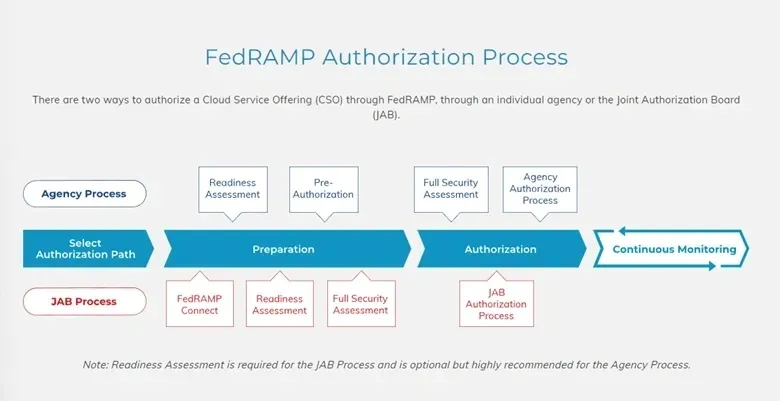
Getting Class A FedRAMP authorization requires completing specific prerequisites before submitting an application. We must secure a listing on the FedRAMP Marketplace in the Preparation phase first. Our cloud service needs to fall within FedRAMP’s scope. This means it’s designed for use by multiple federal agencies, either direct or indirect. The PMO provides all materials and process documentation needed to request Class A certifications.
The application pathway depends on our existing security posture. The process centers on showing security through Key Security Indicators for providers using the 20x framework. These providers must hold a valid SOC 2 Type II certification. Providers who have invested in Rev5 controls follow an alternative process outlined through RFC-0023. Both routes lead to the same Class A designation.
We enter a defined progression timeline after approval. We must show scheduled Independent Verification & Validation (for 20x) or Independent Assessment (for Rev5) toward Class B, C, or D certification within two years of receiving Class A authorization. This requirement provides flexibility around the deadline based on assessor availability.
Federal agencies adopting our Class A certified service should establish conditional agreements during pilot Authorization to Operate processes. These agreements outline expectations for pursuing higher certification levels if agencies choose to expand beyond pilot deployments. Class A remains valid for negligible or low-risk pilot implementations only.
Benefits, Constraints, and Next Steps After Class A

Class A authorization delivers immediate market access to government cloud services without extensive federal-specific compliance overhead. But this benefit comes with explicit temporal boundaries. We receive a two-year window from original certification to schedule our Independent Verification & Validation (20x) or Independent Assessment (Rev5) for Class B, C, or D certification. This timeline provides flexibility when assessor availability creates scheduling constraints and eases pressure on providers ready for evaluation but unable to secure assessment slots before the deadline.
The authorization serves only as a bridge, not a destination. FedRAMP states clearly that no reciprocity exists between Class A and higher certification levels. Any provider pursuing long-term contracts or non-pilot deployments must complete full FedRAMP requirements through Class B, C, or D pathways. Therefore, Class A remains valid only for negligible or low-risk pilot implementations by federal agencies.
Agencies adopting our Class A certified service for deployments with higher security objectives should deploy compensating controls. The FedRAMP Consolidated Rules for 2026 will formalize these requirements by June 2026 and provide definitive guidance on Class A limitations. Agencies establish conditional agreements requiring progression to appropriate certification levels if pilot programs transition to production use.
Conclusion
Class A FedRAMP authorization provides cloud service providers with a streamlined entry point into government contracts, especially for pilot programs and low-risk deployments. We’ve covered how this two-year transitional pathway enables faster market access while maintaining security standards through existing frameworks like SOC 2 Type II. Providers must plan their progression to Class B, C, or D certification to maintain long-term federal partnerships. Class A opens doors, but higher certifications unlock sustainable government cloud opportunities.
Key Takeaways
FedRAMP Class A authorization offers cloud service providers a fast-track entry into government contracts, specifically designed for low-risk pilot programs that need quicker market access than traditional certification paths.
• Class A provides 2-year market entry window: Leverage SOC 2 Type II certification to access government contracts while scheduling full FedRAMP assessment within two years.
• Limited to pilot programs only: Authorization restricts usage to negligible or low-risk deployments, requiring progression to Class B/C/D for production-level contracts.
• No reciprocity with higher certifications: Class A serves as a bridge, not destination – full FedRAMP requirements still apply for long-term government partnerships.
• Direct PMO application process: Apply through Program Certification without agency sponsorship, using either Rev5 or FedRAMP 20x pathways.
• Strategic stepping stone for federal market: Enables immediate government contract opportunities while building toward comprehensive FedRAMP certification for sustained growth.
Class A essentially functions as a government-sanctioned pilot authorization that legitimizes what agencies were already doing informally, creating a structured pathway for cloud providers to demonstrate value before committing to full certification investments.
FAQs
Q1. What is FedRAMP Class A authorization and who is it designed for? FedRAMP Class A is a streamlined authorization pathway for cloud service providers seeking to enter government contracts quickly. It’s specifically designed for low-risk, low-impact cloud solutions intended for pilot programs and negligible-risk deployments with federal agencies, offering a faster alternative to traditional FedRAMP certification processes.
Q2. How long does Class A authorization remain valid? Class A authorization provides a two-year window from the date of initial certification. Within this timeframe, providers must schedule an Independent Verification & Validation (for FedRAMP 20x) or Independent Assessment (for Rev5) to progress toward Class B, C, or D certification. The authorization is transitional by design and not intended as a permanent certification level.
Q3. Can Class A authorization be used for full production deployments? No, Class A authorization is restricted exclusively to negligible or low-risk pilot implementations. For production-level deployments or contracts with higher security requirements, cloud service providers must obtain full FedRAMP certification through Class B, C, or D pathways. Agencies may establish conditional agreements requiring progression to higher certification levels if pilots expand beyond initial scope.
Q4. What are the prerequisites for applying for Class A certification? Providers must first secure a listing on the FedRAMP Marketplace in the Preparation phase and offer cloud services designed for use by multiple federal agencies. For the 20x pathway, a valid SOC 2 Type II certification is required along with demonstration of security through Key Security Indicators. The Rev5 pathway follows alternative procedures but leads to the same Class A designation.
Q5. Does Class A certification transfer or provide credit toward higher FedRAMP levels? No, there is no reciprocity between Class A and higher certification levels (Class B, C, or D). Class A serves as a bridge authorization that enables market entry, but providers pursuing long-term government contracts must complete full FedRAMP requirements independently. The security work done for Class A does not reduce the assessment requirements for higher certification levels.